
Reviewed · AGRA DAY TRIPS FROM DELHI
Golden Triangle India: 5-Day Delhi, Agra, Jaipur & Pushkar Tour
Five stops, one easy rhythm. This Golden Triangle loop plus Pushkar mixes Mughal landmarks with Rajasthan spirituality, and it’s built around smooth private transport and guided time at major sites. I like that so many core stops are marked free admissions, which helps your budget stay under control. I also like the human factor: the route leans on experienced drivers and guides (names like Kamal, Ali, Balvir, and Dinesh come up often) who focus on timing and clear explanations.
One thing to watch: the price is listed very low, so you should double-check what you pay separately on the ground. A few sights are marked not included (like Hawa Mahal, Jantar Mantar, and Panna Meena ka Kund), and the listed duration (about 1 day 16 hours) doesn’t obviously match the 5-day label—so confirm the real day-by-day plan before you commit.
In This Review
- Key highlights worth putting on your radar
- Golden Triangle with Pushkar: a good way to understand India fast
- Starting in New Delhi: Humayun’s Tomb and Qutub Minar in one sweep
- The Agra plan: Taj Mahal first, then Agra Fort
- Baby Taj, or Itimad-ud-Daula: the detail stop people often skip
- Pushkar’s holy lake and Brahma Temple: a quieter counterpoint to the monuments
- Jaipur’s Amber Fort and City Palace: where the day feels royal
- Hawa Mahal, Jantar Mantar, and Panna Meena ka Kund: Jaipur’s architecture with personality
- Jal Mahal on Man Sagar Lake: the quick stop that works
- Car, guides, and timing: why the private setup matters
- Price and admission fees: get the value, avoid the surprises
- Who should book this Delhi–Agra–Jaipur–Pushkar tour
- Should you book this tour?
- FAQ
- Where does the tour start and end?
- Is pickup offered?
- Is this a private tour?
- How long is the tour?
- Are entrance tickets included?
- When do I receive confirmation?
- What’s the cancellation policy?
Key highlights worth putting on your radar
- Private group setup that keeps the schedule tight and avoids waiting around with strangers
- Delhi anchors like Humayun’s Tomb and Qutub Minar that give you old India and modern India in one day
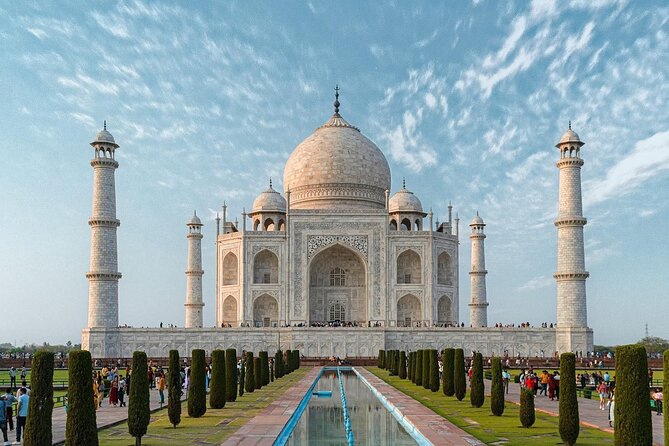
- Agra’s big three: Taj Mahal, Agra Fort, and Itimad-ud-Daulah (Baby Taj) in a compact sequence
- Pushkar for spiritual pace, centered on Pushkar Lake and the rare Brahma Temple
- Jaipur classics with variety, from Amber Fort and City Palace to Hawa Mahal and Jantar Mantar
- Mobile ticket + pickup offered, which usually means fewer hassles at the start
Golden Triangle with Pushkar: a good way to understand India fast
This tour’s real strength is not just the famous names. It’s the contrast: Delhi’s layered past, Agra’s Mughal masterpieces, Jaipur’s royal architecture, and then Pushkar, where the mood shifts toward quiet and faith.
I like how the itinerary gives you “why this matters” without making everything feel like a museum lecture. The stops are arranged so you can see styles evolve—Mughal symmetry in Agra, Rajput and Mughal blends in Jaipur, and then temple-and-lake life in Pushkar. For first-timers, it’s a smart shortcut to get your bearings quickly.
Other Agra runs out of Delhi worth a look




Starting in New Delhi: Humayun’s Tomb and Qutub Minar in one sweep
New Delhi is often overwhelming. This tour tries to tame that by picking two landmarks that teach you a lot about early Mughal grandeur and early Indo-Islamic architecture.
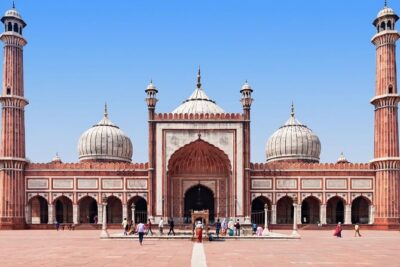
Humayun’s Tomb sets the tone with its grand garden-tomb design, a style that helps explain why later Mughal buildings look the way they do. Then Qutub Minar brings you a different kind of monument—tall, historical, and easy to read visually even if you’re not deep into the dates.
Practical tip: plan for sun and walking. Even if your admission is free, you’ll still want water and a hat, especially if you’re doing these stops back-to-back.
The Agra plan: Taj Mahal first, then Agra Fort
Agra is where you’ll feel the “Golden Triangle” part most strongly. The sequence is straightforward: start with the Taj Mahal, then head to Agra Fort right after.
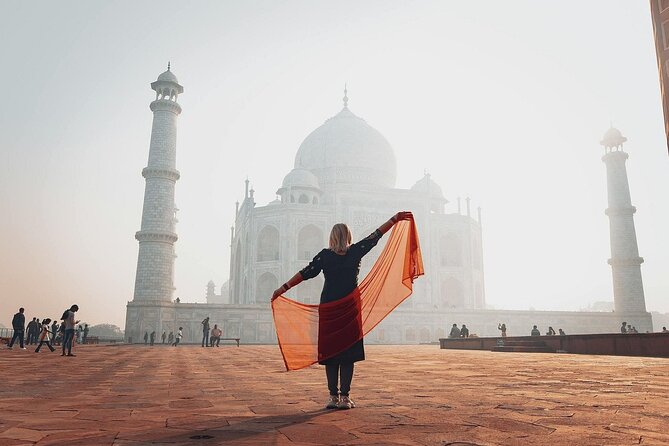
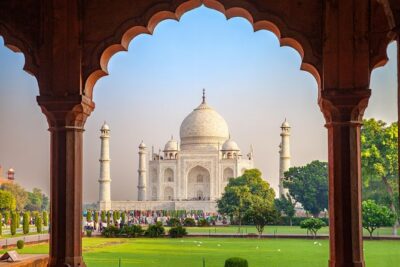
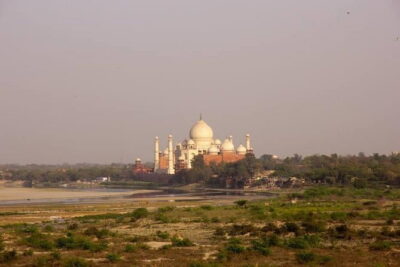
Taj Mahal is famous for a reason, but what makes it worth the time is how you can notice details once you slow down: the marble tones shift as light changes, and the structure’s symmetry is the whole point. This is exactly the type of stop where a good guide matters. The experience is often described as more magical when the explanation is clear, like the sort of focused, precise guiding linked with Balvir in the feedback.
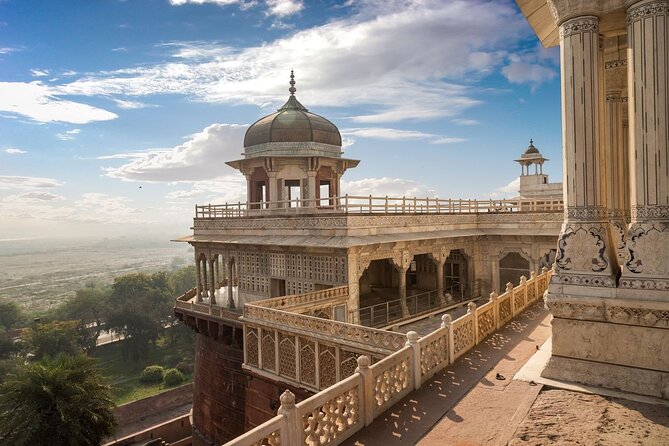
Agra Fort then gives you a different mood: power, stone, and the scale of an imperial stronghold. You’ll be moving from romantic marble to hardened Mughal-era fortification, and that contrast is the whole payoff.
Timing note: Taj Mahal is listed for about 3 hours, while Agra Fort is about 1 hour. If you hate rushing, aim to be early to Taj, and keep your energy for photos around the entrances and courtyard views.
Baby Taj, or Itimad-ud-Daula: the detail stop people often skip
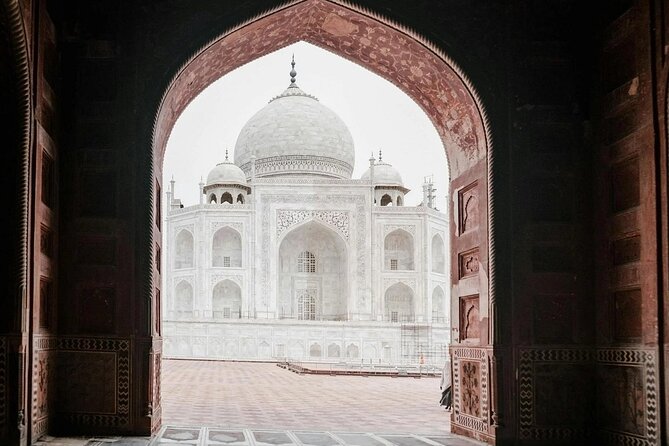
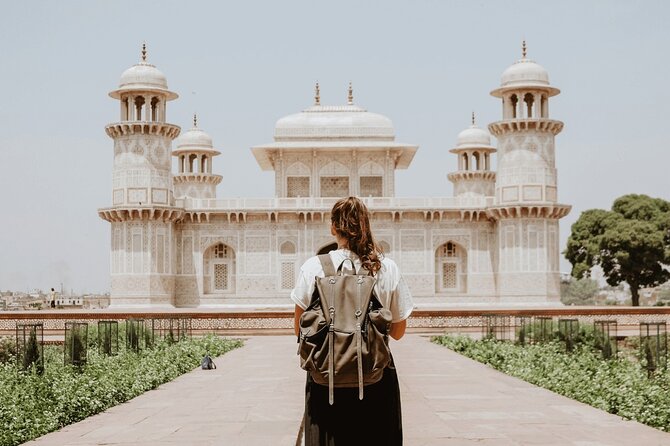
After Taj Mahal and Agra Fort, you get Itimad-ud-Daulah, often called Baby Taj. The reason it hits is the focus on craftsmanship. This Mughal tomb is known for intricate inlay work and delicate carvings, built in 1628, and it’s described as a precursor to the Taj Mahal.
If you’re the type who loves details—the kind you might miss when you’re only chasing the biggest headline building—this stop is your reward. It’s also a nice mental reset. Instead of staring at one huge monument, you spend time reading the surface work.
Practical tip: bring your phone camera and expect to want close-ups. The experience is shorter (about 1 hour), so don’t plan to do slow wandering—use that hour intentionally.
Pushkar’s holy lake and Brahma Temple: a quieter counterpoint to the monuments
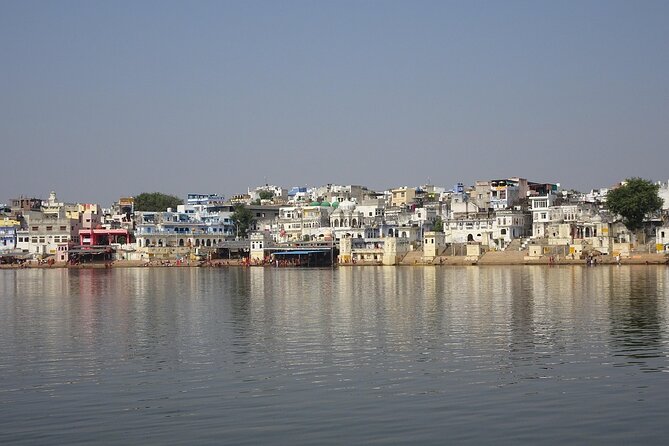
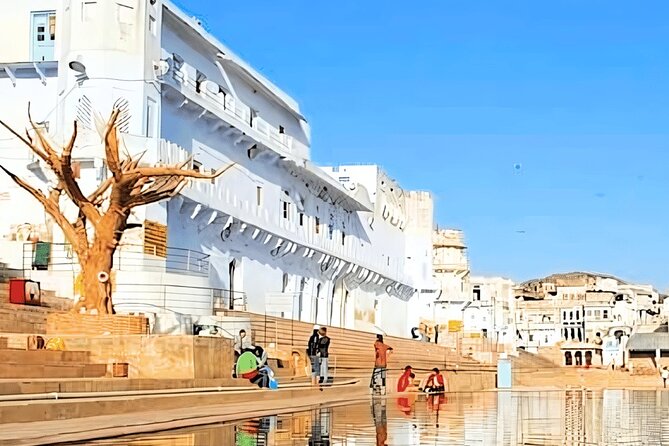
Once you leave Agra’s heavy stone and palace mood, Pushkar changes the atmosphere. Pushkar is described as a spiritual retreat in Rajasthan, built around Pushkar Lake and the Brahma Temple.
What I like about this part of the itinerary is that it doesn’t feel like filler. Pushkar isn’t there just for another famous photo. It’s there to introduce you to a different rhythm of India: temple life, lake views, and time in the bazaar-style spaces.
This stop is listed for about 6 hours, which is the right amount of time if you want both:
- a calm moment near the lake
- and some wandering time for local shops and street scenes
Consideration: if you’re only interested in major monuments, Pushkar can feel more “people and place” than “architecture headline.” That can be good or bad depending on your travel style.
Chasing the Pink City? More Jaipur day trips
Jaipur’s Amber Fort and City Palace: where the day feels royal
Jaipur is the Pink City, and this tour focuses on the big-ticket royal architecture. You’ll start with Amber Fort, described as a majestic fort with spectacular views and Mughal history. Amber Fort is the kind of place that’s easier to understand once you realize it’s both a fortress and a statement of power.
Then you move to City Palace, and here the itinerary gets specific: it’s a blend of Rajasthani and Mughal architecture, and admission is listed as included. This is a strong value signal. City Palace isn’t just one building—it’s a structured complex that helps you connect how royal families lived alongside their own political storytelling.
Practical tip: wear shoes that handle steps and slopes. This isn’t a “grab a quick photo and go” kind of place.
Hawa Mahal, Jantar Mantar, and Panna Meena ka Kund: Jaipur’s architecture with personality
After the fort-and-palace day, the itinerary shifts to smaller, high-impact stops.
Hawa Mahal (Palace of Wind) is built around intricate lattice windows. Even with a short visit (about 30 minutes), it’s one of those sights where you can see why it became an icon. Don’t expect huge interior time; expect a strong exterior and details you can photograph from angles around the frontage. Note: admission is marked not included here.
Jantar Mantar is next, listed as an observatory and home to the world’s largest stone sundial. Even if you don’t know the science, it’s a place where geometry is the attraction. It’s listed for a very brief stop (about 1 minute), so treat this as a quick hit. Admission is marked not included.
Then Panna Meena ka Kund, a 16th-century stepwell near Amber Fort. It’s described as a water reservoir and part of community water systems, with historical water-storage architecture you can still recognize as human design solving real needs. Admission is marked not included.
What to know: because several of these are short and not included on admission, you should budget time to walk between them and money for tickets if you want the full experience.
Jal Mahal on Man Sagar Lake: the quick stop that works
Jal Mahal, the Water Palace, is described as an 18th-century palace that appears to float on Man Sagar Lake. The stop here is brief—about 15 minutes—and admission is listed as free.
That’s the right length for this kind of sight. Jal Mahal works best when you’re not trying to turn it into a half-day activity. Give it the minutes it needs for one good look, one calm photo moment, then move on before the light and your energy both fade.
Car, guides, and timing: why the private setup matters
A big part of your day will be road time between cities and sites. The tour is set up as a private activity, meaning only your group participates. In practical terms, that usually means less waiting, fewer schedule surprises, and a more predictable day.
The strongest repeated theme in the feedback is how drivers keep things moving and make you feel safe and comfortable. Names like Mukesh and Dinesh show up with mentions of punctuality, professionalism, and a clean car. There’s also mention of drivers like Santosh recommending good food spots and keeping service smooth.
Guides matter too. In the feedback, Ali is connected with strong service and clear guidance across multiple cities, while Balvir is linked with very clear and precise explanations at the Taj Mahal.
Practical tip: use the driver/guide time. If you want to shop smarter (or avoid tourist traps), ask what’s nearby and what’s worth your minutes. You’ll get better results when you ask local questions rather than just follow crowds.
Price and admission fees: get the value, avoid the surprises
At $6.96 per person, the headline price looks like a bargain. But here’s how I’d handle it: don’t evaluate it on the dollar amount alone. Evaluate it on what the itinerary marks as free and what’s marked not included.
From the information given:
- New Delhi main sights are marked free (Humayun’s Tomb and Qutub Minar)
- Taj Mahal is marked free
- Agra Fort is marked free
- Itimad-ud-Daula is marked free
- Pushkar is marked free
- Jaipur City Palace admission is marked included
- Hawa Mahal, Jantar Mantar, and Panna Meena ka Kund are marked not included
- Jal Mahal is marked free
So you’re likely to pay extra on a few specific Jaipur stops. That’s normal in India, and it’s exactly why reading the inclusion notes matters.
My advice: before you book, make a quick list of the not-included sights you want to enter. If you’re okay with photos from the outside, you can keep costs down. If you want full access, budget tickets accordingly.
Who should book this Delhi–Agra–Jaipur–Pushkar tour
This is a strong fit if you want:
- a structured route through the classics of the Golden Triangle
- a meaningful add-on in Pushkar for a faith-and-lake change of pace
- private, car-based logistics rather than piecing together trains and taxis
It may be less ideal if you hate any schedule compression. Several stops are short (especially in Jaipur), so this route is best for people who like to keep moving and who don’t mind quick transitions.
If you’re traveling as a couple or a small group, private time is usually a win. Solo travelers can do well here too, especially if you like having a clear plan.
Should you book this tour?
I’d book it if you want a first-timer-friendly route where the big monument blocks are handled, and where Pushkar gives you a real change of mood. The pricing can feel like an unusually good deal because many major admissions are marked free, and the City Palace admission is listed as included.
I’d hold off or at least confirm details if the mismatch between the 5-day label and the listed duration matters to your schedule. Also, if you know you want Hawa Mahal, Jantar Mantar, and Panna Meena ka Kund entrances, check those ticket costs up front so the final bill stays comfortable.
If you like clear guidance, punctual driving, and a mix of architecture plus temple life, this one makes sense.
FAQ
Where does the tour start and end?
It starts in New Delhi, India, and it also returns to New Delhi as the final stop.
Is pickup offered?
Yes, pickup is offered.
Is this a private tour?
Yes. It’s listed as a private tour/activity, so only your group will participate.
How long is the tour?
The duration is listed as approximately 1 day 16 hours, even though it’s described as a 5-day Golden Triangle tour with Pushkar. You should confirm the day-by-day timing before booking.
Are entrance tickets included?
Some are included or marked free (for example, several key Agra and Delhi stops, plus Jal Mahal). Others are marked not included, such as Hawa Mahal, Jantar Mantar, and Panna Meena ka Kund. City Palace in Jaipur is marked as admission included.
When do I receive confirmation?
Confirmation is received at the time of booking.
What’s the cancellation policy?
Free cancellation is allowed up to 24 hours in advance for a full refund. If you cancel less than 24 hours before the start time, the amount paid is not refunded.
The Full Golden Triangle, More Options
- 3-Days Private Golden Triangle Tour: Delhi, Agra & Jaipur by Car
★ 5.0 · 1,107 reviews - 3-Days Private Golden Triangle Tour: Delhi, Agra & Jaipur by Car
★ 5.0 · 1,098 reviews - 3-Day Delhi, Agra and Jaipur Private Tour – India Golden Triangle
★ 5.0 · 812 reviews - Four-Day Private Luxury Golden Triangle Tour to Agra and Jaipur From New Delhi
★ 5.0 · 807 reviews - 5 Nights 6 Days Private Golden Triangle Tour – Delhi Agra Jaipur
★ 5.0 · 574 reviews
Onward to Jaipur: More Day Trips
- 3-Days Private Golden Triangle Tour: Delhi, Agra & Jaipur by Car
★ 5.0 · 1,107 reviews - 3-Days Private Golden Triangle Tour: Delhi, Agra & Jaipur by Car
★ 5.0 · 1,098 reviews - 3-Day Delhi, Agra and Jaipur Private Tour – India Golden Triangle
★ 5.0 · 812 reviews - Four-Day Private Luxury Golden Triangle Tour to Agra and Jaipur From New Delhi
★ 5.0 · 807 reviews - Jaipur Day Trip from Delhi by Car or Train – All Inclusive
★ 5.0 · 663 reviews
More Agra Day Trips out of Delhi
- Same Day Taj Mahal, Agra Fort & Baby Taj Tour from Delhi by Car
★ 5.0 · 4,304 reviews - Full Day Taj Mahal, Agra Fort & Baby Taj Tour from Delhi by Car
★ 5.0 · 3,647 reviews - From Delhi: Taj Mahal & Agra Private Day Trip with Transfers
★ 4.9 · 3,181 reviews - From Delhi: Taj Mahal and Agra Fort Private Sunrise Tour
★ 4.9 · 2,270 reviews - Sunrise Taj Mahal, Agra Fort & Baby Taj Tour from Delhi by Car
★ 5.0 · 2,243 reviews
Just added: more New Delhi reviews to browse
- 4 days Golden Triangle Tour★ 5.0 · 3 reviews
- Discover Old & New Delhi: Private Tour with Street Food★ 5.0 · 3 reviews
- Taj Mahal Tour From Delhi By Private Car★ 4.5 · 3 reviews
- Golden Triangle Tour 5 Days★ 5.0 · 3 reviews
- Taj Mahal: Express Entry Ticket For Sunset Tour with guide★ 5.0 · 3 reviews
- Agra Taj Mahal Sunrise & Sunset Tour from Delhi★ 5.0 · 3 reviews
Agra Day Trips from Delhi, compared.
 ★ 5.0Same Day Taj Mahal, Agra Fort & Baby Taj Tour from Delhi by CarFrom $624,304 reviews
 ★ 5.0Full Day Taj Mahal, Agra Fort & Baby Taj Tour from Delhi by CarFrom $623,647 reviews
 ★ 4.9From Delhi: Taj Mahal & Agra Private Day Trip with TransfersFrom $43,181 reviews
 ★ 4.9From Delhi: Taj Mahal and Agra Fort Private Sunrise TourFrom $592,270 reviews
 ★ 5.0Sunrise Taj Mahal, Agra Fort & Baby Taj Tour from Delhi by CarFrom $622,243 reviews
 ★ 5.0Taj Mahal and Agra Private Car Tour from Delhi with 5* LunchFrom $331,633 reviews
 ★ 4.9From Delhi: Private Taj Mahal and Agra Tour by Express TrainFrom $751,605 reviews
 ★ 5.0Taj Mahal, Agra Fort, Baby Taj Tour from Delhi by Superfast TrainFrom $751,494 reviews