
Reviewed · AGRA DAY TRIPS FROM DELHI
Golden Triangle Tour Delhi-Agra-Jaipur
Sunrise at the Taj sets the tone. This Golden Triangle Tour Delhi–Agra–Jaipur is interesting because it strings together top sights with real guided context, and it starts with the standout Taj Mahal at sunrise while still giving you major Delhi and Jaipur landmarks. I also like the built-in air-conditioned pickup and city guiding (one day of guide in each city). The trade-off: monument entry fees and your meals aren’t included, and the road time is a big part of the deal.
For the price of $283.32 per person, I think the value comes from what most people need on this route: reliable transport, a schedule that keeps you moving, and enough stops to feel like you actually did the triangle. It’s also set up for a private group (only your group participates), with a mobile ticket for less hassle. One small practical note: if you hate early mornings or long car days, you’ll want to mentally pace yourself before you go.
In This Review
- Golden Triangle Tour: quick hits before you commit
- The Golden Triangle setup: what the 4 days are really for
- Entering Delhi: Qutub Minar, Lotus Temple, and the Rajpath monuments
- Day 2 in Agra: Taj Mahal sunrise plus Agra Fort
- Jaipur on Day 3: Hawa Mahal, Amber Palace, and the city-culture route
- Day 4: your Jaipur morning and the return to Delhi
- Price and logistics: is $283.32 per person good value?
- Comfort, timing, and why pacing makes or breaks the trip
- Who this Golden Triangle tour suits best
- Should you book Royal Majestic Tour for Delhi–Agra–Jaipur?
- FAQ
- FAQ
- How long is the Golden Triangle Tour Delhi–Agra–Jaipur?
- What’s included in the price?
- Are monument entry fees included?
- Where does the tour start, and what time does it begin?
- What stops are included in Delhi, Agra, and Jaipur?
- Is this tour private?
Golden Triangle Tour: quick hits before you commit

- Taj Mahal at sunrise plus Agra Fort the same day, so you get two heavyweight stops in one leg
- Full Delhi day of big “first timers” hits: Qutub Minar, Lotus Temple, India Gate, and ceremonial-axis sights
- Jaipur’s best mix of stops: Hawa Mahal photo moment, Amber Palace, City Palace, and Jantar Mantar
- Air-conditioned vehicle + city guides for 1 day in each city, which matters on a route this long
- Multi-leg driving (Delhi → Agra → Jaipur and back) with each leg taking roughly 4–6 hours
- Pickup offered and logistics kept simple with a mobile ticket
The Golden Triangle setup: what the 4 days are really for
The Golden Triangle is the classic loop connecting New Delhi, Agra, and Jaipur—about 720 km by road. The point of doing it as a tour is not just seeing places, but avoiding the time-sink of arranging transport, figuring out timing, and stitching together guides city by city.
This itinerary runs in a clear rhythm: Delhi first, then south to Agra for sunrise, then west to Jaipur. Each leg is listed at about 4 to 6 hours of drive, so you should expect that a real chunk of your day will be on the road (especially on the transfer days).
Value-wise, the package is trying to handle the big friction: transport and guiding. What it does not handle is the stuff that usually adds up in India tours—hotel accommodation, meals, and monument entry fees. If you budget for those separately, you’ll feel like the tour price makes more sense.
Other Agra runs out of Delhi worth a look




Entering Delhi: Qutub Minar, Lotus Temple, and the Rajpath monuments
Day 1 is a “Delhi sampler” that works well if it’s your first time in the capital. You start with Qutub Minar, part of the Qutb complex (a UNESCO site). Qutub Minar is a dramatic, tall landmark, and it’s the kind of stop that gives you quick context for how old Delhi can feel even when the city around it is modern. Plan for about an hour here, and don’t rush your photos—this is one of those places where the scale hits once you’re standing at the base.
Next is the Lotus Temple, known for its flowerlike shape. It’s also open to everyone, which is a nice change of pace from the usual “only certain visitors” vibe you can get at some religious sites. This is a shorter stop (about 30 minutes), so use it to slow down and enjoy the calm geometry—then move on.
Then comes India Gate on the Rajpath area. This is a quick, respectful memorial stop, and it’s also a great way to get your bearings fast on the city’s main ceremonial axis. After that, you’ll pass by Parliament House and Rashtrapati Bhavan. These are listed as brief stops (10 minutes each) and the key thing to understand is that they’re more about sight and orientation than deep interior visits. If you’re hoping for a long, ticketed deep-dive inside government buildings, you’ll want to know that entry isn’t included here.
A practical reality: Day 1 ends with the drive to Agra, with transit via the Yamuna Expressway. That’s about a 4-hour shift, so your “Delhi day” is intentionally compact. It’s effective, but you won’t leave Delhi feeling like you moved at a museum pace.
Day 2 in Agra: Taj Mahal sunrise plus Agra Fort
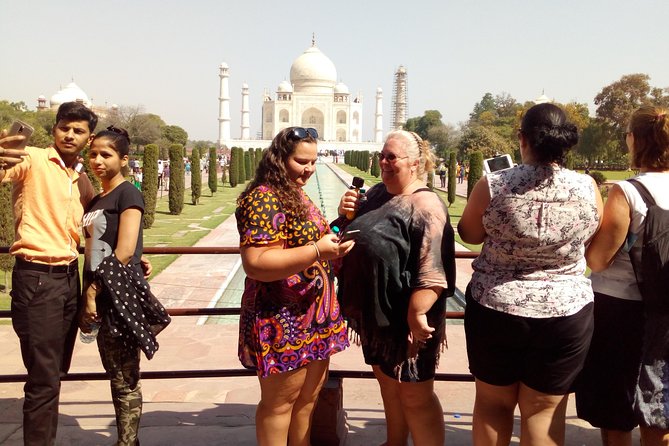
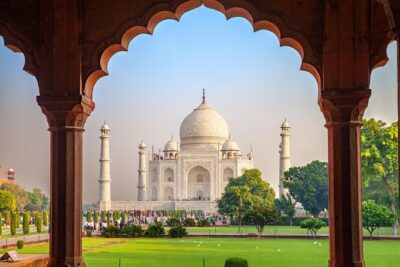
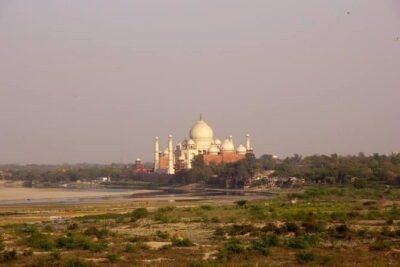
Day 2 is built around the single biggest reason people book this route: Taj Mahal at sunrise. The itinerary lists 1 hour 30 minutes here, and the sunrise timing is the difference between average photos and the kind of light that makes the Taj feel like it’s glowing. Also, remember that monument entry fees aren’t included, so if you like to plan your budget neatly, set aside the ticket cost in advance.
When you go to the Taj, don’t treat it like a quick checkbox. Even if you only have the scheduled time, give yourself a moment to understand the structure: white marble, symmetrical layout, and the way the complex is designed to pull your eye across the main axis. The sunrise timing also means you’ll be trading comfort for atmosphere—worth it for most people, but not for those who hate early mornings.
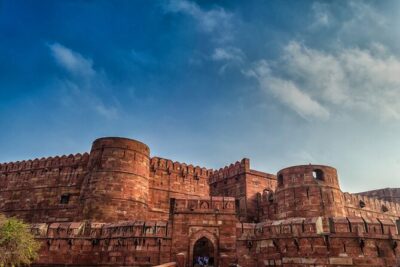
After the Taj, you visit Agra Fort for about 1 hour. This stop gives you a different layer than the Taj: the Mughal-era story isn’t just a monument—it’s also power, defense, and the architecture that grew around the empire’s seat in Agra. You’ll likely appreciate this more if you’re even casually interested in how ruling dynasties shaped what you see.
Then you transition to Jaipur, with a 4-hour drive. That’s a long shift, but it’s the only way to fit Jaipur’s major sights without turning the whole tour into a travel marathon.
Jaipur on Day 3: Hawa Mahal, Amber Palace, and the city-culture route
Day 3 is the densest “sights per hour” day. It starts with Hawa Mahal (Palace of Breeze). The itinerary lists a short 10-minute window, and that’s exactly how I’d approach it: a quick photo, a quick look at the facade, and then move on. Hawa Mahal is famous for the red and pink sandstone look and the design that relates to the women’s chambers. You won’t get a long exploration in this schedule, but you’ll get the iconic picture most people come for.
Next is Amber Palace (Amber Fort area) for about 1 hour 30 minutes. This is the one place on the Jaipur side where you can feel the scale and craft in a way Hawa Mahal can’t fully provide in a short stop. Amber is also a great anchor for Jaipur’s identity—this is where you see how the city’s power and design connect to the surrounding landscape.
After Amber comes Panna Meena ka Kund, a square-shaped stepwell, scheduled for about 15 minutes. It’s a small stop, but stepwells in Rajasthan are often where you see engineering and daily-life practicalities disguised as architecture. Even with a short visit, it can help your day feel less like a string of “just famous” buildings.
Then you get a brief look at Jal Mahal, a palace in the middle of Man Sagar Lake. The stop is only about 10 minutes, and it’s best treated as a scenic palate cleanser. You’ll probably get your best enjoyment from this if you don’t rush and if you’re okay with it being an exterior-style photo moment.
You finish the core city circuit with City Palace (about 1 hour 30 minutes) and Jantar Mantar (about 30 minutes). City Palace helps you understand Jaipur’s royal layers in a more “lived-in” way, because it’s connected to the Maharaja’s court and later development of Jaipur. Jantar Mantar is a very different kind of wonder: astronomical instruments built by Sawai Jai Singh II. It’s the kind of site that can feel dry if you treat it like a random museum, but if you pay attention to how the instruments work, it becomes genuinely satisfying.
One consideration: Day 3 is full. If you’re the type who wants lots of downtime, you’ll feel that pressure here. This isn’t a “relaxed wander” day—it’s a best-of Jaipur day.
Day 4: your Jaipur morning and the return to Delhi
Day 4 keeps things simple. You have breakfast, and then you’re on the move again: about a 5-hour journey back to Delhi or a drop-off at Jaipur airport.
This final day is less about adding new sights and more about giving you a clean wrap-up. If you want one last quick souvenir run or a calm morning pause, this is your window—just know that the tour’s structure is geared toward getting you back on schedule.
Chasing the Pink City? More Jaipur day trips
Price and logistics: is $283.32 per person good value?
The tour price is listed as $283.32 per person for roughly 4 days. That number isn’t just “tickets” to famous sites—it’s mainly paying for:
- Air-conditioned vehicle for the long transfers
- Tour guides for 1 day in each city (so guidance isn’t crammed into just one place)
- Pickup offered and an itinerary that handles routing between Delhi, Agra, and Jaipur
- Group discounts and a mobile ticket for easier on-the-go coordination
What’s not included:
- Hotel accommodation
- Food and beverages
- Monument entry fees
So the value calculation depends on your travel style. If you’d otherwise have to hire transport for intercity legs and find separate guidance, this package can feel cost-competitive—especially because Golden Triangle travel often turns into a time-cost problem, not just a money problem.
Also, one thing I really like from the feedback I’ve seen about this tour style is the sense that it’s worth it for people who want three full days of moving and guided stops. The pacing is still your responsibility, though. If you try to “speed through everything,” you’ll miss what makes these places memorable.
Comfort, timing, and why pacing makes or breaks the trip
This route includes long drives: roughly 4–6 hours each leg. That means comfort and timing matter more than people think when they book. You’ll have an air-conditioned vehicle, and that helps on the road, but it won’t remove the basic fatigue that comes with constant transfers.
The tour also includes an early start for sunrise Taj Mahal. That’s the kind of moment you’ll remember, but it’s also the kind that punishes anyone who is up late the night before.
Here’s my simple pacing advice: treat the schedule as a framework, not a sprint. If you know you tend to run on adrenaline, give yourself permission to slow down at the stops that matter most to you—Qutub Minar for the “wow tower” feel, Taj Mahal sunrise for the atmosphere, and Amber/City Palace for the deeper “place it inside a story” effect.
Who this Golden Triangle tour suits best
This tour fits best if you want a structured Golden Triangle with minimal planning stress. It’s especially good for:
- First-timers who want major landmarks in Delhi, Agra, and Jaipur without coordinating everything separately
- People who appreciate guides and want help understanding what they’re seeing
- Anyone who prefers pickup and transport over sorting out intercity logistics
It’s less ideal if you want long, slow roaming in each city or if you strongly dislike early starts. Also, if you’re trying to keep costs super low, remember the tour excludes entry fees and meals, so your total daily spend will be higher than the base price.
Should you book Royal Majestic Tour for Delhi–Agra–Jaipur?
If your priority is a classic Golden Triangle loop with guides, pickup, and air-conditioned transport, I’d say this is a solid match. The schedule hits the biggest highlights—Taj Mahal sunrise, Agra Fort, and key Jaipur sights—while still giving you a coherent Delhi day.
I’d book it if you’re comfortable budgeting extra for monument entry and meals, and if you can accept that a chunk of your time will be on the road. If that road time sounds painful or you’re chasing a slow, unstructured vibe, look for a different style of trip with more flexible pacing.
FAQ
FAQ
How long is the Golden Triangle Tour Delhi–Agra–Jaipur?
The tour duration is listed as about 4 days.
What’s included in the price?
The package includes an air-conditioned vehicle and tour guides for 1 day in each city. Pickup is offered, and you’ll also receive a mobile ticket.
Are monument entry fees included?
No. Monuments entry fees are not included, so you’ll need to budget for tickets separately.
Where does the tour start, and what time does it begin?
The meeting time is listed as 8:00 am. The meeting point is described as near public transportation.
What stops are included in Delhi, Agra, and Jaipur?
Delhi includes Qutub Minar, Lotus Temple, India Gate, Parliament House, and Rashtrapati Bhavan, followed by the drive to Agra. Agra includes Taj Mahal (sunrise) and Agra Fort, then the drive to Jaipur. Jaipur includes Hawa Mahal, Amber Palace, Panna Meena ka Kund, Jal Mahal, City Palace, and Jantar Mantar.
Is this tour private?
Yes. It’s listed as a private tour/activity, meaning only your group participates.
The Full Golden Triangle, More Options
- 3-Days Private Golden Triangle Tour: Delhi, Agra & Jaipur by Car
★ 5.0 · 1,107 reviews - 3-Days Private Golden Triangle Tour: Delhi, Agra & Jaipur by Car
★ 5.0 · 1,098 reviews - 3-Day Delhi, Agra and Jaipur Private Tour – India Golden Triangle
★ 5.0 · 812 reviews - Four-Day Private Luxury Golden Triangle Tour to Agra and Jaipur From New Delhi
★ 5.0 · 807 reviews - 5 Nights 6 Days Private Golden Triangle Tour – Delhi Agra Jaipur
★ 5.0 · 574 reviews
Onward to Jaipur: More Day Trips
- 3-Days Private Golden Triangle Tour: Delhi, Agra & Jaipur by Car
★ 5.0 · 1,107 reviews - 3-Days Private Golden Triangle Tour: Delhi, Agra & Jaipur by Car
★ 5.0 · 1,098 reviews - 3-Day Delhi, Agra and Jaipur Private Tour – India Golden Triangle
★ 5.0 · 812 reviews - Four-Day Private Luxury Golden Triangle Tour to Agra and Jaipur From New Delhi
★ 5.0 · 807 reviews - Jaipur Day Trip from Delhi by Car or Train – All Inclusive
★ 5.0 · 663 reviews
More Agra Day Trips out of Delhi
- Same Day Taj Mahal, Agra Fort & Baby Taj Tour from Delhi by Car
★ 5.0 · 4,304 reviews - Full Day Taj Mahal, Agra Fort & Baby Taj Tour from Delhi by Car
★ 5.0 · 3,647 reviews - From Delhi: Taj Mahal & Agra Private Day Trip with Transfers
★ 4.9 · 3,181 reviews - From Delhi: Taj Mahal and Agra Fort Private Sunrise Tour
★ 4.9 · 2,270 reviews - Sunrise Taj Mahal, Agra Fort & Baby Taj Tour from Delhi by Car
★ 5.0 · 2,243 reviews
Just added: more New Delhi reviews to browse
- 4 days Golden Triangle Tour★ 5.0 · 3 reviews
- Discover Old & New Delhi: Private Tour with Street Food★ 5.0 · 3 reviews
- Taj Mahal Tour From Delhi By Private Car★ 4.5 · 3 reviews
- Golden Triangle Tour 5 Days★ 5.0 · 3 reviews
- Taj Mahal: Express Entry Ticket For Sunset Tour with guide★ 5.0 · 3 reviews
- Agra Taj Mahal Sunrise & Sunset Tour from Delhi★ 5.0 · 3 reviews
Agra Day Trips from Delhi, compared.
 ★ 5.0Same Day Taj Mahal, Agra Fort & Baby Taj Tour from Delhi by CarFrom $624,304 reviews
 ★ 5.0Full Day Taj Mahal, Agra Fort & Baby Taj Tour from Delhi by CarFrom $623,647 reviews
 ★ 4.9From Delhi: Taj Mahal & Agra Private Day Trip with TransfersFrom $43,181 reviews
 ★ 4.9From Delhi: Taj Mahal and Agra Fort Private Sunrise TourFrom $592,270 reviews
 ★ 5.0Sunrise Taj Mahal, Agra Fort & Baby Taj Tour from Delhi by CarFrom $622,243 reviews
 ★ 5.0Taj Mahal and Agra Private Car Tour from Delhi with 5* LunchFrom $331,633 reviews
 ★ 4.9From Delhi: Private Taj Mahal and Agra Tour by Express TrainFrom $751,605 reviews
 ★ 5.0Taj Mahal, Agra Fort, Baby Taj Tour from Delhi by Superfast TrainFrom $751,494 reviews