
Reviewed · AGRA DAY TRIPS FROM DELHI
Golden Triangle Tour – Delhi Agra Jaipur
Four days, three icons, zero wasted time. This Delhi–Agra–Jaipur Golden Triangle tour is built around priority queue access and a small-group pace, so you spend more moments seeing and less time standing around. I also like the way your guide keeps things practical: English-speaking local guidance, real-time WhatsApp updates, and comfortable door-to-door transport.
The best part for me is that the plan is structured but not rigid. You can ask on the spot for more time at the Taj Mahal or to skip something if the day runs long.
One thing to watch: monument entry fees aren’t included for most stops, so your final bill depends on which sites you choose to enter (the tour includes a few free sights).
In This Review
- Key highlights I’d plan around
- Value Check: What You Get for $250 (and What Costs Extra)
- Day 1 in Delhi: Qutub Minar to Old Delhi Markets
- The Agra Night Route: Comfort Matters on Long Transfers
- Agra at Sunrise: Taj Mahal With a Guided Plan
- More Agra Than Just the Taj: Fort, Baby Taj, and Meaning
- Chand Baori Stop on the Way to Jaipur: Engineering That Feels Ancient
- Jaipur’s Big Day: Amber Fort and the Royal City Tour
- How the Guides and Transport Make or Break This Trip
- Who Should Book This Golden Triangle Route
- Should You Book This Tour?
- FAQ
- What is the duration of the Golden Triangle Tour (Delhi–Agra–Jaipur)?
- How much does the tour cost per person?
- Does the tour include pickup?
- Is this a private tour?
- Are monument entry fees included?
- What’s included in the tour price besides sightseeing?
- Is WiFi available during the drive?
- Does the tour include a sunrise Taj Mahal experience?
- What is the cancellation window?
Key highlights I’d plan around

- Priority queue access at major attractions, cutting down painful line time
- WiFi, water, snacks, and first aid onboard an air-conditioned vehicle
- Sunrise Taj Mahal timing with a guided visit focused on what to notice
- Real-time WhatsApp updates so you’re not chasing the schedule
- Route logic that mixes big-ticket icons with quieter Delhi and Jaipur stops
Value Check: What You Get for $250 (and What Costs Extra)
At $250 per person for a 4-day private Golden Triangle tour, the real value is in the service layer. You’re not just buying transportation; you’re buying smoother timing, guides who know how to manage crowds, and the convenience of pickup plus a prepared day-to-day flow.
The tour price includes an air-conditioned vehicle, breakfast with accommodation, an English-speaking local guide, and the basic operating costs like state tax, tolls, parking, and fuel. You also get mobile tickets, plus on-the-road support with WhatsApp updates.
What’s not included is the part that can add up fast in India: most attraction entry fees and taxes. In the itinerary, some places are free, and one major stop explicitly lists admission included (India Gate), but many others list admission as not included. If you’re trying to keep the total budget tight, plan to set aside extra cash for sites like the Taj Mahal, Agra Fort, Humayun’s Tomb, and Amber Fort.
Other Agra runs out of Delhi worth a look




Day 1 in Delhi: Qutub Minar to Old Delhi Markets
Delhi on this route is paced for variety, not just checklists. You start at Qutub Minar, a UNESCO site and Delhi’s famous tall tower (73 meters). This stop is more than a photo moment—your guide can point out the architectural story behind the structure, so you understand what you’re looking at.
Next comes the Lotus Temple, which is both peaceful and easy on the schedule. It’s free to visit, and the design is instantly memorable with its lotus-flower form and calm, open layout. If you want a break from the city’s noise, this is usually where your brain gets a reset button.
India Gate follows, and here the tour includes admission. It’s a war memorial on Rajpath that also functions like a local meetup point, so you’ll see how the space lives today, not just how it was built. Then there’s a quick stop at Parliament House, which is short by design—enough for the exterior and gardens, not enough to eat half your day.
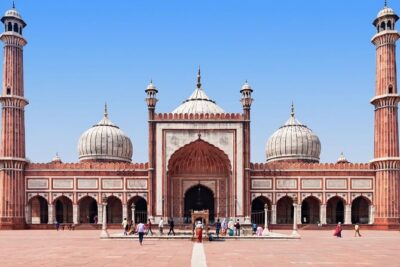
After that, the route leans into Mughal-era Delhi with Jama Masjid. This is one of the larger mosques in India, built in the 1600s under Shah Jahan. Your guide’s job here is important: big places like this can feel overwhelming if you don’t know what to notice, and a good guide helps you read the architecture and the scale without rushing.
You also get time for Agrasen Ki Baoli, an old stepwell that tends to feel more “found” than famous. Stepwells are one of my favorite types of history because they’re practical engineering, not just monuments. This one’s protected and long (about 60 meters), which makes it a great contrast to the towering sites you’ve already seen.
Humayun’s Tomb is the next major stop, and it’s worth treating like a mini-world. It’s a UNESCO site tied to Mughal power and design influences that later show up in the Taj Mahal. Even if you’ve seen “Taj photos,” Humayun’s Tomb helps you understand how styles evolve.
Then it’s Old Delhi time with Chandni Chowk. It’s free to visit, and it’s exactly the kind of place where you learn India by walking through it—spices, jewelry shops, sari stores, and sweets lining narrow lanes. The downside of a market area is simple: it can be crowded and you’ll want to keep moving, especially if you’re sensitive to busy streets.
The Agra Night Route: Comfort Matters on Long Transfers
After Delhi sights, you move toward Agra via the Yamuna Expressway link road. The drive is about three hours, and the tour builds in a lunch at a selected local restaurant before you leave Delhi.
This is one of those moments where “included” details actually affect how good the trip feels. When your vehicle is air-conditioned and you’re supplied with water and snacks, the transfer stops being a punishment and becomes part of the adventure. You’ll also arrive at your Agra hotel with enough evening time to decompress rather than feeling like you have to sprint straight from the car into sightseeing.
Agra at Sunrise: Taj Mahal With a Guided Plan
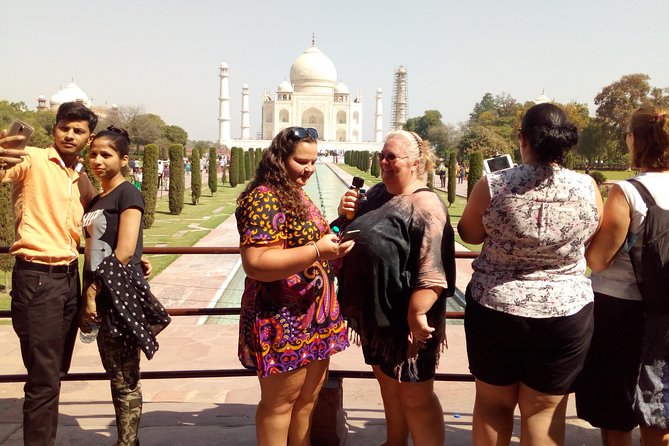
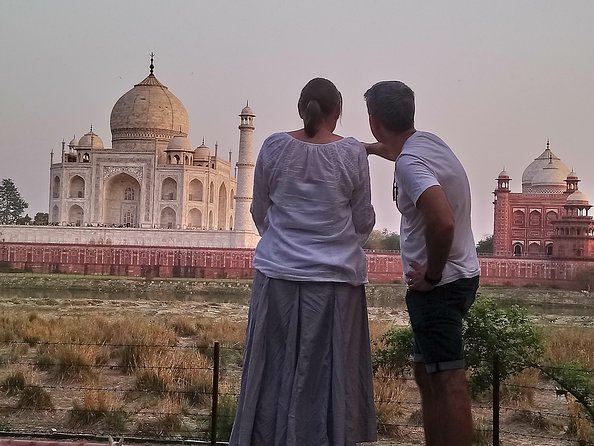
The Taj Mahal is where timing wins. The tour explicitly sets you up to watch the sunrise over the marble, before the thickest crowds arrive. That early window matters because it changes the mood of the place: the light softens, the reflections behave better, and the sound level feels less chaotic.
Inside, you get a guided tour for about two hours. That guide time is a big deal because the Taj is easy to admire and hard to fully read. With a good explanation, you start noticing the marble inlays, the symmetry, and the way the complex is designed to guide your attention.
Yes, entry fees aren’t included here, so you should budget for them. But if you’re going to Agra once, this is the day-to-day payoff. You also get the option to ask for more time at the Taj Mahal if you want it, since the tour allows customization on the spot.
More Agra Than Just the Taj: Fort, Baby Taj, and Meaning
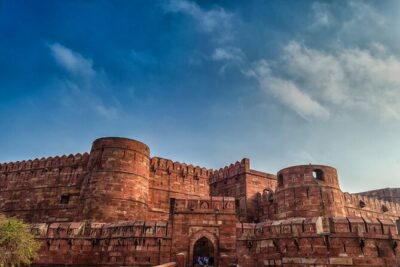
Agra Fort is next, and it gives you a different angle on power. Instead of the romance of white marble, you’re stepping into the feel of red sandstone walls and royal palaces with Mughal-era design cues. It’s UNESCO too, and your guide helps you connect what you see with the rulers who lived and worked here.
Then comes Itmad-ud-Daula, commonly called the Baby Taj. This mausoleum is smaller than the Taj Mahal but rich in detail, and it’s known for the architectural shift from red sandstone to white marble. If you like seeing “how a masterpiece gets made,” this is an eye-opener.
These sites also improve your day because they prevent Taj fatigue. If you only see one monument, it can blur into a single blur of photos. Adding Agra Fort and Itmad-ud-Daula makes your mental map of the city sharper.
Chasing the Pink City? More Jaipur day trips

Chand Baori Stop on the Way to Jaipur: Engineering That Feels Ancient
One of the more memorable curveballs on this itinerary is Chand Baori in Abhaneri. It’s an enormous stepwell from around the 8th–9th century with about 3,500 steps down to where water would be.
This stop is worth your time because it’s functional history. Instead of a tomb or palace meant for display, this is water management—huge scale, serious planning, and a design that had to work through real seasons. The tour lists admission as not included, so it’s another place where you’ll want to check what you pay on-site versus what’s included.
Also, it’s a good “reset” between Agra and Jaipur. You go from Mughal architecture to engineering, then you’re ready for Rajasthan’s fort-and-palace look.
Jaipur’s Big Day: Amber Fort and the Royal City Tour
Jaipur begins with hotel check-in after you arrive. That matters because Jaipur days can be long, and you don’t want to roll in already tired and cranky.
The first true sightseeing day focuses on Amber Fort. It’s the former capital until 1728, perched on a hill and built with Rajput architecture and palace-like interiors. In practical terms, Amber Fort is a strong anchor because it has both views and storytelling. You’ll see how a fort becomes a whole world—courtyards, halls, and the idea of royal life stacked into one complex.
Jal Mahal is a short photo stop at a palace that appears to float on Man Sagar Lake. The tour lists admission as not included, and time here is intentionally brief. Use it for photos and a quick reset, not a long sit-down.
City Palace of Jaipur comes next. It’s the ceremonial and administrative center built in the early 1700s, and the complex layout helps you understand how rulers organized public and private life. Plan on about an hour here, and focus on how the palace spaces connect rather than trying to see everything at once.
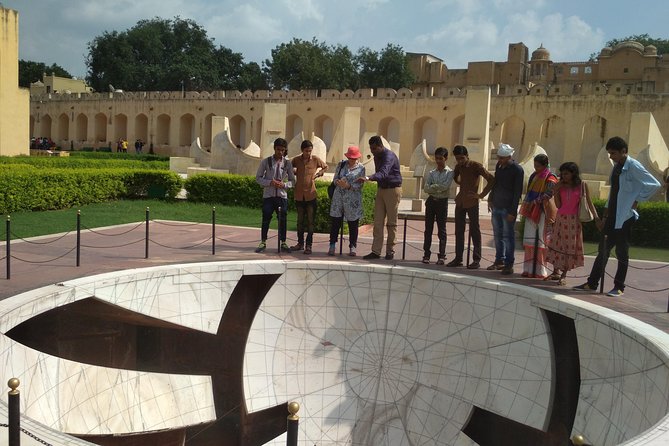
Then you hit Jantar Mantar, a UNESCO site with astronomical instruments designed for naked-eye observation. It’s the kind of place where you stop thinking only in terms of buildings and start thinking in terms of measurement, time, and how people studied the sky. Admission isn’t included, but if you like science as much as architecture, this is a highlight.
Finally, you get Hawa Mahal, the Palace of Wind. It’s an iconic five-story facade built in 1799, known for its many windows. The tour keeps this stop short, which works because the facade is the main event—look, photograph, and then move on before you burn your energy.
How the Guides and Transport Make or Break This Trip
This tour’s planning style is built around reducing friction. Your vehicle is air-conditioned, and the experience includes things that sound small but keep the day pleasant: WiFi, free water, snacks, and first aid onboard.
Guide style also matters. The tour includes English-speaking local guides, and the overview notes multilingual support as well. If you’re worried about communication gaps, the WhatsApp updates are a smart touch because they keep you aware of timing without needing to constantly ask.
The private-group setup is another practical advantage. Instead of herding a big crowd, you travel with only your group. That usually means you get faster check-in and more flexible pacing—especially helpful when you’re trying to manage photo moments and entry lines.
One thing I really appreciate here is the mix of “big icons” plus places that don’t eat your whole day. Qutub Minar, Lotus Temple, Humayun’s Tomb, Jama Masjid, and Chandni Chowk give you layers of Delhi. In Agra, the Taj is the headline, but Fort and Itmad-ud-Daula deepen the story. In Jaipur, Amber Fort anchors the forts-and-palaces theme, while Jantar Mantar adds a science angle.
Who Should Book This Golden Triangle Route
This tour fits best if you want the Golden Triangle highlights without doing the planning yourself. You’ll like it if you value smart scheduling, comfortable transport, and a guide who can help you understand what you’re seeing.
I’d also say it’s a good choice for couples and families because the itinerary has clear pacing and the transport support reduces stress. If you dislike long shopping detours and prefer cultural stops (monuments, stepwells, forts), this route stays mostly on-track.
If you’re a strict minimalist who hates crowds and long days, you might still enjoy it—but you’ll want to accept that Delhi markets and major sites can get busy, and the schedule is built to cover a lot in four days.
Should You Book This Tour?
I’d book it if your top priority is seeing Delhi, Agra, and Jaipur with guided help and priority access, while keeping logistics from eating your vacation time. The biggest selling point is the balance: comfort on the road plus meaningful time at the major monuments.
I’d hesitate if you don’t want to pay extra at the gate. Because most entries are not included, your final cost can jump—especially with the Taj Mahal and major Jaipur/Agra sites. If you budget for that, the experience looks like strong value at $250 per person.
If you want a smooth Golden Triangle with fewer hassles, this one is built for you.
FAQ
What is the duration of the Golden Triangle Tour (Delhi–Agra–Jaipur)?
The tour runs for about 4 days.
How much does the tour cost per person?
The price is $250.00 per person.
Does the tour include pickup?
Yes, pickup is offered.
Is this a private tour?
Yes. It’s private, with only your group participating.
Are monument entry fees included?
No. All fees and taxes are not included, and most monuments list admission as not included. Some stops are free or have admission included, like Lotus Temple and Chandni Chowk (free), and India Gate (included).
What’s included in the tour price besides sightseeing?
You get an air-conditioned vehicle, breakfast with accommodation, an English-speaking local guide, and coverage of state tax, toll, parking, fuel, and driver services.
Is WiFi available during the drive?
Yes. The vehicle includes WiFi.
Does the tour include a sunrise Taj Mahal experience?
Yes. The itinerary includes a sunrise visit to the Taj Mahal, with a guided tour inside.
What is the cancellation window?
You can cancel up to 24 hours in advance for a full refund.
The Full Golden Triangle, More Options
- 3-Days Private Golden Triangle Tour: Delhi, Agra & Jaipur by Car
★ 5.0 · 1,107 reviews - 3-Days Private Golden Triangle Tour: Delhi, Agra & Jaipur by Car
★ 5.0 · 1,098 reviews - 3-Day Delhi, Agra and Jaipur Private Tour – India Golden Triangle
★ 5.0 · 812 reviews - Four-Day Private Luxury Golden Triangle Tour to Agra and Jaipur From New Delhi
★ 5.0 · 807 reviews - 5 Nights 6 Days Private Golden Triangle Tour – Delhi Agra Jaipur
★ 5.0 · 574 reviews
Onward to Jaipur: More Day Trips
- 3-Days Private Golden Triangle Tour: Delhi, Agra & Jaipur by Car
★ 5.0 · 1,107 reviews - 3-Days Private Golden Triangle Tour: Delhi, Agra & Jaipur by Car
★ 5.0 · 1,098 reviews - 3-Day Delhi, Agra and Jaipur Private Tour – India Golden Triangle
★ 5.0 · 812 reviews - Four-Day Private Luxury Golden Triangle Tour to Agra and Jaipur From New Delhi
★ 5.0 · 807 reviews - Jaipur Day Trip from Delhi by Car or Train – All Inclusive
★ 5.0 · 663 reviews
More Agra Day Trips out of Delhi
- Same Day Taj Mahal, Agra Fort & Baby Taj Tour from Delhi by Car
★ 5.0 · 4,304 reviews - Full Day Taj Mahal, Agra Fort & Baby Taj Tour from Delhi by Car
★ 5.0 · 3,647 reviews - From Delhi: Taj Mahal & Agra Private Day Trip with Transfers
★ 4.9 · 3,181 reviews - From Delhi: Taj Mahal and Agra Fort Private Sunrise Tour
★ 4.9 · 2,270 reviews - Sunrise Taj Mahal, Agra Fort & Baby Taj Tour from Delhi by Car
★ 5.0 · 2,243 reviews
Just added: more New Delhi reviews to browse
- 4 days Golden Triangle Tour★ 5.0 · 3 reviews
- Discover Old & New Delhi: Private Tour with Street Food★ 5.0 · 3 reviews
- Taj Mahal Tour From Delhi By Private Car★ 4.5 · 3 reviews
- Golden Triangle Tour 5 Days★ 5.0 · 3 reviews
- Taj Mahal: Express Entry Ticket For Sunset Tour with guide★ 5.0 · 3 reviews
- Agra Taj Mahal Sunrise & Sunset Tour from Delhi★ 5.0 · 3 reviews
Agra Day Trips from Delhi, compared.
 ★ 5.0Same Day Taj Mahal, Agra Fort & Baby Taj Tour from Delhi by CarFrom $624,304 reviews
 ★ 5.0Full Day Taj Mahal, Agra Fort & Baby Taj Tour from Delhi by CarFrom $623,647 reviews
 ★ 4.9From Delhi: Taj Mahal & Agra Private Day Trip with TransfersFrom $43,181 reviews
 ★ 4.9From Delhi: Taj Mahal and Agra Fort Private Sunrise TourFrom $592,270 reviews
 ★ 5.0Sunrise Taj Mahal, Agra Fort & Baby Taj Tour from Delhi by CarFrom $622,243 reviews
 ★ 5.0Taj Mahal and Agra Private Car Tour from Delhi with 5* LunchFrom $331,633 reviews
 ★ 4.9From Delhi: Private Taj Mahal and Agra Tour by Express TrainFrom $751,605 reviews
 ★ 5.0Taj Mahal, Agra Fort, Baby Taj Tour from Delhi by Superfast TrainFrom $751,494 reviews