
Reviewed · TOURS
Himalayas: 15 Days Motorbike Tour To North India
High passes and slow-breathing air. This 15-day motorbike tour from New Delhi strings together Spiti cold-desert country, Ladakh high-altitude riding, and a few headline passes that riders dream about long before they book.
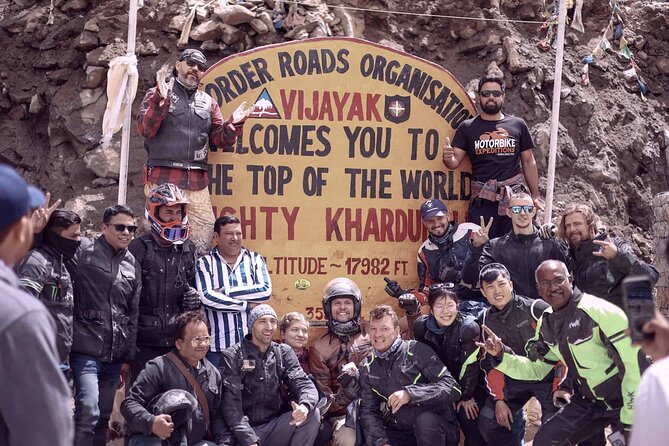
I like how the trip balances real riding with real support. You get a Royal Enfield Himalayan 411cc bike, a mechanic on the ground, and a 24/7 mindset from the team led by Motorbike Expeditions Ltd (the Thakur brothers come up a lot in the operator’s replies), so you spend less energy worrying and more energy riding.
One thing to consider: this is not a comfort tour. You’ll be in remote areas with limited services, the route depends on conditions, and insurance isn’t included, so you need to plan your risk tolerance and travel coverage ahead.
In This Review
- The big things I’d bet on
- Meeting Your Bike in Manali: where the tour actually starts
- Spiti’s cold-desert run: Tirthan, Kalpa, Nako, Hikkim, Dhankar, Kaza
- Day from Bhuntar toward Tirthan Valley, then onward to Shoja
- Shoja to Kalpa via Jalori Pass
- Kalpa toward Kaza via Hindustan-Tibet highway, Nako acclimatization, and permit check
- Nako to Hikkim, Ki monastery, and Kaza base time
- Nako to Dhankar and onward to Kaza (Dhankar Gompa + Sakya Tangyud Monastery)
- Rohtang to Leh in one push: snow walls, Zing-zing Bar, Baralacha-la
- Jispa to Sarchu: rough roads and Pagal Nala at Zing-zing Bar
- Nubra Valley and Diskit Monastery: camel time after hard roads
- Leh sightseeing and acclimatization: doing the smart city bits
- Pangong Lake: the movie-lake day
- Umling La and Hanle: the top-of-the-trip decision point
- The support system that makes long riding feel possible
- Money notes: what $4,132.33 buys (and what it doesn’t)
- Who this ride is for (and who should think twice)
- Should you book this Himalayas Motorbike tour?
- FAQ
- Where does the tour start and how do I get there?
- How long is the motorbike tour?
- What bike will I ride?
- What is the maximum group size?
- Is there a mechanic or backup support included?
- What safety items are included?
- How are meals handled during the trip?
- Is insurance included?
- Is a security deposit required for the bike?
- What happens if weather is poor or I cancel?
The big things I’d bet on
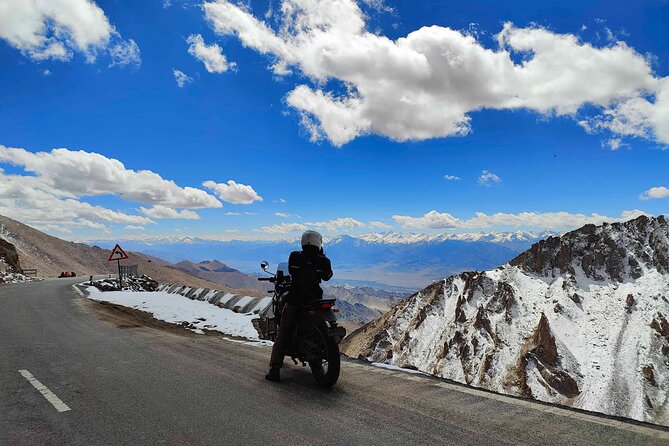
- Royal Enfield Himalayan 411cc + mechanic support to keep your bike moving
- Serious altitude targets including Umling La and major passes in Spiti and Ladakh
- Remote, high-altitude logistics handled with a backup vehicle for luggage and rider support
- Permits, checkpoints, and routing built into the ride, including a police permit check segment
- A true “ride day” rhythm, from Manali loops to freeriding day near Leh
Meeting Your Bike in Manali: where the tour actually starts
Most Himalayan motorbike adventures fail or succeed in one place: the first day you’re on your machine. Here, you start with an overnight Volvo bus from Delhi/Chandigarh to Manali, then you roll into a bike setup day in Manali itself.
On day 2, you’re met at the bus stand, taken to your hotel, and then you get your bikes after a rest. This matters because the day before you’re usually tired from travel, and the day after you’re dealing with traffic, cold mornings, and unfamiliar road habits. The tour’s approach is simple: get your bearings fast, then take your first rides around Manali to learn how your bike handles and how the group moves.
You’ll also get the human side of the operation: dinner plus a bonfire. That’s not just “extra.” In a ride like this, people need to trust each other by nightfall. When that happens early, the rest of the trip runs smoother later when you’re tired and the roads get sharp.
Still deciding? Here is how it stacks up against other Delhi picks we have written up.

Spiti’s cold-desert run: Tirthan, Kalpa, Nako, Hikkim, Dhankar, Kaza
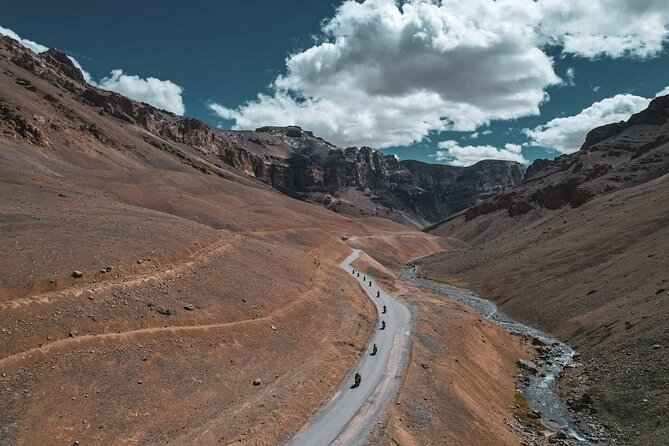
The Spiti segment is the part of this trip that feels like a long story told by roads. Even when you’re not at the highest passes yet, the terrain shift is dramatic, and you’re riding through regions where weather and road conditions can change the plan.
Day from Bhuntar toward Tirthan Valley, then onward to Shoja
You start with a ride from Bhuntar toward Tirthan Valley. The route is described as narrow but paved, with a river running alongside you for stretches. This is a good “eyes open” day. You’re not pushing for altitude; you’re learning steering line, braking on downhill turns, and how to ride smoothly while your group stays together.
Then you continue toward Shoja, stopping for lunch by the river along the way. These mid-route breaks are worth paying attention to because they help you ride better later. If you show up to the real pass days dehydrated or tense, you’ll feel it immediately.
Shoja to Kalpa via Jalori Pass
The Jalori Pass ride is one of those days that gives you variety. Most high passes feel harsh and barren; this one is described as greener with dense forests. That difference matters because it changes how the road looks and how your brain reads the curves. You’re still climbing, but the ride has a softer feel.
The route is split between narrower segments that demand careful navigation and smoother stretches where you can settle. As you descend toward Kalpa, the Kinnaur Kailash range views come into play, making the long day feel rewarding rather than just hard.
Kalpa toward Kaza via Hindustan-Tibet highway, Nako acclimatization, and permit check
After breakfast, you ride the Hindustan-Tibet highway and it’s specifically described as a big shift from green to barren and rocky. You also ride by the Sutlej River, then reach Spello for a police check of your riding permits. That’s a very real detail: on many self-guided trips, permits become a last-minute stress. Here, it’s worked into the schedule.
A key moment is the stop at Khab, the landmark where Sutlej and Spiti meet. Then you ride up to Nako (noted at about 3660 m) and sleep there to acclimatize before the next ascent days.
I like this pacing. You’re not just chasing big numbers on a map; you’re giving your body a few nights to adjust.
Nako to Hikkim, Ki monastery, and Kaza base time
You head toward Hikkim, a village tied to the world’s highest post office. The tour includes the chance to send a post from Hikkim to relatives and loved ones. It’s such a small thing, but it’s exactly the kind of memory that sticks when the days blur together in cold air.
You also visit Ki monastery, described as the largest monastery in Spiti Valley. Then the day closes back in Kaza after reaching Komic village.
Nako to Dhankar and onward to Kaza (Dhankar Gompa + Sakya Tangyud Monastery)
Another Spiti day connects Nako to Kaza via Dhankar. Dhankar Gompa is highlighted as a small village with a monastery and also remains of a 12th-century fort structure. It’s an easy place to feel how old these mountain routes really are.
When you reach Kaza (about 3600 m, on the Spiti River), you explore Sakya Tangyud Monastery and enjoy local food. Kaza is also described as known for its colors, which matters because you’re spending days in stone-and-sky country. Color and texture reset your eyes.
Rohtang to Leh in one push: snow walls, Zing-zing Bar, Baralacha-la
When the route swings from Spiti into Ladakh/Lahaul, the riding days get more “big-world” fast. Here, you start from the Manali side again for the Ladakh push, then reach Rohtang Pass and follow the chain of roads through Gulaba Marhi, Kothi, and Rohtang.
The ride description calls out trees disappearing and snow-capped mountains appearing. You also get that dramatic winter-infrastructure look: huge snow walls about 12 feet high on both sides of the road. Even if you’re a confident rider, this kind of scenery makes you slow down without trying.
Then it’s down to Tandi where the Chandra and Bhaga Rivers meet, and onward to Keylong, finishing at Jispa for the night with a traditional dinner.
Jispa to Sarchu: rough roads and Pagal Nala at Zing-zing Bar
Next day is known for road difficulty: the roads from Jispa to Sarchu are described as terrible, and you cross Pagal Nala at Zing-zing Bar. This is the kind of section where you’ll be grateful the team keeps a serious safety posture.
The tour explicitly states guides are present 24/7 with help available. On a ride like this, that changes the vibe. Instead of “you’re alone with your machine,” you’re riding with a team that can respond if something goes wrong.
After Zing-zing Bar you cross Baralacha-la pass. Fresh snowfall is mentioned as possible if you’re lucky. Then you reach Sarchu, where you can take a bath with hot water shower and then eat.
I appreciate that hot shower mention. In cold riding, small comforts keep morale up.
Nubra Valley and Diskit Monastery: camel time after hard roads
From Sarchu, the route reaches Nubra Valley, described as about 120 km from Khardung-la. Nubra is famous here for double-hump camels, and the day includes a camel ride plus time at Diskit Monastery.
This day works as a pressure release. After long passes, you get a quieter pace with animals, monastery time, and hotel check-in. It’s also a good reminder that this trip isn’t just about riding; it’s about switching modes so you can keep your energy for the final high-pass objectives.
Leh sightseeing and acclimatization: doing the smart city bits
Leh is your major altitude base, and the tour gives you time to acclimatize instead of just sprinting through. You explore spots like Magnetic hill, Pathar Sahib Gurudwara, Shanti stupa, and Leh Palace.
Then in the evening you get market time to buy souvenirs for friends and family. That’s useful for riders because you come back from long roads with dust on you. Having a planned evening moment keeps you from turning every stop into a scramble.
Pangong Lake: the movie-lake day
The Pangong Lake day is described as getting there by SUV or traveler. That detail matters because it means not everything is strict “bike only.” Sometimes the best way to enjoy a place is to remove the extra strain and arrive fresh.
Pangong Lake is called out as the lake where the movie 3 Idiots was shot. You get exploration time and picture opportunities, and you can expect services to be limited compared with city stops. Bring patience and keep your time for the views rather than the logistics.
Umling La and Hanle: the top-of-the-trip decision point
If you care about headline passes, Umling La is the one you plan your trip around. The route describes an early start toward Umling La (listed as 5883 m), with a no-frills approach: do not expect rest or big stops.
The guide assesses readiness before you commit to the final ride. If you do not feel well, you should not take risks. The tour states you can leave the motorbike and join the backup vehicle to take photos at Umling La and then return toward Hanle with the group.
That safety rule is a big deal to me. The best high-altitude tours treat “altitude pride” as a problem, not a goal. Reaching the summit isn’t the only success metric.
You’re aiming to reach Hanle by lunchtime with maybe one tea break en route. After lunch, the Umling La push begins and you ride toward your objective.
Then comes the follow-up day near Leh where you get freeriding time on well-maintained roads. It also warns to watch out for potential accidents and Indian drivers. In other words: enjoy the freedom, but don’t swap caution for confidence.
The support system that makes long riding feel possible
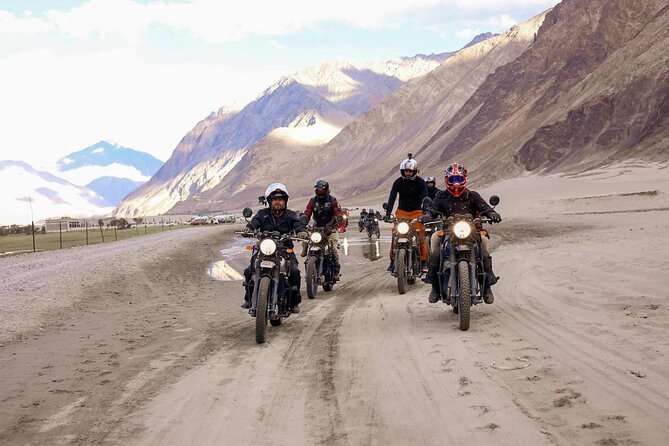
This trip is built around a hard idea: you’re still responsible for your ride, but the tour should reduce preventable problems.
Here’s what’s included that actually matters on a route like this:
- A one motorbike mechanic on the trip
- Helmet included
- A Royal Enfield Himalayan 411cc bike
- One backup vehicle for luggage
- A first aid box and an oxygen cylinder
- Environmental and permit fees, plus parking fees
A mechanic and oxygen aren’t “nice to have” items on high passes. They’re practical risk management. And the backup vehicle reduces the amount of gear stress you carry on your bike, which can help you ride more steadily.
Also, the reviews highlight that guides teach you how to ride in Indian traffic early on, and that after a few days it feels more comfortable. That’s not just comfort talk. Learning how to move with local driving behavior without panicking makes the entire ride safer, especially before you hit tight mountain roads.
Money notes: what $4,132.33 buys (and what it doesn’t)
At $4,132.33 per person, you’re paying for far more than a hotel and a scenic road. This price is tying together bike logistics, permits and environmental fees, mechanical support, a backup vehicle, and meals timed into long riding days.
It also includes a lot of “operational weight” that you’d normally pay for separately:
- Bike (and not a generic rental car ride)
- Helmet and on-the-ground mechanic
- Oxygen and first aid basics
- Multiple meals: dinner is listed for 14 days, lunch for 10 days, breakfast for 13 days
What you should budget for outside the package:
- GST is not included
- Personal expenses (phone, laundry, tips, table drinks)
- Insurance of any type (medical, accidental, theft)
- Security deposit per motorbike of £140, refundable per deposit policy
- Riding gears can be hired, but they are not included
- Extra accommodation/food if delays happen
- Any airfare/rail beyond what’s included
If you’re comparing value, think like this: you’re paying to remove planning headaches around permits, route timing, mechanical problems, and safety equipment. If you try to DIY all of that, you might save money upfront, but you’re accepting a higher risk of waste time and missed riding days.
Who this ride is for (and who should think twice)
This is best for you if you:
- Want a serious motorbike trip across high-altitude passes, not a light sightseeing schedule
- Like group structure but still want meaningful time on the bike each day
- Are comfortable with cold mornings and long road days
- Prefer routes where support is active (mechanic, backup vehicle, oxygen basics)
Think twice if you:
- Do not ride confidently in mixed-speed traffic before the mountains
- Are not ready for remote areas where services are limited
- Want a trip with included full insurance coverage (it’s not included here)
- Need guaranteed comfort stops and frequent services
Should you book this Himalayas Motorbike tour?
If you want a Himalayan ride that feels organized enough to keep you safe, but adventurous enough to feel like a real life story, this one makes a strong case. I especially like how it plans acclimatization moments, builds in permit checks rather than surprises, and includes practical safety gear like oxygen plus on-the-ground mechanical support.
Before you hit confirm, do a quick checklist:
- Arrange insurance that fits high-altitude motorcycling
- Plan for cold: pack layers and expect limited services in remote stretches
- If you’re new to riding in India, lean into the early coaching time; it tends to pay off
If that sounds like your style, this is the kind of trip you’ll remember long after the dust is washed off.
FAQ
Where does the tour start and how do I get there?
The meeting point is Majnu-ka-tilla, New Aruna Nagar, Delhi, India.
How long is the motorbike tour?
The duration is 15 days (approx.).
What bike will I ride?
You ride a Royal Enfield Himalayan 411cc.
What is the maximum group size?
The tour has a maximum of 12 travelers.
Is there a mechanic or backup support included?
Yes. The tour includes one motorbike mechanic and one backup vehicle to carry luggage.
What safety items are included?
The tour includes a first aid box and an oxygen cylinder, and helmets are included.
How are meals handled during the trip?
Dinner is included for 14 days, lunch is included for 10 days, and breakfast is included for 13 days.
Is insurance included?
No. Any type of insurance (medical, accidental, theft) is not included.
Is a security deposit required for the bike?
Yes. A refundable security deposit of £140 per motorbike is required.
What happens if weather is poor or I cancel?
The experience requires good weather. If it’s canceled due to poor weather, you’ll be offered a different date or a full refund. You can cancel for a full refund up to 24 hours in advance; after that, refunds are not available.
More Tours in New Delhi
- Old & New Delhi City Tour – Half or Full Day Options Available
★ 5.0 · 4,811 reviews - Half Day Private Delhi City Tour
★ 5.0 · 4,474 reviews - Same Day Taj Mahal, Agra Fort & Baby Taj Tour from Delhi by Car
★ 5.0 · 4,304 reviews - Taj Mahal Day Tour from Delhi by Superfast Train – TOP RATED TOUR
★ 5.0 · 4,166 reviews - Delhi: Old and New Delhi Private Full or Half-Day Tour
★ 4.9 · 3,776 reviews
More Tour Reviews in New Delhi
- Old & New Delhi City Tour – Half or Full Day Options Available
★ 5.0 · 4,811 reviews - Half Day Private Delhi City Tour
★ 5.0 · 4,474 reviews - Same Day Taj Mahal, Agra Fort & Baby Taj Tour from Delhi by Car
★ 5.0 · 4,304 reviews - Taj Mahal Day Tour from Delhi by Superfast Train – TOP RATED TOUR
★ 5.0 · 4,166 reviews - Delhi: Old and New Delhi Private Full or Half-Day Tour
★ 4.9 · 3,776 reviews
Just added: more New Delhi reviews to browse
- 4 days Golden Triangle Tour★ 5.0 · 3 reviews
- Discover Old & New Delhi: Private Tour with Street Food★ 5.0 · 3 reviews
- Taj Mahal Tour From Delhi By Private Car★ 4.5 · 3 reviews
- Golden Triangle Tour 5 Days★ 5.0 · 3 reviews
- Taj Mahal: Express Entry Ticket For Sunset Tour with guide★ 5.0 · 3 reviews
- Agra Taj Mahal Sunrise & Sunset Tour from Delhi★ 5.0 · 3 reviews
Tours, compared.
 ★ 5.0Old & New Delhi City Tour – Half or Full Day Options AvailableFrom $384,811 reviews
 ★ 5.0Half Day Private Delhi City TourFrom $374,474 reviews
 ★ 5.0Same Day Taj Mahal, Agra Fort & Baby Taj Tour from Delhi by CarFrom $624,304 reviews
 ★ 5.0Taj Mahal Day Tour from Delhi by Superfast Train – TOP RATED TOURFrom $1004,166 reviews
 ★ 4.9Old and New Delhi Private Full or Half-Day TourFrom $23,776 reviews
 ★ 5.0Full Day Taj Mahal, Agra Fort & Baby Taj Tour from Delhi by CarFrom $623,647 reviews
 ★ 5.0Taj Mahal Tour from Delhi by Express Train (Viator Award Winner)From $752,849 reviews
 ★ 5.0All Inclusive Private Taj Mahal Luxury Tour from Delhi by CarFrom $622,564 reviews