
Reviewed · NEW DELHI
Holy North India & Nepal Journey
Two countries, one giant sense of awe. This 21-day route strings together Delhi’s major Mughal sights, Rajasthan’s painted towns, and Nepal’s sacred parks and Himalayan viewpoints, with airport pickup and a private setup. I like that your private car and native English-speaking guide keep the day-to-day moving without constant re-checking plans. One heads-up: the schedule is packed with temples and forts, and monument tickets aren’t automatically included for everything.
I also really love the timing moments built into the trip—especially the Ganges sunrise boat ride and the big-mountain sunrises around Pokhara and Sarangkot. You’re not only touring landmarks; you’re seeing the religious rhythm of cities and the way light changes the buildings, stone by stone.
If you’re traveling at a relaxed pace, you may feel the “go-go” of so many stops. You’ll get a comfortable vehicle and lodging included, but your best results will come from sturdy shoes and an appetite for early starts.
In This Review
- Key Things That Make This Journey Worth It
- From Delhi Airport to Qutub Minar: getting your bearings fast
- Rajasthan in a week: havelis, forts, and Jaipur’s big views
- Agra’s classics: Taj Mahal time, Agra Fort, and the backup plan
- Varanasi by sunrise: the Ganges boat ride and Sarnath’s quieter pace
- Lumbini and sacred temples in Nepal: World Heritage calm with big meaning
- Chitwan to Pokhara: private jeep safari, canoe time, and mountain sunrises
- Kathmandu Durbar Square to Nagarkot: old palaces and Himalayan range views
- Price and Logistics: what $2,556 buys (and what it doesn’t)
- Who should book Holy North India and Nepal?
- Should you book it?
- FAQ
- How long is the trip, and what cities does it cover?
- Do you get picked up at the airports?
- Which flights are included?
- Are entrance tickets included for monuments?
- What included activities relate to water and wildlife?
- What meals are included?
- If I cancel, can I get a refund?
Key Things That Make This Journey Worth It
- Airport pickup + private driver setup: you’re met with a name sign and moved around in an AC vehicle with WiFi on board.
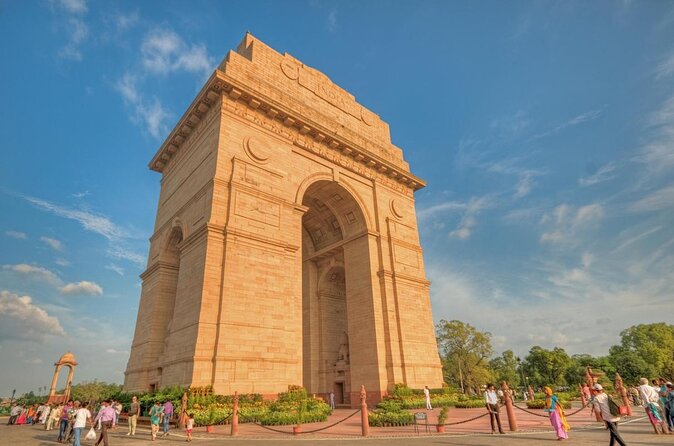
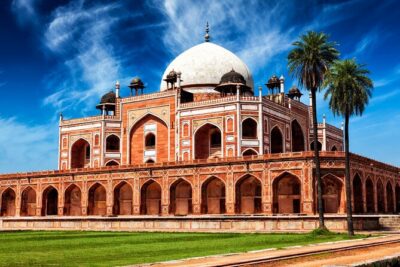
- Major India highlights are scheduled with intention: Qutub Minar, Humayun’s Tomb, Red Fort, Jama Masjid, Taj Mahal, and Agra Fort are all on the route.
- The Ganges day is more than a photo stop: you get a morning boat ride before sunrise plus an evening sunset boat ride for prayers.
- Nepal balances temples and wildlife: Lumbini’s sacred sites meet Chitwan’s jeep and canoe experiences.
- Himalayan mornings are built in twice: sunrise views around Pokhara, then again at Sarangkot and Nagarkot.
- Guides matter here: in the feedback for this tour, a guide named Sandeep is called out as a standout for organization and care.
From Delhi Airport to Qutub Minar: getting your bearings fast
Day 1 starts the way good tours do: you land at Indira Gandhi Intl Airport and get picked up by a driver holding a signed board under your name. From there, you go straight to your hotel to recover. It’s a small thing, but it matters—Delhi can be intense, and you’ll feel it less if your first hours are handled.
Then you jump into the Qutb complex with Qutub Minar, the UNESCO site in the Mehrauli area. Qutub Minar is the kind of landmark that makes you pause, even if you’ve seen tall towers before. It’s not just height; it’s a statement of early architectural ambition, tied to the Qutb complex story. The visit is about two hours and the admission ticket is included on this day.
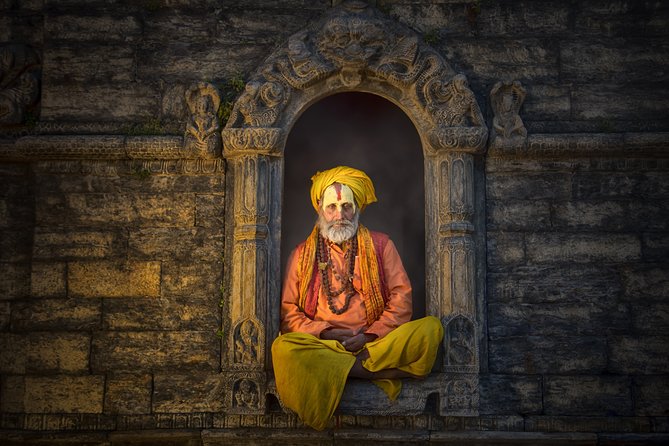
From there, the Delhi “Mughal sweep” continues right away. Expect Humayun’s Tomb, Red Fort, Jama Masjid, India Gate, and major spiritual stops like Swaminarayan Akshardham and Gurudwara Bangla Sahib. Humayun’s Tomb is included, and it’s one of those places where you can feel how Persian-influenced design landed in India. Red Fort and Jama Masjid help you understand how power and faith were built into city life. And at Bangla Sahib, you get the Sikh temple experience with its Sarovar (holy pool) as part of the complex.
Practical tip: Delhi mornings can be dry or hot depending on the season, and afternoons can feel long. If your itinerary gives you choice, I’d still aim for early energy on the days with multiple monuments.
Still deciding? Here is how it stacks up against other Delhi picks we have written up.



Rajasthan in a week: havelis, forts, and Jaipur’s big views
Rajasthan is where this trip turns from big-city monuments into “walkable story” travel. You start with Mandawa in the Shekhawati region. Mandawa is described as an outdoor museum, and the key experience here is the heritage walk through the decorated havelis—those traditional mansion homes built along the Silk Route. Even if you’re not a museum person, the architecture and painted facades do the teaching for you. You’ll spend around six hours with an easy cultural pace that feels more like exploring than rushing.
Then Mandawa continues on the next day with more heritage-walk time and a stay at the Mandawa Kothi property. This repetition is deliberate: Shekhawati towns reveal their details best when you give them at least a day or two. You’ll see murals, textures, and patterns that don’t land when you only pass through in a single afternoon.
Jaipur starts with the royal side of town. You visit the City Palace, which houses the Maharaja Sawai Man Singh II Museum and also remains connected to the royal family. From there, you go to Amer (Amber) Palace, with its gates, ramparts, and paths leading toward the Maota Lake area. Jaigarh Fort is nearby and offers a different angle—more fortification, more views over the Amer Fort region.
You also get Hawa Mahal, the Palace of Winds made of pink and red sandstone. This stop works best if you treat it as architecture you can decode—look at how the windows shape the facade and think about who it was designed for.
Two more choices in the same broader Jaipur block round out the day. Jaigarh and Amer cover defensive and ceremonial design. Then you add Jaigarh’s own Fort feel and later, on the next day, you connect to temples and viewpoints with Albert Hall Museum, Birla Mandir, Galtaji, Nahargarh Fort, and Royal Gaitor Tumbas.
My favorite angle on these Jaipur additions is the variety:
- Temples like Birla Mandir (white marble, Lakshmi and Vishnu focus) add a calm contrast to fort walls.
- Galtaji brings you into an older temple landscape with temples built into a crevice in the hills.
- Nahargarh gives you that edge-of-the-city vantage point, which helps you understand Jaipur’s layout.
If you like cities that feel designed, Jaipur is your payoff.
Agra’s classics: Taj Mahal time, Agra Fort, and the backup plan
Agra is famous for one reason: the Taj Mahal. Here, the tour gives you a flexible structure based on timing and closures. The day you arrive in Agra gives you a chance to see sunset Taj Mahal from the backside of the Yamuna River. There’s also a note that the Taj Mahal can be closed on Friday, so you should be prepared for the tour to adjust.
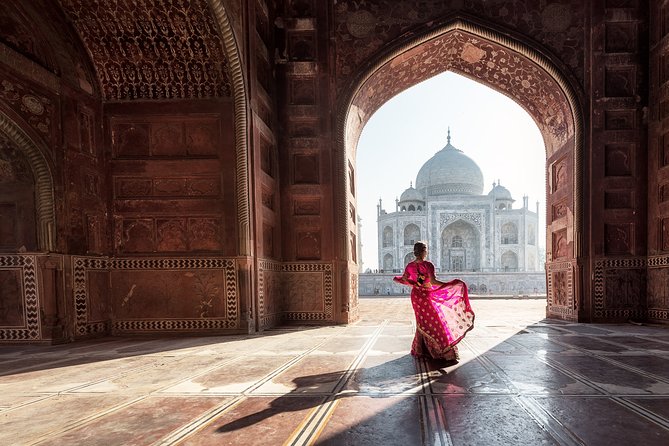
On Day 8, you get the Taj Mahal visit with admission included. This is the Mughal masterpiece everyone knows, but what I appreciate about actually visiting it inside a scheduled program is that you’re not guessing about order or timing. Then you continue with Agra Fort, plus Itimad-ud-Daulah (often called the Bachcha Taj in the tour description), plus Dayal Bagh Temple.
Agra Fort is a reminder that the Taj wasn’t the only big idea. Forts show the military and administrative backbone of the empire. Itimad-ud-Daulah is a smaller, more delicate “jewel box” experience and pairs well with Taj because it teaches you how styles evolved. Dayal Bagh Temple adds a different faith thread with the Radhasoami faith connection described for the tour.
Practical tip: if you’re sensitive to crowds, plan your photo strategy before you enter. It’s easy to waste time inside trying to find the perfect angle.
Varanasi by sunrise: the Ganges boat ride and Sarnath’s quieter pace
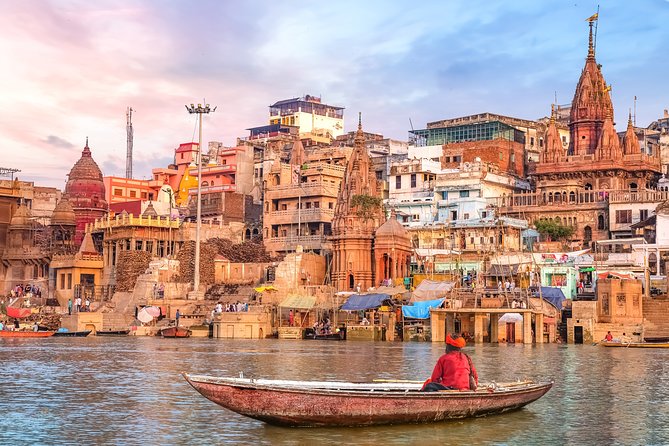
Then the itinerary shifts into Varanasi, where religion is not an activity; it’s daily life. You arrive by flight from Delhi, and you’re met at Varanasi Airport with the same signed-board pickup idea. The main action happens early. The schedule calls for starting your day early before sunrise to reach the Ganges ghats, with a morning boat ride pulling manually by man. That detail matters because it’s slower, more intimate, and it changes how you observe the riverfront.
The included experience builds in two types of views:
- Ghats and daily rituals in the early morning light
- An evening sunset boat ride for prayers
Day 10 continues with the ghats themselves (Banaras Ghats), plus Sarnath. Banaras Ghats include bathing and puja ceremony ghats, and two ghats are cremation sites. If you’re not used to cremation scenes, give yourself a moment to process it respectfully. The tour’s structure includes Sarnath right after, which helps you balance the day with a Buddhist context.
Sarnath is described as the Buddhist city you’ll visit. This is an important pairing with Varanasi because it shows how the same region holds different spiritual traditions in close proximity. It’s not either-or; it’s layers.
Lumbini and sacred temples in Nepal: World Heritage calm with big meaning
Crossing into Nepal starts in Lumbini, the land of Holy Gautam Buddha as described in the route. You visit the Sacred Garden with the Maya Devi temple, where the Buddha’s life story is depicted, and you see the Ashoka Pillar listed as a World Heritage site. The tour also includes Shakya Tank temple and remnants of monasteries and chaityas built over centuries.
Then you add an excursion to Tilaurakot, described as the ancient capital of Kapilvastu, tied to the Shakya dynasty. You also visit the Zone Monastery and Lumbini village as part of that excursion. This is a strong move for anyone who doesn’t want Lumbini to feel like only a single garden stop.
On the next Lumbini day, you focus more tightly on temples:
- Maya Devi Temple (included)
- Chinese Temple with pagoda-style architecture and a courtyard feel
- World Peace Pagoda stupa designed to inspire peace across races and creeds
This portion of the itinerary works well because it doesn’t treat temples as checkboxes. It builds a gentle progression: sacred garden, heritage pillar and remnants, then more specific temples with different cultural styles.
Practical tip: Nepal temple visits are often best with conservative clothing and a calm pace. If your plan includes time for photography, keep an eye on how crowded certain temple angles get.
Chitwan to Pokhara: private jeep safari, canoe time, and mountain sunrises
Chitwan National Park is your wildlife day, and it’s not just a basic “drive and hope” setup. The itinerary includes a private jeep safari in the Jungles, described as traversing streams on canoes and then going deep into the jungle on open jeep safaris in mud tracks. You also get elephants referenced as part of what you’re experiencing.
The tour schedules Chitwan twice. That matters because wildlife sightings aren’t guaranteed. Two days gives you a better chance to see more than one moment, like tracks, birds, or other animals, and not just “we drove around for a while.”
Then you head to Pokhara, described as a naturally gifted valley in Nepal. On the drive, you can spot a glimpse of Mt. Machapuchare among other peaks. You transfer to your hotel by boat ride and experience Fewa and Barahi Lakes, which gives you a break from road travel.
Pokhara also brings the sunrise emphasis back. You’re scheduled to witness sunrise over snow-capped mountains and also a sunrise on the way to Sarangkot. This double sunrise structure is a real value-add if you love light changing the mountains. It’s also a good way to make Pokhara feel like more than a place to relax.
You then continue with lakeside time at Phewa Tal and visits to Matepani Gumba and Begnas Lake. Matepani Gumba is a Buddhist monastery on a forested hill above Matepani, which should give you a quieter, more natural interlude from city and safari days. Begnas Lake rounds out the water experience with another lake stop.
If you’re thinking about energy management: this is the part of the trip where early mornings can stack up. If your body tends to get cranky with sunrise tours, you’ll want to plan for rest windows in the afternoon.
Kathmandu Durbar Square to Nagarkot: old palaces and Himalayan range views
Kathmandu is where the itinerary turns into heritage city walking. You explore Durbar Square (Court of Royalty), history and art, and you spend time in colorful bazaars and market squares in Thamel with its lively nightlife described for the tour. This is a good “after all that sunrise” moment because Thamel gives you a place to wander at your own speed.
Then you return to Kathmandu Durbar Square for more focused palace complex structure. The Hanuman Dhoka complex is included, with the Royal Palace of the Malla kings and also the Shah dynasty in the Durbar Square of central Kathmandu. It’s spread over five acres, and it gets its name from a stone image of Hanuman near the main entryway.
The final Nepal piece is Nagarkot. You drive there to a height of about 2000 meters and get Himalayan mountain views. Then you have the Nagarkot Panoramic Hiking Trail, described for views from the comfort of your hotel balcony, with eight ranges visible: Annapurna, Manaslu, Ganesh Himal, Langtang, Jugal, Rolwaling, Everest, and Numbur.
A small reality check: on clear days this view setup is spectacular. On cloudy days, you’ll still get a hill town atmosphere, but the range visibility may be less dramatic than the ideal.
Price and Logistics: what $2,556 buys (and what it doesn’t)
At $2,556 per person, this tour is priced like an all-in, transport-heavy program. You’re paying for:
- Flights from Delhi to Varanasi and from Kathmandu back to Delhi
- Around 20 nights of selected accommodation (single or double occupancy)
- Private jeep safari in Chitwan
- Sunrise boat ride on the Ganges plus a sunset boat ride for evening prayers
- A rickshaw ride in Old Delhi City Market
- A native English-speaking local driver and private guide
- Air-conditioned vehicle, WiFi on board, and private car use only for your group
- Breakfast (20), plus lunch (2) and dinner (3)
- GST and taxes, tolls, and parkings included
What you should watch: monument tickets are listed as not included unless specified per stop. The itinerary includes admission tickets for many key sights (Qutub Minar, Humayun’s Tomb, Red Fort, Jama Masjid, Taj Mahal, and others), but the overall policy is that you may still pay for some monuments depending on what’s not marked as included.
Also, this is a private tour/activity with only your group participating. That can be a big quality-of-life benefit, especially when you want your own pace inside a structured itinerary.
Value takeaway: if you want flights, guides, safaris, and transportation handled end-to-end, this price can feel reasonable. If you love independent travel and you plan to book everything yourself, you might find ways to spend less—but you’ll trade away the logistics support.
Who should book Holy North India and Nepal?
This trip is a strong fit if you want a complete “north classic plus Nepal” storyline with minimal planning stress. It’s especially good for people who:
- Want a mix of major monuments and spiritual sites without switching companies or doing constant scheduling
- Enjoy sunrise experiences, particularly the Ganges morning boat and Himalayan viewpoints
- Prefer having a private guide and driver to keep the days organized
- Are okay with a packed itinerary and early starts
If you prefer slow travel with lots of free time, you might feel rushed—this route prioritizes seeing many high-demand places.
Should you book it?
I’d book this if you’re the type who likes structure but still wants meaningful moments: the ghats at first light, the stone-and-sky feeling of the Taj Mahal day, the spiritual sites of Lumbini, and the mountain range views from Nagarkot.
I’d think twice if you hate early mornings, dislike crowded heritage areas, or know you’ll want lots of unplanned downtime. With so many included experiences, the best version of this trip happens when you go in flexible and ready.
FAQ
How long is the trip, and what cities does it cover?
The journey runs about 21 days and covers New Delhi, Mandawa, Jaipur, Agra, Varanasi, Lumbini, Chitwan National Park, Pokhara, Kathmandu, Nagarkot, and then returns to New Delhi.
Do you get picked up at the airports?
Yes. You’re picked up at Delhi Airport on arrival and also picked up at Varanasi Airport. The meeting point for the start is Indira Gandhi Intl Airport in New Delhi.
Which flights are included?
The tour includes flights from Delhi to Varanasi and from Kathmandu to Delhi.
Are entrance tickets included for monuments?
Some are included and some are free as shown for specific stops, while monument tickets are generally listed as not included unless specified. You should expect at least some sites may require extra payment.
What included activities relate to water and wildlife?
You get a sunrise boat ride on the Ganges and also a sunset boat ride for evening prayers. For wildlife, you get a private jeep safari in Chitwan, with canoe time described as part of the experience.
What meals are included?
Breakfast is included for 20 days. Lunch is included for 2 days, and dinner is included for 3 days. Other meals are not specified as included.
If I cancel, can I get a refund?
No. The experience is non-refundable and cannot be changed for any reason. If the minimum number of travelers isn’t met and it’s canceled, you’ll be offered another date or a full refund.
More Tour Reviews in New Delhi
- Old & New Delhi City Tour – Half or Full Day Options Available
★ 5.0 · 4,811 reviews - Half Day Private Delhi City Tour
★ 5.0 · 4,474 reviews - Same Day Taj Mahal, Agra Fort & Baby Taj Tour from Delhi by Car
★ 5.0 · 4,304 reviews - Taj Mahal Day Tour from Delhi by Superfast Train – TOP RATED TOUR
★ 5.0 · 4,166 reviews - Delhi: Old and New Delhi Private Full or Half-Day Tour
★ 4.9 · 3,776 reviews
Just added: more New Delhi reviews to browse
- 4 days Golden Triangle Tour★ 5.0 · 3 reviews
- Discover Old & New Delhi: Private Tour with Street Food★ 5.0 · 3 reviews
- Taj Mahal Tour From Delhi By Private Car★ 4.5 · 3 reviews
- Golden Triangle Tour 5 Days★ 5.0 · 3 reviews
- Taj Mahal: Express Entry Ticket For Sunset Tour with guide★ 5.0 · 3 reviews
- Agra Taj Mahal Sunrise & Sunset Tour from Delhi★ 5.0 · 3 reviews