
India’s holy noise is real. This 12-day circuit strings together Mughal monuments, Hindu and Sikh worship sites, Sufi shrines, and river rituals along the Ganga. I like how the route gives you major sights with admission included for most stops, while also building in quieter pauses like step wells and palace-temple complexes. One thing to consider: this is a lot of ground, and some days are long, especially when you want to start early for the Ganga.
What I like most is the hands-on logistics: you get airport pickup with a name sign, and the travel team has a track record of punctual, cooperative driving (I’ve seen driver Bhanwar Singh praised for being on time and courteous). The other strong point is the spiritual breadth. You don’t just check boxes; you move through Delhi’s faiths, then Rajasthan fort culture, then Khajuraho’s sculpture world, and finally Varanasi’s morning life by boat.
In This Review
- Key things I’d plan for on this journey
- Landing in New Delhi: airport pickup that sets the tone
- Qutb Minar and Humayun’s Tomb: two UNESCO stops with very different vibes
- Delhi’s spiritual sampler: Gandhi Memorial, Lotus Temple, and the multi-faith run
- Old Delhi vs New Delhi: Red Fort, Jama Masjid, and the ceremonial axis feeling
- Akshardham, Bangla Sahib, Lodhi Garden, and Birla Mandir: pauses that keep the day human
- Nizamuddin Aulia dargah and Agrasen ki Baoli: Sufi serenity and a stepwell reset
- Rajasthan begins in Mandawa: havelis as an outdoor museum
- Jaipur: Amber Fort, Hawa Mahal, Jantar Mantar, and Jaigarh views
- Jaipur beyond the big names: Albert Hall, Birla Mandir, and the hill temples
- Agra’s marble icons: Taj Mahal, Agra Fort, and the jewel-box tomb
- Orchha: palaces, chhatris by the river, and temple stops that feel intimate
- Khajuraho: sculpted temples and an evening choice that affects the tone
- Varanasi and the Ganga: sunrise boat ride, ghats, and Sarnath
- Returning to Delhi: planning a last-day market crawl
- Price and value: what $1,404 buys you in real terms
- Should you book Mystic Paths of India?
- FAQ
- What is the price and duration of the tour?
- Where does the tour start and what is the meeting point?
- Is airport pickup included?
- Is this a private tour?
- Are tickets and admissions included?
- Which cities are visited during the 12 days?
- Is there an evening option in Khajuraho?
- Are there any notes about who can join?
- What happens if I cancel?
- What if the minimum number of travelers isn’t met?
Key things I’d plan for on this journey
- Multi-faith Delhi day: Akshardham, Gurudwara Bangla Sahib, Jama Masjid, plus Sufi dargah visits for a full-spectrum spiritual day.
- Royal forts in Rajasthan: Amber Fort, Jaigarh Fort, Nahargarh Fort, and Royal Gaitor tombs that look like they belong in a movie.
- Agra at two moods: Taj Mahal daytime plus Mehtab Bagh for sunset viewing.
- Khajuraho not just daytime sightseeing: an evening choice between a cultural dance performance or the light and sound show at the erotic shrine.
- Varanasi’s early-morning rhythm: sunrise boat ride past the ghats, then a full day to settle into the city.
Landing in New Delhi: airport pickup that sets the tone
The trip starts at Indira Gandhi International Airport in Delhi, with a driver meeting you under your name on a signed board. That sounds small, but it matters. After travel days, you want your first hour to be predictable: get in the car, get to your hotel area, and reset.
If you arrive early, you may have a chance to explore Delhi a bit, depending on your preference. That flexibility is useful because Delhi can feel overwhelming when you’re still orienting yourself. A calm start helps you enjoy the later shifts—between grand Mughal tombs and old-city mosques—without feeling rushed.
You’ll also have a mobile ticket for the experience. It’s one less thing to manage when you’re hopping between cities and multiple monuments.
Still deciding? Here is how it stacks up against other Delhi picks we have written up.



Qutb Minar and Humayun’s Tomb: two UNESCO stops with very different vibes
In Delhi, you begin with the Qutb Minar area, part of the Qutb complex (UNESCO). It’s a “victory tower” style minaret—tall, iconic, and instantly recognizable. Even if you’re not a deep architecture nerd, it’s the kind of structure that makes you look up again and again.
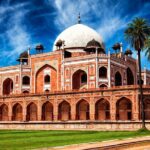
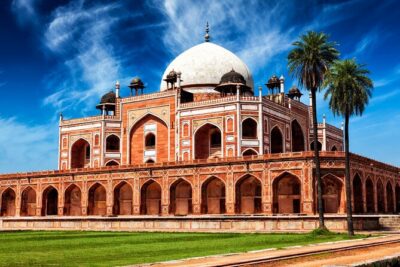
Then you shift to Humayun’s Tomb. This is where the experience gets smoother and more human. Humayun’s tomb feels less like a dramatic fortress and more like a formal garden mausoleum—an early example of Mughal architectural style in India. You’ll likely notice how the design organizes space so you’re not just staring at stone; you’re walking through a plan.
A practical note: these sites are outdoors and can mean sun and heat. If you can, carry water and plan for slower walking when the light gets harsh.
Delhi’s spiritual sampler: Gandhi Memorial, Lotus Temple, and the multi-faith run
After the Mughal hits, you get a contrast day that feels like Delhi telling you it has many spiritual languages at once.
Gandhi Memorial Hall is shorter, but it adds grounding. It’s a pause that keeps the trip from turning into pure sightseeing.
Then the Lotus Temple. It’s a Baháʼí House of Worship known for its flowerlike shape, dedicated in December 1986. If you like places where design creates calm, this one helps. The space is visually striking, but the bigger win is the feeling of order compared with Delhi’s traffic-and-noise outside.
Later you’ll keep that theme going in a very deliberate way: the program brings you into major Hindu, Sikh, and Muslim worship spaces, plus a Sufi dargah. That’s not a random grab bag; it’s a way to understand how faith is lived in public life here.
Old Delhi vs New Delhi: Red Fort, Jama Masjid, and the ceremonial axis feeling
The experience includes India Gate, a war memorial along Rajpath, with time to look at the memorial and the long, formal approach of the avenue. It’s quick, but it’s also a good orientation to how monumental Delhi was designed around a ceremonial axis.
Then comes Red Fort, commissioned by Shah Jahan in 1638 when the capital moved to Delhi. This is a major Mughal center, and the visit is longer so you can actually take in courtyards and scale. If you tend to lose your way in big sites, a guided plan is a real advantage here because Red Fort can swallow time on your own.
Jama Masjid rounds this off on the religious side. It’s one of India’s largest mosques, and it has that “city-scale” presence. The day’s strongest value is the way you experience power in two forms: imperial architecture and sacred gathering spaces.
Akshardham, Bangla Sahib, Lodhi Garden, and Birla Mandir: pauses that keep the day human
Delhi can drain you if it’s all monuments, no breathing room. Here, the schedule includes breaks that feel like you’re stepping away from the stone.
Swaminarayan Akshardham is a Hindu temple and spiritual campus known for messages of devotion and harmony, with art and architecture that are meant to be experienced as a whole. It’s included with an hour in the plan, which is enough time to enjoy the site without feeling like you’re sprinting.
Gurudwara Bangla Sahib is another standout. It’s a prominent Sikh gurdwara and known for the Sarovar, a holy water feature inside the complex. Again, it’s not just a building; it’s a place where daily worship shapes the atmosphere.
From there, you visit Lodhi Garden, where the mix of mausoleums and green space gives you a breather. Then you go to Laxmi Narayan Temple, also called Birla Mandir. It’s an important Hindu temple in Delhi, inaugurated by Mahatma Gandhi, with side temples dedicated to Shiva, Krishna, and Buddha.
This part of the trip feels like the organizer understands you need small slow moments between major landmarks.

Nizamuddin Aulia dargah and Agrasen ki Baoli: Sufi serenity and a stepwell reset
Hazrat Nizamuddin Aulia, also known as the Nizamuddin dargah, is for many people the emotional highlight of Delhi. It’s associated with the Sufi saint Khwaja Nizamuddin Auliya, and it attracts pilgrims in large numbers every week. The power here is spiritual atmosphere more than size.
Then you go to Agrasen ki Baoli, a historic stepwell. It’s a protected monument and a long, broad set of steps designed for water access. Even without deep background knowledge, you’ll feel the weird-cool shift from living city streets down into a stone well space. This stop is excellent for photos, but it’s also just a good way to change pace.
If you’re traveling with kids or anyone who gets tired fast, these two stops can be a nice “switch” from palace-and-tower intensity.
Rajasthan begins in Mandawa: havelis as an outdoor museum
After Delhi, you move to Mandawa in the Shekhawati region. This is where the trip changes textures: less imperial stone, more town-scale heritage.
Mandawa is known for 18th-century architecture and haveli mansions along heritage walks. Think of it as an outdoor museum where the buildings themselves tell you about the Silk Route era and local wealth. The program also includes time at the Mandawa Kothi property, which can help you transition from city pace to small-town exploring.
Mandawa tends to reward people who like details—painted facades, carved entrances, and street-by-street discoveries.
Jaipur: Amber Fort, Hawa Mahal, Jantar Mantar, and Jaigarh views
Jaipur is set up for maximum “wow” per hour. The schedule includes the City Palace, which now houses the Maharaja Sawai Man Singh II Museum and continues as a home base for the royal family. Even if you don’t linger long, it’s a good anchor for understanding why Jaipur looks the way it does.
Then Amber Fort. This fort is famous for its artistic style and views over Maota Lake, the water source for Amer Palace. If you like fort settings, Amber is one of the strongest in the region. The ramparts, gates, and cobbled paths make it feel lived-in by history.
Hawa Mahal follows: the Palace of Wind, built in red and pink sandstone. It’s more about form and façade than it is about roaming, and it works well as an emotional palette cleanser after Amber’s heavier fort feeling.
Jantar Mantar is the science-meets-royalty stop: UNESCO-listed astronomical instruments built by Rajput king Sawai Jai Singh II. You’ll see big stone instruments, including the world’s largest stone sundial. If you like learning through sight, this is a fun stop that doesn’t require a long explanation to understand what you’re looking at.
Jaigarh Fort adds height and scale. It overlooks Amer Fort and Maota Lake and sits on the Aravalli range promontory.
A small consideration: with multiple forts, you’ll be walking on uneven ground. Comfortable shoes are not optional here.
Jaipur beyond the big names: Albert Hall, Birla Mandir, and the hill temples
One of the smartest things in this program is that it doesn’t stop at the usual postcard circuit. You get the Albert Hall Museum, the oldest museum of Rajasthan and the state museum. It’s a solid way to slow down in Jaipur.
Birla Mandir is another highlight: constructed of white marble, dedicated to Lakshmi and Vishnu (Narayan), and built by the B.M. Birla Foundation in 1988. It’s also tied to festivals like Diwali and Janamashtami, which helps you understand why it remains culturally important.
Then Galtaji Temple, an ancient Hindu pilgrimage about 10 km from Jaipur. It’s built into a crevice in the ring of hills around the city. The setting gives it a different mood than city temples.
You also visit Govind Devji Temple for morning worship time and Nahargarh Fort, with views over Jaipur. Nahargarh once formed part of Jaipur’s defensive ring, and it helps connect the forts into a bigger story.
Finally, Royal Gaitor Tumbas round out the Jaipur set. It’s a palace set in a valley and known for a white marble exterior. This is one of those stops that feels like the city releases you from hustle.
Agra’s marble icons: Taj Mahal, Agra Fort, and the jewel-box tomb
Agra is where the trip goes full cinematic.
You start with the Taj Mahal, commissioned in 1632 by Shah Jahan for Mumtaz Mahal. The experience is structured with a two-hour window, which is enough to see the full effect without feeling like you’re checking a box and leaving.
Agra Fort follows. It was the main residence of Mughal emperors until the capital shifted back in 1638. The fort connects to the broader arc of Mughal power, and it’s a good pairing with the Taj since you see both royal residence and mausoleum.
Then you get Itimad-ud-Daulah’s tomb, often called the Bachcha Taj. It’s described as a jewel box and sometimes treated as a draft of the Taj Mahal. If you like comparing designs, this is a satisfying stop.
Mehtab Bagh is included for sunset viewing of the Taj Mahal, which can be one of the most memorable visual moments. If you’re sensitive to time pressure, plan to arrive early and stay calm. Sunset lighting tends to make everyone want the same angles.
You also visit Dayal Bagh Temple, described as the headquarters of the Radhasoami faith, and then Akbar’s tomb, an important Mughal architectural masterpiece.
Fatehpur Sikri rounds out the Agra region. It’s a town in the Agra district area and included with a short, included-time stop.
Orchha: palaces, chhatris by the river, and temple stops that feel intimate
Orchha takes the route away from the biggest tourist circuits and into something more atmospheric.
Orchha Fort complex includes forts, palaces, temples, and related buildings. The time set aside is long enough to feel like you’re inside a historic compound rather than glancing at walls.
Then you visit chhatris cenotaphs: there are 14 chhatris on the river banks, built in memory of rulers of the Bundelkhand dynasty. The river setting gives these cenotaphs a softer visual tone than fort walls.
Ram Raja Temple is included as a sacred Hindu pilgrimage site, and it draws devotees in large numbers. Chaturbhuj Temple is dedicated to Vishnu and references the idea of Rama as an avatar of Vishnu through the name’s meaning.
Sunder Mahal in Orchha is a different kind of stop: a palace area described as the palace of love, connected to the love story between Prince Dhurbhajan and his Muslim lover. This helps the town feel personal, not just ancient.
Then you finish the Orchha block with Lakshmi Temple.
If you like places where the story is carried through architecture and local tradition, Orchha is a great fit.
Khajuraho: sculpted temples and an evening choice that affects the tone
Khajuraho is one of the most visually distinctive parts of the route. You visit the Kama Sutra temples at the Eastern, Western, and Southern groups of buildings, part of a UNESCO World Heritage site. The sculptures are famous, and the program’s framing makes it clear you’re meant to look carefully and slow down.
Even better, the schedule includes an evening option: you can choose between a cultural dance performance or a light and sound show at the erotic shrine. Either option changes the feel of the day. The dance leans into living culture; the light and sound version leans into narration and theatrical storytelling.
The only consideration I’d flag here is comfort level. If explicit sculptures feel uncomfortable for you, decide ahead of time which evening option you’ll pick.
Varanasi and the Ganga: sunrise boat ride, ghats, and Sarnath
Varanasi is the emotional center of this whole trip.
You start with Banaras Ghats: riverfront steps along the Ganges, with 88 ghats total mentioned. Some ghats are used for bathing and puja rituals, and two are used exclusively as cremation sites. That mix is part of Varanasi’s reality, and it’s why the experience feels intense even if you keep your plan simple.
Next comes the early-morning boat ride before sunrise. You go to the Ganges ghats at dawn and ride a manually pulled boat to watch morning life: people bathing, praying, and doing rituals. This is one of those moments where even if you’re not sure what you’re seeing, you can feel the rhythm.
Then you visit Sarnath, the Buddhist city associated with early Buddhist traditions. The inclusion matters because it widens the spiritual map beyond one tradition.
Ramnagar Fort and Bharat Mata Temple follow. The Bharat Mata Temple is described as the only temple dedicated to Bharat Mata, mother of India, also called Mother India Temple. These stops give the city additional layers beyond the river.
You also have a dedicated day to explore Varanasi itself, with time to settle in the atmosphere and not treat the city like a checklist.
Returning to Delhi: planning a last-day market crawl
On the final day, you’re back in New Delhi and your driver takes you to the airport based on your flight schedule. Before that, you have the option to prepare for departure or explore markets if you still have energy.
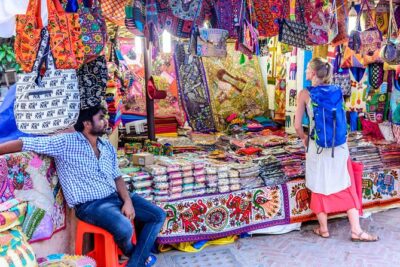
The suggested shopping areas include Chandni Chowk Market, Kinari Bazaar (wedding market), the textile market (wholesale market), a book market, and the spice market for ground and whole spices. If you’re more into art and architecture, the suggestions include Fateh Puri Mosque, Sis Ganj Guradwara, a Jain temple, and a Shiva temple, depending on your comfort.
This is a good way to end the trip with something practical. After days of monuments, shopping for spices or textiles feels like bringing a memory home you can use.
Price and value: what $1,404 buys you in real terms
At $1,404 per person for about 12 days, you’re paying for a full travel system: pickup in Delhi, an organized loop through multiple cities, and a schedule where many major admissions are listed as included. Instead of spending your time chasing tickets and negotiating access, you’re spending your time looking at the places.
The “value” really comes from the structure. You get long-distance geographic variety without having to build the trip yourself, and you also get a guided approach to the big spiritual and architectural moments. The program even highlights mobile ticket use, which suggests it’s designed to keep your movement smoother.
One more reason it can be worth it: the reviews included praises for punctual, courteous service and professional guiding. When you’re moving through places like Agra, Orchha, and Varanasi, good timing makes a difference. You don’t want to miss sunrise light because a connection went sideways.
Should you book Mystic Paths of India?
I’d recommend this tour if you want a single trip that mixes major monuments with real spiritual variety—Delhi’s multi-faith sites, Rajasthan’s forts and temples, Agra’s marble, Khajuraho’s sculpture art, and Varanasi at dawn.
It’s also a good fit if you like having the plan handled, especially when distance is part of the appeal. The airport pickup and consistent admission structure reduce a lot of stress.
I’d think twice if you hate early starts, don’t like long days, or prefer only one kind of destination. This route is powerful because it’s broad, but that means you’ll be busy most days.
If you go in knowing it’s an active, multi-city spiritual-and-historical tour, you should come away with memories that feel way bigger than a photo set.
FAQ
What is the price and duration of the tour?
The price is $1,404.00 per person, and the duration is approximately 12 days.
Where does the tour start and what is the meeting point?
The meeting point is Indira Gandhi Intl Airport, New Delhi, New Delhi 110037 India.
Is airport pickup included?
Yes. Pickup from Delhi Airport is offered with a signed board under your name, based on your arrival details.
Is this a private tour?
Yes. It is a private tour/activity, and only your group will participate.
Are tickets and admissions included?
Many stops list admission tickets as included, while some stops are free. You’ll generally have ticket handling covered as part of the program’s listed inclusions.
Which cities are visited during the 12 days?
The cities included are Delhi, Mandawa, Jaipur, Agra, Orchha, Khajuraho, and Varanasi.
Is there an evening option in Khajuraho?
Yes. In the evening you can choose one of two activities: a cultural dance performance or the light and sound show at the erotic shrine.
Are there any notes about who can join?
The tour notes say most travelers can participate.
What happens if I cancel?
The experience is non-refundable and cannot be changed for any reason. If you cancel or ask for an amendment, the amount you paid will not be refunded.
What if the minimum number of travelers isn’t met?
The experience requires a minimum number of travelers. If it’s canceled because the minimum isn’t met, you’ll be offered a different date/experience or a full refund.
More Tour Reviews in New Delhi
- Old & New Delhi City Tour – Half or Full Day Options Available
★ 5.0 · 4,811 reviews - Half Day Private Delhi City Tour
★ 5.0 · 4,474 reviews - Same Day Taj Mahal, Agra Fort & Baby Taj Tour from Delhi by Car
★ 5.0 · 4,304 reviews - Taj Mahal Day Tour from Delhi by Superfast Train – TOP RATED TOUR
★ 5.0 · 4,166 reviews - Delhi: Old and New Delhi Private Full or Half-Day Tour
★ 4.9 · 3,776 reviews
Just added: more New Delhi reviews to browse
- 4 days Golden Triangle Tour★ 5.0 · 3 reviews
- Discover Old & New Delhi: Private Tour with Street Food★ 5.0 · 3 reviews
- Taj Mahal Tour From Delhi By Private Car★ 4.5 · 3 reviews
- Golden Triangle Tour 5 Days★ 5.0 · 3 reviews
- Taj Mahal: Express Entry Ticket For Sunset Tour with guide★ 5.0 · 3 reviews
- Agra Taj Mahal Sunrise & Sunset Tour from Delhi★ 5.0 · 3 reviews