
You’ll see India’s icons fast. This 3-day Golden Triangle tour strings together Delhi and Agra big hitters, then swings you into Jaipur for Mughal-Rajput showstoppers, all with a driver and guides lined up.
I like that the plan is built around major UNESCO-level sights with real time blocks: Jama Masjid, Red Fort, Humayun’s Tomb, Qutub Minar, plus Taj Mahal, Agra Fort, and the Agra-area mausoleum people call the Baby Taj. You also get a smoother experience because transport is private and air-conditioned, not a hunt for cabs between stops.
One thing to think about: day 3 lists City Palace as being in Udaipur, even though the trip is framed as Delhi–Agra–Jaipur. I’d confirm the exact palace location with your operator before you go, so you know what you’re signing up for.
In This Review
- Key highlights I’d plan around
- The Golden Triangle, compressed into 3 days (without feeling totally rushed)
- Delhi’s monument day: Jama Masjid, Red Fort, Humayun’s Tomb, Qutub Minar
- Jama Masjid: Old Delhi’s scale and Mughal style
- Red Fort: the Mughal seat made of red sandstone
- Humayun’s Tomb: the design blueprint that leads toward the Taj
- Qutub Minar: Indo-Islamic geometry and early inscriptions
- Agra in a day: Taj Mahal, Agra Fort, and the Baby Taj hour
- Taj Mahal: 3 hours for the main event
- Agra Fort: fortress views and Mughal-era storytelling
- Itimad-ud-Daula: the quieter cousin people call the Baby Taj
- Jaipur’s day plan: Jal Mahal to Hawa Mahal (and a City Palace question)
- Jal Mahal: the Water Palace on Man Sagar Lake
- Hawa Mahal: the Palace of Breeze
- City Palace: confirm which one you’re visiting
- The driving and guiding setup that keeps you from losing time
- Tickets, hotel, and the math behind the $198.44 price
- Pacing and comfort: why the time blocks matter
- Who this tour is best for (and who should rethink it)
- Should you book this 3 Days Golden Triangle Tour?
- FAQ
- Is pickup and drop-off included?
- Do you include hotel accommodation and breakfast?
- Is transportation private and air-conditioned?
- Are admission tickets included for the major attractions?
- Is the tour private or shared?
- What is the cancellation policy?
Key highlights I’d plan around
- Private AC car + pickup/drop-off so you spend less time coordinating and more time seeing.
- Taj Mahal is included (listed entry: 1100 INR) with a 3-hour visit window.
- Mughal architecture focus across Delhi and Agra, from Humayun’s Tomb to the Baby Taj.
- Driver and guide consistency, with people like Husan and Shamsher Singh Bisht noted for safe, punctual driving and helpful tips.
- Hotel comfort matters: 3-star accommodation with breakfast included for two nights.
The Golden Triangle, compressed into 3 days (without feeling totally rushed)
The Golden Triangle is a classic for a reason: Delhi, Agra, and Jaipur sit like three big dots on India’s map, and connecting them gives you a strong snapshot of North India architecture, court life, and religious art. What makes this tour practical is that it’s built like a managed route, not a DIY scramble.
You’re traveling door-to-door in a private AC car for the whole activity, and you’ll have a professional tour guide in each city. That matters more than it sounds. In a place where famous monuments are spread out, guides help you keep the story straight. They also help you move with less downtime between the big photo stops.
You’ll also sleep comfortably enough for the pace: 3-star hotels with breakfast are included. It’s the kind of thing that keeps a short tour from turning into a tired blur.
Other Agra runs out of Delhi worth a look




Delhi’s monument day: Jama Masjid, Red Fort, Humayun’s Tomb, Qutub Minar
Day 1 is all about Delhi’s layered identity—old-city worship spaces, Mughal power, and later court-era design cues you’ll recognize later at the Taj Mahal.
Jama Masjid: Old Delhi’s scale and Mughal style
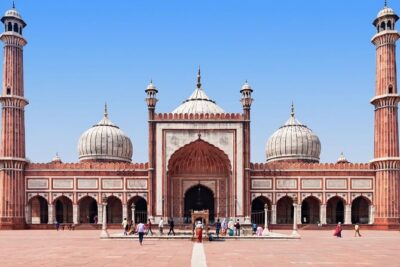
You start at Jama Masjid, one of India’s largest mosques, built by Mughal Emperor Shah Jahan in Old Delhi. The key here isn’t just the wow-factor. It’s how the mosque shows Mughal architecture through scale and detail, including intricate carvings and big views over the city.
This is also a smart way to begin because it sets a tone: you’re not just checking boxes—you’re learning the visual language first.
Practical note: the visit block is about 30 minutes, so you’ll want to pick what you focus on rather than trying to photograph everything at once.
Red Fort: the Mughal seat made of red sandstone
Next up is Red Fort, a UNESCO World Heritage Site known for its Mughal architecture and cultural significance. This stop leans into material and design: those majestic red sandstone walls are the headline, but the fort’s layout and historical context give you a sense of Mughal rule as lived experience.
Your time here is about 1 hour. That’s usually enough to get oriented, see major sections, and still have time to absorb the setting rather than sprinting.
Humayun’s Tomb: the design blueprint that leads toward the Taj
Then you go to Humayun’s Tomb, another UNESCO site, built in 1570 and credited as a major architectural inspiration for the Taj Mahal. You’ll spend around 1 hour here, and the big takeaway is the Persian-influenced design style and the way the tomb complex is planned.
I especially like this stop because it turns Taj Mahal admiration from pure awe into understanding. Once you see Humayun’s Tomb, Taj Mahal starts to feel less like a random miracle and more like a continuation of a building tradition.
Chasing the Pink City? More Jaipur day trips
Qutub Minar: Indo-Islamic geometry and early inscriptions
Finish day 1 at Qutub Minar, also UNESCO-listed, with Indo-Islamic architecture and inscriptions dating back to the 12th century. Your time is about 1 hour.
This stop can surprise people. It’s not the size of Red Fort, and it’s not a living palace compound like you might imagine, but it’s a powerful marker of early design and writing on stone. If you like the feel of history you can read, this one will land.
Agra in a day: Taj Mahal, Agra Fort, and the Baby Taj hour
Agra is where the tour earns its reputation. The day is built around three monuments that connect through Mughal power and aesthetics.
Taj Mahal: 3 hours for the main event
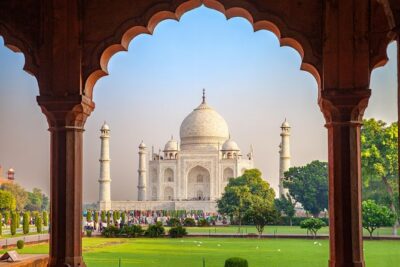
You’ll visit the Taj Mahal with about 3 hours on the ground. Admission is included (listed at 1100 INR), and the highlight isn’t just the white marble image you’ve probably seen a hundred times online.
The tour description points to specific visual features: Mughal architecture, intricate marble inlay work, and the way the monument creates a sense of symmetry and permanence. With a longer time slot than most attractions, you can actually move your attention around—rather than treating it like a quick drive-by.
This is the stop most people will remember. Planning-wise, it’s also the anchor for your whole day. If anything else runs slower, it’s Taj Mahal you can’t afford to lose.
Agra Fort: fortress views and Mughal-era storytelling
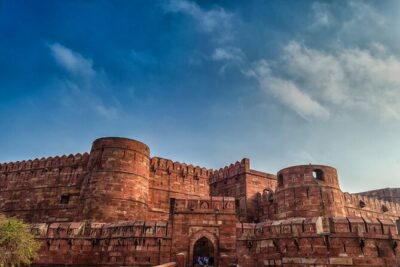
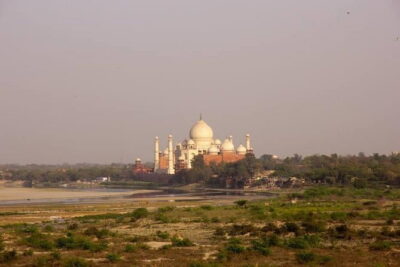
After Taj, you head to Agra Fort, another UNESCO World Heritage Site. You get about 2 hours, and the fort is described for its Mughal past and red sandstone architecture—plus the big bonus: breathtaking views of the Taj Mahal.
That view angle is the reason this fort doesn’t feel like a “second Taj.” It’s a different relationship to the same centerpiece. From a fortress, you see the monument as something political and strategic, not just romantic.
Admission is included (listed at 650 INR), so you’re not stuck doing ticket math mid-trip.
Itimad-ud-Daula: the quieter cousin people call the Baby Taj
Your final Agra stop is Itimad-ud-Daula, often nicknamed the Baby Taj. It’s a Mughal mausoleum built between 1622 and 1628, known for Persian-inspired architecture and intricate marble inlay work.
You get about 1 hour here, with entry included (listed at 350 INR). For me, this stop is the payoff for people who enjoy craftsmanship. It’s less about scale and more about the eye for detail.
If you’re the type who likes to spot patterns—geometric layouts, carved stone, and the way surfaces are decorated—this is where you’ll feel rewarded.
Jaipur’s day plan: Jal Mahal to Hawa Mahal (and a City Palace question)
Day 3 shifts from monumental tombs and forts into Jaipur’s courtly architecture style—plus a lake setting that changes the mood.
Jal Mahal: the Water Palace on Man Sagar Lake
First is Jal Mahal, the “Water Palace,” located in the center of Man Sagar Lake. The tour notes a five-story structure and a blend of Mughal and Rajput styles, with breezy, scenic views as part of the experience.
You’ll have about 1 hour. This is a good stop if you want a slower visual break after two big history-heavy days.
Hawa Mahal: the Palace of Breeze
Next comes Hawa Mahal, the Palace of Winds, with its iconic five-story pink sandstone facade and the famous rows of windows. The idea is that light and air flow through those openings—so you’re looking at architecture designed for both function and spectacle.
Again, the time block is about 1 hour. You’ll have enough time to appreciate the facade and courtyard-adjacent angles, rather than just a quick front-photo.
City Palace: confirm which one you’re visiting
The last stop is City Palace, and here’s the one detail you should verify. The description says City Palace is in Udaipur, on the banks of Lake Pichola. But your tour overall is framed as Delhi–Agra–Jaipur.
The tour also lists City Palace entry at 700 INR as included, but it doesn’t clarify the exact palace location beyond that Udaipur mention.
My advice: message your operator ahead of time and ask for the exact City Palace location in writing. This is a short tour—getting the last stop right matters.
The driving and guiding setup that keeps you from losing time
This experience is built around a simple promise: you shouldn’t spend your days managing transit.
You’ll have:
- Pickup and drop-off
- A private AC car for the entire tour activity
- A professional tour guide in each city
- Mineral water included
That private setup is the real value. In a tight 3-day window, even small delays stack up. With a scheduled driver and city guide, your day has a backbone.
From what’s been shared about this service, drivers such as Husan and Shamsher Singh Bisht are noted for being punctual and driving safely. People also highlight clear communication skills—like excellent English—so you can ask questions and get practical context, not just a list of dates.
And one more practical point: having local recommendations for food helps on tours like this. If you’re worried about the pressure that comes with walking into unfamiliar areas, a calm plan beats improvising.
Tickets, hotel, and the math behind the $198.44 price
The listed price is $198.44 per person for about 3 days. At first glance it might seem either like a deal or a mystery, depending on what’s actually included. The good news: the package bundles several items that normally cost time and extra money.
Included highlights:
- 3-star hotel accommodation with breakfast
- Private AC car with pickup/drop-off
- Entry tickets for major sites:
- Taj Mahal: 1100 INR
- Agra Fort: 650 INR
- Itimad-ud-Daula: 350 INR
- Humayun’s Tomb: 600 INR
- Qutub Minar: 550 INR
- City Palace: 700 INR
- Red Fort: listed as included (ticket time block is provided for the stop)
- Jama Masjid: admission included for the stop duration
So you’re not paying separately for every big monument ticket. You’re also not planning each day’s routing around what needs to be purchased first.
What’s not included is also clear: personal expenses. That typically covers things like snacks, shopping, and anything outside the scheduled meals. On a short tour, those are often the first “surprise budget” items—so it’s smart to set aside some cash for it.
Also listed as part of the experience: group discounts and a mobile ticket. For many people, those two details translate into less hassle right up front.
Pacing and comfort: why the time blocks matter
A Golden Triangle tour lives or dies on pacing. This one uses specific visit windows per stop, which makes your day feel planned instead of chaotic.
Examples from the schedule:
- Jama Masjid: 30 minutes
- Taj Mahal: 3 hours
- Agra Fort: 2 hours
- Most remaining Delhi/Jaipur stops: about 1 hour each
That structure helps you in two ways:
- You know how long you have, so you can decide what to focus on.
- You’re less likely to over-plan your own day on top of the tour plan.
Comfort-wise, two nights in 3-star hotels with breakfast plus mineral water can make this feel less like a nonstop sprint. And since it’s private for your group, you won’t be slowed down by strangers making last-minute decisions.
Who this tour is best for (and who should rethink it)
This works well if you:
- Want a first-time-friendly intro to Delhi, Agra, and Jaipur with built-in context.
- Prefer safe, punctual, English-speaking guidance and don’t want to figure out every monument yourself.
- Like a route where major sites are covered in a tight time frame, but you still get real time for Taj Mahal.
You might pause before booking if you:
- Are picky about the final “City Palace” stop, given the Udaipur mention on a Delhi–Agra–Jaipur route. Confirm it first.
- Don’t like fixed schedules. With a set number of stops and time slots, you’ll move with the plan.
Should you book this 3 Days Golden Triangle Tour?
I’d book it if you want a smooth, structured run through India’s headline monuments, with private AC transport, guides, and key admissions handled for you. The value is strongest when you care about saving time and keeping your day stress low.
Before you click confirm, do two quick checks:
- Ask which City Palace you’ll visit on day 3, since the description mentions Udaipur.
- Make sure the pickup/drop-off details match your real location and timing needs.
If those points are clear, this is a solid way to see Delhi, Agra, and the Pink City area markers with less guesswork—and with the kind of local driving support that helps you enjoy the day instead of managing it.
FAQ
Is pickup and drop-off included?
Yes. Pickup and drop-off are included as part of the experience.
Do you include hotel accommodation and breakfast?
Yes. The tour includes 3-star hotel accommodation with breakfast.
Is transportation private and air-conditioned?
Yes. You’ll use a private AC car for the entire tour activity.
Are admission tickets included for the major attractions?
Yes. Entry tickets are included for several sites listed in the package, including Taj Mahal, Agra Fort, Itimad-ud-Daula, Humayun’s Tomb, Qutub Minar, and City Palace.
Is the tour private or shared?
It’s private. Only your group participates.
What is the cancellation policy?
Free cancellation is available. You can cancel up to 24 hours in advance for a full refund. If you cancel less than 24 hours before the start time, the amount paid will not be refunded.
The Full Golden Triangle, More Options
- 3-Days Private Golden Triangle Tour: Delhi, Agra & Jaipur by Car
★ 5.0 · 1,107 reviews - 3-Days Private Golden Triangle Tour: Delhi, Agra & Jaipur by Car
★ 5.0 · 1,098 reviews - 3-Day Delhi, Agra and Jaipur Private Tour – India Golden Triangle
★ 5.0 · 812 reviews - Four-Day Private Luxury Golden Triangle Tour to Agra and Jaipur From New Delhi
★ 5.0 · 807 reviews - 5 Nights 6 Days Private Golden Triangle Tour – Delhi Agra Jaipur
★ 5.0 · 574 reviews
Onward to Jaipur: More Day Trips
- 3-Days Private Golden Triangle Tour: Delhi, Agra & Jaipur by Car
★ 5.0 · 1,107 reviews - 3-Days Private Golden Triangle Tour: Delhi, Agra & Jaipur by Car
★ 5.0 · 1,098 reviews - 3-Day Delhi, Agra and Jaipur Private Tour – India Golden Triangle
★ 5.0 · 812 reviews - Four-Day Private Luxury Golden Triangle Tour to Agra and Jaipur From New Delhi
★ 5.0 · 807 reviews - Jaipur Day Trip from Delhi by Car or Train – All Inclusive
★ 5.0 · 663 reviews
More Agra Day Trips out of Delhi
- Same Day Taj Mahal, Agra Fort & Baby Taj Tour from Delhi by Car
★ 5.0 · 4,304 reviews - Full Day Taj Mahal, Agra Fort & Baby Taj Tour from Delhi by Car
★ 5.0 · 3,647 reviews - From Delhi: Taj Mahal & Agra Private Day Trip with Transfers
★ 4.9 · 3,181 reviews - From Delhi: Taj Mahal and Agra Fort Private Sunrise Tour
★ 4.9 · 2,270 reviews - Sunrise Taj Mahal, Agra Fort & Baby Taj Tour from Delhi by Car
★ 5.0 · 2,243 reviews
Just added: more New Delhi reviews to browse
- 4 days Golden Triangle Tour★ 5.0 · 3 reviews
- Discover Old & New Delhi: Private Tour with Street Food★ 5.0 · 3 reviews
- Taj Mahal Tour From Delhi By Private Car★ 4.5 · 3 reviews
- Golden Triangle Tour 5 Days★ 5.0 · 3 reviews
- Taj Mahal: Express Entry Ticket For Sunset Tour with guide★ 5.0 · 3 reviews
- Agra Taj Mahal Sunrise & Sunset Tour from Delhi★ 5.0 · 3 reviews
Agra Day Trips from Delhi, compared.
 ★ 5.0Same Day Taj Mahal, Agra Fort & Baby Taj Tour from Delhi by CarFrom $624,304 reviews
 ★ 5.0Full Day Taj Mahal, Agra Fort & Baby Taj Tour from Delhi by CarFrom $623,647 reviews
 ★ 4.9From Delhi: Taj Mahal & Agra Private Day Trip with TransfersFrom $43,181 reviews
 ★ 4.9From Delhi: Taj Mahal and Agra Fort Private Sunrise TourFrom $592,270 reviews
 ★ 5.0Sunrise Taj Mahal, Agra Fort & Baby Taj Tour from Delhi by CarFrom $622,243 reviews
 ★ 5.0Taj Mahal and Agra Private Car Tour from Delhi with 5* LunchFrom $331,633 reviews
 ★ 4.9From Delhi: Private Taj Mahal and Agra Tour by Express TrainFrom $751,605 reviews
 ★ 5.0Taj Mahal, Agra Fort, Baby Taj Tour from Delhi by Superfast TrainFrom $751,494 reviews