

Reviewed · DELHI MONUMENTS & LANDMARKS TOURS
New Delhi: Red Fort Entry Ticket with Optional Add-Ons
That red sandstone hits you fast. This guided Red Fort visit takes you from the Lahori Gate into the halls of Mughal power, with museum stops and even an optional light and sound show.
What I like most is the way a good guide makes the fort’s layout feel logical, not random. I also like that you’re not stuck only looking at stones—there are structured stops at key spaces like Diwan-i-Aam and the private audience hall. One drawback to plan around: you’ll do a fair amount of walking in sun, and the fort can be closed around major national security days.
If you’re short on time in Delhi, this is a tight, high-impact way to see one of the city’s true headline sites—plus an add-on path that can turn it into a fuller day.
In This Review
- Key takeaways before you go
- The Red Fort’s best first impression: Lahori Gate
- Naubat Khana: why the Drum House matters
- Diwan-i-Aam: the emperor’s court, in a space you can feel
- Diwan-i-Khas and the shift from public to private
- Museums inside the Red Fort: artifacts + the 1857 connection
- Mumtaz Mahal and Zafar Mahal: palaces that hint at changing eras
- Optional add-on path #1: Red Fort + Jama Masjid + Chandni Chowk
- Optional add-on path #2: Red Fort + Humayun’s Tomb + Lotus Temple + Qutub Minar
- Timing: how long it really takes and how to pace yourself
- Price and value: what you’re paying for at about $9
- The guide factor: English/Hindi and real-world expertise
- Know the closure windows before you plan
- What to bring and what to avoid
- Should you book this Red Fort ticket with optional add-ons?
- FAQ
- How long is the Red Fort experience?
- Where do we meet the guide?
- What languages are available for the live guide?
- Does the ticket include skip-the-line entry?
- Are there major dates when the Red Fort may be closed?
- What should I bring to visit comfortably?
- What’s the cancellation policy?
Key takeaways before you go
- Start at Lahori Gate to get the fort’s best “wow” moment immediately, before the deeper interior walking
- Diwan-i-Aam turns Mughal rule into something you can picture, not just memorize
- Naubat Khana (the Drum House) gives context for the pomp you’ll see throughout the complex
- Museums and displays help you connect architecture to artifacts, including the 1857 rebellion items
- Optional add-ons can link Red Fort with Jama Masjid and Chandni Chowk, or with Humayun’s Tomb, Lotus Temple, and Qutub Minar
- Private group, English/Hindi makes it easier to ask questions at your pace (guides like Rambabu, Adel, and Priyam are repeatedly praised for how they explain things)
The Red Fort’s best first impression: Lahori Gate

Old Delhi can feel chaotic the first time you hit it. So I like that this experience starts with a clean reference point: the guide meets you at Lahori Gate, the main entrance. You’ll get a WhatsApp message before you start, which is useful when the area around the fort is busy and signage isn’t always friendly to first-timers.
From the gate, you’re immediately in the Mughal mindset. The Red Fort’s scale is obvious, but what surprises many people is how the entrance frames the rest of the fort. Getting your bearings here means the walk after won’t feel like wandering.
Practical note: wear comfortable shoes. The fort is largely a “walk-through” site, and shade can be hit-or-miss depending on the time of day.
More of Delhi in stone: forts, tombs and gates




Naubat Khana: why the Drum House matters
Next up, you’ll head toward Naubat Khana, often called the Drum House. Even if you don’t know much Mughal court history, this stop gives you a framework for what the palace complex was designed to do: impress, signal authority, and set the rhythm of daily life.
It’s a small stop compared to the big halls, but it changes how you read the fort. Instead of seeing buildings as separate photos, you start to see them as parts of a system—where sound, ceremony, and ceremony-based movement were built into the space.
If you’re the type who likes context, this is where a good guide earns their fee. People in the guide lineup—like Gopaal Jat, Mohammed, and Anas—are repeatedly described as friendly and professional, and this kind of context is exactly the sort of thing they tend to explain well.
Diwan-i-Aam: the emperor’s court, in a space you can feel

The Diwan-i-Aam is one of the most important stops for your mental picture. This is the grand open space where the emperor would hold public audiences and address the people. When you’re standing there, you can quickly understand why the design had to be visible to a crowd.
Here’s what I think makes it valuable: it’s not just an architectural highlight. It’s a “social theater” space. Mughal power wasn’t hidden behind walls; it was staged in a way that the public could understand.
If you want photos that actually explain the place, ask your guide to point out sightlines and how the hall’s shape affects who would have stood where. That small instruction makes your pictures look like evidence, not decoration.
Diwan-i-Khas and the shift from public to private

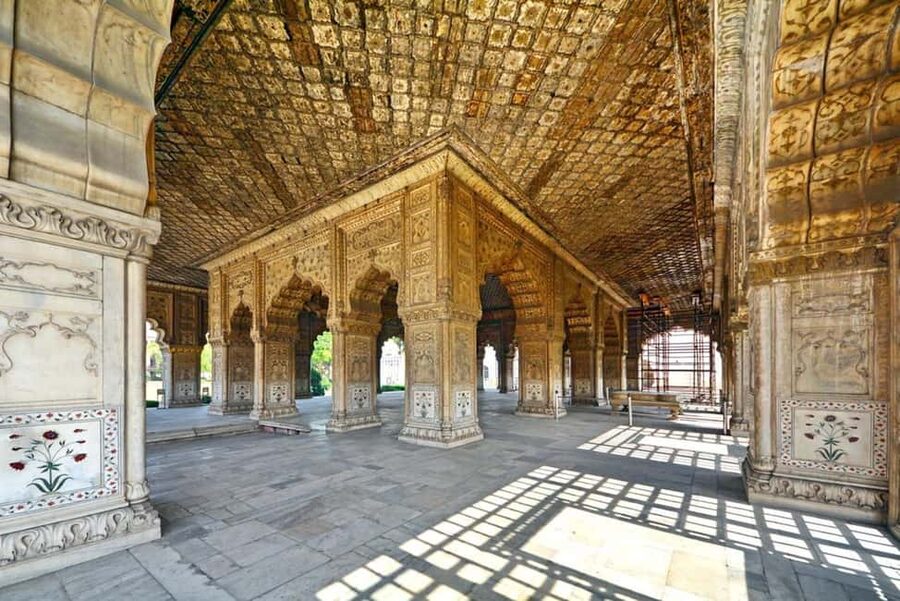
After the public audience space, you’ll move to Diwan-i-Khas, the Hall of Private Audiences. This is where the emperor met with officials and dignitaries, and the feeling of the complex shifts.
The big takeaway is contrast. In the public hall, the focus is on visibility and order for the masses. In the private hall, the focus turns toward controlled access and elite decision-making. A guide helps you connect that difference to what you see in the architecture without turning it into a lecture that makes your feet revolt.
Guides such as Adel and Gyanendra are often praised for staying at your pace and not rushing, which matters here. Time spent looking carefully is the difference between “I saw a hall” and “I understand why this hall was built.”
Museums inside the Red Fort: artifacts + the 1857 connection

A Red Fort visit shouldn’t be only architecture. That’s why I like that this experience includes stops in the fort museums, where you’ll see Mughal-era artifacts and displays related to the 1857 rebellion.
Museums can easily feel like a box-checking stop. Here, the value is in the connection. You’re moving from spaces designed for ceremony into displays that explain the people and events tied to the fort’s broader story. It helps you avoid the common feeling of seeing impressive monuments with no thread connecting them.
Also, if the timing works out, you may have the chance to experience the light and sound show described with the tour highlights. Even if you’re not a “show person,” it’s one more way to turn history into something you can track in your head while you’re still standing in the location.
More entry tickets sorted ahead of time


Mumtaz Mahal and Zafar Mahal: palaces that hint at changing eras
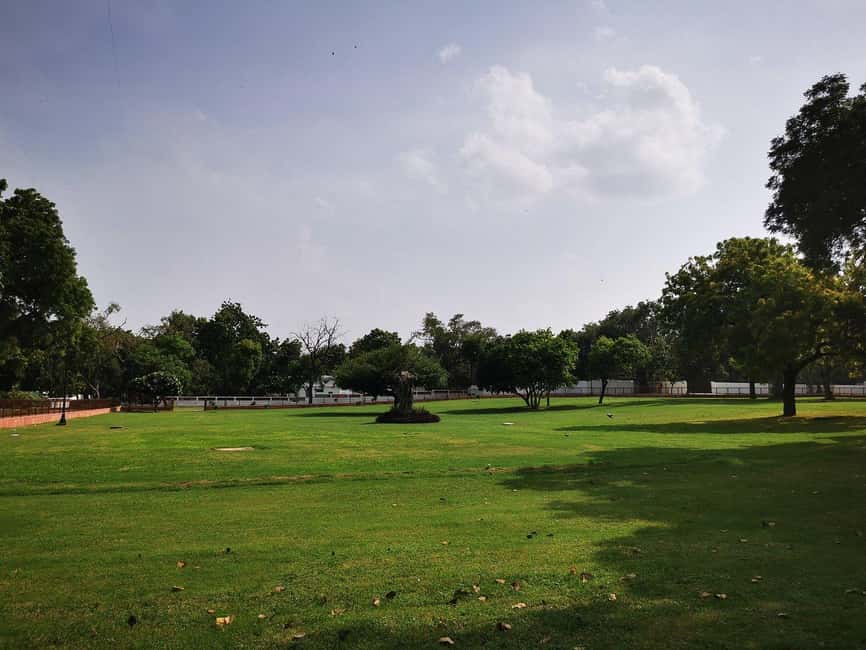
Two palace areas you’ll encounter are the Mumtaz Mahal and the Zafar Mahal. The highlights note that these show a blend of Mughal and later architectural styles.
This is a good stop if you like seeing history in layers. Instead of expecting everything to look perfectly “pure” to one era, you’ll notice how the fort evolves. That matters in Delhi, where many monuments have been shaped by time, politics, and different rulers.
Ask your guide what to look for in the transitions—materials, proportions, or decorative cues. This is one of those times where a brief explanation can make your eyes do the right work.
Optional add-on path #1: Red Fort + Jama Masjid + Chandni Chowk

If you choose the second option, you add a whole “Old Delhi day” around the fort. The structure is simple: Red Fort first, then Jama Masjid, and then shopping and street-life time in Chandni Chowk.
After the Red Fort segment, you’ll travel by pedicab/rickshaw (the itinerary lists a 75-minute transfer segment). Once you reach Jama Masjid, you’ll get time for a guided visit with a focus on the mosque’s scale and details, including its grand courtyard.
Then comes the part many people remember most: walking the lanes in Chandni Chowk. The tour frames it as a mix of traditional goods shopping and local street food opportunities, with a lively market atmosphere you can experience at human speed.
Who this option fits: you want more than monuments. You want the city feeling to rub off on you—sounds, smells, crowd energy, and the everyday Delhi you’d miss if you only ride between top sights.
Optional add-on path #2: Red Fort + Humayun’s Tomb + Lotus Temple + Qutub Minar

The third option turns your day into a Mughal-to-spiritual-to-sultanate highlight run. After Red Fort, you’ll visit Humayun’s Tomb, described as the first garden-tomb of the Mughal era and an inspiration for later design choices (including the Taj Mahal).
Next is Lotus Temple, known for its lotus-shaped design and a peaceful atmosphere that welcomes visitors of all faiths. It’s a nice reset after the intensity of Old Delhi. Even if you’re not religious, this kind of space gives your brain a breather.
Finally you end at Qutub Minar, the world’s tallest brick minaret, surrounded by older ruins tied to Delhi’s early sultanate story. This is the place where Delhi’s timeline stops being abstract.
Who this option fits: you want variety and you like walking through different “chapters” of Delhi in one day—Mughal gardens, spiritual modern design, then early sultanate monuments.
Timing: how long it really takes and how to pace yourself

The experience is listed as 1.5–2.5 hours, though the fort visit itself is noted as typically about 1 hour. That means you can treat it as a focused burst rather than a whole-day commitment—unless you pick the add-ons.
For pacing, I’d plan your day around the walking. Bring water and comfortable shoes, and a hat if you’re visiting in warmer months. Sun in Delhi isn’t shy, and the fort won’t always give you continuous shade.
If you care about photography, give yourself a few extra minutes at the key structural moments—Lahori Gate, Diwan-i-Aam, and the more iconic palace areas—because those are the spots where your shots will look most “explained” once you know what you’re seeing.
Price and value: what you’re paying for at about $9
At roughly $9 per person, the value comes from three things that stack well:
- You get skip-the-ticket-line entry help
- You get a live guide (English and Hindi)
- You get the structure to see the right features in a short window, including museums and major halls
A lot of bargain tours cost less but spend more time figuring out entrances and waiting in lines. Here, paying a small amount to reduce friction tends to be worth it—especially in a place like the Red Fort where entry flow can get messy.
Also, a guided visit changes how you remember the site later. You’re not just collecting photos; you’re collecting “why this matters” moments, and that’s what makes a monument feel worth revisiting.
The guide factor: English/Hindi and real-world expertise
This is a guided experience with English and Hindi support, and it runs as a private group. That matters because with a private group you can ask questions that would slow a big group tour.
Names that show up with strong feedback include Rambabu, Adel, Gopaal Jat, Mohammed, Anas, Raj, Gyanendra, Priyam, Ajid, and Ali Gufran. The common thread in the praise is not just friendliness, but the ability to explain the fort’s features clearly and answer questions beyond one building.
If you’re traveling with kids, or you like a lighter conversation style, this kind of guide flexibility is a big plus. The tour includes time for guided touring plus free time, so you’re not stuck only listening the entire visit.
Know the closure windows before you plan
The Red Fort can close for national security on major dates. The guidance provided is:
- Republic Day (January 26): the Red Fort is generally closed for security reasons, and it will be closed from 20th January to 30th January.
- Independence Day (August 15): it may be closed for a few days before and after due to security arrangements.
If your trip overlaps those periods, double-check your dates before you lock in plans.
What to bring and what to avoid
For a comfortable visit, bring comfortable shoes, a hat, camera, sunscreen, and water.
Also note the restrictions listed for the experience: no pets, no smoking, no drones, no plastic bags, and no food, alcohol, or drugs, plus no firework.
These rules are worth respecting early. Delhi controls can be strict, and you’ll lose time if you show up with the wrong items.
Should you book this Red Fort ticket with optional add-ons?
Book it if you want the Red Fort done right without wasting time—especially if you value a guide who can connect Lahori Gate, Naubat Khana, Diwan-i-Aam, Diwan-i-Khas, and the museums into a clear story. The private format and English/Hindi guide support make it a strong match for couples, solo travelers, and families who want questions answered.
Choose an add-on if you have room in your day and you like a logical “route” feel. Go with Jama Masjid + Chandni Chowk if you want Old Delhi street life after the fort. Go with Humayun’s Tomb + Lotus Temple + Qutub Minar if you want a mix of Mughal and later Delhi landmarks in one sweep.
Skip it (or at least re-check timing) if your dates fall near Republic Day closure windows or you’d rather move independently without a structured route.
FAQ
How long is the Red Fort experience?
The duration is listed as 1.5 to 2.5 hours, depending on the selected option and starting time availability.
Where do we meet the guide?
The guide meets you at Lahori Gate (the Red Fort entrance) and contacts you on WhatsApp before the start.
What languages are available for the live guide?
The tour offers a live guide in English and Hindi.
Does the ticket include skip-the-line entry?
Yes. The experience includes skip the ticket line and an entry ticket if selected.
Are there major dates when the Red Fort may be closed?
Yes. The Red Fort is generally closed on Republic Day (January 26), and it will close from 20th January to 30th January. It may also close for security a few days around Independence Day (August 15).
What should I bring to visit comfortably?
Bring comfortable shoes, a hat, camera, sunscreen, and water.
What’s the cancellation policy?
You can cancel up to 24 hours in advance for a full refund.
Tickets Sorted in Advance
- Taj Mahal Tour From Delhi By Car-Skip The Line Tickets With Lunch
★ 5.0 · 113 reviews - Taj Mahal Tour From Delhi with Tickets : Private Tour
★ 5.0 · 89 reviews - Red Fort Delhi Entry tickets with Licensed Tour Guide
★ 4.5 · 78 reviews - Delhi- Agra -Delhi Same Day Trip with Entrance Tickets
★ 5.0 · 60 reviews - Red Fort Skip-the-Line E-tickets & guide Delhi transfers
★ 4.6 · 49 reviews
More Tour Reviews in New Delhi
- Old & New Delhi City Tour – Half or Full Day Options Available
★ 5.0 · 4,811 reviews - Half Day Private Delhi City Tour
★ 5.0 · 4,474 reviews - Same Day Taj Mahal, Agra Fort & Baby Taj Tour from Delhi by Car
★ 5.0 · 4,304 reviews - Taj Mahal Day Tour from Delhi by Superfast Train – TOP RATED TOUR
★ 5.0 · 4,166 reviews - Delhi: Old and New Delhi Private Full or Half-Day Tour
★ 4.9 · 3,776 reviews
Forts, Tombs and Gates of Delhi
- Delhi Hidden Gems: Mehrauli, Lodhi Art & Sunder Nursery
★ 5.0 · 108 reviews - Red Fort Delhi Entry tickets with Licensed Tour Guide
★ 4.5 · 78 reviews - Delhi: Yoga in Lodhi Garden
★ 4.9 · 53 reviews - Red Fort Skip-the-Line E-tickets & guide Delhi transfers
★ 4.6 · 49 reviews - Delhi: Red Fort Light and Sound Show Guided Tour
★ 4.8 · 44 reviews
Just added: more New Delhi reviews to browse
- 4 days Golden Triangle Tour★ 5.0 · 3 reviews
- Discover Old & New Delhi: Private Tour with Street Food★ 5.0 · 3 reviews
- Taj Mahal Tour From Delhi By Private Car★ 4.5 · 3 reviews
- Golden Triangle Tour 5 Days★ 5.0 · 3 reviews
- Taj Mahal: Express Entry Ticket For Sunset Tour with guide★ 5.0 · 3 reviews
- Agra Taj Mahal Sunrise & Sunset Tour from Delhi★ 5.0 · 3 reviews
Delhi Monuments & Landmarks Tours, compared.
 ★ 5.0Delhi Hidden Gems: Mehrauli, Lodhi Art & Sunder NurseryFrom $76108 reviews
 ★ 4.5Red Fort Delhi Entry tickets with Licensed Tour GuideFrom $3378 reviews
 ★ 4.9Yoga in Lodhi GardenFrom $3853 reviews
 ★ 4.6Red Fort Skip-the-Line E-tickets & guide Delhi transfersFrom $3549 reviews
 ★ 4.8Red Fort Light and Sound Show Guided TourFrom $2944 reviews
 ★ 4.9Skip-the-Line Humayun’s Tomb Tour with TransfersFrom $741 reviews
 ★ 5.0Delhi Street Art Walk in Lodhi Art District with Chai & FoodFrom $3334 reviews
 ★ 5.009 Hour Tour Of Delhi With India Gate Qutab Minar And Humayuns TombFrom $4130 reviews
Browse the lists this tour appears in