
Reviewed · AGRA DAY TRIPS FROM DELHI
Private 3 Day Delhi ,Agra ,Jaipur Golden Triangle Tour
A 3-day triangle that feels properly paced. This private tour stitches Delhi, Agra, and Jaipur into one smooth plan, with hotel pickup/drop-off each day and skip-the-line help at major sights. I especially like the sunrise focus at the Taj Mahal and the way the guides turn big monuments into stories you can actually follow.
The one thing to consider: with only three days, the schedule moves fast between cities. You’ll spend real time in the car (including a highway drive day), so plan your energy for mornings early and afternoons on the move, not long, slow wandering.
In This Review
- Key Highlights You’ll Notice Right Away
- The Golden Triangle Plan: Why 3 Days Works
- Delhi Day 1: Humayun’s Tomb to India Gate
- Old Delhi Day 1: Chandni Chowk and Jama Masjid
- The Agra Transfer Day: Highway Time and a Clean Break
- Agra at Sunrise: Taj Mahal Without the Stress
- Jaipur Day 1: Amber, Jal Mahal, and Hawa Mahal
- Jaipur to Delhi: A Smooth End to a Long Day
- Private Guide Value: What You Actually Get
- Price and Value: Is $119.15 a Good Deal?
- Who This Tour Fits Best
- Should You Book This 3-Day Delhi–Agra–Jaipur Golden Triangle?
- FAQ
- What’s included in the tour price?
- Is hotel pickup and drop-off included?
- Are entrance tickets included for the main monuments?
- Is lunch or dinner included?
- Is the rickshaw ride in New Delhi included?
- What about Lotus Temple if my Delhi day is Monday?
- What kind of vehicle do you use?
Key Highlights You’ll Notice Right Away
- Sunrise Taj Mahal time aimed at softer light and fewer crowds
- Skip-the-line access at the Taj and other major monuments
- Private guide in each city, so questions and context are easy
- Hotel pickup/drop-off daily, including hotel or New Delhi Airport meet-up
- Old Delhi highlights in sequence, from Chandni Chowk to Jama Masjid
- Jaipur’s “big icons” in one run, including Hawa Mahal and Jantar Mantar
The Golden Triangle Plan: Why 3 Days Works
If this is your first trip to India, the Golden Triangle can feel like three different countries in one itinerary: modern Delhi energy, Mughal-era Agra scale, then Jaipur’s royal architecture and color. What makes this tour workable is that it removes the planning headaches: you get a driver, a guide, and tickets handled for the big sites.
I also like the balance between spectacle and context. You’re not just “seeing things,” you’re learning what you’re looking at—why Humayun’s Tomb matters, what the Taj Mahal’s geometry is doing, and why Jaipur’s observatory is a technical marvel. That turns photos into understanding.
Just keep expectations realistic: the magic is in the route, not in long free time. If you want one city for days and days, you’d stretch this tour thin. But if you want a strong first taste, this is a solid way to get your bearings fast.
Other Agra runs out of Delhi worth a look




Delhi Day 1: Humayun’s Tomb to India Gate
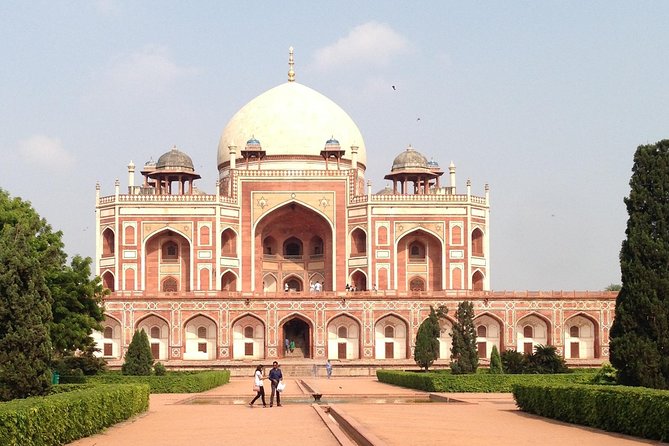
Your day starts with pickup from your hotel or New Delhi Airport at a set time. Then you roll straight into one of the most important Mughal-era sites in Delhi: Humayun’s Tomb. It’s often described as one of the “first Mughal garden-tomb” signals in North India, and seeing it in person gives you a useful baseline for what you’ll later spot at Agra. The layout and the idea of a tomb as a landscaped monument become easier to read once you’ve started here.
Next comes Lotus Temple, the famous Bahá’í House of Worship shaped like a lotus. It’s short and visual, but there’s one practical catch: it remains closed on Mondays, so your exact day matters.
Then you move to India Gate, a war memorial built in memory of Indian soldiers who died from 1914–1921. It’s not just a photo stop. If you pause, you notice the quiet gravity compared with Delhi’s usual movement around it. It gives your trip a reminder that this country’s landmarks are not only about art and royalty—they’re also about sacrifice and national memory.
After that, the tour includes an easy lunch window in Delhi before you begin the 3.30-hour drive to Agra (timing can shift with traffic, which is normal here).
Old Delhi Day 1: Chandni Chowk and Jama Masjid
Agra arrival isn’t the full story of Delhi, though—because the route after lunch also features Chandni Chowk and Jama Masjid. Chandni Chowk is an old market area in Old Delhi, called Moonlight Square, and it’s one of those places where the streets feel like a living ecosystem. The stop is brief, but that’s the point: you get a first hit of the scale and energy without trying to cover everything.
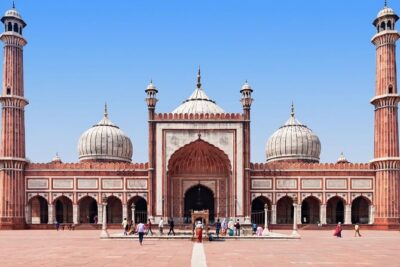
Then comes Jama Masjid, one of India’s largest mosques, with space for over 25,000 devotees at a time. Even if you’re not religious yourself, you’ll feel the architectural confidence here. The building works because it’s designed to gather people—and to make the central courtyard feel like the heart of the area.
There’s also an option for a rickshaw ride through narrow streets around Chandni Chowk. Important detail: the tour notes list rickshaw as not included. So treat it as an add-on if you want it, and budget a little extra.
Finally, you stop at Red Fort from outside for photos. It’s quick—about 15 minutes—but it still gives context. When you see Red Fort later as a landmark in the city, you’ll remember why it’s such a big deal.
The Agra Transfer Day: Highway Time and a Clean Break
The road from Delhi to Agra is where a lot of Golden Triangle itineraries either become exhausting or become a blur. Here, you get a deliberate rhythm: after lunch, you move via the Yamuna Expressway, and en route there’s a planned stop at a highway hotel for restroom use.
Why that matters: in India, having a guaranteed restroom pause beats the “hope for the best” approach. Your day-to-day comfort is part of the tour value, especially if you don’t love negotiating logistics between stops.
When you arrive in Agra, you check in and rest overnight. That small reset is smart. Taj Mahal day is early, and you’ll want your legs—not just your camera battery—ready for sunrise.
Agra at Sunrise: Taj Mahal Without the Stress
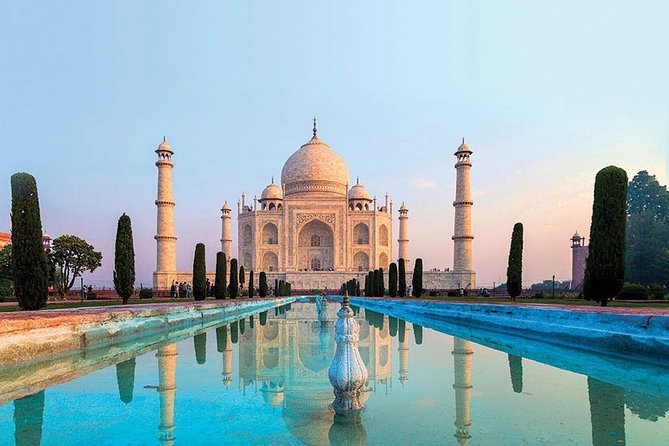
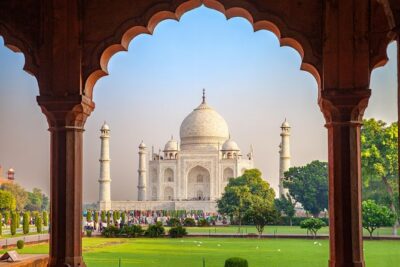
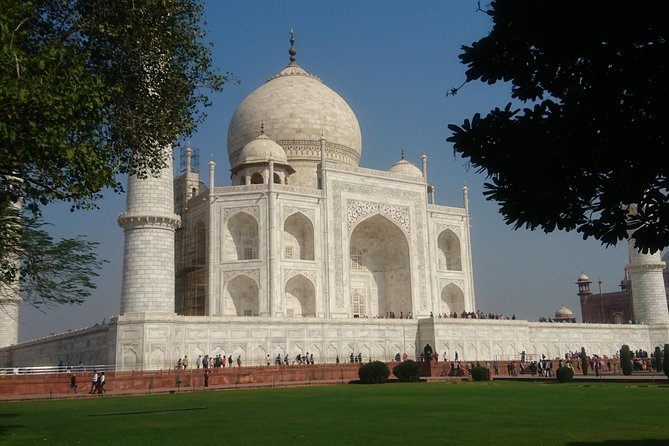
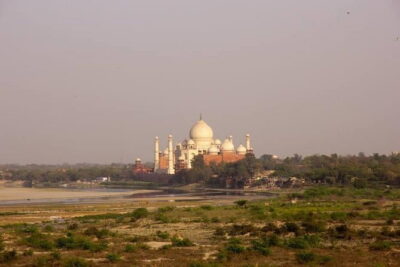
The second day is built around Taj Mahal at sunrise, with a very early start (about 0600 pickup). That timing is not random. Early light softens the marble and makes the whole complex feel calmer. It also helps with the crowd factor compared with later arrival.
What makes this stop special isn’t only the Taj’s fame. It’s the way the site is designed: the symmetry, the reflections, and the way the main structure changes as the light shifts. A good guide helps you notice details you’d miss if you only walked straight to the centerpiece.
The tour includes admission tickets and skip-the-line entry for the Taj Mahal. That’s money well spent here. One of the most annoying things about iconic sights is losing time to queues while your best photos depend on lighting conditions. This tour protects that.
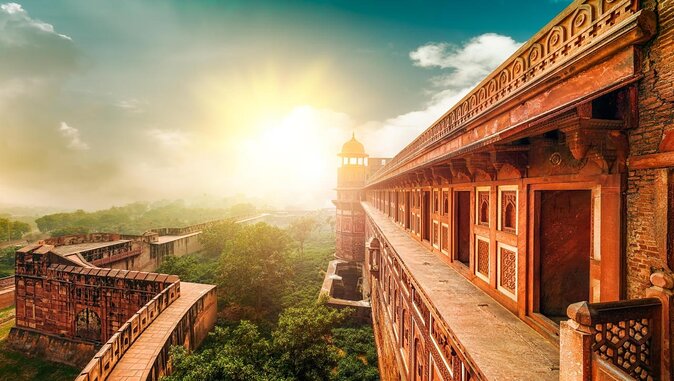
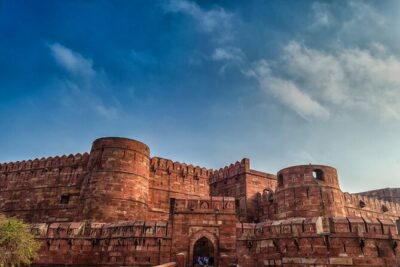
After the Taj, you return for breakfast, then check out and move to Agra Fort. Agra Fort was once a royal seat, and it gives you a different angle on Mughal power: not just mausoleum romance, but defense, administration, and the practical side of empire.
Agra Fort is followed by Fatehpur Sikri, formerly a capital of the great Mughals. It’s a longer hop (about an hour from Agra), and you’ll spend around two hours there. Fatehpur Sikri’s key value is contrast: it’s less about one monument and more about a whole planning idea—palaces built in red stone and the feel of a planned city.
Then you transfer onward to Jaipur and stay overnight.
Chasing the Pink City? More Jaipur day trips
Jaipur Day 1: Amber, Jal Mahal, and Hawa Mahal
Jaipur is the kind of city where the icons are visual before you even know their names. The tour makes sure you see the most recognizable ones without turning Jaipur into a checklist exercise.
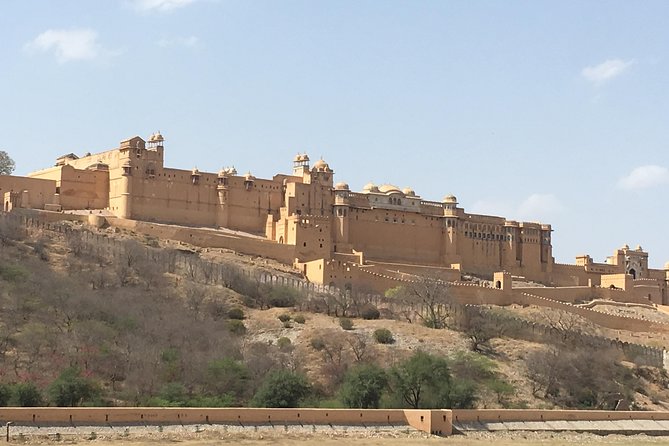
After breakfast, you head to Amber Palace. This is a hilltop fort with ramparts and cobbled paths, so expect uneven walking. Amber is famous for its artistry and “royal” feel, and seeing it with a guide helps connect the design to the people who used it.
Next is Jal Mahal (Water Palace). It’s best from the outside, and it’s a photo stop with an easy rhythm. Even without going inside, it works because it looks like it floats on water in a way that’s unique for a fort setting.
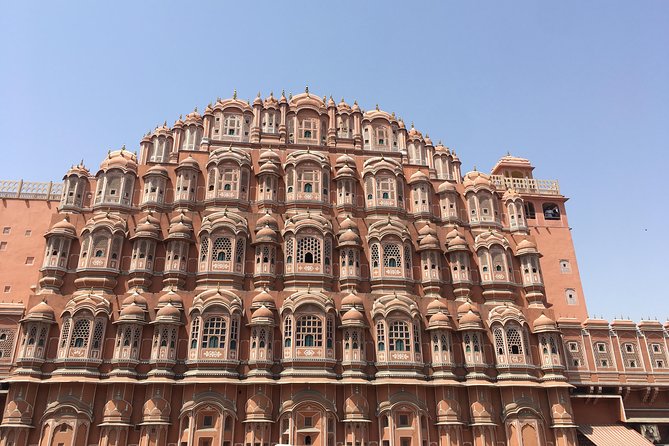
Then you visit Hawa Mahal, the Palace of Wind. Built in 1799, it was designed for royal women to observe city life through small windows without being seen by outsiders. You’ll likely notice the repeated window pattern fast, but a guide helps you understand why those details mattered socially, not just aesthetically. The tour notes mention 953 windows, which gives you something fun to look for on the facade.
After that, the schedule includes City Palace, which served as administrative and ceremonial seat of the Maharaja of Jaipur. Today it’s a museum with courtyards and buildings used for different purposes. This stop is where you’ll feel Jaipur’s “royal city” identity most clearly. It’s not just pretty; it’s functional architecture turned into a public story.
You also cover Jantar Mantar, the old astrological instruments site, and specifically the largest sun dial mentioned in the tour notes. It’s a reminder that “science” in royal India often looked like architecture and public measurement.
Finally, you add a couple of quieter extras: Panna Meena ka Kund, a step well near Amber Fort built for collecting water, and Gaitore Ki Chhatriyan, crematorium memorials linked to the Kachwaha Rajputs. These last stops add texture. They keep Jaipur from feeling like only postcards.
Jaipur to Delhi: A Smooth End to a Long Day
On the final day, after the Jaipur icons, you return toward New Delhi for lunch and a drop-off at your hotel or the airport. The drive time listed is around 5 hours, and the reality is that it depends on traffic and timing.
This is the part I think people underestimate: leaving Jaipur after a full sightseeing day means you won’t want more planned stops once you’re on the highway. The tour’s structure makes that workable because you’re not rushing to “one more thing.” You’re aiming for a clean finish so you can make your next flight or evening plans with less stress.
Also, the tour operates in all weather conditions, so you’ll want a light layer and something for sun or rain. Smart casual dress is the listed dress code—practical and not overly fussy.
Private Guide Value: What You Actually Get
A private guide sounds fancy, but here’s what it does for you in real terms:
- Time-saving explanations: You don’t need to guess what you’re looking at. The guide helps you move faster mentally, not just physically.
- Context for photo stops: Without context, big monuments turn into “cool buildings.” With context, they become “a design choice by a specific era.”
- Language barrier help: The tour is built around reducing communication friction across multiple cities.
If you’re curious about what that looks like in practice, one Jaipur guide named B.L. Kumavat is specifically remembered for being funny in a positive way. Another driver named Raza is noted for speaking English and sharing information on the way between locations. Names vary by departure, but the overall intent is consistent: explanations while you travel, not just at the monument gates.
Price and Value: Is $119.15 a Good Deal?
At $119.15 per person for a 3-day private Golden Triangle, the key is what’s folded into that price.
You’re getting:
- 2 nights in a three-star category hotel on a twin-sharing basis
- Private guides in each city
- Hotel pickup and drop-off daily
- Entrance tickets for monuments
- Skip-the-line help for Taj Mahal and other major sites
- Breakfast (2) and bottled water
You’re not getting:
- Lunch and dinner
- Rickshaw ride in New Delhi
- Optional gratuities
- Christmas/New Year Eve hotel gala charges (paid directly to the hotel)
So the value math is basically: you’re paying for convenience and reduced friction across three major cities. If you were to DIY this—hotel, guides, entrance tickets, and transportation—the admin time and ticket chaos can easily eat more than the difference.
One more “value” point: Taj Mahal skip-the-line is the kind of add-on that feels minor until you’re staring at a queue in the heat. Paying upfront for that comfort is smart.
Who This Tour Fits Best
This is a strong match if:
- You want a first-time-friendly taste of Delhi, Agra, and Jaipur
- You dislike figuring out logistics across cities
- You want private guidance so the trip makes sense as you go
- You’re okay with early starts for sunrise
It’s less ideal if:
- You want lots of free time in one city
- You prefer minimal driving and long, slow days
- You’re the type who hates structured schedules entirely
Should You Book This 3-Day Delhi–Agra–Jaipur Golden Triangle?
Yes—if you want a well-run introduction to India’s most famous triangle sights with fewer “where do we go next?” moments. The sunrise Taj Mahal focus, skip-the-line handling, and private guides are the big reasons this works.
I’d especially recommend it for first-timers who want to feel confident when they walk into places like Jama Masjid, Agra Fort, and City Palace. The trip is fast, but it’s fast in a controlled way, with enough context that it doesn’t feel like you’re just rushing from gate to gate.
If your main goal is deep slow travel or lots of independent roaming, you might choose a longer itinerary instead. But for three days, this is a practical, value-driven route.
FAQ
What’s included in the tour price?
The tour includes two nights in a three-star category hotel on a twin-sharing basis, private guides in each city, bottled water, monument entrance tickets across Delhi–Agra–Jaipur, skip-the-line entry for Taj Mahal and other monuments, and breakfast for two days.
Is hotel pickup and drop-off included?
Yes. Pickup and drop-off are included each day, and the driver meets you either at your hotel in New Delhi or at New Delhi Airport based on the pre-set time.
Are entrance tickets included for the main monuments?
Yes. The tour includes entrance of monuments during the route, with skip-the-line tickets specifically noted for Taj Mahal and other monuments.
Is lunch or dinner included?
No. Lunch and dinner are not included, though there are lunch breaks during the drives.
Is the rickshaw ride in New Delhi included?
Rickshaw ride in New Delhi is listed as not included. The itinerary mentions it as an activity in the area, but you should treat it as an optional add-on.
What about Lotus Temple if my Delhi day is Monday?
Lotus Temple is noted as closed on Monday, so you may not be able to visit it if your itinerary day falls on Monday.
What kind of vehicle do you use?
It depends on group size: a sedan for 1–2 people, a 7-seater SUV for 3–5 people, and a 12-seater mini bus for 6–10 people.
The Full Golden Triangle, More Options
- 3-Days Private Golden Triangle Tour: Delhi, Agra & Jaipur by Car
★ 5.0 · 1,107 reviews - 3-Days Private Golden Triangle Tour: Delhi, Agra & Jaipur by Car
★ 5.0 · 1,098 reviews - 3-Day Delhi, Agra and Jaipur Private Tour – India Golden Triangle
★ 5.0 · 812 reviews - Four-Day Private Luxury Golden Triangle Tour to Agra and Jaipur From New Delhi
★ 5.0 · 807 reviews - 5 Nights 6 Days Private Golden Triangle Tour – Delhi Agra Jaipur
★ 5.0 · 574 reviews
Onward to Jaipur: More Day Trips
- 3-Days Private Golden Triangle Tour: Delhi, Agra & Jaipur by Car
★ 5.0 · 1,107 reviews - 3-Days Private Golden Triangle Tour: Delhi, Agra & Jaipur by Car
★ 5.0 · 1,098 reviews - 3-Day Delhi, Agra and Jaipur Private Tour – India Golden Triangle
★ 5.0 · 812 reviews - Four-Day Private Luxury Golden Triangle Tour to Agra and Jaipur From New Delhi
★ 5.0 · 807 reviews - Jaipur Day Trip from Delhi by Car or Train – All Inclusive
★ 5.0 · 663 reviews
More Agra Day Trips out of Delhi
- Same Day Taj Mahal, Agra Fort & Baby Taj Tour from Delhi by Car
★ 5.0 · 4,304 reviews - Full Day Taj Mahal, Agra Fort & Baby Taj Tour from Delhi by Car
★ 5.0 · 3,647 reviews - From Delhi: Taj Mahal & Agra Private Day Trip with Transfers
★ 4.9 · 3,181 reviews - From Delhi: Taj Mahal and Agra Fort Private Sunrise Tour
★ 4.9 · 2,270 reviews - Sunrise Taj Mahal, Agra Fort & Baby Taj Tour from Delhi by Car
★ 5.0 · 2,243 reviews
Just added: more New Delhi reviews to browse
- 4 days Golden Triangle Tour★ 5.0 · 3 reviews
- Discover Old & New Delhi: Private Tour with Street Food★ 5.0 · 3 reviews
- Taj Mahal Tour From Delhi By Private Car★ 4.5 · 3 reviews
- Golden Triangle Tour 5 Days★ 5.0 · 3 reviews
- Taj Mahal: Express Entry Ticket For Sunset Tour with guide★ 5.0 · 3 reviews
- Agra Taj Mahal Sunrise & Sunset Tour from Delhi★ 5.0 · 3 reviews
Agra Day Trips from Delhi, compared.
 ★ 5.0Same Day Taj Mahal, Agra Fort & Baby Taj Tour from Delhi by CarFrom $624,304 reviews
 ★ 5.0Full Day Taj Mahal, Agra Fort & Baby Taj Tour from Delhi by CarFrom $623,647 reviews
 ★ 4.9From Delhi: Taj Mahal & Agra Private Day Trip with TransfersFrom $43,181 reviews
 ★ 4.9From Delhi: Taj Mahal and Agra Fort Private Sunrise TourFrom $592,270 reviews
 ★ 5.0Sunrise Taj Mahal, Agra Fort & Baby Taj Tour from Delhi by CarFrom $622,243 reviews
 ★ 5.0Taj Mahal and Agra Private Car Tour from Delhi with 5* LunchFrom $331,633 reviews
 ★ 4.9From Delhi: Private Taj Mahal and Agra Tour by Express TrainFrom $751,605 reviews
 ★ 5.0Taj Mahal, Agra Fort, Baby Taj Tour from Delhi by Superfast TrainFrom $751,494 reviews