
Reviewed · AGRA DAY TRIPS FROM DELHI
Private 3-Day Golden Triangle Tour: Delhi, Agra & Jaipur by Car
Three cities, one smooth car ride. This private Golden Triangle tour pairs licensed local guides with a private, air-conditioned vehicle, so you can keep a relaxed pace while you cover Delhi, Agra, and Jaipur. My only caution is that monument entrance fees add up, and some sites prefer cash in INR.
What I like most is the freedom. You can choose a guide-only setup, a private car plan, or upgrade to 4- or 5-star hotel options, then customize the sightseeing if something doesn’t fit your style. And when the guide team includes people like Sanjiv or Anil, you get clear explanations (often with a bit of humor) plus practical help like where to eat without hunting around.
Old Delhi can feel like sensory overload—until you’re on a plan. This itinerary uses a rickshaw ride through the historic lanes and wraps the biggest sights into a day that still leaves room to breathe.
In This Review
- Key highlights at a glance
- Why the Golden Triangle feels easier with a private car
- Delhi Day 1: Qutub Minar, Lotus Temple, and Old Delhi by rickshaw
- Delhi details that matter: closures and how your day stays on track
- The Delhi lunch break you’ll actually use
- Day 2 in Agra: sunrise Taj Mahal and the perfect trio
- Agra Fort and Baby Taj: why the order works
- Drive to Jaipur: how to make 4 hours feel short
- Jaipur Day 3: Jaigarh Fort, Hawa Mahal, and City Palace
- Jal Mahal and Jantar Mantar: two stops that slow you down
- Price and value: what $56.74 per person really covers
- Practical logistics that save you stress
- Who this tour suits best
- Should you book this private 3-day Golden Triangle by car?
- FAQ
- Is the tour private or shared?
- What’s included in the price?
- Are monument entrance fees included?
- What if I’m traveling on a Friday?
- What happens if I’m traveling on a Monday?
- Can I customize the hotel quality or add/remove sights?
- Do I need cash for entrance tickets?
Key highlights at a glance
- Private, air-conditioned car with hotel/airport pickup and drop-off in Delhi, Agra, and Jaipur
- Government-approved local guides who guide you through the big-ticket monuments with context
- Old Delhi routing with rickshaw ride plus time at Chandni Chowk, Jama Masjid, and Khari Baoli
- Sunrise Taj Mahal with a battery-operated shuttle from parking to the monument
- Thoughtful pacing: lunch stops are built in, and drives are planned for comfort
- On-the-fly adjustments for closures (like Taj Mahal on Fridays and Red Fort/Lotus Temple on Mondays)
Why the Golden Triangle feels easier with a private car
If you’ve tried doing the Golden Triangle on your own, you already know the pattern: tickets, lines, sudden closures, and “where do we go next?” all stack up. Here, the car and guide work as a team. You don’t waste time negotiating taxis or trying to match routes to your energy level.
You’ll also like the flexibility in how this tour can be arranged. The experience can be configured as guide-only, private car, or paired with hotel options (including 4- or 5-star choices), so you can steer it toward budget-smart or comfort-heavy. In practice, that means you’re not locked into one rigid format.
Another practical win is that you get daily support from the tour team. It’s not just a driver who waits. You get coordinated sightseeing and guidance—plus things like complimentary bottled water during journeys—so the day doesn’t unravel when traffic or timing gets tricky.
Other Agra runs out of Delhi worth a look




Delhi Day 1: Qutub Minar, Lotus Temple, and Old Delhi by rickshaw
Delhi starts with a strong foundation. Qutub Minar is where you get your first real “this is old” moment, and the timing gives you a clean start to the day with pickup arranged from your Delhi-area hotel or nearby locations. Plan for around an hour here, then keep moving.
Next comes the Lotus Temple. It’s one of those buildings that’s easy to miss if you just speed through Delhi, but it’s worth the stop. It’s free to enter, it’s calm, and the design is instantly recognizable—like a work of architecture made for quiet pauses.
Then you’ll do a drive-by loop that sets the stage for New Delhi’s official landmarks. Passing sights like the Red Fort (from the outside), the Tomb of the Unknown Soldier, and the broad Lutyens-and-Baker-style layout helps you understand how Delhi is split between imperial history and modern power. You don’t have to “tour” those drive-bys, but they give you context fast.
Old Delhi is where the itinerary turns into a hands-on experience. You’ll head into Chandni Chowk, and this is where the rickshaw ride through historic lanes comes in handy. It helps you see the street texture without walking every step. Expect a mix of spices, dry fruits, jewelry, saris, and sweets—all packed into narrow lanes.
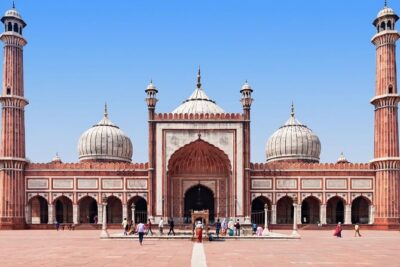
From there, you visit Jama Masjid (about an hour). It’s a major Mughal-era mosque and one of the largest in India, and the scale feels different once you’re inside. The stop doesn’t include the entrance fee, so factor that into your budget.
Finally, you finish with Khari Baoli, an enormous wholesale spice market. This is the kind of place where you’ll smell your way through decisions about what to buy, even if you don’t plan to shop. It’s also a great place to see how everyday trade works in Old Delhi.
Delhi details that matter: closures and how your day stays on track
Delhi is the kind of city where closures can mess up a “must-see” list. The good part is that this tour accounts for major schedule changes.
If you land on a Monday, Red Fort and Lotus Temple are closed, so the route shifts and includes Gurudwara Bangla Sahib instead. If you’re traveling on a Friday, the Taj Mahal is closed on that day later in the trip, and the overall order is adjusted so you’re not left waiting around.
Even with closures handled, you should still keep one expectation realistic: monuments are not always predictable. That’s why the guide and vehicle matter. Your day won’t be a scramble of last-minute taxis because your sightseeing order can be adjusted.
One more detail that’s worth your attention: some monuments don’t accept credit cards for tickets. I strongly suggest carrying cash in INR for entrance fees. Your guide can help you find nearby ATMs if needed, but cash makes your life easier.
The Delhi lunch break you’ll actually use
This tour builds in a meal break on Day 1. Your guide uses that hour to point you toward popular, hygienic local restaurants, and it’s not framed as a generic stop. It’s more like: here’s where you can eat without overthinking it.
The value here is time and sanity. Old Delhi can be intense, and you don’t want to spend your only break hunting for a reliable place. If your guide is the sort who thinks ahead (and some guides—like Sanjiv—have done well here), you can get a solid meal choice and get back to sightseeing feeling human.
Day 2 in Agra: sunrise Taj Mahal and the perfect trio
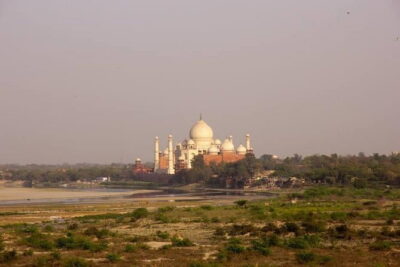
Agra morning starts early for a reason. The Taj Mahal is planned as a sunrise visit, which is often when the light looks best on the white marble and the crowds feel more manageable. You’ll spend about two hours at the monument with a guide who can explain what you’re seeing while you’re still there to absorb it.
Tickets for the Taj Mahal aren’t included, so check your budget. Also, it’s closed on Fridays, and your itinerary is adjusted if your dates land there.
The shuttle detail is small but important. Battery-operated shuttle service runs from the Taj Mahal parking area to the monument and back, so you’re not wasting energy walking long distances right after a sunrise wake-up.
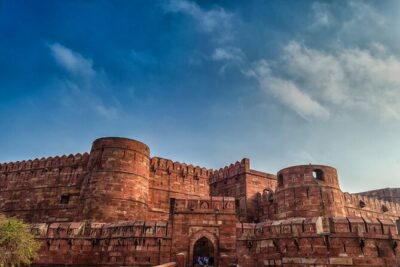
After the Taj, you’ll visit Agra Fort. This UNESCO site dates back to the Mughal era and is a different kind of monument from the Taj: more forts, courtyards, palaces, and a stronger sense of power and defense. Plan on about an hour here.
Then comes Itmad-ud-Daulah, often called the Baby Taj. It’s compact and delicate, and it’s especially rewarding if you like seeing marble work up close. This stop is shorter, around 30 minutes, but it changes the feel of the day from grand to detailed.
Between monuments, you’ll get a break for local cuisine in Agra. Again, this is about convenience and guidance. An informed food stop can be the difference between eating well and spending the afternoon stuck with the wrong choice.
Chasing the Pink City? More Jaipur day trips

Agra Fort and Baby Taj: why the order works
This sequence matters. The Taj Mahal is the emotional hit. Agra Fort is the historical engine. Itmad-ud-Daulah is the finishing close-up—where you can appreciate craft details after seeing the bigger picture.
If you’re doing this trip in a short window, that order helps your brain organize what you’re learning. You don’t just “collect photos.” You build a quick sense of timeline and purpose across the same region.
And because it’s a private plan, your pace is yours. If you want to linger at one stop longer (or step out briefly for a rest), you’re not stuck waiting for a group.
Drive to Jaipur: how to make 4 hours feel short
The Agra-to-Jaipur transfer is about four hours, and it’s one of the longer stretches on the itinerary. The private car helps because you’re not scheduling a chain of rides. You’ll also have bottled water during journeys, and the car type is based on group size (from a sedan like a Toyota Etios for 1–2 people up to a larger Tempo Traveler van for bigger groups).
This is also where choosing your hotel option can matter. If you upgrade to a better category, you typically arrive with more energy because you’re not scrambling for basic comfort after a long day. The tour drops you at your pre-booked hotel for the overnight stay.
You’ll get the next day’s Jaipur pickup after breakfast.
Jaipur Day 3: Jaigarh Fort, Hawa Mahal, and City Palace
Jaipur opens with Jaigarh Fort. This is about vantage and scale. Built in the early 1700s, it sits on the Aravalli hills and gives you a sense of how Jaipur’s rulers planned visibility and defense. Plan on about two hours, and expect it to feel less like a photo checklist and more like a real place you can walk and understand.
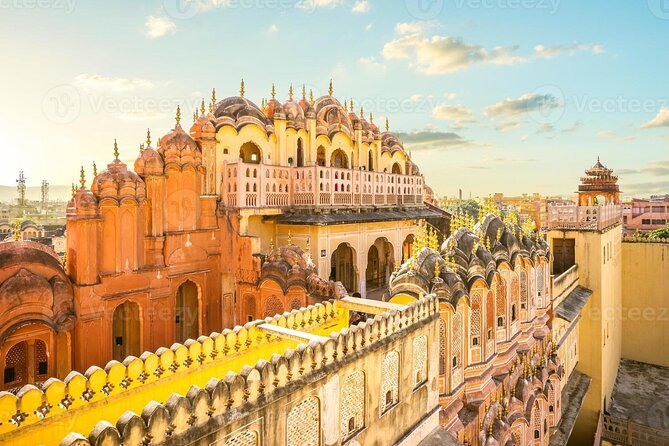
Then you hit Hawa Mahal, the Palace of Winds. The five-story façade with its 953 carved jharokhas is instantly iconic, and the stop is short—about 30 minutes. The value here is recognizing it as a functional design: it allowed royal ladies to observe street life while keeping privacy.
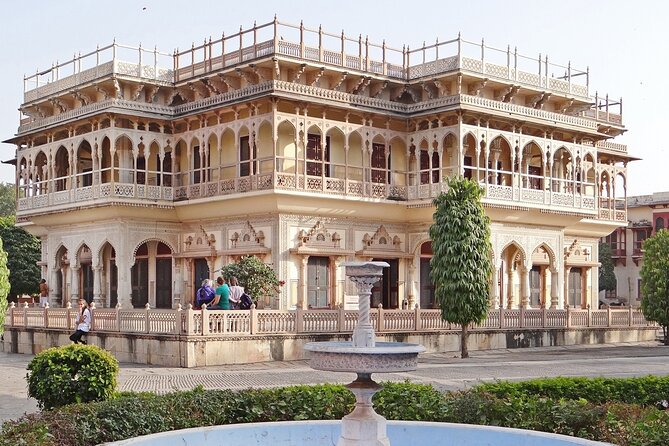
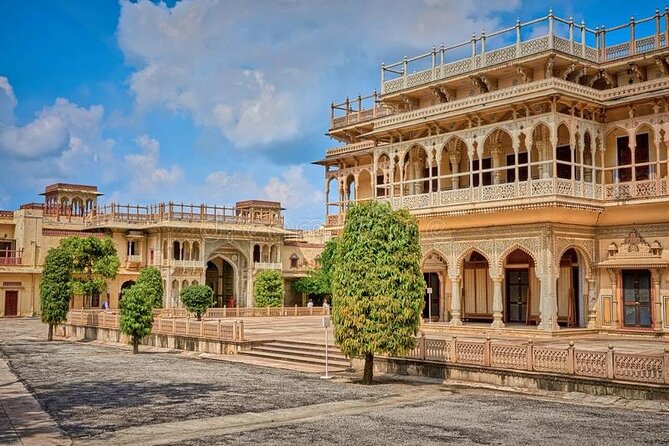
City Palace follows in the heart of Jaipur. You’ll have around an hour to wander courtyards, gardens, and palace structures that now function as part museum and part living monument. This stop helps you connect Hawa Mahal’s street-facing image to the broader royal complex behind it.
Jal Mahal and Jantar Mantar: two stops that slow you down
After City Palace, you visit Jal Mahal. It’s a palace set in Man Sagar Lake, and while it’s not the biggest attraction on the list, it’s one of the most calming. You get scenic views and a break from the “walk-walk-walk” rhythm. The stop is about 30 minutes, and it’s listed as free admission.
Later, you finish with Jantar Mantar. This UNESCO site is an ancient observatory and one of the best-preserved in India. The stop is around 30 minutes, and it’s a great way to add variety to the trip: Jaipur isn’t only forts and palaces. It’s also science-era design turned into architecture.
At the end, you drive back to Delhi (about four hours) or you can be dropped at Jaipur Airport if that fits your flights.
Price and value: what $56.74 per person really covers
The headline price is attractive, but the smart question is: what are you getting for it?
For transportation and guidance, you’re getting strong coverage. Private air-conditioned vehicle, hotel/airport pickup and drop-off in each city, government-approved local guides, and a bunch of small but helpful inclusions like parking fees, tolls, fuel charges, taxes, and service charges are covered. You also get daily bottled water during journeys.
Then there are the things that cost extra: entrance fees to monuments are listed as about $70 per person, and gratuities are optional.
Here’s how I’d judge value: if you’d otherwise pay for a private driver, pay for guide services, and then still figure out entrance tickets and logistics across three cities, the packaged format tends to be a better deal. The “discount” feel also comes from the private nature of the tour. You’re not splitting time with strangers, and you’re not scrambling when someone’s timing slips.
Practical logistics that save you stress
A few small realities can make or break a short tour like this one.
First, plan for cash. Since some sites don’t accept credit cards, carry INR for entrance tickets. Your guide can help locate an ATM, but you’ll save time and reduce friction by arriving prepared.
Second, treat Fridays and Mondays as date-variable days. Taj Mahal closure on Fridays triggers an itinerary swap, and Red Fort/Lotus closures on Mondays bring in Gurudwara Bangla Sahib. This tour handles it, but knowing the pattern helps you avoid surprise.
Third, pack for walking. You’re doing multiple monuments plus markets. Even if stops are shorter, Jaipur and Old Delhi involve plenty of movement, stairs, and uneven paths.
Fourth, use the guide’s strengths. In past trips, guides like Kamal and Madhan have been praised for steering people to the right places and explaining what they’re seeing. So ask questions. If you like photography, say so. If you want less walking, speak up early. A private setup is only as flexible as you make it.
Who this tour suits best
This is a strong fit if you want a classic Golden Triangle route without turning it into a self-managed headache. It’s also a good match for first-timers who want context, not just checkmarks.
If you’re traveling solo, you’ll probably appreciate the private structure and the coordinated pickup/drop-off rhythm. One theme that shows up in the experience is safety and professionalism in how the driver and guide work as a team.
If you’re traveling with friends or family, the vehicle sizing makes sense. Smaller groups tend to get sedans, and bigger groups can be placed in larger vans for comfort.
Should you book this private 3-day Golden Triangle by car?
I’d book it if you want the Golden Triangle in a way that feels organized, comfortable, and easier to enjoy. The biggest reasons are the combination of private transport and government-approved local guides, plus real time inside the major monuments and a structured Old Delhi day that doesn’t leave you guessing.
I’d think twice if you hate paying entrance fees on top of the tour price, because the listed monument admissions (around $70 per person) are an extra line item. And if you’re strict about card-only payments, bring cash in INR since some sites don’t accept credit cards.
If your dates fall on a Friday or Monday, you still have a plan—the route is adjusted to match closures—so you’re not stuck.
If you want a classic route with less stress and better pacing, this private car Golden Triangle is a smart way to do it.
FAQ
Is the tour private or shared?
It’s a private tour/activity, meaning only your group participates.
What’s included in the price?
You get pickup and drop-off in Delhi, Agra, and Jaipur, private air-conditioned transportation, two nights of accommodation (based on the option selected), private government-approved guides, a rickshaw ride in Old Delhi, bottled water during journeys, and fees for parking, tolls, and fuel.
Are monument entrance fees included?
No. Entrance fees are listed separately at about $70.00 per person, and Taj Mahal tickets are not included.
What if I’m traveling on a Friday?
The Taj Mahal is closed on Fridays. If your itinerary includes a Friday, the route is adjusted to Delhi – Jaipur – Agra – Delhi.
What happens if I’m traveling on a Monday?
Red Fort and Lotus Temple are closed on Mondays. The tour visits Gurudwara Bangla Sahib instead.
Can I customize the hotel quality or add/remove sights?
Yes. The tour is fully customizable, and you can choose guide-only, a private car setup, or hotel options (including 4- or 5-star categories). You can also request itinerary changes.
Do I need cash for entrance tickets?
Some monuments do not accept credit card payments, so it’s advised to carry cash in INR for entrance fees. Your guide can help you find nearby ATMs if necessary.
The Full Golden Triangle, More Options
- 3-Days Private Golden Triangle Tour: Delhi, Agra & Jaipur by Car
★ 5.0 · 1,107 reviews - 3-Days Private Golden Triangle Tour: Delhi, Agra & Jaipur by Car
★ 5.0 · 1,098 reviews - 3-Day Delhi, Agra and Jaipur Private Tour – India Golden Triangle
★ 5.0 · 812 reviews - Four-Day Private Luxury Golden Triangle Tour to Agra and Jaipur From New Delhi
★ 5.0 · 807 reviews - 5 Nights 6 Days Private Golden Triangle Tour – Delhi Agra Jaipur
★ 5.0 · 574 reviews
Onward to Jaipur: More Day Trips
- 3-Days Private Golden Triangle Tour: Delhi, Agra & Jaipur by Car
★ 5.0 · 1,107 reviews - 3-Days Private Golden Triangle Tour: Delhi, Agra & Jaipur by Car
★ 5.0 · 1,098 reviews - 3-Day Delhi, Agra and Jaipur Private Tour – India Golden Triangle
★ 5.0 · 812 reviews - Four-Day Private Luxury Golden Triangle Tour to Agra and Jaipur From New Delhi
★ 5.0 · 807 reviews - Jaipur Day Trip from Delhi by Car or Train – All Inclusive
★ 5.0 · 663 reviews
More Agra Day Trips out of Delhi
- Same Day Taj Mahal, Agra Fort & Baby Taj Tour from Delhi by Car
★ 5.0 · 4,304 reviews - Full Day Taj Mahal, Agra Fort & Baby Taj Tour from Delhi by Car
★ 5.0 · 3,647 reviews - From Delhi: Taj Mahal & Agra Private Day Trip with Transfers
★ 4.9 · 3,181 reviews - From Delhi: Taj Mahal and Agra Fort Private Sunrise Tour
★ 4.9 · 2,270 reviews - Sunrise Taj Mahal, Agra Fort & Baby Taj Tour from Delhi by Car
★ 5.0 · 2,243 reviews
Just added: more New Delhi reviews to browse
- 4 days Golden Triangle Tour★ 5.0 · 3 reviews
- Discover Old & New Delhi: Private Tour with Street Food★ 5.0 · 3 reviews
- Taj Mahal Tour From Delhi By Private Car★ 4.5 · 3 reviews
- Golden Triangle Tour 5 Days★ 5.0 · 3 reviews
- Taj Mahal: Express Entry Ticket For Sunset Tour with guide★ 5.0 · 3 reviews
- Agra Taj Mahal Sunrise & Sunset Tour from Delhi★ 5.0 · 3 reviews
Agra Day Trips from Delhi, compared.
 ★ 5.0Same Day Taj Mahal, Agra Fort & Baby Taj Tour from Delhi by CarFrom $624,304 reviews
 ★ 5.0Full Day Taj Mahal, Agra Fort & Baby Taj Tour from Delhi by CarFrom $623,647 reviews
 ★ 4.9From Delhi: Taj Mahal & Agra Private Day Trip with TransfersFrom $43,181 reviews
 ★ 4.9From Delhi: Taj Mahal and Agra Fort Private Sunrise TourFrom $592,270 reviews
 ★ 5.0Sunrise Taj Mahal, Agra Fort & Baby Taj Tour from Delhi by CarFrom $622,243 reviews
 ★ 5.0Taj Mahal and Agra Private Car Tour from Delhi with 5* LunchFrom $331,633 reviews
 ★ 4.9From Delhi: Private Taj Mahal and Agra Tour by Express TrainFrom $751,605 reviews
 ★ 5.0Taj Mahal, Agra Fort, Baby Taj Tour from Delhi by Superfast TrainFrom $751,494 reviews