

Reviewed · AGRA DAY TRIPS FROM DELHI
Private 3-Day Golden Triangle Tour : New Delhi Agra And Jaipur
Three cities in three days can actually work.
This private Golden Triangle route strings together Delhi, Agra, and Jaipur with a local guide, a dedicated driver, and the kind of planning that keeps you moving without feeling rushed. You’ll see big-ticket sites like Humayun’s Tomb, Qutub Minar, and the Taj Mahal, plus standout Jaipur sights like Amber Fort and City Palace.
I especially like that you get professional local city guides (not just a driver who drops you off), and you’re also set up with two nights in a 4 to 5 star hotel plus every day buffet breakfast included. In other words, you’re paying for the whole machine: guidance, timing, and comfort.
One thing to factor in: monument admission and camera fees aren’t included, and the Taj Mahal comes with two timing rules—it’s closed every Friday, and sunrise timing is weather-dependent. If you’re the type who hates ticket lines and uncertainty, plan to budget a bit extra and stay flexible.
In This Review
- Key highlights in plain terms
- The Golden Triangle route in 3 days (and why it feels worth it)
- Day 1 in Delhi: Humayun’s Tomb, Qutub Minar, and India Gate
- Humayun’s Tomb: garden-planning that changed what “tomb” meant
- Qutub Minar: the Victory Tower and a 73-meter flex
- India Gate: a war memorial break between heavy hitters
- The big Agra day: Taj Mahal timing and Agra Fort’s Mughal power
- Taj Mahal: plan for sunrise reality and Friday closures
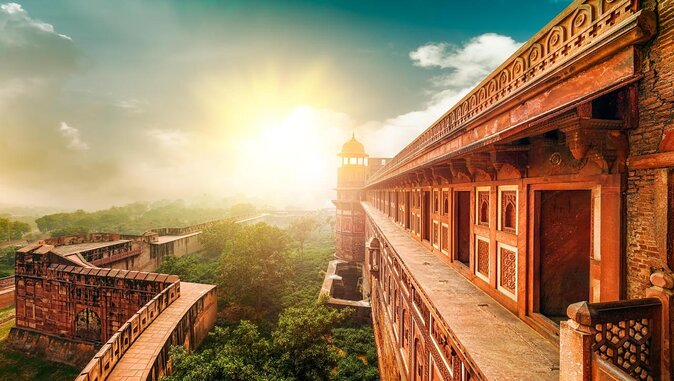
- Agra Fort: the former Mughal residence you don’t skip
- Day 3 in Jaipur: Amber Fort ramparts, City Palace courtyards, and Jantar Mantar
- Amber Palace (Amer Fort): ramparts, gates, and a big visual punch
- City Palace: Mughal and Rajput architecture in one functioning complex
- Jantar Mantar: an astronomy stop that’s actually practical to understand
- Hotels, breakfasts, and private driving that keep the trip sane
- Price and value: what $436 per person really covers
- Tickets, walking time, and small rules that can make or break your day
- Should you book this 3-day Golden Triangle tour?
- FAQ
- How long is the Private 3-Day Golden Triangle Tour?
- What is included in the tour price?
- What is not included?
- Do I need to buy tickets in advance for Humayun’s Tomb, Qutub Minar, and the Taj Mahal?
- Is Taj Mahal sunrise visit guaranteed?
- Are there any sites with free admission on this tour?
- How does the tour handle transportation between cities?
- Are the hotel accommodations part of the tour?
- What documents do I need on the day of travel?
Key highlights in plain terms
- Private driver + air-conditioned vehicle to connect Delhi, Agra, and Jaipur with fewer hassles
- UNESCO morning-and-afternoon rhythm: Humayun’s Tomb and Qutub Minar in Delhi, Taj Mahal in Agra, Amber + City Palace in Jaipur
- Buffet breakfast included for 2 mornings, plus bottled water on the tour days
- Clear focus on iconic sights like the Taj Mahal (built 1628–1658) and Qutub Minar (73 meters, UNESCO)
- Friday Taj rule and sunrise weather note so you can avoid disappointment
- Guide quality called out by name in feedback, including Sunil Poddar and driver Mr. Gaurav
The Golden Triangle route in 3 days (and why it feels worth it)
The Golden Triangle is famous for a reason: Delhi gives you Mughal-era grandness, Agra brings the Taj Mahal, and Jaipur delivers royal architecture and strong local identity. What makes this version practical is that it’s a private, guided route with private transportation, so you’re not piecing together buses and timing on the fly.
In three days, you’ll see the headlines—and also get just enough context to understand what you’re looking at. I find that matters. A monument can be beautiful even without explanation, but when you know why it was built a certain way, you notice details you’d otherwise miss.
This isn’t a slow, lingering tour, though. You’re visiting major landmarks with set time windows at each stop. If you love wandering for hours in one neighborhood, you might want to add extra days later.
Other Agra runs out of Delhi worth a look




Day 1 in Delhi: Humayun’s Tomb, Qutub Minar, and India Gate
Your Delhi day hits three very different moods: gardens and design (Humayun’s Tomb), religious victory architecture (Qutub Minar), then a reflective city memorial (India Gate).
Humayun’s Tomb: garden-planning that changed what “tomb” meant
Humayun’s Tomb is built by Humayun’s first wife, Bega Begum, and it was designed by Mirak Miraz Giyas. It’s often described as India’s first garden-tomb, and it’s a UNESCO site since 1993—so you’re not just seeing something pretty, you’re seeing a design concept that influenced later architecture.
The tomb follows the char bagh layout, a four-garden system that divides space into a formal, balanced plan. And inside, the entry tomb is made of red sandstone—a detail you’ll feel more than you’ll photograph, because the color and texture are part of the way the monument “sets the scene.”
You’ll have about 45 minutes here, and admission is not included, so budget time to handle tickets before you enter.
Qutub Minar: the Victory Tower and a 73-meter flex
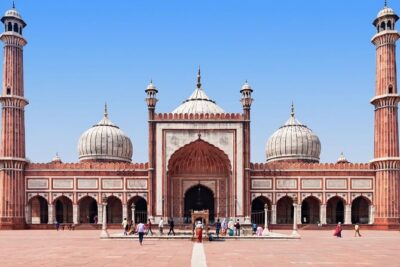
Next up is Qutub Minar, often called the Victory Tower. It’s recognized as the tallest brick minaret in the world, at 73 meters, and it’s also a UNESCO site.
This is one of those places where being there in person helps. The scale is hard to judge from photos because it’s not just height—it’s the layers, the vertical rhythm, and the way the monument dominates the skyline around it. Even if you don’t climb, the tower still reads as a statement.
You’ll get about 45 minutes for this stop. Admission isn’t included, so think of your ticket as part of the tour prep, not a surprise cost.
India Gate: a war memorial break between heavy hitters
India Gate is shorter on the clock—about 30 minutes—but it’s a nice change of pace. It’s a war memorial gate, and it gives your day a pause between UNESCO giants.
The good news: India Gate admission is free (at least as listed on this tour). If you want quick photos and a stretch, this is the stop where you can do it without feeling like you’re paying extra to stand still.
Chasing the Pink City? More Jaipur day trips

The big Agra day: Taj Mahal timing and Agra Fort’s Mughal power
Agra is where the Golden Triangle either becomes magical or becomes hectic—depending on timing and expectations. This tour sets you up for the essentials: Taj Mahal first, then Agra Fort.
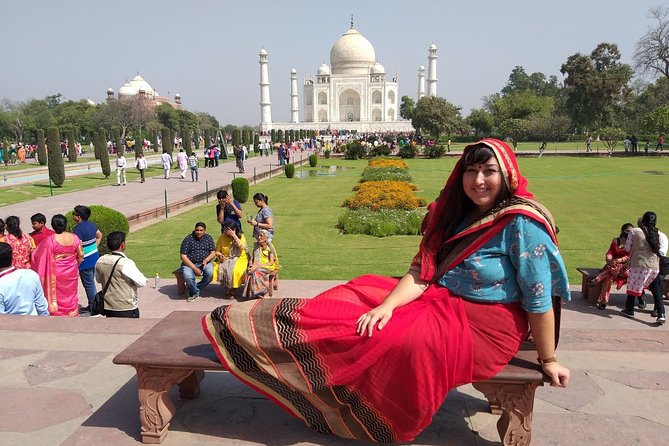
Taj Mahal: plan for sunrise reality and Friday closures
The Taj Mahal is called the Crown of the Palace, built by Mughal Emperor Shah Jahan. Work began in 1628 and it was completed in 1658. It’s also a UNESCO site (listed as 1983).
You may hear about Taj Mahal sunrise visits a lot in tour marketing, and this tour also mentions sunrise timing being subject to weather conditions. That’s smart. Fog, cloud cover, or rain can change what you can actually see, even if you’re ready.
Two practical notes you should treat seriously:
- Taj Mahal is closed every Friday on this tour’s schedule info.
- Admission tickets aren’t included, and camera fees may apply.
The listed time window is about 2 hours. That’s enough to do the classic viewing circuit without feeling like you’re speed-running. But if you’re a slow photographer, you’ll want extra time added on your own.
Agra Fort: the former Mughal residence you don’t skip
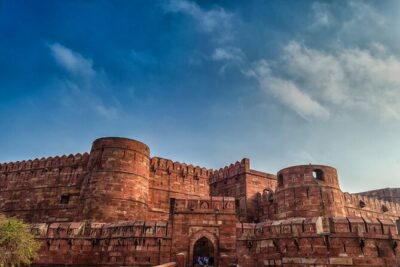
After the Taj, you’ll head to Agra Fort, a UNESCO World Heritage site. It’s described as the main residence of the Mughal Dynasty, which is exactly why it pairs well with the Taj Mahal.
The Taj Mahal shows the dream. Agra Fort shows the system that made the dream possible—the political center, the power base, the architecture built to endure.
Your stop is about 1 hour, and again admission isn’t included. Because you’re doing both Taj Mahal and Fort in one day, wear shoes you can handle on uneven stone and be ready for some walking.
Day 3 in Jaipur: Amber Fort ramparts, City Palace courtyards, and Jantar Mantar
Jaipur turns the dial from empire romance to royal design and everyday craft. By Day 3, you’ll likely feel the travel days in your legs, so the best strategy is to focus on the “why” behind the spaces.
Amber Palace (Amer Fort): ramparts, gates, and a big visual punch
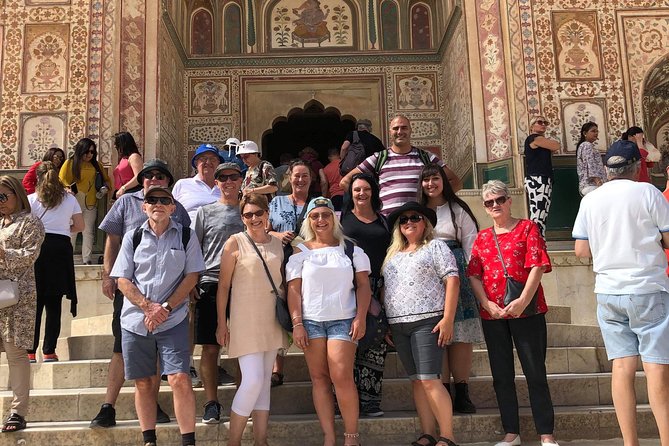
Amber Palace is also popularly called Amer Fort. It’s known for artistic style elements, with large ramparts and a series of gates that build drama as you move through.
This is one of those forts where you feel the military purpose and the aesthetic effort at the same time. The fort isn’t just a backdrop—it’s the experience. Plan on spending your time looking at how the approach works, not just the main points.
You’ll have about 1 hour 30 minutes here. Admission isn’t included, so check that before you arrive.
City Palace: Mughal and Rajput architecture in one functioning complex
The City Palace of Jaipur was constructed by Maharaja Sawai Jai Singh II. Like many Jaipur structures, it blends Mughal and Rajput architecture, and it’s laid out with gardens, buildings, open courtyards, plus a temple and museum.
That’s the key difference versus a single building: City Palace is a complex. You can see multiple styles and functions in one place, and that helps it feel more alive than a single-photo stop.
Your allotted time is about 1 hour. Since admission fees aren’t included, you’ll likely want to treat this as a pay-then-explore moment and not a “maybe we’ll do it” stop.
Jantar Mantar: an astronomy stop that’s actually practical to understand
Then you’ll visit Jantar Mantar, an astronomical observatory. It was built to help measure distance and the positions of celestial objects.
The tour description also points out clever use of geometrical patterns. If you arrive thinking it’s just “odd shapes in a square,” you’ll probably miss the point. But with a guide’s explanations, it turns into a fascinating window into how people mapped the sky with physical instruments.
You’ll have about 30 minutes here. Admission isn’t included. This is the kind of stop where you can learn a lot quickly if you focus on a few key instruments rather than trying to see everything.
At the end, you’ll drive back to Delhi and be dropped at your hotel or airport.
Hotels, breakfasts, and private driving that keep the trip sane
This tour includes two nights in a 4 to 5 star hotel, and it includes buffet breakfast for 2 mornings. That’s a big deal on a short itinerary. When you’re bouncing between three major cities, breakfast being handled removes one daily decision.
You also get a private driver with an air-conditioned vehicle plus bottled water. That matters in India’s heat and traffic, even when the sightseeing is great. The point isn’t luxury. The point is that you can keep your energy for the monuments.
From the feedback you can see a pattern: people liked the organization and the feeling that things were handled. Some groups even named their guide or driver—for example Sunil Poddar is mentioned as an extremely informative guide, and Mr. Gaurav is mentioned as a professional driver who guided throughout the journey.
One more detail that helps: it’s a private tour/activity, so it’s only your group. That usually means fewer waiting games and less chaos than shared group tours.
Price and value: what $436 per person really covers
At $436 per person, you’re paying for more than just tickets and a checklist. The core value is the mix of:
- Two guided city days worth of local expertise
- Private transportation between cities in an air-conditioned vehicle
- Two nights in a 4 to 5 star hotel
- Breakfast included for 2 mornings
- Bottled water and a guided flow through major UNESCO sites
Tickets are the main extra cost. The tour clearly lists that monument fees and camera fees aren’t included. On top of that, it notes that Taj Mahal sunrise is weather-dependent and closed on Fridays—which can affect what you actually get to see without changing the itinerary’s structure.
So here’s my practical way to think about the price:
- If you were to arrange private cars, professional guides, and hotel rooms on your own, you’d likely spend similar money—or more—without getting the same planned timing.
- If you’re the kind of traveler who loves flexibility, you may feel boxed in. But if you want a smooth route with real guidance, this is good value.
Tickets, walking time, and small rules that can make or break your day
This itinerary includes multiple stops with set durations (often 30 to 45 minutes, and 2 hours for Taj Mahal). That means comfort matters.
Here’s what I’d plan around:
- Comfortable walking shoes are recommended, and that’s exactly what you’ll want for fort walls, tomb areas, and Jaipur palace courtyards.
- Admission tickets aren’t included, so keep extra cash or card ready.
- Camera fees may apply, so if you rely on photos, you’ll want to check this ahead of time when possible.
- Taj Mahal timing rules are the big ones: closed every Friday, and sunrise visits depend on weather.
- India Gate admission is free per the tour info, so that’s one spot where you won’t deal with entry fees.
Also, the tour notes that you’ll need a current valid passport on the day of travel. That’s basic, but it’s easy to forget when you’re packing for multiple cities.
Should you book this 3-day Golden Triangle tour?
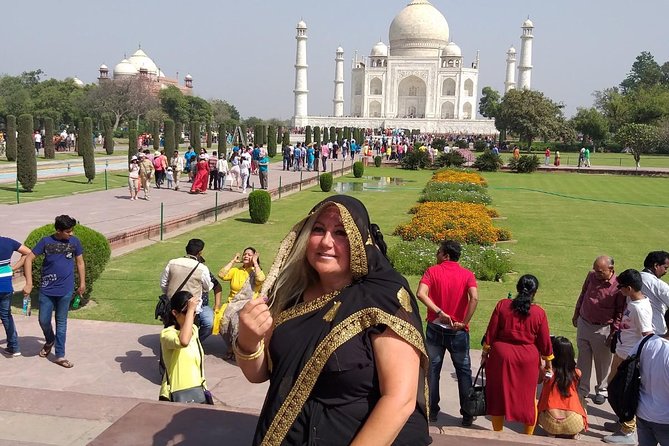
I’d book it if you want a guided, private, high-hit-rate route through Delhi, Agra, and Jaipur without spending your vacation time on logistics. The combination of local guides, private air-conditioned transport, and 4 to 5 star hotel nights makes this one of the more comfortable ways to do the Golden Triangle in a short window.
Skip it—or consider adding flexibility—if you’re deeply sensitive to ticket costs or you’re trying to lock in a very specific Taj Mahal sunrise plan. Between the Friday closure and weather dependency, you can’t treat sunrise as guaranteed.
If you’re traveling with family, or you want the trip to feel organized and calm, this is the kind of tour that tends to work well. The consistent praise for drivers and guides—like Sunil Poddar and Mr. Gaurav—is a good signal that the human part of the trip is taken seriously.
FAQ
How long is the Private 3-Day Golden Triangle Tour?
It runs for approximately 3 days, visiting Delhi, Agra, and Jaipur with drives between each city.
What is included in the tour price?
You get a private driver with an air-conditioned vehicle, professional local city guides, bottled water, two nights in a 4 to 5 star hotel, and buffet breakfast for 2 days. Pickup is offered, and you receive a mobile ticket.
What is not included?
Monument admission fees and camera fees are not included.
Do I need to buy tickets in advance for Humayun’s Tomb, Qutub Minar, and the Taj Mahal?
Admission tickets aren’t included for those sites on the tour details, so you should expect to pay monument entry fees separately.
Is Taj Mahal sunrise visit guaranteed?
No. The sunrise visit is listed as subject to weather conditions. Also note that the Taj Mahal remains closed every Friday.
Are there any sites with free admission on this tour?
India Gate is listed as free for admission.
How does the tour handle transportation between cities?
You’ll travel with a private driver in an air-conditioned vehicle between Delhi, Agra, and Jaipur.
Are the hotel accommodations part of the tour?
Yes. The tour includes two nights in a 4 to 5 star hotel.
What documents do I need on the day of travel?
A current valid passport is required on the day of travel.
The Full Golden Triangle, More Options
- 3-Days Private Golden Triangle Tour: Delhi, Agra & Jaipur by Car
★ 5.0 · 1,107 reviews - 3-Days Private Golden Triangle Tour: Delhi, Agra & Jaipur by Car
★ 5.0 · 1,098 reviews - 3-Day Delhi, Agra and Jaipur Private Tour – India Golden Triangle
★ 5.0 · 812 reviews - Four-Day Private Luxury Golden Triangle Tour to Agra and Jaipur From New Delhi
★ 5.0 · 807 reviews - 5 Nights 6 Days Private Golden Triangle Tour – Delhi Agra Jaipur
★ 5.0 · 574 reviews
Onward to Jaipur: More Day Trips
- 3-Days Private Golden Triangle Tour: Delhi, Agra & Jaipur by Car
★ 5.0 · 1,107 reviews - 3-Days Private Golden Triangle Tour: Delhi, Agra & Jaipur by Car
★ 5.0 · 1,098 reviews - 3-Day Delhi, Agra and Jaipur Private Tour – India Golden Triangle
★ 5.0 · 812 reviews - Four-Day Private Luxury Golden Triangle Tour to Agra and Jaipur From New Delhi
★ 5.0 · 807 reviews - Jaipur Day Trip from Delhi by Car or Train – All Inclusive
★ 5.0 · 663 reviews
More Agra Day Trips out of Delhi
- Same Day Taj Mahal, Agra Fort & Baby Taj Tour from Delhi by Car
★ 5.0 · 4,304 reviews - Full Day Taj Mahal, Agra Fort & Baby Taj Tour from Delhi by Car
★ 5.0 · 3,647 reviews - From Delhi: Taj Mahal & Agra Private Day Trip with Transfers
★ 4.9 · 3,181 reviews - From Delhi: Taj Mahal and Agra Fort Private Sunrise Tour
★ 4.9 · 2,270 reviews - Sunrise Taj Mahal, Agra Fort & Baby Taj Tour from Delhi by Car
★ 5.0 · 2,243 reviews
Just added: more New Delhi reviews to browse
- 4 days Golden Triangle Tour★ 5.0 · 3 reviews
- Discover Old & New Delhi: Private Tour with Street Food★ 5.0 · 3 reviews
- Taj Mahal Tour From Delhi By Private Car★ 4.5 · 3 reviews
- Golden Triangle Tour 5 Days★ 5.0 · 3 reviews
- Taj Mahal: Express Entry Ticket For Sunset Tour with guide★ 5.0 · 3 reviews
- Agra Taj Mahal Sunrise & Sunset Tour from Delhi★ 5.0 · 3 reviews
Agra Day Trips from Delhi, compared.
 ★ 5.0Same Day Taj Mahal, Agra Fort & Baby Taj Tour from Delhi by CarFrom $624,304 reviews
 ★ 5.0Full Day Taj Mahal, Agra Fort & Baby Taj Tour from Delhi by CarFrom $623,647 reviews
 ★ 4.9From Delhi: Taj Mahal & Agra Private Day Trip with TransfersFrom $43,181 reviews
 ★ 4.9From Delhi: Taj Mahal and Agra Fort Private Sunrise TourFrom $592,270 reviews
 ★ 5.0Sunrise Taj Mahal, Agra Fort & Baby Taj Tour from Delhi by CarFrom $622,243 reviews
 ★ 5.0Taj Mahal and Agra Private Car Tour from Delhi with 5* LunchFrom $331,633 reviews
 ★ 4.9From Delhi: Private Taj Mahal and Agra Tour by Express TrainFrom $751,605 reviews
 ★ 5.0Taj Mahal, Agra Fort, Baby Taj Tour from Delhi by Superfast TrainFrom $751,494 reviews