
Reviewed · OLD & NEW DELHI CITY TOURS
Private City Tour to Old and New Delhi
Delhi’s monuments feel like a timeline. In one private day with an air-conditioned car, you can connect Indo-Islamic towers, Mughal power, and modern faith spaces without fighting traffic chaos. I also like the smart pacing built around a classic cluster of sights across South, Central, and Old Delhi.
Two things I really liked: first, you get a genuine private setup (up to 5 people) with pickup offered and a mobile ticket, so you’re not squeezed into a crowd. Second, the operator’s team is known for polite, English-speaking drivers who keep things calm—no rushing, and they’ll often help with practical choices like where to eat.
One consideration: entrance fees aren’t included, and the route mixes paid sites (like Qutub Minar, Humayun’s Tomb, Red Fort, Jama Masjid, Akshardham) with free ones. If you’re traveling with a tight budget, plan around that extra cost up front.
In This Review
- Key highlights worth planning for
- Why This Old-and-New Delhi Route Works in One Private Day
- Qutub Minar: The Tower That Defines the Skyline
- Humayun’s Tomb: Mughal Power in a Persian-Indian Blend
- Lotus Temple: Free Entry and a Real Breather
- India Gate: A War Memorial That Feels Like a City Landmark
- Red Fort and Jama Masjid: Old Delhi’s Mughal Power Duo
- Akshardham Mandir: Big Visuals, Strict Security, Plan Your Time
- Lodhi Garden: Free Ground to Walk Off Monument Energy
- Price and Logistics: Does $65 Per Group Actually Feel Worth It?
- Who This Tour Fits Best (and Who Should Adjust Expectations)
- Should You Book This Private Delhi City Tour?
- FAQ
- How many people are in a group for this private tour?
- Is pickup included, and where does the tour start and end?
- How long does the tour take?
- Are entrance fees included in the price?
- What’s included in the tour?
- Are there any free attractions on the route?
- Can I bring bags or a camera into Akshardham?
- When does the tour operate?
Key highlights worth planning for
- A one-day route that covers Old Delhi plus New Delhi without making you hop across town all day
- Qutub Minar and Humayun’s Tomb as two UNESCO stops that show two different eras of Mughal-era craftsmanship
- Lotus Temple and Lodhi Garden for a reset—free, quiet, and great for breathing room
- Old Delhi icons (Red Fort and Jama Masjid) grouped together so you can see Mughal Delhi in one stretch
- Akshardham with strict security rules (no bags, cameras, or electronics inside)
Why This Old-and-New Delhi Route Works in One Private Day
Delhi is huge, and sightseeing can turn into a commute if you don’t plan the geometry of where things sit. This private tour is built around a logical sweep: start with the Qutb complex (South Delhi), move into Mughal Delhi (Humayun’s Tomb), then head toward Central Delhi (India Gate), and finish with Old Delhi power landmarks (Red Fort and Jama Masjid) plus a modern spiritual stop (Akshardham). You get the feel of Delhi’s eras without spending your day in random zigzags.
The private part matters more than people think. When you’re traveling with just your group, you can go at a human pace—pause for photos, ask questions, and don’t waste energy counting heads. In past experiences with Ashok Tour, the service also tends to be organized and steady, with drivers known for being punctual and easy to communicate with (names like Ashok, Harish, Raj, and Anant come up in firsthand stories).
The day length is flexible (about 4 to 8 hours), which is helpful if you’re jet-lagged, traveling with kids, or you just want fewer stops on a “lighter” schedule. Still, if you’re hoping to linger at every monument, you’ll want to tell your driver up front so the timing matches your style.
The old and the new, covered a few more ways




Qutub Minar: The Tower That Defines the Skyline
Qutub Minar is a UNESCO World Heritage Site and one of the easiest places in Delhi to understand why people keep coming back. The tower reaches about 73 meters (240 feet), built in the early 13th century by Qutub-ud-din Aibak and completed by Iltutmish, with later enhancements by Firoz Shah Tughlaq and Sikandar Lodi. It’s made of red sandstone and marble, and the scale feels real the moment you stand close.
What makes this stop more than a photo stop is the design. Qutub Minar is a standout example of Indo-Islamic Afghan architecture, and the repeating details along the shaft help your eye “read” the structure even if you don’t know the language of the carvings. If you like historical craftsmanship, you’ll probably enjoy taking time to notice how the material color changes as the light hits it.
Also look for the Iron Pillar within the Qutb complex area. The listing information notes it as part of what you’ll encounter here, and it’s typically something visitors enjoy pairing with the tower since it adds a different kind of story to the site.
Practical tip: this is one of the monuments where you’ll feel time pressure if you treat it like a quick drive-by. Build in a real 45–60 minutes so you can zoom in on details, then zoom out for the full tower.
Humayun’s Tomb: Mughal Power in a Persian-Indian Blend
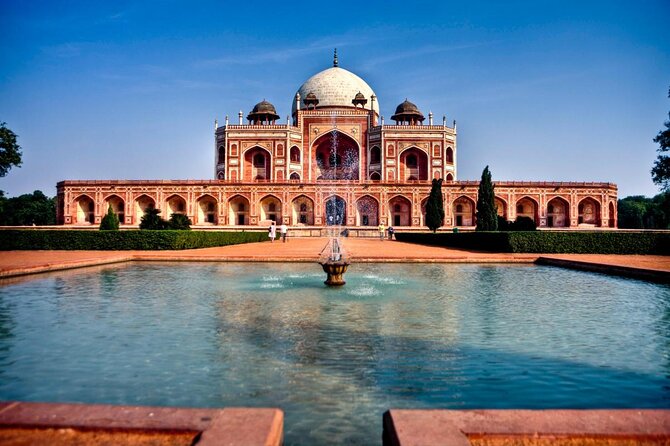
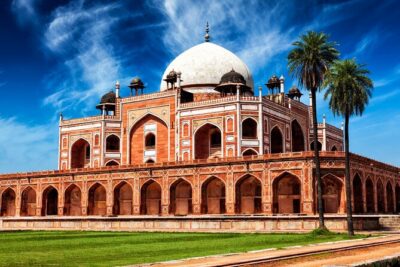
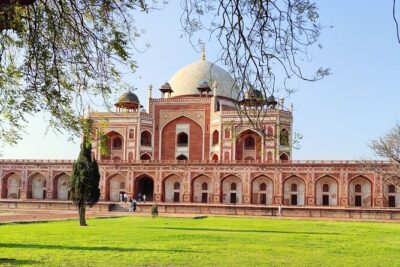
A short ride away, Humayun’s Tomb gives you the Mughal lens on architecture. It was commissioned by Empress Bega Begum and completed in 1572, built for Emperor Humayun. This is the kind of site where the layout helps you understand intention: symmetry, calm courtyards, and a monument that feels designed for contemplation.
The big architecture note is that it’s widely regarded as a precursor to the Taj Mahal. You don’t need to know that comparison to enjoy the building, but it helps. The style combines Persian and Indian elements, designed by the Persian architect Mirak Mirza Ghiyas. Even if you just walk the perimeter and take in the domes and arches, you can see why later Mughal designs leaned into this “order and grandeur” look.
A realistic drawback: this stop can sometimes feel crowded depending on the time of day. Your advantage with a private tour is that you can adjust your position—move to less busy angles, step back for a cleaner view, and keep your momentum instead of getting stuck in a slow-moving bottleneck.
If you’re a photography person, bring patience. You’ll get better shots by taking a few short breaks to wait for the best light and fewer people in your frame.
Lotus Temple: Free Entry and a Real Breather
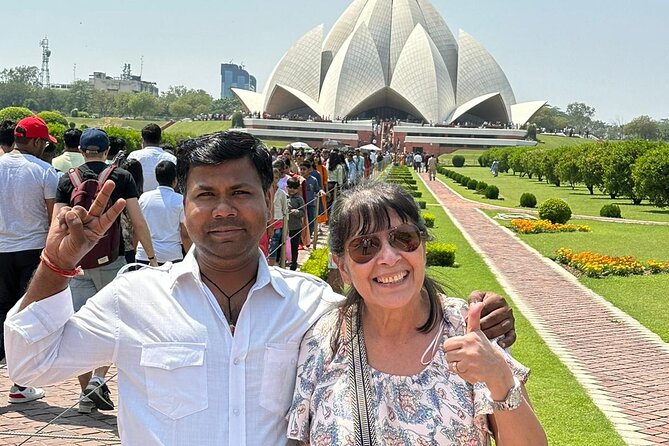
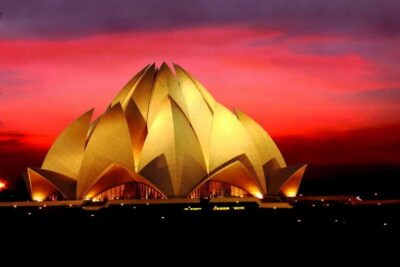
The Lotus Temple is the kind of stop that makes Delhi feel softer. It’s a Bahá’í House of Worship—its official role is the Mother Temple of the Indian subcontinent—and it’s open to people of all faiths. The tour notes it’s intended for meditation and prayer, and you’re expected to keep a quiet atmosphere inside.
The architecture is instantly recognizable: a lotus shape made from white marble, designed by Iranian architect Fariborz Sahba and completed in 1986. Even if you’re not into architecture, the form is satisfying. The building sits inside landscaped gardens, which gives you a smoother transition from the urban intensity outside.
The practical value here is simple: it’s a free admission stop, and it breaks up the day so you’re not running on monument fatigue. I also like that it’s a place where behavior shifts—no bargaining, no scramble for the next “must see,” just a short reset.
Time-wise, expect about 30 minutes here. If your group likes quiet, you may want a little longer, but even the shorter visit helps you recharge before you head to the more intense Old Delhi area.
India Gate: A War Memorial That Feels Like a City Landmark
India Gate is free to enter and, in my opinion, it’s one of the best ways to understand how modern Delhi remembers the past. Built to commemorate soldiers of the Indian Army who died in World War I, it’s also known historically as the All India War Memorial. The foundation stone was laid in 1921, and it was completed in 1931.
The architectural reference point is also interesting: it’s inspired by the Arc de Triomphe in Paris. At 42 meters (138 feet), it’s imposing without needing a huge explanation. The center archway has inscriptions listing the names of more than 13,516 British and Indian soldiers connected to the Afghan war of 1919. That combination—scale plus names—makes it hit harder than a typical statue photo.
At the base is the Amar Jawan Jyoti, an eternal flame. Even if you only stop briefly, it’s worth being still for a minute. Your group will feel the difference from the previous stops.
This is a short stop (about 30 minutes), but it works well as a bridge between sightseeing zones. It’s also one of those places where the driver can time the route so you don’t lose daylight to traffic.
Bigger loops around the capital
Red Fort and Jama Masjid: Old Delhi’s Mughal Power Duo
If Delhi has a dramatic “main act,” it’s here: Red Fort and Jama Masjid. These two stops are close enough to pair in one flow, and the private vehicle setup helps you avoid stress. Together, they show Mughal Delhi from both the ruler’s side and the community’s side.
At Red Fort, construction began in 1638 under Mughal Emperor Shah Jahan and the fort was completed in 1648. It served as the main residence for Mughal emperors for nearly 200 years. Architecturally, you’re looking at red sandstone walls with intricate white marble inlays—exactly the kind of contrast that makes the fort visible even from a distance.
Inside the fort, the tour highlights the audience halls:
- Diwan-i-Aam (Hall of Public Audience)
- Diwan-i-Khas (Hall of Private Audience)
Even if you only see parts of the halls, the names help you imagine how authority operated—public face, private decisions.
Then comes Jama Masjid, commissioned by Shah Jahan with construction beginning in 1650, taking six years to complete, and inaugurated in 1656. The architect noted is Ustad Khalil, and like the other Mughal-era buildings on your list, the style mixes Persian, Timurid, and Indian influences.
The highlight is the main gateway, the Buland Darwaza, described as grand and facing east with white marble details. This is one of those entrances where the architecture does the heavy lifting: you don’t need a lecture to appreciate the scale.
A practical note: because admission fees aren’t included, these stops can be where your day’s total cost climbs. Still, they’re also two of the biggest monuments in Delhi for sheer historical weight, so the trade usually feels fair.
Akshardham Mandir: Big Visuals, Strict Security, Plan Your Time
Swaminarayan Akshardham is a very different kind of Delhi experience—less about empire, more about devotion and design. It was inaugurated on November 6, 2005, built by the Bochasanwasi Akshar Purushottam Swaminarayan Sanstha (BAPS). The inspiration is linked to Pramukh Swami Maharaj, the spiritual leader of BAPS.
The central focus is the Akshardham Mandir, dedicated to Bhagwan Swaminarayan, and it houses the main deity, Akshar Purushottam Maharaj. The scale of the craftsmanship is what most people notice first: 234 intricately carved pillars, 9 domes, and over 20,000 statues of divine figures.
Here’s the key consideration you should not ignore: security rules are strict. The tour notes that you cannot carry bags, cameras, or electronic devices inside the temple complex. There is a secure facility to leave your belongings, but you’ll want to arrive ready to follow the rules. That means keep your bag small or leave extra items behind if you can.
This stop is longer than the others—about 1 hour 30 minutes—and it’s a good place to slow down. You’ll get more out of it if you take in details rather than rushing the route.
Lodhi Garden: Free Ground to Walk Off Monument Energy
After temple towers and fort walls, Lodhi Garden feels like a smart reset. It’s a historical garden named after the Lodhi Dynasty, which ruled parts of northern India in the 15th and 16th centuries. The listing describes it as a place with monuments from the Lodhi period, so you’re still in “history mode,” just with space to breathe.
Location helps too: it sits between Khan Market and Safdarjung’s Tomb in New Delhi. The garden covers about 90 acres and is described as a peaceful spot for walking and enjoying nature in the middle of the city.
Admission is free, and the stop is short (about 30 minutes), which makes it ideal as a wind-down point. If your feet are tired, you’ll appreciate having a place where the goal isn’t rushing to the next landmark. It also gives you a natural decompression before returning to Connaught Place, the meeting point.
Price and Logistics: Does $65 Per Group Actually Feel Worth It?
The price is $65 per group (up to 5 people). That structure is part of why this works so well for families and small friend groups: your cost doesn’t jump just because you picked up an extra person at the last minute.
What you get for that price:
- Air-conditioned vehicle
- Bottled water
- Pickup offered (and the tour ends back at the start)
- Mobile ticket
What you don’t get:
- Entrance fees noted as $50 for two persons
Let’s translate that into practical value. If you’re traveling as a group of 3–5, the private car with driver can cost less than piecing together separate taxis and figuring out the order yourself. You also gain a smooth route plan across multiple zones in Delhi. And when you do group up, you’re paying for time saved, less hassle, and fewer chances to get stuck.
The entrance fees are the one variable. Since several of the biggest sights are paid, your total spend will depend on how many people you have and what you choose to enter. But even with that in mind, the mix of UNESCO sites and major monuments usually makes the day feel like more than “a few stops.”
If your budget is tight, I’d suggest you treat the route as a menu. Keep Lodhi Garden and Lotus Temple on your must-do list since they’re free, and then decide based on interest whether to fully commit to paid forts and temples.
Who This Tour Fits Best (and Who Should Adjust Expectations)
This private city tour is ideal if you want:
- A first-time Delhi highlights plan that covers both Old and New Delhi in one go
- Comfortable transport and a steady pace
- Big monuments with enough context to make the day make sense
It also fits well if your group includes different interests. Architecture lovers get Qutub Minar, Humayun’s Tomb, Red Fort, and Jama Masjid. People who want calm get Lotus Temple and Lodhi Garden. If your group likes modern spiritual design, Akshardham is a strong contrast.
It may not be the best fit if you want deep research or long stays at each site. This route is built for seeing a lot, not for spending half a day studying one monument. If that’s your style, you may prefer to choose fewer stops and extend your time on site.
Should You Book This Private Delhi City Tour?
Yes, I’d book it if you want an efficient, organized way to see major Delhi sights without turning your day into logistics. The big win is the combination of private pacing, AC transport, and a route that connects Mughal-era landmarks, a Bahá’í worship space, a major war memorial, and Akshardham’s highly controlled visitor experience.
Book it with extra planning if you care about photos at Akshardham—security rules mean you’ll need to store cameras and electronics. And budget for entrance fees since several marquee stops are paid.
If your top goal is getting your bearings fast across Delhi’s eras, this tour hits that sweet spot.
FAQ
How many people are in a group for this private tour?
The tour is priced per group and is up to 5 people.
Is pickup included, and where does the tour start and end?
Pickup is offered. The tour starts at Connaught Place in New Delhi and ends back at the meeting point.
How long does the tour take?
The duration is approximately 4 to 8 hours.
Are entrance fees included in the price?
No. Entrance fees are not included, and the information lists entrance fees of $50 for two persons.
What’s included in the tour?
It includes an air-conditioned vehicle and bottled water, plus a mobile ticket.
Are there any free attractions on the route?
Yes. Lotus Temple, India Gate, and Lodhi Garden are listed as free admission stops.
Can I bring bags or a camera into Akshardham?
No. The tour notes that visitors are not allowed to carry bags, cameras, or electronic devices inside the Akshardham temple complex.
When does the tour operate?
The listed opening hours show Monday from 10:00 AM to 4:00 PM.
More Tours in New Delhi
- Old & New Delhi City Tour – Half or Full Day Options Available
★ 5.0 · 4,811 reviews - Half Day Private Delhi City Tour
★ 5.0 · 4,474 reviews - Same Day Taj Mahal, Agra Fort & Baby Taj Tour from Delhi by Car
★ 5.0 · 4,304 reviews - Taj Mahal Day Tour from Delhi by Superfast Train – TOP RATED TOUR
★ 5.0 · 4,166 reviews - Delhi: Old and New Delhi Private Full or Half-Day Tour
★ 4.9 · 3,776 reviews
More Tour Reviews in New Delhi
- Old & New Delhi City Tour – Half or Full Day Options Available
★ 5.0 · 4,811 reviews - Half Day Private Delhi City Tour
★ 5.0 · 4,474 reviews - Same Day Taj Mahal, Agra Fort & Baby Taj Tour from Delhi by Car
★ 5.0 · 4,304 reviews - Taj Mahal Day Tour from Delhi by Superfast Train – TOP RATED TOUR
★ 5.0 · 4,166 reviews - Delhi: Old and New Delhi Private Full or Half-Day Tour
★ 4.9 · 3,776 reviews
Old and New Delhi, Keep Exploring
- Old & New Delhi City Tour – Half or Full Day Options Available
★ 5.0 · 4,811 reviews - Delhi: Old and New Delhi Private Full or Half-Day Tour
★ 4.9 · 3,776 reviews - Delhi: Private Old & New Delhi Guided Half- or Full-Day Tour
★ 4.9 · 2,309 reviews - Old & New Delhi Private Tour – Half or Full Day (Rated Excellent)
★ 5.0 · 2,226 reviews - Old & New Delhi Full or Half Day Sightseeing Tour
★ 5.0 · 1,900 reviews
Just added: more New Delhi reviews to browse
- 4 days Golden Triangle Tour★ 5.0 · 3 reviews
- Discover Old & New Delhi: Private Tour with Street Food★ 5.0 · 3 reviews
- Taj Mahal Tour From Delhi By Private Car★ 4.5 · 3 reviews
- Golden Triangle Tour 5 Days★ 5.0 · 3 reviews
- Taj Mahal: Express Entry Ticket For Sunset Tour with guide★ 5.0 · 3 reviews
- Agra Taj Mahal Sunrise & Sunset Tour from Delhi★ 5.0 · 3 reviews
Old & New Delhi City Tours, compared.
 ★ 5.0Old & New Delhi City Tour – Half or Full Day Options AvailableFrom $384,811 reviews
 ★ 4.9Old and New Delhi Private Full or Half-Day TourFrom $23,776 reviews
 ★ 4.9Private Old & New Delhi Guided Half- or Full-Day TourFrom $72,309 reviews
 ★ 5.0Old & New Delhi Private Tour – Half or Full Day (Rated Excellent)From $202,226 reviews
 ★ 5.0Old & New Delhi Full or Half Day Sightseeing TourFrom $241,900 reviews
 ★ 4.8Full or Half-Day Old and New Delhi Private TourFrom $71,883 reviews
 ★ 4.9Private Full-Day City Tour of Old and New DelhiFrom $221,722 reviews
 ★ 5.0Old and New Delhi Guided Full or Half-Day TourFrom $20976 reviews
Browse the lists this tour appears in