
Reviewed · OLD & NEW DELHI CITY TOURS
Private Full Day Tour of Old and New Delhi
Delhi changes character fast. This private day tour strings together Old Delhi, New Delhi landmarks, and major religious sites into one workable plan. You get a driver plus a guide in an air-conditioned car, then step out for walking moments and the kind of local street time you normally need multiple days to stitch together.
I especially like the balance: big-name monuments like Humayun’s Tomb and Qutub Minar share the day with quieter spiritual places such as Lotus Temple and Gurudwara Bangla Sahib. I also like the practical setup for comfort and momentum—bottled water, WiFi on board, and snack breaks to keep you moving through the heat.
One drawback to plan around: not everything is fully included. Entrance fees aren’t included for monuments, and Jama Masjid includes a 300 INR charge per chamber, while lunch is on your own.
In This Review
- Key highlights worth your attention
- Old and New Delhi in One Tight Day
- The Private Car Setup That Actually Helps (AC, WiFi, and a Real Guide)
- Jama Masjid and the Old-Delhi Intro You Won’t Skip
- Chandni Chowk and Khari Baoli: Where Delhi’s Daily Life Takes Over
- Red Fort to India Gate: Mughal Power Meets British-Era Memory
- President’s House and Parliament Photos: What You Can See Without Getting Stuck
- Agrasen Ki Baoli Steps and Bangla Sahib Service: A Change of Pace
- Humayun’s Tomb to Lotus Temple to Qutub Minar: UNESCO With Enough Breathing Room
- Price and Planning: What the $55 Covers and What You Still Need
- Should You Book This Old and New Delhi Private Day Tour?
- FAQ
- How long is the Private Full Day Tour of Old and New Delhi?
- What is the price per person for this tour?
- Is pickup included?
- Does the tour include entrance fees to monuments?
- Are there any known extra charges during the day?
- Is lunch included in the price?
- What’s included in the tour experience?
- Is this tour private?
- Cancellation and Weather
Key highlights worth your attention
- Private guide + driver in a car that keeps you out of long transit headaches for a full 8 to 9 hours.
- Old Delhi food trail around Chandni Chowk and Parantha Wali Gali, with time to taste and wander.
- Khari Baoli spice market for a straight-up sensory stop, smelling spices and seeing how Delhi shops at scale.
- Religious sites across faiths in one day, including the Sikh kitchen at Bangla Sahib that serves over 30,000 people daily.
- UNESCO stops that connect logically: Humayun’s Tomb to Lotus Temple to the Qutub complex.
- Language and organization show up repeatedly in feedback, including Spanish support and WhatsApp-style coordination from the team led by Kuldeep.
Old and New Delhi in One Tight Day

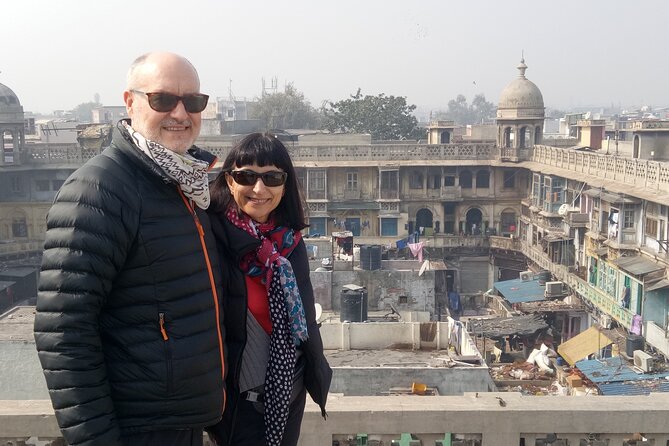
Delhi isn’t one city. It’s several cities that feel like different planets. This tour is designed to help you experience that switch without spending your whole trip commuting or second-guessing where to go next.
The core idea is simple: you start in Old Delhi’s layered Mughal-era world, then you work toward New Delhi’s grand memorials, government architecture, and UNESCO monuments. Along the way, you get a mix of temples, mosques, and gurdwaras—so you’re not just collecting photos. You’re learning how Delhi’s power, faith, and everyday life overlap.
You’ll also notice the tour pacing is built around “step out, see, move on.” Some stops are quick viewing blocks. Others give you enough time to walk slowly and actually look at details. That matters in Delhi, where crowds can speed you up or stop you cold if you don’t have a plan.
The old and the new, covered a few more ways




The Private Car Setup That Actually Helps (AC, WiFi, and a Real Guide)
Let’s talk comfort, because Delhi can be intense. This tour runs about 8 to 9 hours in a private vehicle with an air-conditioned cabin, plus bottled water and chips and cookies in the car. There’s also WiFi on board and disinfectant included, which sounds small until you’re halfway through a long day of heat and walking.
The guide is the other half of the value. In the feedback, the team associated with Kuldeep is praised for organization, attentiveness, and knowledge. Some comments mention Spanish being handled well, and at least one note describes an advance WhatsApp message from the manager to share key info and answer questions. Even with a tight itinerary, that kind of communication reduces stress.
One practical note: keep your expectations realistic. A private day tour still moves with traffic and crowds. Your guide can’t delete lines or temperatures. But a good guide can steer you through the timing and help you understand what you’re seeing fast—especially at places where Delhi’s layers can feel confusing.
Jama Masjid and the Old-Delhi Intro You Won’t Skip
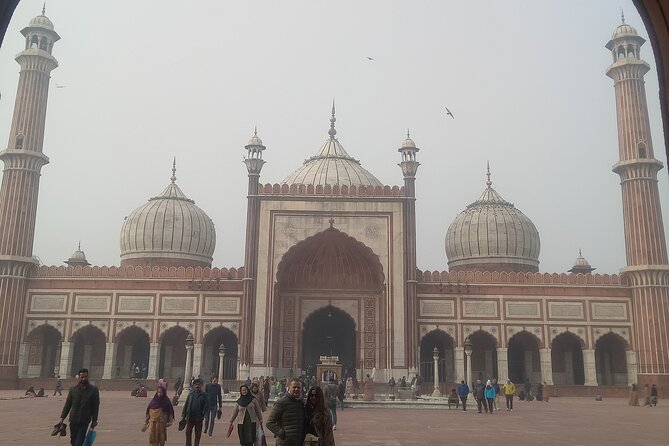
You start with Jama Masjid, often the best “welcome” stop for understanding how Delhi’s religious architecture set the tone. This is the largest mosque in India, built by Emperor Shahjahan (the same ruler associated with the Taj Mahal). The tour focuses on why the place matters, including the preservation of holy relics of the Prophet Muhammad.
Logistics here are important. There’s no general entrance fee to the mosque, but there is a 300 INR charge per chamber. Also, guidance is provided for attire—foreign ladies are advised to wear a simple robe, and the mosque authorities can provide one. If you’re not sure what to bring, you can treat this as your reminder to pack something light you can easily cover with.
Time-wise, this is a relatively short stop (about 20 minutes), so don’t plan on a long sit-down. Instead, think of it like an orientation session: you’re learning the look, the scale, and the key Indo-Islamic design cues before the tour throws you into Chandni Chowk’s street-level chaos.
Chandni Chowk and Khari Baoli: Where Delhi’s Daily Life Takes Over
After Jama Masjid, the tour shifts into sensory overload—on purpose. First comes Chandni Chowk, described as the Moonlight Market, built by Shahjahan’s daughter in the 17th century. You’ll explore the narrow streets and also take in some nearby heritage buildings, but the real draw is the way the market works: dense, busy, and built for local rhythm.
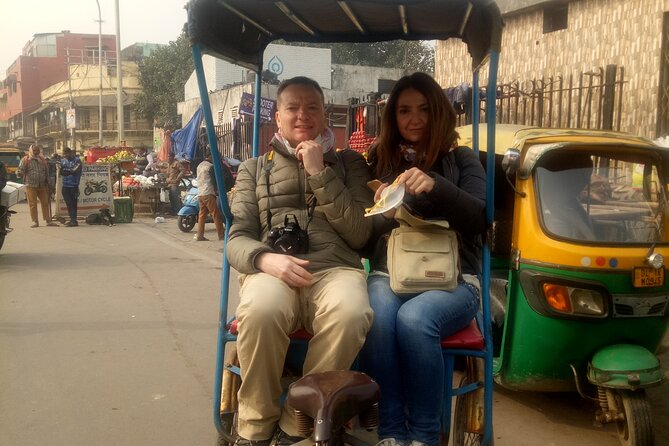
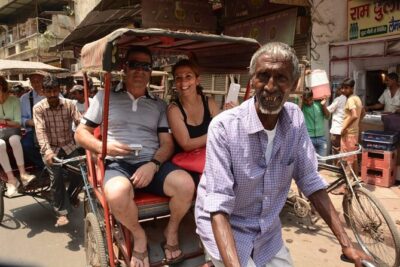
You also get the signature Old Delhi-style transport moment: a cycle rickshaw ride through the area. It’s short, but it changes your view. On foot, you can feel stuck in the crowd. By rickshaw, you get a faster “scan” of the street, then you step off for targeted wandering.
Food is part of the plan, too. The route includes Parantha Wali Gali, a street known for parantha. There’s even a quick stop built around tasting, not just walking past storefronts. If you’re someone who wants to eat what locals actually snack on—not just where tourists point—this is one of the best-value sections of the day.
Next is Khari Baoli, the spice market. This is the biggest spice market in North India, with over 3,000 shops selling spices and more. You’re not just looking—you’re smelling and soaking in the atmosphere. The tour gives you around 25 minutes here, plus a quick ride.
Bring your patience. Spice markets can be loud and crowded, and the smell hits fast. But that’s also the point: this stop helps you understand what Delhi sells every day, not only what it built centuries ago.
Red Fort to India Gate: Mughal Power Meets British-Era Memory
From Old Delhi’s marketplaces, the tour pivots to monuments that explain how power changed hands. Red Fort is a UNESCO World Heritage site and was the Mughal royal residence for more than two centuries. After the British captured it in the mid-19th century, many royal palaces were demolished—but the fort’s remaining presence tells the story clearly.
You’ll explore it on foot, including the defensive walls. The tour description suggests the fort’s walls can feel hypnotic. That’s believable: Mughal fortification is all about scale and repetition. Walking it also helps you understand it’s not just a backdrop for selfies—it was designed to defend people and power.
Then you move to India Gate, the war memorial built by the British in 1931. It’s widely recognized in Delhi, and it’s inspired by the Arc de Triomphe. Your guide takes you for a short tour and points out nearby memorials like the King George Memorial, the National War Memorial, and the tomb of unknown soldiers.
Time is tight here (about 20 minutes), and you won’t treat this like a museum day. Instead, think of it as a visual map: you’re learning how Delhi marks sacrifice and authority along a grand boulevard.
More private days with a guide of your own

President’s House and Parliament Photos: What You Can See Without Getting Stuck
Next comes a stretch focused on government architecture and photo angles. The tour includes time near the President’s house, built in the early 20th century by the British. Normally, tourists can’t enter the house, but you can explore from outside. The plan includes a “best effort” approach: if a permit is available, you might be able to walk a bit; otherwise, it’s a drive-by and photo from close range.
After that, you pass the Parliament building, described as the largest democratic parliament building in the world. The tour notes you can’t stop there, but you can take photos from the president’s house area, since it isn’t far.
This section is not about deep access. It’s about context. If your goal is to understand modern Delhi’s layout and how the city frames national identity, this photo-and-pass segment saves you time while still giving you something to look at.
Agrasen Ki Baoli Steps and Bangla Sahib Service: A Change of Pace
By mid-day, you’ll appreciate the shift in vibe. Agrasen Ki Baoli is a stepped well built in the 8th century by King Agrasen. The key detail is that it’s built for stairs: there are about 100 steps down toward the water level. If you like hiking stairs, you can go down. If you don’t, the tour notes you can still enjoy photos from the top.
This stop is short (around 10 minutes), but it’s the kind of Delhi detail most first-time visitors miss. It’s also a good reset. After monuments and markets, the stepped geometry feels different—quiet, textured, and very “Delhi keeps older layers alive.”
Then the itinerary moves to Gurudwara Bangla Sahib, the largest Sikh temple in Delhi. This stop isn’t just a photo stop. It includes the chance to see prayer live and explore the temple’s kitchen, which serves over 30,000 people every day.
A standout here is the kitchen component. The guide explains the work, and you can volunteer for a few minutes if you want. In the feedback, guests describe feeling both welcomed and satisfied in this kind of hands-on moment, where service isn’t a performance—it’s routine.
Bangla Sahib also has a beautiful sacred lake in the complex. Even if you only have time for a quick look, it helps you slow down for a moment before the UNESCO leg starts.
Humayun’s Tomb to Lotus Temple to Qutub Minar: UNESCO With Enough Breathing Room
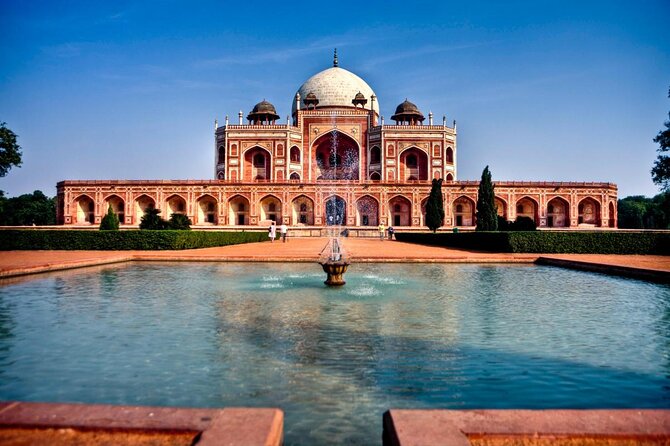
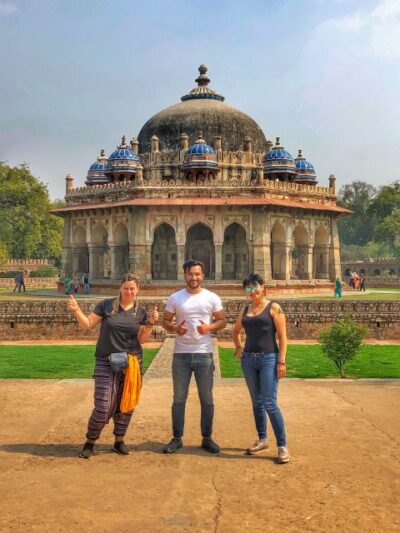
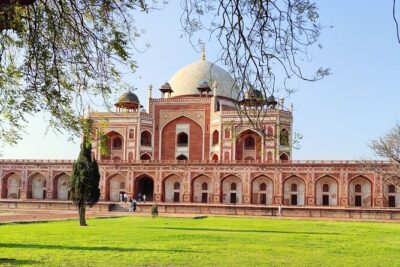
Now you shift into New Delhi’s big UNESCO territory. Humayun’s Tomb is a UNESCO World Heritage site and the second Mughal emperor’s resting place. It was built by his wife Hamida Bano begam. The tour also connects it to a famous idea: some accounts say the Taj Mahal was inspired by Humayun’s Tomb, with shared characteristics.
You’ll explore the complex with a historical focus, and you’ll also see other parts of the site, including tombs and structures like Isa Khan’s tomb, the barber’s grave, Bu-Halima’s tomb, and Arab ki Sarai and mosque. The plan says the Persian architecture and photo opportunities make it especially worthwhile. You get about 1 hour here, which is enough time to walk without feeling rushed.
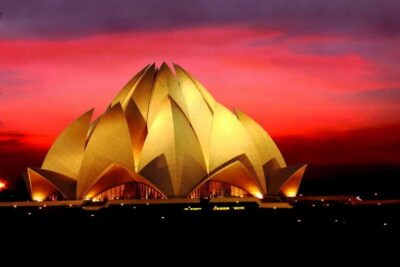
Next is Lotus Temple, a Bahá’í house of worship. It’s described as being inspired by the Sydney Opera House, which is a good way to visualize its shape before you reach it. This stop is more about calm. The plan includes entering the temple, and you can meet Bahá’í people or visit the information center during your time there.
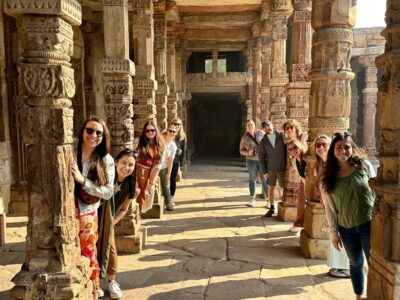
Then the tour finishes with Qutub Minar, also UNESCO-listed. This is one of the most impressive “ancient skyline” moments in Delhi. The tour notes it as almost 800 years old and the largest tower in India, located in the ancient city of Laal kot in South Delhi. You’ll start with the archaeological complex and explore multiple sites within it, including Alai Minar, the tomb of Iltutmish, the first mosque and cemetery areas, Alai Darvaza, and the famous iron pillar from the 4th century.
You’ll have about 1 hour for this complex, and the guide’s role matters here. Qutub’s area has many points of interest packed close together. Without interpretation, it can turn into random ruins. With a guide, you get a clearer sense of what each structure is for and how they relate.
Price and Planning: What the $55 Covers and What You Still Need
At $55 per person for a private full-day tour, the value mostly comes from the logistics. You’re paying for the private car with an AC cabin, a driver, guide time, and the heavy lifting of stitching together Old Delhi and New Delhi in one day without you figuring out transport and sequencing.
What’s not fully included is also pretty clear:
- Lunch isn’t included.
- Entrance fees to monuments aren’t included (the tour notes many stops are listed as admission ticket free, but not all charges are zero).
- Bicycle rickshaw rates aren’t included. You’ll still do the rickshaw ride, but if there’s any extra rate beyond what the tour counts, it may fall on you.
- Camera is listed as not included, so you may need to check whether any photo rules or permissions have separate requirements.
One extra cost to remember is the 300 INR per chamber charge at Jama Masjid. If you want to avoid last-minute scrambling, carry some cash for those on-site fees.
Weather matters here, too. The experience requires good weather, so if Delhi is running its usual extremes, plan to be flexible.
Finally, a balanced caution based on feedback: while the overall organization sounds strong, one negative comment flags the need to confirm timing on your side. If you have flight or hard appointment times, treat this as a day tour, not a personal concierge for your entire trip. Double-check pickup times and keep your own reminders.
Should You Book This Old and New Delhi Private Day Tour?
I’d book it if you want one day that covers major Delhi pillars—Old Delhi markets, Mughal landmarks, Sikh and Bahá’í places of worship, plus UNESCO sights—without burning your energy on transit.
You should also consider it if you like guided context. Delhi rewards interpretation. Places like Humayun’s Tomb and Qutub Minar make more sense when someone connects the dots for you while you’re standing in front of the stones.
Skip or rethink it only if you strongly prefer self-paced travel with no structure. This itinerary is full. Even with a private car, it’s still a lot of walking and a lot of stops.
If you’re the type who wants to see Delhi’s big contrasts in a single organized day, this tour fits.
FAQ
How long is the Private Full Day Tour of Old and New Delhi?
It runs about 8 to 9 hours.
What is the price per person for this tour?
The price is $55.00 per person.
Is pickup included?
Pickup is offered.
Does the tour include entrance fees to monuments?
Entrance fees are not included for monuments. Some listed stops are ticket-free, but not everything is.
Are there any known extra charges during the day?
Yes. For example, Jama Masjid has a 300 INR charge per chamber. Lunch is also not included, and bicycle rickshaw rates are not included.
Is lunch included in the price?
No, lunch is not included.
What’s included in the tour experience?
Included items are bottled water, snacks (chips and cookies in the car), mask and disinfectant, air-conditioned vehicle, WiFi on board, private transportation, parking fees, guide fee, and chauffeur fee (plus airport/departure tax, fuel surcharge, and GST).
Is this tour private?
Yes. It’s a private tour/activity, and only your group participates.
Cancellation and Weather
Free cancellation is available up to 24 hours in advance for a full refund. The experience requires good weather, and if it’s canceled due to poor weather, you’ll be offered a different date or a full refund.
More Tours in New Delhi
- Old & New Delhi City Tour – Half or Full Day Options Available
★ 5.0 · 4,811 reviews - Half Day Private Delhi City Tour
★ 5.0 · 4,474 reviews - Same Day Taj Mahal, Agra Fort & Baby Taj Tour from Delhi by Car
★ 5.0 · 4,304 reviews - Taj Mahal Day Tour from Delhi by Superfast Train – TOP RATED TOUR
★ 5.0 · 4,166 reviews - Delhi: Old and New Delhi Private Full or Half-Day Tour
★ 4.9 · 3,776 reviews
More Tour Reviews in New Delhi
- Old & New Delhi City Tour – Half or Full Day Options Available
★ 5.0 · 4,811 reviews - Half Day Private Delhi City Tour
★ 5.0 · 4,474 reviews - Same Day Taj Mahal, Agra Fort & Baby Taj Tour from Delhi by Car
★ 5.0 · 4,304 reviews - Taj Mahal Day Tour from Delhi by Superfast Train – TOP RATED TOUR
★ 5.0 · 4,166 reviews - Delhi: Old and New Delhi Private Full or Half-Day Tour
★ 4.9 · 3,776 reviews
Old and New Delhi, Keep Exploring
- Old & New Delhi City Tour – Half or Full Day Options Available
★ 5.0 · 4,811 reviews - Delhi: Old and New Delhi Private Full or Half-Day Tour
★ 4.9 · 3,776 reviews - Delhi: Private Old & New Delhi Guided Half- or Full-Day Tour
★ 4.9 · 2,309 reviews - Old & New Delhi Private Tour – Half or Full Day (Rated Excellent)
★ 5.0 · 2,226 reviews - Old & New Delhi Full or Half Day Sightseeing Tour
★ 5.0 · 1,900 reviews
Just added: more New Delhi reviews to browse
- 4 days Golden Triangle Tour★ 5.0 · 3 reviews
- Discover Old & New Delhi: Private Tour with Street Food★ 5.0 · 3 reviews
- Taj Mahal Tour From Delhi By Private Car★ 4.5 · 3 reviews
- Golden Triangle Tour 5 Days★ 5.0 · 3 reviews
- Taj Mahal: Express Entry Ticket For Sunset Tour with guide★ 5.0 · 3 reviews
- Agra Taj Mahal Sunrise & Sunset Tour from Delhi★ 5.0 · 3 reviews
Old & New Delhi City Tours, compared.
 ★ 5.0Old & New Delhi City Tour – Half or Full Day Options AvailableFrom $384,811 reviews
 ★ 4.9Old and New Delhi Private Full or Half-Day TourFrom $23,776 reviews
 ★ 4.9Private Old & New Delhi Guided Half- or Full-Day TourFrom $72,309 reviews
 ★ 5.0Old & New Delhi Private Tour – Half or Full Day (Rated Excellent)From $202,226 reviews
 ★ 5.0Old & New Delhi Full or Half Day Sightseeing TourFrom $241,900 reviews
 ★ 4.8Full or Half-Day Old and New Delhi Private TourFrom $71,883 reviews
 ★ 4.9Private Full-Day City Tour of Old and New DelhiFrom $221,722 reviews
 ★ 5.0Old and New Delhi Guided Full or Half-Day TourFrom $20976 reviews
Browse the lists this tour appears in