
Three cities, one fast plan. I love the private AC vehicle and the fact that you hit UNESCO sites like Qutub Minar and the Taj Mahal with guided time that keeps things moving. It also feels built for real life: pickup is set up, you’re not figuring out routes or timing on your own.
The only real drawback is the pace. You’ll pack in big-ticket stops with short stretches between them, and some monuments list admission as not included, so you’ll want to budget for entry fees where required.
In This Review
- Key highlights worth knowing
- How a 3-day Golden Triangle route keeps you moving (and sane)
- Day 1 in Delhi: Qutub Minar, Humayun’s Tomb, and Old Delhi markets
- Sunrise Taj Mahal day: Agra Fort and the Baby Taj
- Day 3 in Jaipur: Hawa Mahal, Jantar Mantar, City Palace, and Jal Mahal
- Private chauffeur and guides: what this setup changes
- Price and value: why $134.20 can be a smart choice
- Practical expectations: how to handle short stops and long rides
- Who this private Golden Triangle tour suits best
- Should you book this private Golden Triangle 3-day tour?
- FAQ
- How long is the Golden Triangle tour?
- Where can I get pickup?
- Is this tour private?
- What transportation do I use?
- Are hotels included?
- Is breakfast included?
- Are meals included besides breakfast?
- Are monument entry fees included?
- Which car do I get based on group size?
- Is there a cancellation window for a full refund?
- Is the tour e-ticket based?
Key highlights worth knowing
- Airport or hotel pickup across Delhi, Noida, and Gurugram so you start clean and easy
- English-speaking driver in a private AC car for smoother logistics and less waiting
- Big UNESCO moments spread across Delhi, Agra, and Jaipur without planning headaches
- Breakfast included for 2 days (while most other meals are on your own)
- A long-drive day is built in with a transfer toward Agra using Yamuna Express Way
How a 3-day Golden Triangle route keeps you moving (and sane)
The Golden Triangle is called that for a reason: Delhi, Agra, and Jaipur sit in a triangle shape, so you can see a lot in a short time. The trick is not to treat it like three separate vacations. This tour is built as one connected plan, with a private chauffeur and an organized order of stops.
That organization matters most in Delhi. Traffic and distances can drain you fast, and the day can feel like a blur if you’re relying on public transport or ride-hailing apps. Here, you’re in an AC vehicle with fuel, tolls, parking, and taxes covered, and you’re not spending mental energy on how to get from one monument to the next.
I also like that the schedule mixes “headline” sights with places that add texture. You get landmark architecture like India Gate and the Taj Mahal, but you also hit atmospheric Old Delhi markets at Chandni Chowk and stepwell sights like Agrasen Ki Baoli and Chand Baori. That keeps the trip from feeling like a checklist.
Still, the pace is real. Several stops are described with short visit windows. That means you’ll do photo time, guided highlights, and then move on. If you want long, slow walks through every neighborhood, this kind of itinerary can feel tight.
Other Agra runs out of Delhi worth a look




Day 1 in Delhi: Qutub Minar, Humayun’s Tomb, and Old Delhi markets
Your first day starts with pickup at the airport (or wherever you’re staying) and a direct run to Qutub Minar. Qutub Minar is a UNESCO World Heritage site, built in 1193 by Qutub-ud-din Aibak. It’s one of those structures you can’t fully understand from a single angle—up close, it feels tall and serious in a way that photos don’t catch. Note: the itinerary lists admission as not included for this stop, so confirm ticket coverage for your booking.
Next comes the Lotus Temple, a free admission stop and a completely different mood. Built in 1986, it’s a flower-like architectural form that people often find surprisingly calming after the intensity of Delhi traffic. Then you roll toward central Delhi for India Gate, Parliament House (Sansad Bhavan), and Rashtrapati Bhavan. These are fast stops, but they work well as context: you’re seeing how the city frames its national identity in stone and symmetry.
Then you get a classic “wait, what is that?” moment at Agrasen Ki Baoli, a protected stepwell monument under India’s archaeological protection law. It’s measured at 60 m, and standing in the area you can appreciate why stepwells are more than curiosities. They’re practical design from the past, built for water access, now turned into a cool, atmospheric stop. Admission is listed as free here.
After that, Humayun’s Tomb takes the day into Mughal grandeur. It’s another UNESCO World Heritage site, commissioned in 1558 by Empress Bega Begum. This one tends to reward you if you pause and look around—the setting and the layout give the tomb a sense of space and intention.
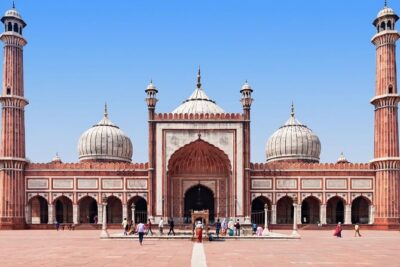
By the time you reach Chandni Chowk, you’re shifting into Old Delhi energy. This is where you’ll see narrow lanes lined with shopping for spices, dried fruits, silver jewelry, and saris. Even if you’re not shopping, it’s useful for understanding how Delhi feels at street level. You’ll then visit Jama Masjid, one of India’s largest mosques, commissioned by Shah Jahan and completed in 1656.
Finally, the Red Fort closes the Delhi chapter. Historically, it served as the Mughal emperors’ main residence until 1856. Admission is listed as not included for this stop, so again, this is where your booking option matters.
The day doesn’t end in Delhi proper. You’ll have a lunch stop at a local restaurant (meals are not listed as included, so treat this as your own expense), and then you’ll drive toward Agra. The itinerary calls out about a 3-hour ride via Yamuna Express Way, and that transfer is a big reason a private car package is worth it. You’re not scrambling for transport when you’re already tired.
Sunrise Taj Mahal day: Agra Fort and the Baby Taj
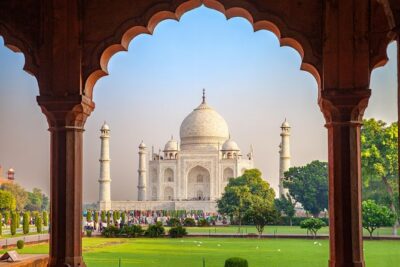
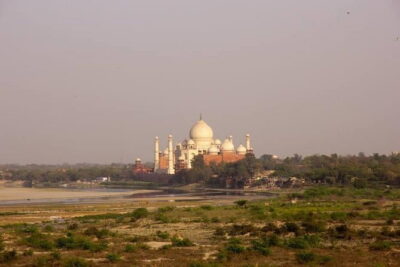
Day 2 starts early in Agra with the Taj Mahal, and the schedule is aimed at making that visit count. The itinerary specifically frames it as a sunrise view followed by a guided look inside. The Taj Mahal is UNESCO, and it’s also noted here as one of the New 7 Wonders of the World. Even if you’ve seen it in photos before, sunrise light changes the feel—everything looks more dimensional, and the crowd flow is often different than later in the day.
Admission is listed as not included for the Taj Mahal, so double-check your package option. If your booking includes monument entry fees, you’ll be covered. If not, you’ll want to plan for tickets so you’re not stuck at the gate.
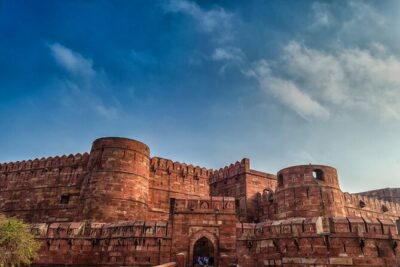
After the Taj, you move to Agra Fort, also UNESCO. This fort is described as one of the most iconic forts in India and originally served as the main residence of Mughal emperors. This stop is great because it broadens the story beyond one monument. The fort setting gives you a sense of power, defense, and daily life scale.
You then hit Itmad-ud-Daula, called the Baby Taj. Admission is listed as free in the itinerary. The label “Baby Taj” can sound like a gimmick, but it’s useful. It tells you to approach it like a smaller, more intimate Mughal mausoleum compared to the Taj Mahal, with gardens and buildings that reward a slower look.
Next is Fatehpur Sikri, a fortified city connected to Mughal architecture and credited here to Akbar, who founded it in 1569. It’s listed as free admission, and that’s a nice way to balance the day after paid-ticket stops.
You’ll then visit Chand Baori, a stepwell with over 3,500 steps. The itinerary notes it was built in the 8th and 9th centuries. This is another stop that’s “small enough” to feel different from the grand monuments. It’s not just a view—it’s architecture you can understand by walking its geometry in your mind.
After these sights, you transfer to Jaipur and check into your hotel for the night. The itinerary doesn’t give a named drive duration here, but in a 3-day format you can assume your time goes fast. If you want to stretch your legs after the long day, you’ll probably have a short window once you arrive—so keep your energy for the evening reset.
Day 3 in Jaipur: Hawa Mahal, Jantar Mantar, City Palace, and Jal Mahal
Jaipur is where the trip shifts from Mughal icons to Rajput-era landmarks and city planning. You start at Hawa Mahal, the Palace of Breeze. It’s famous for its bright red and pink sandstone look and its five-storey design. Built in 1799 by Sawai Pratap Singh, it’s one of those buildings that feels like it was designed for views and movement even if you’re just standing there looking up. Admission is listed as not included.
Then you head to Jantar Mantar, another UNESCO World Heritage site. It’s described as a complex of nineteen architectural astronomical instruments, commissioned by Sawai Jai Singh II. This stop is one of the most interesting on the list if you like the idea that science and design were treated as cultural projects. Admission is listed as not included here as well.
The City Palace is next. Built in 1721, it served as the administrative and ceremonial hub for the Maharaja of Jaipur, and today it houses the museum portion noted in the itinerary. Admission is listed as not included, and the value here is that you get context for how power and culture were organized in the city.
You’ll also visit Royal Gaitor Tumbas, linked to the cremation of the Maharajas of Rajasthan. This stop is said to be in Brahmpuri, about 15 km from Jaipur, at the base of Nahargarh Fort. That extra distance makes the site feel slightly removed from the main tourist flow, which can be a nice contrast.
After that, Jal Mahal arrives in the middle of the day as a visual breather. It’s described as a palace in the heart of Man Sagar Lake, expanded and refurbished by Maharaja Jai Singh II during the 18th century. Admission is listed as free. Even if you don’t spend ages there, it’s a “picture-your-mind” stop—water + architecture changes how the whole scene reads.
Next is Amer, on the outskirts of Jaipur. The itinerary frames it as a historic town known for culture, heritage, and history, and admission is listed as free. Since the itinerary just names Amer rather than a specific monument at this point, you should expect a more general experience rather than one single timed ticketed highlight.
Finally, you head back toward Delhi for the approximately 5-hour journey. The itinerary frames this as a drop-off option after the Jaipur city tour. In a 3-day schedule, this last ride can feel long, so plan to have your charger, water, and any needed items ready before you leave Jaipur.
Private chauffeur and guides: what this setup changes
The best thing about a private Golden Triangle tour isn’t the bragging rights. It’s friction reduction. With your own driver, you can keep your day aligned to the schedule without constantly checking routes, translating signs, or timing rides.
Here’s what stands out from the details provided:
- The driver is English-speaking, and that matters a lot when you’re trying to understand what you’re looking at.
- The vehicle is private and air-conditioned, which is a practical win in heat and traffic.
- Fuel, tolls, parking, and taxes are included, so you’re not hit with a bunch of micro-expense decisions.
I also appreciate the human side. One example from a past trip highlights a driver named Sangam who was praised for friendly communication, great personality, and clear explanations in English. That’s not just comfort—it’s how you get more from the monuments, especially on days when the itinerary moves quickly.
Because it’s private, you also have a realistic chance to ask small questions at the right moment instead of waiting for a group’s pace. That makes the day feel less rushed, even if the schedule itself is still busy.
Chasing the Pink City? More Jaipur day trips
Price and value: why $134.20 can be a smart choice
At $134.20 per person for roughly 3 days, this tour can be good value if you want structure. You’re not just paying for sightseeing—you’re paying for transport, coordination, and guided time at major stops.
Your value depends on which option you choose:
- The package can include 2 nights of accommodation if you select the hotel option.
- It includes breakfast (2).
- It can include tour guides and monument entry fees if that option is selected.
That last point is crucial. In the itinerary notes, several major sites list admission as not included, including places like Qutub Minar, Humayun’s Tomb, Red Fort, Taj Mahal, Agra Fort, Chand Baori, Hawa Mahal, Jantar Mantar, City Palace, and Royal Gaitor Tumbas. Other sites are listed as free, such as Lotus Temple, India Gate area monuments (as described), Agrasen Ki Baoli, Itmad-ud-Daula, Jal Mahal, and Jama Masjid.
So you’re not guessing blindly—you’re making a choices-and-budget decision up front:
- If you want fewer ticket hassles, select the option that includes entry fees.
- If you’re traveling with flexible timing or prefer handling tickets yourself, you can still do it, but you’ll need to budget for those non-free stops.
Meals are not included beyond breakfast, and personal expenses are on you. That’s common, but it’s still worth planning for snacks and lunch during the ride days.
Practical expectations: how to handle short stops and long rides
This itinerary is built around “highlight blocks.” Many stops are described with visit windows like 15 minutes, 30 minutes, or about an hour. Here’s what that means for you on the ground:
- You’ll likely get guided direction first, then some time for photos and a quick walk around.
- If you’re the kind of person who loves soaking in details, you’ll need to choose what to prioritize at each site.
- Wear comfortable shoes. Stepwell stops and fort areas can involve uneven surfaces.
Also, pack for the day you’ll spend in Delhi and the day you’ll spend in Agra. Even if you’re not thinking about weather right now, think about hydration and shade. The itinerary includes a lunch stop in Delhi before the drive, but lunch is not listed as included, so have a plan for your own meal and drink needs.
Finally, decide in advance how you want to handle shopping time at Chandni Chowk. It’s free to visit, but it’s also designed for buying. If you’re not shopping, it still helps to go in with a simple strategy: look first, wander for 30–60 minutes, and avoid getting pulled into long detours when you still have mosque and fort time later.
Who this private Golden Triangle tour suits best
This tour fits best if you:
- Want a first-time-friendly Golden Triangle plan without navigating between cities on your own
- Prefer the certainty of a private AC car and an organized schedule
- Like guided context for major monuments, not just pass-by photos
- Are okay with a packed itinerary and short stops at several sites
It may not be ideal if you:
- Want lots of free time in each city to explore at your own pace
- Dislike early starts (the Taj Mahal portion is described as sunrise-focused)
- Don’t want to deal with monument entry budgeting if your chosen option doesn’t include tickets
Should you book this private Golden Triangle 3-day tour?
If your goal is efficiency plus comfort, I think it’s a solid pick. The combination of pickup, a private AC vehicle, and guided time at the biggest monuments removes the biggest headaches in India sightseeing—getting from place to place and making sure you understand what you’re seeing.
My main decision point for you is simple: choose the option that matches how you want to handle monument entry fees. With several paid-ticket stops listed, your total experience cost can shift based on that choice. If you want fewer ticket headaches, prioritize the booking option that includes monument entry fees.
If you like a plan you can follow closely, this is the kind of tour that helps you see Delhi, Agra, and Jaipur without losing days to logistics.
FAQ
How long is the Golden Triangle tour?
It’s a 3-day tour, with the itinerary spread across Delhi, Agra, and Jaipur.
Where can I get pickup?
Pickup is available from the airport, railway station, hotel, or any location in Delhi, Noida, and Gurugram.
Is this tour private?
Yes. It’s a private tour/activity, and only your group participates.
What transportation do I use?
You travel in a private AC vehicle with an English-speaking driver. Fuel, tolls, parking, and all taxes are included.
Are hotels included?
You get 2 nights of accommodation if you book the option that includes hotels.
Is breakfast included?
Yes. Breakfast is included for 2 days.
Are meals included besides breakfast?
Meals are not included (besides the included breakfasts). Personal meals and snacks are on you.
Are monument entry fees included?
It depends on your selected option. The package can include tour guides and monument entry fees if that option is selected. Some stops are listed with admission not included, while others are listed as free.
Which car do I get based on group size?
For 1–3 passengers: Maruti Dzire or Toyota Etios sedan. For 4–5 passengers: Maruti XL6 or Toyota Crysta SUV. For 6–10 passengers: minivan or Tempo Traveler.
Is there a cancellation window for a full refund?
Yes. You can cancel up to 24 hours in advance for a full refund.
Is the tour e-ticket based?
You get a mobile ticket.
The Full Golden Triangle, More Options
- 3-Days Private Golden Triangle Tour: Delhi, Agra & Jaipur by Car
★ 5.0 · 1,107 reviews - 3-Days Private Golden Triangle Tour: Delhi, Agra & Jaipur by Car
★ 5.0 · 1,098 reviews - 3-Day Delhi, Agra and Jaipur Private Tour – India Golden Triangle
★ 5.0 · 812 reviews - Four-Day Private Luxury Golden Triangle Tour to Agra and Jaipur From New Delhi
★ 5.0 · 807 reviews - 5 Nights 6 Days Private Golden Triangle Tour – Delhi Agra Jaipur
★ 5.0 · 574 reviews
Onward to Jaipur: More Day Trips
- 3-Days Private Golden Triangle Tour: Delhi, Agra & Jaipur by Car
★ 5.0 · 1,107 reviews - 3-Days Private Golden Triangle Tour: Delhi, Agra & Jaipur by Car
★ 5.0 · 1,098 reviews - 3-Day Delhi, Agra and Jaipur Private Tour – India Golden Triangle
★ 5.0 · 812 reviews - Four-Day Private Luxury Golden Triangle Tour to Agra and Jaipur From New Delhi
★ 5.0 · 807 reviews - Jaipur Day Trip from Delhi by Car or Train – All Inclusive
★ 5.0 · 663 reviews
More Agra Day Trips out of Delhi
- Same Day Taj Mahal, Agra Fort & Baby Taj Tour from Delhi by Car
★ 5.0 · 4,304 reviews - Full Day Taj Mahal, Agra Fort & Baby Taj Tour from Delhi by Car
★ 5.0 · 3,647 reviews - From Delhi: Taj Mahal & Agra Private Day Trip with Transfers
★ 4.9 · 3,181 reviews - From Delhi: Taj Mahal and Agra Fort Private Sunrise Tour
★ 4.9 · 2,270 reviews - Sunrise Taj Mahal, Agra Fort & Baby Taj Tour from Delhi by Car
★ 5.0 · 2,243 reviews
Just added: more New Delhi reviews to browse
- 4 days Golden Triangle Tour★ 5.0 · 3 reviews
- Discover Old & New Delhi: Private Tour with Street Food★ 5.0 · 3 reviews
- Taj Mahal Tour From Delhi By Private Car★ 4.5 · 3 reviews
- Golden Triangle Tour 5 Days★ 5.0 · 3 reviews
- Taj Mahal: Express Entry Ticket For Sunset Tour with guide★ 5.0 · 3 reviews
- Agra Taj Mahal Sunrise & Sunset Tour from Delhi★ 5.0 · 3 reviews
Agra Day Trips from Delhi, compared.
 ★ 5.0Same Day Taj Mahal, Agra Fort & Baby Taj Tour from Delhi by CarFrom $624,304 reviews
 ★ 5.0Full Day Taj Mahal, Agra Fort & Baby Taj Tour from Delhi by CarFrom $623,647 reviews
 ★ 4.9From Delhi: Taj Mahal & Agra Private Day Trip with TransfersFrom $43,181 reviews
 ★ 4.9From Delhi: Taj Mahal and Agra Fort Private Sunrise TourFrom $592,270 reviews
 ★ 5.0Sunrise Taj Mahal, Agra Fort & Baby Taj Tour from Delhi by CarFrom $622,243 reviews
 ★ 5.0Taj Mahal and Agra Private Car Tour from Delhi with 5* LunchFrom $331,633 reviews
 ★ 4.9From Delhi: Private Taj Mahal and Agra Tour by Express TrainFrom $751,605 reviews
 ★ 5.0Taj Mahal, Agra Fort, Baby Taj Tour from Delhi by Superfast TrainFrom $751,494 reviews