
Reviewed · AGRA DAY TRIPS FROM DELHI
Private Luxury 4 Days Golden Triangle Tour of Delhi, Agra & Jaipur
Golden Triangle in luxury, without the guesswork. You move fast across Delhi, Agra, and Jaipur, but you still get time at the big monuments thanks to private transport and admission tickets included. I especially like the flexibility of customized packages and the way native, English-speaking guides make each site click fast. One drawback: the schedule is full, so you’ll want comfortable shoes and patience for crowds and travel time.
This tour’s “luxury” shows up in the small stuff that keeps the day smooth: bottled water, WiFi on board, masks/hand sanitizer provided, and an air-conditioned vehicle that actually helps on hot days. I also like that the company leans on real people; in feedback, driver Sanju is often credited with smooth hotel check-ins, and guides like Bobby, Deepak, and Dheeraj get praised for clear explanations and great pacing.
You’ll hit a classic set of sights—Mughal landmarks in Delhi and Agra, then Rajput power in Jaipur. Just know that iconic places like the Taj Mahal can be intense with crowds and morning energy, and some planned stops are short by design, so you’ll get highlights rather than slow wandering.
In This Review
- Key things I’d plan around
- Private luxury means you travel like you matter
- Old Delhi: Humayun’s Tomb, India Gate garden time, and Jama Masjid scale
- Rashtrapati Bhavan and the day’s big power-symbol stops
- Red Fort: Shah Jahan’s empire statement and a great evening option
- Fly-free Agra days: Taj Mahal first, then fort views
- Itimad-ud-Daulah (Baby Taj) and the Mughal-inspired museum stop
- Jaipur icons: City Palace, Jantar Mantar, and Hawa Mahal at golden hour pace
- What you actually pay for: price value vs meal reality
- Who this tour suits best (and who should adjust expectations)
- Book it? My decision checklist
- FAQ
- What cities does the private luxury Golden Triangle tour cover?
- How long is the tour?
- Is this tour private?
- Does the tour include pickup?
- Are admission tickets included?
- What meals are included?
- Is accommodation included?
- What’s included in the air-conditioned vehicle experience?
- Do I get a mobile ticket?
- Is the tour refundable if I cancel?
- What happens if weather is bad?
- Can most people participate?
Key things I’d plan around
- Private car + guide in each city: you’re not hunting tickets or directions on your own
- Entry tickets included for the listed monuments, so your day stays predictable
- English-speaking guides with names like Bobby, Deepak, and Dheeraj showing up in customer stories
- Hotel + breakfast included, while lunch and dinner are on your own
- Flexible itinerary options: you can include or skip destinations from an existing plan
Private luxury means you travel like you matter
A lot of Golden Triangle tours are “private” in name only. Here, the structure is built around your group: private transportation, a tour guide, and time blocks that keep you from feeling like you’re constantly sprinting to the next bus. You’re also dealing with a professional team that’s reachable 24/7—useful when India travel throws a curveball and you need quick answers.
The vehicle setup matters more than most people expect. In hot months, AC becomes a sanity saver. WiFi on board and bottled water also make the transfer days easier, especially if you’re carrying a phone full of maps and photos. And because you’re on a private tour, you can ask your guide for practical priorities like where to stand for photos or how to sequence entrances with less pushing.
If you’re the kind of traveler who likes control, the customization angle is a big plus. The company explicitly offers fully-customized travel packages and even lets you include or exclude destinations from an existing route. That’s valuable if you care more about temples than forts, or vice versa.
Other Agra runs out of Delhi worth a look




Old Delhi: Humayun’s Tomb, India Gate garden time, and Jama Masjid scale
Your day starts at Humayun’s Tomb, one of the most beautiful Mughal-era monuments in Delhi. It’s a strong opener because the site gives you a calmer, garden-and-architecture feel before the city gets loud. You’re learning the background of Humayun and seeing how Mughal design uses symmetry and space to create a sense of order.
Then you’ll head to India Gate. The stop is brief, but it’s meaningful: you pay homage to the martyrs and get a chance to slow down in the surrounding garden area. I like this kind of stop in a tour like this because it breaks up the monument rush and gives your brain a breather.
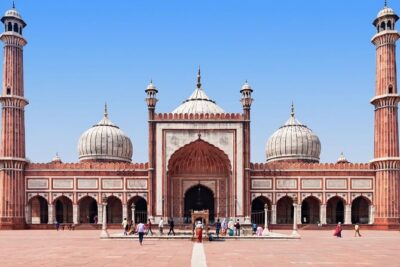
Next comes Jama Masjid, built by Mughal emperor Shah Jahan. This is one of those places that hits you physically—large courtyard, big scale, and details everywhere you look. Even if you’re not going deep into architecture, your guide can help you understand what you’re seeing and why it matters. If you’re visiting with family or if this is your first time in India, Jama Masjid is also a great “orientation” moment for understanding how historic power shaped the city layout.
Practical note: this area can be crowded and active, so wear shoes you can walk in for a while. Also, plan to dress respectfully—these are working religious sites.
Rashtrapati Bhavan and the day’s big power-symbol stops
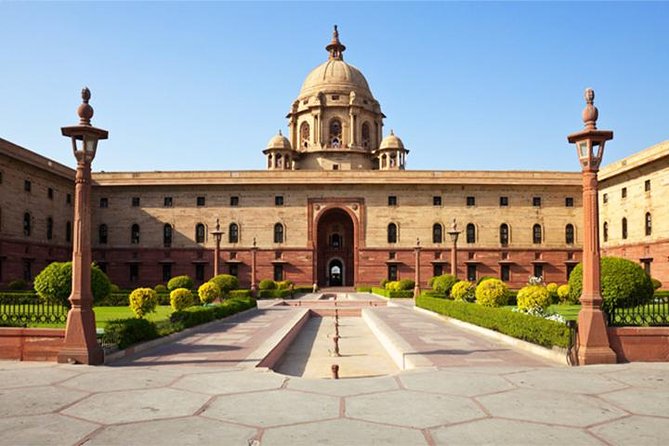
After Humayun’s Tomb and India Gate, the tour moves into New Delhi’s official-symbol territory with Rashtrapati Bhavan, the residence of the President of India. The plan calls it a short stop, which tells you what to expect: this isn’t a long museum visit. It’s more about taking in the scale and getting context for how Delhi works as both capital city and political center.
Then you pivot toward the “power and empire” feeling again with Jama Masjid’s monumental presence. The balance is smart. Delhi isn’t just one story. You see Mughal city foundations first, then you shift toward the modern government landscape.
If you’re someone who dislikes rushing, don’t worry—you won’t be constantly sprinting between sites, but you should still expect quick stops. This tour is designed to cover major icons across three cities efficiently. That means some moments are highlight-and-move, not deep-and-long.
Red Fort: Shah Jahan’s empire statement and a great evening option
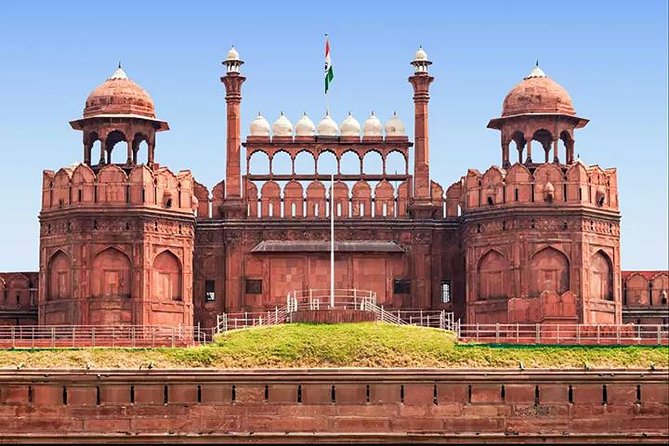
The next major Delhi stop is Red Fort, built by Mughal emperor Shah Jahan. This is a site with political weight, so it works well even if you’re short on time. You get the “empire centerpiece” feeling right away—walls, gates, and the sense that history happened here at full volume.
There’s also a note in the plan about a sound-and-light show at Red Fort being a must-watch, especially for foreign visitors who want a smoother overview of Indian history and culture. The tour package you have here includes entrance tickets for the listed monuments, but it doesn’t explicitly say the show is included. So think of it as an optional extra: if you want it, ask your guide how to fit it into your timing.
Either way, Red Fort is one of the best places to use your guide’s context. Left alone, it’s easy to see walls and miss the “why.” With a good explanation, it becomes a story of rulers, legitimacy, and the way architecture broadcast authority.
Fly-free Agra days: Taj Mahal first, then fort views
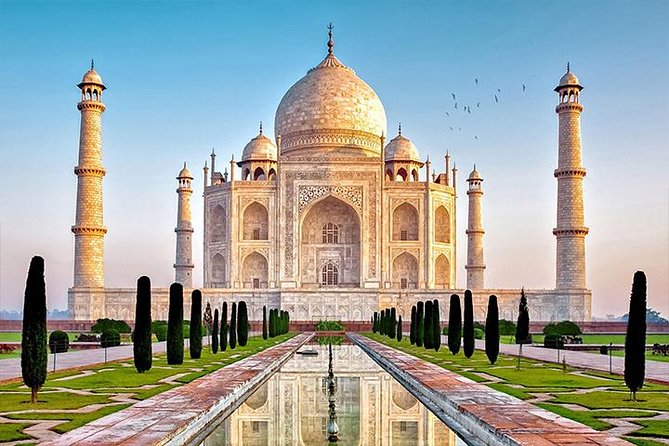
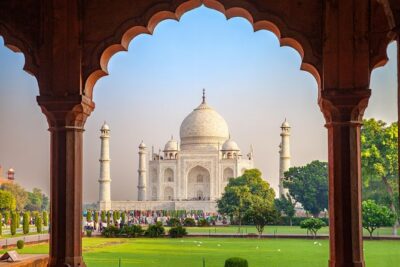
Agra’s sightseeing centers on the main event: Taj Mahal. The tour frames it correctly—on the banks of the Yamuna River, built by Shah Jahan in memory of Mumtaz Mahal, and recognized as one of the Seven Wonders of the World. You don’t need a long lecture to understand why this place turns people into poets. But your guide can help you notice the construction logic and the symbolism so it’s not just a pretty silhouette.
Here’s the practical truth: Taj Mahal is popular for a reason, and that means crowds. The tour keeps your time focused (the plan lists about a couple hours), so you’ll want to be ready to move efficiently—arrive with a plan for photos and a respectful pace for worship-like areas.
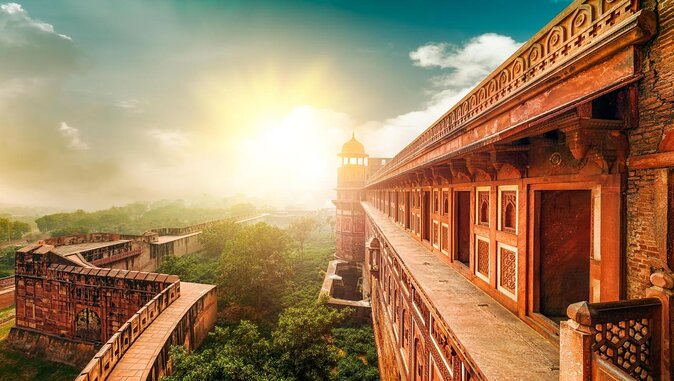
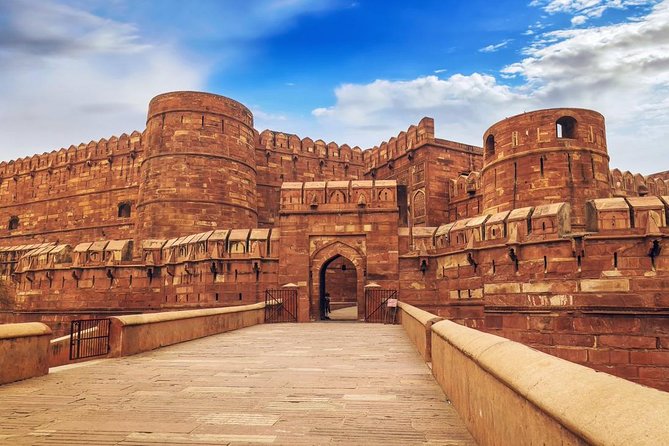
After Taj Mahal, you’ll head to Agra Fort. This fort is associated with Mughal emperor Akbar and is described as showcasing the treasury of the empire. In simple terms, it’s how you connect the dots from “memorial beauty” to “state power.” Taj Mahal is romance made stone. Agra Fort is what ran the machine behind that beauty.
Lunch time is built in: you’ll enjoy a meal at an air-conditioned hotel or restaurant. The important detail is that lunch isn’t listed as included, so budget for it separately. The upside is that the break is planned, and it helps you avoid getting stuck in roadside chaos.
Chasing the Pink City? More Jaipur day trips
Itimad-ud-Daulah (Baby Taj) and the Mughal-inspired museum stop
After Agra’s big monuments, you’ll visit Tomb of Itimad-ud-Daulah, often called the Baby Taj. The plan highlights the idea that it’s a draft of the Taj Mahal—an earlier expression of that same Mughal design language. This is a smart add-on because it gives you variation. You see a familiar style without feeling like you’re doing the same thing twice.
Then the tour includes a stop at the Sanskriti Museum, with a focus on jewelry and art inspired by the Mughal period. It’s also a place where you can buy items if you want. Even if shopping isn’t your goal, the museum stop is useful: it connects the stone monuments to the decorative arts you might not notice on your own.
This day’s structure is also a good example of the tour’s “highlight” approach. You get the emotional peak at Taj Mahal, then you shift to politics and power at Agra Fort, and you end with craftsmanship at Itimad-ud-Daulah and the museum. That arc helps the whole trip feel cohesive.
Jaipur icons: City Palace, Jantar Mantar, and Hawa Mahal at golden hour pace
Jaipur brings the Rajput angle with three headline stops.
First is City Palace, the royal museum and residence of Jaipur’s royal family. The plan stresses that the museum showcases armory and costumes. I like this kind of stop because it’s not just architecture. You get everyday visuals of how status looked—what people wore, what they used, and how power lived inside palace walls.
Next is Jantar Mantar, described as a solar observatory used to calculate positions of stars. It includes dozens of astronomical tools, including a very large sundial. If you usually skip “science” sites during travel, this one is worth staying with—because it’s old technology that still works as an explanation of how humans measured the sky long before modern instruments.
Finally comes Hawa Mahal, the Palace of Wind. It’s crown-shaped, with hundreds of windows designed to let cool breeze pass through. The plan ties it to Rajput rulers and a summer retreat for queens. When you stand near it, you finally understand why the building looks decorative. It wasn’t only for looks—it was an engineering idea disguised as beauty.
After Hawa Mahal, the tour includes time to enter a local restaurant for Rajasthan cuisine. Again, the key detail is that lunch isn’t listed as included, so treat this as an opportunity to eat what you want at your own cost. In my experience, this is where the trip becomes personal—what you choose to eat can make the day feel very much like your own.
What you actually pay for: price value vs meal reality
At $310 per person, this tour is priced like a private guided package, not a budget bus tour. You’re paying for the combination of private transport across three cities, a guide, and included entrance tickets for all listed stops—plus accommodation and breakfast.
The “included” list is solid:
- bottled water
- air-conditioned vehicle
- WiFi on board
- private transportation
- tour guide
- all fees and taxes
- accommodation and breakfast
- hand sanitizer and masks
The parts that are not included are also clearly stated: dinner and lunch aren’t part of the package. That matters because these two meals are often the biggest daily costs on a trip. Luckily, the plan does build in lunch time. You just have to pay for it yourself at the restaurant option.
If you’re trying to judge value, think about what’s being bundled:
- You’re not paying separately for guides and private car transfers.
- You’re not paying separately for entrance tickets to the major monuments listed.
- You’re getting lodging and breakfast, so you aren’t adding hotel costs on top.
That makes the price feel more “all-in” than many tours that surprise you later.
Who this tour suits best (and who should adjust expectations)
This is a strong fit for:
- first-time visitors to India who want a clean, guided introduction
- solo travelers who prefer private movement and English-speaking explanations
- couples and families who want fewer navigation hassles between cities
- travelers who want to see the core Golden Triangle sights without spending hours planning
It may be less ideal for:
- people who love slow, museum-level exploring all day
- travelers who want totally unstructured time at each monument
- anyone who gets cranky with crowds at top sites
The best way to get what you want from this tour is to treat it like a “guided highlights course.” You’ll learn enough to appreciate the big monuments and then you can decide what you want to return to on a longer trip.
Book it? My decision checklist
I’d book this tour if you want a private, guided Golden Triangle with entry tickets handled, comfortable transfers, and hotel + breakfast included. The balance of Mughal-era and Rajput-era sites is a good way to understand how India’s visual story changes across regions.
Before you book, check two things mentally:
- You’ll be paying separately for lunch and dinner, so plan your meal budget.
- You’re choosing speed and coverage over long, slow wandering at each stop.
If that matches your travel style, you’ll likely love how smoothly the days flow—and if you end up with guides like Bobby, Deepak, or Dheeraj, you’ll be in good hands for explanations and timing.
FAQ
What cities does the private luxury Golden Triangle tour cover?
It covers Delhi, Agra, and Jaipur (starting in New Delhi).
How long is the tour?
It runs for about 3 days and 12 hours.
Is this tour private?
Yes. It’s a private tour/activity, and only your group participates.
Does the tour include pickup?
Pickup is offered, and the tour is in New Delhi.
Are admission tickets included?
Yes. The listed stops include admission tickets.
What meals are included?
Breakfast is included. Lunch and dinner are not included.
Is accommodation included?
Yes. Accommodation is included as part of the package.
What’s included in the air-conditioned vehicle experience?
The package includes air-conditioned vehicle, WiFi on board, and bottled water.
Do I get a mobile ticket?
Yes. The tour includes a mobile ticket.
Is the tour refundable if I cancel?
This experience is non-refundable and cannot be changed for any reason. The amount you paid will not be refunded if you cancel or amend.
What happens if weather is bad?
The experience requires good weather. If it’s canceled due to poor weather, you’ll be offered a different date or a full refund.
Can most people participate?
Yes. The information provided says most travelers can participate.
The Full Golden Triangle, More Options
- 3-Days Private Golden Triangle Tour: Delhi, Agra & Jaipur by Car
★ 5.0 · 1,107 reviews - 3-Days Private Golden Triangle Tour: Delhi, Agra & Jaipur by Car
★ 5.0 · 1,098 reviews - 3-Day Delhi, Agra and Jaipur Private Tour – India Golden Triangle
★ 5.0 · 812 reviews - Four-Day Private Luxury Golden Triangle Tour to Agra and Jaipur From New Delhi
★ 5.0 · 807 reviews - 5 Nights 6 Days Private Golden Triangle Tour – Delhi Agra Jaipur
★ 5.0 · 574 reviews
Onward to Jaipur: More Day Trips
- 3-Days Private Golden Triangle Tour: Delhi, Agra & Jaipur by Car
★ 5.0 · 1,107 reviews - 3-Days Private Golden Triangle Tour: Delhi, Agra & Jaipur by Car
★ 5.0 · 1,098 reviews - 3-Day Delhi, Agra and Jaipur Private Tour – India Golden Triangle
★ 5.0 · 812 reviews - Four-Day Private Luxury Golden Triangle Tour to Agra and Jaipur From New Delhi
★ 5.0 · 807 reviews - Jaipur Day Trip from Delhi by Car or Train – All Inclusive
★ 5.0 · 663 reviews
More Agra Day Trips out of Delhi
- Same Day Taj Mahal, Agra Fort & Baby Taj Tour from Delhi by Car
★ 5.0 · 4,304 reviews - Full Day Taj Mahal, Agra Fort & Baby Taj Tour from Delhi by Car
★ 5.0 · 3,647 reviews - From Delhi: Taj Mahal & Agra Private Day Trip with Transfers
★ 4.9 · 3,181 reviews - From Delhi: Taj Mahal and Agra Fort Private Sunrise Tour
★ 4.9 · 2,270 reviews - Sunrise Taj Mahal, Agra Fort & Baby Taj Tour from Delhi by Car
★ 5.0 · 2,243 reviews
Just added: more New Delhi reviews to browse
- 4 days Golden Triangle Tour★ 5.0 · 3 reviews
- Discover Old & New Delhi: Private Tour with Street Food★ 5.0 · 3 reviews
- Taj Mahal Tour From Delhi By Private Car★ 4.5 · 3 reviews
- Golden Triangle Tour 5 Days★ 5.0 · 3 reviews
- Taj Mahal: Express Entry Ticket For Sunset Tour with guide★ 5.0 · 3 reviews
- Agra Taj Mahal Sunrise & Sunset Tour from Delhi★ 5.0 · 3 reviews
Agra Day Trips from Delhi, compared.
 ★ 5.0Same Day Taj Mahal, Agra Fort & Baby Taj Tour from Delhi by CarFrom $624,304 reviews
 ★ 5.0Full Day Taj Mahal, Agra Fort & Baby Taj Tour from Delhi by CarFrom $623,647 reviews
 ★ 4.9From Delhi: Taj Mahal & Agra Private Day Trip with TransfersFrom $43,181 reviews
 ★ 4.9From Delhi: Taj Mahal and Agra Fort Private Sunrise TourFrom $592,270 reviews
 ★ 5.0Sunrise Taj Mahal, Agra Fort & Baby Taj Tour from Delhi by CarFrom $622,243 reviews
 ★ 5.0Taj Mahal and Agra Private Car Tour from Delhi with 5* LunchFrom $331,633 reviews
 ★ 4.9From Delhi: Private Taj Mahal and Agra Tour by Express TrainFrom $751,605 reviews
 ★ 5.0Taj Mahal, Agra Fort, Baby Taj Tour from Delhi by Superfast TrainFrom $751,494 reviews