
Reviewed · OLD & NEW DELHI CITY TOURS
Private Tour, The Portraits of Old and New Delhi with Pickup Included
Delhi changes fast, so plan smart. This private full-day sightseeing run through Old and New Delhi mixes big-name monuments with market stops most standard routes skip, including Khari Baoli spice market, Kinari Bazaar wedding shopping, and Churi Wali Gali for bangles. I also like that you travel in a comfortable air-conditioned vehicle with bottled water and onboard Wi-Fi, so the long day stays manageable.
Another thing I love here is the Old Delhi rhythm: you get a pedicab (often described as a rickshaw-style ride) around Chandni Chowk, plus time at Jama Masjid and other landmark religious sites. One consideration: entrance tickets are listed as not included, even though parts of the itinerary note admission ticket free for some stops, so it’s worth confirming what you’ll actually need to pay on the day. Also, this is a full day with plenty of walking in busy areas, so plan for sun, dust, and sensible shoes.
In This Review
- Key things to know before you go
- Why this private Old and New Delhi plan works
- Pickup, comfort, and Wi-Fi: touring without the usual Delhi headaches
- Qutub Minar and Humayun’s Tomb: two big Mughal-era icons
- Jama Masjid and Gurudwara Bangla Sahib: faith and culture in the same day
- Chandni Chowk by pedicab: markets you actually get time to see
- Raj Ghat and Lotus Temple: a calmer reset before the big monuments
- Rashtrapati Bhavan, India Gate, and Red Fort: the power-and-memory sequence
- Price and value: is $90.77 per person a good deal?
- Who should book this private Old and New Delhi tour
- Should you book this private Delhi tour?
- FAQ
- What is the duration of the tour?
- Is pickup included?
- Is this tour private?
- What’s included in the price?
- Are entrance tickets included for monuments and attractions?
- What happens if weather is poor?
Key things to know before you go
- A true private day: only your group, with pickup included
- Market stops you won’t see on most classics: Khari Baoli, Kinari Bazaar, Churi Wali Gali
- Real monument time: Qutub Minar, Humayun’s Tomb, Jama Masjid, Red Fort, and more
- Comfort matters in Delhi: AC vehicle, bottled water, and onboard Wi-Fi
- A mix of loud and quiet: Chandni Chowk energy plus Raj Ghat and Lotus Temple
- Some entries may be free, but tickets aren’t guaranteed included: check before you arrive
Why this private Old and New Delhi plan works
Delhi is a city of layers. One hour you’re staring at Mughal-era stone and arches, the next you’re elbow-to-elbow in a market where spices or wedding supplies are the main event. This tour is built for that switch-up. You’re not just chasing famous sights; you’re also seeing the shopping streets that locals actually use.
I like that the route connects Old Delhi and New Delhi in a way that makes sense for a single day. You start with Qutub Minar, move into Mughal power and religious architecture, slide into Old Delhi’s market district, then finish with major memorial and government landmarks. It’s an efficient arc through the city’s identity—old empires, everyday faith, and modern civic monuments.
The old and the new, covered a few more ways




Pickup, comfort, and Wi-Fi: touring without the usual Delhi headaches
The comfort package here is not fluff. You get an air-conditioned vehicle, bottled water, and onboard Wi-Fi. That matters because Delhi heat and traffic can drain you faster than you expect. The private setup also means fewer waits and fewer awkward transitions than group tours that constantly regroup.
You also get mobile ticketing, which can save time at the start of the day. It’s a small thing, but in a city where lines and procedures vary, it helps you stay on schedule. And since this is private transportation, you’re not stuck timing your day around strangers’ pace.
One more practical note: the tour is listed as having pickup offered and being near public transportation. That signals the starting point is arranged for easier access—helpful if you’re coming from a hotel without direct pickup logistics.
Qutub Minar and Humayun’s Tomb: two big Mughal-era icons
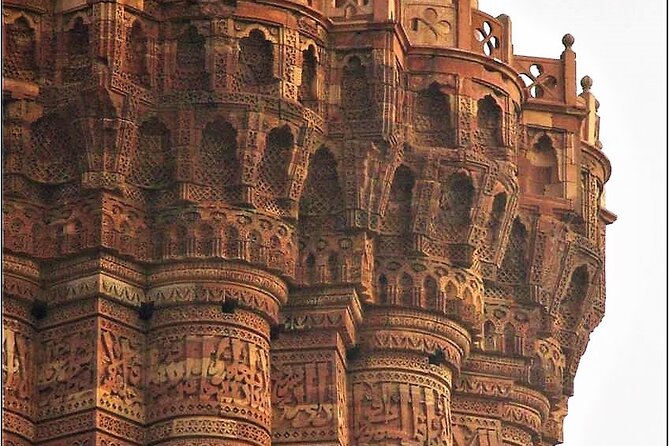
Qutub Minar (about 50 minutes) is the kind of stop that makes you look up even if you’re tired. The tower is described as a 237-foot sandstone minaret/victory tower built in 1193 by Sultan Qutb-ud-din. The scale hits fast. Even if you’ve seen photos before, the real thing feels taller than you remember.
This is also a good early stop because you’re still fresh enough to notice the details: stone texture, the way the tower rises, and the overall layout of the complex. If you’re the type who likes to understand why a place is important—not just what it looks like—this first hour sets the tone for the day.
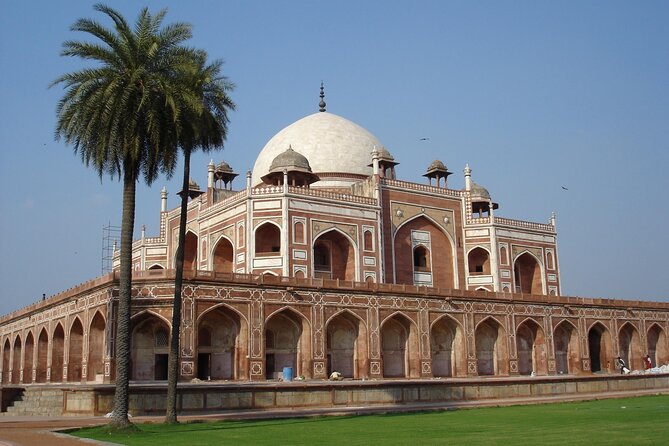
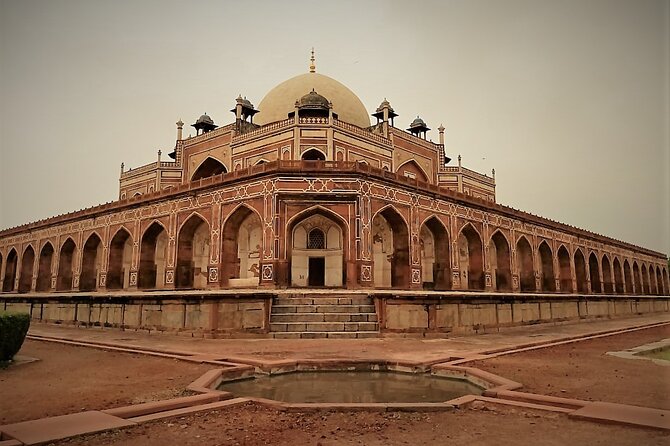
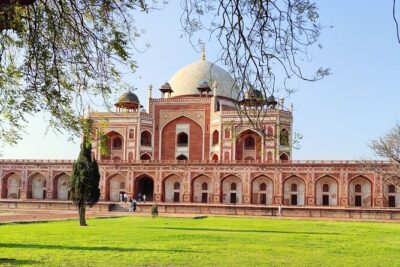
Then you shift to Humayun’s Tomb (also about 50 minutes). This one is important because it’s described as a predecessor to the Taj Mahal, built for the Mughal emperor in the mid-16th century. You’ll also hear the story of Haji Begum, the Persian-born wife credited with the tomb’s construction, and how Persian and Mughal design elements are combined. It’s a “power-to-beauty” moment in the itinerary.
The trade-off: both Qutub Minar and Humayun’s Tomb are popular sights, so expect crowds at least at certain times. Going with a private driver and a tight schedule helps you avoid wandering too much.
Jama Masjid and Gurudwara Bangla Sahib: faith and culture in the same day
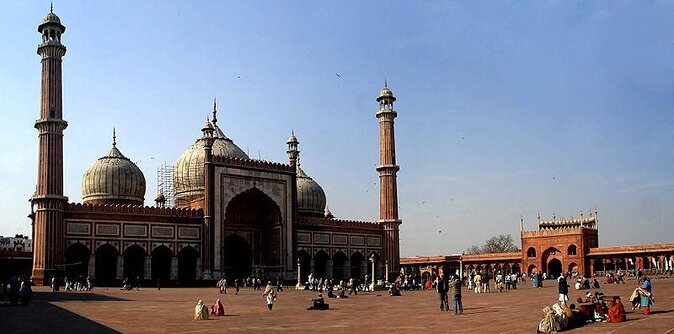
After the Mughal architecture stops, you’ll head to Jama Masjid (about 50 minutes). The tour describes it as the Friday Mosque, built between 1644 and 1658, with two minarets that are 40 meters high. It’s Shah Jahan’s final architectural triumph, and the materials—marble and red sandstone—are part of what makes it so visually distinctive.
This is a great place to learn how Delhi’s identity isn’t only about monuments. It’s also about religious life, public space, and daily routines that happen in settings that are hundreds of years old.
Then the tour adds a meaningful contrast at Gurudwara Bangla Sahib (about 30 minutes), a Sikh temple where you can observe—or join if you’d like—the langar, the voluntary community cooking and feeding program. If you want one of the day’s most human moments, this is it. You’re not just looking at architecture; you’re seeing a working tradition.
Tip for your comfort: plan for respectful clothing and a slower walking pace here than in the market sections. Religious sites tend to have different rules and foot traffic flow.
Chandni Chowk by pedicab: markets you actually get time to see
Here’s the big reason this tour feels different from the typical Old Delhi list. You get Chandni Chowk time (about 30 minutes) and a pedicab ride through the area, which is a fun way to get context quickly—like you’re getting the map of the neighborhood in motion.
On this stretch, the itinerary includes a range of stops that show Delhi’s shopping culture in specific categories:
- Digamber Jain Temple (quick temple viewing stop)
- Sisganj Gurudwara (another faith landmark in the same district)
- Gali Paranthewali (a street associated with parathas)
- Khari Baoli, described as Asia’s biggest spice market
- Kinari Bazaar, known for wedding market shopping
And the overview also highlights Churi Wali Gali, where merchants sell bangles. That matters because Delhi’s markets aren’t just one street of generic shopping. They’re specialized economies.
The drawback is simple: market areas are busy, and your time is limited. This means you’ll get a taste, not a deep, hour-long browse. If you love shopping and want to haggle and linger, set expectations. Use the time to identify what you want to come back for later, then make a second plan.
Still, 30 minutes in Chandni Chowk is a strong value because the tour isn’t skipping the key flavor: spices, wedding supplies, and the everyday religious landmarks woven through the commercial streets.
More private days with a guide of your own


Raj Ghat and Lotus Temple: a calmer reset before the big monuments
After the sensory overload of Old Delhi, you get two calmer stops that help you reset your brain.
Raj Ghat (about 45 minutes) is a memorial dedicated to Mahatma Gandhi on the banks of the Yamuna River. The setting is described as peaceful and very well maintained, with a simple black-marble platform marking the spot where Gandhi was cremated. This is the kind of place where your pace naturally slows down. It’s not a photo-op stop only; it’s more of a reflective pause.
Then you move to Lotus Temple (about 20 minutes). The tour describes it as a lotus flower shape with 27 delicate-looking white-marble petals. It’s designed to bring faiths together, and visitors are invited to pray or meditate silently according to their own beliefs. That “silence rules” feel is exactly what makes this stop work in an otherwise crowded schedule.
The consideration here: these calm stops can make you forget you still have more to do. Keep your energy for the later section where the day leans back into big civic landmarks and the Red Fort.
Rashtrapati Bhavan, India Gate, and Red Fort: the power-and-memory sequence
This is where the tour shifts into major New Delhi landmarks and the Mughal centerpiece at the end.
Rashtrapati Bhavan (President’s Palace), also known as the President’s Estate, is described as the former home of the British Viceroy, with 340 rooms. Even if you don’t have time for deep exploration, it gives you a clear sense of how power was built into architecture here. It also helps connect the dots between the colonial-era civic image and the later memorials in the city.
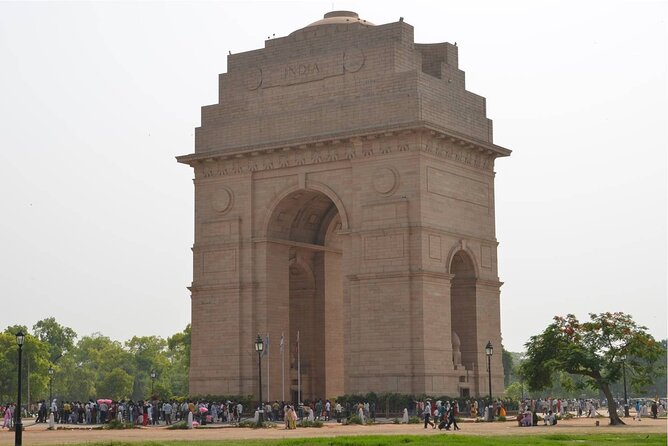
Next is India Gate (the itinerary lists it as a 42-meter-high stone memorial arch designed by Lutyens in 1921). The tour explains it pays tribute to around 90,000 Indian Army soldiers who died in World War I, the Northwest Frontier operations, and the 1919 Anglo-Afghan War. This is one of those “you feel the scale” stops. And if you’ve ever wondered how war memorials fit into everyday city life, India Gate is a strong example.
Finally, you reach Red Fort. The tour describes it as a symbol of Mughal power, founded by Emperor Shah Jahan and surrounded by an 18-meter-high wall. It notes the fort took about ten years to construct (1638 to 1648). This is the big finish, and it makes sense to end your day here because it ties together so many themes: empire, stonework, ceremony, and the idea of power made visible.
A small heads-up: the final hours can feel like a blur in a long day. When you’re comparing tours, prioritize this one if you want the day to end with a monument that really matches the earlier Mughal stops.
Price and value: is $90.77 per person a good deal?
At $90.77 per person for an approximately 8-hour private tour with pickup, you’re paying for three things: time, logistics, and a guide-led route that mixes monuments with less-common market stops.
Here’s how that value shakes out in real terms:
- You’re getting private transportation plus an air-conditioned vehicle, which is a major comfort upgrade in Delhi.
- You’re getting onboard Wi-Fi and bottled water, which helps you stay functional rather than just surviving.
- You’re also getting access to a route that includes places like Khari Baoli and Kinari Bazaar, which often don’t make it into the shortest “greatest hits” plans.
Entrance tickets are not included. The itinerary also labels several monuments as admission ticket free, so there may be savings depending on current access rules. Either way, you should expect some amount of on-site payment and set a small buffer in your budget.
One more value point: the overall rating is strong, and the feedback highlights the guide and driver as informative and effective at making the day flow. In Delhi, that matters. Good guiding can turn “I saw buildings” into “I understand why these places matter.”
Who should book this private Old and New Delhi tour
This tour fits best if you:
- Want a full-day plan that combines Old Delhi markets with New Delhi landmarks
- Prefer a private setup where your group can move at a consistent pace
- Like religious architecture and cultural stops, not just forts and arches
- Would rather have a driver and plan than spend your day navigating transit and traffic
It’s also a good pick for first-time Delhi visitors. You get enough variety that you’ll leave with a working sense of how the city is organized: Mughal monuments, community faith spaces, market districts, and civic memorial landmarks.
If you’re traveling with a serious shopping focus and want to linger for long periods at Khari Baoli or wedding-market streets, you might find the market time a bit short. In that case, pair the tour with a planned second visit on a different day.
Should you book this private Delhi tour?
Yes, I’d book it if your goal is a smart, guided day that covers the big sights and the Delhi-you-feel-it markets in one run. The combination of pickup + AC comfort + a route that includes Churi Wali Gali, Khari Baoli, and Kinari Bazaar is the main selling point. Add the strong emphasis on major monuments like Qutub Minar, Humayun’s Tomb, Jama Masjid, and Red Fort, and you’ve got a well-shaped itinerary for a first visit.
Do it with one mindset: it’s a full day. Wear comfortable shoes, keep water handy, and plan for busy crowds at the popular sites. If your travel dates depend on perfect weather, note the tour requires good weather; if conditions are poor, you’ll be offered a different date or a full refund.
FAQ
What is the duration of the tour?
The tour is listed at about 8 hours.
Is pickup included?
Yes, pickup is offered and included in the experience.
Is this tour private?
Yes. It’s a private tour/activity, and only your group will participate.
What’s included in the price?
The included items are an air-conditioned vehicle, bottled water, WiFi on board, and private transportation. It also uses mobile ticketing.
Are entrance tickets included for monuments and attractions?
Entrance tickets are not listed as included. At the same time, the itinerary marks some stops as admission ticket free, so it’s smart to confirm what you’ll need to pay for on the day.
What happens if weather is poor?
The experience requires good weather. If it’s canceled due to poor weather, you’ll be offered a different date or a full refund.
More Tours in New Delhi
- Old & New Delhi City Tour – Half or Full Day Options Available
★ 5.0 · 4,811 reviews - Half Day Private Delhi City Tour
★ 5.0 · 4,474 reviews - Same Day Taj Mahal, Agra Fort & Baby Taj Tour from Delhi by Car
★ 5.0 · 4,304 reviews - Taj Mahal Day Tour from Delhi by Superfast Train – TOP RATED TOUR
★ 5.0 · 4,166 reviews - Delhi: Old and New Delhi Private Full or Half-Day Tour
★ 4.9 · 3,776 reviews
More Tour Reviews in New Delhi
- Old & New Delhi City Tour – Half or Full Day Options Available
★ 5.0 · 4,811 reviews - Half Day Private Delhi City Tour
★ 5.0 · 4,474 reviews - Same Day Taj Mahal, Agra Fort & Baby Taj Tour from Delhi by Car
★ 5.0 · 4,304 reviews - Taj Mahal Day Tour from Delhi by Superfast Train – TOP RATED TOUR
★ 5.0 · 4,166 reviews - Delhi: Old and New Delhi Private Full or Half-Day Tour
★ 4.9 · 3,776 reviews
Old and New Delhi, Keep Exploring
- Old & New Delhi City Tour – Half or Full Day Options Available
★ 5.0 · 4,811 reviews - Delhi: Old and New Delhi Private Full or Half-Day Tour
★ 4.9 · 3,776 reviews - Delhi: Private Old & New Delhi Guided Half- or Full-Day Tour
★ 4.9 · 2,309 reviews - Old & New Delhi Private Tour – Half or Full Day (Rated Excellent)
★ 5.0 · 2,226 reviews - Old & New Delhi Full or Half Day Sightseeing Tour
★ 5.0 · 1,900 reviews
Just added: more New Delhi reviews to browse
- 4 days Golden Triangle Tour★ 5.0 · 3 reviews
- Discover Old & New Delhi: Private Tour with Street Food★ 5.0 · 3 reviews
- Taj Mahal Tour From Delhi By Private Car★ 4.5 · 3 reviews
- Golden Triangle Tour 5 Days★ 5.0 · 3 reviews
- Taj Mahal: Express Entry Ticket For Sunset Tour with guide★ 5.0 · 3 reviews
- Agra Taj Mahal Sunrise & Sunset Tour from Delhi★ 5.0 · 3 reviews
Old & New Delhi City Tours, compared.
 ★ 5.0Old & New Delhi City Tour – Half or Full Day Options AvailableFrom $384,811 reviews
 ★ 4.9Old and New Delhi Private Full or Half-Day TourFrom $23,776 reviews
 ★ 4.9Private Old & New Delhi Guided Half- or Full-Day TourFrom $72,309 reviews
 ★ 5.0Old & New Delhi Private Tour – Half or Full Day (Rated Excellent)From $202,226 reviews
 ★ 5.0Old & New Delhi Full or Half Day Sightseeing TourFrom $241,900 reviews
 ★ 4.8Full or Half-Day Old and New Delhi Private TourFrom $71,883 reviews
 ★ 4.9Private Full-Day City Tour of Old and New DelhiFrom $221,722 reviews
 ★ 5.0Old and New Delhi Guided Full or Half-Day TourFrom $20976 reviews
Browse the lists this tour appears in