

Reviewed · TAJ MAHAL TOURS FROM DELHI
Taj Mahal and the Golden Triangle
Taj Mahal and Old Delhi in four days. This Golden Triangle route is a fast, focused way to see the big names of northern India with the comfort of an air-conditioned vehicle and a driver-turned-best-friend vibe. I especially like the guided pacing on Day 1, from a close-up walk at Jama Masjid to the UNESCO Qutub Minar visit with included entry. I also like the way the trip stays practical and human, with your driver/manager Mahendra standing out for friendly hospitality and water each day. The one catch: several major sites require extra entry fees you should budget for in cash, including Jama Masjid (200 rupees), Agra Fort (300 rupees), and multiple Jaipur attractions.
You’ll also appreciate how the days are structured: sunrise or sunset planning for the Taj Mahal, forts and tombs for strong visuals, and Old Delhi shopping time built in. With a maximum group size of 15, it feels organized without feeling like a cattle chute, and the mobile ticket plus airport pickup means you can start fast.
In This Review
- Key things that make this trip work
- How the Golden Triangle feels in real life (Delhi to Agra to Jaipur)
- Day 1 in Delhi: Old Delhi sights, then Qutub Minar and a spice-market detour
- Jama Masjid: a guided stroll where details actually matter
- India Gate and Raj Ghat: two quiet pauses
- Qutub Minar: the UNESCO stop that rewards slow looking
- Chandni Chowk (spice market): where the trip gets real
- Day 2 to Agra: forts first, then the Baby Taj and Taj Mahal at sunrise or sunset
- Agra Fort: Mughal grandeur with strong photo backdrops
- Itmad-ud-Daula: the Baby Taj that prepares you for the main event
- Taj Mahal at sunrise or sunset: why the timing matters
- Day 3 in Jaipur: forts, observatories, palaces, and the pink-building quick stop
- Fatehpur Sikri en route: a free heritage break
- Amber Fort: the big Jaipur fort stop with extra entry cost
- Jantar Mantar: an old astronomical observatory
- City Palace of Jaipur: royal space, practical visit time
- Hawa Mahal: quick but iconic
- Day 4 in Jaipur: time for shopping and flexible pacing
- The human part: driver, guide, and that Mahendra-level hospitality
- Getting value for $247.23: what’s covered and what you should budget
- Who this tour suits best (and who should think twice)
- Should you book this Taj Mahal and Golden Triangle tour?
- FAQ
- What cities does the tour cover?
- How long is the tour?
- What does the price include?
- Where does the tour start?
- Is there a group size limit?
- Are admission fees included for every stop?
- Does the tour include meals besides breakfast?
- Are flights or travel insurance included?
- Is tipping included?
- What is the cancellation policy?
Key things that make this trip work
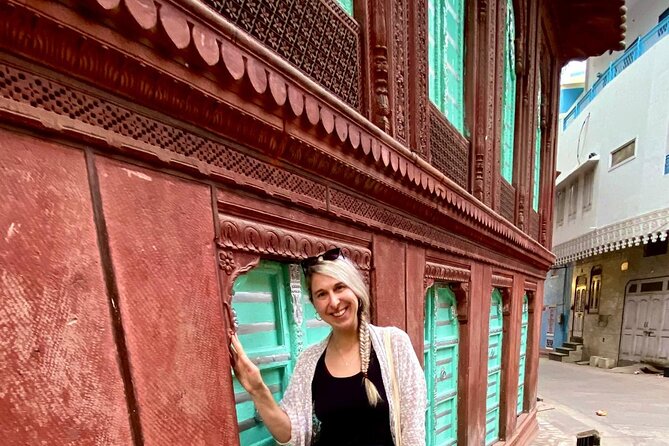
- Airport pickup and small group size (max 15) keep the start smooth and the experience more personal.
- Guided monument walks turn first-time stops like Jama Masjid into something you can actually understand.
- Agra pacing includes the Baby Taj (Itmad-ud-Daula) before the big Taj moment.
- Sunrise or sunset Taj Mahal timing gives you that softer light for photos and atmosphere.
- Air-conditioned comfort plus bottled water helps a lot on long drives and busy streets.
- Clear entry-fee split (some included, some not) makes budgeting easier if you plan ahead.
How the Golden Triangle feels in real life (Delhi to Agra to Jaipur)
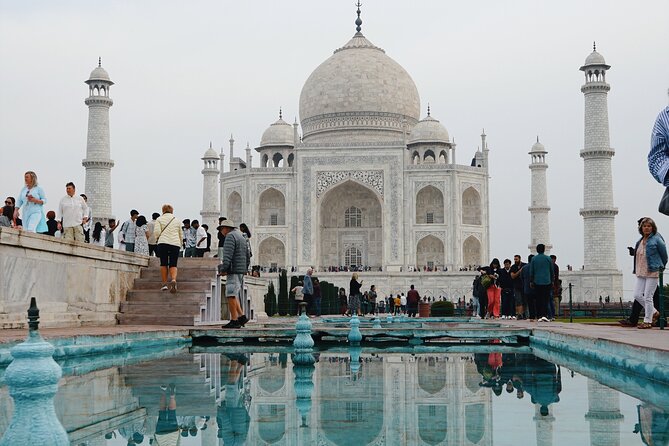
If it’s your first time in India and you want the greatest hits without getting overwhelmed, this 4-day loop has a smart rhythm. You start in New Delhi, move to Agra for the Taj Mahal, then finish in Jaipur. The long drives are built in, but you don’t just sit there wondering what’s next—you get a sequence of stops that makes each day feel like a theme.
On the road, the air-conditioned vehicle is not a luxury-for-luxury’s-sake add-on. It’s what lets you handle road chaos and still show up fresh for monuments. Your driver and guide approach also matter here. In the feedback you’ll see the same pattern: friendly hospitality, “homely” warmth, and lots of practical tips, with Mahendra highlighted as a key part of that.
This kind of trip works best if you’re okay trading a little spontaneity for structure. You’ll know what’s coming next, roughly how long you’ll be there, and how to manage entry fees when they’re not included.
More ways to reach the Taj, weighed side by side




Day 1 in Delhi: Old Delhi sights, then Qutub Minar and a spice-market detour
Day 1 is your orientation day. It jumps from grand faith and memorial space to UNESCO architecture, then lands you in the middle of Old Delhi energy.
Jama Masjid: a guided stroll where details actually matter
You’ll be picked up and taken to Jama Masjid, one of the largest mosques in India. The highlight is not just seeing the building—it’s having a guide explain details during a short stroll. Plan for 200 rupees per person admission here, since it’s not included.
If you’re used to seeing monuments from the outside only, this stop helps you read the place better. You’ll also get a sense of how religion shapes daily movement in Old Delhi, not just how it looks on postcards.
India Gate and Raj Ghat: two quiet pauses
Next comes India Gate, a memorial built in 1931 for Indian soldiers. There’s no entry fee, and you’ll have a 30–60 minute window (your time depends on the day’s pacing). It’s short, but it’s a grounding stop after crowds and walking.
Then you visit Raj Ghat, the cremation site of Mahatma Gandhi. This is a peaceful memorial with gardens where you can slow down. Entry is included, and the pace here feels intentionally gentle.
Qutub Minar: the UNESCO stop that rewards slow looking
After that, you go to Qutub Minar, an Afghan UNESCO World Heritage site known for its marble and red sandstone architecture. You’ll spend around an hour here, and entry is included. If you like architecture, you’ll likely find yourself looking longer than you planned. The structure is visually strong, but it’s the materials and proportions that keep you staring.
Delhi, Agra and Jaipur: more full circuits
Chandni Chowk (spice market): where the trip gets real
Finally, you’ll head to Chandni Chowk, billed here as Asia’s largest spice market. You get about an hour, no entry fee, and plenty of time to feel the hustle. This stop is less about “a single photo moment” and more about taste, smell, and browsing.
One practical thought: this is where you might want to keep a little extra money aside. You’re likely to be tempted by spices, blends, and small food-related products. The market is part of the charm, but it can also make it easy to overspend if you’re not paying attention.
Day 2 to Agra: forts first, then the Baby Taj and Taj Mahal at sunrise or sunset
Day 2 is about travel energy and big visuals. You’ll leave Delhi and drive about 4 hours to Agra, then hit a sequence that sets up the Taj Mahal instead of throwing it at you without context.
Agra Fort: Mughal grandeur with strong photo backdrops
First up is Agra Fort, built in 1565 by Emperor Akbar. You’ll spend around 2 hours, and entry is 300 rupees per person, not included. The fort sits along the Yamuna River, which means you get a classic Mughal-fort setting and lots of background angles for photos.
Even if you’re not a history buff, forts like this communicate power and planning. It’s also an easier entry point than a museum-heavy day. You can wander, look outward over the river-side setting, and get a feel for why Agra mattered so much.
Itmad-ud-Daula: the Baby Taj that prepares you for the main event
After Agra Fort, you visit Itmad-ud-Daula, sometimes called the Baby Taj. This is a marble tomb built in 1622. Here, entry is included, and you’ll have about 1 hour.
What I like about this stop is that it helps you understand how marble work and ornamental detail set the stage for what you’ll see at the Taj Mahal later. It also gives you a breather after the fort. If you only did the Taj Mahal, you’d still get the wow factor—but doing Itmad-ud-Daula first adds extra satisfaction.
Taj Mahal at sunrise or sunset: why the timing matters
Then comes the big moment: Taj Mahal. The itinerary specifies sunset or sunrise, depending on the day’s timing, and you’ll have about 3 hours there. Entry is included.
This is a place where timing changes how the light behaves on marble. Sunrise can feel calmer and cooler, while sunset adds a different warmth as the sky shifts. Either way, 3 hours gives you a realistic chance to take in the full complex, not just rush through.
Practical note: even with a tour, you’ll likely be walking in strong sun or cooler morning air. Wear shoes you trust, and keep water handy—this tour includes bottled water, which helps.
Day 3 in Jaipur: forts, observatories, palaces, and the pink-building quick stop
Day 3 shifts from Agra vibes to Jaipur’s mix of fort walls, royal buildings, and geometry-as-art.
Fatehpur Sikri en route: a free heritage break
On the way to Jaipur, there’s a stop at Fatehpur Sikri Heritage site. Entry is listed as free and you’ll have around 2 hours. This is a smart move because it breaks up the drive and adds another major historical location before Jaipur begins.
Amber Fort: the big Jaipur fort stop with extra entry cost
In Jaipur, you go to Amber Fort, which you’ll tour for about 2 hours. Here, entry is not included. Amber Fort is one of the best-known Jaipur attractions, and it’s exactly the kind of place where a guide helps you move through efficiently and know what you’re looking at.
If you care about dramatic visuals, go in expecting that this will be a highlight day. Fort courtyards, architecture, and views tend to reward patience.
Jantar Mantar: an old astronomical observatory
Next is Jantar Mantar (Jaipur), about 1 hour. Entry is not included. This stop is interesting because it turns “science in stone” into something you can walk around. It’s not only a structure to admire; it’s a place to imagine how people observed time and the sky.
City Palace of Jaipur: royal space, practical visit time
You also visit City Palace of Jaipur for about 1 hour. Entry is not included. This gives you a chance to connect Jaipur’s architecture with its royal identity without spending all day inside.
Hawa Mahal: quick but iconic
Finally, you’ll see Hawa Mahal, also known as the Palace of Winds. The stop is about 30 minutes, and entry is not included. Because it’s shorter, it works well as a “capstone” to the day. You’ll likely get clear views of the facade and understand why it’s one of Jaipur’s signature images.
Day 4 in Jaipur: time for shopping and flexible pacing
Day 4 is a lighter day by design. You’ll have around 2 hours for sightseeing and shopping in Jaipur, with no listed entry fee for this portion.
This is the time I’d use for practical purchases. Think spices if you’re a cook, small crafts if you like souvenirs that look local, or simple gifts for friends back home. Since you’ve already seen the big monuments, this day doesn’t feel like you’re constantly rushing from one ticket counter to another.
The human part: driver, guide, and that Mahendra-level hospitality
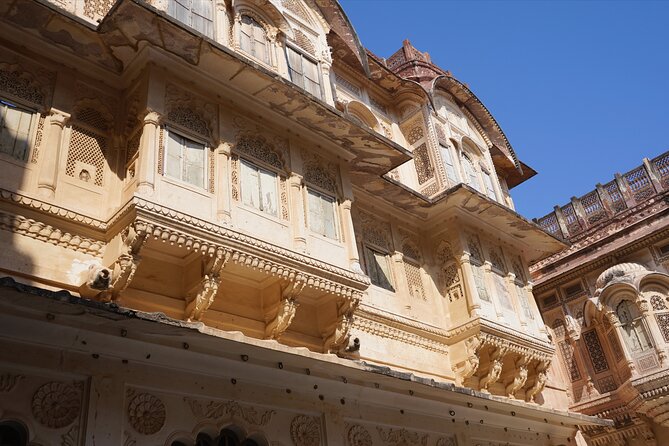
Most tours can name landmarks. What matters here is how the trip feels between stops—and that’s where the feedback is strong.
Your driver and manager can shape your day more than you’d expect. In the reviews, Mahendra stands out for being professional, knowledgeable in the sense that he can explain what you’re seeing, and genuinely friendly. The most repeated theme: good hospitality, a comfortable atmosphere, and help with practical needs like water each day.
Also, with maximum 15 travelers, you’re more likely to feel guided rather than processed. In chaotic traffic, having someone who knows when to move and when to pause makes a difference fast.
Getting value for $247.23: what’s covered and what you should budget
At $247.23 per person for about 4 days, this tour is positioned as an efficient way to see Delhi, Agra, and Jaipur without arranging separate transport yourself. The value isn’t just in the price—it’s in the included logistics.
Included:
- Air-conditioned vehicle
- Bottled water
- Breakfast (4)
- Mobile ticket
- Pickup offered (starting at Indira Gandhi Intl Airport)
Not included (based on the info you have):
- Flights
- Insurance
- Tipping
- Several site admission fees (varies by stop)
Here’s how admission works in plain terms, so you can plan:
- Included admissions you don’t have to pay on-site: Raj Ghat, Qutub Minar, Itmad-ud-Daula, Taj Mahal.
- Not included and you should expect extra payment: Jama Masjid (200 rupees), Agra Fort (300 rupees), Amber Fort, Jantar Mantar, City Palace, Hawa Mahal.
So the smart budget move is simple: bring enough cash for those not-included entries, and keep small bills if possible. The trip gives you a set itinerary and defined stop lengths, so you can’t rely on improvising the schedule to dodge fees.
Who this tour suits best (and who should think twice)
This fits you if:
- You want a first-time-friendly Golden Triangle introduction.
- You prefer organization: planned stops, guides, and set time windows.
- You like forts and major monuments more than deep-dive local experiences.
- You’d rather ride comfortably in an A/C vehicle than try to piece together transport under time pressure.
You might think twice if:
- You hate paying extra entry fees at multiple sites.
- You want lots of free time each day for wandering without a schedule.
- You prefer flexible pacing over sunrise/sunset planning for the Taj Mahal.
Should you book this Taj Mahal and Golden Triangle tour?
I’d book it if your priority is a clean, efficient route that covers the big monuments of Delhi, Agra, and Jaipur in 4 days, with comfort and guidance built in. The strong points—driver hospitality (Mahendra gets specific praise), bottled water, breakfast, and the way the Taj Mahal day is timed—make this feel like more than a checklist.
I wouldn’t book it blindly if you don’t want to handle extra ticket costs for major sites. But if you budget for the not-included admissions, this is a practical way to see a lot without the stress of coordinating everything yourself.
FAQ
What cities does the tour cover?
It covers New Delhi, Agra (including the Taj Mahal), and Jaipur.
How long is the tour?
The duration is about 4 days.
What does the price include?
The price includes an air-conditioned vehicle, bottled water, and breakfast for 4 days, plus a mobile ticket and pickup offered.
Where does the tour start?
The start point is Indira Gandhi Intl Airport, New Delhi.
Is there a group size limit?
Yes. The tour has a maximum of 15 travelers.
Are admission fees included for every stop?
No. Some admissions are included (like Raj Ghat, Qutub Minar, Itmad-ud-Daula, and the Taj Mahal). Other places require extra payment, including Jama Masjid (200 rupees) and Agra Fort (300 rupees), plus multiple Jaipur sights.
Does the tour include meals besides breakfast?
The only meals listed as included are breakfast (4). Other meals are not stated as included.
Are flights or travel insurance included?
No. Flights and insurance are not included.
Is tipping included?
No. Tipping is not included.
What is the cancellation policy?
You can cancel for free up to 24 hours before the experience start time for a full refund.
More Tour Reviews in New Delhi
- Old & New Delhi City Tour – Half or Full Day Options Available
★ 5.0 · 4,811 reviews - Half Day Private Delhi City Tour
★ 5.0 · 4,474 reviews - Same Day Taj Mahal, Agra Fort & Baby Taj Tour from Delhi by Car
★ 5.0 · 4,304 reviews - Taj Mahal Day Tour from Delhi by Superfast Train – TOP RATED TOUR
★ 5.0 · 4,166 reviews - Delhi: Old and New Delhi Private Full or Half-Day Tour
★ 4.9 · 3,776 reviews
The Full Golden Triangle, More Options
- 3-Days Private Golden Triangle Tour: Delhi, Agra & Jaipur by Car
★ 5.0 · 1,107 reviews - 3-Days Private Golden Triangle Tour: Delhi, Agra & Jaipur by Car
★ 5.0 · 1,098 reviews - 3-Day Delhi, Agra and Jaipur Private Tour – India Golden Triangle
★ 5.0 · 812 reviews - Four-Day Private Luxury Golden Triangle Tour to Agra and Jaipur From New Delhi
★ 5.0 · 807 reviews - 5 Nights 6 Days Private Golden Triangle Tour – Delhi Agra Jaipur
★ 5.0 · 574 reviews
The Taj, Reached a Few More Ways
- Same Day Taj Mahal, Agra Fort & Baby Taj Tour from Delhi by Car
★ 5.0 · 4,304 reviews - Taj Mahal Day Tour from Delhi by Superfast Train – TOP RATED TOUR
★ 5.0 · 4,166 reviews - Full Day Taj Mahal, Agra Fort & Baby Taj Tour from Delhi by Car
★ 5.0 · 3,647 reviews - From Delhi: Taj Mahal & Agra Private Day Trip with Transfers
★ 4.9 · 3,181 reviews - Taj Mahal Tour from Delhi by Express Train (Viator Award Winner)
★ 5.0 · 2,849 reviews
Just added: more New Delhi reviews to browse
- 4 days Golden Triangle Tour★ 5.0 · 3 reviews
- Discover Old & New Delhi: Private Tour with Street Food★ 5.0 · 3 reviews
- Taj Mahal Tour From Delhi By Private Car★ 4.5 · 3 reviews
- Golden Triangle Tour 5 Days★ 5.0 · 3 reviews
- Taj Mahal: Express Entry Ticket For Sunset Tour with guide★ 5.0 · 3 reviews
- Agra Taj Mahal Sunrise & Sunset Tour from Delhi★ 5.0 · 3 reviews
Taj Mahal Tours from Delhi, compared.
 ★ 5.0Same Day Taj Mahal, Agra Fort & Baby Taj Tour from Delhi by CarFrom $624,304 reviews
 ★ 5.0Taj Mahal Day Tour from Delhi by Superfast Train – TOP RATED TOURFrom $1004,166 reviews
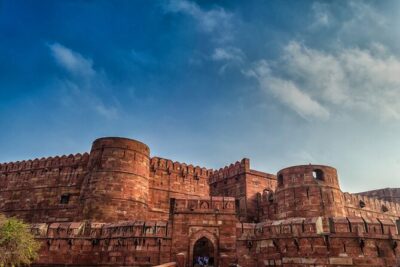 ★ 5.0Full Day Taj Mahal, Agra Fort & Baby Taj Tour from Delhi by CarFrom $623,647 reviews
 ★ 4.9From Delhi: Taj Mahal & Agra Private Day Trip with TransfersFrom $43,181 reviews
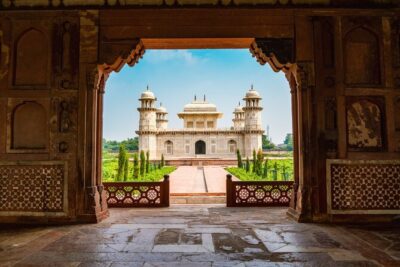 ★ 5.0Taj Mahal Tour from Delhi by Express Train (Viator Award Winner)From $752,849 reviews
 ★ 5.0All Inclusive Private Taj Mahal Luxury Tour from Delhi by CarFrom $622,564 reviews
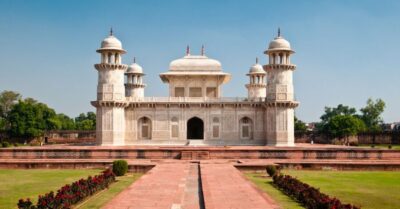 ★ 4.9Same Day Taj Mahal, Fort & Baby Taj Tour from Delhi by CarFrom $502,534 reviews
 ★ 4.9From Delhi: Taj Mahal and Agra Fort Private Sunrise TourFrom $592,270 reviews