
Reviewed · TOURS
The Indian Dream Tour – Classic North India
Ten days, five cities, one smooth route. This tour is interesting because you get a private Golden Triangle base in Delhi, Jaipur, and Agra, then you keep going to the holy ghats of Varanasi and the temple world of Khajuraho.
I love how the route is built for efficiency: you travel in a private car with a guide, so you spend time seeing, not bargaining or guessing. I also love the mix of headline sights and lived-in culture, including meals with local families in Jaipur and Agra, plus an evening Ganga Aarti on the river.
One possible drawback: the schedule is full and includes early starts, and a few experiences can shift with the season—like boat rides and Aarti during monsoon months when river levels run high.
In This Review
- Key highlights worth your attention
- A Smart Way to Cover North India’s Big Hits
- Delhi First Look: Qutub Minar, Jama Masjid, and Chandni Chowk by Pedal Rickshaw
- Taj Mahal Day in Agra: Seeing It With Context (Not Just a View)
- Jaipur Palaces and City Palace: Fort Views Plus Royal Details
- Timing Matters: Fatehpur Sikri and Abhaneri Stepwell Detours
- Private Car Meets Local Rhythm: How the Tour Works in Motion
- Varanasi by Dawn and Night: Sarnath, Ganges Boat Ride, and Ganga Aarti
- Prayagraj Stops: Triveni Sangam, Anand Bhavan, and Khusro Bagh
- Khajuraho Temples: Erotic Sculptures With Architectural Muscle
- Orchha and Gwalior: Forts, Palaces, and Jain Sculpture Photo Stops
- Price and Value: Is $1,199 Fair for This Route?
- Who This Tour Suits Best (and Who Should Think Twice)
- Should You Book This North India “Dream” Tour?
- FAQ
- What does the tour price include?
- Are flights included?
- Do I need a visa and insurance?
- Where do the pickup details start?
- Is there a dress code?
- Is Ganga Aarti guaranteed?
- Is there a vegetarian option?
Key highlights worth your attention
- UNESCO-heavy route across Delhi, Agra, and Khajuraho, with major entrance fees covered for key stops
- Private car + local English-speaking guide, which makes long drives feel manageable
- Old Delhi on pedal rickshaws, built for getting your bearings fast in Chandni Chowk
- Varanasi by dawn and night, with a boat ride and an evening Aarti (season-dependent)
- Khajuraho temples and Orchha combined, so you see both monumental and small-town charm
- Small group size (max 8), which usually means better pacing and fewer bottlenecks
A Smart Way to Cover North India’s Big Hits
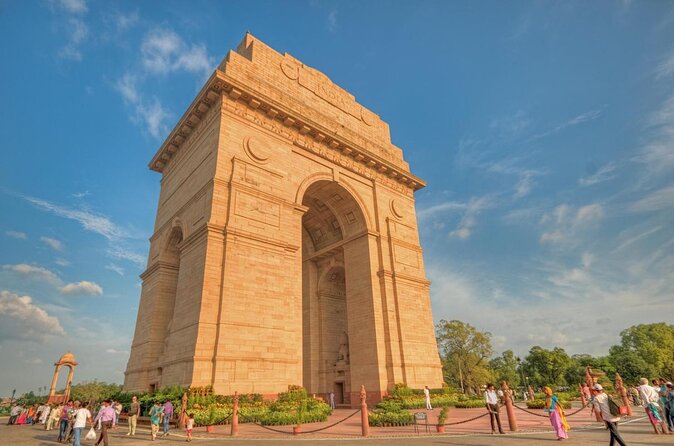
If North India is on your bucket list, this style of tour is a good match. You’re hitting the usual superstars—Taj Mahal, Jaipur forts, Varanasi ghats, Khajuraho temples—but the private format helps you keep control. You’re not stuck waiting for the slowest traveler in a giant bus crowd.
I also like that the tour is not just monuments-and-photos. You get time in religious and historic places where people actually live their routines: morning on the Ganges, evening ceremonies, and temple architecture that explains itself once you have a guide.
And yes, there’s a practical upside too. With pickup options in Delhi and an AC vehicle doing the between-city driving, you can focus on what matters: getting oriented, learning the context, and seeing sights on the right schedule.
Still deciding? Here is how it stacks up against other Delhi picks we have written up.



Delhi First Look: Qutub Minar, Jama Masjid, and Chandni Chowk by Pedal Rickshaw
Delhi can feel like a swirl at first. This morning set-up helps you land on your feet. You start with Qutub Minar, a UNESCO World Heritage site, and it’s a great opener because it immediately gives you a sense of scale and time depth—towering, detailed, and historic.
Next comes Old Delhi with Jama Masjid, the big Friday mosque that can host up to 20,000 worshippers. That number matters because it explains the energy and the crowds you’ll see around the area. You’re not just touring a building; you’re stepping into a living religious hub.
Then you ride a pedal rickshaw through the narrow lanes of Chandni Chowk. This is one of those moments where the tour earns its keep. Trying to do it on your own can be stressful—streets twist, signage is limited, and traffic is chaotic. By using a guided route, you get the experience without losing half your day.
You also get a calmer, reflective stop at Rajghat, Gandhi’s memorial. It’s short, but it breaks up the intensity of Old Delhi.
Taj Mahal Day in Agra: Seeing It With Context (Not Just a View)
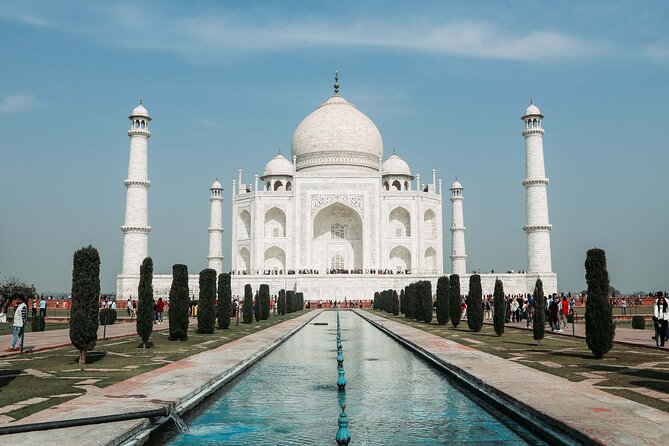
Agra is where many people come for one thing: the Taj Mahal. Even if you’ve seen photos a hundred times, seeing it in person still hits differently—white marble, intricate inlays, and the sense of planning behind the design.
Two practical notes matter here. First, the tour includes the Taj Mahal visit and the entrance ticket for it. Second, the Taj Mahal is closed on Fridays, so your exact day-to-day schedule can shift if your travel dates fall on a Friday.
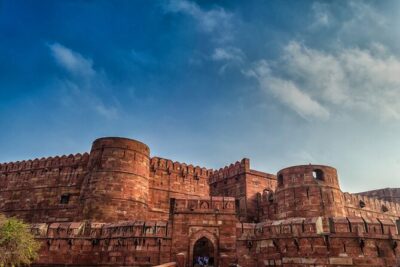
After the Taj, you move to Agra Fort, a royal complex on the riverbank. This stop is valuable because it doesn’t let the Taj Mahal be the only story. The fort takes you into the Mughal world of palaces and gardens and shows how power was staged and lived.
If you like your sightseeing with a little structure, this pairing works well: Taj Mahal for the emotional impact, then Agra Fort for the political and architectural context.
Jaipur Palaces and City Palace: Fort Views Plus Royal Details
Jaipur is where the tour turns up the visual volume. You start with Amber Palace, positioned on a hill. It’s an easy place to fall in love with the geometry—ramps, courtyards, and fort architecture that feels designed for dramatic arrivals.
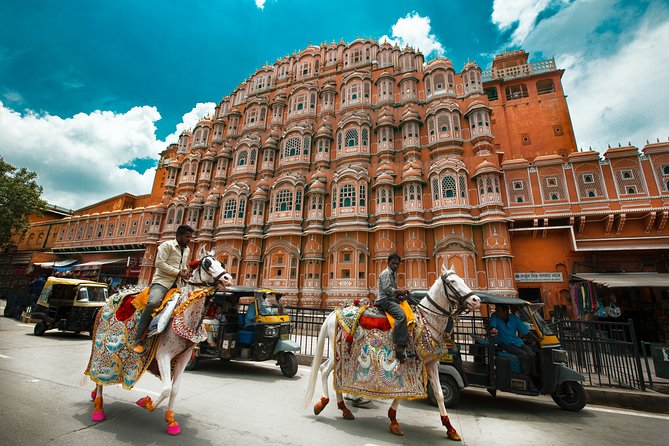
The tour also includes a photostop at Hawa Mahal, the famous honeycomb facade. Even if you’re not going inside, it’s worth stopping for because it’s one of the city’s quickest “I’m in Jaipur” signals.
Later, you visit the City Palace, a complex of princely buildings and museum spaces. What I like about this stop is that it’s not only about grand halls. The museum includes carpets and miniatures, and that matters if you enjoy details—because it helps you understand the decorative design culture that shaped royal life.
Then there’s Jantar Mantar, Jaipur’s astronomical observatory. The highlight is a 27-meter sundial that can calculate time with high precision. If you’re the type who likes places that explain how people thought about the sky, this is your stop. It’s history you can almost touch.
Timing Matters: Fatehpur Sikri and Abhaneri Stepwell Detours
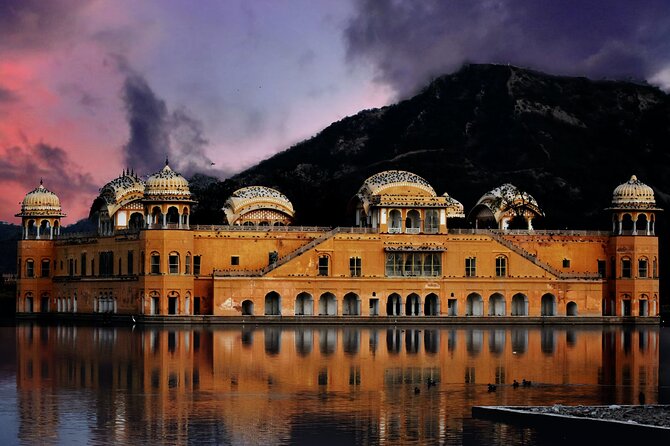
Between major cities, the tour adds two detours that can make your whole trip feel more complete.
First is Fatehpur Sikri, often described as a ghost city. It was built by Emperor Akbar in red sandstone and abandoned after about twelve years of use. That short lifespan is the point. You see a city that still has personality, but you also feel the story of it being left behind.
Then there’s Abhaneri’s Chand Baori, the stepwell. It’s built in sandstone and dates back to the ninth century, and the visual effect is strong: rows of steps going down and down, like architecture designed for an optical puzzle.
A practical consideration: the tour notes there aren’t too many guides at Abhaneri, so you may do more self-guided reading or rely on your tour guide’s explanation rather than having a separate specialist there. Still, the structure itself is the star.
Private Car Meets Local Rhythm: How the Tour Works in Motion
The private format is the secret sauce here. You’re getting AC vehicle transport between stops, plus local English-speaking guides for the sightseeing. That combination matters because North India travel often has two problems: time sinks and confusion. With a driver and guide, you avoid both.
Also, the group size is capped at 8 travelers, which generally means fewer waiting games at entrances and more flexibility when something runs long. In a region where traffic and crowd levels can change fast, that small group size helps you keep the day from feeling like a conveyor belt.
You’ll also get hotel breakfast included as part of the stay pattern. The tour also provides bottled water twice a day per person, which sounds minor until you’re walking in warm air and it’s one less thing to manage.
Varanasi by Dawn and Night: Sarnath, Ganges Boat Ride, and Ganga Aarti
Varanasi is the trip’s emotional switch. Delhi, Jaipur, and Agra feel like the big-stage monuments. Varanasi feels like the real world—religion, daily routines, and belief all visible at once.
You start with Sarnath and then go into the heart of Varanasi’s spiritual pull. Sarnath is one of those places where history matters, but the atmosphere matters just as much.
Then comes the evening Ganga Aarti, a ceremony of light on the ghats with priests singing and thanking the gods with sacred music. It’s a powerful contrast to the daylight sightseeing. If you’re photographing, be ready for strong light and shifting crowds, but the ceremony itself is the reason to be there.
Two season-related cautions are important:
- During monsoon periods when river water levels are high, Ganga Aarti may not be possible.
- For the early morning boat ride on the Ganges, the tour notes that in August and monsoon months, the boat may not be permitted.
You’re still in Varanasi even if water conditions change, but these notes affect whether you get the full “dawn boat + night ceremony” package.
Prayagraj Stops: Triveni Sangam, Anand Bhavan, and Khusro Bagh
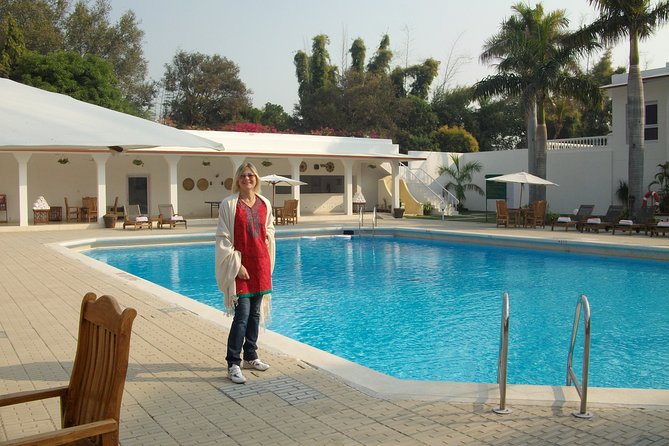
From Varanasi, the route continues to Prayagraj (listed as Allahabad). This is a different kind of sacred geography. The highlight is Triveni Sangam, the point where the Ganga meets the Yamuna, and the Saraswati is part of the story as well.
The tour then adds Anand Bhavan, the paternal house of Jawaharlal Nehru, now a museum. It’s a change of pace from temple and river stops because it connects the spiritual and the political threads of modern India.
Finally, you visit Khusro Bagh, the tomb of Amir Khusro. This combination works because it doesn’t force everything into one theme. You see sacred water, a major political family site turned museum, and a historical tomb complex.
If you like itinerary variety—rather than repeating the same visual style each day—this segment delivers.
Khajuraho Temples: Erotic Sculptures With Architectural Muscle
Then you move into the temple world: Khajuraho. The tour gives you time to check in and relax, and that matters. Khajuraho is popular, but it’s not a place you should rush through if you want to notice details.
The next morning focuses on the temples built between the ninth and eleventh centuries. You start with the western temples dedicated to Hindu deities. And yes, the famous sculptural style includes erotic imagery and Tantra-related mudra. What makes Khajuraho more than a headline is that the sculpture is attached to serious architecture—proportions, carvings, and temple layout that reward slower looking.
Here’s a unique detail I found especially useful: the tour notes that the site originally had around 84 temples, connected to the idea of 84 Kamasutra postures, and today only 33 remain. That helps you understand why the complex looks like it does—surviving pieces of a much larger whole.
You also visit the eastern area dedicated to Jain tradition and tirthankaras, so it’s not a one-faith-only stop. You’re seeing how the temple complex reflects different strands of belief.
Orchha and Gwalior: Forts, Palaces, and Jain Sculpture Photo Stops
After Khajuraho, you head toward Orchha. It’s described as a small village area with colorful feel and temples with high Shikhara, and it’s a nice change from the big-city pace. You then visit Jahangir Mahal, a 16th-century monument.
From Orchha, you transfer to Gwalior, and the final sightseeing focuses on Gwalior Fort. The fort is known for Hindu architecture and temples near the fort area. It’s a fitting finish because it brings together the tour’s themes—power, religion, and craftsmanship—into one dense setting.
Before you leave, there’s a photo stop at Gopachal Parvat for giant statues of Jain saints carved in rock. Even if you’re not a hardcore statue person, rock-carved figures feel different than temple walls because of their scale and permanence.
You then end with transfer to the station and train back to Delhi, followed by arrival transfer to the airport.
Price and Value: Is $1,199 Fair for This Route?
At $1,199 per person for roughly 10 days, you’re paying for three big things: private transport, guided sightseeing, and included hotel breakfasts.
Let’s be realistic. This is not a “budget backpacker” trip. But it’s also not just paying for seats on a bus. You get:
- Private car + guide covering long travel legs
- Hotel accommodation (twin sharing) with breakfast
- Bottled water twice a day
- Entrance tickets included for many of the major stops listed in the program
- Pickups in Delhi either from the airport (for morning arrivals) or from your hotel
The value improves if you want an organized route and would otherwise have to pay for guides and private transport yourself. Also, this is one of those tours where the cost can feel more reasonable if you compare the alternatives: self-planning Golden Triangle plus Varanasi and Khajuraho can turn into a patchwork of train timings, internal flights, and guide bookings.
One more practical point: you can choose standard, deluxe, or premium accommodations. Some couples opt for upgrades, and when you do, the comfort boost is real—especially after long drives and early mornings. If you want steady sleep and smoother bathroom breaks (a small thing until you need it), upgrading can be worth it.
Who This Tour Suits Best (and Who Should Think Twice)
This tour fits you if you want:
- A structured route that hits the headline attractions without the planning headache
- Guides who can translate what you’re seeing into real context
- A balance of monuments plus religious and cultural moments
It also fits well if you enjoy learning with a guide. One guest specifically praised a guide named Manish for being patient and extremely knowledgeable, and for keeping the experience organized. Even if your guide isn’t Manish, the fact that the tour uses local English-speaking guides is a big reason this itinerary works.
Think twice if:
- You hate early starts. Varanasi includes pre-dawn action.
- You’re very sensitive to schedule changes caused by monsoon conditions or fixed closures like the Taj Mahal Friday rule.
Should You Book This North India “Dream” Tour?
I’d book it if your goal is to see a lot of India’s most important places in one coherent trip, without turning your vacation into a logistics project. The private transport, small group size, and guide-led sightseeing are the core reasons this feels smooth.
I’d hesitate only if you’re traveling during monsoon months and you’re hoping for every water-based moment with certainty, or if you’re set on a Taj Mahal visit on a Friday.
If you want the best chance of things going exactly your way, pack smart for temple dress rules (shoulders and knees covered), bring breathable layers for travel days, and keep your expectations flexible for river conditions in Varanasi.
FAQ
What does the tour price include?
It includes accommodations on a twin sharing basis with bed and breakfast, AC vehicle transfers and sightseeing as per the itinerary, local English-speaking guides, two bottles of water per day per person, local assistance, and taxes/parking/tolls/driver expenses. Breakfast is included for 9 days. Many entrance tickets for the listed sightseeing are included as well.
Are flights included?
No. Flights are not included. You’ll need to arrange your own flights.
Do I need a visa and insurance?
Visa and insurance are not included.
Where do the pickup details start?
The tour start is at Indira Gandhi International Airport in New Delhi. The tour notes that if you arrive in the morning on the tour starting date, the representative will pick you up at the airport; otherwise you may be picked up from your hotel in Delhi. The tour also indicates hotel pickup and drop-off is part of the experience.
Is there a dress code?
Yes. Dress code is smart casual. For places of worship and selected museums, you must cover shoulders and knees for both men and women. Shorts or sleeveless tops can lead to refused entry.
Is Ganga Aarti guaranteed?
Visiting Ganga Aarti is noted as not possible during monsoon season if the water level in the Ganges is high.
Is there a vegetarian option?
A vegetarian option is available. You should advise the provider at the time of booking if you want it.
More Tours in New Delhi
- Old & New Delhi City Tour – Half or Full Day Options Available
★ 5.0 · 4,811 reviews - Half Day Private Delhi City Tour
★ 5.0 · 4,474 reviews - Same Day Taj Mahal, Agra Fort & Baby Taj Tour from Delhi by Car
★ 5.0 · 4,304 reviews - Taj Mahal Day Tour from Delhi by Superfast Train – TOP RATED TOUR
★ 5.0 · 4,166 reviews - Delhi: Old and New Delhi Private Full or Half-Day Tour
★ 4.9 · 3,776 reviews
More Tour Reviews in New Delhi
- Old & New Delhi City Tour – Half or Full Day Options Available
★ 5.0 · 4,811 reviews - Half Day Private Delhi City Tour
★ 5.0 · 4,474 reviews - Same Day Taj Mahal, Agra Fort & Baby Taj Tour from Delhi by Car
★ 5.0 · 4,304 reviews - Taj Mahal Day Tour from Delhi by Superfast Train – TOP RATED TOUR
★ 5.0 · 4,166 reviews - Delhi: Old and New Delhi Private Full or Half-Day Tour
★ 4.9 · 3,776 reviews
Just added: more New Delhi reviews to browse
- 4 days Golden Triangle Tour★ 5.0 · 3 reviews
- Discover Old & New Delhi: Private Tour with Street Food★ 5.0 · 3 reviews
- Taj Mahal Tour From Delhi By Private Car★ 4.5 · 3 reviews
- Golden Triangle Tour 5 Days★ 5.0 · 3 reviews
- Taj Mahal: Express Entry Ticket For Sunset Tour with guide★ 5.0 · 3 reviews
- Agra Taj Mahal Sunrise & Sunset Tour from Delhi★ 5.0 · 3 reviews
Tours, compared.
 ★ 5.0Old & New Delhi City Tour – Half or Full Day Options AvailableFrom $384,811 reviews
 ★ 5.0Half Day Private Delhi City TourFrom $374,474 reviews
 ★ 5.0Same Day Taj Mahal, Agra Fort & Baby Taj Tour from Delhi by CarFrom $624,304 reviews
 ★ 5.0Taj Mahal Day Tour from Delhi by Superfast Train – TOP RATED TOURFrom $1004,166 reviews
 ★ 4.9Old and New Delhi Private Full or Half-Day TourFrom $23,776 reviews
 ★ 5.0Full Day Taj Mahal, Agra Fort & Baby Taj Tour from Delhi by CarFrom $623,647 reviews
 ★ 5.0Taj Mahal Tour from Delhi by Express Train (Viator Award Winner)From $752,849 reviews
 ★ 5.0All Inclusive Private Taj Mahal Luxury Tour from Delhi by CarFrom $622,564 reviews