

Reviewed · JAIPUR DAY TRIPS FROM DELHI
Two Days Package Jaipur Tour by Car.
Jaipur hits you with a mix of old-world royal design and modern daily life. This Two Days Package Jaipur Tour by Car is interesting because you’re not just ticking off monuments; you’re rolling through the Aravalli foothills and seeing how the city’s grand planning connects from fort tops to palace courts. I love the small-group feel (max 3 travelers), because it keeps the day from feeling like cattle-herding. I also love that the plan includes a full night in a 3 hotel with morning breakfast, so you’re not stuck trying to power through the next day on fumes.
One possible drawback: it’s a tight, car-based route with multiple forts and palace stops packed into roughly 22 hours to 1 day. Also, the package notes monument fees as not included, while the itinerary lists admission ticket included for the sights—so you’ll want to confirm what’s covered on your exact booking to avoid a surprise at the gate.
In This Review
- Key highlights worth planning around
- How the small-group car tour really changes Jaipur
- Hawa Mahal: read the wind windows, not just the postcard
- Amber Palace (Amer Fort): the halls and the cooling idea at Sukh Niwas
- Jaigarh Fort: where you can feel the military mindset
- Nahargarh Fort: hill views and the nine identical suites
- City Palace of Jaipur: the Rajasthani-Mughal blend in real rooms
- Price and value: what $163 covers (and what you should budget)
- Timing, pacing, and the 22-hour reality of a fast circuit
- Hotel night and meals: what you get, what you control
- Staff quality: why Sumi and Driver Raji matter
- Who should book this Jaipur by car package
- Should you book it? My take
- FAQ
- What is the starting location for the Jaipur tour by car?
- How long is the tour?
- How much does the package cost?
- What’s included in the price?
- Which sights are included in the itinerary?
- Are monument fees included?
- Are meals included?
- Is there a hotel included, and what type?
- How many travelers can be on this tour?
- What happens if the weather is poor?
Key highlights worth planning around
- AC car + parking covered: easier comfort and fewer logistical headaches during a long circuit.
- Max 3 travelers: more personal attention, less crowd stress at each stop.
- Hawa Mahal’s wind-window design: not just photos—look for how the façade works.
- Amber Fort interiors: public and private audience halls plus the cooling concept at Sukh Niwas.
- Jaigarh Fort’s Jain Ban cannon: a rare chance to connect fort life with medieval military engineering.
- City Palace blend of styles: Rajasthani and Mughal art stitched into one complex you can actually explore.
How the small-group car tour really changes Jaipur
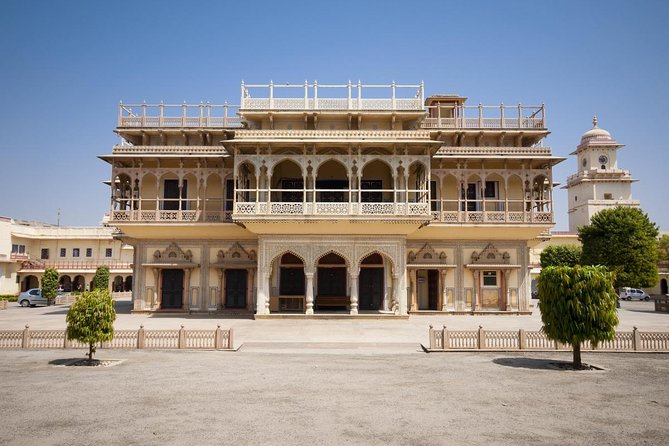
If you’re used to big bus tours, this one feels calmer. With a maximum of 3 travelers, you’re more likely to get straightforward pacing—enough time to look, read, and take breaks, without feeling like you’re being rushed from one gate to the next. The tour also includes an air-conditioned vehicle and parking fees, which matters in Rajasthan where traffic and stop-and-go can eat up energy.
The route itself makes sense for first-timers. You start with Jaipur’s most iconic façade, then head out to the fort zone around Amer and the hills. Later, you work your way back into central Jaipur for the City Palace complex. It’s a classic shape to the day: city landmark → fort architecture → hilltop views → royal complex.
One more practical win: you get a mobile ticket and confirmation at booking time. That’s small, but on a tight schedule, it reduces friction when you’re coordinating entry times.
Chasing the Pink City? More Jaipur day trips



Hawa Mahal: read the wind windows, not just the postcard
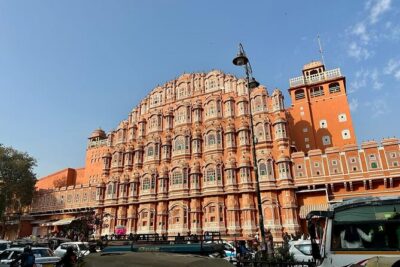
Hawa Mahal, the Palace of Wind, is built for a very specific kind of everyday spectacle. Maharaja Sawai Pratap Singh commissioned it in 1799, and the façade is the star: a broad pyramid shape with five storeys of semi-octagonal overhanging windows and perforated screens, plus domes and spires. From far away it looks like an architectural lace pattern. Up close, you start seeing the logic.
What I like about the stop is that it’s not only pretty—it invites you to notice how design can control air flow. Those perforations are the whole point: the building is structured to let breezes do their work while keeping sightlines and privacy in play. It’s a place where the details reward your attention, especially if you take a slow walk along the façade and don’t just snap one quick photo.
This stop is listed as about 3 hours, and it’s a good anchor at the beginning of the itinerary. Start here and you’ll have a mental model for what comes next: Rajasthan royalty loved architecture that performs in daily life, not only in grand halls.
Amber Palace (Amer Fort): the halls and the cooling idea at Sukh Niwas
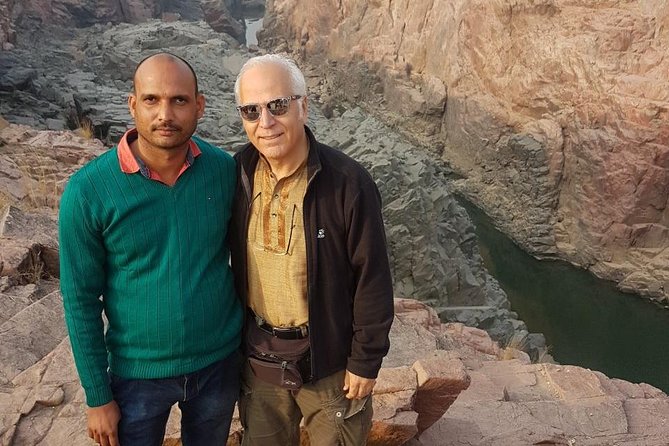
From Jaipur, Amber Fort sits about 11 km away, with ramparts rising above wooded hills and the view reflected in Maota Lake. It’s a strong location choice: the fort feels defensible and scenic at the same time. Amber was the ancient capital of the Kachhawah rulers, with early construction by Raja Man Singh and later additions by Sawai Jai Singh, so you’re basically walking through layers of patronage and power.
Here’s what makes the visit more than a stone maze: you get inside key spaces that show how royal life organized public vs private access.
- Diwan-e-Aam: the Hall of Public Audience, where rulers could address broader matters.
- Diwan-e-Khas: the Hall of Private Audience, built for more controlled, personal audiences.
- Sukh Niws: the cooling channels concept, where water and air movement combine for a natural air-conditioning effect.
Even if you’re not an architecture nerd, Sukh Niwas gives you something tangible to look for. The tour description highlights the breeze moving across channels of water. That detail helps you “read” the space instead of just passing through it.
You’re given about 5 hours here, and that time is important. Amber Fort isn’t a quick stop. If you try to rush, you’ll miss the interior contrasts—how the same complex can feel open in one hall and tightly controlled in another.
Jaigarh Fort: where you can feel the military mindset
Jaigarh Fort dominates the western skyline with walls, watch towers, and gateways. The best part about going here is that it feels like a working defense system rather than a decorative palace complex. It’s one of the few medieval military structures preserved almost intact, and the fort holds palaces, gardens, open and covered reservoirs, a granary, an armoury, and even a well-planned cannon foundry.
Then comes the headline: the giant mounted cannon called Jain Ban, described as the largest cannon in the world. You don’t have to be a military history fan to appreciate what a place like this means. Standing near the structures, you get a sense of scale—how rulers prepared for siege threats and how resources were stored and managed inside the walls.
This stop is listed for about 4 hours. I’d use that time to do two things: (1) look outward from the ramparts so you understand the defense logic, and (2) connect the interior features—reservoirs, armoury, foundry—to why the fort was built to be self-sufficient.
Also, one small planning note: forts often mean walking and steps. Comfortable shoes are not optional.
Nahargarh Fort: hill views and the nine identical suites

Nahargarh Fort is perched on a hill with city views that make the whole region feel connected. It was initially built by Sawai Jain Singh in 1734, then enlarged into its current form by Sawai Madho Singh in 1885. What I like is that the tour description doesn’t treat it as only a viewpoint. It includes room details and layout design.
Decorative motifs appear in some rooms, and the windows overlooking Jaipur include a specific mention: nine identical suites with a magnificent view of the city and the geometrical layout below. From Amer, there’s also a road to Nahargarh that passes through the hills, which reinforces how these forts link across terrain rather than sitting isolated on a map.
You’re given about 5 hours at Nahargarh, which helps. This is the kind of stop where you should pause often. The views are the payoff, but the best experience comes when you combine views with a slower look at the rooms and window lines. Treat it like a “breather” in the itinerary—one of the rare chances to step back after palace-and-fort intensity.
Worth putting side by side with this New Delhi pick:


City Palace of Jaipur: the Rajasthani-Mughal blend in real rooms
City Palace is where Jaipur’s royal identity becomes highly physical. The complex is an imposing blend of traditional Rajasthani and Mughal art and architecture, and it houses multiple palatial structures. The first building highlighted is Mubarak Mahal, built by Maharaja Madho Singh, with a beautifully carved marble gate and heavy brass doors.
Inside, the tour plan points you toward both public and private audience spaces:
- Diwan-e-Khas (Hall of Private Audience) as the controlled interior counterpart,
- Diwan-e-Aam (Hall of Public Audience) across the paved square.
To the north-west sits Chandra Mahal, described as a stately seven-storeyed residence of the ex-ruler. Each storey has a distinctive name, and the palace spaces include paintings, floral decorations, mirror walls, and ceilings in traditional style. That kind of detail can turn City Palace from a “walk-through” into a place where you actually notice craftsmanship.
This stop is listed for about 5 hours, which sounds long until you realize City Palace isn’t one room. It’s a complex, and you’ll likely want time to follow visual threads: marble gate → audience halls → Chandra Mahal’s stacked presence → decorative interiors.
Price and value: what $163 covers (and what you should budget)
At $163 per person, this package is built around efficient transportation, entry coverage for the listed sights, and one solid overnight reset. Let’s break down the value in plain terms.
Included:
- Parking fees
- Air-conditioned vehicle
- 01 Night Accommodation in 3 Hotel with morning breakfast
Not included:
- Dinner
- Lunch
- Monument Fee
- Personal expenses
There’s a small contradiction worth flagging. The itinerary lists admission tickets included at each stop, while the package notes monument fees not included. That doesn’t mean it’s broken, but it does mean you should confirm with the operator before you go: which costs are covered for your dates, and whether any extra monuments beyond the core stops cost extra.
Still, the structure makes financial sense for many travelers. If you’re already planning to pay for transport around Jaipur and add a hotel night, having those basics folded in can keep the rest of your spending focused—mainly meals and anything personal.
Timing, pacing, and the 22-hour reality of a fast circuit
This tour runs roughly 22 hours to 1 day. That wide range is a clue: the schedule is designed to fit multiple major sights without turning into a multi-day marathon.
The way I’d manage your own energy is to plan for three phases:
- Start strong in Jaipur (Hawa Mahal) and absorb the city identity.
- Go heavier on fort interiors (Amber and Jaigarh) where time can disappear quickly.
- Finish with more viewpoint-and-palace texture (Nahargarh and City Palace).
Long days can be tiring, but this route has built-in variety. Hawa Mahal is façade-first. Amber is interior-and-courtyard. Jaigarh shifts your brain toward military function. Nahargarh slows you down with panoramic views. City Palace brings you back to art and royal living spaces.
One more consideration: the tour notes a good weather requirement. If weather isn’t cooperating, the operator may move you to a different date or offer a full refund. That’s not a small detail; fort viewpoints depend on visibility.
Hotel night and meals: what you get, what you control
You’re included for one night at a 3 hotel with morning breakfast. Dinner and lunch are not included, so you’ll have flexibility to choose food based on timing and hunger level.
This is the part where I think you’ll be happiest if you stay practical:
- Eat early when you can. Long sightseeing days make late meals feel harder.
- Keep a bottle of water on hand during forts.
- Plan for breaks that are short but real. Sitting down for a quick meal prevents the end-of-day crash.
Because the itinerary includes major palace and fort complexes, you’ll be doing a lot of walking. Meals become part of your energy management plan, not just a schedule item.
Staff quality: why Sumi and Driver Raji matter
A tour lives or dies on execution: timing, entry coordination, and how smoothly you move between stops. In the feedback tied to this operator, staff names come up clearly—Sumi is singled out for help and the day’s flow, and Driver Raji gets praised for making the experience smooth.
That’s what you want in a car-based sightseeing package: a driver who understands the route pace and a person on the ground who can keep things organized when the day gets crowded or complicated.
This operator is also described as highly responsive for planning help in India, which matters if you want the flexibility to adjust details across different cities. For Jaipur itself, though, your day is already structured around the key monuments, so the main benefit is smooth logistics and clear guidance at the sights.
Who should book this Jaipur by car package
This tour is a good fit if:
- you want major Jaipur highlights in one tightly planned circuit,
- you prefer an AC vehicle and a small group,
- you like fort-and-palace architecture more than shopping stops,
- you’re okay with a long day and walking.
It may be less ideal if:
- you’re sensitive to fatigue or prefer slower pacing,
- you want all meals included,
- you dislike uncertainty around monument fee coverage (since the package has both included and not-included wording—confirm before booking).
If you’re visiting for the first time and want a “greatest hits” version that still respects meaningful stops like Amber and City Palace, this works.
Should you book it? My take
Book it if you want a focused Jaipur experience with good logistics, small-group attention, and a serious route through Hawa Mahal, Amer, Jaigarh, Nahargarh, and City Palace. The price feels reasonable because it bundles transport comfort and an overnight stay with breakfast, then builds the day around major sights instead of random add-ons.
Think twice (or at least confirm) if you hate walking days or if meal planning and potential monument-fee questions make you uneasy. Ask one simple question before you go: exactly what entry costs are included for your date.
If you can handle a full itinerary and enjoy forts and palace interiors, this is a strong way to see Jaipur with less hassle and more time spent looking at what matters.
FAQ
What is the starting location for the Jaipur tour by car?
The tour is listed with New Delhi, India as the location.
How long is the tour?
The duration is listed as 22 hours to 1 day (approx.).
How much does the package cost?
The price is $163.00 per person.
What’s included in the price?
Included items are parking fees, an air-conditioned vehicle, and one night accommodation in a 3 hotel with morning breakfast.
Which sights are included in the itinerary?
The itinerary includes Hawa Mahal, Amber Palace (Amber Fort), Jaigarh Fort, Nahargarh Fort, and City Palace of Jaipur.
Are monument fees included?
The tour information lists monument fee as not included, but the itinerary also shows admission ticket included for each stop. You should confirm what is covered for your booking.
Are meals included?
Dinner and lunch are not included.
Is there a hotel included, and what type?
Yes. You get one night at a 3* hotel, including morning breakfast.
How many travelers can be on this tour?
The tour has a maximum of 3 travelers.
What happens if the weather is poor?
The experience requires good weather. If it’s canceled due to poor weather, you’ll be offered a different date or a full refund.
More Tours in New Delhi
- Old & New Delhi City Tour – Half or Full Day Options Available
★ 5.0 · 4,811 reviews - Half Day Private Delhi City Tour
★ 5.0 · 4,474 reviews - Same Day Taj Mahal, Agra Fort & Baby Taj Tour from Delhi by Car
★ 5.0 · 4,304 reviews - Taj Mahal Day Tour from Delhi by Superfast Train – TOP RATED TOUR
★ 5.0 · 4,166 reviews - Delhi: Old and New Delhi Private Full or Half-Day Tour
★ 4.9 · 3,776 reviews
More Tour Reviews in New Delhi
- Old & New Delhi City Tour – Half or Full Day Options Available
★ 5.0 · 4,811 reviews - Half Day Private Delhi City Tour
★ 5.0 · 4,474 reviews - Same Day Taj Mahal, Agra Fort & Baby Taj Tour from Delhi by Car
★ 5.0 · 4,304 reviews - Taj Mahal Day Tour from Delhi by Superfast Train – TOP RATED TOUR
★ 5.0 · 4,166 reviews - Delhi: Old and New Delhi Private Full or Half-Day Tour
★ 4.9 · 3,776 reviews
Onward to Jaipur: More Day Trips
- 3-Days Private Golden Triangle Tour: Delhi, Agra & Jaipur by Car
★ 5.0 · 1,107 reviews - 3-Days Private Golden Triangle Tour: Delhi, Agra & Jaipur by Car
★ 5.0 · 1,098 reviews - 3-Day Delhi, Agra and Jaipur Private Tour – India Golden Triangle
★ 5.0 · 812 reviews - Four-Day Private Luxury Golden Triangle Tour to Agra and Jaipur From New Delhi
★ 5.0 · 807 reviews - Jaipur Day Trip from Delhi by Car or Train – All Inclusive
★ 5.0 · 663 reviews
Just added: more New Delhi reviews to browse
- 4 days Golden Triangle Tour★ 5.0 · 3 reviews
- Discover Old & New Delhi: Private Tour with Street Food★ 5.0 · 3 reviews
- Taj Mahal Tour From Delhi By Private Car★ 4.5 · 3 reviews
- Golden Triangle Tour 5 Days★ 5.0 · 3 reviews
- Taj Mahal: Express Entry Ticket For Sunset Tour with guide★ 5.0 · 3 reviews
- Agra Taj Mahal Sunrise & Sunset Tour from Delhi★ 5.0 · 3 reviews
Jaipur Day Trips from Delhi, compared.
 ★ 5.03-Days Private Golden Triangle Tour: Delhi, Agra & Jaipur by CarFrom $1271,107 reviews
★ 5.03-Days Private Golden Triangle Tour: Delhi, Agra & Jaipur by CarFrom $1271,098 reviews
 ★ 5.03-Day Delhi, Agra and Jaipur Private Tour – India Golden TriangleFrom $110812 reviews
 ★ 5.0Four-Day Private Luxury Golden Triangle Tour to Agra and Jaipur From New DelhiFrom $160807 reviews
 ★ 5.0Jaipur Day Trip from Delhi by Car or Train – All InclusiveFrom $116663 reviews
 ★ 5.0Jaipur City Private Day Tour from Delhi by Car – All InclusiveFrom $10589 reviews
 ★ 5.05 Nights 6 Days Private Golden Triangle Tour – Delhi Agra JaipurFrom $240574 reviews
 ★ 5.0Private Golden Triangle Tour Delhi Agra Jaipur ( Top Rated )From $148436 reviews