
Reviewed · OLD & NEW DELHI CITY TOURS
Viator Recommended Full Day Old and New Delhi City Tour
Delhi deserves a plan, not a scramble. This private 8-hour Old and New Delhi tour gives you a private guide and a real own-pace feel, pairing morning highlights like Gurudwara Bangla Sahib and Jama Masjid with a tuk-tuk pass through Old Delhi’s market lanes before moving on to New Delhi icons. I like how guides such as Mr. Vikas and drivers like Mr. Rishab show up repeatedly in the feedback for keeping things calm, punctual, and clear. One thing to watch: the day is packed, and food isn’t included, so you’ll want to plan around that.
You choose your pickup point across Delhi NCR (Delhi, Noida, Gurugram, Ghaziabad, Faridabad) between 7 AM and 10 AM, then you finish with a drop-off anywhere you want in the same area. Tickets are a mixed bag depending on the stop, with some attractions free and others included, so it helps to know what you’re paying for ahead of time.
In This Review
- Key highlights worth planning for
- A private Delhi day where you set the pace
- Pickup across Delhi NCR, with a start window that actually helps
- Gurudwara Bangla Sahib: a calm start with a healing legend
- Jama Masjid and Red Fort views: scale, sandstone, and the city’s spine
- Sunheri Masjid to tuk-tuk ride: Old Delhi without the full chaos tax
- Khari Baoli spice market: the smell alone is worth the stop
- India Gate and the Parliament House: New Delhi’s memorial energy
- Agrasen Ki Baoli: a 7th-century stepwell break from the big monuments
- Humayun’s Tomb: the first garden-tomb feel, plus a great history anchor
- Lotus Temple: a modern icon, with one ticket detail to plan for
- Transport and timing: why 8 hours works better than it looks
- Food isn’t included: how to keep the day comfortable
- Shopping help in the markets: getting better deals with a guide
- Price and value: why $10 can still feel like a real day tour
- Who this tour suits best, and who might want a different plan
- Should you book this Old and New Delhi tour?
- FAQ
- FAQ
- What time does pickup start?
- Where can the tour pick me up?
- Is this tour private or shared?
- How long is the tour?
- What’s included in the price?
- Are tickets for all stops included?
- Is food provided during the day?
- Do I get dropped off after the tour?
- What’s the cancellation policy?
Key highlights worth planning for
- Private, not a group shuffle: you decide where you spend time, and your guide handles the logistics
- Old Delhi by tuk-tuk: get the market sights without spending hours fighting traffic
- Smart mix of classic and quieter stops: Jama Masjid and Red Fort plus Agrasen Ki Baoli and Humayun’s Tomb
- A driver + guide combo: practical movement across sprawling Delhi, with someone explaining what you’re seeing
- Admission varies by stop: some are free or included; Lotus Temple is not included
- Markets as a built-in end-game: your guide can help you shop with better bargaining sense
A private Delhi day where you set the pace
Delhi can feel like two different cities in one day. Old Delhi is all lanes and noise; New Delhi is broad roads and monumental symmetry. This tour works because it doesn’t force you into a fixed walking march. You get a private guide and private vehicle, then you choose what to linger on and what to rush.
What I like most is the approach: you’re not trapped in a group schedule. Your guide discusses the day with you up front, then steers you to the spots you care about. If you want more photos at Jama Masjid or more time breathing in the gardens around Humayun’s Tomb, you can usually make that happen—within reason—because someone is managing the day for you.
The second big win is how the day is designed to reduce hassle. Instead of hopping between public transport options, you get round-trip private transfer and a private vehicle. That matters in Delhi, where crossing town can eat your day fast.
The old and the new, covered a few more ways




Pickup across Delhi NCR, with a start window that actually helps

Instead of one rigid meeting point, pickup is offered from anywhere in Delhi, Noida, Gurugram, Ghaziabad, or Faridabad. You also get a start window: choose a pickup time between 7 AM and 10 AM. That gives you flexibility depending on your hotel location, your energy level, and whether you want to beat the morning crowds for the biggest sights.
You’ll also finish with a complimentary drop-off to the place of your choice anywhere in Delhi NCR. This sounds small, but it’s a huge time saver. Delhi isn’t a city where you want to add extra transit steps at the end of an 8-hour outing.
Gurudwara Bangla Sahib: a calm start with a healing legend
The morning begins at Gurudwara Bangla Sahib, typically about 30 minutes. This Sikh gurdwara is strongly associated with the eighth Sikh Guru, who stayed here in 1664 and helped heal people during a cholera epidemic. There’s also a holy pond called the Sarovar, and its water is believed to have healing properties.
Even if you’re not there for religious practice, it’s a strong way to reset your brain before the rest of the day. It’s quieter than what comes next, and it gives you context for how many layers Delhi has—spiritual, historical, and everyday life all at once.
Practical tip: plan for modest clothing and expect a few moments of rules and respectful behavior. Admission here is free, which is another nice morale boost at the start of a long day.
Jama Masjid and Red Fort views: scale, sandstone, and the city’s spine
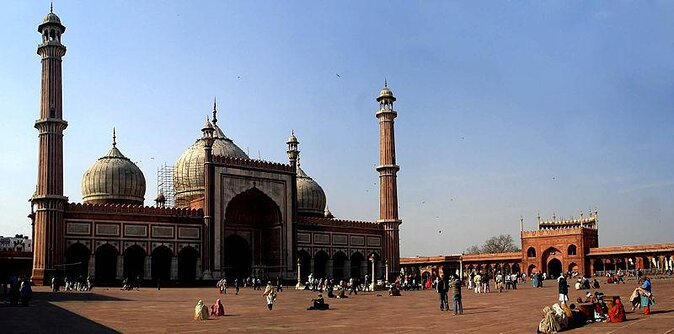
Next comes Jama Masjid, India’s largest mosque, usually around 1 hour, with admission included. It was built in 1656 with help from 5,000 workers and sits in front of Red Fort, right in the midst of Chandni Chowk.
This stop hits two targets at once. First, you get a serious sense of scale—the red sandstone courtyard is enormous and visually dramatic. Second, you understand why this area became the center of Old Delhi life. The mosque isn’t a lone monument; it’s part of the city’s main flow.
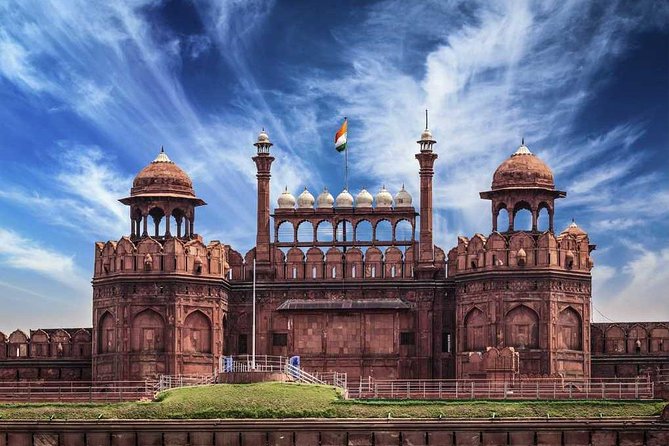
Red Fort is nearby and discussed in the route right after this area. It was built by Shah Jahan between 1639 and 1648 and served as the Mughal emperors’ main residence. Its architecture reflects Indo-Islamic and Mughal styles, which helps connect what you’re seeing now with the empire that shaped the neighborhood.
Sunheri Masjid to tuk-tuk ride: Old Delhi without the full chaos tax
A key moment in this tour is the shift from big monuments to street reality. After meeting your guide at Sunheri Masjid, you ride in a tuk-tuk and pass several colorful, busy bazaars of Old Delhi while your guide explains the role these markets play for locals.
This is the trick that makes the tour feel efficient. You still experience the street life, but you’re not walking every single chaotic stretch. It also helps if you’re traveling with family or you simply want to see more without arriving exhausted.
How to get the most out of this segment: keep your phone ready for quick shots, but don’t spend the whole ride filming. Ask your guide what you’re passing—spices, wedding-related shopping lanes, and everyday commerce patterns. Those little explanations turn traffic and storefronts into something you can actually read.
Bigger loops around the capital

Khari Baoli spice market: the smell alone is worth the stop
Then you hit Khari Baoli, the famous spice market inside Chandni Chowk. The stop is about 30 minutes, and admission is free. This is where your senses do the work. You’ll see spices piled high and get the kind of facts and uses that only come from someone who has lived with the market logic for years.
The main value here is learning how spices move from stall to kitchen. When you have context, shopping feels less random and more like you’re picking ingredients with purpose. If your guide helps you compare qualities and uses, you’ll save money and avoid getting talked into the loudest bag on the shelf.
India Gate and the Parliament House: New Delhi’s memorial energy
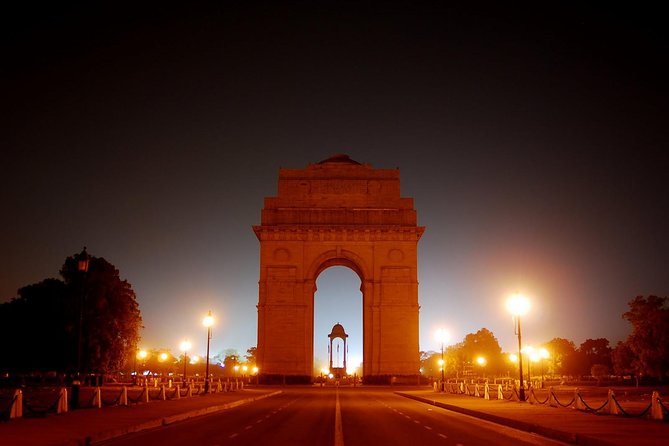
After Old Delhi, the tour shifts toward New Delhi’s major landmarks. India Gate is typically a quick stop—around 15 minutes. It honors the Tomb of the Unknown Soldier (1921), and the names of 13,300 Indian army servicemen who died during the First World War are carved on the wall.
This isn’t a museum-style stop, and you won’t be here long. But it’s still a meaningful pause. It gives your day balance: you’ve been inside religious and market spaces in the morning; now you’re standing in a public memorial space with wide-open sightlines.
From there, you visit the Parliament House area. It houses the Lok Sabha and Rajya Sabha, the lower and upper houses of India’s bicameral parliament. Even just viewing it as part of the route gives you a better sense of how power and governance are physically placed in the city.
Agrasen Ki Baoli: a 7th-century stepwell break from the big monuments
Next is Agrasen Ki Baoli, also listed as Leamigo. You’ll spend about 15 minutes, and admission is included. This is a 7th-century stepwell—one of those Delhi sights that feels like a secret even when you’re standing right next to it.
Stepwells are cool because they weren’t only scenic. They were practical water solutions adapted to the shape of Delhi life. Here, you also get a break from the oversized monument rhythm of Red Fort and the big New Delhi memorials. Short stop, big contrast.
If you like architecture and quiet corners, this is one of the better moments to slow down for a few photos and a short look around.
Humayun’s Tomb: the first garden-tomb feel, plus a great history anchor
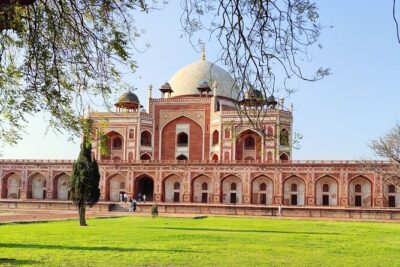
Humayun’s Tomb is a longer stop—about 1 hour—with admission included. The tomb was commissioned by Humayun’s wife Hamida Banu Begum in 1562 CE and designed by Persian architect Mirak Mirza Ghiyath. It’s considered the first garden-tomb on the Indian subcontinent and sits in Nizamuddin East, close to the Dina-panah citadel that Humayun founded in 1533.
This stop is valuable because it gives you a readable narrative for Mughal-era design. Instead of just seeing a monument, you see how geometry, gardens, and tomb placement all work together. It’s the kind of site where a guide’s explanations help you notice what you might otherwise miss.
Practical tip: bring water or plan to buy some nearby, because this part of the day can mean sun and walking in open areas.
Lotus Temple: a modern icon, with one ticket detail to plan for
The final major stop is the Lotus Temple, typically around 20 minutes. Admission is not included, and it’s completed in 1986. It’s a Bahá’í House of Worship popularly known as the Lotus Temple due to its flowerlike shape, and it serves as the Mother Temple of the Indian subcontinent.
Why this matters even for a short visit: it shows another Delhi layer—modern spiritual architecture built for calm and symbolism rather than empire power. If you’re tired from the morning’s heavy sights, this stop is often a gentle finish.
Plan ahead for the admission cost since it’s not included. Also, check your timing: 20 minutes can be enough for a solid look, but not if you want a long, slow sit.
Transport and timing: why 8 hours works better than it looks
This tour is listed at around 8 hours, and the pacing is the whole point. You’re moving across districts, so it’s designed to balance monument time with transit efficiency.
A realistic rhythm looks like this:
- Early start, fast entry to big landmarks
- A tuk-tuk ride that gives Old Delhi texture without losing the whole day on walking
- Short, focused breaks at markets and lesser-known-feeling sights
- An afternoon shift into New Delhi’s major landmarks and grand tomb architecture
- A finish at Lotus Temple with a quick final view
The only timing drawback is also simple: the list is long. If you’re the type who wants 2 hours at one site, you may feel rushed. That’s why the private guide piece matters. Use it. Ask your guide where you should spend extra time and where you can keep it brief.
Food isn’t included: how to keep the day comfortable
Meals and food aren’t included. That’s not a dealbreaker, but it does mean you should plan for comfort. With a full day that moves between Old Delhi and New Delhi, hunger can slow you down and make crowds feel worse.
What you can do:
- Eat a proper breakfast before pickup
- Carry a snack if that’s your style
- Use your guide’s suggestions when you’re near markets, especially if you want something quick and easy
If you care about shopping in the markets, this matters even more. You want your energy for bargaining and browsing, not for trying to find food while everything closes and your time runs out.
Shopping help in the markets: getting better deals with a guide
One of the best parts of this style of tour is that markets aren’t just window dressing. The tour is set up so you can end your experience by getting into the markets and doing some shopping with help from your local guide.
This can save you money because you’re not guessing what things cost or how bargaining actually works in that area. Your guide can also steer you toward stalls that match what you want—spices for cooking, small items for gifts, and other market goods you might not recognize on your own.
A simple mindset helps: decide what you want before you start browsing. Then let your guide help you compare options quickly.
Price and value: why $10 can still feel like a real day tour
The price is listed at $10.00 per person for a full day with a local guide and round-trip private transfer and vehicle. That’s unusually low when you compare it to typical Delhi guiding costs, and the value comes from the structure: you’re not paying for one big attraction ticket at a time. You’re paying for movement across multiple key areas plus interpretation.
Of course, price always comes with trade-offs. Here, the trade-off is mostly about time: you get shorter stops at many sites (15 to 30 minutes), and the day includes no food. You also have admission costs that are sometimes not included, like Lotus Temple.
If you want a day that’s efficient, flexible, and guided—without paying museum-ticket prices for everything—it can be excellent value.
Who this tour suits best, and who might want a different plan
This tour is a strong fit if:
- You want Old Delhi and New Delhi in one day
- You prefer a private setup over sharing a schedule
- You want market time with guidance, not random wandering
- You like the idea of short stops that let you see a lot
It might not be the best match if:
- You want long, slow visits with no schedule pressure
- You’re sensitive to a very full day with lots of moving
- You hate ticket add-ons and don’t want to think about admissions at Lotus Temple
Also, since it’s private and includes a local guide, it works well for families and friends who want a consistent voice and pace rather than splitting decisions.
Should you book this Old and New Delhi tour?
If you want a practical Delhi day where someone else handles the driving and the day flow, I’d book it. The combination of private guide, private vehicle, and Old Delhi tuk-tuk time is a smart way to see big landmarks without turning your trip into pure logistics.
Just go in with the right expectations: the schedule is packed, food isn’t included, and Lotus Temple’s admission isn’t covered. If you can handle that, you’ll get a well-rounded sweep of the city—mosque scale, fort architecture, a stepwell pause, Humayun’s garden-tomb elegance, and a calm modern finish—plus the ability to shop in the markets with help from someone who knows how to make it painless.
FAQ
FAQ
What time does pickup start?
Pickup time is flexible between 7 AM and 10 AM. You can choose a pickup time within that window.
Where can the tour pick me up?
Pickup is offered from anywhere in Delhi, Noida, Gurugram, Ghaziabad, or Faridabad.
Is this tour private or shared?
It’s a private tour/activity. Only your group participates.
How long is the tour?
The duration is about 8 hours.
What’s included in the price?
It includes a local guide, round-trip private transfer, transport by a private vehicle, and a private tour.
Are tickets for all stops included?
Admission is included for some places and not for others. Gurudwara Bangla Sahib and Khari Baoli are free, Jama Masjid is included, India Gate is free, Agrasen Ki Baoli is included, Humayun’s Tomb is included, and Lotus Temple is not included.
Is food provided during the day?
No. Food and drinks are not included, and meals are not provided.
Do I get dropped off after the tour?
Yes. At the end, there’s a complimentary drop-off to the place of your choice anywhere in Delhi, Noida, Gurugram, Ghaziabad, or Faridabad.
What’s the cancellation policy?
Free cancellation is available. You can cancel up to 24 hours in advance for a full refund; if you cancel within 24 hours of the start time, you won’t receive a refund.
More Tours in New Delhi
- Old & New Delhi City Tour – Half or Full Day Options Available
★ 5.0 · 4,811 reviews - Half Day Private Delhi City Tour
★ 5.0 · 4,474 reviews - Same Day Taj Mahal, Agra Fort & Baby Taj Tour from Delhi by Car
★ 5.0 · 4,304 reviews - Taj Mahal Day Tour from Delhi by Superfast Train – TOP RATED TOUR
★ 5.0 · 4,166 reviews - Delhi: Old and New Delhi Private Full or Half-Day Tour
★ 4.9 · 3,776 reviews
More Tour Reviews in New Delhi
- Old & New Delhi City Tour – Half or Full Day Options Available
★ 5.0 · 4,811 reviews - Half Day Private Delhi City Tour
★ 5.0 · 4,474 reviews - Same Day Taj Mahal, Agra Fort & Baby Taj Tour from Delhi by Car
★ 5.0 · 4,304 reviews - Taj Mahal Day Tour from Delhi by Superfast Train – TOP RATED TOUR
★ 5.0 · 4,166 reviews - Delhi: Old and New Delhi Private Full or Half-Day Tour
★ 4.9 · 3,776 reviews
Old and New Delhi, Keep Exploring
- Old & New Delhi City Tour – Half or Full Day Options Available
★ 5.0 · 4,811 reviews - Delhi: Old and New Delhi Private Full or Half-Day Tour
★ 4.9 · 3,776 reviews - Delhi: Private Old & New Delhi Guided Half- or Full-Day Tour
★ 4.9 · 2,309 reviews - Old & New Delhi Private Tour – Half or Full Day (Rated Excellent)
★ 5.0 · 2,226 reviews - Old & New Delhi Full or Half Day Sightseeing Tour
★ 5.0 · 1,900 reviews
Just added: more New Delhi reviews to browse
- 4 days Golden Triangle Tour★ 5.0 · 3 reviews
- Discover Old & New Delhi: Private Tour with Street Food★ 5.0 · 3 reviews
- Taj Mahal Tour From Delhi By Private Car★ 4.5 · 3 reviews
- Golden Triangle Tour 5 Days★ 5.0 · 3 reviews
- Taj Mahal: Express Entry Ticket For Sunset Tour with guide★ 5.0 · 3 reviews
- Agra Taj Mahal Sunrise & Sunset Tour from Delhi★ 5.0 · 3 reviews
Old & New Delhi City Tours, compared.
 ★ 5.0Old & New Delhi City Tour – Half or Full Day Options AvailableFrom $384,811 reviews
 ★ 4.9Old and New Delhi Private Full or Half-Day TourFrom $23,776 reviews
 ★ 4.9Private Old & New Delhi Guided Half- or Full-Day TourFrom $72,309 reviews
 ★ 5.0Old & New Delhi Private Tour – Half or Full Day (Rated Excellent)From $202,226 reviews
 ★ 5.0Old & New Delhi Full or Half Day Sightseeing TourFrom $241,900 reviews
 ★ 4.8Full or Half-Day Old and New Delhi Private TourFrom $71,883 reviews
 ★ 4.9Private Full-Day City Tour of Old and New DelhiFrom $221,722 reviews
 ★ 5.0Old and New Delhi Guided Full or Half-Day TourFrom $20976 reviews
Browse the lists this tour appears in