

Reviewed · GOLDEN TRIANGLE TOURS
10 Day Private Luxury Golden Triangle with Khajuraho and Varanasi
One long corridor of history can be surprisingly calming here. This private 10-day Golden Triangle trip adds Khajuraho and Varanasi, so you get the classic North India highlights without feeling like you are sprinting from one photo stop to the next. I especially like that you start each day with a plan and end it with time to actually absorb what you saw. The only real watch-out is that monument entrance fees are not included, so you should budget for tickets in advance.
What I like most is the human pace: private local guides in each city and a driver who stays with you throughout. The second big win is the comfort details—private air-conditioned vehicle, mineral water on journeys, and smooth transport choices (including a battery-bus ride that cuts down the trek at the Taj Mahal parking area).
The possible drawback: you are covering a lot of ground (including a long 400 km drive from Khajuraho to Varanasi). If you hate car time or you are sensitive to early mornings, you will want to plan rest days in your own style, not the itinerary’s.
In This Review
- Key highlights worth caring about
- What this 10-day private Golden Triangle with Khajuraho and Varanasi really delivers
- Delhi: from Bangla Sahib calm to Old Delhi chaos (the good kind)
- Jaipur: Amer Palace, Jantar Mantar, and the breeze at Hawa Mahal
- Amber to Fatehpur Sikri: the Agra lead-in that saves time later
- Agra: Taj Mahal sunrise and the UNESCO trio that keeps it meaningful
- Khajuraho temples: stone storytelling that rewards patience
- Varanasi: Kashi Vishwanath, Sarnath, and the Ganga Aarti moment
- Hotels and pacing: private comfort without the fake VIP feel
- Price and value: what you get for $623.07 per person
- Getting the most out of your private driver and local guides
- Should you book this Golden Triangle with Khajuraho and Varanasi?
- FAQ
- How long is the tour?
- Is this a private tour?
- Does the tour include pickup and drop-off?
- Are meals included?
- Are monument entrance tickets included?
- What about transport between cities?
- Can I cancel for a full refund?
Key highlights worth caring about
- Private local guides in each city so you understand what you are looking at, not just where to stand for the picture
- Taj Mahal sunrise option with a guided inside visit plus a battery bus ride from parking up to the monument area
- UNESCO-packed days across Delhi, Jaipur, Agra, and Khajuraho, with clear time for major sites
- Varanasi ghats at night with the evening Ganga Aarti scheduled for the best viewing windows
- Single-team organization with drivers named in guest feedback like Surendra, Ajay, Man Singh, Deepak, Maan, and Himmett
- Optional add-ons like Jhalana leopard safari in Jaipur have been arranged for some clients if you want one wild card day
What this 10-day private Golden Triangle with Khajuraho and Varanasi really delivers
This is a highlights-heavy route with a luxury feel, but it is not the kind of luxury that wastes your time. You get a private, air-conditioned vehicle with a driver, plus pickup and drop-off so you are not wrestling with taxis between cities. That matters because North India traffic is its own character—loud, unpredictable, and not impressed by your schedule.
The itinerary is built around a simple idea: show you the major UNESCO anchors (Delhi, Agra, Jaipur, Khajuraho) and then switch gears into India’s spiritual engine with Varanasi. You get the intellectual awe of Qutub Minar and Humayun’s Tomb in Delhi, the Rajasthan grandeur of Amber Palace and Jantar Mantar in Jaipur, the emotional gravity of the Taj Mahal in Agra, the stone storytelling of Khajuraho temples, and then the lived-in rituals of Varanasi along the Ganges.
I also like how the tour balances structure with breathing room. A couple of days include hotel time or a later arrival block, so you can reset your feet and your brain. You are still seeing a lot, but it is not nonstop panic.
Delhi, Agra and Jaipur: more full circuits
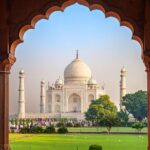


Delhi: from Bangla Sahib calm to Old Delhi chaos (the good kind)
Delhi day one starts with Gurudwara Bangla Sahib, a free-entry spiritual stop where the story behind the site gives context before you even walk around. This is a gentle start. Instead of jumping straight into monuments, you begin with a place that shows how faith shapes daily life in the city.
Day two is where Delhi flexes. You begin at Qutub Minar—a UNESCO site and a 73-meter tall tower built in 1193. Even if you think you are just looking at a tower, you are really looking at how Delhi’s early power made a physical footprint. The height and details make it hard to rush.
Next is the Lotus Temple, a striking architectural landmark shaped like a flower and open to everyone regardless of religion. It is a great contrast after Qutub Minar. You go from historical monument scale to modern “welcome” design in the same half day.
Then comes India Gate near Rajpath. It is a war memorial, but it also works as an easy pause point because people treat it as a place to sit, snack, and people-watch. You get the feeling of being in a real city, not a museum.
After that, you pass Parliament House (Sansad Bhavan). Even without a long visit block, it helps connect the dots between India’s ancient layers and its current governance. Nearby, Jama Masjid anchors the Mughal era. It is one of Delhi’s largest mosques, built by Shah Jahan between 1650 and 1656—so you know you are standing in the legacy of an empire that wanted Delhi to look permanent.
For a quieter break, Agrasen Ki Baoli (step well) gives you something very different: architecture that is functional, ancient, and human-scale. It is also a good reminder that not everything famous in Delhi is built for rulers. People built for daily needs too.
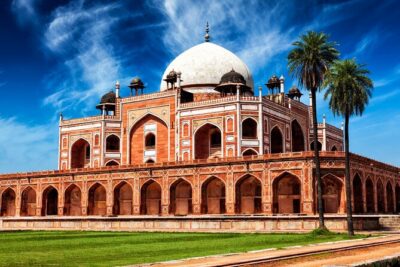
You finish with Humayun’s Tomb, a Mughal tomb commissioned in 1558 by Empress Bega Begum. This one pays off if you look slowly. The complex is famous for a reason: it shows Mughal design thinking at a high level, and it is a perfect lead-in to the later Taj Mahal in Agra.
Finally, you end in Chandni Chowk, Old Delhi’s shopping heart. Expect narrow lanes, dense market energy, and lots of things to smell and browse. It is exciting—but it can be tiring. If you are shopping-minded, plan a little time for spices and small goods. If you are not, use Chandni Chowk as a cultural walk-through, not a marathon.
Practical consideration: in Delhi, the schedule packs in a lot of famous stops. That is great for coverage, but it means you should wear shoes you can trust and keep water handy. Good news: the tour provides mineral water during journeys.
Jaipur: Amer Palace, Jantar Mantar, and the breeze at Hawa Mahal
Jaipur starts with an arrival day that is more than just checking into a hotel. You go to Monkey Temple (Galtaji Temple) for a first taste of Jaipur’s temple culture. It is known for its complex structure and sacred pools. The name is a practical warning: if you see monkeys, do not act like a tourist prop.
Next is Birla Mandir, with its intricate white marble latticework and dedication to Lord Vishnu. Even with a shorter visit, it is the kind of place that makes you look up and notice materials and light.
Then you transition into the “big days” of Jaipur.
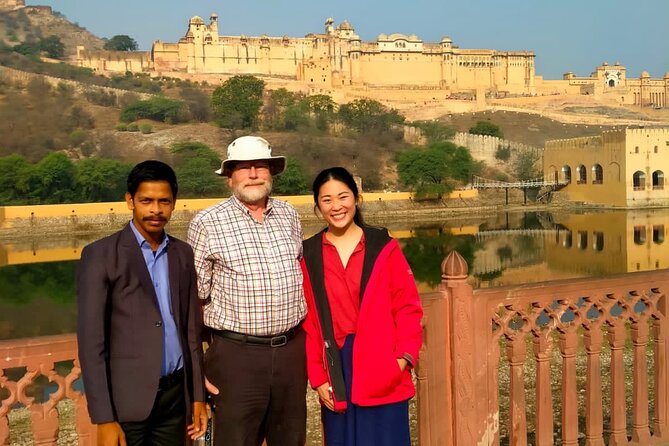
Day four is a feast of Rajasthan landmarks. You start at Amber Palace in Amer, built by Raja Man Singh I. The palace visit feels like you are stepping into how Rajasthan power displayed itself—palaces, courtyards, and the geometry of a royal seat. Keep expectations realistic: palace interiors can mean walking in sun and stairs, so pace yourself.
You then stop at Jal Mahal, the water palace in the Man Sagar Lake area. The main value here is the setting. It photographs well, but it is also worth taking a slow look at how the palace design connects to water rather than just standing beside it.
After that, Jantar Mantar gives you science inside stone. Built in 1734 by Sawai Jai Singh II, it is a UNESCO site featuring nineteen architectural astronomical instruments. This is one of those stops where a local guide changes everything. Without context, you might treat it like a collection of weird structures. With context, you start seeing it as a serious observation tool.
You continue to City Palace, the administrative and ceremonial seat of the Maharaja of Jaipur, constructed in 1721. This is where you get the lived-in royal story—how a state ran itself and displayed authority.
Then comes Hawa Mahal, the Palace of Breeze: red and pink sandstone, five storeys, pyramidal shape. It is basically made to capture airflow and street-level views. Even if you only have a short time window, the facade is enough to get why it became an icon.
You also have a stop at Albert Hall Museum, the oldest museum in Rajasthan. The scheduled time is short, so think of it as a quick art-and-architecture sampler rather than a deep museum day.
A strong practical angle here: Jaipur is where you can get “choice fatigue” because there are so many major sights. The private guide approach helps you choose what to focus on—like whether you care more about palace history or about the design logic in Jantar Mantar.
Amber to Fatehpur Sikri: the Agra lead-in that saves time later
Your route from Jaipur toward Agra includes a powerful detour: Chand Baori and Fatehpur Sikri.
Chand Baori is one of India’s largest and deepest stepwells, extending about 30 meters into the ground. It is visually striking because of the repetition. When you stand at the top and look down into the geometry, it feels like a natural amphitheater for sound and light. It is also an easy way to break up the drive rhythm.
Then you go to Fatehpur Sikri, built in the late 16th century by Akbar and served as the Mughal capital for about a decade. You do not get a multi-day takeover of the complex here, but the scheduled visit gives enough structure that you can understand why it mattered—then you move on.
Arriving in Agra, you check in and get free time for leisure, which I genuinely appreciate. It gives you a buffer for jet-lag (if you have it), jet-foot soreness, or just plain hunger for a nap.
Agra: Taj Mahal sunrise and the UNESCO trio that keeps it meaningful
Agra is built around one big emotional moment: the Taj Mahal.
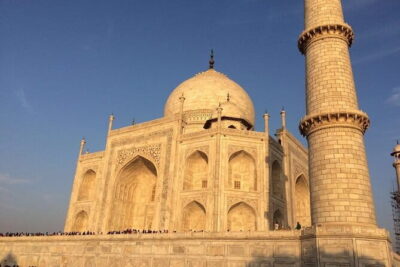
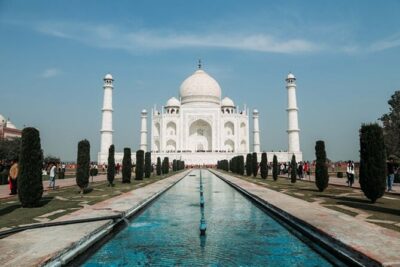
You start with the option to watch the sun rise over the Taj Mahal, then you get a guided tour inside for about two hours. This is the moment most people picture when they think of India, but the real value is timing plus explanation. A guided inside visit helps you understand the tomb’s purpose and the Mughal story behind it, instead of treating it like a photo backdrop.
The tour also includes a battery bus ride from the Taj parking area up to the monument area. That might sound like a small detail, but it changes the experience on a long day. It reduces walking and helps you keep your energy for actually enjoying the site.
Next is Agra Fort, another UNESCO World Heritage site. This one feels different from the Taj. The Taj is about beauty and symbolism. Agra Fort is about power, defenses, and the Mughal world as a working machine. The scheduled time includes time with your guide to understand palaces, balconies, and gardens.
Then you add Itmad-ud-Daula, often called Baby Taj. It is a Mughal mausoleum with gardens and multiple structures. Even if you are Taj’d out by then, this stop helps because it shows the broader Mughal approach to design and ornament.
Practical tip: If you are sensitive to early mornings, sunrise may be a lot. The upside is that the Taj experience can feel calmer. The drawback is that your body will demand a slower evening afterward. Plan accordingly.
More private days with a guide of your own

Khajuraho temples: stone storytelling that rewards patience
Khajuraho is where the trip stops looking like a standard history circuit and starts becoming more personal. The temples here are famous for sculpture, symbolism, and the feeling that stone can tell stories without speaking.
Day seven focuses on Lakshmana Temple and Kandariya Mahadev Temple, both built by the Chandela rulers. Lakshmana Temple, built in the 10th century, has the main idol described with multiple faces and arms. Kandariya Mahadev, from the early 11th century, is known for its entrance-area attractions, and it comes with the context that this region faced invasions. That historical thread matters because it gives you a sense of why these monuments were made and guarded.
Then you also get time for Khajuraho Temples as a broader experience. The scheduled duration suggests you will not just do one stop and leave. You get a window to walk, compare carvings, and notice how the temple layout feels intentional rather than random.
Day six is a big travel transition too. After Agra, you head to Khajuraho and check into your hotel, with the day including your Taj/Agra Fort sequence first. That means Khajuraho arrival is not the start of a relaxed travel day. It is still manageable, but you should expect a long day and then a lighter next day.
Varanasi: Kashi Vishwanath, Sarnath, and the Ganga Aarti moment
Varanasi is the trip’s emotional shift.
You drive from Khajuraho to Varanasi—around 400 km, about 7 hours. That is the one long car day that defines this itinerary. It is not avoidable, but it is also why the destination feels worth it: you are going to a city that works differently than Delhi or Jaipur.
On arrival, you check in and head out to the evening’s spiritual focus through your day two Varanasi schedule.
Day nine begins at Kashi Vishwanath Temple, a major riverside Shiva temple known for a gold-plated spire and a sacred well. It is described as a landmark temple and sets the tone instantly.
Later you visit Sarnath around noon. Sarnath matters because it is a significant Buddhist pilgrimage site where Buddha first preached after enlightenment. This is the ideal contrast to Kashi Vishwanath: you get two major religious threads in one day, without it feeling like a forced switch.
Then comes a Ganges River walk near the river bank. This scheduled walk is where Varanasi stops being a list of monuments and starts being a lived-in river culture. You are strolling ancient spaces tied to spiritual and cultural heritage.
The day ends with Ganga Aarti, the evening ritual on the ghats. Your tour includes the best-view approach from your seat. For many people, this is the single most unforgettable “why I came” moment of the whole trip. Even if you are not religious, you can still respect how rhythm, light, and community energy create a shared experience.
Hotels and pacing: private comfort without the fake VIP feel
The tour includes nine nights of accommodation if you choose the option that includes hotels. Rooms are generally twin-sharing, and for a booking of three people, rooms are usually triple-sharing by default. If three guests want two rooms, an additional charge may apply. That is not unusual, but it is worth noting so you are not surprised later.
The day structure is fairly sensible for a first-time route. You get early starts on major sites, then you balance them with hotel time or shorter blocks. For example, Agra has a free leisure block after arrival, and Delhi’s first day starts softly before the full sightseeing day.
One more comfort factor: you are never doing these transitions alone. This is a private tour, meaning only your group participates. You also get pickup and drop-off, and a driver who provides the continuity that makes a route like this feel less stressful than it looks on paper.
Price and value: what you get for $623.07 per person
At about $623.07 per person for roughly 10 days, this is priced like a private, guided, city-to-city experience rather than a budget backpack route. The value comes from the combination: private vehicle, local guides for sightseeing in each city, and the included comfort touches that reduce friction.
Here’s what is included:
- Private air-conditioned vehicle with driver
- Hotel or airport pickup and drop-off
- All sightseeing with private local guides
- Daily hotel breakfast (if you book the hotel-inclusive option)
- Battery bus ride to and from Taj Mahal parking up to the monument area
- Bottles of mineral water during journeys
- Personal care and attention
Here’s what you should plan for separately:
- Monument entrance tickets
- Meals (not included)
- Tips for the driver and guide
- Laundry and personal expenses
This is a key point for your budget. If you add entrance tickets for multiple UNESCO sites across Delhi, Jaipur, Agra, and Khajuraho, you will want some cash set aside. The tour structure covers the experience and expertise; you cover the gate fees and meals.
Getting the most out of your private driver and local guides
One of the best parts of private touring is that you can ask questions and adjust your pace without derailing the whole day. The tour is designed around that. You meet your driver, and you also meet city guides for sightseeing, which keeps each place from becoming a generic checklist.
The feedback pattern is consistent: drivers are described as kind, considerate, and focused on safety, with names showing up like Surendra, Ajay, Man Singh, Deepak, Maan, and Himmett. Even though your exact driver and guides may differ, the operator’s approach seems geared around continuity and responsiveness.
Two planning tips that fit this specific route:
- Use the guided portions to learn the story. Stops like Jantar Mantar and Humayun’s Tomb can feel “just structures” unless someone explains what you are seeing.
- Give your feet time. With places like Chandni Chowk and stepwells, you get movement throughout the day. Comfortable shoes are not optional here.
Should you book this Golden Triangle with Khajuraho and Varanasi?
I think you should book if you want a first-timer-friendly North India route that hits the major names while still leaving space to understand them. The private setup, local guides in every city, and the inclusion of the sunrise Taj experience and Ganga Aarti make it feel like more than a driving tour.
You might skip or modify it if you dislike long travel days, because the itinerary includes a significant Khajuraho to Varanasi drive. Also, if you hate planning around entrance tickets, you will need to budget for monument entry fees and meals on top of the tour price.
If you like your trips organized but not robotic, this one is a strong match—especially if Khajuraho and Varanasi are on your must-see list.
FAQ
How long is the tour?
It runs for about 10 days.
Is this a private tour?
Yes. It is private, and only your group participates.
Does the tour include pickup and drop-off?
Yes. Hotel or airport pickup and drop-off are included.
Are meals included?
No. Meals are not included. The tour includes daily hotel breakfast if you book the option that includes hotels.
Are monument entrance tickets included?
No. Monument entrance tickets are not included.
What about transport between cities?
You travel by a private, air-conditioned vehicle with a driver. The vehicle size depends on your group size (4-seater sedan for 1–2 people, 6-seater wagon for 3–4 people, and 10-seater minivan for 5–10 people).
Can I cancel for a full refund?
Yes. You can cancel up to 24 hours in advance for a full refund. If you cancel less than 24 hours before the start time, the amount paid is not refunded.
Your Group Alone, Private Cars
- Half Day Private Delhi City Tour
★ 5.0 · 4,474 reviews - Delhi: Old and New Delhi Private Full or Half-Day Tour
★ 4.9 · 3,776 reviews - From Delhi: Taj Mahal & Agra Private Day Trip with Transfers
★ 4.9 · 3,181 reviews - All Inclusive Private Taj Mahal Luxury Tour from Delhi by Car
★ 5.0 · 2,564 reviews - Delhi: Private Old & New Delhi Guided Half- or Full-Day Tour
★ 4.9 · 2,309 reviews
More Tour Reviews in New Delhi
- Old & New Delhi City Tour – Half or Full Day Options Available
★ 5.0 · 4,811 reviews - Half Day Private Delhi City Tour
★ 5.0 · 4,474 reviews - Same Day Taj Mahal, Agra Fort & Baby Taj Tour from Delhi by Car
★ 5.0 · 4,304 reviews - Taj Mahal Day Tour from Delhi by Superfast Train – TOP RATED TOUR
★ 5.0 · 4,166 reviews - Delhi: Old and New Delhi Private Full or Half-Day Tour
★ 4.9 · 3,776 reviews
The Full Golden Triangle, More Options
- 3-Days Private Golden Triangle Tour: Delhi, Agra & Jaipur by Car
★ 5.0 · 1,107 reviews - 3-Days Private Golden Triangle Tour: Delhi, Agra & Jaipur by Car
★ 5.0 · 1,098 reviews - 3-Day Delhi, Agra and Jaipur Private Tour – India Golden Triangle
★ 5.0 · 812 reviews - Four-Day Private Luxury Golden Triangle Tour to Agra and Jaipur From New Delhi
★ 5.0 · 807 reviews - 5 Nights 6 Days Private Golden Triangle Tour – Delhi Agra Jaipur
★ 5.0 · 574 reviews
Just added: more New Delhi reviews to browse
- 4 days Golden Triangle Tour★ 5.0 · 3 reviews
- Discover Old & New Delhi: Private Tour with Street Food★ 5.0 · 3 reviews
- Taj Mahal Tour From Delhi By Private Car★ 4.5 · 3 reviews
- Golden Triangle Tour 5 Days★ 5.0 · 3 reviews
- Taj Mahal: Express Entry Ticket For Sunset Tour with guide★ 5.0 · 3 reviews
- Agra Taj Mahal Sunrise & Sunset Tour from Delhi★ 5.0 · 3 reviews
Golden Triangle Tours, compared.
 ★ 5.03-Days Private Golden Triangle Tour: Delhi, Agra & Jaipur by CarFrom $1271,107 reviews
★ 5.03-Days Private Golden Triangle Tour: Delhi, Agra & Jaipur by CarFrom $1271,098 reviews
★ 5.03-Days Private Golden Triangle Tour: Delhi, Agra & Jaipur by CarFrom $1271,107 reviews
★ 5.03-Days Private Golden Triangle Tour: Delhi, Agra & Jaipur by CarFrom $1271,098 reviews
 ★ 5.03-Day Delhi, Agra and Jaipur Private Tour – India Golden TriangleFrom $110812 reviews
 ★ 5.0Four-Day Private Luxury Golden Triangle Tour to Agra and Jaipur From New DelhiFrom $160807 reviews
 ★ 5.05 Nights 6 Days Private Golden Triangle Tour – Delhi Agra JaipurFrom $240574 reviews
 ★ 5.04 Days Golden Triangle TourFrom $146499 reviews
 ★ 5.0Private Car and Drive for Golden Triangle (4N/5D)From $167451 reviews
 ★ 5.0Private Golden Triangle Tour Delhi Agra Jaipur ( Top Rated )From $148436 reviews