

Reviewed · GOLDEN TRIANGLE TOURS
4 Day Golden Triangle Tour with Ranthambore Tiger Tour
A tiger morning in Rajasthan anchors this trip. In 4 days, you’ll stitch together Delhi landmarks, the sunrise Taj Mahal, and a real-world Ranthambore safari.
I like that it’s run with a private feel—your own guide in each city and a dedicated air-conditioned vehicle with bottled water. I also like the pacing: you’re not just ticking boxes, you’re doing long, scenic drives between big sights like Agra to Ranthambore and Ranthambore to Jaipur.
One thing to plan for: the big monument entrances are not included, and the listed total for entrance fees to monuments is $69 per person. Also, safari sightings are wildlife, so your morning can be incredible or simply memorable rather than guaranteed.
In This Review
- Key Highlights You’ll Care About
- Day 1: Delhi to Agra, With Classic Mughal-And-Beyond Stops
- Day 2: Taj Mahal Sunrise, Agra Fort, Then Ranthambore Headline Wildlife Time
- Day 3: Sawai Madhopur and Ranthambore Safari, Jeep-Canter Style
- Day 4: Full-Day Jaipur—Fort Views, Hawa Mahal Photos, and Jantar Mantar Timekeeping
- Price and Value: What $449 Buys (and What You Still Pay)
- Guides, Drivers, and the “Private but Not Isolated” Feeling
- Who This Tour Fits Best
- Should You Book This 4-Day Golden Triangle Plus Ranthambore?
- FAQ
- What cities are included in this Golden Triangle plus Ranthambore trip?
- Does the tour include pickup from my hotel or the airport?
- What kind of hotels and meals are included?
- Is the Ranthambore safari private or shared?
- Are monument entrance fees included in the $449 price?
- What time is the Taj Mahal sunrise visit scheduled?
- How long is the drive from Agra to Ranthambore, and from Ranthambore to Jaipur?
- What is the cancellation deadline for a full refund?
Key Highlights You’ll Care About
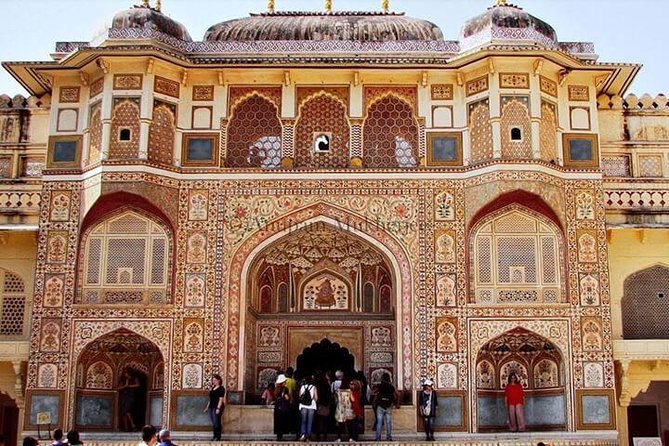
- Sunrise Taj Mahal: a very early start, but the payoff is the iconic first light on white marble.
- Private guides in each city: you get context fast, from Delhi’s Mughal-era sites to Jaipur’s instruments.
- Ranthambore morning safari: wildlife time in the park before the day heats up.
- Real Golden Triangle route: Delhi–Agra–Jaipur, plus an extra wildlife day in Sawai Madhopur.
- Hotel stays in 3/4/5-star options: your comfort level is built into the package, not left to chance.
Day 1: Delhi to Agra, With Classic Mughal-And-Beyond Stops

Your day starts in New Delhi with pickup from the airport or your hotel anywhere in Delhi NCR. The format is simple: you’re chauffeured in comfort, then you meet a guide for a city tour that hits the big narrative points of Delhi—war memorial, imperial power, and Mughal architecture.
In Delhi, you’ll stop at India Gate, the long war memorial lined with lawns and fountains. It’s not a “museum moment.” It’s more like a quick orientation to how Delhi stages public space—wide, formal, and meant for strolling. From there, you get photo stops at Parliament House and Rashtrapati Bhavan. These are short, but they help you place modern India’s governing institutions against the older monuments you’ll see later.
Next is Humayun’s Tomb, a UNESCO site that’s often described as the first garden-tomb in the Indian subcontinent and a forerunner to the Taj Mahal. You’ll see why it matters: the garden layout and tomb-in-a-pavilion idea feel like the blueprint for what comes in Agra. Then comes Qutub Minar, the 73-meter brick minaret linked to Qutb-ud-din Aibak, and widely known as the world’s tallest brick minaret. It’s a strong contrast to the tomb—tall, sharp, and built to dominate the skyline.
After the Delhi sightseeing, you drive to Agra (about 4 hours) for your overnight stay. This is one of those practical choices that makes the next day work well. You sleep in Agra so you can wake up early enough for the Taj sunrise experience.
What to watch for: Delhi traffic can stretch your sense of time. The tour includes a chauffeur and guided stops, which helps, but you’ll still feel that you’re on the road. Bring patience and plan for a “short stops, long drive” rhythm.
Delhi, Agra and Jaipur: more full circuits



Day 2: Taj Mahal Sunrise, Agra Fort, Then Ranthambore Headline Wildlife Time
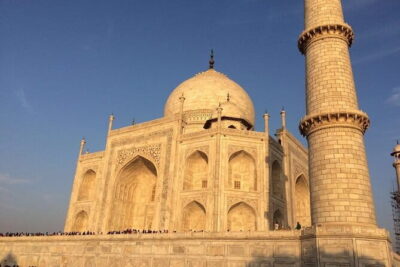
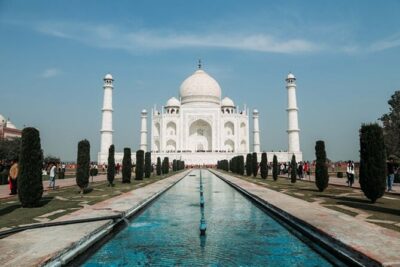
Day 2 begins with an early meeting at 6:00 AM. You’re taken out for the Taj Mahal sunrise view, with about 30 minutes allocated before the main visit. This is the classic moment: you’re trying to catch light as it turns the white marble warm and bright, and you avoid the later crowds that tend to turn the experience loud.
The Taj Mahal visit runs about 2 hours. The guide focus here is usually what you need most: why Shah Jahan built it, who Mumtaz Mahal was to him, and how the monument is designed for sightlines and reflection. Even if you’ve seen photos for years, seeing it in person at sunrise is different—less postcard, more scale and detail. The tour notes that Taj entry isn’t included, so you’ll want to budget the entrance fee piece.
After the Taj, you return for breakfast and then head to Agra Fort. You’ll have about 1 hour at Agra Fort, which is described as a majestic red sandstone fortress built by Emperor Akbar and used by Mughal emperors until 1638. The key here is architectural mix: Islamic and Hindu styles in the same strong fortress form. If you’re wondering why Agra isn’t just “Taj,” this stop answers that.
Then it’s onto Ranthambore, with the transfer taking about 5 hours. You overnight in Ranthambore, which is exactly what you want for safari success. A night in the area means you’re not fighting late-day travel into tomorrow’s big morning.
My practical take: Don’t pack this day too tightly in your head. Sunrise is early, the Taj is a deep-looking place, and then you’re driving again. The best strategy is to treat it like a sequence of set-piece scenes: light on marble, then fortress walls, then park country.
Day 3: Sawai Madhopur and Ranthambore Safari, Jeep-Canter Style
Today is the reason a lot of people book Ranthambore: the early safari. You’re picked up from your hotel at around 6:00 AM for your jungle safari. The tour includes morning wildlife time in Ranthambore National Park via shared Jeep/Canter with a naturalist.
The safari itself is listed as about 3 hours and the park portion is marked as included. This is your best chance to see native wildlife in a natural environment, and you’ll be focused on tracks, movement, and the small changes that signal an animal is nearby. The operator’s description points to the park as a globally known tiger-photography area, and that’s the expectation. Just keep your brain flexible: wildlife can shift minute by minute.
After the safari, you go back for breakfast and then there’s a calmer block before you move on. You’ll have a short unwind window, then a drive to Jaipur (about 3 hours) for overnight.
A note on comfort: Safaris are usually cooler in the morning but not always. Dress in layers you can remove quickly, and if you hate sitting still, you’ll have to compromise for a few hours. The best wildlife moments often come from quiet attention.
Day 4: Full-Day Jaipur—Fort Views, Hawa Mahal Photos, and Jantar Mantar Timekeeping
You start the day in Jaipur with breakfast, then a full-day private city tour. Jaipur is the “showy” Golden Triangle stop, and this route leans into that. It mixes forts, palaces, and a few famous facades you’ll see from streets and lakesides.
First up is Sheesh Mahal, part of Jaipur Fort. The fort is described as a hillside fortress built by Raja Man Singh I in 1592, and it gives you that classic Rajasthan panorama energy—views over the Maota Lake area. After that, the tour makes a quick photo stop at Jal Mahal, the palace that sits in the middle of Man Sagar Lake. Entry is restricted, so you admire it from the lakeside instead of going inside. It’s short but photogenic.
Next is City Palace of Jaipur. It’s described as a seven-story royal complex built between 1729 and 1732 by Maharaja Sawai Jai Singh II, blending Rajput, Mughal, and European influences. The big idea is the museums and royal artifacts inside the palace spaces. If you want the story behind the architecture, this is where it lands.
You’ll also do a photo stop for Hawa Mahal, the Palace of Wind. The tour highlights the façade with 953 jharokhas, those window-like projections that once let royal women watch street life without being seen.
Then comes the star for the nerdy-history crowd: Jantar Mantar, an astronomical observatory built in 1734 by Maharaja Sawai Jai Singh II. The tour notes 19 instruments for tracking celestial bodies and measuring time. This is one of those stops that surprises people who only expect “pretty buildings.” The instruments are physical proof of how serious the science was, right in the middle of a city center.
Finally, you transfer back to Delhi or drop at Jaipur Airport. Arrival in Delhi is expected after 7 PM, so plan your flights accordingly.
The best way to enjoy Jaipur here: Keep your pace slow at City Palace and Jantar Mantar. That’s where you’ll get the most from the private guide, and where the architecture stops being background and starts being information.
Price and Value: What $449 Buys (and What You Still Pay)
At $449 per person, this is a very “do a lot without chaos” style of package. The value isn’t just the route—it’s the built-in structure.
Here’s what you’re getting for the money:
- Accommodation in 3/4/5-star hotels (your chosen level), plus breakfast (3)
- A private air-conditioned vehicle with packaged drinking water
- Pickup within Delhi NCR (airport or hotel) and transfers at the end
- Private tour guides in each city
- Ranthambore morning safari in a shared Jeep/Canter
- Mobile ticket support and the small perks that reduce friction
And here’s what you should mentally budget separately:
- Entrance fees to monuments are listed as $69 per person
- Anything not explicitly included (like meals beyond breakfast)
So, is it a bargain or just priced fairly? For most first-timers, it lands as solid value because you’re paying for fewer headaches: guides handle the context, the vehicle handles the long distances, and the early-day timing for Taj sunrise is built in. If you tried to DIY this route, you’d still spend big money on transport, you’d still chase early entries, and you’d likely spend more time figuring things out than seeing.
Practical budget tip: Even if the tour lists $69 for entrances, your real spending depends on what you decide to add. Stick to what’s included in the tour plan and you’ll keep the budget under control.
More tiger country trips beyond the capital


Guides, Drivers, and the “Private but Not Isolated” Feeling
A big part of why Golden Triangle tours feel smooth is how the human side works: driver skill and guide storytelling. The tour is described as private (only your group participates), with private guides in each city and a chauffeur handling transfers.
From the guide names shared in past experiences, you may run into professionals like Ajay or Rashick for city guiding, and drivers such as Parveen, Shiv, or Ram Pal for driving support. What stands out in the feedback patterns is consistent: drivers are praised for careful handling and good English, and guides are described as passionate about explaining what you’re seeing. That matters because the monuments in Delhi, Agra, and Jaipur aren’t just “look up at the building.” They’re patterns of power, design, and belief across centuries.
Also, the safari format is “shared Jeep/Canter,” which is normal for Ranthambore. It’s not private in the wildlife vehicle, but it’s still guided and structured. In other words: you get the park and the logistics without spending your trip money on an entirely separate private safari vehicle.
Who This Tour Fits Best
This tour is a great match if:
- You’re doing India for the first time and want a fast but understandable circuit
- You hate wasting time on planning—early Taj, fixed drives, guided stops
- You want a wildlife day without trying to figure out the Ranthambore logistics alone
- You prefer private guiding over group bus chaos
It may be less ideal if:
- You dislike long car days. Day 1 and Day 2 both involve substantial driving blocks.
- You need “free time” every afternoon. This plan is structured and full.
- You don’t want to think about entrance fees. They’re listed separately.
Should You Book This 4-Day Golden Triangle Plus Ranthambore?

If your goal is a clean, high-impact 4 days across Delhi, Agra, Jaipur, and Ranthambore, I’d say yes—with eyes open. The Taj Mahal sunrise timing is the sort of detail that’s worth paying for because it’s hard to nail on your own. Pair that with a morning Ranthambore safari and you get a rare contrast: imperial architecture in the early hours, then real wildlife in a natural setting.
Book it if you want:
- Guided storytelling for major monuments
- Hotel comfort built into the price
- A smooth route with pickup and transfers handled
Skip it or consider a different style if:
- You want more flexible days with fewer fixed stops
- You’re on a tight budget and don’t want to add monument entrances on top
Bottom line: this is a strong “first India” plan that trades some spontaneity for reliability, and for most people, that trade feels worth it.
FAQ
What cities are included in this Golden Triangle plus Ranthambore trip?
You’ll cover New Delhi, Agra, Jaipur, and Ranthambore National Park (with the safari based around Sawai Madhopur).
Does the tour include pickup from my hotel or the airport?
Yes. You get pickup from the airport or your hotel anywhere in Delhi NCR.
What kind of hotels and meals are included?
Accommodation is included in 3/4/5-star hotels (based on the option you choose), and breakfast is included for 3 days.
Is the Ranthambore safari private or shared?
The morning jungle safari is included in a shared Jeep/Canter with a naturalist.
Are monument entrance fees included in the $449 price?
No. Entrance fees to monuments are listed separately at $69 per person.
What time is the Taj Mahal sunrise visit scheduled?
You’ll meet at 6:00 AM for the sunrise Taj Mahal viewing.
How long is the drive from Agra to Ranthambore, and from Ranthambore to Jaipur?
The transfer from Agra to Ranthambore is about 5 hours, and the drive from Ranthambore to Jaipur is about 3 hours.
What is the cancellation deadline for a full refund?
You can cancel up to 6 days in advance of the experience for a full refund, meaning you must cancel at least 6 full days before the start time.
More Tour Reviews in New Delhi
- Old & New Delhi City Tour – Half or Full Day Options Available
★ 5.0 · 4,811 reviews - Half Day Private Delhi City Tour
★ 5.0 · 4,474 reviews - Same Day Taj Mahal, Agra Fort & Baby Taj Tour from Delhi by Car
★ 5.0 · 4,304 reviews - Taj Mahal Day Tour from Delhi by Superfast Train – TOP RATED TOUR
★ 5.0 · 4,166 reviews - Delhi: Old and New Delhi Private Full or Half-Day Tour
★ 4.9 · 3,776 reviews
Tiger Country: More Ranthambore Trips
- Private 4-Day Golden Triangle Tour with Ranthambore Tiger Safari
★ 5.0 · 248 reviews - Golden Triangle & Ranthambore: 4-Day Private Tour from Delhi
★ 5.0 · 224 reviews - Private 5-Day Ranthambhore Tiger Tour from Delhi including the Taj Mahal, Agra and Jaipur
★ 5.0 · 197 reviews - From Delhi: 4-Day Golden Triangle & Ranthambore Guided Tour
★ 4.7 · 121 reviews - 4 Day Golden Triangle with Ranthambore Tiger Safari Tour from Delhi
★ 5.0 · 110 reviews
The Full Golden Triangle, More Options
- 3-Days Private Golden Triangle Tour: Delhi, Agra & Jaipur by Car
★ 5.0 · 1,107 reviews - 3-Days Private Golden Triangle Tour: Delhi, Agra & Jaipur by Car
★ 5.0 · 1,098 reviews - 3-Day Delhi, Agra and Jaipur Private Tour – India Golden Triangle
★ 5.0 · 812 reviews - Four-Day Private Luxury Golden Triangle Tour to Agra and Jaipur From New Delhi
★ 5.0 · 807 reviews - 5 Nights 6 Days Private Golden Triangle Tour – Delhi Agra Jaipur
★ 5.0 · 574 reviews
Just added: more New Delhi reviews to browse
- 4 days Golden Triangle Tour★ 5.0 · 3 reviews
- Discover Old & New Delhi: Private Tour with Street Food★ 5.0 · 3 reviews
- Taj Mahal Tour From Delhi By Private Car★ 4.5 · 3 reviews
- Golden Triangle Tour 5 Days★ 5.0 · 3 reviews
- Taj Mahal: Express Entry Ticket For Sunset Tour with guide★ 5.0 · 3 reviews
- Agra Taj Mahal Sunrise & Sunset Tour from Delhi★ 5.0 · 3 reviews
Golden Triangle Tours, compared.
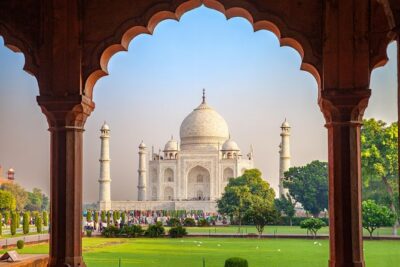 ★ 5.03-Days Private Golden Triangle Tour: Delhi, Agra & Jaipur by CarFrom $1271,107 reviews
★ 5.03-Days Private Golden Triangle Tour: Delhi, Agra & Jaipur by CarFrom $1271,098 reviews
★ 5.03-Days Private Golden Triangle Tour: Delhi, Agra & Jaipur by CarFrom $1271,107 reviews
★ 5.03-Days Private Golden Triangle Tour: Delhi, Agra & Jaipur by CarFrom $1271,098 reviews
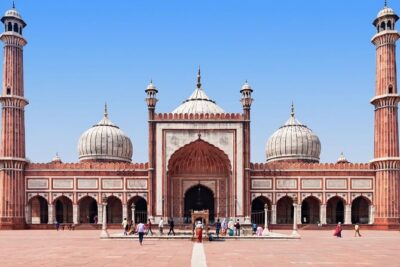 ★ 5.03-Day Delhi, Agra and Jaipur Private Tour – India Golden TriangleFrom $110812 reviews
 ★ 5.0Four-Day Private Luxury Golden Triangle Tour to Agra and Jaipur From New DelhiFrom $160807 reviews
 ★ 5.05 Nights 6 Days Private Golden Triangle Tour – Delhi Agra JaipurFrom $240574 reviews
 ★ 5.04 Days Golden Triangle TourFrom $146499 reviews
 ★ 5.0Private Car and Drive for Golden Triangle (4N/5D)From $167451 reviews
 ★ 5.0Private Golden Triangle Tour Delhi Agra Jaipur ( Top Rated )From $148436 reviews
Browse the lists this tour appears in