
Reviewed · GOLDEN TRIANGLE TOURS
4 Days Golden Triangle Tour India From Delhi
Four days, three cities, zero guessing.
This private Golden Triangle tour links Delhi, Agra, and Jaipur in one smooth loop, with a start time of 9:00 am and pickup offered so you spend less energy on logistics and more on monuments. What makes it especially interesting is the balance: you get the headline sites plus a few “how is this so pretty?” moments like Itmad-ud-Daula and Mehtab Bagh.
I love the way the itinerary begins in Agra with Itmad-ud-Daula, often called the Baby Taj, built by Nur Jahan for her father and treated like a jewel box. I also like the Jaipur sequence because it’s not only about one famous facade; you move through Hawa Mahal’s 953 windows, the science of Jantar Mantar, and the practical splendor of City Palace.
One consideration: most major entry tickets are not included, so you’ll want to budget for entrances in addition to the $190 price.
In This Review
- Key Highlights That Make This Tour Work
- Price and Logistics: What $190 Really Buys
- Day 1 in Agra: Baby Taj Calm and Sunset-Style Views
- A note on tickets
- Taj Mahal Time: How to Make Two Hours Count
- Practical tip for your mindset
- Agra Fort and Fatehpur Sikri: Mughal Power Beyond the Postcard
- The value of switching gears
- One thing to watch
- Jaipur Day: Pink City Icons in a Logical Order
- Jal Mahal: a quick but memorable lakeside pause
- Hawa Mahal: the 953-window selfie story, explained by structure
- Jantar Mantar: old-school science that still feels modern
- City Palace: royal rooms, courtyards, and gallery spaces
- Day 4 in Delhi: The Trip Ends, the City Doesn’t
- Drivers, Safety, and the Human Part of Getting There
- What You’ll Miss (and How to Decide)
- Who This Tour Fits Best
- Should You Book This 4-Day Golden Triangle Tour?
- FAQ
- What time does the tour start?
- Is pickup included?
- Is this a private tour?
- How many breakfasts are included?
- Are monument entry tickets included?
- Which sites are listed as free?
- Which Agra sights are included on Day 1?
- What are the main Jaipur sights on Day 3?
- Where does Day 4 end?
- Can I cancel for a full refund?
Key Highlights That Make This Tour Work
- Private group comfort with pickup: Only your group travels together in a car, with tolls, parking, and driver costs covered.
- A strong Agra opener at Itmad-ud-Daula: Smaller, elegant, and easier to enjoy than the biggest crowds.
- Taj Mahal time built in: A full 2 hours helps you see more than just photos.
- Jaipur’s mix of looks and meaning: Hawa Mahal, Jantar Mantar, and City Palace give you style plus context.
- Good travel support from real people: Drivers like Tabul and Sumit (company lead) are noted for being punctual, safe, and helpful with timing.
- Clear add-on reality: Fatehpur Sikri is listed as free, while several other sites require paid admission.
Price and Logistics: What $190 Really Buys
At $190 per person for 4 days, this tour is priced like a practical “transport + guided-time sightseeing” deal. You’re paying for the engine: car, a driver, and all the extras that usually nickel-and-dime you—toll taxes, parking fees, driver expenses, fuel cost, and local and interstate taxes.
Breakfast is included for three days, which matters more than it sounds. In India, starting early without rushing to find food can save time and stress, especially when you’re hopping between cities.
The biggest budgeting surprise is admissions. The itinerary explicitly lists several major sites as admission ticket not included, including Itmad-ud-Daula, Taj Mahal, Agra Fort, Hawa Mahal, Jantar Mantar, and City Palace. Fatehpur Sikri is marked as free, and Jal Mahal is also marked free, but the rest likely means you’ll be buying tickets as you go.
Finally, this is a private tour/activity, meaning your group is the only one moving through the schedule. That usually makes the pace feel calmer, and it gives your driver more flexibility if you need a short adjustment.
Delhi, Agra and Jaipur: more full circuits



Day 1 in Agra: Baby Taj Calm and Sunset-Style Views
Your day starts with Itmad-ud-Daula, a Mughal mausoleum built between 1622 and 1628 by Nur Jahan for her father Mirza Ghiyas Beg. If you’ve only ever heard Taj Mahal, this stop can feel like a warm-up that pays off. Itmad-ud-Daula is often described as a jewel box, and the “smaller than Taj” size makes it easier to slow down and really look at details.
You’ll spend about 1 hour here, but the real value is the mood. This is a Mughal masterpiece that doesn’t demand constant attention like a headline landmark. You can stand, step back, and take in symmetry and marble work without the feeling of being herded.
Next is Mehtab Bagh, a charbagh garden complex on the opposite side of the Yamuna River. It’s listed as a popular sunset viewing spot for Taj Mahal, and that’s exactly why this stop is smart. When you finally reach the big Taj later, you’ll already understand its river-side setting and the visual lines across the water.
This stop is shorter—about 30 minutes—but it’s the kind of short stop that prevents the day from feeling like a nonstop checklist.
A note on tickets
Both Itmad-ud-Daula and Mehtab Bagh are listed as admission ticket not included. So, even though the schedule feels efficient, you should treat Day 1 as a day where you’ll likely pay for entry once or twice.
Taj Mahal Time: How to Make Two Hours Count
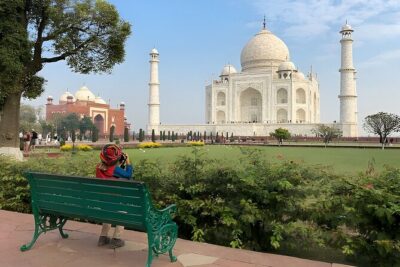
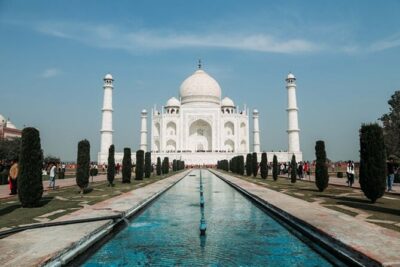
Taj Mahal is the obvious headline, and you get 2 hours here. That’s enough time to do more than take the first perfect shot and move on. With two hours, you can spend part of your visit orienting yourself, then come back to the viewpoint you liked most and notice how the light changes.
It’s described as the finest idiom of love, built by Mughal Emperor Shah Jahan in 1653 in memory of his wife. Even if you know the story, I find Taj Mahal works best when you treat it like a design project. Look at the geometry, the play between white marble and shadow, and how the complex feels designed for slow walking.
Practical tip for your mindset
Plan to do your “best-photo round” earlier, then shift your focus to smaller observations. That could be the way the structure frames the garden spaces, or the way different angles change the feel of the scale.
Also, Taj Mahal admission tickets are not included. Budget time and cash for that decision so you don’t feel rushed.
Worth putting side by side with this New Delhi pick:

Agra Fort and Fatehpur Sikri: Mughal Power Beyond the Postcard
After Taj Mahal, you continue to Agra Fort for about 1 hour. This is a UNESCO World Heritage site and served as a residence complex of the Mughal dynasty until 1638. It’s also tied to dramatic political history: it was the fort where Shah Jahan was deposed and restrained by his son at the end of his life.
Agra Fort isn’t just “another fort.” It’s a change in texture. Taj Mahal is pure emotion in marble; Agra Fort is governance, defense, and the heavy weight of empire. If you want one day where the story of the region feels more than sentimental, this is the place.
Then comes Fatehpur Sikri. The itinerary frames it as a non-guided visit to the short-lived capital of the Mughal empire between 1572 and 1585 during Emperor Akbar’s reign. You’ll see red sandstone buildings clustered at the center of town, and you get about 1 hour here.
Fatehpur Sikri is listed as free, which is a nice relief in an itinerary with several ticketed stops.
The value of switching gears
This pairing—Agra Fort then Fatehpur Sikri—keeps you from spending all your time only on the most famous sights. You start the day with a love story, then shift into power and administration, then end with the idea of a city planned to last and quickly moved on from.
One thing to watch
Fatehpur Sikri is non-guided in this plan, so you’ll want to rely on your own curiosity. If you like reading plaques and map thinking, you’ll likely enjoy it. If you prefer a live explanation for every stop, you might feel a little less “guided” than at Taj.
Jaipur Day: Pink City Icons in a Logical Order
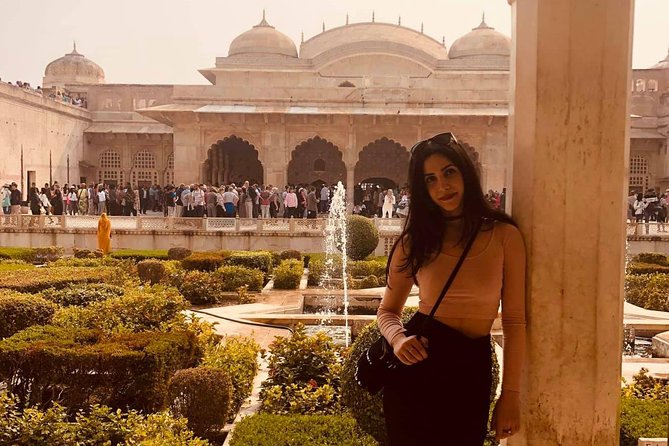
By Day 3, you’re in Jaipur. The route includes four stops: Jal Mahal, Hawa Mahal, Jantar Mantar, and City Palace. This is a good sequence because it moves from the dreamy lakeside image to street-level architectural detail to scientific instruments to royal complex.
Jal Mahal: a quick but memorable lakeside pause
Jal Mahal is the palace in the middle of Man Sagar Lake, built by Sawai Pratap Singh in 1799. It’s listed as a short stop (about 10 minutes) and free. Even though the time is brief, it works as a visual palate cleanser after Agra’s stone intensity.
Hawa Mahal: the 953-window selfie story, explained by structure
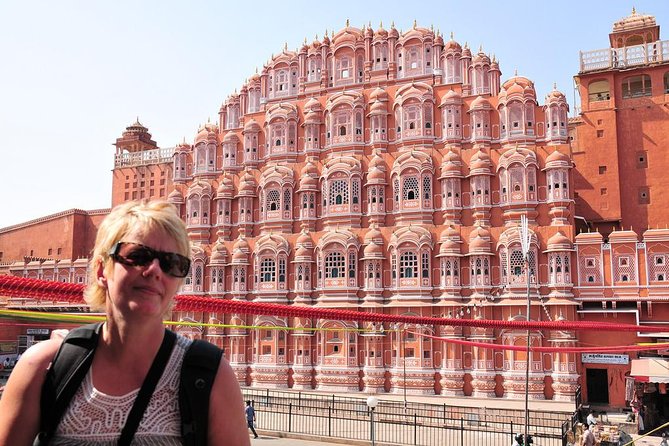
Next is Hawa Mahal, the Palace of Breeze. The itinerary describes it as a five-storey honeycombed beehive of pink sandstone with 953 small windows called jharokhas, plus intricate latticework. It’s also known as a women’s chamber of the royal family.
This stop is about 30 minutes, and admission tickets are not included. The real value here isn’t just spotting the famous facade. With a half-hour, you can look at the layering and understand that the windows aren’t decoration only—they’re part of how the building functions socially and visually.
Jantar Mantar: old-school science that still feels modern
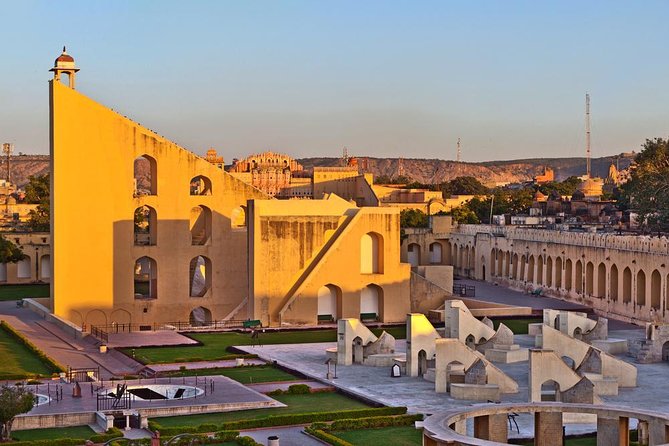
Then you reach Jantar Mantar, an astronomical instrument site built in 1734 by Sawai Jai Singh II. The itinerary notes it includes the world’s largest stone sundial.
You get about 1 hour. If you like things with a purpose, this is where your brain gets rewarded. It’s also a nice break from purely architectural stops because it asks you to think about measuring time and motion using geometry and materials.
Tickets are not included here, so again, plan for entrances.
City Palace: royal rooms, courtyards, and gallery spaces
Finally, City Palace rounds out the day. It’s described as a vast palace complex with courtyards, gardens, and galleries of art crafts. You get about 1 hour, and admission tickets are not included.
City Palace can be the best payoff if you care about how a royal household lived day to day—how spaces were laid out and how different parts relate. It’s also a good end to a sightseeing day because it feels like you’re stepping through a larger system rather than just looking at a single landmark.
Day 4 in Delhi: The Trip Ends, the City Doesn’t
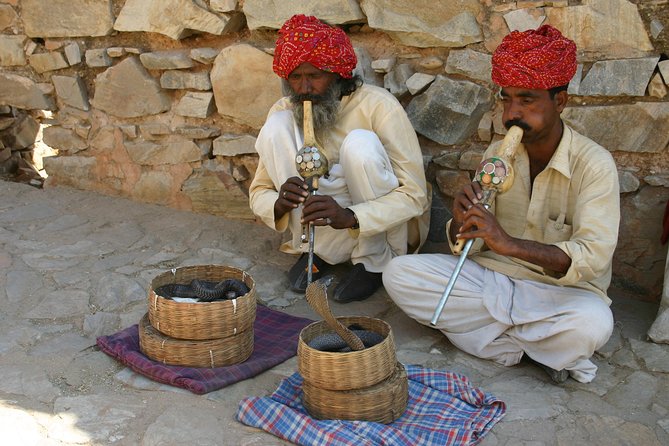
Day 4 is built for departure. The plan says that after arriving in Delhi, you’ll have a transfer to Delhi airport/railway station or another location within Delhi as per your requirements.
So you’re not stuck with a full sightseeing schedule on departure day. That’s a practical choice. Long-haul travel often turns the last morning into a stress test, and this design reduces the chance of missing a train or flight.
Drivers, Safety, and the Human Part of Getting There
One thing I really like about this tour’s reputation is the emphasis on the human side of transport. Drivers such as Tabul and Sumit are described as punctual, careful with safety, and genuinely helpful with advice on what to see and how to use your time.
That matters because in the Golden Triangle, the distance isn’t the whole problem. Traffic, timing, and entry queues can change your day. A driver who navigates local traffic well can make the route feel smoother and more comfortable, especially if you’re traveling solo.
There’s also a repeated theme about flexibility. If you have preferences—spending more time at a place you like, or adjusting the pace—this kind of tour can often work better than rigid “bus tour” formats.
What You’ll Miss (and How to Decide)
This is a focused tour. It gives you the major Mughal and Jaipur highlights listed in the plan, but it doesn’t promise a long list of every possible add-on sight.
If you want extra experiences—like shopping time beyond the structured stops, or a major optional outing—you’ll likely pay for those separately. One example from shared experience: a tiger safari can be expensive as an extra for a single person and involves a lot of mileage, so it’s worth thinking hard about whether the trade fits your style and energy.
Also, because several stops are marked as admission not included, you should expect to spend additional time and money at the entrances. That’s not a flaw, but it’s part of the deal.
Who This Tour Fits Best
This itinerary is a strong match if you want:
- A private Golden Triangle route with a driver and a day-by-day plan.
- The “big names” (Taj Mahal) plus good Agra and Jaipur depth (Itmad-ud-Daula, Jantar Mantar, City Palace).
- Early starts handled for you, with breakfast included.
- A trip where safety and punctuality matter as much as monuments.
It may not fit you as well if:
- You hate buying entrance tickets on the spot.
- You prefer a fully guided, commentary-heavy experience for every stop (since Fatehpur Sikri is listed as non-guided).
Should You Book This 4-Day Golden Triangle Tour?
I’d book it if you want a practical, well-paced introduction to Delhi-Agra-Jaipur without thinking too hard about how to connect everything. The value is strongest when you factor in what’s included: transport, covered taxes/tolls/parking, driver costs, and three breakfasts.
I’d hesitate only if your budget is extremely tight for entrances, because several key sites are ticketed separately. If you can handle that reality, you’ll likely enjoy the mix: Mughal romance and power in Agra, then Jaipur’s architecture and science through Hawa Mahal, Jantar Mantar, and City Palace.
FAQ
What time does the tour start?
The tour start time is 9:00 am.
Is pickup included?
Pickup is offered as part of the tour.
Is this a private tour?
Yes. It’s private, so only your group will participate.
How many breakfasts are included?
Breakfast is included for 3 days.
Are monument entry tickets included?
No. Many stops are listed as admission ticket not included, including Taj Mahal, Agra Fort, Hawa Mahal, Jantar Mantar, and City Palace.
Which sites are listed as free?
Fatehpur Sikri is listed as free, and Jal Mahal is also listed as free in the itinerary.
Which Agra sights are included on Day 1?
Day 1 includes Itmad-ud-Daula (Baby Taj) and Mehtab Bagh.
What are the main Jaipur sights on Day 3?
Day 3 includes Jal Mahal, Hawa Mahal, Jantar Mantar, and City Palace.
Where does Day 4 end?
Day 4 focuses on a transfer to Delhi airport/railway station or another location within Delhi based on your needs.
Can I cancel for a full refund?
Yes, free cancellation is available up to 24 hours in advance of the experience start time for a full refund.
More Tours in New Delhi
- Old & New Delhi City Tour – Half or Full Day Options Available
★ 5.0 · 4,811 reviews - Half Day Private Delhi City Tour
★ 5.0 · 4,474 reviews - Same Day Taj Mahal, Agra Fort & Baby Taj Tour from Delhi by Car
★ 5.0 · 4,304 reviews - Taj Mahal Day Tour from Delhi by Superfast Train – TOP RATED TOUR
★ 5.0 · 4,166 reviews - Delhi: Old and New Delhi Private Full or Half-Day Tour
★ 4.9 · 3,776 reviews
More Tour Reviews in New Delhi
- Old & New Delhi City Tour – Half or Full Day Options Available
★ 5.0 · 4,811 reviews - Half Day Private Delhi City Tour
★ 5.0 · 4,474 reviews - Same Day Taj Mahal, Agra Fort & Baby Taj Tour from Delhi by Car
★ 5.0 · 4,304 reviews - Taj Mahal Day Tour from Delhi by Superfast Train – TOP RATED TOUR
★ 5.0 · 4,166 reviews - Delhi: Old and New Delhi Private Full or Half-Day Tour
★ 4.9 · 3,776 reviews
The Full Golden Triangle, More Options
- 3-Days Private Golden Triangle Tour: Delhi, Agra & Jaipur by Car
★ 5.0 · 1,107 reviews - 3-Days Private Golden Triangle Tour: Delhi, Agra & Jaipur by Car
★ 5.0 · 1,098 reviews - 3-Day Delhi, Agra and Jaipur Private Tour – India Golden Triangle
★ 5.0 · 812 reviews - Four-Day Private Luxury Golden Triangle Tour to Agra and Jaipur From New Delhi
★ 5.0 · 807 reviews - 5 Nights 6 Days Private Golden Triangle Tour – Delhi Agra Jaipur
★ 5.0 · 574 reviews
Just added: more New Delhi reviews to browse
- 4 days Golden Triangle Tour★ 5.0 · 3 reviews
- Discover Old & New Delhi: Private Tour with Street Food★ 5.0 · 3 reviews
- Taj Mahal Tour From Delhi By Private Car★ 4.5 · 3 reviews
- Golden Triangle Tour 5 Days★ 5.0 · 3 reviews
- Taj Mahal: Express Entry Ticket For Sunset Tour with guide★ 5.0 · 3 reviews
- Agra Taj Mahal Sunrise & Sunset Tour from Delhi★ 5.0 · 3 reviews
Golden Triangle Tours, compared.
 ★ 5.03-Days Private Golden Triangle Tour: Delhi, Agra & Jaipur by CarFrom $1271,107 reviews
★ 5.03-Days Private Golden Triangle Tour: Delhi, Agra & Jaipur by CarFrom $1271,098 reviews
★ 5.03-Days Private Golden Triangle Tour: Delhi, Agra & Jaipur by CarFrom $1271,107 reviews
★ 5.03-Days Private Golden Triangle Tour: Delhi, Agra & Jaipur by CarFrom $1271,098 reviews
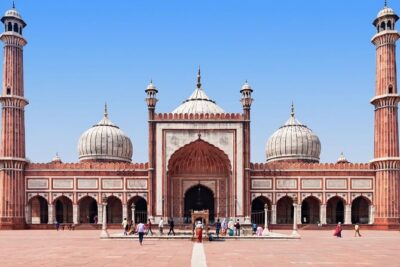 ★ 5.03-Day Delhi, Agra and Jaipur Private Tour – India Golden TriangleFrom $110812 reviews
 ★ 5.0Four-Day Private Luxury Golden Triangle Tour to Agra and Jaipur From New DelhiFrom $160807 reviews
 ★ 5.05 Nights 6 Days Private Golden Triangle Tour – Delhi Agra JaipurFrom $240574 reviews
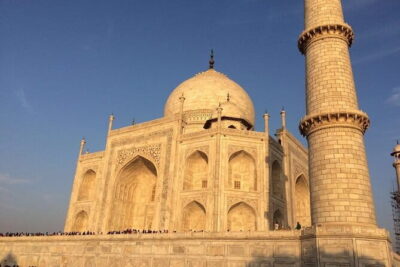 ★ 5.04 Days Golden Triangle TourFrom $146499 reviews
 ★ 5.0Private Car and Drive for Golden Triangle (4N/5D)From $167451 reviews
 ★ 5.0Private Golden Triangle Tour Delhi Agra Jaipur ( Top Rated )From $148436 reviews