
Reviewed · GOLDEN TRIANGLE TOURS
4 Days Private Golden Triangle Tour
Delhi-Agra-Jaipur by car feels fast and personal. This 4-day private Golden Triangle tour is interesting because it mixes big-name sights like Taj Mahal with practical city highlights like Qutub Minar and India Gate, then rounds it out with Jaipur’s palace-and-astronomy combo. I really like the private AC vehicle plus pickup and drop, because it cuts down the daily stress of figuring out transport. I also like the pacing that builds in actual sightseeing time (not just drive-by photos), especially for the early morning Taj visit. One possible drawback: the major entrances are not included, with an estimated USD 50 per person extra for key sites like Taj Mahal and Agra Fort, so you’ll want to budget for that upfront.
The route is classic Golden Triangle, but the delivery sounds thoughtfully practical. You get private English/language guides as per the itinerary, and the vehicle is available for extra stops if you want to tweak the plan.
One more thing to weigh: you’re doing a lot of driving across three cities. It’s still comfortable, but if you hate time on the road, you’ll feel it more on the Delhi-to-Agra and Agra-to-Jaipur days.
In This Review
- Key things I’d watch for on this Golden Triangle tour
- Price and value: $285.77 per person and what it really covers
- Getting around Delhi, Agra, Jaipur: private car comfort that actually matters
- Day 1 in Delhi: Qutub Minar to Raj Ghat, then the drive to Agra
- Day 2: sunrise Taj Mahal plus Agra Fort and Chand Baori
- Day 3 in Jaipur: Hawa Mahal, Jal Mahal, City Palace, and Jantar Mantar
- Day 4: back to Delhi for your departure or onward travel
- Service quality: guides, responsiveness, and that peace-of-mind factor
- What you’ll likely enjoy most on this route
- A realistic drawback to plan around
- Should you book this Golden Triangle Delhi Agra Jaipur by car?
- FAQ
- What major attractions are included in the Delhi, Agra, and Jaipur stops?
- Are entrance fees included in the price?
- Is pickup and drop included?
- Is the Taj Mahal visit scheduled early?
- What vehicle do you use for the private tour?
- Is there free cancellation?
Key things I’d watch for on this Golden Triangle tour
- Sunrise-focused Taj Mahal timing: you’re set up for an early morning visit, not a late-day scramble
- Two “icon” clusters on Day 1: Qutub Minar plus the Parliament/Gandhi/President-area belt in Delhi
- Agra Fort and the Mughal story arc: a military structure that Shah Jahan reshaped into a palace and later a prison
- Jaipur’s brain-and-beauty pairing: City Palace details plus Jantar Mantar’s astronomical instruments
- Stepwell stop included on the way: Chand Baori (Abhaneri) adds variety between Agra and Jaipur
- Private vehicle type matches your group size: sedan, Innova Crysta, or Tempo Traveller/van depending on headcount
Price and value: $285.77 per person and what it really covers
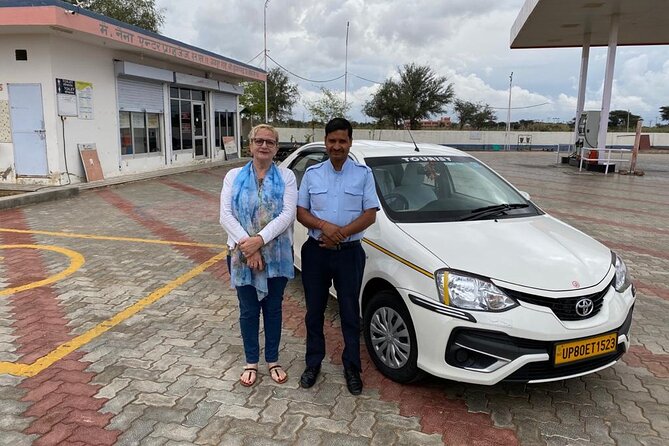
At $285.77 per person, you’re paying for a private, door-to-door style experience across Delhi, Agra, and Jaipur. The value is strongest if you want less hassle: private air-conditioned car, fuel, tolls, parking, interstate taxes, and pickup/drop are included.
The one big “watch this” item is admissions. Entrance fees are not included, with an approximate USD 50 per person set aside for sites like Qutub Minar, Taj Mahal, Agra Fort, City Palace Jaipur, and Jantar Mantar Jaipur. That’s normal for monuments-heavy tours, but it does change the all-in cost.
Hotels are included only if you book the option with accommodations. The tour includes 3 nights stay at respective hotels if that part is selected, plus breakfast (3). If you’re traveling with your own hotel plans, you’ll want to confirm what’s actually bundled in your quote.
Delhi, Agra and Jaipur: more full circuits



Getting around Delhi, Agra, Jaipur: private car comfort that actually matters
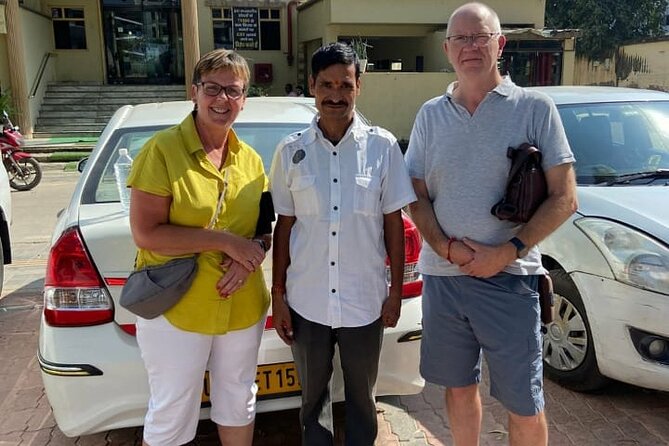
This is a private tour, meaning you’re not sharing the vehicle with random strangers. Your transportation is a private air-conditioned vehicle, and the car type is chosen by group size: a 4-seater sedan for 1–2 people, a 6-seater Innova Crysta for 3–4 people, and a 10-seater Tempo Traveller/van for 5–9 people.
That sounds like a small detail until you’re in India and trying to fit everyone, luggage, and water bottles into one cramped setup. Here, the vehicle choice is built around your party size, and that usually makes the days feel smoother.
You also get guides along the way and they’re described as English/language guides “as per the itinerary.” In plain terms: you get someone to connect the dots, explain what you’re seeing, and keep you from feeling lost in the crowds and timings.
Day 1 in Delhi: Qutub Minar to Raj Ghat, then the drive to Agra
Day 1 starts with Qutub Minar, a UNESCO World Heritage site and one of the most recognizable Delhi monuments. The tower is about 73 meters tall and dates to the late 12th century, with construction associated with Qutub-ud-din Aibak in 1193. You’ll have about 40 minutes here, which is enough time to see the structure well without turning it into a marathon.
Next comes India Gate, a war memorial for soldiers of the undivided Indian Army who died during World War I (1914–1921). The stop is short—around 15 minutes—but it’s a good “reset” after Qutub Minar, and it’s free to enter.
Then you move into a Delhi-government and ceremonial area sweep. The plan includes stops connected with the Sansad Bhavan (Lok Sabha and Rajya Sabha), the President of India’s official residence at Raisina Hill (Rashtrapati Bhavan area), and then Raj Ghat, the memorial dedicated to Mahatma Gandhi. Raj Ghat is free, and the time here is around 30 minutes.
The day ends with a four-hour drive to Agra, plus a scheduled 30-minute stop in between for toilet break and tea/coffee with snacks. When you’re hopping countries of monuments this fast, it helps that you’re not trying to guess where you can reliably pause.
After you arrive in Agra, you check into your hotel. The plan doesn’t list an included meal for Day 1, so you’ll want to plan for dinner on your own unless your hotel package includes it.
Day 2: sunrise Taj Mahal plus Agra Fort and Chand Baori
Day 2 is the big payoff. You start with the Taj Mahal on an early morning sunrise visit, with about 2 hours on site. The tour frames it as a Mughal memorial built by Emperor Shah Jahan for Mumtaj Mahal, and that context makes a difference: it’s not just a pretty building, it’s a crafted emotion meant to be felt in the light.
Taj Mahal entrance is not included, so remember the admissions budgeting. Also, sunrise timing usually means you’ll feel the day start earlier than you’d expect, even if the travel day itself is scheduled well.
After Taj Mahal, you head to Agra Fort. You get around 40 minutes here, and the story you’ll hear is strong: the fort began as a military structure, Shah Jahan transformed it into a palace, and later it functioned as his gilded prison for eight years. That mix of power, luxury, and captivity gives Agra a darker edge than people expect.
Then the plan adds a curveball stop: Chand Baori (the stepwell) at Abhaneri, located between Agra and Jaipur. You get about 30 minutes, and it’s described as one of the deepest and largest stepwells in India. This is the kind of stop that breaks up the “monument loop” and gives you something different to photograph and talk about.
From there, you drive to Jaipur, with about 5 hours of travel time. Once you arrive in Jaipur, you check into your hotel.
Day 3 in Jaipur: Hawa Mahal, Jal Mahal, City Palace, and Jantar Mantar
Jaipur is where the tour leans into the “royal Rajput” era vibe, and the lineup matches that. You’ll see a mix of architecture, courtly space, and science-like geometry.
First up, you’ll likely get the famous Hawa Mahal, the Palace of Breeze, built in 1799 as an extension to the Royal City Palace. It’s described as part of the royal complex, which matters because it helps you understand it as more than a single façade. You won’t get all-day here; expect focused time, then you move on.
Then there’s Jal Mahal, also called the Water Palace. It was built by Maharaja Madho Singh in 1750. The tour notes it wasn’t intended as a palace in the modern sense; it was used as a lodge for duck hunting trips. That detail is small, but it changes how you picture the place. It was built for a lifestyle, not just spectacle.
Jal Mahal’s stop is short—around 15 minutes—so treat it as a quick scenic moment rather than a deep museum visit.
Next is City Palace of Jaipur, with about 1 hour. The palace complex was originally built between 1729 and 1732 by Maharaja Sawai Jai Singh, the founder of Jaipur city. The tour highlights specific parts you can expect to notice, including Rajendra Pol, Dewan-E-Khas, Pritam Niwas Chowk, Chandra Mahal, and the Textile Museum. City Palace entrance is not included, so again, admissions budgeting matters.
Finally comes Jantar Mantar, the astronomical observation site built in the early 18th century with 19 instruments constructed by Sawai Jai Singh II. You get about 40 minutes. This is one of the best stops for people who like reasoning and measurement. You don’t need a science background to appreciate it, because you can see the tools and the logic.
More private days with a guide of your own
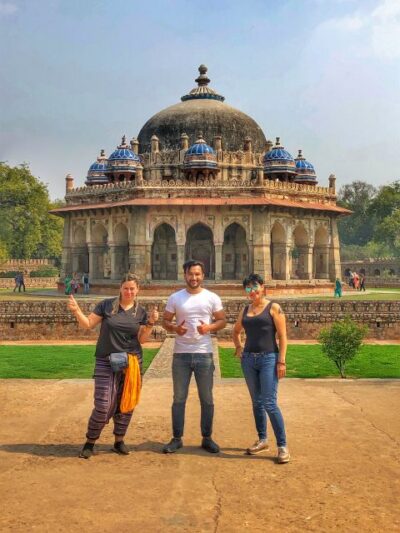

Day 4: back to Delhi for your departure or onward travel
Day 4 is mainly the travel day back to Delhi. After breakfast, you get about 5 hours of journey time, then a transfer to either Delhi airport or your suggested place in Delhi/Gurgaon.
The tour also mentions an option to fly from Jaipur airport onward. If your schedule is flexible, that can be a nice way to reduce return-road time. Just keep in mind that any flight change depends on your own booking, since the tour only sets the ground transfer options.
Service quality: guides, responsiveness, and that peace-of-mind factor
This tour’s strongest praise centers on how smoothly it runs when you’re in a new country with unfamiliar logistics. In the feedback shared, the agency’s communication and responsiveness come up repeatedly, including a named contact: Om Prakash. He’s described as excellent and patient in handling concerns before and during the trip.
There’s also a named contact, Ms. Hema, described as helpful even before arrival, with continued checking after you reach the airport. That sort of “we’re watching your schedule” feeling can be a big relief on a multi-city tour.
If you care about safety and confidence, the feedback also mentions a safer cab with driver and a guide at key stops. Since this is a private setup, you’ll generally spend your time with your assigned driver and guides instead of constantly re-orienting.
What you’ll likely enjoy most on this route
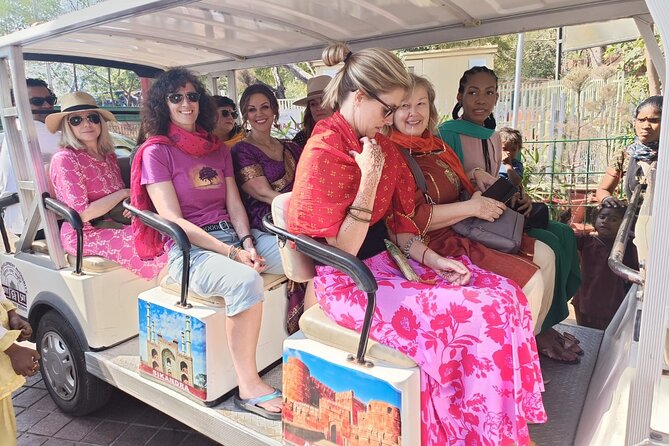
This Golden Triangle plan works because it doesn’t treat the cities like boxes to check. It’s built around a storyline: early Delhi power and sacred memory, Mughal magnificence in Agra, then court life and scientific geometry in Jaipur.
You’ll probably enjoy the mix of major icons and “breather” stops. Qutub Minar and India Gate set the stage in Delhi. Taj Mahal and Agra Fort give you the Mughal drama in Agra. Jaipur then brings you the palace look and the mind-bending instruments at Jantar Mantar, with Chand Baori adding a non-palace pause.
And if you like having someone manage timing, guides, and movement, this private car format does that work for you. It’s less about planning and more about paying attention.
A realistic drawback to plan around
The main drawback is simple: entrances and extra costs are on you. Taj Mahal, Qutub Minar, Agra Fort, City Palace Jaipur, and Jantar Mantar are all listed as not included, and Day 1 doesn’t list any meal as included.
So you can’t treat the price as all-in. If you budget the approximately USD 50 per person for entrances and plan for Day 1 meals, the tour usually feels fair and worth it.
The other consideration is endurance. Three cities in about four days means you’ll be active, and you’ll spend time in transit. For most people, that’s the whole point. If you want a slower pace, this one may feel tight.
Should you book this Golden Triangle Delhi Agra Jaipur by car?
I’d book it if you want the Golden Triangle experience with less friction: a private AC car, pickup and drop, guides at the sights, and smart early timing for Taj Mahal. The mix of Delhi landmarks, Agra’s Mughal highlights, and Jaipur’s City Palace plus Jantar Mantar is a good way to see multiple sides of northern India without wasting half your days on logistics.
I wouldn’t book it if you hate early mornings, dislike driving between cities, or want a completely “tickets included” package. In that case, you might end up doing extra budgeting and thinking about entrance costs more than you’d like.
If you’re planning smart, this tour can be a very efficient way to get the classics and still feel guided rather than rushed.
FAQ
What major attractions are included in the Delhi, Agra, and Jaipur stops?
In Delhi, the plan includes Qutub Minar, India Gate, the Parliament/Sansad Bhavan area, Raisina Hill (President of India’s official residence area), and Raj Ghat. In Agra, it includes Taj Mahal and Agra Fort, plus Chand Baori (stepwell) at Abhaneri. In Jaipur, it includes Jal Mahal, City Palace, and Jantar Mantar, with Hawa Mahal also listed as part of the Day 3 sightseeing.
Are entrance fees included in the price?
No. Entrance fees are not included for Qutub Minar, Taj Mahal, Agra Fort, City Palace Jaipur, and Jantar Mantar Jaipur. The tour estimates entrance fees at about USD 50 per person.
Is pickup and drop included?
Yes. Pickup and drop are included, with transfers in Delhi either to the airport or to a suggested place in Delhi/Gurgaon on the final day.
Is the Taj Mahal visit scheduled early?
Yes. The Taj Mahal is described as an early morning visit by sunrise, with about 2 hours allocated on site.
What vehicle do you use for the private tour?
Vehicle type depends on group size. For 1–2 people it’s a four-seater sedan, for 3–4 people it’s a six-seater Innova Crysta, and for 5–9 people it’s a 10-seater Tempo Traveller/van.
Is there free cancellation?
Yes, free cancellation is offered. You can cancel up to 24 hours in advance of the experience’s start time for a full refund, and changes within 24 hours are not accepted.
More Tours in New Delhi
- Old & New Delhi City Tour – Half or Full Day Options Available
★ 5.0 · 4,811 reviews - Half Day Private Delhi City Tour
★ 5.0 · 4,474 reviews - Same Day Taj Mahal, Agra Fort & Baby Taj Tour from Delhi by Car
★ 5.0 · 4,304 reviews - Taj Mahal Day Tour from Delhi by Superfast Train – TOP RATED TOUR
★ 5.0 · 4,166 reviews - Delhi: Old and New Delhi Private Full or Half-Day Tour
★ 4.9 · 3,776 reviews
More Tour Reviews in New Delhi
- Old & New Delhi City Tour – Half or Full Day Options Available
★ 5.0 · 4,811 reviews - Half Day Private Delhi City Tour
★ 5.0 · 4,474 reviews - Same Day Taj Mahal, Agra Fort & Baby Taj Tour from Delhi by Car
★ 5.0 · 4,304 reviews - Taj Mahal Day Tour from Delhi by Superfast Train – TOP RATED TOUR
★ 5.0 · 4,166 reviews - Delhi: Old and New Delhi Private Full or Half-Day Tour
★ 4.9 · 3,776 reviews
The Full Golden Triangle, More Options
- 3-Days Private Golden Triangle Tour: Delhi, Agra & Jaipur by Car
★ 5.0 · 1,107 reviews - 3-Days Private Golden Triangle Tour: Delhi, Agra & Jaipur by Car
★ 5.0 · 1,098 reviews - 3-Day Delhi, Agra and Jaipur Private Tour – India Golden Triangle
★ 5.0 · 812 reviews - Four-Day Private Luxury Golden Triangle Tour to Agra and Jaipur From New Delhi
★ 5.0 · 807 reviews - 5 Nights 6 Days Private Golden Triangle Tour – Delhi Agra Jaipur
★ 5.0 · 574 reviews
Just added: more New Delhi reviews to browse
- 4 days Golden Triangle Tour★ 5.0 · 3 reviews
- Discover Old & New Delhi: Private Tour with Street Food★ 5.0 · 3 reviews
- Taj Mahal Tour From Delhi By Private Car★ 4.5 · 3 reviews
- Golden Triangle Tour 5 Days★ 5.0 · 3 reviews
- Taj Mahal: Express Entry Ticket For Sunset Tour with guide★ 5.0 · 3 reviews
- Agra Taj Mahal Sunrise & Sunset Tour from Delhi★ 5.0 · 3 reviews
Golden Triangle Tours, compared.
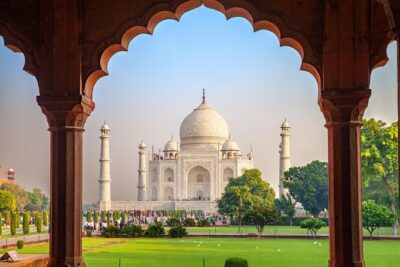 ★ 5.03-Days Private Golden Triangle Tour: Delhi, Agra & Jaipur by CarFrom $1271,107 reviews
★ 5.03-Days Private Golden Triangle Tour: Delhi, Agra & Jaipur by CarFrom $1271,098 reviews
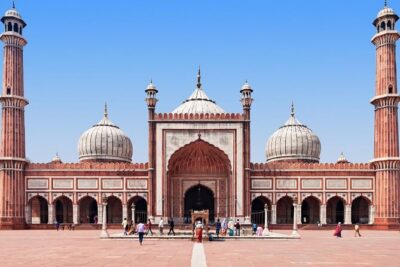 ★ 5.03-Day Delhi, Agra and Jaipur Private Tour – India Golden TriangleFrom $110812 reviews
 ★ 5.0Four-Day Private Luxury Golden Triangle Tour to Agra and Jaipur From New DelhiFrom $160807 reviews
 ★ 5.05 Nights 6 Days Private Golden Triangle Tour – Delhi Agra JaipurFrom $240574 reviews
 ★ 5.04 Days Golden Triangle TourFrom $146499 reviews
 ★ 5.0Private Car and Drive for Golden Triangle (4N/5D)From $167451 reviews
 ★ 5.0Private Golden Triangle Tour Delhi Agra Jaipur ( Top Rated )From $148436 reviews