

Reviewed · GOLDEN TRIANGLE TOURS
5-Day Golden Triangle Tour from Delhi
The Golden Triangle feels less cookie-cutter here.
This 5-day, 4-night tour strings together Delhi, Agra, and Jaipur with a private English-speaking guide and a chauffeured air-conditioned vehicle the whole time, so you’re not stuck piecing things together on your own. I especially like that your guide is there to explain what you’re seeing as you go, not just after the fact.
You also get 5-star hotel nights with breakfast and lunch included, which matters in North India when the days start early and keep moving. And when you choose the all-inclusive option, the tour states that monument entrance fees are prepaid, which can save time and hassle at ticket counters.
One thing to think about: the itinerary notes several sites as Admission Not Included, while the tour also promises prepaid entrance fees in an all-inclusive setup. That mismatch means you should double-check what’s covered for your exact booking before you go, especially for the biggest-ticket stops.
In This Review
- Key highlights that actually affect your day
- Why this Golden Triangle trip from Delhi is a smart structure
- Getting around in a chauffeured AC car (and what that means in real life)
- Where to watch the ticket coverage: prepaid fees vs admission Not Included
- Day 1 in Delhi: Humayun’s Tomb, Qutub Minar, Jama Masjid, and Gandhi at Raj Ghat
- Humayun’s Tomb: Mughal grandeur with British-era echoes
- Qutub Minar: when stone becomes a statement of power
- Jama Masjid: a huge mosque with straightforward impact
- Raj Ghat: ending the day with a quiet, direct moment
- War Memorial Arch: a brief pause that frames the city
- Day 2 in Agra: Taj Mahal, Agra Fort, Itmad-ud-Daula, and the Mehtab Bagh garden view
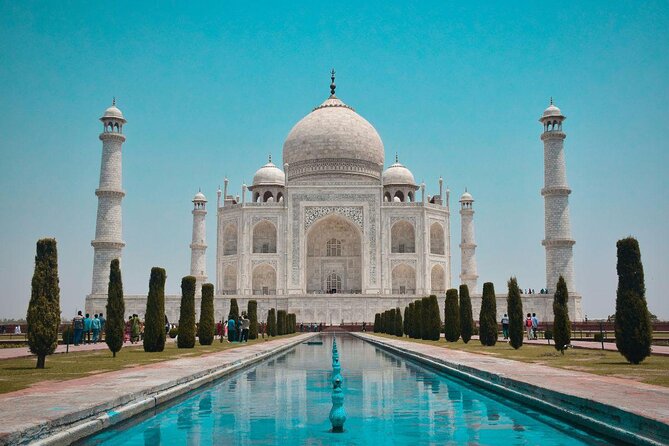
- Taj Mahal: more than a pretty building
- Agra Fort: the Mughal stronghold behind the postcard
- Itmad-ud-Daula: the “other marble” you don’t want to skip
- Mehtab Bagh: the moonlight garden angle
- Day 3 in Fatehpur Sikri: the day trip that explains Akbar’s ambition
- Day 4 in Jaipur: Amber Palace, Water Palace, City Palace, and Jantar Mantar
- Amber Palace: forts-with-views energy
- Water Palace: the five-storey showpiece
- City Palace of Jaipur: museum time without a museum overload
- Jantar Mantar: math made visible
- Day 5: Jaipur to Delhi airport drop-off (the only part you should keep light)
- Hotels, meals, and what “5-star” feels like on this route
- What I’d love to see clarified before you pay
- Value for $165.34: when it’s a great deal (and when it isn’t)
- Should you book this Delhi–Agra–Jaipur tour?
- FAQ
- What time does the tour start?
- How long is the tour?
- Are hotel pickup and drop-off included?
- Is there a private guide?
- Are monument entrance fees included?
- What meals are included?
- Do I get help with transportation between Delhi, Agra, and Jaipur?
- Is water provided during the tour?
- What is the cancellation rule?
Key highlights that actually affect your day
- Private guide throughout: easier pacing, clearer context, fewer awkward “what do we do now?” moments
- Chauffeured AC vehicle: you’re traveling comfortably between cities and within each city
- 4 lunches + water while traveling: you’ll be fed without hunting for quick, overpriced meals
- 5-star hotels for 4 nights: real downtime after full monument days
- Prepaid entrance fees option: can be great value, but verify what’s included for each monument
Why this Golden Triangle trip from Delhi is a smart structure
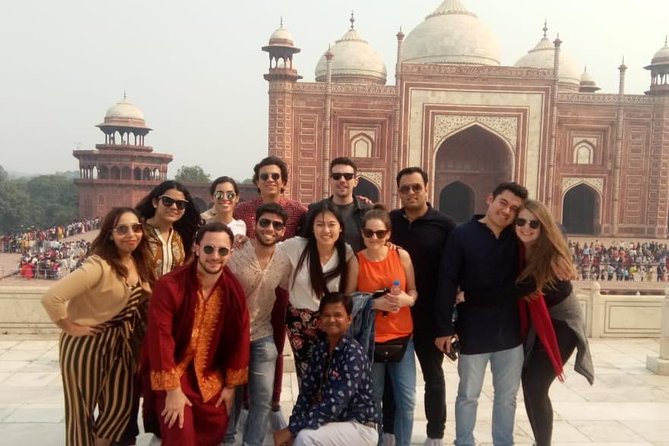
If you want the Golden Triangle highlights without the usual stress, this format helps. You start in New Delhi, move to Agra for the Taj Mahal and Mughal sites, then finish in Jaipur before getting dropped at the Delhi airport for your onward flight. That one-direction flow keeps logistics simpler than backtracking.
The tour is also a private experience—your group only—so you can ask for adjustments. The operator notes that you can request a more comfortable itinerary if you want changes, which is useful if you’re sensitive to long walking stretches or you want more time at one monument.
And the tour begins at 8:00 am, which is both a blessing and a warning. Early starts usually mean fewer crowds and more daylight for photos. But if you’re the type who likes to ease in, you’ll want a good sleep the night before.
Delhi, Agra and Jaipur: more full circuits



Getting around in a chauffeured AC car (and what that means in real life)
North India road travel can be intense—traffic, honking, and heat. Having your own air-conditioned private vehicle keeps the “getting there” part from becoming the most exhausting part of the trip.
The vehicle type depends on your group size: a sedan for 1–2 travelers, Toyota Innova for 3–4 packs, or a mini van for larger groups (5–15). That matters because big tours often cram people into cars that feel too small. Here, the car choice is built around party size.
You also get hotel pickup and drop-off and time saved by not hunting taxis between stops. Add in toll taxes and parking covered, plus a water bottle while traveling, and your day runs smoother than a DIY route where you’re constantly paying cash and re-planning.
Where to watch the ticket coverage: prepaid fees vs admission Not Included
This is the part you should treat like your homework.
The tour highlights say: All monument entrance fees are prepaid if the all-inclusive tour option is selected. But the day-by-day stop list labels several major sights as Admission Not Included (and some as Free). That contradiction is common in tour descriptions, but it can still affect what you pay on the ground.
Here’s how to handle it practically:
- When you book, confirm whether your package covers Humayun’s Tomb, Qutub Minar, Taj Mahal, Agra Fort, Itmad-ud-Daula, Amber Palace, City Palace, and Jantar Mantar.
- If any are not covered, ask how you’re expected to pay (cash vs card) and whether the guide handles ticketing or you do it.
Why this matters: the Taj Mahal and similar sites are timed and controlled. If you’re scrambling at the last minute, you can lose time—and patience.
Day 1 in Delhi: Humayun’s Tomb, Qutub Minar, Jama Masjid, and Gandhi at Raj Ghat
Day 1 is a strong “start big” day, with four major stops that cover different layers of Delhi.
Humayun’s Tomb: Mughal grandeur with British-era echoes
You’ll start at Humayun’s Tomb, described as reflecting the legacy that the British left behind. It’s an important opening stop because it sets the tone for Mughal monument design—symmetry, scale, and the idea of a garden tomb.
Timing note: the itinerary lists 1 hour here. Admission is marked as Not Included, so again, confirm whether your option covers it.
Worth putting side by side with this New Delhi pick:

Qutub Minar: when stone becomes a statement of power
Next is Qutub Minar, noted as the tallest stone tower in India and tied to the establishment of Muslim rule. This isn’t a place you just glance at. Even in an hour, you can appreciate how the tower dominates the surrounding complex and how that architectural confidence shows up across the site.
Admission is also marked as Not Included.
Jama Masjid: a huge mosque with straightforward impact
Then you hit Jama Masjid, described as the largest mosque in Asia and built by Shahjahan. The stop is shorter—about 45 minutes—and admission is marked Free, so it’s a good momentum-builder without additional ticket friction.
Raj Ghat: ending the day with a quiet, direct moment
Day 1 finishes at Raj Ghat, Gandhi’s cremation site. Admission is marked Free, and the time is about 30 minutes. This stop changes the mood from architecture and empire to modern history and everyday moral weight.
War Memorial Arch: a brief pause that frames the city
There’s also a War Memorial Arch listed with no time given in the description, so your schedule may vary. It’s usually a short photo-and-walk stop—good for perspective, not a full attraction day on its own.
My take on Day 1: it’s packed, but the mix works. You’re not just seeing monuments—you’re seeing how Delhi tells stories from different eras.
Day 2 in Agra: Taj Mahal, Agra Fort, Itmad-ud-Daula, and the Mehtab Bagh garden view

Day 2 is the classic Agra day, but what makes it worth it on a guided private tour is how fast you can connect the dots between the sites.
Taj Mahal: more than a pretty building
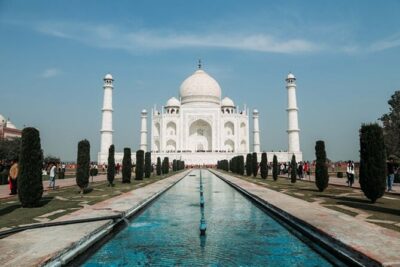
You’ll spend about 1.5 hours at the Taj Mahal. The description focuses on its white marble beauty and Shah Jahan’s mausoleum for Mumtaz Mahal. Plan to slow down inside the complex—details matter: marble inlay, symmetry, and the way light shifts across the facade.
Admission is marked Not Included, so check coverage carefully.
Agra Fort: the Mughal stronghold behind the postcard
Next is Agra Fort, a Mughal architecture highlight and described as a stronghold under successive generations. You get about 1 hour, which is enough for the big shapes and key viewpoints even if you don’t turn into an architecture student.
Admission is marked Not Included.
Itmad-ud-Daula: the “other marble” you don’t want to skip
Then comes Itmad-ud-Daula, a marble mausoleum built by Nur Jahan for her father Ghiyas Beg. The time is short—about 30 minutes—but it’s often the kind of place that rewards you for paying attention to craftsmanship rather than size.
Admission is marked Not Included.
Mehtab Bagh: the moonlight garden angle
Finally, Mehtab Bagh is listed as the moonlight garden, with a 30-minute stop. Even if you don’t get literal moonlight timing, the garden viewpoint is about framing views and seeing Taj Mahal from a different angle than the main complex.
Admission is marked Not Included.
My take on Day 2: it balances the famous monument with two Mughal contexts that make the Taj feel less like a standalone photo spot.
Day 3 in Fatehpur Sikri: the day trip that explains Akbar’s ambition
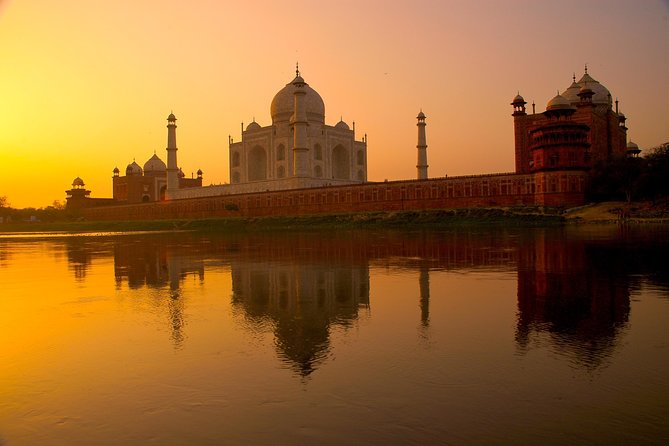
This is your half-day to full-day momentum reset, depending on travel time: Fatehpur Sikri, about 37 km from Agra, built by Emperor Akbar in 1571. It was Mughal capital for about 14 years before being abandoned due to water shortages.
Admission is marked Free, and the itinerary gives about 1 hour 30 minutes.
What I like about this stop: it helps you understand the “why” behind Mughal buildings. Instead of just admiring stone, you’re getting a story of a capital site that rises and then fades when resources don’t cooperate. Your guide’s commentary matters a lot here, because without it you might miss the significance.
Practical note: wear comfortable shoes. Even when the time is limited, these sites involve walking across uneven ground.
Day 4 in Jaipur: Amber Palace, Water Palace, City Palace, and Jantar Mantar
Jaipur is where the tour leans more into a mix of fort views, palace museums, and science-and-astronomy structures.
Amber Palace: forts-with-views energy
First is Amber Palace (Amber Fort), on a ridge overlooking Moata Lake. You’ll have about 1.5 hours. Amber Fort is built for drama—wide panoramas, layered defenses, and palace spaces that feel designed for spectacle.
Admission is marked Not Included.
Water Palace: the five-storey showpiece
There’s also a Water Palace stop described as a five-storey wonder with a pyramidal facade and overhanging windows with latticed screens plus domes and spires. No time is stated, so you’ll likely get a shorter look.
City Palace of Jaipur: museum time without a museum overload
Then comes City Palace of Jaipur, described as a museum with Rajasthani costumes and an armor collection featuring Rajput and Mughal weaponry. You get about 1 hour, and admission is marked Not Included.
Jantar Mantar: math made visible
Finally, Jantar Mantar—a stone observatory built in the 18th century by Maharaja Jai Singh. The stop is about 30 minutes, and admission is marked Not Included.
This is one of those places that can feel slow if you go in cold. With your guide, it becomes a “how did they measure time and sky without modern tools?” kind of experience.
My take on Day 4: it’s the day that turns the Golden Triangle from monuments into lived-in court culture—forts and palaces, then astronomy made physical.
Day 5: Jaipur to Delhi airport drop-off (the only part you should keep light)
Day 5 is mostly a transfer day. You’ll be picked up from your hotel in Jaipur and driven to Delhi, then dropped at the Delhi airport for your onward flight.
Because the description doesn’t list a monument stop on Day 5, you’ll want to schedule your flight thoughtfully—build in real buffer time for traffic variability.
My practical advice: pack anything you need easy access to (charging cable, documents, light jacket). You don’t want the last hours of the trip spent searching through luggage.
Hotels, meals, and what “5-star” feels like on this route
This tour includes four nights of 5-star hotel accommodation, plus breakfast and lunch (lunch is listed as 4 meals). That’s a big deal because you’re visiting intense sites all day. Having food sorted means you can focus on the monuments instead of solving “where do we eat now?” every afternoon.
It also includes water bottles while traveling, which helps on hot days and long drives between Delhi, Agra, and Jaipur.
You’ll still be responsible for drinks, plus there’s mention of souvenir photos and DVDs available to purchase. If you’re trying to keep costs down, this is where you’ll decide what’s worth it to you.
What I’d love to see clarified before you pay
This tour seems well organized on the ground, but your best move is to confirm details tied to cost and ticketing.
Based on the information provided:
- The package says entrance fees are prepaid only for the all-inclusive option.
- Yet the stop list marks multiple key monuments as Admission Not Included.
So before you commit, ask a clear question:
- Which specific monuments are covered in my all-inclusive selection, and which ones I should expect to pay for separately?
It’s a quick confirmation call—and it prevents the most common travel frustration: arriving excited, then hitting a payment wall.
Value for $165.34: when it’s a great deal (and when it isn’t)
At $165.34 per person, you’re paying for a package that includes:
- private guide,
- private AC vehicle,
- 5-star hotels (4 nights),
- breakfast and lunch,
- water while traveling,
- tolls and parking.
That can be solid value if your entrance fees are truly covered for the major sites you care about (especially Taj Mahal and Amber Palace). If many entry tickets are not included, the final cost can climb quickly, depending on what you end up paying at each stop.
So I’d judge it like this:
- If your booking covers the major paid attractions, this is a strong “time-saver” deal.
- If it doesn’t, you may still enjoy the organization, but it shifts from value to convenience.
Either way, the private setup is the core benefit. Shared tours can be cheaper, but they also mean compromise on timing.
Should you book this Delhi–Agra–Jaipur tour?
I’d book it if you want a private, guided Golden Triangle that handles transfers, meals, and comfortable travel between cities. It’s a good fit for first-timers who want to see the big names—Taj Mahal, Amber, and Delhi’s major monuments—without building an itinerary spreadsheet.
I’d hesitate or at least verify ticket coverage if your package description leads you to pay at multiple monuments, since the itinerary labels several “Admission Not Included” stops. One simple confirmation with the operator can make the difference between a smooth trip and a mildly annoying one.
If you like structure but want flexibility, this tour also offers the chance to request a more comfortable itinerary. That’s the sweet spot for many people: clear planning with room to breathe.
FAQ
What time does the tour start?
The start time is listed as 8:00 am.
How long is the tour?
It runs for 5 days (approximately) with 4 nights of lodging included.
Are hotel pickup and drop-off included?
Yes. The tour includes hotel pickup and drop-off in the cities on the route, and on the final day it includes pickup in Jaipur and drop at the Delhi airport.
Is there a private guide?
Yes. The tour includes a private English-speaking guide who stays with you throughout the experience, and it’s a private tour for your group only.
Are monument entrance fees included?
The tour says monument entrance fees are prepaid if you select the all-inclusive option. Some stops on the itinerary are marked as admission not included or free, so you should confirm what your specific booking covers.
What meals are included?
Breakfast is included with your hotel nights, and lunch is included for 4 days. Drinks are not included.
Do I get help with transportation between Delhi, Agra, and Jaipur?
Yes. You travel in your own chauffeured air-conditioned vehicle, sized to your group (sedan, Toyota Innova, or mini van depending on party size).
Is water provided during the tour?
Yes. Water bottles are provided while traveling.
What is the cancellation rule?
You can cancel for a full refund if you cancel at least 24 hours in advance. If you cancel less than 24 hours before the start time, no refund is provided.
More Tours in New Delhi
- Old & New Delhi City Tour – Half or Full Day Options Available
★ 5.0 · 4,811 reviews - Half Day Private Delhi City Tour
★ 5.0 · 4,474 reviews - Same Day Taj Mahal, Agra Fort & Baby Taj Tour from Delhi by Car
★ 5.0 · 4,304 reviews - Taj Mahal Day Tour from Delhi by Superfast Train – TOP RATED TOUR
★ 5.0 · 4,166 reviews - Delhi: Old and New Delhi Private Full or Half-Day Tour
★ 4.9 · 3,776 reviews
More Tour Reviews in New Delhi
- Old & New Delhi City Tour – Half or Full Day Options Available
★ 5.0 · 4,811 reviews - Half Day Private Delhi City Tour
★ 5.0 · 4,474 reviews - Same Day Taj Mahal, Agra Fort & Baby Taj Tour from Delhi by Car
★ 5.0 · 4,304 reviews - Taj Mahal Day Tour from Delhi by Superfast Train – TOP RATED TOUR
★ 5.0 · 4,166 reviews - Delhi: Old and New Delhi Private Full or Half-Day Tour
★ 4.9 · 3,776 reviews
The Full Golden Triangle, More Options
- 3-Days Private Golden Triangle Tour: Delhi, Agra & Jaipur by Car
★ 5.0 · 1,107 reviews - 3-Days Private Golden Triangle Tour: Delhi, Agra & Jaipur by Car
★ 5.0 · 1,098 reviews - 3-Day Delhi, Agra and Jaipur Private Tour – India Golden Triangle
★ 5.0 · 812 reviews - Four-Day Private Luxury Golden Triangle Tour to Agra and Jaipur From New Delhi
★ 5.0 · 807 reviews - 5 Nights 6 Days Private Golden Triangle Tour – Delhi Agra Jaipur
★ 5.0 · 574 reviews
Just added: more New Delhi reviews to browse
- 4 days Golden Triangle Tour★ 5.0 · 3 reviews
- Discover Old & New Delhi: Private Tour with Street Food★ 5.0 · 3 reviews
- Taj Mahal Tour From Delhi By Private Car★ 4.5 · 3 reviews
- Golden Triangle Tour 5 Days★ 5.0 · 3 reviews
- Taj Mahal: Express Entry Ticket For Sunset Tour with guide★ 5.0 · 3 reviews
- Agra Taj Mahal Sunrise & Sunset Tour from Delhi★ 5.0 · 3 reviews
Golden Triangle Tours, compared.
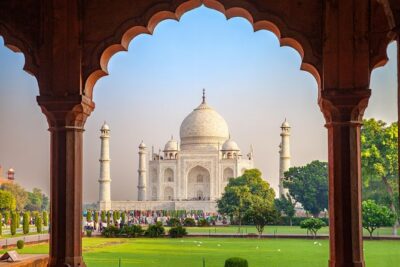 ★ 5.03-Days Private Golden Triangle Tour: Delhi, Agra & Jaipur by CarFrom $1271,107 reviews
★ 5.03-Days Private Golden Triangle Tour: Delhi, Agra & Jaipur by CarFrom $1271,098 reviews
★ 5.03-Days Private Golden Triangle Tour: Delhi, Agra & Jaipur by CarFrom $1271,107 reviews
★ 5.03-Days Private Golden Triangle Tour: Delhi, Agra & Jaipur by CarFrom $1271,098 reviews
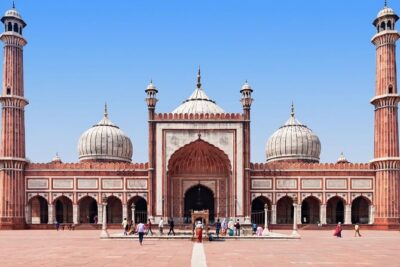 ★ 5.03-Day Delhi, Agra and Jaipur Private Tour – India Golden TriangleFrom $110812 reviews
 ★ 5.0Four-Day Private Luxury Golden Triangle Tour to Agra and Jaipur From New DelhiFrom $160807 reviews
 ★ 5.05 Nights 6 Days Private Golden Triangle Tour – Delhi Agra JaipurFrom $240574 reviews
 ★ 5.04 Days Golden Triangle TourFrom $146499 reviews
 ★ 5.0Private Car and Drive for Golden Triangle (4N/5D)From $167451 reviews
 ★ 5.0Private Golden Triangle Tour Delhi Agra Jaipur ( Top Rated )From $148436 reviews