
Reviewed · GOLDEN TRIANGLE TOURS
5 Days Golden Triangle Tour From Delhi
Golden Triangle in five days feels intense. This private tour strings together Delhi, Agra, and Jaipur with enough time to actually look, not just rush past. I love how day one blends iconic monuments with calmer stops, like Qutub Minar and Jama Masjid in Old Delhi.
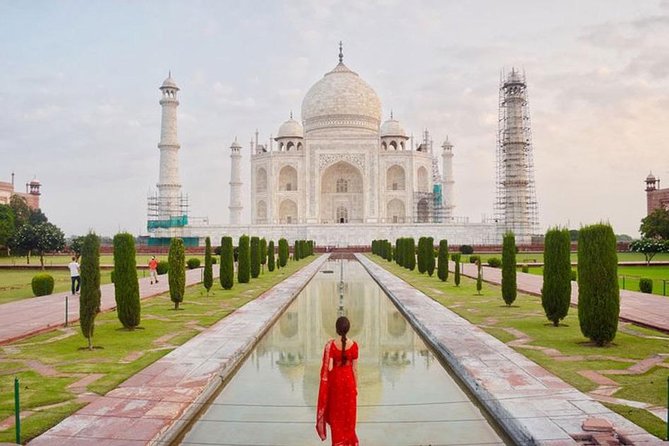
My second favorite part is the way the itinerary builds in big-Taj moments twice: the sunrise Taj Mahal visit, plus a sunset view from across the river at Mehtab Bagh. If you care about photos and atmosphere, that timing matters more than people expect.
The main drawback to keep in mind is the pace. You’ll cover long drives between cities, and at many stops admission tickets are not included, so you should budget for monument entry costs along the way.
In This Review
- Key things that make this Golden Triangle route work
- A five-day Golden Triangle route that trades sleep for signal
- Day 1 in Delhi: Qutub Minar, Jama Masjid, and the calm breaks that prevent overload
- Qutub Minar and the Qutub complex
- Jama Masjid: the big mosque as a city in miniature
- Lotus Temple: a reset button in the middle of it all
- Raj Ghat and the memorial route
- Rashtrapati Bhavan and Parliament House from the outside
- India Gate: a memorial arch with weight
- Day 2 to Agra by Yamuna Expressway: getting there comfortably matters
- Itmad-ud-Daula (the Baby Taj) for Mughal detail lovers
- Mehtab Bagh: Taj Mahal across the river at sunset
- Day 3 in Agra: sunrise Taj Mahal plus Agra Fort and the next-city stepping stone
- The sunrise Taj Mahal visit: why this timing changes everything
- Taj-area pacing and a lunch break in the middle
- Agra Fort: the Mughal power center you can feel
- City landmarks on the route: Jantar Mantar and Hawa Mahal
- City Palace museum time
- Chand Baori step well and Abhaneri: a rainwater machine
- Day 4 in Jaipur: Amer Fort, Jal Mahal photos, and the Palace of Winds exterior
- Amer (Amber) Palace: fort on a hill, built for impact
- City Palace of Jaipur: the seats of power and display spaces
- Jal Mahal: the lakeside photo moment
- Jantar Mantar and the outdoor science
- Hawa Mahal: the pink facade made of tiny design decisions
- Day 5: the five-hour drive back to Delhi
- Price and value: what $249 gets you, and where the extra costs can appear
- How to get the best experience out of this tight schedule
- Who should book this Golden Triangle tour
- FAQ
- FAQ
- Which cities are included in this Golden Triangle tour?
- How long is the tour and how many nights do I stay?
- Do I get pickup in Delhi?
- Is this a private tour?
- What is included in the price?
- Are entrance fees included for the monuments?
- What major sights are included in Agra?
- Which Jaipur attractions are included?
- Is free cancellation available?
- Should you book this 5-day Golden Triangle tour?
Key things that make this Golden Triangle route work
- Private pickup in Delhi: you can start from your hotel, airport, or another spot you choose.
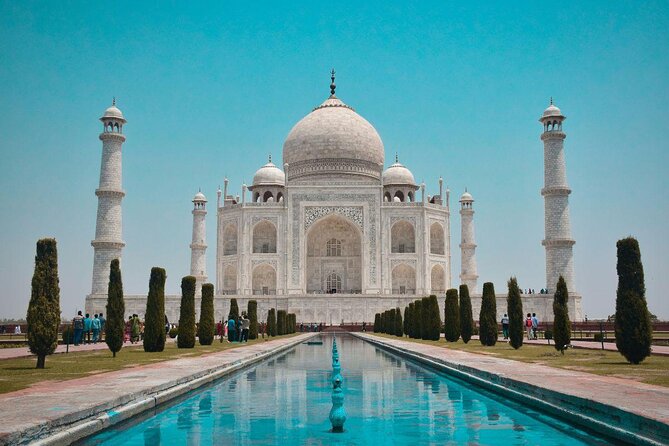
- Sunrise Taj Mahal plus sunset views: Taj time isn’t just one quick visit.
- A strong guide setup: the tour includes a government-approved guide, and past teams have included guides like Arif Khan (Delhi), Zaid (Agra), and Vikram Singh (Jaipur), with driver Dinesh noted for solid English.
- A balanced Delhi day: Old Delhi giants (Jama Masjid) plus spiritual calm (Lotus Temple) and key memorials (Raj Ghat, India Gate).
- Jaipur design hits multiple styles: forts and palaces (Amer Fort, City Palace) plus astronomy and optics (Jantar Mantar) and the pink city icon (Hawa Mahal).
- Breakfast is built in: you get breakfast on four mornings, which helps you keep the schedule tight without searching for food.
A five-day Golden Triangle route that trades sleep for signal
The Golden Triangle story is simple: Delhi gives you the present and the power centers, Agra delivers the Mughal wow-factor, and Jaipur shows you Rajput-era city planning and palace architecture. Doing it in five days is all about focus. You won’t have time to meander. You will, however, leave each city with a clearer sense of how India’s layers stack up.
This particular version leans toward comfort and logistics. You’re not navigating trains or swapping taxis by yourself. Instead, you get private transportation between stops, plus a guide who handles the order and timing so you can spend your energy on the sights.
One practical note: with a schedule this packed, your best strategy is to travel light and wear good walking shoes. Your feet will do most of the thinking on this trip.
Delhi, Agra and Jaipur: more full circuits



Day 1 in Delhi: Qutub Minar, Jama Masjid, and the calm breaks that prevent overload
Delhi day one has the kind of contrast that makes the city feel real instead of one big blur.
Qutub Minar and the Qutub complex
You start with Qutub Minar, a UNESCO World Heritage Site and one of Delhi’s signature landmarks. The tower is about 73 meters tall, tapering from a wide base down to the top, with five storeys. Even if you only have an hour, the scale lands fast. It’s the type of monument where you want to step back, then walk closer again, because the proportions shift as you move.
Admission isn’t included for this stop, so plan to pay the ticket locally if your booking doesn’t include monument fees as an option.
Jama Masjid: the big mosque as a city in miniature
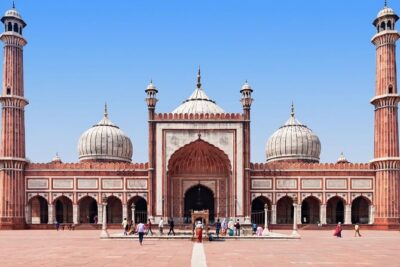
Next is Jama Masjid, described as the capital’s largest mosque. It sits on a 10-meter elevation and can hold up to 25,000 people. The marble and red-sandstone structure was built between 1644 and 1658, and it’s tied to Shah Jahan’s late architectural achievements.
This is one of those places where you’ll feel the rhythm of Old Delhi. If you’re trying to photograph, aim to keep your shots respectful. You’ll get more satisfying frames when you wait for the movement to settle.
Lotus Temple: a reset button in the middle of it all
After Old Delhi’s intensity, the Lotus Temple functions like a breath. It’s a Bahá’í House of Worship, dedicated in December 1986, and open to everyone regardless of religion. The flowerlike form makes it easy to understand why people remember it. More importantly, it gives your mind a break between heavy sightseeing blocks.
Worth putting side by side with this New Delhi pick:

Raj Ghat and the memorial route
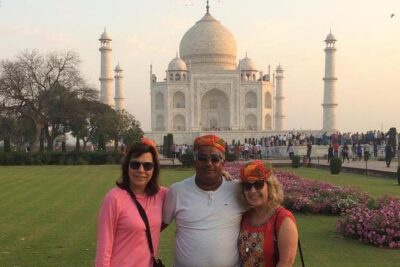
Then you head to Raj Ghat, a well-kept riverside park on the banks of the Yamuna. The simple black-marble platform marks the cremation spot of Mahatma Gandhi after his assassination in 1948.
This stop isn’t about architectural wow. It’s about atmosphere: quiet, reflective, and well paced inside a day that otherwise moves quickly.
Rashtrapati Bhavan and Parliament House from the outside
You also visit viewpoints linked to Rashtrapati Bhavan (the President of India’s residence, formerly home to the British Viceroy). The description highlights 340 rooms and 2.5 km of corridors, which is a helpful mental picture even if you do not go inside. You then see Parliament House, the circular building where power transferred in 1947 and where parliament still meets.
Even if your time inside is limited, these stops help you connect the monuments you saw earlier to how the modern state operates.
India Gate: a memorial arch with weight
Finally, India Gate closes the loop on the day. It’s a 42-meter-high stone memorial arch designed by Lutyens, built to honor about 90,000 Indian soldiers who died in World War I and related campaigns.
It’s a strong ending point because the arch is simple to recognize, but the meaning is heavy.
Day 2 to Agra by Yamuna Expressway: getting there comfortably matters
Agra day starts with the drive: you travel via Yamuna Expressway, about three hours. That countryside stretch helps break up the day’s sightseeing demand. When you arrive, you check in at your pre-booked hotel and settle in.
Itmad-ud-Daula (the Baby Taj) for Mughal detail lovers
You’ll then visit Itmad-ud-Daula, a Mughal mausoleum in Agra often called the Baby Taj. It’s sometimes described as a draft of the Taj Mahal, and that nickname isn’t just marketing. The structure rewards slow looking: patterns, stonework, and that Mughal sense of order.
Tickets aren’t included here, so treat this as a paid entry stop unless your monument-fee option covers it.
Mehtab Bagh: Taj Mahal across the river at sunset
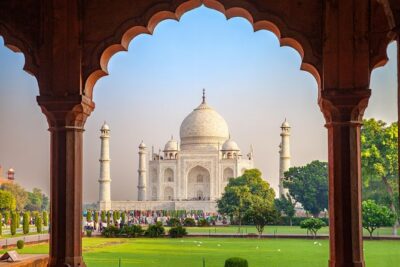
Next comes Mehtab Bagh, the Taj Mahal viewpoint across the river. The itinerary calls it one of the best places to view Taj beauty away from crowds during sunset.
This is smart planning. The Taj Mahal is crowded by design. Giving you an alternate angle at sunset improves your odds of getting both a calmer scene and a more cinematic light.
Day 3 in Agra: sunrise Taj Mahal plus Agra Fort and the next-city stepping stone

Day three is where the trip cashes in its biggest card: the Taj Mahal in the early hours.
The sunrise Taj Mahal visit: why this timing changes everything
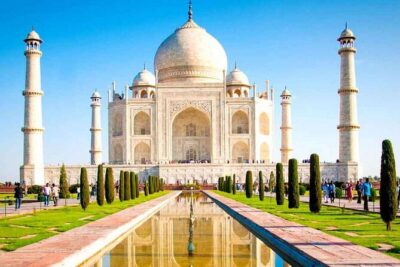
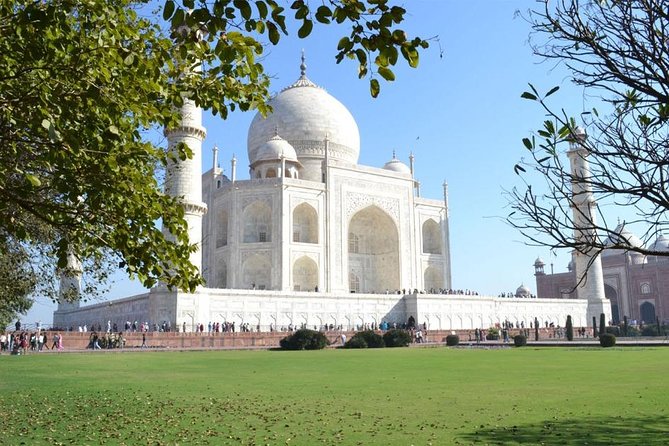
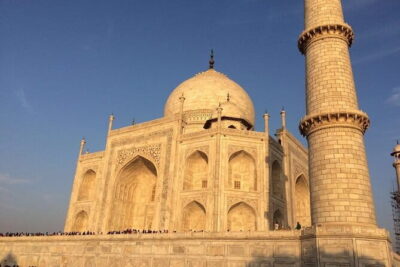
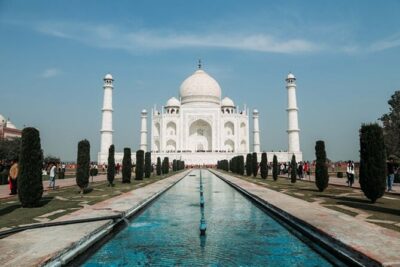
You go to the Taj Mahal at sunrise, which is a UNESCO World Heritage Site and widely considered one of the world’s most beautiful buildings. The itinerary also shares the origin story: Shah Jahan built it as a memorial for Mumtaz Mahal, his third wife, who died in 1631 giving birth to their 14th child.
Even if you’ve seen photos before, sunrise changes how the building reads. Light comes in softer. Marble looks less harsh. And you’re more likely to get a calmer, more reflective experience than if you arrive in peak afternoon glare.
Admission isn’t listed as included for this part, so be ready for your ticket cost unless you chose the monuments-fee option.
Taj-area pacing and a lunch break in the middle
After Taj, you return to your hotel for breakfast and then check out. The schedule then moves into additional sightseeing and includes a stop where you eat lunch between activities.
That lunch stop is practical. With a day this full, the worst-case scenario is skipping food and getting cranky at exactly the moment you’re supposed to enjoy the monuments.
Agra Fort: the Mughal power center you can feel
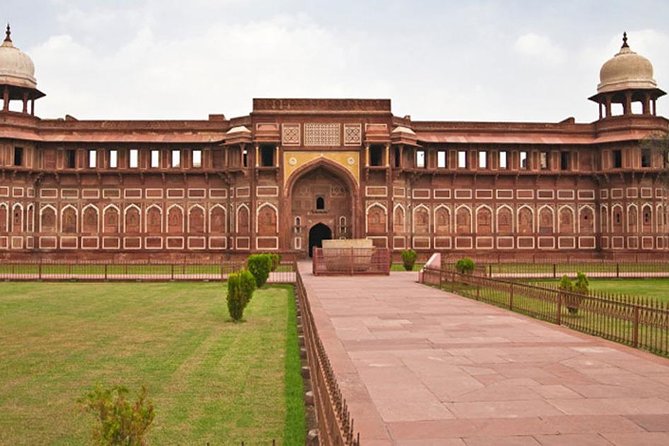
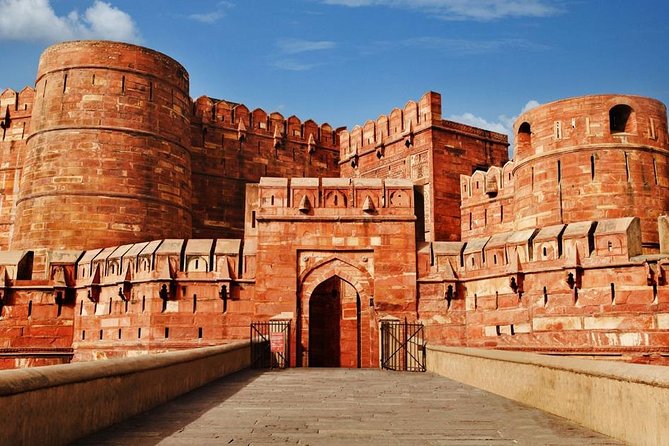
You then visit Agra Fort, another UNESCO World Heritage site and described as the main residence of Mughal emperors. It’s a fort with palaces, balconies, and gardens. If Taj Mahal is the love story, Agra Fort is the government-and-empire story.
This stop also runs into paid entry, depending on your option.
City landmarks on the route: Jantar Mantar and Hawa Mahal
The itinerary includes Jantar Mantar and Hawa Mahal (Palace of Winds) around this part of the tour. Jantar Mantar is an observatory built in 1734, and it features instruments used to observe astronomical positions with the naked eye. Hawa Mahal is the five-storey pyramidal monument built in 1799 with red and pink sandstone.
Even though these are often thought of as Jaipur sights, what matters for you here is that the trip gives you both “science in stone” and the facade-theater effect of Hawa Mahal.
City Palace museum time
The schedule also includes the City Palace area and its museum. The description mentions a fusion of Mughal and Hindu architecture, plus a collection of paintings, Rajasthani armor, and costumes. This is a good balance when you’ve spent the day outside in bright sun. Museums give you shade and context.
Chand Baori step well and Abhaneri: a rainwater machine
You also stop at Chand Baori in Abhaneri. This famous step well is described as one of Rajasthan’s deepest and largest, with rainwater harvesting as its native purpose. The huge tank and carved design are the point, and it’s a strong contrast to everything that looks like palace and fort.
If you like architecture that works as engineering, you’ll get a lot out of this stop.
Day 4 in Jaipur: Amer Fort, Jal Mahal photos, and the Palace of Winds exterior
Jaipur day is your “princes and planning” day. You’re seeing not only what rulers built, but how they controlled a city’s views, movement, and aesthetics.
Amer (Amber) Palace: fort on a hill, built for impact
You visit Amer Fort (Amer Palace), located in Amer about 11 kilometers from Jaipur. It’s on a hill, and the itinerary gives you two hours, which is enough to move through multiple areas without feeling like a stampede.
Even if forts aren’t your usual thing, this one has a strong visual hook: you’re looking at a stronghold designed for presence.
City Palace of Jaipur: the seats of power and display spaces
Then you head to City Palace, the seat of the Maharaja of Jaipur and described as a complex that includes the Chandra Mahal and Mubarak Mahal palaces. The palace museum comes up again as part of the wider experience, so if you’re museum-active, you’ll appreciate the repeat focus on armor, paintings, and costumes.
Jal Mahal: the lakeside photo moment
Jal Mahal is next, a palace-like structure sitting in Man Sagar Lake. The itinerary frames this as a photo opportunity, and it notes renovation and enlargement in the 18th century by Maharaja Jai Singh II. Even from a distance, Jal Mahal helps break up palace-day fatigue. You get scenery mixed into the architecture.
Jantar Mantar and the outdoor science
After that comes Jantar Mantar, UNESCO-listed and built in 1734. Nineteen astronomical instruments are included, built by Sawai Jai Singh II. The best way to enjoy this is to slow down and picture people using these tools without modern tech.
Your eyes will start to connect lines, angles, and scale.
Hawa Mahal: the pink facade made of tiny design decisions
Finally, Hawa Mahal is the iconic “Palace of Winds” built in 1799. The five-storey pyramidal monument made with red and pink sandstone looks like it’s all facade. That’s the charm. The itinerary also includes time for lunch at a local restaurant after full-day sightseeing, which is helpful when Jaipur’s walking times can feel longer than you expect.
Day 5: the five-hour drive back to Delhi
On day five, you check out and drive from Jaipur back to Delhi, about five hours. You’ll be dropped at your Delhi Airport or your location.
This is the right kind of ending for a short trip: you’re not scrambling for transit at the last minute. Just remember that the last day is usually when people get tired. Hydrate, snack if you need to, and don’t expect this final drive to feel like sightseeing.
Price and value: what $249 gets you, and where the extra costs can appear
At $249 per person, the big value comes from what’s bundled and what’s not.
Included items (as listed) are meaningful:
- 4 nights accommodation
- government-approved guide
- private transportation
- breakfast for 4 days
- monuments fees if you chose the option (not always automatic)
The tricky part is tickets. Many stops explicitly say admission tickets are not included. That means your final cost may rise depending on how many paid entry sites you hit and whether your booking includes the monuments-fee option.
Here’s the practical way to decide if it’s good value for you: if you want a guided, hotel-to-hotel plan across all three cities, this price looks reasonable because you’re paying for time saved, transport handled, and a guide to keep the route moving. If you’re the kind of person who prefers self-guided wandering and you already know you’ll spend a lot on individual tickets anyway, you might compare against a DIY approach. But DIY rarely gives you the same level of schedule control, especially on a tight five-day window.
How to get the best experience out of this tight schedule
You’ll enjoy this tour most if you plan like you have one job: keep energy steady.
- Start the day early when the plan suggests it. The Taj sunrise slot is the big payoff.
- Keep expectations realistic on “photo time.” Many stops are timed to a practical visit window, so moving with the group is part of the deal.
- Wear shoes that handle uneven walking. Forts and heritage complexes tend to have steps and changes in surface.
- Budget for admission tickets unless your booking confirms monuments fees are included.
- If you’re picky about languages or guidance style, this operator’s guide teams have included people like Arif Khan, Zaid, and Vikram Singh, and communication has been responsive through WhatsApp with the owner Abid Khan Shan noted as helpful. It’s worth asking what guide language you’ll have before you go.
Who should book this Golden Triangle tour
This fits best if you want:
- a guided Golden Triangle with minimal logistics
- a focus on major sights like Taj Mahal, Agra Fort, and Jaipur’s top palace monuments
- a plan that reduces decision fatigue across three cities
It may not fit if you:
- want unstructured time in each city
- dislike early starts
- don’t want to manage the reality that several sites require separate admission payments
FAQ
FAQ
Which cities are included in this Golden Triangle tour?
The tour covers Delhi, Agra, and Jaipur as part of the Golden Triangle route.
How long is the tour and how many nights do I stay?
The tour is listed as 5 days (approx.) and includes 04 nights accommodation.
Do I get pickup in Delhi?
Yes. Pickup is offered from your hotel, airport, or any desired location in Delhi.
Is this a private tour?
Yes. It is described as a private tour/activity, meaning only your group participates.
What is included in the price?
Included items listed are 04 nights accommodation, a govt approved guide, private transportation, breakfast (4), and monuments fees (if option).
Are entrance fees included for the monuments?
For many stops, the plan lists admission tickets as not included. It also notes monuments fees (if option), so whether fees are covered depends on your chosen option.
What major sights are included in Agra?
Agra includes Taj Mahal (sunrise visit), Itmad-ud-Daula, Mehtab Bagh, and Agra Fort.
Which Jaipur attractions are included?
In Jaipur, the tour includes Amber Palace (Amer Fort), City Palace, Jal Mahal, Jantar Mantar, and Hawa Mahal.
Is free cancellation available?
Yes. There is free cancellation up to 24 hours in advance for a full refund.
Should you book this 5-day Golden Triangle tour?
If you want a guided sweep that hits Delhi, Agra, and Jaipur without you planning transport and timing every leg, this is a solid choice. The standout is the way it schedules sunrise Taj Mahal plus a sunset viewpoint at Mehtab Bagh, which gives you a stronger Taj experience than the quick-in-quick-out style.
Book it if you’re okay with early mornings and a packed day structure, and if you budget for monument admission where tickets are listed as not included. Skip it if you crave long, slow afternoons or you strongly prefer fully DIY travel with no guide and no tight timings.
More Tours in New Delhi
- Old & New Delhi City Tour – Half or Full Day Options Available
★ 5.0 · 4,811 reviews - Half Day Private Delhi City Tour
★ 5.0 · 4,474 reviews - Same Day Taj Mahal, Agra Fort & Baby Taj Tour from Delhi by Car
★ 5.0 · 4,304 reviews - Taj Mahal Day Tour from Delhi by Superfast Train – TOP RATED TOUR
★ 5.0 · 4,166 reviews - Delhi: Old and New Delhi Private Full or Half-Day Tour
★ 4.9 · 3,776 reviews
More Tour Reviews in New Delhi
- Old & New Delhi City Tour – Half or Full Day Options Available
★ 5.0 · 4,811 reviews - Half Day Private Delhi City Tour
★ 5.0 · 4,474 reviews - Same Day Taj Mahal, Agra Fort & Baby Taj Tour from Delhi by Car
★ 5.0 · 4,304 reviews - Taj Mahal Day Tour from Delhi by Superfast Train – TOP RATED TOUR
★ 5.0 · 4,166 reviews - Delhi: Old and New Delhi Private Full or Half-Day Tour
★ 4.9 · 3,776 reviews
The Full Golden Triangle, More Options
- 3-Days Private Golden Triangle Tour: Delhi, Agra & Jaipur by Car
★ 5.0 · 1,107 reviews - 3-Days Private Golden Triangle Tour: Delhi, Agra & Jaipur by Car
★ 5.0 · 1,098 reviews - 3-Day Delhi, Agra and Jaipur Private Tour – India Golden Triangle
★ 5.0 · 812 reviews - Four-Day Private Luxury Golden Triangle Tour to Agra and Jaipur From New Delhi
★ 5.0 · 807 reviews - 5 Nights 6 Days Private Golden Triangle Tour – Delhi Agra Jaipur
★ 5.0 · 574 reviews
Just added: more New Delhi reviews to browse
- 4 days Golden Triangle Tour★ 5.0 · 3 reviews
- Discover Old & New Delhi: Private Tour with Street Food★ 5.0 · 3 reviews
- Taj Mahal Tour From Delhi By Private Car★ 4.5 · 3 reviews
- Golden Triangle Tour 5 Days★ 5.0 · 3 reviews
- Taj Mahal: Express Entry Ticket For Sunset Tour with guide★ 5.0 · 3 reviews
- Agra Taj Mahal Sunrise & Sunset Tour from Delhi★ 5.0 · 3 reviews
Golden Triangle Tours, compared.
 ★ 5.03-Days Private Golden Triangle Tour: Delhi, Agra & Jaipur by CarFrom $1271,107 reviews
★ 5.03-Days Private Golden Triangle Tour: Delhi, Agra & Jaipur by CarFrom $1271,098 reviews
★ 5.03-Days Private Golden Triangle Tour: Delhi, Agra & Jaipur by CarFrom $1271,107 reviews
★ 5.03-Days Private Golden Triangle Tour: Delhi, Agra & Jaipur by CarFrom $1271,098 reviews
 ★ 5.03-Day Delhi, Agra and Jaipur Private Tour – India Golden TriangleFrom $110812 reviews
 ★ 5.0Four-Day Private Luxury Golden Triangle Tour to Agra and Jaipur From New DelhiFrom $160807 reviews
 ★ 5.05 Nights 6 Days Private Golden Triangle Tour – Delhi Agra JaipurFrom $240574 reviews
 ★ 5.04 Days Golden Triangle TourFrom $146499 reviews
 ★ 5.0Private Car and Drive for Golden Triangle (4N/5D)From $167451 reviews
 ★ 5.0Private Golden Triangle Tour Delhi Agra Jaipur ( Top Rated )From $148436 reviews