
Reviewed · GOLDEN TRIANGLE TOURS
5 Days Private Golden Triangle Tour by Car
A five-day Golden Triangle that doesn’t waste your time. This private tour strings together Delhi’s top Mughal-era landmarks and Jaipur classics, then finishes with memorable Taj Mahal moments—handled with a private A/C vehicle and a professional driver who keeps things safe and efficient.
What I like most is the practical comfort built in: Wi‑Fi on board, chilled drinking water, and a guide plus entrance tickets included. The second big win is the pacing—each day has clear highlights, with enough structure that you’re not scrambling for logistics in traffic or between sights.
One consideration: you’ll be on the road a lot, especially when heading between Delhi, Agra, and Jaipur—so if you’re sensitive to long drives, plan on starting early and keeping your patience charged.
In This Review
- Key things that make this tour work well
- Private Golden Triangle Comfort: What You’re Really Paying For
- Getting In and Out: Delhi Airport Pickup That Sets the Tone
- Day 1 in Delhi: UNESCO Hits Plus Old Delhi Flavor
- Qutb Minar: The Tower You See Before You Understand It
- Humayun’s Tomb: Mughal Design with Persian Roots
- Red Fort: Power at the Center of Delhi
- Lotus Temple: A Different Kind of Quiet
- Jama Masjid and Chandni Chowk: Big Scale and Living Streets
- India Gate and Parliament House: A Modern Layer on Top
- Day 2 Agra: Taj Mahal Sunset View and the “Baby Taj” Detour
- Taj Mahal Sunset View Point: Less Crowd Stress, More Calm
- Itmad-ud-Daula: The “Jewel Box” Mausoleum
- Day 3 Agra to Jaipur: Taj Mahal by Day and Fort Views
- Taj Mahal (Full Visit): White Marble and Mausoleum Details
- Agra Fort: Mughal Power in Stone
- Transfer to Jaipur: Hotel Check-In Right After Sight Time
- Day 3 Stepwell Stop Near Abhaneri: Simple Architecture, Big Personality
- Day 4 Jaipur: Step Wells, Water Views, Astronomy, and Palaces
- Panna Meena ka Kund: Symmetry and Rainwater Catchment
- Jal Mahal: A Palace Floating on the Lake
- Jantar Mantar Jaipur: Astronomical Instruments Built in 1734
- City Palace: Royal Center and Political Memory
- Hawa Mahal: The Wind Palace in Red and Pink Sandstone
- Day 5 Back to Delhi: A Simple Finish
- Who This Tour Fits Best (And Who Might Want Something Different)
- Value Check: Is $430 Per Person Fair for What’s Included?
- Should You Book This 5-Day Private Golden Triangle Tour?
- FAQ
- What is the duration of the tour?
- Where does the tour start and end?
- Is pickup from the airport included?
- What’s included in the price?
- What is not included?
- Does the tour include admission tickets for the sights?
- What is the cancellation deadline for a full refund?
Key things that make this tour work well
- Private A/C car with a professional driver for door-to-door convenience, not a seat-and-hope setup
- Entrance fees included for major sights, so your day runs on schedule
- Wi‑Fi and bottled water (with an ice box) as complimentary extras inside the car
- A guided route through UNESCO sites like Qutb Minar and Humayun’s Tomb
- Two Rajasthan-style stepwell stops plus Jaipur’s big monuments in one sweep
- Your driver-guide team focuses on a tailored experience and doesn’t push commissions
Private Golden Triangle Comfort: What You’re Really Paying For
At $430 per person for 5 days / 4 nights, you’re not just buying sightseeing. You’re buying the reduction of friction: fewer decisions, fewer ticket lines you have to manage yourself, and a driver who can keep your route smooth across three cities.
This tour is set up like a high-comfort “single package.” That matters in India, where the biggest challenge is often not the attraction—it’s the time lost in moving between them. With a private, air-conditioned car and a guide included, you spend more of your day seeing, and less of it figuring out.
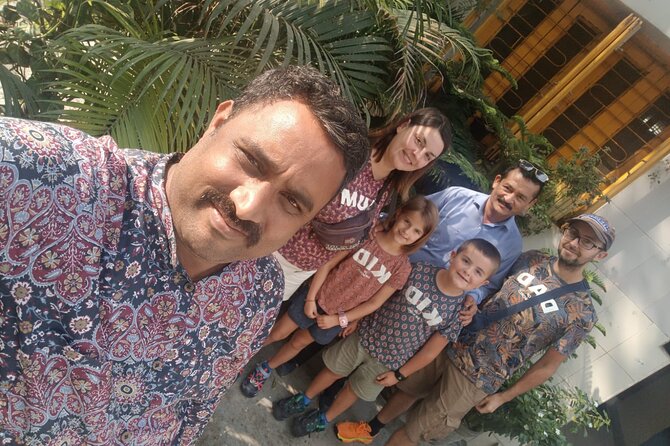
Also, the tone from driver notes is clear: the guides and drivers (including names like Kamal and Subhash) are described as professional and safe, and they don’t work on commissions. That’s the kind of reassurance that changes how you experience a day. You’re less likely to feel rushed into shops, and more likely to focus on the places in front of you.
Delhi, Agra and Jaipur: more full circuits



Getting In and Out: Delhi Airport Pickup That Sets the Tone
The tour starts back at Indira Gandhi International Airport in New Delhi, and pickup is offered. For a first-time trip to India, this is huge. You avoid the stress of arrival-day negotiating and you get straight into the rhythm of the itinerary.
It also helps that the tour says it runs daily (Monday–Sunday) with a broad window, so it’s designed for flexible planning around your travel days. If you’re arriving late or early, having pickup already built in reduces the “what do we do next?” feeling.
One practical tip: keep your essentials easy to reach (water, a light layer, sunglasses). You’ll have a long day at various points, and having everything on-hand makes the early starts much easier.
Day 1 in Delhi: UNESCO Hits Plus Old Delhi Flavor
Delhi on day one is a smart mix: major UNESCO landmarks, then classic Old Delhi atmosphere. The key is that you’re not just touring buildings—you’re seeing how different eras of power and culture share the same city.
Qutb Minar: The Tower You See Before You Understand It
Qutb Minar is a 73-metre tapering minaret with five storeys, part of the UNESCO Qutb complex. The scale is the wow factor. It’s also a great first stop because it “sets the language” of the trip—stepped forms, repeating arches, and the Mughal-era transition into earlier Sultanate architecture.
Admission is included, and the time block is about an hour, which is usually enough to walk around, take in the proportions, and still keep the day moving.
Humayun’s Tomb: Mughal Design with Persian Roots
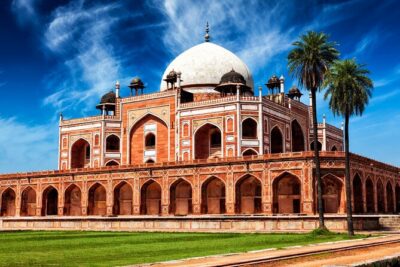
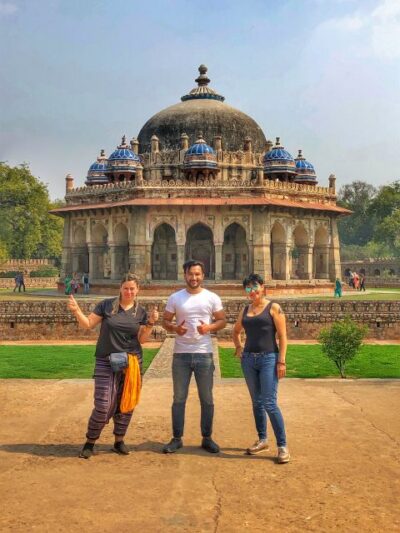
Humayun’s Tomb is the tomb of Mughal Emperor Humayun, commissioned in 1569–70 by Empress Bega Begum and designed by Mirak Mirza Ghiyas and his son Sayyid Muhammad. If you like architecture, this stop pays off because it’s not just pretty—it’s historically specific.
You get about an hour here with admission included. It’s also a good “slow down” moment after the first tall monument, since the garden layout and the symmetry make it easier to take photos without racing.
More private days with a guide of your own

Red Fort: Power at the Center of Delhi
The Red Fort was the main residence of Mughal emperors for nearly 200 years. It’s also now a museum area, so it’s not only about the walls—it’s about what those walls protected.
Your time is about an hour with admission included. One practical note: Red Fort can feel crowded during peak times, so arrive with a flexible plan in your head. If you want the best photos, you’ll likely spend a few extra minutes finding a calm angle.
Lotus Temple: A Different Kind of Quiet
The Lotus Temple is a Baháʼí House of Worship with a flowerlike shape, dedicated in December 1986. It’s open to everyone regardless of religion, which makes it a great reset stop.
You’ll have about 30 minutes here. It’s not the fastest stop to skip, because it breaks up the day’s heavier Mughal forts and mausoleums with a calmer atmosphere.
Jama Masjid and Chandni Chowk: Big Scale and Living Streets
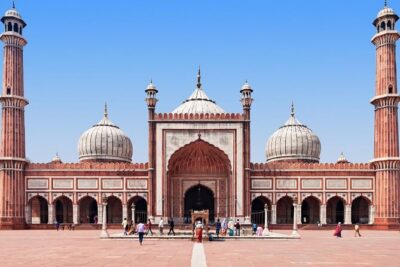
Jama Masjid (Masjid e Jahan Numa) is one of Delhi’s largest mosques. Then you slide into Chandni Chowk, with a short ride by rickshaw to enjoy Old Delhi life.
This is where the day turns from monuments to motion. Your time blocks are short here, so the goal is to soak up the vibe rather than try to see everything in detail. If you get overwhelmed by crowds, it helps to stick to your guide’s pace and pick a couple of “must-see” moments for photos.
India Gate and Parliament House: A Modern Layer on Top
India Gate is a war memorial on Rajpath, and Parliament House (Sansad Bhavan) is India’s legislative center. These stops are brief—about 15 minutes each—but they help you understand Delhi as both historic capital and modern government hub.
It’s also a practical way to end day one: you see a wide city view, then you get back to your hotel routine.
Day 2 Agra: Taj Mahal Sunset View and the “Baby Taj” Detour
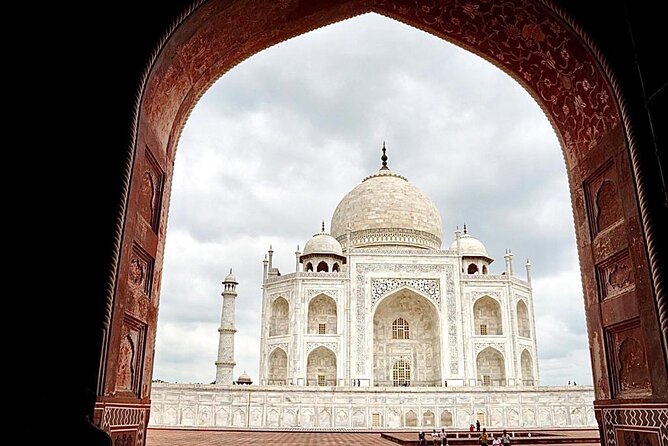
Day two is where the trip earns its title: Taj Mahal time. But this version doesn’t only do the obvious. It mixes a famous sunset view with a quieter Mughal mausoleum that many people skip.
Taj Mahal Sunset View Point: Less Crowd Stress, More Calm
Instead of only focusing on the main complex, the schedule includes the Taj Mahal Sunset View Point across the river. It’s described as one of the best places to see the Taj Mahal’s beauty away from the crowd during sunset.
You get about two hours here, and this is one of those moments where small choices matter. Watching the Taj change as the light shifts can feel more emotional than the “check-the-box” version of sightseeing.
Practical note: sunset can bring cooler air but also stronger demand for viewing space. If you want photos without constant interruptions, arrive with patience and keep moving slowly when instructed.
Itmad-ud-Daula: The “Jewel Box” Mausoleum
Then you move to Itmad-ud-Daula—the tomb of I’timād-ud-Daulah, often called the Baby Taj and described as a “jewel box.” It’s considered a kind of draft of the Taj Mahal.
You get about an hour, admission included, and then the day ends with an overnight hotel stay. This is a smart move for two reasons:
- You get to see Agra’s core sights without trying to cram everything in one hectic day
- You position yourself for the next day’s full Taj Mahal experience
Day 3 Agra to Jaipur: Taj Mahal by Day and Fort Views
Day three is another Taj day—this time with a full visit—then you move on to Jaipur.
Taj Mahal (Full Visit): White Marble and Mausoleum Details
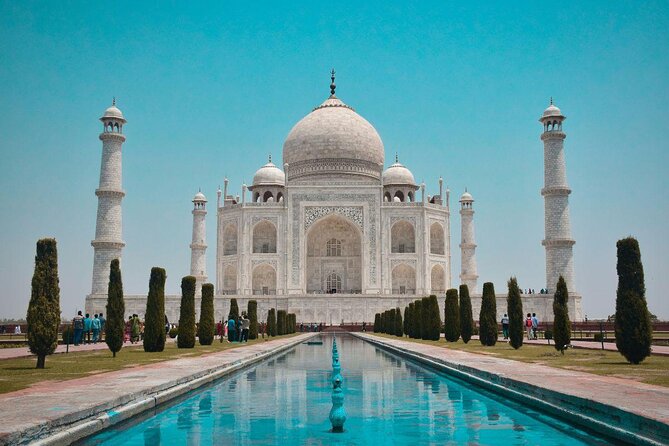
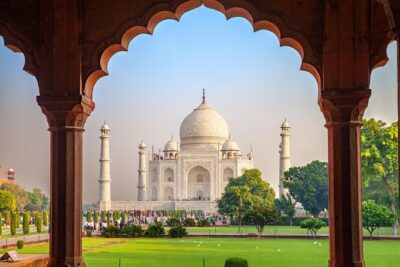
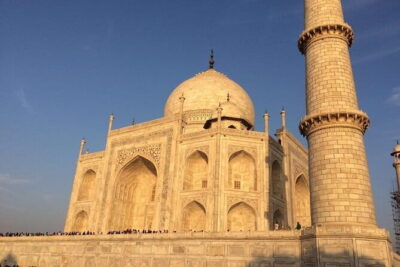
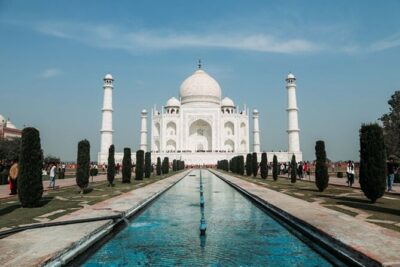
The Taj Mahal is described as an ivory-white marble mausoleum on the south bank of the Yamuna. It was commissioned in 1632 by Emperor Shah Jahan for Mumtaz Mahal, and it also houses Shah Jahan’s tomb.
You’ll have around two hours with admission included. That time is about right: enough to appreciate the symmetry, look at the grounds, and spend time on the key angles people remember.
One reality check: Taj Mahal days can be mentally tiring. It’s not just the beauty—it’s the scale and the number of photo opportunities fighting for your attention. I suggest setting a simple goal: pick one or two viewpoints you want to revisit, then wander without rushing.
Agra Fort: Mughal Power in Stone
Next is Agra Fort, described as a historical fort and the main residence of Mughal emperors until 1638, when the capital shifted to Delhi. Before British capture, it was occupied by the Marathas.
You get about an hour here. This stop gives your trip a different angle from the Taj: less romance, more fortification, more sense of defense and administration.
Transfer to Jaipur: Hotel Check-In Right After Sight Time
After Agra Fort, you continue to Jaipur and check in at the hotel upon arrival. This matters because it removes the “drive then figure out where we sleep” problem.
If you’re traveling with kids or older family members, this type of structure tends to keep everyone calmer. Your day isn’t a long line of transitions.
Day 3 Stepwell Stop Near Abhaneri: Simple Architecture, Big Personality
One of the most interesting additions in the schedule is Chand Baori, a stepwell in Abhaneri, Rajasthan. You get about an hour, admission included.
Stepwells are more than pretty geometry. They’re functional structures designed to collect and cool water, and that makes them a nice change from forts and palaces. The stair patterns also make for great photos, and walking down some of the steps can feel like you’re stepping into a different world of light and shade.
Day 4 Jaipur: Step Wells, Water Views, Astronomy, and Palaces
Day four layers Jaipur landmarks with two stepwell-style stops and some iconic views. It’s a day for people who like variety: architecture, science-themed monuments, and royal structures in one route.
Panna Meena ka Kund: Symmetry and Rainwater Catchment
Panna Meena ka Kund is described as a historic stepwell and rainwater catchment known for symmetrical stairways. Your time is short—about 15 minutes—so use it for photos and a quick sense of scale.
This is the kind of stop that’s easy to overrun if you treat it like a “main event.” Better approach: treat it like a visual intermission, then carry that energy into the next place.
Jal Mahal: A Palace Floating on the Lake
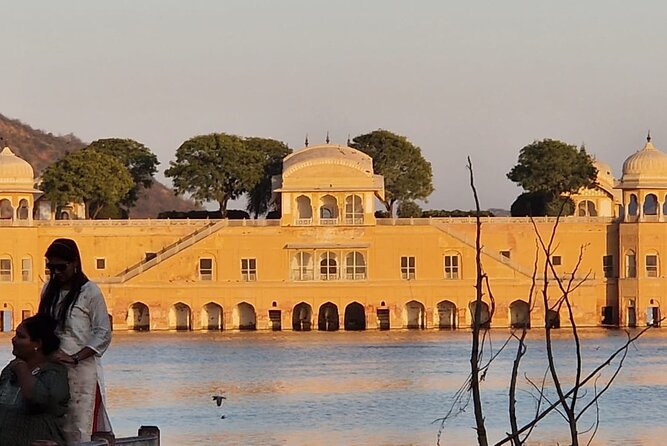
Jal Mahal is a palace in the middle of Man Sagar Lake. It was renovated and enlarged in the 18th century by Maharaja Jai Singh II of Amber.
Your stop is only about 15 minutes, so don’t expect long museum-style exploration. What you’re really there for is the lake-and-palace effect—seeing royal architecture framed by water rather than walls.
Jantar Mantar Jaipur: Astronomical Instruments Built in 1734
Then comes Jantar Mantar, described as nineteen astronomical instruments built by Sawai Jai Singh II, and completed in 1734.
This is one of those places where a good guide helps a lot. Even if you’re not a science nerd, you can still appreciate the idea: a city designed with tools for measuring the sky. You get about an hour, which is enough time to understand the main instruments without turning it into homework.
City Palace: Royal Center and Political Memory
City Palace in Jaipur was established by Maharaja Sawai Jai Singh II when he moved his court to Jaipur from Amber in 1727.
You get about an hour with admission included. City Palace is less about one single photo and more about walking through how the palace connects to the rest of the city’s design. It’s also a good stop to take breaks, because you’ll likely be standing and walking through courtyard-to-courtyard spaces.
Hawa Mahal: The Wind Palace in Red and Pink Sandstone
Finally, Hawa Mahal—the Palace of Wind—is built from red and pink sandstone and sits at the edge of City Palace. The description notes it extends to the zenana, or women’s chambers.
Your time is about 30 minutes. That’s enough to see why people love it: the facade pattern and the idea that it was designed so women could observe street life from within.
Day 5 Back to Delhi: A Simple Finish
On day five, after breakfast, you’ll make the approximately five-hour journey back to Delhi, or you can be dropped at Jaipur airport.
That’s a practical ending. You avoid a late-day scramble in a new city, and you start your travel day with less stress.
Who This Tour Fits Best (And Who Might Want Something Different)
This tour is a strong match if you want:
- Private, guided sightseeing across Delhi, Agra, and Jaipur
- Major UNESCO sites and big-name monuments without doing all the planning
- Comfortable transport with A/C, Wi‑Fi, and bottled water included
- A driver-guide approach that’s described as professional, safe, and not commission-driven
It may be less ideal if:
- You hate long driving days and early starts
- You want lots of free time to wander without structure (this route is scheduled around key stops and admissions)
Value Check: Is $430 Per Person Fair for What’s Included?
For many people, the biggest “value question” is whether you’re paying for the right things.
Here, your money clearly covers:
- Private transportation with an A/C vehicle and fuel/parking fees
- Hotel with dinner and breakfast (included)
- Guide
- Entrance fees for monuments
- Extra comfort items like Wi‑Fi and water bottles in the car (kept cool)
Not included items are mostly what you’d expect on a multi-day tour: flights, lunch, and tips. So the deal is that you get a lot of the “hard logistics” handled, and you only need to budget for your flexible meal choices.
If you’re traveling with family, or you want your trip to feel more like a guided experience than a backpacking route, the structure can feel worth it quickly.
Should You Book This 5-Day Private Golden Triangle Tour?
If you want a Golden Triangle trip that feels controlled and comfortable, I’d say yes, consider booking. The combination of private A/C car, entrance fees included, guide support, and a driver noted as safe and professional is exactly what makes multi-city touring easier.
I’d especially book it if Taj Mahal and the core UNESCO Delhi sights are your priorities, and if you value a route with fewer surprises. Just go in knowing you’ll spend meaningful time in the car—and plan to treat day starts and driving time as part of the experience.
FAQ
What is the duration of the tour?
The tour runs for 5 days (about 4 nights) covering Delhi, Agra, and Jaipur.
Where does the tour start and end?
It starts at Indira Gandhi International Airport, New Delhi and ends back at the meeting point (the airport area in Delhi). On the final day, you can also be dropped at Jaipur airport.
Is pickup from the airport included?
Yes. Pickup is offered, and the meeting point is at Indira Gandhi International Airport.
What’s included in the price?
Included items are hotel with dinner and breakfast, a guide, entrance fees for monuments, private transportation in an air-conditioned vehicle, parking and fuel charges, Wi‑Fi on board, and water bottles inside the car.
What is not included?
Flights, lunch, tips for the driver, tips for the guide, and drinks are not included.
Does the tour include admission tickets for the sights?
Yes. Admission tickets for the listed monuments are included.
What is the cancellation deadline for a full refund?
You can cancel up to 24 hours in advance for a full refund.
More Tours in New Delhi
- Old & New Delhi City Tour – Half or Full Day Options Available
★ 5.0 · 4,811 reviews - Half Day Private Delhi City Tour
★ 5.0 · 4,474 reviews - Same Day Taj Mahal, Agra Fort & Baby Taj Tour from Delhi by Car
★ 5.0 · 4,304 reviews - Taj Mahal Day Tour from Delhi by Superfast Train – TOP RATED TOUR
★ 5.0 · 4,166 reviews - Delhi: Old and New Delhi Private Full or Half-Day Tour
★ 4.9 · 3,776 reviews
More Tour Reviews in New Delhi
- Old & New Delhi City Tour – Half or Full Day Options Available
★ 5.0 · 4,811 reviews - Half Day Private Delhi City Tour
★ 5.0 · 4,474 reviews - Same Day Taj Mahal, Agra Fort & Baby Taj Tour from Delhi by Car
★ 5.0 · 4,304 reviews - Taj Mahal Day Tour from Delhi by Superfast Train – TOP RATED TOUR
★ 5.0 · 4,166 reviews - Delhi: Old and New Delhi Private Full or Half-Day Tour
★ 4.9 · 3,776 reviews
The Full Golden Triangle, More Options
- 3-Days Private Golden Triangle Tour: Delhi, Agra & Jaipur by Car
★ 5.0 · 1,107 reviews - 3-Days Private Golden Triangle Tour: Delhi, Agra & Jaipur by Car
★ 5.0 · 1,098 reviews - 3-Day Delhi, Agra and Jaipur Private Tour – India Golden Triangle
★ 5.0 · 812 reviews - Four-Day Private Luxury Golden Triangle Tour to Agra and Jaipur From New Delhi
★ 5.0 · 807 reviews - 5 Nights 6 Days Private Golden Triangle Tour – Delhi Agra Jaipur
★ 5.0 · 574 reviews
Just added: more New Delhi reviews to browse
- 4 days Golden Triangle Tour★ 5.0 · 3 reviews
- Discover Old & New Delhi: Private Tour with Street Food★ 5.0 · 3 reviews
- Taj Mahal Tour From Delhi By Private Car★ 4.5 · 3 reviews
- Golden Triangle Tour 5 Days★ 5.0 · 3 reviews
- Taj Mahal: Express Entry Ticket For Sunset Tour with guide★ 5.0 · 3 reviews
- Agra Taj Mahal Sunrise & Sunset Tour from Delhi★ 5.0 · 3 reviews
Golden Triangle Tours, compared.
 ★ 5.03-Days Private Golden Triangle Tour: Delhi, Agra & Jaipur by CarFrom $1271,107 reviews
★ 5.03-Days Private Golden Triangle Tour: Delhi, Agra & Jaipur by CarFrom $1271,098 reviews
 ★ 5.03-Day Delhi, Agra and Jaipur Private Tour – India Golden TriangleFrom $110812 reviews
 ★ 5.0Four-Day Private Luxury Golden Triangle Tour to Agra and Jaipur From New DelhiFrom $160807 reviews
 ★ 5.05 Nights 6 Days Private Golden Triangle Tour – Delhi Agra JaipurFrom $240574 reviews
 ★ 5.04 Days Golden Triangle TourFrom $146499 reviews
 ★ 5.0Private Car and Drive for Golden Triangle (4N/5D)From $167451 reviews
 ★ 5.0Private Golden Triangle Tour Delhi Agra Jaipur ( Top Rated )From $148436 reviews