
Reviewed · GOLDEN TRIANGLE TOURS
6 Days: Golden Triangle With Ranthambore Tour With 5 Star Hotels
A whirlwind route is the point here, and it works. You get private air-conditioned transport with a driver and a plan that hits Delhi, Jaipur, Ranthambore, and Agra without you doing the logistics math. I also like the built-in tiger day in Ranthambore, plus guided time at the big UNESCO stops so you’re not just staring at stone and hoping it makes sense.
The main thing to watch is cost creep. Several major sights list admission as not included, and only the 5-star option includes monument entry fees, while lunches generally aren’t part of the deal.
In This Review
- Key points before you go
- Price and logistics: what $387 buys you (and what it doesn’t)
- Day 1 in Delhi: Red Fort, Jama Masjid, Qutub Minar, Humayun’s Tomb
- Jaipur Day 2: Albert Hall Museum, Birla Mandir, Patrika Gate
- Jaipur Day 3: Amber Fort, City Palace, Jantar Mantar, Hawa Mahal
- Ranthambore National Park: a shared safari built around tiger odds
- Agra and Fatehpur Sikri: Taj Mahal plus the bigger story around it
- Hotels, meals, and guides: where the tour feels most like value
- Who should book this Golden Triangle + Ranthambore tour?
- Should you book it?
- FAQ
- What’s included in the tour price?
- Are monument entry tickets included?
- What hotel standards are offered?
- Is transportation private?
- Is there a safari in Ranthambore?
- How much time do I have to cancel for a full refund?
Key points before you go
- Private AC vehicle + driver: you travel between cities with less stress and more time at the sights
- Guides in key cities: Delhi, Jaipur, Fatehpur Sikri, and Agra each come with local guidance
- Ranthambore safari focus: the day is structured around tiger and wildlife-spotting in the park
- Two hotel tiers change your totals: the 5-star option adds monument entry fees
- Meal planning is partial: breakfast is daily; you get dinner(s), but lunch isn’t consistently included
- Flexible pacing with your guide: guides are set up to explain options so you can prioritize what matters most to you
Price and logistics: what $387 buys you (and what it doesn’t)
At $387 per person for about 6 days, this tour is priced like a “do-it-for-me” package. You’re not just paying for transport—you’re paying for a tight route design, private car time, local guides for major stretches, and hotel stays (5 nights) with breakfast. That’s what makes it feel efficient, especially if you’re short on time or you’d rather spend energy on the sights than on figuring out the next bus, taxi stand, and check-in.
You should also understand the boundary lines. Monument entry fees aren’t automatically included for every stop. The itinerary notes admission as not included for places like the Red Fort, Jama Masjid, Qutub Minar, Humayun’s Tomb, and the Taj Mahal (unless you select the higher-tier option that includes monument entry fees). Lunch isn’t listed as included either, so you’ll want to budget for midday meals as you go.
One practical perk that matters more than it sounds: pickup is offered, and you’ll receive a mobile ticket. That cuts down on last-minute paperwork and makes it easier to move through the early parts of each day smoothly.
Delhi, Agra and Jaipur: more full circuits



Day 1 in Delhi: Red Fort, Jama Masjid, Qutub Minar, Humayun’s Tomb
Day 1 is a classic Old Delhi meets Mughal-era landmarks mash-up. You start at the Red Fort (Lal Qila), a Mughal seat of power built in the 1600s, commissioned by Shah Jahan when he shifted the capital from Agra to Delhi. Then it’s over to Jama Masjid, one of the largest mosques in India, built by Shah Jahan and inaugurated in the mid-1600s.
From there, you pivot south to Qutub Minar, a UNESCO World Heritage site and the striking minaret/victory tower that sits within the Qutb complex. The stop at Humayun’s Tomb follows, another Mughal landmark with a design credited to Persian architects chosen by Empress Bega Begum.
What I like about this first day is the variety of “why these places matter.” You’re not stuck in one neighborhood theme. You also get to see how Mughal power showed up in monumental architecture—fortress, mosque, minaret, and royal tomb—without having to research each site on your own.
The drawback is time pressure. Most of these stops are listed at about 30 minutes each. If you like wandering slowly, snapping photos, or reading interpretive plaques cover-to-cover, you’ll feel the pace. The fix is simple: wear comfortable shoes, keep your water handy, and ask your guide what’s most worth your time inside each complex.
Jaipur Day 2: Albert Hall Museum, Birla Mandir, Patrika Gate
Jaipur Day 2 is set up like a warm-up. You begin with Albert Hall Museum, the state’s oldest museum, set in Ram Niwas Garden outside the city wall. This is one of the places where the architecture does half the storytelling: the Indo-Saracenic style building is a major part of the experience, even if you don’t go deep into museum collections.
Next is Birla Mandir, a Hindu temple built of white marble and supported by the B.M. Birla Foundation. It’s listed as free, with a shorter visit window, which makes it an easy stop after the museum. Then comes Patrika Gate, the entrance to Jawahar Circle Park—more modern in tone, but still useful if you want a break from the “fort-and-palace only” rhythm.
What you’ll likely appreciate here is balance. You’re getting cultural context (museum + temple) and then a public-space vibe (Patrika Gate and the park entrance) without committing the whole day to ticket-heavy sites.
Jaipur Day 3: Amber Fort, City Palace, Jantar Mantar, Hawa Mahal
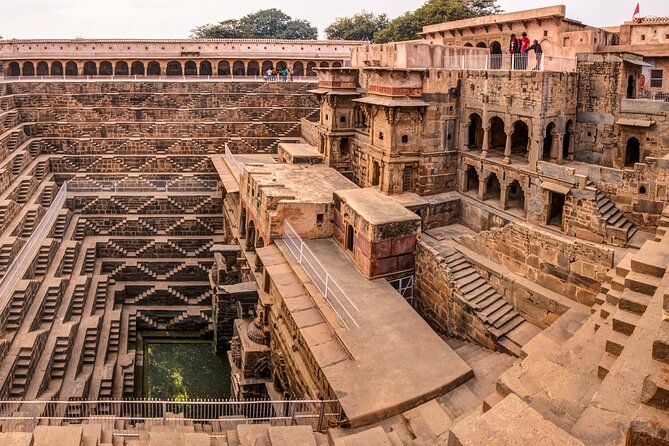
Day 3 is your big Jaipur monuments day. You’ll start at Amber Fort (Amer Fort). It’s associated with Raja Man Singh and later additions by Sawai Jai Singh, and it’s one of those places where you feel the scale even during a shorter visit. The tour also includes a stop at Jal Mahal—described as a palace in the middle of Man Sagar Lake. Even if you keep your time brief, it’s a memorable sight because it looks like a floating fort when light and weather cooperate.
Then you head to City Palace of Jaipur, established when Jaipur became the seat of power. After that is Jantar Mantar, a UNESCO World Heritage site featuring large astronomical instruments built under Sawai Jai Singh II. One highlight people tend to remember is the world’s largest stone sundial, and it’s the kind of stop where a guide can make the science feel practical instead of abstract.
You end with Hawa Mahal, the iconic red and pink sandstone façade built on the edge of City Palace. It’s often more satisfying when you can place it within the layout of the old city—this route helps you do that without you mapping everything yourself.
The practical consideration: multiple stops are listed with relatively tight time blocks (often under an hour). If you want deeper time inside Amber Fort or City Palace, prioritize one and treat the others like “see it, understand it, move on.” That’s also where having a guide can help, since a good guide can point you toward the sections that deliver the most meaning in the time you have.
Ranthambore National Park: a shared safari built around tiger odds
This is the day the whole tour title is trying to deliver: wildlife. Ranthambore National Park is described as a former royal hunting ground, now a wildlife reserve with Bengal tigers, leopards, and marsh crocodiles. You also have standout landmarks within the park, including the Ranthambore Fort on a hilltop and the Ganesh Mandir temple. Padam Talao Lake is noted for water lilies, another visual clue for where animals may gather.
A key detail for planning expectations: the tour includes sharing safari with the hotel options. That means you’re not guaranteed a private vehicle experience for the safari portion. For many people, that’s totally fine. Wildlife watching is a group game—your best tool is patience, not control. But if you strongly prefer quiet, private wildlife time, know that this format may not match your style.
What I like about this setup is that the day is anchored around the park itself rather than turning it into a rushed “look at the gate and leave.” You’re given about 3 hours for the Ranthambore National Park portion, and the route description emphasizes the park’s defining features.
What you might consider: tiger spotting is never guaranteed. The tour can’t manufacture tiger sightings, but it is designed around putting you in the right place with the right focus—an experienced approach to maximizing your chances rather than selling certainty.
More tiger country trips beyond the capital


Agra and Fatehpur Sikri: Taj Mahal plus the bigger story around it
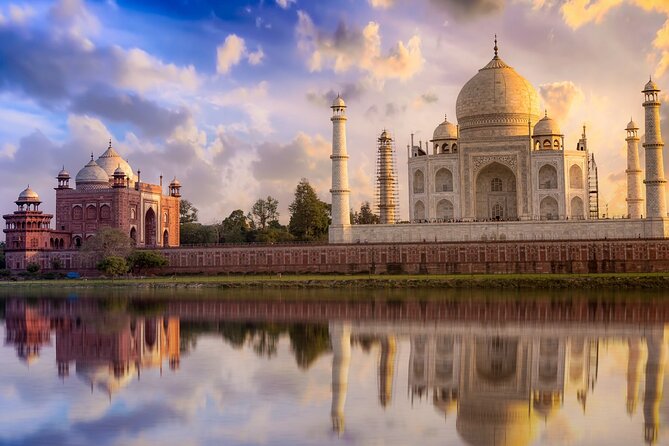
Agra Day 5 is structured to give Taj Mahal context. You begin with Fatehpur Sikri, a city founded by a 16th-century Mughal emperor, with red sandstone buildings clustered around the center. You’ll see the Buland Darwaza gate, the Jama Masjid mosque area, the marble Tomb of Salim Chishti, and the Diwan-E-Khas hall with a carved central pillar. Nearby you also have Jodha Bai Palace, described as a mix of Hindu and Mughal styles, plus the Panch Mahal with multiple levels overlooking the site.
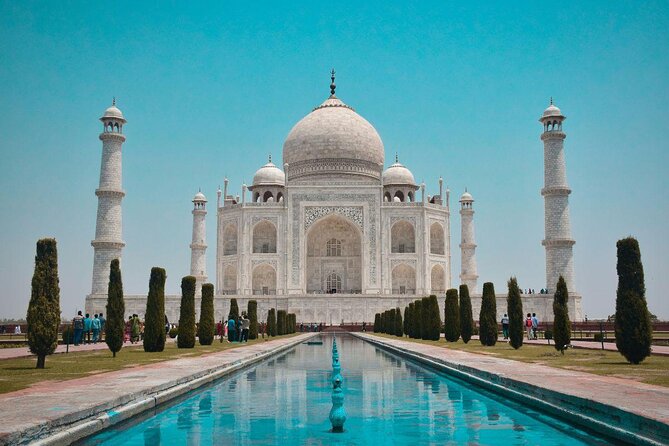
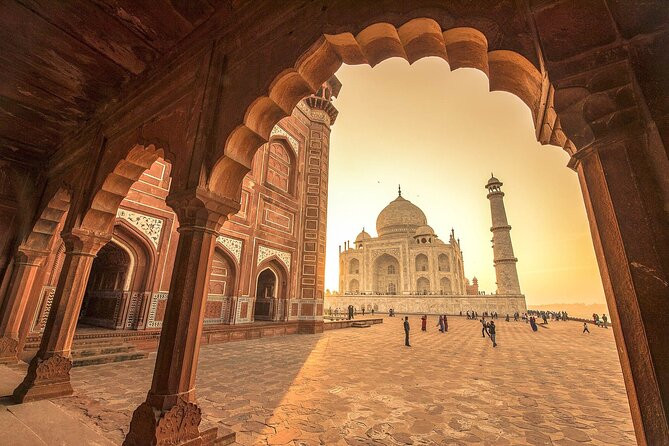
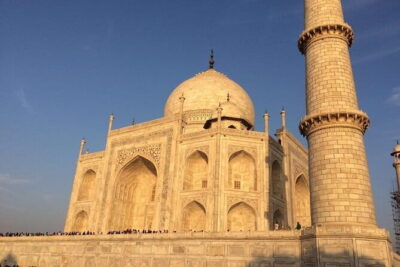
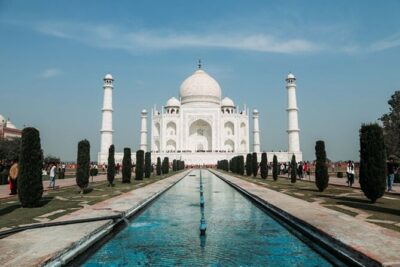
Then it’s on to the Taj Mahal, the ivory-white marble mausoleum commissioned in the 1600s by Shah Jahan for Mumtaz Mahal, and also housing Shah Jahan himself. Agra Fort rounds out the day, built for Akbar in the late 1500s and serving as a residence for later rulers too.
This combination is smart because it prevents the Taj Mahal from becoming a one-stop photo mission. Fatehpur Sikri helps you see the larger Mughal building program and the way power and belief shaped city planning. Agra Fort then adds the “fortress and authority” layer back into the story.
Two timing notes to keep your expectations honest. Taj Mahal is listed for about 1 hour 30 minutes, while Agra Fort is shorter (about 40 minutes). Also, Taj Mahal admission is listed as not included unless you choose the 5-star tier that includes monument entry fees. So if you choose the lower hotel option, you should plan on paying for major entries.
Hotels, meals, and guides: where the tour feels most like value
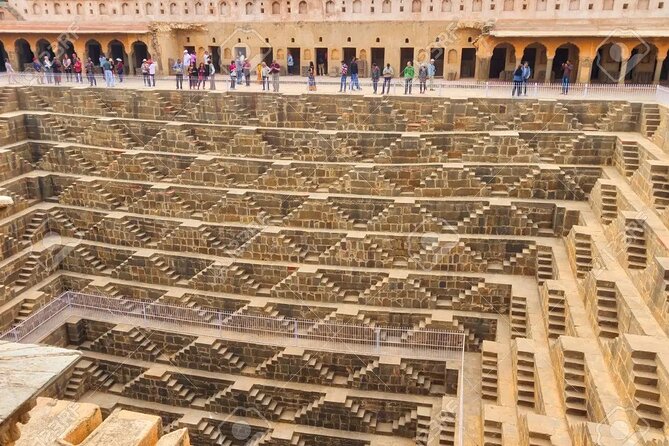
The “5-nights accommodation with breakfast” part is where this tour starts to feel like a real convenience. You’re not stacking multiple hotel searches while also trying to keep sightseeing moving. If you select 5-star, you also get monument entry fees included, which can offset a big chunk of the cash you’d otherwise spend at ticket counters.
Food is partly covered. You’ll have daily breakfasts, plus one dinner with a traditional Indian family in Jaipur. There’s also one dinner at the hotel in Ranthambore. Lunch isn’t listed consistently, so you’ll want to accept that you’ll make a few choices on your own—casual spots near your route, simple café meals, or hotel meals if timing works.
The guide plan matters too. The format is designed around local guidance in Delhi, Jaipur, Fatehpur Sikri, and Agra, and it’s built so you can adjust priorities. A good guide helps you choose what to enter versus what to see from outside, and they can also compress complex stories into something you can actually remember.
If you’re the kind of traveler who likes your day to run smoothly—transport waiting, someone explaining what you’re looking at, and hotel nights already handled—this tour’s structure is a strong fit.
Who should book this Golden Triangle + Ranthambore tour?
This is a great match if you:
- want the Golden Triangle highlights plus Ranthambore in one organized plan
- have limited time and don’t want to plan trains, drivers, and hotel moves
- like guided context at major monuments
- are okay with tight sight windows and a busy schedule
It may not be the best fit if you:
- want lots of free time at each monument without time limits
- need fully included lunches every day
- prefer a private safari vehicle (this tour specifies a shared safari format)
If your travel style is more “slow and deep,” you might still enjoy the tour, but you’d need to be intentional about which sites you treat as must-enter experiences.
Should you book it?
I’d book this if you want a well-structured way to see Delhi, Jaipur, Agra, and Ranthambore without turning your trip into a spreadsheet. The value is strongest when you pick the tier that includes monument entry fees, since several top stops have admissions called out as not included otherwise.
If you do book, do two things to make it land well: budget for lunches and possible ticket gaps (especially for Taj Mahal and other major monuments if you’re not on the 5-star entry-fee option), and tell your guide what you care about most so your short time inside each site isn’t wasted.
FAQ
What’s included in the tour price?
The tour includes 5 nights of accommodation with breakfast, a private AC vehicle with an experienced driver, local guides in Delhi, Jaipur, Fatehpur Sikri, and Agra, and dinner(s) as listed (including one traditional family dinner in Jaipur and one dinner at the hotel in Ranthambore). It also includes one dinner and meals as per the itinerary, plus a monument entry fee only with the 5-star option.
Are monument entry tickets included?
Not for every site. The itinerary lists admission as not included for several monuments (like the Red Fort and the Taj Mahal). The included section notes that monument entry fees are included only with the 5-star option.
What hotel standards are offered?
You can choose 4-star or 5-star hotels. The tour states the accommodation will be 4-star or 5-star depending on the option selected.
Is transportation private?
Yes. The tour includes transportation in a private air-conditioned vehicle with a driver.
Is there a safari in Ranthambore?
Yes. The tour includes a sharing safari (noted as only with the hotel options) as part of the Ranthambore experience.
How much time do I have to cancel for a full refund?
You can cancel up to 6 days in advance for a full refund, as long as you cancel at least 6 full days before the experience’s start time.
More Tour Reviews in New Delhi
- Old & New Delhi City Tour – Half or Full Day Options Available
★ 5.0 · 4,811 reviews - Half Day Private Delhi City Tour
★ 5.0 · 4,474 reviews - Same Day Taj Mahal, Agra Fort & Baby Taj Tour from Delhi by Car
★ 5.0 · 4,304 reviews - Taj Mahal Day Tour from Delhi by Superfast Train – TOP RATED TOUR
★ 5.0 · 4,166 reviews - Delhi: Old and New Delhi Private Full or Half-Day Tour
★ 4.9 · 3,776 reviews
Tiger Country: More Ranthambore Trips
- Private 4-Day Golden Triangle Tour with Ranthambore Tiger Safari
★ 5.0 · 248 reviews - Golden Triangle & Ranthambore: 4-Day Private Tour from Delhi
★ 5.0 · 224 reviews - Private 5-Day Ranthambhore Tiger Tour from Delhi including the Taj Mahal, Agra and Jaipur
★ 5.0 · 197 reviews - From Delhi: 4-Day Golden Triangle & Ranthambore Guided Tour
★ 4.7 · 121 reviews - 4 Day Golden Triangle with Ranthambore Tiger Safari Tour from Delhi
★ 5.0 · 110 reviews
The Full Golden Triangle, More Options
- 3-Days Private Golden Triangle Tour: Delhi, Agra & Jaipur by Car
★ 5.0 · 1,107 reviews - 3-Days Private Golden Triangle Tour: Delhi, Agra & Jaipur by Car
★ 5.0 · 1,098 reviews - 3-Day Delhi, Agra and Jaipur Private Tour – India Golden Triangle
★ 5.0 · 812 reviews - Four-Day Private Luxury Golden Triangle Tour to Agra and Jaipur From New Delhi
★ 5.0 · 807 reviews - 5 Nights 6 Days Private Golden Triangle Tour – Delhi Agra Jaipur
★ 5.0 · 574 reviews
Just added: more New Delhi reviews to browse
- 4 days Golden Triangle Tour★ 5.0 · 3 reviews
- Discover Old & New Delhi: Private Tour with Street Food★ 5.0 · 3 reviews
- Taj Mahal Tour From Delhi By Private Car★ 4.5 · 3 reviews
- Golden Triangle Tour 5 Days★ 5.0 · 3 reviews
- Taj Mahal: Express Entry Ticket For Sunset Tour with guide★ 5.0 · 3 reviews
- Agra Taj Mahal Sunrise & Sunset Tour from Delhi★ 5.0 · 3 reviews
Golden Triangle Tours, compared.
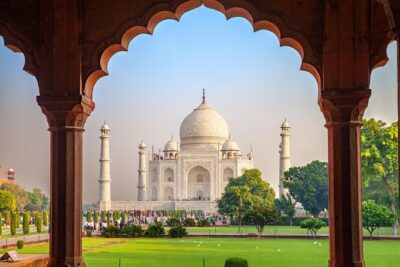 ★ 5.03-Days Private Golden Triangle Tour: Delhi, Agra & Jaipur by CarFrom $1271,107 reviews
★ 5.03-Days Private Golden Triangle Tour: Delhi, Agra & Jaipur by CarFrom $1271,098 reviews
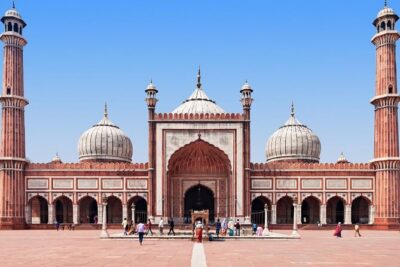 ★ 5.03-Day Delhi, Agra and Jaipur Private Tour – India Golden TriangleFrom $110812 reviews
 ★ 5.0Four-Day Private Luxury Golden Triangle Tour to Agra and Jaipur From New DelhiFrom $160807 reviews
 ★ 5.05 Nights 6 Days Private Golden Triangle Tour – Delhi Agra JaipurFrom $240574 reviews
 ★ 5.04 Days Golden Triangle TourFrom $146499 reviews
 ★ 5.0Private Car and Drive for Golden Triangle (4N/5D)From $167451 reviews
 ★ 5.0Private Golden Triangle Tour Delhi Agra Jaipur ( Top Rated )From $148436 reviews
Browse the lists this tour appears in