
Reviewed · GOLDEN TRIANGLE TOURS
7 Day Golden Triangle Tour With Holi Colour Festival 4 March 2026
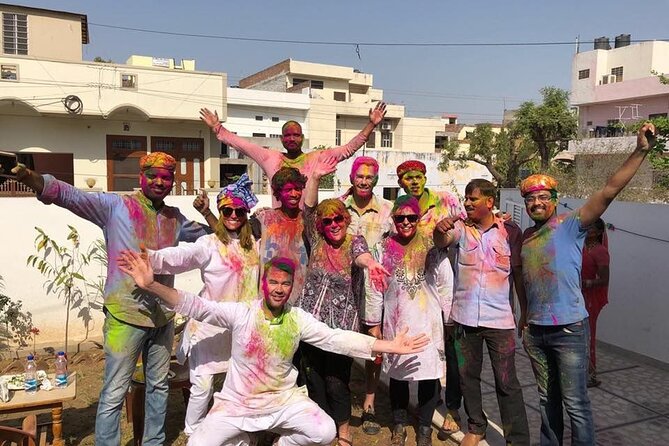
Holi hits differently when it’s built into a Golden Triangle route. This 7-day plan strings together Delhi’s big landmarks, Agra’s major Mughal stops, and Jaipur’s temple-and-street Holi moments, all with private transport and local guiding. I especially love how the schedule mixes signature sights with real-life experiences, like Holika Dahan in Jaipur and color play with local people around Govind Dev Ji–style celebrations. One heads-up: Holi means you should expect mess and staining risks, so plan your outfits and camera handling carefully.
The value here is that you’re not just ticking monuments. You’re moving with a driver, seeing Old Delhi and New Delhi in the same trip, and getting at least one Taj Mahal viewing timed for sunset and another for sunrise. If you’re sensitive to crowds, noise, or spending extra time on your feet, this itinerary is best when you’re ready to stay active.
In This Review
- Key highlights to know before you go
- Golden Triangle with Holi in the same week: what March 4, 2026 means
- Entering New Delhi: Bangla Sahib, Qutub Minar, Lotus Temple, and Old Delhi
- Gurudwara Bangla Sahib and Agrasen Ki Baoli
- Qutub Minar, Lotus Temple, and the feel of modern Delhi
- Jama Masjid, Humayun’s Tomb, and Chandni Chowk
- Agra Fort, Itmad-ud-Daula, Mehtab Bagh, and Taj Mahal in two light moods
- Agra Fort and Itmad-ud-Daula: the Mughal depth charge
- Taj Mahal at sunset view point—and later at sunrise
- Fatehpur Sikri and Chand Baori: stepwells and a “city of victory” stop
- Jaipur arrival and Holika Dahan: the night the colors start
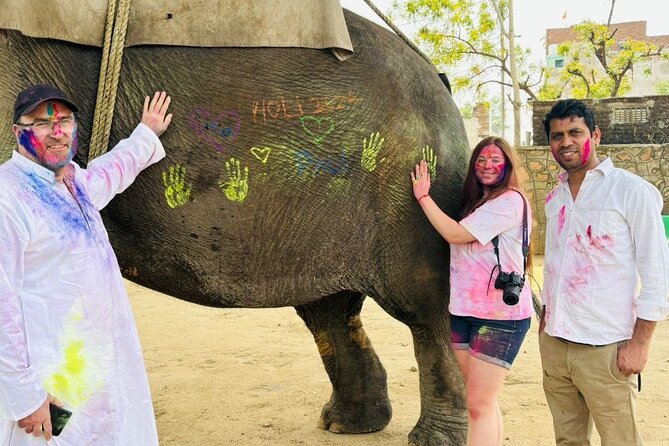
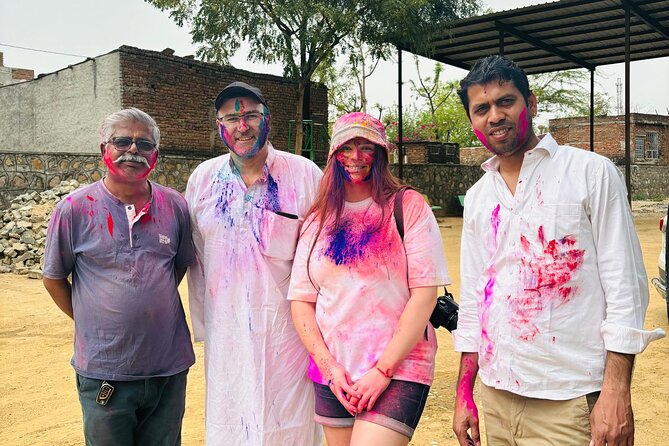
- Holi with color throwing in Pink City Jaipur: what to expect on the main day
- Jaipur monument day 6: stepwell, fort, Jal Mahal photos, Jantar Mantar, Hawa Mahal, and City Palace
- Galtaji Monkey Temple and Birla Mandir: a calmer end before the drive back to Delhi
- Price and logistics: is $335.72 actually good value?
- Who this tour suits best (and who should rethink it)
- Should you book this March Holi Golden Triangle tour?
- FAQ
- Where does the tour start and where do I get dropped off?
- Is this tour private?
- How long is the tour and which cities are included?
- Are hotels and breakfast included?
- Are monument entrance fees included?
- What transport is provided during the trip?
- Is the Holi festival part of the itinerary?
- What is the cancellation policy?
Key highlights to know before you go

- Private, air-conditioned vehicle with a driver plus hotel or airport pickup and drop-off
- Holi in Jaipur with temple and local participation, including Holika Dahan at night
- Agra photo timing: Taj Mahal sunset view point (across the river) and Taj Mahal sunrise later
- Delhi Old + New mix: Jama Masjid and Chandni Chowk alongside Qutub Minar, Lotus Temple, and Humayun’s Tomb
- Big-ticket culture stops: Jantar Mantar, Hawa Mahal, City Palace area, and stepwells like Agrasen Ki Baoli and Chand Baori
Golden Triangle with Holi in the same week: what March 4, 2026 means

This tour is the classic Delhi–Agra–Jaipur loop, but with a major twist: it’s designed around Holi season in Jaipur. The dates are set for March 4, 2026, and the plan layers Holi events across two days—starting with the evening of Holika Dahan when you arrive in Jaipur, then continuing with a full Holi day the next day.
Why it works for you: you get the “India monuments” part and the “India people” part. Holi isn’t just a photo stop here. The itinerary describes Holika Dahan, cultural events, street parties, traditional music, and color throwing. That social side is also what you’ll want to plan for, because it affects what you wear, what you carry, and how much time you’ll spend moving around.
Delhi, Agra and Jaipur: more full circuits



Entering New Delhi: Bangla Sahib, Qutub Minar, Lotus Temple, and Old Delhi
Day 1 and Day 2 focus on getting your bearings fast—spiritual Delhi, monumental Delhi, and then the Old Delhi chaos you came for.
Gurudwara Bangla Sahib and Agrasen Ki Baoli
You start at Gurudwara Bangla Sahib, where you’ll spend about 30 minutes. The site has a clear story: in the 1600s, an eighth Sikh Guru is said to have helped people during outbreaks by distributing water from the tank. Whether you’re religious or not, that mix of faith, history, and daily life tends to land well because you’re seeing a living place, not a museum.
Next is Agrasen Ki Baoli, the stepwell. It’s protected as a monument, and it’s known for its long, structured descent (about 60 meters by the description). Stepwells are one of those architectural “wait, really?” things—part water storage, part community space, part skyline feature.
Practical thought: stepwells are cool to see, but they can also feel slippery or uneven depending on surface conditions. Wear shoes you trust.
Qutub Minar, Lotus Temple, and the feel of modern Delhi
On Day 2 you hit Qutub Minar (about a 1-hour stop). It’s listed as a UNESCO World Heritage site, and the tower’s height and layered design are the point—constructed in the late 1100s by Qutub-ud-din Aibak’s line, and inspired by earlier minaret styles.
Then comes Lotus Temple, built in 1986 and open to everyone regardless of religion. It’s a nice contrast after older stone architecture: modern, symbolic, and calm on the outside even when the city is busy.
You also pass or stop briefly at India Gate (a short stop) and Parliament House (Sansad Bhavan), where the building’s circular concept is described as echoing the Ashoka Chakra.
Jama Masjid, Humayun’s Tomb, and Chandni Chowk
The Old Delhi section is Jama Masjid first, then Humayun’s Tomb, then Chandni Chowk.
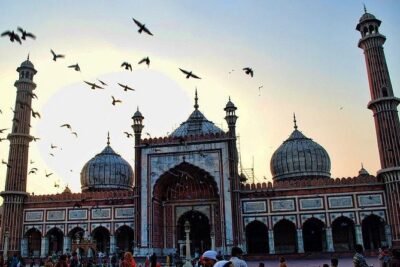
- Jama Masjid is one of the Mughal-era anchor sites. The description says it was built between 1650 and 1656 under Shah Jahan.
- Humayun’s Tomb is about 1558 and is the Mughal emperor’s tomb, commissioned by Empress Bega Begum.
- Chandni Chowk is where the tour becomes less about monuments and more about city rhythm. You’ll spend about an hour here in the market lanes described for spices, dried fruit, jewelry, and everyday shops.
If you want an easy approach: treat Chandni Chowk like a tasting walk, not a shopping spree. Look, sample if you’re comfortable, and keep moving so you don’t get stuck in bottlenecks.
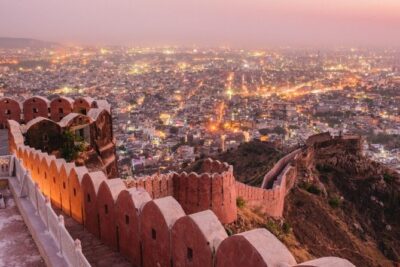
Worth putting side by side with this New Delhi pick:
Agra Fort, Itmad-ud-Daula, Mehtab Bagh, and Taj Mahal in two light moods
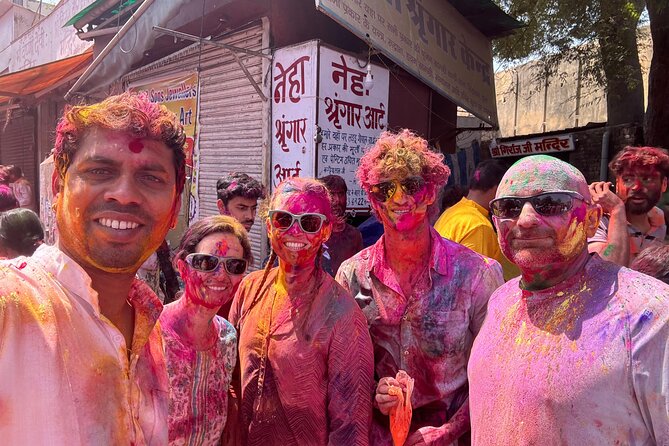
The trip from Delhi to Agra is set at about 222 km and roughly 4 hours by road. Once you arrive, you check in and then jump into Mughal highlights, with a strong mix of grand forts, “small but gorgeous” tombs, and Taj Mahal viewpoints.
Agra Fort and Itmad-ud-Daula: the Mughal depth charge
Agra Fort is a UNESCO site and tied to multiple Mughal emperors, including Akbar and Shah Jahan. It’s an hour-long stop, and it matters because it gives context for why the Taj story plays out the way it does.
Then you get Itmad-ud-Daula, described as a Mughal mausoleum often nicknamed the “Baby Taj” or “Bachcha Taj” (it’s also called “jewel box”). This stop is worth it if you like detailed craftsmanship. It also works as a palate cleanser before the Taj Mahal big moment.
Taj Mahal at sunset view point—and later at sunrise
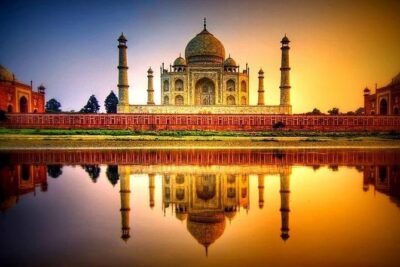
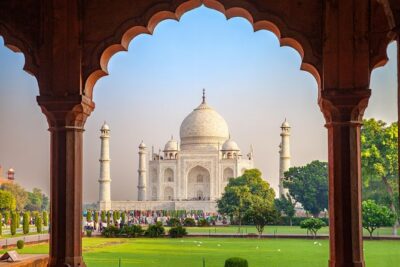
Day 3 includes Taj Mahal with a sunset view point across the river, explicitly described as being away from the crowd. You also get Mehtab Bagh, a garden viewpoint tied to Babur’s era and restored over time. That garden moment is less about “buildings” and more about perspective—how the Taj frames in your view line.
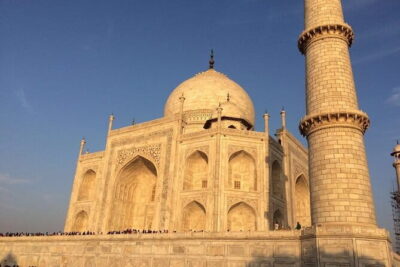
Day 4 repeats Taj Mahal, this time as a sunrise experience with a 2-hour slot. Seeing it in a second light changes the mood. Even if you’ve seen photos, sunrise lighting tends to feel more intimate because the monument looks less like a postcard and more like a solid object standing there doing its thing.
Small caution: two Taj visits means two days with more time planning around timing and stamina. Bring patience.
Fatehpur Sikri and Chand Baori: stepwells and a “city of victory” stop
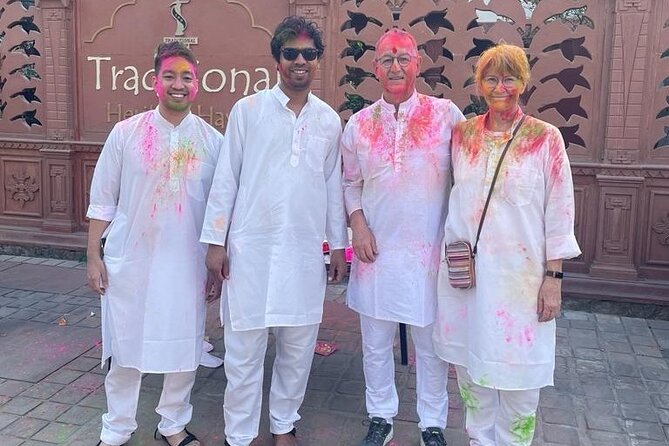
After Agra, the route includes Fatehpur Sikri (about a 1-hour stop). It’s described as Akbar’s “City of Victory,” built in the late 1500s and functioning as the Mughal capital for about a decade. Even in short time, this kind of stop gives you the “how they ruled” context between major tombs and forts.
Then you go to Chand Baori in Abhaneri. This is the stepwell that goes down about 30 meters into the ground. It’s described as one of the largest and deepest in India. If you like architecture that’s also usable at a human scale, this is one of the most memorable “stop-and-stare” moments on the route.
Practical note: stepwells mean lots of geometry and lots of stairs. If you’re used to city walking, you’ll be okay, but you’ll want comfortable shoes.
Jaipur arrival and Holika Dahan: the night the colors start
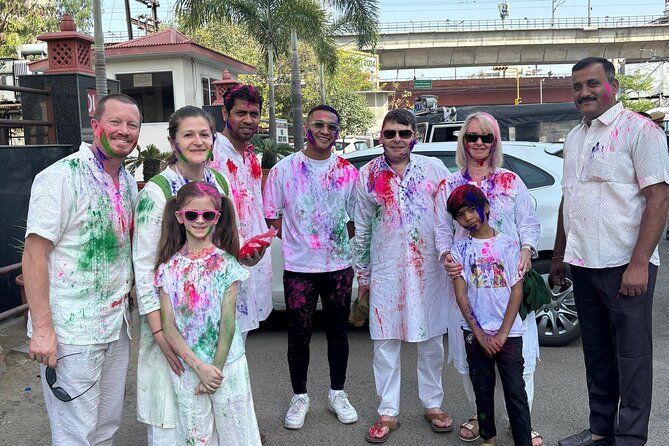
You arrive in Jaipur and check into your hotel. The plan then includes the Holika Dahan celebration at night. The itinerary describes Holika Dahan as a Hindu occasion centered on the legend of Holika’s burning, and it frames the evening as part ritual, part cultural event.
This is also where the tour becomes personal for many people. In feedback you’ll see names like Gopal connected to arranging the Holi day experience, plus praise for the way the celebration is coordinated. People specifically call out being taken to temple-centered Holi participation in Jaipur, with mentions of Govind Dev Ji temple experiences.
The takeaway for you: this tour tries to get you into the festival in a way that feels local, not like a staged tourist show. That’s a big part of why people recommend it.
Holi with color throwing in Pink City Jaipur: what to expect on the main day
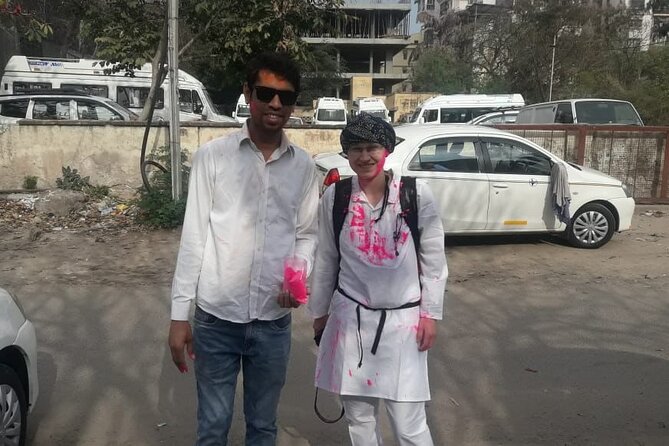
The full Holi day is about 6 hours, focused on playing with local people in Pink City Jaipur. The description includes a huge bonfire, cultural events, temple festivals, street parties, color throwing, and traditional music.
Here’s the honest planning angle: Holi is fun, but it’s also loud, crowded at times, and messy. You’ll want to treat your clothing as something you don’t mind staining. Protect your camera (or be ready to go phone-only). Bring eye protection if you tend to get irritated by dust or powder. If you’re traveling with light luggage, think before you pack your “only going out outfit.”
You’ll also likely be around other visitors. Even though the tour is set up as a private experience for your group, the celebration itself is social, and the whole point is to play together with local people and festival-goers.
Jaipur monument day 6: stepwell, fort, Jal Mahal photos, Jantar Mantar, Hawa Mahal, and City Palace
Day 6 is packed, and it’s a great day if you like variety: one small architectural stop, one big fort, one lake-side photo stop, then the science and the skyline.
- Panna Meena ka Kund: a stepwell near the palace area, about a 15-minute guided stop.
- Jaipur’s most famous fort: described as a 2-hour fort tour with palaces, squares, and monuments, tied to the capital until 1728.
- Jal Mahal: a lake palace stop for a photo opportunity on Man Sagar Lake.
- Jantar Mantar: a UNESCO World Heritage site with 19 astronomical instruments built around 1734 by Sawai Jai Singh II.
- Hawa Mahal: the Palace of Wind, a five-storey pyramidal monument in red and pink sandstone.
- City Palace of Jaipur: about an hour to explore the Maharaja’s seat and ceremonial spaces, but it’s explicitly listed as admission not included.
This day is a good example of why the tour is “Golden Triangle + depth,” not only “see the big names.” Jantar Mantar gives you a different kind of wonder—human measurement meets architecture. Hawa Mahal gives you a distinct silhouette and street-level details that are hard to appreciate until you’re close.
If you want a simple rhythm: focus on one “science” stop (Jantar Mantar), one “views” stop (Hawa Mahal and Jal Mahal), and one “craft” stop (the forts and stepwells). That keeps your brain from glazing over.
Galtaji Monkey Temple and Birla Mandir: a calmer end before the drive back to Delhi
On Day 7, the plan starts with Birla Mandir in Jaipur, described as a special temple with intricate latticework in white marble. It’s dedicated to Lord Vishnu.
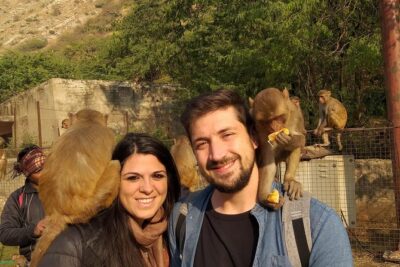
Then you visit Monkey Temple, also known as Galtaji Temple. It’s described as complex and well-known, with three sacred pools of water. If you like places where the city’s daily behavior mixes with worship, this stop tends to feel more lived-in than the earlier “photogenic by design” sights.
After that, you drive back to New Delhi for a roughly 5-hour trip, with drop-off at the airport, hotel, or another desired location in the city.
Price and logistics: is $335.72 actually good value?
At $335.72 per person for about a 7-day trip, the value depends on what you pick for hotels. The package includes 6 nights of accommodations with breakfast only if you book with the option including hotels. That matters, because without that add-on, you’d still be paying for transportation and guiding, but you’d have to source lodging separately.
What helps the price make sense:
- Private, air-conditioned vehicle with a driver for the full circuit (not a shared bus hop).
- Hotel or airport pickup and drop-off.
- All sightseeing with private local guides.
- Bottled mineral water during journeys.
- Mobile ticket.
One possible catch to verify: the package’s “Not Included” section says monument entrance fees are not included, even though the stop list sometimes marks specific admissions as included. For you, the practical move is to ask the operator what you’ll pay on arrival at each site. Especially for the City Palace, since it’s explicitly listed as admission not included.
Who this tour suits best (and who should rethink it)
This is a strong match if:
- You want Delhi, Agra, and Jaipur in one efficient week.
- You care about seeing major monuments and experiencing Holi as a real event with local participation.
- You prefer private guiding and a driver, so you aren’t wrestling taxis between far-flung sights.
You might want to rethink it if:
- You’re very sensitive to stains, powder, or crowded festival spaces (Holi is central here).
- You dislike repeated “big day” pacing. Taj Mahal appears twice (sunset view point and sunrise timing), and Jaipur includes a full monument day plus the Holi schedule.
Should you book this March Holi Golden Triangle tour?
Yes—if you want the Golden Triangle experience with a clear reason to be in Jaipur at the right time. The strongest draw is that Holi isn’t tacked on as a quick stop; it’s scheduled as a main event, with coordination credited to people like Gopal in guest feedback. Add in the private guides, the driver comfort, and the two Taj Mahal light moods, and the package feels like it’s trying to give you a complete story, not just a checklist.
Before you book, do two quick checks: confirm which monument entrance fees you’ll personally pay, and plan your clothing and gear for Holi day so you can enjoy the color without stress.
FAQ
Where does the tour start and where do I get dropped off?
The start point is Indira Gandhi Intl Airport, New Delhi. At the end, you’re driven back to Delhi with drop-off at the airport, hotel, or another desired location in the city.
Is this tour private?
Yes. It’s set up as a private tour/activity, meaning only your group participates.
How long is the tour and which cities are included?
The duration is 7 days (approx.) and the route focuses on New Delhi, Agra, and Jaipur.
Are hotels and breakfast included?
There are 6 nights of accommodations with breakfast included only if you book with the option including hotels.
Are monument entrance fees included?
The tour listing says monument entrance fees are not included, even though some stops note admissions as included. It’s smart to confirm entrance fees for each specific site before you go.
What transport is provided during the trip?
You get private, air-conditioned vehicle transport with a driver, plus hotel or airport pickup and drop-off, and bottled mineral water during journeys.
Is the Holi festival part of the itinerary?
Yes. The plan includes Holika Dahan in Jaipur at night after you arrive, plus a full Holi day where you play with local people in Pink City Jaipur, including color throwing.
What is the cancellation policy?
You can cancel for a full refund up to 24 hours in advance of the experience’s start time.
More Tours in New Delhi
- Old & New Delhi City Tour – Half or Full Day Options Available
★ 5.0 · 4,811 reviews - Half Day Private Delhi City Tour
★ 5.0 · 4,474 reviews - Same Day Taj Mahal, Agra Fort & Baby Taj Tour from Delhi by Car
★ 5.0 · 4,304 reviews - Taj Mahal Day Tour from Delhi by Superfast Train – TOP RATED TOUR
★ 5.0 · 4,166 reviews - Delhi: Old and New Delhi Private Full or Half-Day Tour
★ 4.9 · 3,776 reviews
More Tour Reviews in New Delhi
- Old & New Delhi City Tour – Half or Full Day Options Available
★ 5.0 · 4,811 reviews - Half Day Private Delhi City Tour
★ 5.0 · 4,474 reviews - Same Day Taj Mahal, Agra Fort & Baby Taj Tour from Delhi by Car
★ 5.0 · 4,304 reviews - Taj Mahal Day Tour from Delhi by Superfast Train – TOP RATED TOUR
★ 5.0 · 4,166 reviews - Delhi: Old and New Delhi Private Full or Half-Day Tour
★ 4.9 · 3,776 reviews
The Full Golden Triangle, More Options
- 3-Days Private Golden Triangle Tour: Delhi, Agra & Jaipur by Car
★ 5.0 · 1,107 reviews - 3-Days Private Golden Triangle Tour: Delhi, Agra & Jaipur by Car
★ 5.0 · 1,098 reviews - 3-Day Delhi, Agra and Jaipur Private Tour – India Golden Triangle
★ 5.0 · 812 reviews - Four-Day Private Luxury Golden Triangle Tour to Agra and Jaipur From New Delhi
★ 5.0 · 807 reviews - 5 Nights 6 Days Private Golden Triangle Tour – Delhi Agra Jaipur
★ 5.0 · 574 reviews
Just added: more New Delhi reviews to browse
- 4 days Golden Triangle Tour★ 5.0 · 3 reviews
- Discover Old & New Delhi: Private Tour with Street Food★ 5.0 · 3 reviews
- Taj Mahal Tour From Delhi By Private Car★ 4.5 · 3 reviews
- Golden Triangle Tour 5 Days★ 5.0 · 3 reviews
- Taj Mahal: Express Entry Ticket For Sunset Tour with guide★ 5.0 · 3 reviews
- Agra Taj Mahal Sunrise & Sunset Tour from Delhi★ 5.0 · 3 reviews
Golden Triangle Tours, compared.
 ★ 5.03-Days Private Golden Triangle Tour: Delhi, Agra & Jaipur by CarFrom $1271,107 reviews
★ 5.03-Days Private Golden Triangle Tour: Delhi, Agra & Jaipur by CarFrom $1271,098 reviews
★ 5.03-Days Private Golden Triangle Tour: Delhi, Agra & Jaipur by CarFrom $1271,107 reviews
★ 5.03-Days Private Golden Triangle Tour: Delhi, Agra & Jaipur by CarFrom $1271,098 reviews
 ★ 5.03-Day Delhi, Agra and Jaipur Private Tour – India Golden TriangleFrom $110812 reviews
 ★ 5.0Four-Day Private Luxury Golden Triangle Tour to Agra and Jaipur From New DelhiFrom $160807 reviews
 ★ 5.05 Nights 6 Days Private Golden Triangle Tour – Delhi Agra JaipurFrom $240574 reviews
 ★ 5.04 Days Golden Triangle TourFrom $146499 reviews
 ★ 5.0Private Car and Drive for Golden Triangle (4N/5D)From $167451 reviews
 ★ 5.0Private Golden Triangle Tour Delhi Agra Jaipur ( Top Rated )From $148436 reviews
Browse the lists this tour appears in