
Powerful forts. Big tigers. One packed week. This 7-day route blends India’s famous Golden Triangle sights with the calmer, more story-rich stops in Bundi, then finishes with a Ranthambore jeep safari experience.
What I like most is how the pacing mixes big-name monuments with places that feel less crowded and more local. I also love that you get a built-in day for the park—so the wildlife part isn’t an afterthought. You’ll be riding an air-conditioned vehicle with pickup, plus accommodation and breakfast are included to keep your planning simple.
One thing to consider: the schedule is sight-heavy, and a lot of the key sights have entrance fees that are not included. Plan for extra spending for tickets and also for lunch and dinner, which are on your own.
In This Review
- Key highlights to look forward to
- Why this Golden Triangle route (plus Bundi) feels like good value
- Price and logistics: what your $670 really covers
- Day 1 in Jaipur: Amber Fort, City Palace, and market time
- Day 2 in Jaipur: Jal Mahal, Hawa Mahal, and Jantar Mantar
- Day 3 in Bundi: Garh Palace, Raniji-ki-Baori, and Kipling’s Kim connection
- Day 4 Ranthambore National Park: one-sharing jeep safari day
- Day 5 Agra and Fatehpur Sikri: ghost town stop plus Taj Mahal
- Day 6 Agra’s Baby Taj and back to Delhi
- Day 7 Delhi: Red Fort, Jama Masjid, and the Big Monuments Finish
- What stood out in the people side of the trip
- Who this tour is best for
- Should you book this tour?
- FAQ
- How long is the tour?
- What is the starting meeting point?
- Is accommodation included?
- Is breakfast included?
- Is the Ranthambore safari included?
- Are entrance tickets included for the monuments?
- Are lunch and dinner included?
- Is transportation included?
- What is the cancellation policy?
Key highlights to look forward to
- Ranthambore jeep safari included with a sharing jeep and a full block of time for wildlife spotting
- Bundi’s stepwell and palace details like Raniji-ki-Baori carvings and elephant motifs
- Jaipur’s main monuments in a smart order from Amber to Hawa Mahal to Jantar Mantar
- Agra’s Mughal focus with Taj Mahal plus Agra Fort and Itimad-ud-Daulah
- Delhi wrap-up with Old and New Delhi stops in a single final day
Why this Golden Triangle route (plus Bundi) feels like good value
Golden Triangle tours can sometimes feel like a checklist. This one adds Bundi, which is a nice counterweight. You still get the Jaipur-Agra-Delhi classic hits, but you also slow down a bit for palaces, stepwells, and viewpoints that don’t always get the same attention as the usual stops.
From a practical standpoint, the package is built for easier logistics: air-conditioned transportation, six nights of accommodation, and breakfast (6) are included. That matters because India travel can get tiring fast—having the big pieces handled helps you spend your energy on the sights.
And then there’s Ranthambore. Instead of squeezing wildlife in as a half-day detour, you get a dedicated safari slot. That’s the day you’ll remember when the rest of the trip blurs into photos of forts and domes.
Delhi, Agra and Jaipur: more full circuits



Price and logistics: what your $670 really covers
At $670 per person for roughly 7 days, the value is mostly about what’s included versus what you’ll have to pay separately.
Included items that save real money and time:
- Accommodation for 6 nights
- Breakfast for 6 mornings
- One-time sharing jeep safari in Ranthambore
- Pickup from the start point area and airport transfer at the end
- Air-conditioned vehicle with tolls, parking, state tax, and driver allowances covered
- A complementary phone SIM with internet during the trip
- Mobile ticket and group discounts
What’s not included (so you’re not surprised later):
- Entrance tickets at monuments
- Travel insurance
- Tips
- Laundry and phone calls
- Lunch, dinner, snacks, and drinks
For planning, I’d treat entrance fees + meals as the main add-on. The itinerary includes a lot of top sights, and tickets can add up quickly—especially on days like Jaipur and Delhi.
Also note: it’s described as private for your group (so you won’t be mixed with random strangers), but it’s still a sharing jeep safari in Ranthambore.
Day 1 in Jaipur: Amber Fort, City Palace, and market time
Jaipur day is built around a classic starter move: start with Amber Fort and then connect it to the city’s royal core.
Amber Fort is the big one. You’ll see the dramatic setting on rugged hills and the blend of design styles—fort palace vibes with red sandstone and white marble details. Expect a full sightseeing block here, long enough to actually walk and take photos without feeling instantly rushed.
After that, you get City Palace time. This palace complex is tied to the founding of Jaipur under Maharaja Sawai Jai Singh II, and it helps you connect Amber’s grandeur to the court that built the city.
A nice bonus: the day also includes time for Jaipur shopping in the bazaars. That’s often the fun part people skip when they move too fast. Even if shopping isn’t your priority, it breaks up the monument load.
Practical tip: Amber Fort involves walking and steps. If you’re used to flat city strolling, wear shoes that handle uneven ground.
Day 2 in Jaipur: Jal Mahal, Hawa Mahal, and Jantar Mantar
Day 2 is basically Jaipur’s “signature photo day,” and it’s packed in a good way. You’ll hit:
- Jal Mahal (Jal Mahal): a palace in the middle of Man Sagar Lake, with renovations tied to Maharaja Jai Singh II of Amber. Even short stops here can be worth it because the view is so distinctive.
- Hawa Mahal (Palace of Wind): the red and pink sandstone facade built in 1799, known for extending toward the women’s chambers area (zenana). This is one of those places where standing still helps—let your eyes catch the pattern and the idea behind it.
- Jantar Mantar: the astronomical instruments site, including the world’s largest stone sundial, and noted as a UNESCO World Heritage site. It’s not just pretty stone—it’s science made visible.
City-wise, this day works because each stop is close enough to feel connected. You’re moving through a single theme: how the Maharajas shaped architecture for power, weather, and timekeeping.
Possible consideration: multiple monuments mean multiple ticket decisions. Since entrance tickets are not included, you’ll want to budget ahead so you don’t end up playing catch-up mid-trip.
Day 3 in Bundi: Garh Palace, Raniji-ki-Baori, and Kipling’s Kim connection
Bundi is the tour’s curveball—in a good way. It feels more relaxed than the big three of Jaipur, Agra, Delhi, but it still delivers strong architecture.
You start with Garh Palace, described as one of the largest palaces in India. What I love about this stop is the internal variety: it’s not one single hall, but a collection built across rulers and centuries. The details stand out—jharokhas and pillars with carvings, including elephant motifs. You’ll also hear about Chitrashala, a pavilion/gallery of miniature murals, which is exactly the kind of thing that makes you slow down.
Then the day moves to water-and-stone attractions:
- Nawal Sagar Lake: an artificial lake where palace reflections are part of the appeal, with a half-submerged temple at its center.
- Raniji-ki-Baori (Queen’s Stepwell): built in 1699 by Rani Nathavati Ji. The carvings of Gajraj (elephant) with the trunk turned inward are a standout detail, and the arched gate gives it a strong entrance feel.
- Sukh Niwas Mahal: this small two-storied palace matters because it’s linked to Rudyard Kipling’s Kim (and it’s said that part of a movie based on the novel was shot here). That literary connection makes the site more fun, especially if you like stories tied to place.
One practical note: Garh Palace is open from 8:00 am to 5:00 pm, with a small entry fee (and the option to hire a guide). If you want the best photos, aim to arrive earlier rather than later.
More tiger country trips beyond the capital


Day 4 Ranthambore National Park: one-sharing jeep safari day
This is your wildlife anchor day, and it’s the most unpredictable day of the trip in the best way.
After checking into your hotel, you’ll go for a jeep safari in Ranthambore National Park. The safari is described as famous for tiger sightings and being a strong place for tiger photography in natural habitat. The included safari is a sharing jeep, with a total time block of about 4 hours and ticket costs covered for this activity.
How to think about the safari day:
- Be ready for early wake-up energy. Even if the timing is handled for you, wildlife drives can feel long in the moment, and patience pays off.
- Bring a layer. Park air and early mornings can feel cooler than you expect.
- You’ll likely spend a lot of that time waiting. That’s normal. Waiting is part of the deal.
Since the safari is included but sharing is part of the deal, expect standard group dynamics rather than private vehicle flexibility.
Day 5 Agra and Fatehpur Sikri: ghost town stop plus Taj Mahal
Day 5 starts with Fatehpur Sikri, an important Mughal-era stop on the way to Agra. It’s described as a perfectly preserved red sandstone ghost town and the estranged capital of Emperor Akbar.
Even when you’re short on time, this kind of place sticks in your head. It’s a whole city that was left behind, and the scale makes it feel like the past is still built into the stone.
Then it’s on to Agra for:
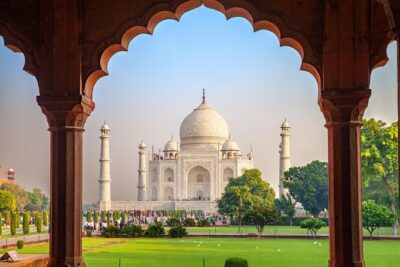
- Taj Mahal: about 2 hours at one of the world’s best-known monuments. It’s called an extravagant expression of love in the itinerary description—whether you go for the art, the symmetry, or the story, you’ll still end up standing in awe of the design.
- Agra Fort: a red-sandstone fort on the banks of the Yamuna, with construction tied to Emperor Akbar starting work in 1566. The contrast between Taj’s white monument feel and Agra Fort’s heavier fort vibe is a good way to balance your day.
Ticket reminder: Taj Mahal and Agra Fort entrances are not included. Budget for both.
Day 6 Agra’s Baby Taj and back to Delhi
The morning brings Itimad-ud-Daulah—often called Baby Taj. It’s described as a Mughal mausoleum and compared to Taj Mahal as a kind of draft or earlier jewel-box style. This stop is one of those where the smaller scale can actually make it easier to appreciate details.
After that, you drive back to Delhi and check in to your hotel. The rest of the day is at leisure.
This leisure block matters. By day 6, you’ve been on the move for a week’s worth of major sites. Downtime helps you reset—whether you want to rest, do casual shopping, or just enjoy a quiet evening.
Day 7 Delhi: Red Fort, Jama Masjid, and the Big Monuments Finish
Your final day in Delhi is a full-hit, both Old Delhi and New Delhi. You’ll visit:
- Red Fort: the main residence of Mughal emperors for nearly 200 years, until 1856. It also includes museums.
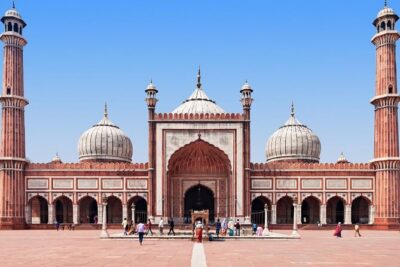
- Jama Masjid: one of the largest mosques in India, built by Mughal Emperor Shah Jahan.
- Raj Ghat: memorial dedicated to Mahatma Gandhi.
- India Gate: a war memorial along the Rajpath ceremonial axis.
- Humayun’s Tomb: Mughal emperor Humayun’s tomb commissioned by his wife Empress Bega Begum (1569–70).
- Lotus Temple: a Bahá’í House of Worship dedicated in December 1986.
- Qutub Minar: part of the Qutb complex, marked as a UNESCO World Heritage site, and you end with transfer to the airport.
Since this day includes many major sites, it can feel like you’re moving almost nonstop. Still, it’s a smart way to end a trip: you finish with Delhi’s range—imperial forts, monumental religion, and modern spiritual architecture.
If you hate rushing: I’d treat your energy like a budget. If you can, pick the one or two sites you personally care about most and treat the rest as bonus wins.
What stood out in the people side of the trip
The tour’s human value comes through in the reviews’ details: drivers named Kumar and Sanjay were specifically called out for being kind and helpful, with explanations about culture and local life. That kind of narration can turn long drives from “just transport” into useful context.
Also, the tour is described as organized with friendly guides and smooth arrangements, which usually means fewer panicky moments around timing. When you’re juggling forts, tombs, and a safari day, that’s not a minor benefit.
Who this tour is best for
This works well if you want:
- A classic Delhi-Jaipur-Agra base with meaningful extras in Bundi
- One serious wildlife day with a planned safari block
- A guided, handled-the-hard-parts style trip where you focus on the sights
It’s less ideal if you:
- Want lots of free time every day
- Hate entrance ticket budgeting
- Prefer a slower pace with fewer stops per day
Should you book this tour?
I’d say book it if you want a strong mix of big landmarks and more off-the-main-track architecture in Bundi, and you’re excited to spend a dedicated day in Ranthambore. The included accommodation, breakfasts, and the safari are real value, especially since transportation logistics are handled for you.
I’d pause and plan your budget first if you don’t like adding entrance tickets on the fly. Also, be honest about your stamina—your days include multiple major stops, and Delhi and Jaipur can feel especially packed.
If those sound okay, this is a solid way to get the highlights without turning your trip into a full-time scheduling job.
FAQ
How long is the tour?
It’s listed as 7 days (approx.).
What is the starting meeting point?
The start point is Indira Gandhi Intl Airport, New Delhi 110037 India.
Is accommodation included?
Yes. The tour includes 6-nights accommodation.
Is breakfast included?
Yes. Breakfast is included for 6 days.
Is the Ranthambore safari included?
Yes. It includes one time sharing jeep safari in Ranthambore National Park.
Are entrance tickets included for the monuments?
No. Entrance tickets are listed as not included.
Are lunch and dinner included?
No. Food and drinks such as lunch, dinner, snacks, and soft drinks are not included.
Is transportation included?
Yes. Transportation by air-conditioned vehicle, plus tolls, parking, state tax, and driver allowances are included.
What is the cancellation policy?
You can cancel up to 3 days in advance for a full refund. If you cancel within 3 days, the amount paid is not refunded.
More Tour Reviews in New Delhi
- Old & New Delhi City Tour – Half or Full Day Options Available
★ 5.0 · 4,811 reviews - Half Day Private Delhi City Tour
★ 5.0 · 4,474 reviews - Same Day Taj Mahal, Agra Fort & Baby Taj Tour from Delhi by Car
★ 5.0 · 4,304 reviews - Taj Mahal Day Tour from Delhi by Superfast Train – TOP RATED TOUR
★ 5.0 · 4,166 reviews - Delhi: Old and New Delhi Private Full or Half-Day Tour
★ 4.9 · 3,776 reviews
Tiger Country: More Ranthambore Trips
- Private 4-Day Golden Triangle Tour with Ranthambore Tiger Safari
★ 5.0 · 248 reviews - Golden Triangle & Ranthambore: 4-Day Private Tour from Delhi
★ 5.0 · 224 reviews - Private 5-Day Ranthambhore Tiger Tour from Delhi including the Taj Mahal, Agra and Jaipur
★ 5.0 · 197 reviews - From Delhi: 4-Day Golden Triangle & Ranthambore Guided Tour
★ 4.7 · 121 reviews - 4 Day Golden Triangle with Ranthambore Tiger Safari Tour from Delhi
★ 5.0 · 110 reviews
The Full Golden Triangle, More Options
- 3-Days Private Golden Triangle Tour: Delhi, Agra & Jaipur by Car
★ 5.0 · 1,107 reviews - 3-Days Private Golden Triangle Tour: Delhi, Agra & Jaipur by Car
★ 5.0 · 1,098 reviews - 3-Day Delhi, Agra and Jaipur Private Tour – India Golden Triangle
★ 5.0 · 812 reviews - Four-Day Private Luxury Golden Triangle Tour to Agra and Jaipur From New Delhi
★ 5.0 · 807 reviews - 5 Nights 6 Days Private Golden Triangle Tour – Delhi Agra Jaipur
★ 5.0 · 574 reviews
Just added: more New Delhi reviews to browse
- 4 days Golden Triangle Tour★ 5.0 · 3 reviews
- Discover Old & New Delhi: Private Tour with Street Food★ 5.0 · 3 reviews
- Taj Mahal Tour From Delhi By Private Car★ 4.5 · 3 reviews
- Golden Triangle Tour 5 Days★ 5.0 · 3 reviews
- Taj Mahal: Express Entry Ticket For Sunset Tour with guide★ 5.0 · 3 reviews
- Agra Taj Mahal Sunrise & Sunset Tour from Delhi★ 5.0 · 3 reviews
Golden Triangle Tours, compared.
 ★ 5.03-Days Private Golden Triangle Tour: Delhi, Agra & Jaipur by CarFrom $1271,107 reviews
★ 5.03-Days Private Golden Triangle Tour: Delhi, Agra & Jaipur by CarFrom $1271,098 reviews
 ★ 5.03-Day Delhi, Agra and Jaipur Private Tour – India Golden TriangleFrom $110812 reviews
 ★ 5.0Four-Day Private Luxury Golden Triangle Tour to Agra and Jaipur From New DelhiFrom $160807 reviews
 ★ 5.05 Nights 6 Days Private Golden Triangle Tour – Delhi Agra JaipurFrom $240574 reviews
 ★ 5.04 Days Golden Triangle TourFrom $146499 reviews
 ★ 5.0Private Car and Drive for Golden Triangle (4N/5D)From $167451 reviews
 ★ 5.0Private Golden Triangle Tour Delhi Agra Jaipur ( Top Rated )From $148436 reviews
Browse the lists this tour appears in