
Reviewed · GOLDEN TRIANGLE TOURS
8-Day Private Golden Triangle Tour with a Ranthambore Wildlife Safari From Delhi
Eight days to see India’s big three. This private Golden Triangle tour pairs Delhi and the Mughal masterpieces with a real wildlife detour to Ranthambore, so you’re not just sightseeing in cities. I like that it cuts planning stress hard: hotels, transfers, and a daily breakfast are built in, and you’re guided from stop to stop.
What I really liked are two practical things. First, the private AC vehicle and driver take the pressure off long transfers between cities. Second, the two safari jeep/canter drives in Ranthambore give you more than one shot at wildlife action (and the timing is handled for you).
One consideration: many monument entry tickets aren’t included, and the schedule moves quickly, especially on full sightseeing days like Delhi.
In This Review
- Key Things I’d Highlight Before You Go
- Entering India’s Golden Triangle With No Route-Chaos
- Day 1 in Delhi: Airport Meet-Up and Optional Akshardham
- Day 2 Delhi Masterpieces: Red Fort to Lotus Temple in One Big Sweep
- Day 3 Agra: Transfer Morning, Taj Mahal Afternoon
- Day 4 to Ranthambore: Travel Day With Fatehpur Sikri Timing
- Day 5 Ranthambore Safari Day: One Big Morning and More Time in the Park
- Day 6 Jaipur Arrival: Monkey Temple and an Amber Fort Sound-and-Light Show
- Day 7 in Jaipur: Amber Fort, Hawa Mahal, City Palace, Jantar Mantar, and More
- Day 8 Return to Delhi: Drop-Off Where You Need to Be
- Price and Value: Is $1,065 Per Person Worth It?
- Who Should Book This Private Golden Triangle With Ranthambore?
- Should You Book This Tour?
- FAQ
- Does the tour include airport pickup in Delhi?
- Are hotel stays included?
- How many safari rides are included in Ranthambore?
- Are meals included?
- Are entrance tickets included for major monuments like the Taj Mahal?
- What if my flight arrives very early on Day 1?
Key Things I’d Highlight Before You Go
- Private door-to-door transfers in a private AC vehicle between Delhi, Agra, Ranthambore, and Jaipur
- Two Ranthambore safari drives (jeep/canter) on a sharing basis
- Built-in breakfasts (7) plus two included dinners, so you’re not hunting for meals every night
- A tight UNESCO circuit across Delhi, Agra, and Fatehpur Sikri
- Jaipur as a day-by-day payoff: Amber Fort area, City Palace, Jantar Mantar, and Jal Mahal
Entering India’s Golden Triangle With No Route-Chaos
The best part of this tour is that it’s designed for people who want the highlights without turning their trip into a logistics project. You land in Delhi, meet a representative, and get transferred to your hotel. From there, you’re guided through the big-ticket sights in an order that makes sense geographically, not just by guesswork.
A private setup matters here. Even though Ranthambore safari is on sharing basis, the rest of your movement is private—your group travels together with your own vehicle and your guide. That means fewer awkward gaps and less time waiting around while other groups do their own thing.
And you do get genuine variety. In eight days you’ll see Mughal architecture in multiple forms, one of India’s most famous tombs, and then shift gears to wildlife country. It’s a smart way to get a first-time India overview fast.
Delhi, Agra and Jaipur: more full circuits



Day 1 in Delhi: Airport Meet-Up and Optional Akshardham
Day 1 is mostly about arrival comfort. A representative meets you at the airport and helps with the transfer to your hotel and check-in. If you have time, you can add a short visit to Akshardham temple.
This is a small detail, but it’s the kind that helps your whole trip feel smoother. After a flight, you don’t want to start pulling tickets, finding the right metro line, or trying to decode local traffic patterns. You’re already set up for tomorrow’s full sightseeing day.
If you arrive early in the morning (before 8am), note that an extra night in a hotel may be needed. If you arrive later (up to 11pm), you’re still fine because Day 1 doesn’t schedule major activities in Delhi.
Day 2 Delhi Masterpieces: Red Fort to Lotus Temple in One Big Sweep
Delhi on Day 2 is a classic highlights day. You start with Red Fort, the UNESCO World Heritage site that served as the main residence of the Mughal emperors. It’s impressive even if you’re not a history person—the scale and craftsmanship do the talking.
Next you head to Chandni Chowk for a walking market tour focused on spices and jewelry near the area. This is the kind of stop that gives you your first real taste of everyday India: strong scents, lots of small storefronts, and street-level energy.
Then it’s religion and empire in close succession:
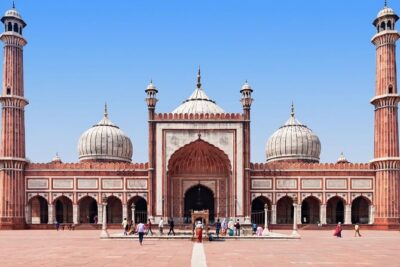
- Jama Masjid, built under Shah Jahan in 1656 and described as one of the largest mosques in India
- Raj Ghat, the memorial marking where Mahatma Gandhi was cremated
- Humayun’s Tomb, known for its Chaharbagh garden layout with pathways and water channels, plus a well-proportioned mausoleum topped by a double dome
After that, you get some views by drive: India Gate (commemorating 70,000 Indian soldiers who died fighting with the British Army in World War I) and Parliament House (opened in 1927, circular shape).
The afternoon portion is where Delhi really flexes architecturally:
- Qutub Minar, the 73-meter UNESCO minaret complex, with the spiral staircase (379 steps mentioned)
- Lotus Temple, a Baháʼí House of Worship with its distinctive lotus-like design
Tip: This is a long day. Even if you’re energized, bring a realistic mindset. You’ll see a lot of stone and detail in a short time. I found it helps to keep your camera ready for wide shots first, then slow down for close looks once you’re inside key areas.
A nice touch from the experience overall: one review specifically praised the New Delhi guide as the strongest—well educated and able to answer questions. That kind of guide can turn a checklist day into something you actually understand.
Day 3 Agra: Transfer Morning, Taj Mahal Afternoon
Day 3 moves you toward Agra with a drive of around four hours by car. On arrival, you check in and then do sightseeing in the afternoon.
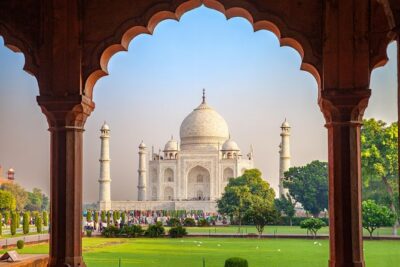
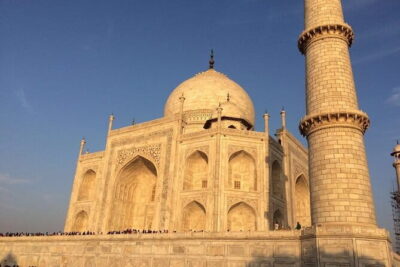
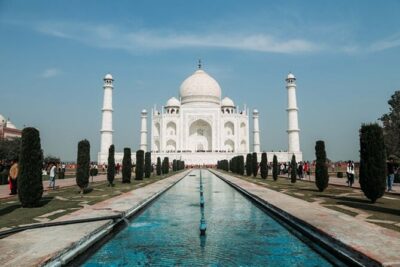
This is the day for the “yes, it’s that famous” moment: Taj Mahal. It was built by Emperor Shah Jahan in memory of his wife Mumtaz Mahal. The time on the site is about three hours, which is enough to take in both the main view and the surrounding architectural details without feeling rushed.
Then you add Agra Fort, raised by Emperor Akbar in 1565. The tour notes also include the story element that Shah Jahan is believed to have died after being imprisoned there. Whether you care about the political drama or not, the fort is a great contrast to the Taj—more fortress, more power.
I like how this day is structured. You don’t fight for timed entry planning, and you’re guided through the sequence. It’s also a good pacing choice: Taj in the afternoon means you still get good sight lines even if you didn’t do an early morning start.
Day 4 to Ranthambore: Travel Day With Fatehpur Sikri Timing
Day 4 is your transition from Mughal city icons to wildlife country. You leave for Ranthambore National Park, check in on arrival, and then (based on the schedule provided) you also make a stop at Fatehpur Sikri.
Fatehpur Sikri is described as a small city just west of Agra, founded by a 16th-century Mughal emperor, with red sandstone buildings clustered around the center. The visit includes attention to Buland Darwaza, the massive gate that serves as the entrance to the Jama Masjid complex there.
This combo can feel like two different trips in one day, but it’s actually a smart way to make the transfer count. You’re not just burning hours in a car.
Consideration: travel days are long by nature, and this one has a stop layered in. If you’re someone who hates being rushed, you might find you’ll want slightly more downtime on the edges of the day. That said, the benefit is you’re saving time overall by keeping your itinerary tight and guided.
More tiger country trips beyond the capital


Day 5 Ranthambore Safari Day: One Big Morning and More Time in the Park
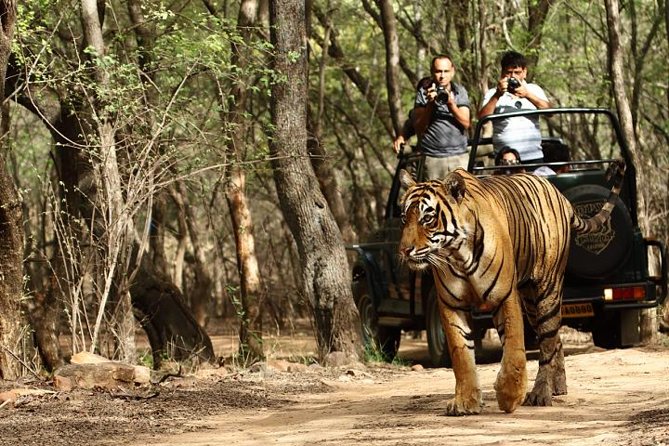
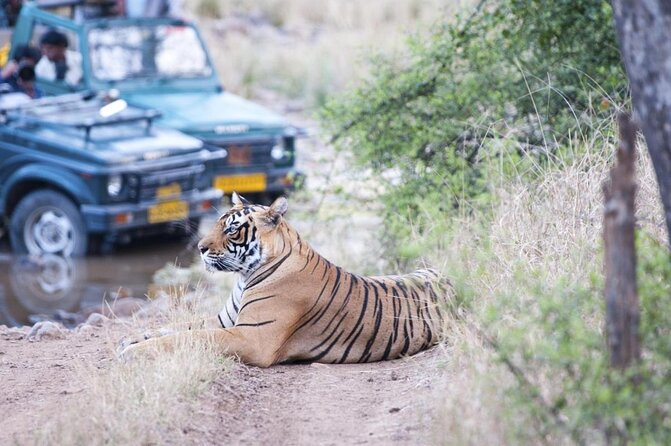
Day 5 is the heart of the wildlife portion. You’ll set off early for the tiger sanctuary with a long block in the reserve area—about 12 hours—and the safari admission ticket is included.
Ranthambore is described as home to a large tiger population, and the tour frames it as one of Asia’s best wildlife sanctuaries. You’re also given time to visit Ranthambore Fort, located within the national park area near Sawai Madhopur, and historically connected to the Maharajas of Jaipur’s hunting grounds.
Two realistic thoughts to keep in mind:
1) Wildlife viewing depends on conditions and animal behavior that day.
2) Even when you don’t see a tiger immediately, you’re still in a habitat full of wildlife activity, and that’s part of the point of going.
One review also highlighted how the driver stayed safe and handled tough traffic with confidence. That matters even in a safari context, because good driving keeps your experience calm and on schedule.
Day 6 Jaipur Arrival: Monkey Temple and an Amber Fort Sound-and-Light Show
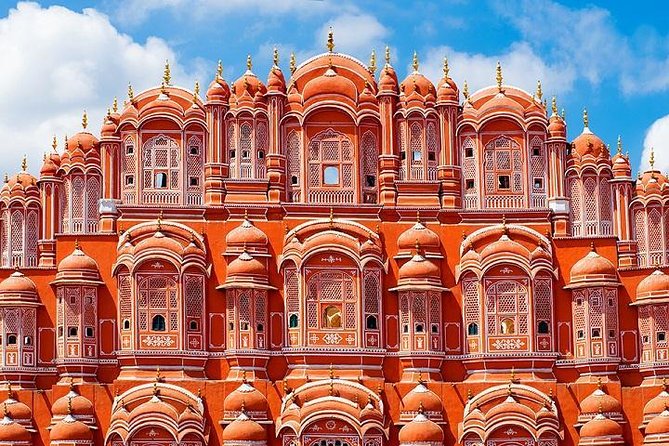
After breakfast, you check out and drive to Jaipur, described as the Pink City. You arrive and check in for the night, and the rest of the day is leisure.
Then you head into two curated cultural hits:
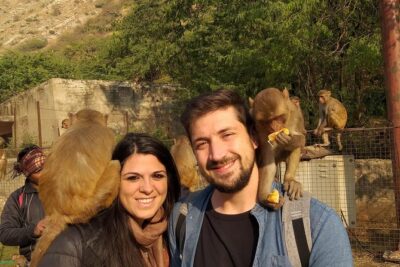
- Galtaji Temple (Monkey Temple): a pre-historic Hindu pilgrimage site with temples, natural springs, and sacred water tanks (kunds).
- Sound and Light Show at Amber Fort: the schedule includes this evening-style experience focused on pride, legends, and local tradition connected to Amber.
If you’ve been traveling hard for a couple of days, I actually like this mix. It adds an evening activity that doesn’t require more museum time or a long hike. And Amber Fort is one of those places where night lighting can change your perception even if you already saw the fort area earlier.
Day 7 in Jaipur: Amber Fort, Hawa Mahal, City Palace, Jantar Mantar, and More
Day 7 is the full Jaipur “greatest hits” day. You start with Amber Fort, and you get a Jeep ride at Amber Fort, which helps when the area around the fort is spread out and the terrain isn’t something you want to treat like a casual walk.
Then you move through a high-density architecture and culture loop:
- Hawa Mahal (Palace of Wind), built for royal women to view busy street scenes while staying behind jharokhas (overhanging windows)
- City Palace, seat of Jaipur’s Maharajas and now a museum, blending Mughal and Rajput architecture
- Jantar Mantar, the largest sundial in the world
- Albert Hall Museum, known for Indo-Saracenic architecture and built by Maharaja Sawai Ram Singh II in 1868
- Diwan-e-Khas (Hall of Private Audience), tied to the maharajas’ private meetings
- Jal Mahal (Water Palace) at Man Sagar Lake
And then you can also add Birla Mandir Temple (Lakshmi-Narayan Temple), built in white marble and located on an elevated platform at the base of Moti Dungari.
I’ll be straight with you: this day is packed. If you love architecture and details, it’s a dream. If you prefer unstructured wandering, you’ll want to pace yourself—take breaks, drink water, and plan for some sensory overload.
One small positive from the tour style: you’re not doing these stops alone. You’ve got a guide, and you can ask questions as you go. That personalized Q and A angle is exactly what one reviewer said they liked about booking privately.
Day 8 Return to Delhi: Drop-Off Where You Need to Be
Your final day is simple. After breakfast in Jaipur, you drive back to Delhi for a journey of about six hours. You’ll be dropped off either at your hotel or the airport of your choice, and that ends the tour.
This “end cleanly” approach matters. A lot of trips start well and then collapse into messy checkout chaos. Here you’re given a clear exit.
Price and Value: Is $1,065 Per Person Worth It?
At $1,065 per person, this tour is priced as a guided, built-in-service package. What you’re paying for isn’t just sightseeing—it’s time saved and friction removed.
Here’s how the value stacks up based on what’s included:
- 7 nights of accommodation in double/twin sharing hotels
- Transfers and sightseeing by private AC vehicle
- 2 safari drives in Ranthambore on sharing basis
- English speaking tour guide for Delhi, Agra, and Jaipur
- Breakfast for 7 days
- Two included dinners
- Taxes and driver expenses are included for the car
Not included costs can include entrance fees for many monuments (the schedule marks many admission tickets as not included). So you should budget for ticket spending on top of the base price. That said, the itinerary is structured around major sites, so you likely would be paying those fees anyway.
Where this price becomes especially fair is for first-timers. If you tried to piece this route together solo—hotels, drivers, entrance tickets, and the safari logistics—you’d spend a lot of time on planning and messaging, not seeing India. This tour turns that work into one coordinated schedule.
One more value point: the driver experience. A reviewer singled out the driver Babulat for safe driving and good recommendations, even through intense traffic. That’s the kind of detail that can make a big difference over 8 days.
Who Should Book This Private Golden Triangle With Ranthambore?
This tour fits best if you:
- want a first-time India intro and don’t want to plan every leg
- like having a guide to explain what you’re seeing and allow Q and A
- are okay with a busy schedule and early days (especially around safari)
- prefer private travel in a car, not hopping between transit systems
It may be less ideal if you:
- want a slower pace with lots of free time
- hate the idea that many monument tickets may be extra
- expect a fully private safari vehicle (it’s sharing basis for the safari drives)
Also note: even in a private tour, guides can vary in style. One review said guides ranged from excellent to so-so, with New Delhi standing out as the best. If you care a lot about guide quality, read your language/guide expectations carefully when you book.
Should You Book This Tour?
If your goal is simple—see Delhi, Agra, Jaipur, plus Ranthambore wildlife—this is a strong booking option. The structure is built for momentum: hotels and transfers handled, big sights efficiently grouped, and at least two safari drives planned rather than left to chance.
Before you commit, do two sanity checks:
1) Confirm you’re comfortable with extra entrance fees for many monuments.
2) Make sure you can handle a packed itinerary day like Delhi and a longer sightseeing day like Jaipur.
If that sounds like your kind of trip, you’ll likely love it: you get the big-name sites, you get real wildlife-focused time, and you don’t waste your vacation turning logistics into a second job.
FAQ
Does the tour include airport pickup in Delhi?
Yes. On Day 1, a representative meets you at the airport and assists with your transfer to the hotel and check-in.
Are hotel stays included?
Yes. The tour includes 7 nights of accommodation on double/twin sharing.
How many safari rides are included in Ranthambore?
You get 2 jeep/canter safari rides in Ranthambore on a sharing basis.
Are meals included?
Breakfast is included for 7 days. The tour also includes 2 dinners, but the exact nights for those dinners are not specified in the provided details.
Are entrance tickets included for major monuments like the Taj Mahal?
Many monument admission tickets are marked as not included (while some items are marked free). Only the Ranthambore safari admission ticket is listed as included.
What if my flight arrives very early on Day 1?
If your arrival flight is before 8am, rooms should be booked one night prior on extra cost, according to the additional info provided.
If you tell me your travel month and whether you’re more into photography or history, I can also suggest which days you should prioritize in your own pace so you don’t feel rushed.
More Tour Reviews in New Delhi
- Old & New Delhi City Tour – Half or Full Day Options Available
★ 5.0 · 4,811 reviews - Half Day Private Delhi City Tour
★ 5.0 · 4,474 reviews - Same Day Taj Mahal, Agra Fort & Baby Taj Tour from Delhi by Car
★ 5.0 · 4,304 reviews - Taj Mahal Day Tour from Delhi by Superfast Train – TOP RATED TOUR
★ 5.0 · 4,166 reviews - Delhi: Old and New Delhi Private Full or Half-Day Tour
★ 4.9 · 3,776 reviews
Tiger Country: More Ranthambore Trips
- Private 4-Day Golden Triangle Tour with Ranthambore Tiger Safari
★ 5.0 · 248 reviews - Golden Triangle & Ranthambore: 4-Day Private Tour from Delhi
★ 5.0 · 224 reviews - Private 5-Day Ranthambhore Tiger Tour from Delhi including the Taj Mahal, Agra and Jaipur
★ 5.0 · 197 reviews - From Delhi: 4-Day Golden Triangle & Ranthambore Guided Tour
★ 4.7 · 121 reviews - 4 Day Golden Triangle with Ranthambore Tiger Safari Tour from Delhi
★ 5.0 · 110 reviews
The Full Golden Triangle, More Options
- 3-Days Private Golden Triangle Tour: Delhi, Agra & Jaipur by Car
★ 5.0 · 1,107 reviews - 3-Days Private Golden Triangle Tour: Delhi, Agra & Jaipur by Car
★ 5.0 · 1,098 reviews - 3-Day Delhi, Agra and Jaipur Private Tour – India Golden Triangle
★ 5.0 · 812 reviews - Four-Day Private Luxury Golden Triangle Tour to Agra and Jaipur From New Delhi
★ 5.0 · 807 reviews - 5 Nights 6 Days Private Golden Triangle Tour – Delhi Agra Jaipur
★ 5.0 · 574 reviews
Just added: more New Delhi reviews to browse
- 4 days Golden Triangle Tour★ 5.0 · 3 reviews
- Discover Old & New Delhi: Private Tour with Street Food★ 5.0 · 3 reviews
- Taj Mahal Tour From Delhi By Private Car★ 4.5 · 3 reviews
- Golden Triangle Tour 5 Days★ 5.0 · 3 reviews
- Taj Mahal: Express Entry Ticket For Sunset Tour with guide★ 5.0 · 3 reviews
- Agra Taj Mahal Sunrise & Sunset Tour from Delhi★ 5.0 · 3 reviews
Golden Triangle Tours, compared.
 ★ 5.03-Days Private Golden Triangle Tour: Delhi, Agra & Jaipur by CarFrom $1271,107 reviews
★ 5.03-Days Private Golden Triangle Tour: Delhi, Agra & Jaipur by CarFrom $1271,098 reviews
★ 5.03-Days Private Golden Triangle Tour: Delhi, Agra & Jaipur by CarFrom $1271,107 reviews
★ 5.03-Days Private Golden Triangle Tour: Delhi, Agra & Jaipur by CarFrom $1271,098 reviews
 ★ 5.03-Day Delhi, Agra and Jaipur Private Tour – India Golden TriangleFrom $110812 reviews
 ★ 5.0Four-Day Private Luxury Golden Triangle Tour to Agra and Jaipur From New DelhiFrom $160807 reviews
 ★ 5.05 Nights 6 Days Private Golden Triangle Tour – Delhi Agra JaipurFrom $240574 reviews
 ★ 5.04 Days Golden Triangle TourFrom $146499 reviews
 ★ 5.0Private Car and Drive for Golden Triangle (4N/5D)From $167451 reviews
 ★ 5.0Private Golden Triangle Tour Delhi Agra Jaipur ( Top Rated )From $148436 reviews
Browse the lists this tour appears in