
Reviewed · GOLDEN TRIANGLE TOURS
Adventurous & Classical India Curated Journey: South & Golden Triangle
Three faiths. Two coasts. One great India run. This 15-day private tour blends South India sights like Hampi with the Golden Triangle’s biggest icons, using domestic flights and a private car so you spend more time looking and less time coordinating.
I especially like the way the route stacks major sites that actually connect: Vijayanagara stonework in Hampi, then Buddhist rock-cut art in Ajanta and Ellora, and finally Mughal landmarks in Agra and Delhi. The second win for me is comfort and pacing—accommodations and daily breakfasts are included, so your mornings don’t start with a scramble.
One consideration: it’s a lot of monuments in 15 days. You’ll likely face early start energy, long drive days, and heat (depending on when you go). If you like slow travel, this may feel like a full calendar instead of a gentle stroll.
In This Review
- Key highlights at a glance
- Route in plain terms: domestic flights plus private car comfort
- Mumbai days: Elephanta Caves, Dharavi, Dhobi Ghat, and Colaba Market
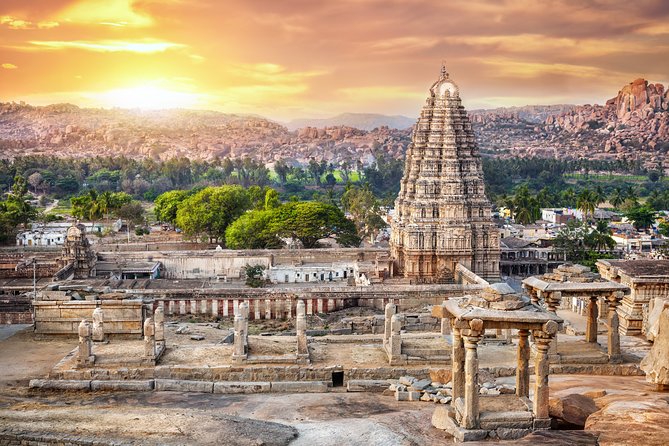
- Hampi’s Vijayanagara ruins: Mahanavami Dibba, Lotus Mahal, and Virupaksha Temple
- Ajanta and Ellora rock-cut storytelling in Maharashtra
- Jaipur’s palaces and forts: City Palace, Amber, Hawa Mahal, and temple morning
- Jantar Mantar, Jaigarh, and Nahargarh: the Aravalli defense ring
- Taj Mahal sunset in Agra, then Agra Fort and Itimad-ud-Daulah
- Delhi’s Mughal and religious landmarks: Qutb Minar to Akshardham
- Price and value: what $1,920 really buys over 15 days
- Should you book this South and Golden Triangle adventure?
- FAQ
- How long is the tour?
- Where does the tour start and end?
- Is pickup offered?
- Are domestic flights included?
- What meals are included?
- Are admission tickets included?
- Is this a private tour?
- What if the minimum number of travelers isn’t met?
- Is it non-refundable?
Key highlights at a glance
- A route that truly links South India (Hampi) to the Golden Triangle (Jaipur, Agra, Delhi)
- Mumbai start with Elephanta Caves plus real-city stops like Dhobi Ghat and Colaba Market
- Hampi highlights include the Mahanavami Dibba and the Virupaksha Temple complex
- Ajanta and Ellora are scheduled as their own world: rock-cut monasteries with Hindu, Buddhist, and Jain sites
- Jaipur is more than a quick photo stop: City Palace, Amber Palace, Hawa Mahal, and fort views
- Drivers and guides get named praise for safety, flexibility, and top-level historical context
Route in plain terms: domestic flights plus private car comfort
This tour works because it doesn’t try to make you “figure it out” between regions. You’re set up with domestic flights and private car travel between major cities, which is the difference between enjoying India’s sights and fighting transport logistics.
That matters on a route like this. You’re moving from Mumbai into Karnataka (Hampi), then onward to Maharashtra (Ajanta and Ellora), down the line to Rajasthan (Jaipur), and finally into Delhi with a full day of Mughal and religious landmarks. With the transport handled, you can focus on what you came for: temples, palaces, cave art, and the big national-scale monuments.
Also, many key admissions are listed as included for major stops, while a few places are free (like Gateway of India and India Gate). So you’re not constantly calculating costs in the moment—another small stress reducer when you’re crossing states.
Delhi, Agra and Jaipur: more full circuits



Mumbai days: Elephanta Caves, Dharavi, Dhobi Ghat, and Colaba Market
Mumbai is a strong opening because it hits two very different modes fast—ancient and everyday.
You start with the Elephanta Caves, a UNESCO-listed cave-temple complex devoted largely to Shiva. The visit is timed as a major block of time (about two hours), which is exactly what you want for cave carvings and big interior views. After that, the Gateway of India gives you a classic waterfront landmark—more breeze and perspective than museum-style depth.
Then the tour turns to daily life with Dharavi and Dhobi Ghat. Dharavi is Mumbai’s largest slum area, widely known from Slumdog Millionaire, but here it’s approached as a place where people live and work—so you get context beyond stereotypes. Dhobi Ghat (the open-air laundry) adds a fascinating, hands-on look at labor and routine. It’s not glamorous, but it’s real, and it helps you understand how much of Mumbai’s city-life depends on systems that run every single day.
You’ll also have time for Colaba Market, where shopping feels like an activity. It’s the kind of place where you can wander for bargains, snacks, and everyday items, and still feel like you’re doing something distinctly Mumbai.
Practical note: this part of India can be hot and crowded. If you prefer quieter sightseeing, plan to bring patience for city energy.
Hampi’s Vijayanagara ruins: Mahanavami Dibba, Lotus Mahal, and Virupaksha Temple
If you like archaeology that feels like it’s still breathing, Hampi is your payoff.
You’ll visit Mahaanavami Dibba (Dasara Dibba), a stone platform built during the Vijayanagara period by King Krishnadevaraya to commemorate a victory. It’s one of those stops where you start noticing scale: these weren’t small ceremonial pieces. The stonework suggests a kingdom that wanted its power remembered.
Next comes Lotus Mahal, an ancient stone palace structure with gardens, arches, and elaborate carvings. Even from a distance, it looks designed for movement—like you’re meant to walk around and see how light and patterns shift.
Then you reach Virupaksha Temple, part of the UNESCO Group of Monuments at Hampi. This is dedicated to Lord Virupaksha (a form of Shiva), and the temple setting adds atmosphere beyond the carvings themselves. If you want one “this is why people come here” stop, this is it.
Finally, you get broader time for Hampi itself—its ruins from the medieval Hindu kingdom of Vijayanagar, monolithic sculptures, and monuments built with excellent workmanship. Hampi’s appeal isn’t just what remains. It’s how the layout helps you understand an empire’s priorities: religion, public space, and architecture that can last centuries in harsh conditions.
Downside: Hampi is mostly about stone + sun + walking. Wear shoes you trust. Plan to slow down and look back at details, not just the big skyline views.
Ajanta and Ellora rock-cut storytelling in Maharashtra
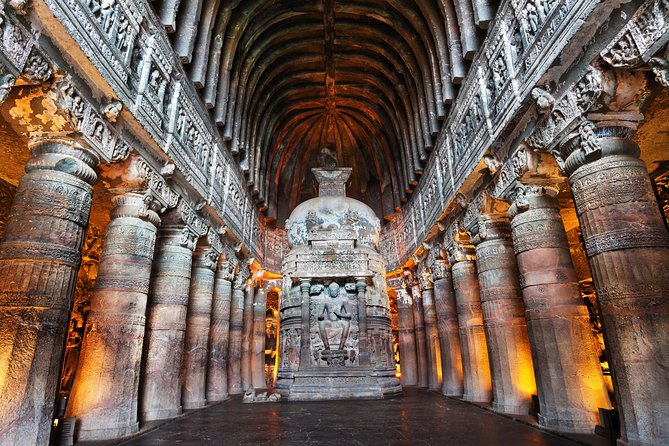
From Hampi’s stone temples, the route moves into cave worlds—first Ajanta, then Ellora, both UNESCO.
At Ajanta, you’re looking at rock-cut Buddhist cave monuments dating roughly from the 2nd century BCE to about 480 CE. The visit block (around five hours) makes sense because you need time for shifting viewpoints and the way paintings/sculptures sit on cave walls. You’re not just “seeing caves.” You’re reading a visual timeline in stone.
The tour also pairs Ajanta with Bibi-Ka-Maqbara (The Lady’s Tomb), described as a Mughal-era mausoleum associated with Aurangzeb’s wife Rabia—sometimes called the Taj of the Deccan. Even if you’re not a hardcore tomb fan, it works as a contrast: same region, different art goals and a different era’s mood.
Then comes Ellora Caves, a major UNESCO complex known for featuring Hindu, Buddhist, and Jain monuments in one large rock-cut setting. The tour gives you about six hours, which is crucial. Ellora is less about a single “main hall” and more about navigating a whole cluster of belief systems carved into one landscape.
One extra value point: you’re not just transported between places—you get context for what you’re looking at, so you can tell whether a carving belongs to a Buddhist monastery setting or a Hindu temple focus.
Heat can be an issue again in Maharashtra. If you’re sensitive, bring water strategies and start early when you can.
Jaipur’s palaces and forts: City Palace, Amber, Hawa Mahal, and temple morning
Jaipur is the Golden Triangle’s style capital, but this route treats it like more than just pretty facades.
You start with the City Palace, established when Maharaja Sawai Jai Singh II moved his court to Jaipur in 1727. It’s a historical anchor that helps you understand why Jaipur’s architecture feels like planning, not luck.
Then you visit Amber Palace, a royal complex that gives you a sense of power expressed through layout and stone. If you’ve ever wondered why people talk about Rajasthan’s forts like they’re living entities, Amber is where that idea becomes easier to grasp.
You also get Hawa Mahal (Palace of Wind), a five-storey palace built in 1799, known for its many windows. The structure is famous for façade drama—what matters most is taking time to see how the design works with light and the idea of watching life unfold below.
A standout addition here is a morning worship stop at the Vaishnava temple Govind Dev Ji. You’re not just passing through sacred spaces; you’re given a quiet moment of local practice before returning to sightseeing mode.
And you’re not left with “palaces only.” The itinerary continues into observatories and forts, which brings Jaipur into a more complete picture.
Practical note: Jaipur can feel like a lot of stops in one stretch. If you want photos, prioritize angles early and save slower time for when the sun shifts.


Jantar Mantar, Jaigarh, and Nahargarh: the Aravalli defense ring
After the palace trio, Jaipur shifts to how the city was designed and defended—plus the view factor.
Jantar Mantar is an observatory built in 1724 by Maharaja Jai Singh of Jaipur. The core idea is practical: astronomical tables to help predict time and movement of celestial bodies like the sun and moon. It’s one of the more interesting cultural breaks because it reminds you that science and rule-making were linked.
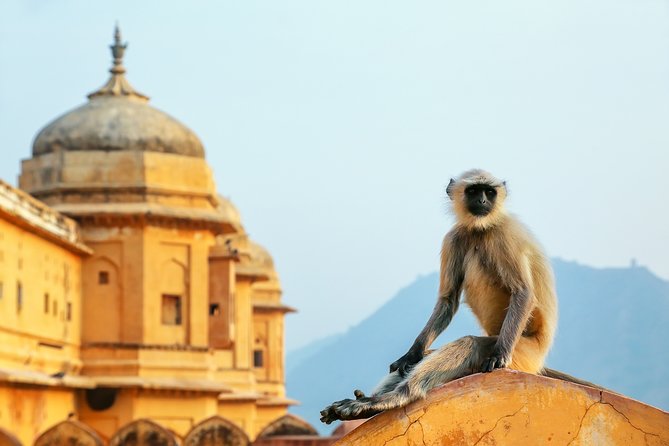
Next is Jaigarh Fort, on Cheel ka Teela in the Aravalli range, overlooking Amer Fort and Maota Lake. The fort was built by Jai Singh II in 1726 to protect the Amer Fort and palace complex. This stop helps you “see” how the city’s forts formed layers of security.
Then you’ll hit Albert Hall Museum, the oldest museum in Rajasthan and the state museum. It’s a good weather-proof option if the midday sun is aggressive.
The tour also includes Birla Mandir Temple, plus a deeper fort finale with Nahargarh Fort. Nahargarh is part of the defense ring with Amer and Jaigarh. The name connects to local spirit legend—Nahar Singh Bhomia—and the story of how a temple was built to pacify the spirit. Whether or not you care about legends, the setting adds character.
You finish with Royal Gaitor Tumbas, a white marble palace set in a valley at the mountain’s foot. It’s peaceful compared to the busier palace stops and a nice way to wind down before the route leaves Rajasthan behind.
Taj Mahal sunset in Agra, then Agra Fort and Itimad-ud-Daulah
Agra is where the route delivers its main emotional hit, and it does it with timing.
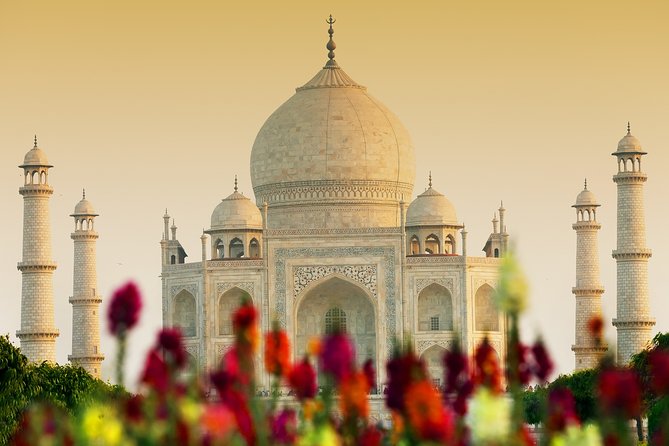
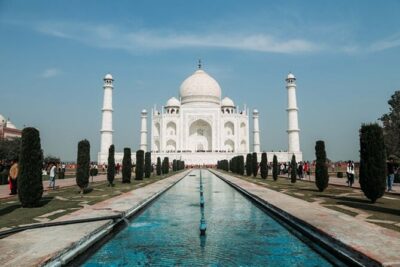
You start with Taj Mahal at sunset, including views along the river. Watching the light change on the marble is the kind of moment that makes the rest of the trip feel worth it. It’s not just a monument stop; it’s a mood stop.
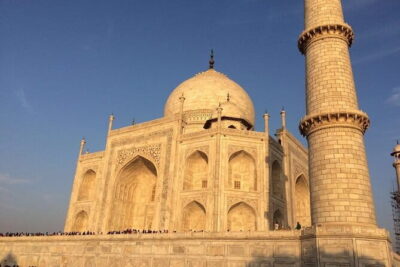
Then you return for Taj Mahal again, with time described as about three hours. Built between 1632 and 1647 by Mughal Emperor Shah Jahan in memory of Mumtaz Mahal, it’s a shrine built to impress through symmetry and detail. The second Taj visit also gives you a better shot at seeing different carvings and perspectives without rushing.
After that, you get Agra Fort, once the main residence of Mughal emperors until the capital moved to Delhi. It was occupied by Marathas before British capture. You’re basically walking through a political history in stone—useful if you want more than postcard viewing.
Finally, Tomb of Itimad-ud-Daulah (often called the Bachcha Taj) rounds out the Mughal art story. Even in the tour’s short format, it’s a smart choice because it bridges the aesthetic gap between earlier Mughal tomb styles and the final Taj form.
Tip: if you’re prone to fatigue, this is where you slow down. Agra is dense with major sights. Choose a few details you’ll remember later.
Delhi’s Mughal and religious landmarks: Qutb Minar to Akshardham
Delhi closes the loop by stacking empires, faiths, and civic monuments in one final stretch.
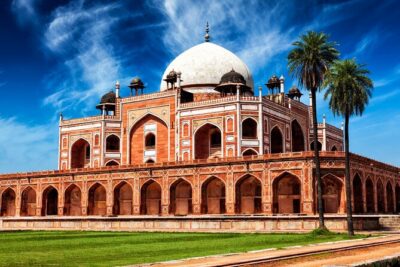
You begin at the Qutub Minar complex, UNESCO-listed, known as a minaret and victory tower. From there you move to Humayun’s Tomb, commissioned in 1569-70 by Empress Bega Begum with Persian architects. It’s an important stop for understanding how Mughal tomb architecture developed and how gardens and symmetry create meaning.
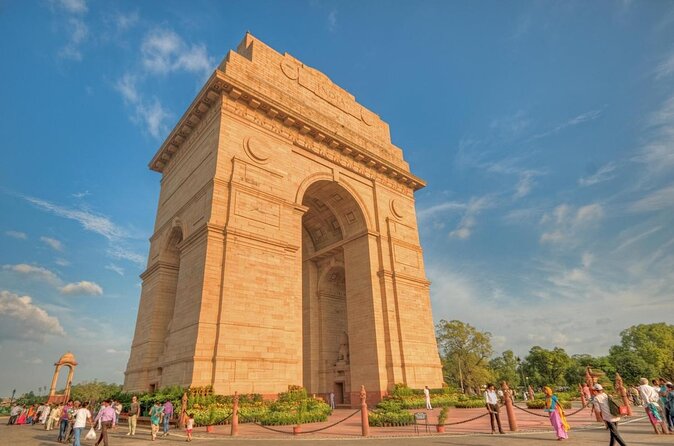
Then you hit India Gate, a war memorial on Rajpath that commemorates 70,000 soldiers of the British Indian Army who died between 1914–1921. Even though it’s a shorter stop, it gives you modern historical context beyond the imperial monuments.
You also visit the Red Fort, a Mughal residence that remains one of the city’s most recognizable fort forms.
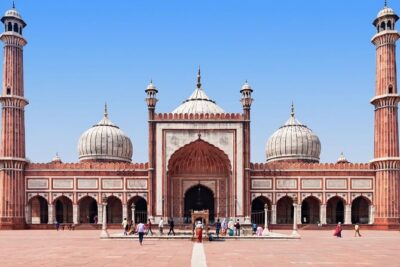
Religious sites round out the day with Swaminarayan Akshardham, a spiritual and cultural campus described as a Hindu house of worship. Next is Gurudwara Bangla Sahib, known for its sarovar (holy river) inside the complex. You then pass through Jama Masjid, one of India’s largest mosques, and add Gandhi Memorial Hall for a brief look at modern history.
This finale works well because you end with balance: monuments, faith spaces, and civic memory rather than only one era.
Price and value: what $1,920 really buys over 15 days
At $1,920 per person for about 15 days, the value depends on how much you hate coordinating.
Here’s what helps justify the cost based on what’s included and structured:
- Accommodations and daily breakfasts are included, so you’re not budgeting those daily basics.
- Domestic flights and private car transfers reduce the time and stress that usually comes with multi-state itineraries.
- Many admissions are listed as included for major attractions (from Elephanta Caves to Ajanta, Ellora, key Jaipur palaces, Taj Mahal, Qutb Minar, Humayun’s Tomb, and Red Fort).
- It’s private for your group, which tends to mean less waiting and more control over your daily flow.
Where the money may feel tighter is if you’re the type who wants lots of free time, fewer monuments, or more flexible “skip a stop” moments. This route is built as a full schedule, so you’ll get your value by showing up ready for it.
One more practical value point: drivers get praised for safety and calm navigation. Named examples include Bhanwar Singh and Mudaram, both described as professional, flexible, funny (in Mudaram’s case), and great in heavy traffic conditions.
Should you book this South and Golden Triangle adventure?
Book it if you want a single trip that covers Hampi + Ajanta/Ellora + Jaipur + Taj Mahal + Delhi without turning your vacation into a planning project. You’ll like the balance of cave art, fort-and-palace architecture, and Mughal-era monuments, plus the bonus of real-city Mumbai stops.
Skip or reconsider if you get worn out by long drives, repeated major sights, or heat-heavy walking. This itinerary is packed. If you love a tighter pace and want logistics handled, it’s an easy yes.
FAQ
How long is the tour?
It’s approximately 15 days.
Where does the tour start and end?
The sightseeing route starts with Mumbai and ends in Delhi. The listed meeting point is Indira Gandhi Intl Airport in New Delhi.
Is pickup offered?
Yes, pickup is offered.
Are domestic flights included?
Yes, domestic flights are included, along with private car travel between major cities.
What meals are included?
Accommodation and daily breakfasts are included.
Are admission tickets included?
Many major sites list admission as included (for example Elephanta Caves, Ajanta Caves, Ellora Caves, City Palace, Amber Palace, Hawa Mahal, Jantar Mantar, Taj Mahal, Qutub Minar, Humayun’s Tomb, and Red Fort). Some stops are listed as free (like Gateway of India, Colaba Market, India Gate, and parts of the Delhi museum/shrine stops).
Is this a private tour?
Yes. It’s a private tour/activity, with only your group participating.
What if the minimum number of travelers isn’t met?
If it’s canceled because the minimum isn’t met, you’ll be offered a different date/experience or a full refund.
Is it non-refundable?
Yes. This experience is non-refundable and can’t be changed for any reason.
More Tour Reviews in New Delhi
- Old & New Delhi City Tour – Half or Full Day Options Available
★ 5.0 · 4,811 reviews - Half Day Private Delhi City Tour
★ 5.0 · 4,474 reviews - Same Day Taj Mahal, Agra Fort & Baby Taj Tour from Delhi by Car
★ 5.0 · 4,304 reviews - Taj Mahal Day Tour from Delhi by Superfast Train – TOP RATED TOUR
★ 5.0 · 4,166 reviews - Delhi: Old and New Delhi Private Full or Half-Day Tour
★ 4.9 · 3,776 reviews
The Full Golden Triangle, More Options
- 3-Days Private Golden Triangle Tour: Delhi, Agra & Jaipur by Car
★ 5.0 · 1,107 reviews - 3-Days Private Golden Triangle Tour: Delhi, Agra & Jaipur by Car
★ 5.0 · 1,098 reviews - 3-Day Delhi, Agra and Jaipur Private Tour – India Golden Triangle
★ 5.0 · 812 reviews - Four-Day Private Luxury Golden Triangle Tour to Agra and Jaipur From New Delhi
★ 5.0 · 807 reviews - 5 Nights 6 Days Private Golden Triangle Tour – Delhi Agra Jaipur
★ 5.0 · 574 reviews
Just added: more New Delhi reviews to browse
- 4 days Golden Triangle Tour★ 5.0 · 3 reviews
- Discover Old & New Delhi: Private Tour with Street Food★ 5.0 · 3 reviews
- Taj Mahal Tour From Delhi By Private Car★ 4.5 · 3 reviews
- Golden Triangle Tour 5 Days★ 5.0 · 3 reviews
- Taj Mahal: Express Entry Ticket For Sunset Tour with guide★ 5.0 · 3 reviews
- Agra Taj Mahal Sunrise & Sunset Tour from Delhi★ 5.0 · 3 reviews
Golden Triangle Tours, compared.
 ★ 5.03-Days Private Golden Triangle Tour: Delhi, Agra & Jaipur by CarFrom $1271,107 reviews
★ 5.03-Days Private Golden Triangle Tour: Delhi, Agra & Jaipur by CarFrom $1271,098 reviews
★ 5.03-Days Private Golden Triangle Tour: Delhi, Agra & Jaipur by CarFrom $1271,107 reviews
★ 5.03-Days Private Golden Triangle Tour: Delhi, Agra & Jaipur by CarFrom $1271,098 reviews
 ★ 5.03-Day Delhi, Agra and Jaipur Private Tour – India Golden TriangleFrom $110812 reviews
 ★ 5.0Four-Day Private Luxury Golden Triangle Tour to Agra and Jaipur From New DelhiFrom $160807 reviews
 ★ 5.05 Nights 6 Days Private Golden Triangle Tour – Delhi Agra JaipurFrom $240574 reviews
 ★ 5.04 Days Golden Triangle TourFrom $146499 reviews
 ★ 5.0Private Car and Drive for Golden Triangle (4N/5D)From $167451 reviews
 ★ 5.0Private Golden Triangle Tour Delhi Agra Jaipur ( Top Rated )From $148436 reviews