
Reviewed · GOLDEN TRIANGLE TOURS
Five days Golden Triangle India Tour From Delhi
Three cities. One tight, guided loop.
This Golden Triangle tour links Delhi, Agra, and Jaipur with a mix of UNESCO sights and standout religious architecture, timed for the best light. I like that you travel in an air-conditioned vehicle and have a professional English-speaking city tour guide who can help you make sense of what you’re seeing.
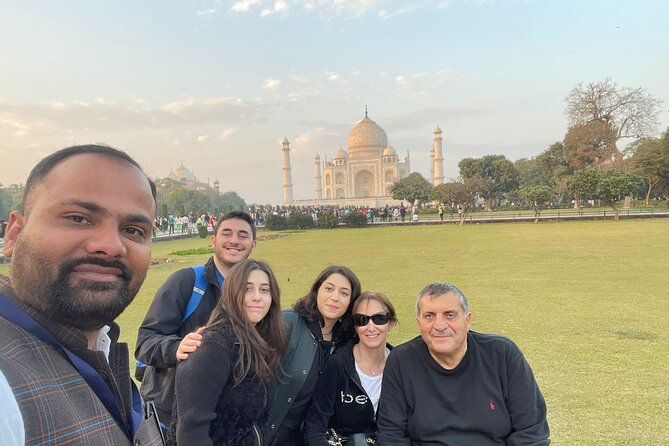
I also like the “two Taj moments” approach: a calm sunrise Taj Mahal visit followed by a sunset viewing spot across the river. And the guide experience looks strong from the feedback, with names like Praveen and Rajiv Gupta showing up as experts who help with timing, entry lines, and even great photo spots.
One possible drawback: monument entrances are not included, so your real day-by-day cost depends on which ticketed sites you choose and how many you add. Also, Swaminarayan Akshardham is closed on Mondays, so check the day you land in Delhi.
In This Review
- Key Things That Make This Tour Work
- The Golden Triangle Route: what you’re really signing up for
- Day 1 in Delhi: from Qutub Minar and Jama Masjid to Lotus Temple calm
- Day 2 to Agra: the Yamuna Expressway transfer and the first Taj glow
- Day 3: sunrise Taj Mahal and Agra Fort, then onward to Jaipur
- Day 4 in Jaipur: Amer’s ramparts, City Palace rooms, and Hawa Mahal’s wind facade
- Day 5 back to Delhi: a straight shot home (with airport drop)
- Price and value: what $210 covers, and what you should budget for next
- How to make the most of a tight schedule without feeling rushed
- Should you book the 5-Day Golden Triangle tour from Delhi?
- FAQ
- What cities are included in this 5-day Golden Triangle tour?
- How long is the tour?
- Is pickup offered?
- Is the tour private?
- Are monument entrance tickets included?
- How many nights of accommodation are included?
- Are meals included?
- Is there a stop that is free of charge?
- Is Swaminarayan Akshardham closed on any day?
- What is the cancellation policy?
Key Things That Make This Tour Work
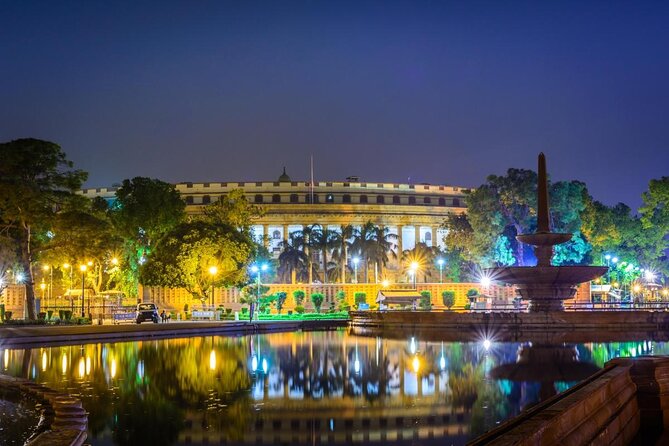
- Sunrise Taj Mahal + sunset viewpoint: two different moods for the same iconic monument
- English-speaking guide support: help with entry timing and navigating crowds, reported by multiple guides
- A/C vehicle across long transfers: a big deal on Delhi–Agra–Jaipur road days
- A lot of major sights, plus quieter breaks: think Raj Ghat and the Lotus Temple, not just ticket counters
- Monday closure at Swaminarayan Akshardham: you may need an alternate plan that day
The Golden Triangle Route: what you’re really signing up for
This is a 5-day, private-group style tour in India’s Golden Triangle—Delhi, Agra, Jaipur—built around guided sightseeing plus door-to-door transport. You’ll have 4 nights of accommodation and breakfast included for 4 mornings, with an air-conditioned vehicle handling the long drives.
The price is listed at $210 per person, and the booking pattern is pretty “early bird”: on average it’s booked about 43 days ahead. For me, that signals one thing: the best timing options (especially for early Taj visits) are easier when you lock in early.
Where value gets tricky is the line between included and not included. Monument entrance fees are not included, so you should budget for tickets separately while you plan your days.
Delhi, Agra and Jaipur: more full circuits



Day 1 in Delhi: from Qutub Minar and Jama Masjid to Lotus Temple calm
Delhi day is intense—in a good way. You’re stacking major sights from different eras of the city, which helps you understand how layered Delhi really is. The pace is tourist-packed, so it’s not a day for slow, casual wandering.
Start with Qutub Minar, a tall tapering minaret in the Qutub complex and part of a UNESCO World Heritage area. It’s visually stunning even if you just want the tower as a skyline landmark. The entry ticket is not included, so plan that cost if you want to go inside.
Next is Jama Masjid, Old Delhi’s big Friday Mosque, built between 1644 and 1658 under Shah Jahan. It can hold a huge crowd, and the setting—raised above the surrounding lanes—gives you that “Old Delhi is loud” feeling. The ticket isn’t included, but the atmosphere is worth it.
Then you pivot hard into quiet with the Lotus Temple. This Bahá’í House of Worship is known for its flowerlike shape and is open to all, which makes it a great stop even if you’re not sure what religion you’ll relate to. Here, entry is free, and you get a full hour to slow down.
After that, you get a respectful pause at Raj Ghat, a well-kept park with the black-marble platform marking where Mahatma Gandhi was cremated in 1948. It’s short on paper—about 30 minutes—but it lands emotionally more than most monuments do. Entry is free.
From there, you’ll see several landmark buildings and memorials that are free to visit from the outside or with limited access—including Rashtrapati Bhavan (President House), Parliament House, and India Gate. India Gate, designed by Lutyens, is the WWI memorial arch for about 90,000 Indian army soldiers and other campaigns—big scale, simple message.
Finally, you have Swaminarayan Akshardham, described as Delhi’s largest temple and known for extremely detailed stonework. Entry is listed as free, but there’s a key catch: it’s closed on Mondays. If your Delhi day falls on a Monday, assume you’ll miss it unless your operator swaps something out.
Practical note: day 1 is a long sight loop. Bring water, wear shoes that can handle uneven walking, and don’t plan to “optimize” every single stop—you’ll spend energy arguing with your own schedule.
Day 2 to Agra: the Yamuna Expressway transfer and the first Taj glow
Day 2 starts with the road trip—about 3 hours from Delhi to Agra. The drive is part of the experience here because you’re seeing the shift from city noise toward the Taj’s historical zone. You check in to your pre-booked hotel once you arrive.
That first Agra stop is Tomb of Itimad-ud-Daulah, often called the Baby Taj. It’s a Mughal mausoleum, frequently described as a “jewel box,” and it’s the kind of place where the beauty is in the details rather than the scale. Entry is not included, but the time on-site (about 45 minutes) is enough to appreciate why people compare it to the Taj.
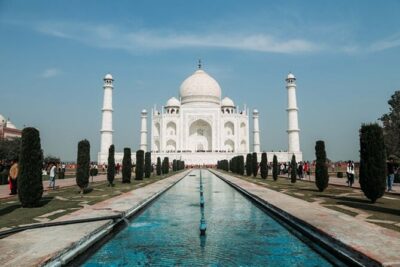
Then you get your first Taj-adjacent moment: a Taj Mahal sunset viewpoint across the river, aimed at seeing it away from the busiest crowd and catching golden light. Entry is not included here either, but you’re not just chasing views—you’re learning the Taj’s “second look,” the one where reflections and sky color matter as much as the marble.
Why I think this matters: the Taj Mahal isn’t one look. If you see it only once, you tend to remember the idea. Seeing it again at a different time helps you remember the building itself—edges, symmetry, and how light changes the stone.
Day 3: sunrise Taj Mahal and Agra Fort, then onward to Jaipur
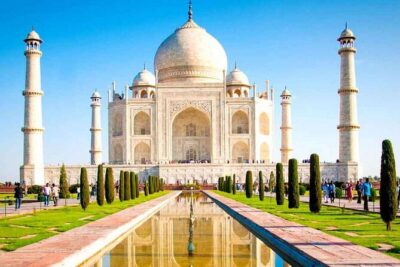
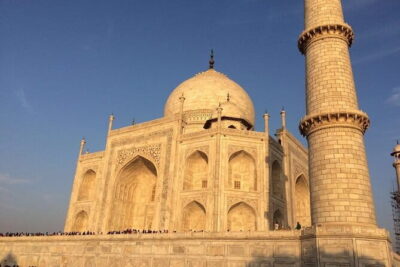
Day 3 is the big headline: Taj Mahal at sunrise. You get about 2 hours here, and sunrise usually means two things: kinder light and cooler temperatures. The story of the Taj is tied to Shah Jahan and his wife Mumtaz Mahal, with the construction linked to the early-to-mid 1600s. Since tickets aren’t included, you’ll want to be ready to pay the entrance fee separately.
If you’re the type who loves architecture, this is your day. The Taj isn’t just pretty; it’s about proportion and craftsmanship. And it’s one of those rare places where your brain goes quiet because the details are too good to argue with.
After the Taj, you’ll head back to your hotel for breakfast and then check out. After that comes Agra Fort, another UNESCO World Heritage site and the Mughal emperors’ main residence. Agra Fort is all about palaces, balconies, gardens, and that lived-in feel of power—very different from the Taj’s romantic stand-alone style. Entry isn’t included, and the stop length is about 45 minutes.
Then the day transitions toward Jaipur with a quick “detour” stop: Chand Baori (step well) in Abhaneri. This is one of Rajasthan’s most spectacular step wells, known for its carved walls and massive stepped structure. It’s also tied to rainwater harvesting, which gives it more meaning than just a photo opportunity. You’ll have about 1 hour here, and entry is not included.
Finally, you drive to Jaipur, check in, and rest. This part of the day is practical: you arrive with enough time to reset before a full Jaipur sightseeing day.
Tip that helps: for sunrise, plan layers. Even if you’re not freezing, you’ll likely appreciate a warm layer before the sun arrives.
Day 4 in Jaipur: Amer’s ramparts, City Palace rooms, and Hawa Mahal’s wind facade

Jaipur day is where the tour leans into “forts and palaces,” with a classic mix of dramatic viewpoints and formal heritage stops.
You’ll start with Amber Palace (Amer Fort), located high on a hill about 11 km from Jaipur. You get about 2 hours here, and entry isn’t included. Amber Fort’s strength is that it feels like a whole world—not one monument—so you’ll want to wander with your guide long enough to understand the layout and the standout sections.
Next is the City Palace of Jaipur, a palace complex tied to the Maharaja of Jaipur and the Kachwaha Rajput clan. You have about 2 hours here. Like other ticketed stops, entry isn’t included, but it’s worth it if you want context for Jaipur’s royal story, not just views from the outside.
Then you get a quick photo stop at Jal Mahal, a palace sitting on Man Sagar Lake. The stop is around 30 minutes, and entry isn’t included. Even if you don’t linger, it’s a strong visual break between the heavier palace complexes.
After that, it’s Jantar Mantar, a UNESCO site built in 1734. This is a collection of nineteen astronomical instruments created by Rajput king Sawai Jai Singh II. You’ll have about 1 hour here, and entry isn’t included. If you like science-as-history, this is one of the most interesting stops in Jaipur because it explains how people measured the sky long before electronics.
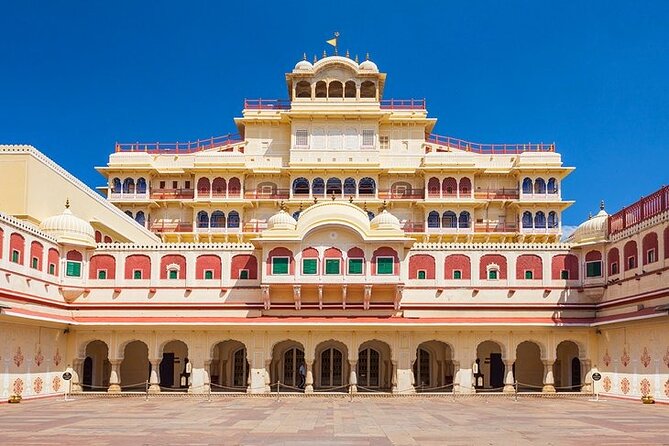
You end with Hawa Mahal (Palace of Wind), the iconic five-storey facade built in 1799. You’ll have about 1 hour, and entry isn’t included. It’s designed like a honeycomb of windows, and from street level it looks almost unreal—like a decorative wall that somehow became a building.
The plan also gives you time for lunch at a local restaurant after the full-day sightseeing. That’s a helpful structure because it prevents you from hunting for food on a tight schedule.
Worth putting side by side with this New Delhi pick:

Day 5 back to Delhi: a straight shot home (with airport drop)
On the final day, you’ll have breakfast, check out, and then drive from Jaipur to Delhi—about 5 hours. The tour is designed to drop you at Delhi airport or your location, depending on what you choose.
This day is intentionally low-stress compared with the sightseeing days. There’s nothing wrong with that. After two hard city-hopping days (Agra and Jaipur especially), it’s nice to have a clean finish.
Price and value: what $210 covers, and what you should budget for next
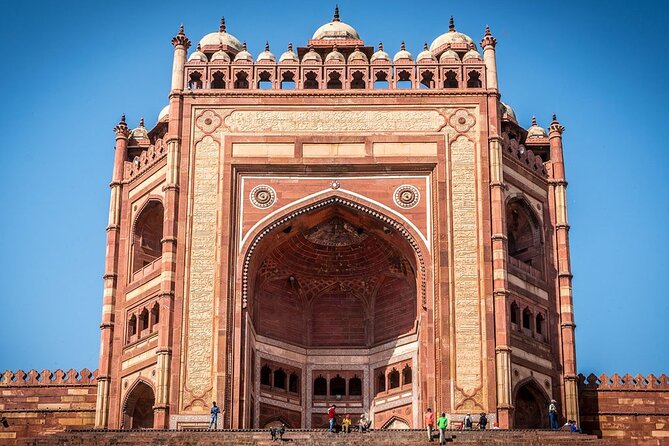
Let’s talk value in plain terms.
Your price is $210 per person, and the included pieces are substantial for a 5-day loop:
- Professional English-speaking guide
- Air-conditioned vehicle throughout
- 4 nights accommodation
- Breakfast for 4 mornings
- All tolls and taxes
What’s not included is equally important: monument entrance tickets. That means your final “all-in” number depends on how many paid entries you use and what ticket prices are at the time you travel.
For me, the real value is in reducing decision fatigue. The tour handles the transport, the guided context, and the sequence of sights across three cities. If you’ve ever tried to “DIY” the Golden Triangle, you know it can become a stressful pile of ticket lines, timing mistakes, and wasted transit time.
One more thing: the tour is described as private, meaning only your group participates. If you’re traveling as a couple, family, or small group, this can be more comfortable and often feels more efficient than a large bus group.
And since cancellation is free up to 24 hours in advance (per the tour rules), you get a bit of breathing room if your schedule changes.
How to make the most of a tight schedule without feeling rushed
This trip is packed, but you can still make it feel smooth with a few smart moves.
1) Don’t treat tickets as an afterthought.
Because monument entrances aren’t included, set aside money early. Even if you plan to pay at each stop, having a budget avoids the “wait—how much?” moment that kills momentum.
2) Use the guide for timing.
The feedback you shared has a clear theme: guides like Praveen (and other named guides) are praised for knowing how to manage entry lines, help you navigate the process, and get you to the best places for photos. When you arrive at a ticketed site, ask your guide what matters most first—timing beats extra wandering when your schedule is tight.
3) Pack for early mornings and long days.
You’ll do sunrise Taj Mahal, plus long road days. Wear breathable clothes, bring a light layer for dawn, and carry a small water bottle. Delhi-to-Agra-to-Jaipur days mean your feet will do more work than you think.
4) Know the Monday issue.
Swaminarayan Akshardham is closed on Mondays. If your Delhi day could land on Monday, don’t assume you’ll see it. Ask what the plan is for that slot.
5) Keep your expectations realistic.
This isn’t a “slow travel” tour. It’s for people who want a structured overview of three cities with major landmarks—then maybe add extra days later if they want to linger.
Should you book the 5-Day Golden Triangle tour from Delhi?
I’d book this if you want a clear route through Delhi, Agra, and Jaipur with transport handled, a guide who speaks English, and smart scheduling like sunrise Taj Mahal plus a sunset viewpoint. It also works well if you’re traveling with family or multiple generations and you value safety and comfort in road transfers—especially with an air-conditioned vehicle.
I’d think twice if you hate early mornings, you’re very cost-sensitive, or you want lots of free time to roam without structure. Since entrance fees are extra, your final budget may be higher than the headline price.
If your goal is the classic Golden Triangle with minimal stress and maximum heritage highlights in five days, this tour has the right ingredients.
FAQ
What cities are included in this 5-day Golden Triangle tour?
The tour covers Delhi, Agra, and Jaipur.
How long is the tour?
It runs for 5 days (approx.).
Is pickup offered?
Yes, pickup is offered.
Is the tour private?
Yes. It’s described as a private tour/activity, so only your group participates.
Are monument entrance tickets included?
No. Monuments entrances are not included.
How many nights of accommodation are included?
You get 04 nights accommodation.
Are meals included?
Yes, breakfast is included for 4 mornings.
Is there a stop that is free of charge?
Yes. For example, Lotus Temple, Raj Ghat, Rashtrapati Bhavan, Parliament House, and India Gate are listed as free. Swaminarayan Akshardham is also listed as free, but it has a closure note.
Is Swaminarayan Akshardham closed on any day?
Yes. Swaminarayan Akshardham is closed on Monday.
What is the cancellation policy?
Cancellation is free up to 24 hours before the experience starts for a full refund. If you cancel less than 24 hours before, you don’t receive a refund.
More Tours in New Delhi
- Old & New Delhi City Tour – Half or Full Day Options Available
★ 5.0 · 4,811 reviews - Half Day Private Delhi City Tour
★ 5.0 · 4,474 reviews - Same Day Taj Mahal, Agra Fort & Baby Taj Tour from Delhi by Car
★ 5.0 · 4,304 reviews - Taj Mahal Day Tour from Delhi by Superfast Train – TOP RATED TOUR
★ 5.0 · 4,166 reviews - Delhi: Old and New Delhi Private Full or Half-Day Tour
★ 4.9 · 3,776 reviews
More Tour Reviews in New Delhi
- Old & New Delhi City Tour – Half or Full Day Options Available
★ 5.0 · 4,811 reviews - Half Day Private Delhi City Tour
★ 5.0 · 4,474 reviews - Same Day Taj Mahal, Agra Fort & Baby Taj Tour from Delhi by Car
★ 5.0 · 4,304 reviews - Taj Mahal Day Tour from Delhi by Superfast Train – TOP RATED TOUR
★ 5.0 · 4,166 reviews - Delhi: Old and New Delhi Private Full or Half-Day Tour
★ 4.9 · 3,776 reviews
The Full Golden Triangle, More Options
- 3-Days Private Golden Triangle Tour: Delhi, Agra & Jaipur by Car
★ 5.0 · 1,107 reviews - 3-Days Private Golden Triangle Tour: Delhi, Agra & Jaipur by Car
★ 5.0 · 1,098 reviews - 3-Day Delhi, Agra and Jaipur Private Tour – India Golden Triangle
★ 5.0 · 812 reviews - Four-Day Private Luxury Golden Triangle Tour to Agra and Jaipur From New Delhi
★ 5.0 · 807 reviews - 5 Nights 6 Days Private Golden Triangle Tour – Delhi Agra Jaipur
★ 5.0 · 574 reviews
Just added: more New Delhi reviews to browse
- 4 days Golden Triangle Tour★ 5.0 · 3 reviews
- Discover Old & New Delhi: Private Tour with Street Food★ 5.0 · 3 reviews
- Taj Mahal Tour From Delhi By Private Car★ 4.5 · 3 reviews
- Golden Triangle Tour 5 Days★ 5.0 · 3 reviews
- Taj Mahal: Express Entry Ticket For Sunset Tour with guide★ 5.0 · 3 reviews
- Agra Taj Mahal Sunrise & Sunset Tour from Delhi★ 5.0 · 3 reviews
Golden Triangle Tours, compared.
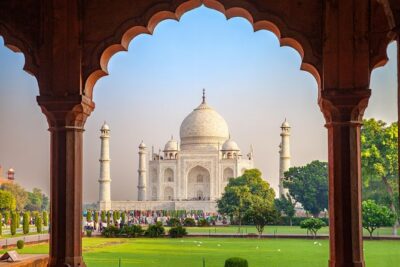 ★ 5.03-Days Private Golden Triangle Tour: Delhi, Agra & Jaipur by CarFrom $1271,107 reviews
★ 5.03-Days Private Golden Triangle Tour: Delhi, Agra & Jaipur by CarFrom $1271,098 reviews
★ 5.03-Days Private Golden Triangle Tour: Delhi, Agra & Jaipur by CarFrom $1271,107 reviews
★ 5.03-Days Private Golden Triangle Tour: Delhi, Agra & Jaipur by CarFrom $1271,098 reviews
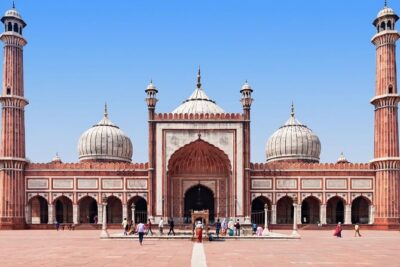 ★ 5.03-Day Delhi, Agra and Jaipur Private Tour – India Golden TriangleFrom $110812 reviews
 ★ 5.0Four-Day Private Luxury Golden Triangle Tour to Agra and Jaipur From New DelhiFrom $160807 reviews
 ★ 5.05 Nights 6 Days Private Golden Triangle Tour – Delhi Agra JaipurFrom $240574 reviews
 ★ 5.04 Days Golden Triangle TourFrom $146499 reviews
 ★ 5.0Private Car and Drive for Golden Triangle (4N/5D)From $167451 reviews
 ★ 5.0Private Golden Triangle Tour Delhi Agra Jaipur ( Top Rated )From $148436 reviews