
Reviewed · CHANDNI CHOWK TOURS
From Chaats to Chandni Chowk: A Gourmet Journey
Five streets, one full stomach. This 4-hour Old Delhi experience strings together Chandni Chowk street food, major sights like Jama Masjid, and hands-on cooking at a Sikh temple kitchen. I especially love the long, sensory time in the spice area and the way the stops keep food first, not just photos.
The other thing I like is the small group setup (up to 18), which makes it easier to move, ask questions, and actually taste what’s put in front of you. One thing to consider: you’ll spend time around busy market lanes, so wear shoes you can stand in and expect a bit of crowd energy.
In This Review
- Key highlights you’ll care about
- Why this Old Delhi route works (and why it’s fun)
- Price and value: what $40 buys you in real terms
- Getting picked up and moving through Old Delhi
- Stop 1: Sunehri Masjid and the Old Delhi ride-by context
- Stop 2: Jama Masjid—big-scale architecture and a clear sense of place
- Stop 3: Chandni Chowk spice market time (this is the real star)
- The Sikh temple 24-hour kitchen and chapatti-making lesson
- The chow menu: what you’ll likely taste on this route
- Passing big New Delhi sights at a food-tour pace
- Guides, group size, and why Rishabh shows up in the story
- Drop-off in the evening: finishing without stress
- Who should book this tour (and who might want to rethink)
- Should you book From Chaats to Chandni Chowk?
- FAQ
- What’s the duration of the tour?
- Where does pickup happen?
- What tastings are included?
- Are entry tickets included?
- Is the tour vegetarian-friendly?
- Is this a private tour?
Key highlights you’ll care about
- Chandni Chowk spice market time focused on what spices do, not just what they look like
- Tuk-tuk rides to keep you from losing your whole trip to traffic and walking
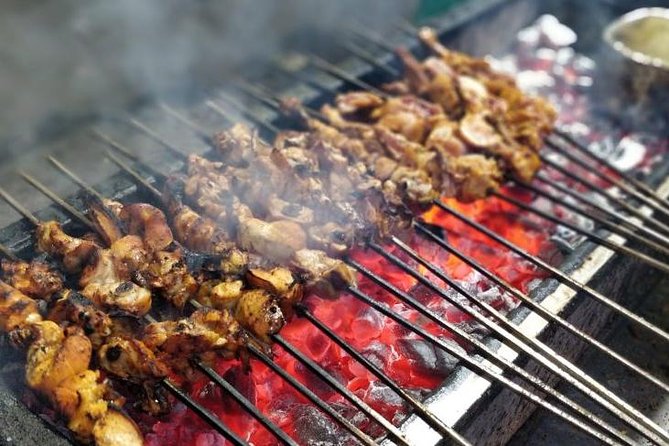
- Iconic tastings like pani puri, pakoras, stuffed parathas, paneer masala, plus Indian desserts
- Landmark pairing with Jama Masjid and nearby Old Delhi context
- Sikh temple 24-hour kitchen where you learn chapatti-making
- Local English-speaking guide with professional, friendly support (including Rishabh, mentioned in reviews)
Why this Old Delhi route works (and why it’s fun)
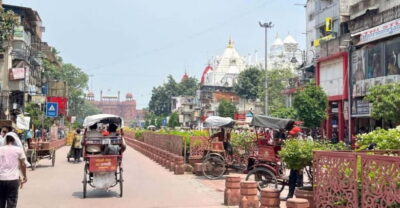
This tour is built like a food loop with cultural stops attached. You start in the Old Delhi orbit around Chandni Chowk, where street food is the main language. Then you layer in big landmarks so you understand why this neighborhood smells the way it does and how the city organizes daily life around food and faith.
I like that it doesn’t feel like a “checklist” tour. Even when you’re at a monumental place like Jama Masjid, the focus stays practical: how locals use spaces, what the area means, and what you’re going to eat next. It’s the kind of outing where you walk away with both a full stomach and some real context.
And yes, you do end with sweets. Delhi knows how to finish a meal.
Back into the lanes of Chandni Chowk



Price and value: what $40 buys you in real terms
At around $40 per person for a roughly 4-hour outing, the value comes from the mix of included extras:
- Food and drinks during the tastings
- Bottled water and refreshing Indian drinks
- A local English-speaking guide
- A small group limit (up to 18)
- A tuk-tuk ride connected to the pickup and the flow of the tour
- Admission at Sunehri Masjid (ticket free)
- And for Jama Masjid, the ticket is included if you selected the ticket option
That’s the part people miss when they only look at the headline price. Food tours get expensive fast when tastings are “optional” add-ons. Here, you’re paying for a structured route that includes the eating and the guide time.
One more value note: the tour is suitable for both vegetarians and non-vegetarians, so you’re not forced into an “all one menu” situation. You’ll still get a cohesive experience even if your taste is more veggie or more meat-forward.
Getting picked up and moving through Old Delhi
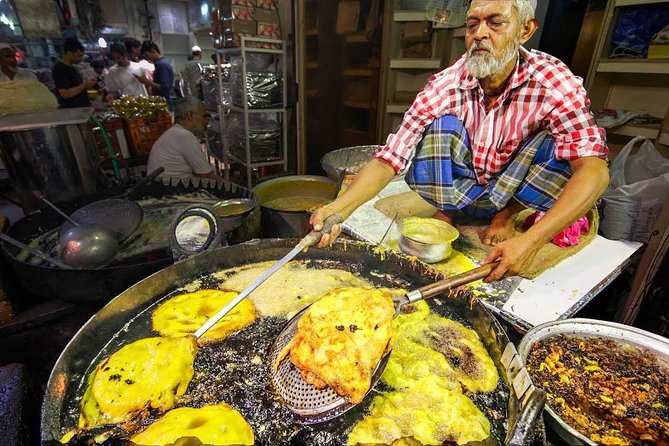
Old Delhi is not a place you want to conquer alone. Streets tighten up, traffic gets unpredictable, and the best way to stay on schedule is to let the tour handle the movement.
If you choose the option, pickup is available from Delhi, Noida, Gurugram, Ghaziabad, and Faridabad. Then you meet the guide near Sunehri Masjid, and they arrange a tuk-tuk ride as you travel past Old Delhi bazaars. You’re not spending the entire tour stuck in “how do I get there?” moments.
This matters because it keeps your attention where it belongs: on what you’re about to eat and learn. Also, a tuk-tuk helps the group keep together, which is important when you’re heading into market lanes where it’s easy to lose a slow walker.
Stop 1: Sunehri Masjid and the Old Delhi ride-by context
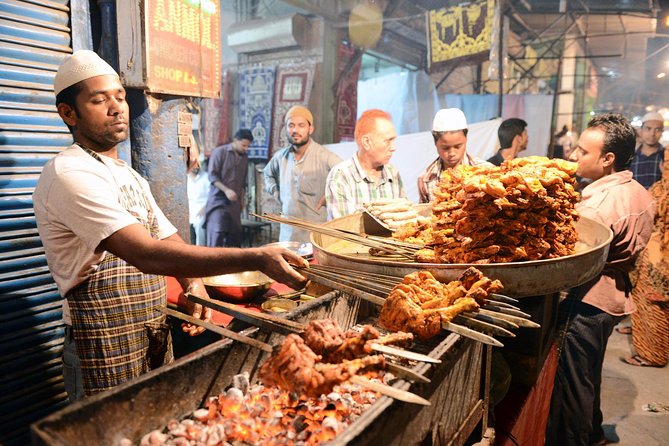
You start at Sunehri Masjid, where the foodie guide meets you and sets up the tuk-tuk ride. The timing here is short—around 10 minutes—but it works as a warm-up. You get oriented before you go deeper into the lanes.
Even better, the guide shares what the bazaars mean to the local community while you’re passing them. You’ll notice that helps your brain “map” the area faster. Instead of just seeing stalls and crowds, you start understanding the neighborhood logic: where people gather for staples, spices, snacks, and daily errands.
Admission here is free, so there’s no added cost trap.
Stop 2: Jama Masjid—big-scale architecture and a clear sense of place
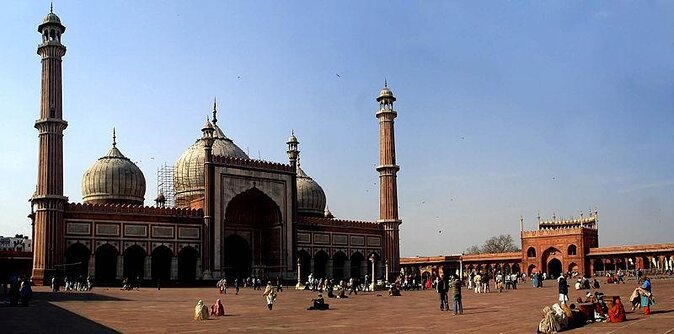
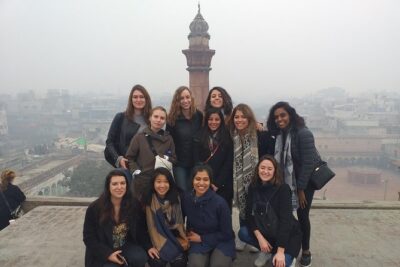
Next you head to Jama Masjid, the largest mosque in India. You get about 30 minutes to explore the red sandstone courtyard and take in the space.
A few details that make this stop more than a photo stop:
- It was built in 1656
- The work involved about 5,000 workers
- It’s positioned opposite the Red Fort, which helps you visualize the Old Delhi power center
The ticket is listed as included if you selected the ticket option. So if you care about avoiding surprise add-ons, double-check what you selected when booking.
One practical note: you’ll be walking and standing. The courtyard is open and active, so plan for sun, wind, and crowds depending on the day.


Stop 3: Chandni Chowk spice market time (this is the real star)
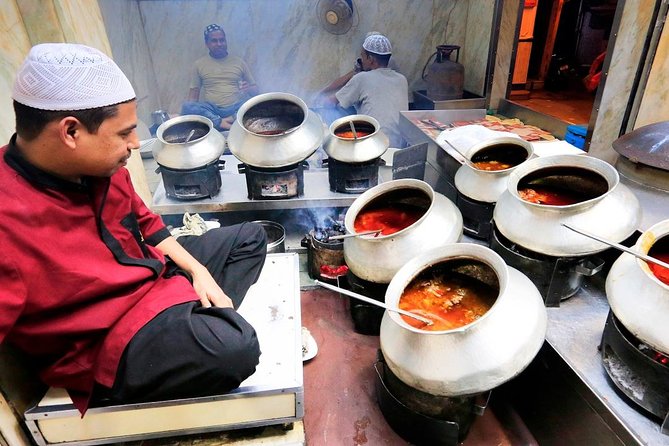
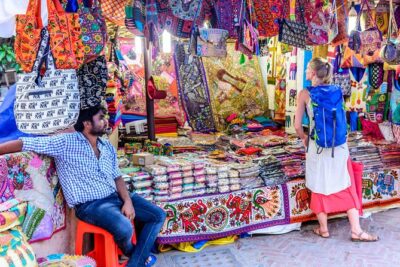
If you came for food, this is the part that usually turns into the favorite memory. The tour gives you around 45 minutes in Chandni Chowk’s spice market, and the focus is on understanding spices—what they’re used for and how they change flavor.
This isn’t just “look at powders” time. You’ll learn facts and uses of spices in a way that makes later bites click. When you taste something smoky, citrusy, garlicky, or warm-spiced, you’ll have a better sense of what you’re reacting to.
For people who love cooking, this portion is especially useful. For people who just love eating, it’s still fun because you start tasting with curiosity instead of autopilot.
The Sikh temple 24-hour kitchen and chapatti-making lesson
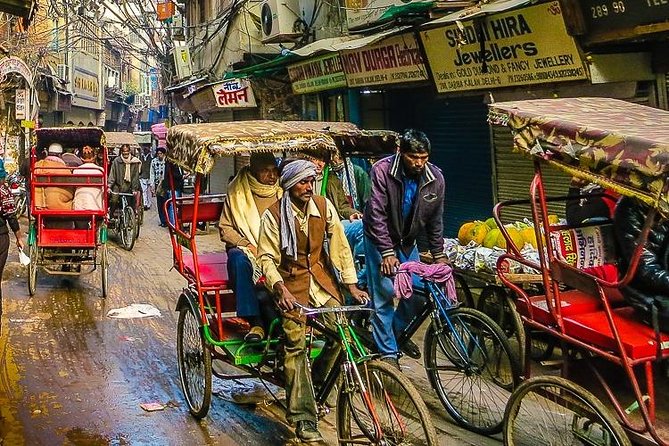
A big part of this experience is a stop at a Sikh temple with a 24-hour kitchen, where you learn chapatti-making. This is the cultural bridge between food as street snack and food as everyday community service.
What I like about this segment is that it’s hands-on. You’re not just watching a ritual from the outside. You get into the rhythm of making dough and working the process with guidance.
Also, the chapatti angle matters in Delhi food culture. Flatbreads show up everywhere—alongside curries, alongside snacks, sometimes as the base for a meal you thought you were just having “a bite of.”
Even if your cooking skills are shaky, it’s one of those activities where you leave with the satisfaction of having actually tried.
The chow menu: what you’ll likely taste on this route
The tour is framed as a “gourmet journey,” and the included tastings lean classic Delhi street and comfort flavors. Based on what this experience promises, you can expect a sequence that typically includes:
- Pani puri (often the first shock of flavor: crisp shell, tangy filling, and a spicy hit)
- Pakoras (fried snacks that bring crunch and spice)
- Stuffed parathas (hearty, filling, and perfect between sightseeing stops)
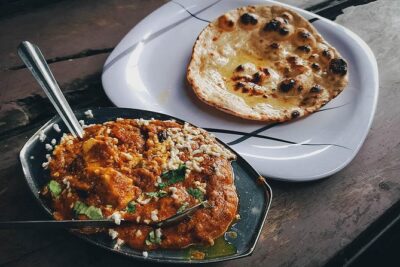
- Paneer masala curry (creamy spiced comfort if you’re going vegetarian or want a dairy-forward option)
- Indian desserts to finish
I like how the menu mix balances textures: crunchy, crispy, soft, saucy. It also keeps you from getting stuck in one flavor mode too long.
From the reviews, I’m also picking up that the meat options can include things like chicken tikka alongside paneer items such as paneer tikka. If you’re non-vegetarian, that’s a good sign that you won’t be forced into a limited menu.
One practical consideration: street food can be spicy. If you have a heat limit, tell the guide early. A good guide can often steer you toward less intense bites while still keeping the variety.
Passing big New Delhi sights at a food-tour pace
After Old Delhi, the tour shifts to classic landmarks you’ve probably seen in pictures—but you’re seeing them from the road, at an easier pace than a full sightseeing day.
On the way, you pass:
- President House (the former residence for the Viceroy of India, now Rashtrapati Bhavan)
- India Gate, including the Tomb of the Unknown Soldier
- Names of 13,300 Indian army servicemen are carved on the wall who died during the First World War
- Parliament House, housing the Lok Sabha and Rajya Sabha
This part won’t feel like a museum visit. It’s more like getting your bearings in the larger city while your evening is winding down. If you’ve got limited time in Delhi, this is a smart way to gain perspective without sacrificing your food time.
Guides, group size, and why Rishabh shows up in the story
This is a privately guided tour, but with a small group cap of 18 guests, which is a rare sweet spot. You get structure and personal attention, but you’re not trapped in a massive group where questions go unanswered.
Several reviews praise professional, organized arrangements, and one name that pops up is Rishabh. When a guide is consistently mentioned, it usually means you got clear guidance and smooth coordination—especially important on a food tour where you’re moving through crowded areas and timing tastings correctly.
Local English-speaking guidance also matters. You’re more likely to understand what you’re eating (and why) when the explanations are clear.
Drop-off in the evening: finishing without stress
The tour ends in the evening, with a complimentary drop-off available anywhere in Delhi, Noida, Gurugram, Ghaziabad, or Faridabad if you selected the option.
That’s a practical win. After four hours of eating and walking, the last thing you want is to figure out transport at the end of a long, fun day.
Who should book this tour (and who might want to rethink)
This works best for:
- Food lovers who want both street snacks and a more structured culinary path
- People short on time who still want a meaningful Old Delhi day
- Anyone who likes culture that connects to daily life, especially through the chapatti lesson
You might want to rethink if:
- You want a slow, sit-down-only day. This is structured, and you’ll be moving through multiple stops.
- You can’t handle crowds at all. Market areas can be busy even when the tour is well managed.
- You dislike spicy food. You can usually adjust, but you’ll still encounter Indian spices.
Should you book From Chaats to Chandni Chowk?
If you want the best of Old Delhi without spending your day planning, I think this is a solid buy. The included tastings, the spice market learning time, and the chapatti-making in a temple kitchen give you more than “just food.”
At around $40 for a 4-hour outing with guided stops, drinks, and transport support, the value is strong—especially if you pick the option that includes the Jama Masjid ticket.
My final take: this is a great first Delhi food experience. It gives you flavor, context, and a satisfying ending, without turning your schedule into a marathon.
FAQ
What’s the duration of the tour?
It runs for approximately 4 hours.
Where does pickup happen?
Pickup is offered from anywhere in Delhi, Noida, Gurugram, Ghaziabad, and Faridabad if you select that option.
What tastings are included?
The tour includes tasting iconic Delhi foods such as pani puri, pakoras, stuffed parathas, paneer masala curry, and it ends with Indian desserts.
Are entry tickets included?
Sunehri Masjid admission is listed as free. Jama Masjid admission is included if you select the option where tickets are included.
Is the tour vegetarian-friendly?
Yes. The tour is suitable for vegetarians and non-vegetarians.
Is this a private tour?
Yes. It’s a private tour/activity where only your group will participate, with a small group limit of up to 18 guests.
More Tour Reviews in New Delhi
- Old & New Delhi City Tour – Half or Full Day Options Available
★ 5.0 · 4,811 reviews - Half Day Private Delhi City Tour
★ 5.0 · 4,474 reviews - Same Day Taj Mahal, Agra Fort & Baby Taj Tour from Delhi by Car
★ 5.0 · 4,304 reviews - Taj Mahal Day Tour from Delhi by Superfast Train – TOP RATED TOUR
★ 5.0 · 4,166 reviews - Delhi: Old and New Delhi Private Full or Half-Day Tour
★ 4.9 · 3,776 reviews
Deeper into Chandni Chowk
- Old Delhi: Private Tour of Chandni Chowk, Tuk Tuk & Food
★ 4.9 · 345 reviews - Old Delhi Street Food Tour – Explore Spices in Chandni Chowk
★ 5.0 · 334 reviews - Chandni Chowk Delhi Food Tour with 15+ Tastings
★ 5.0 · 285 reviews - Chandni Chowk Old Delhi Food Tour with Spice Market
★ 5.0 · 90 reviews - Delhi: Private Chandni Chowk, Food Tasting, & Tuk-Tuk Tour
★ 4.8 · 68 reviews
Just added: more New Delhi reviews to browse
- 4 days Golden Triangle Tour★ 5.0 · 3 reviews
- Discover Old & New Delhi: Private Tour with Street Food★ 5.0 · 3 reviews
- Taj Mahal Tour From Delhi By Private Car★ 4.5 · 3 reviews
- Golden Triangle Tour 5 Days★ 5.0 · 3 reviews
- Taj Mahal: Express Entry Ticket For Sunset Tour with guide★ 5.0 · 3 reviews
- Agra Taj Mahal Sunrise & Sunset Tour from Delhi★ 5.0 · 3 reviews
Chandni Chowk Tours, compared.
 ★ 4.9Old Delhi: Private Tour of Chandni Chowk, Tuk Tuk & FoodFrom $70345 reviews
 ★ 5.0Old Delhi Street Food Tour – Explore Spices in Chandni ChowkFrom $34334 reviews
 ★ 5.0Chandni Chowk Delhi Food Tour with 15+ TastingsFrom $39285 reviews
 ★ 5.0Chandni Chowk Old Delhi Food Tour with Spice MarketFrom $4590 reviews
 ★ 4.8Private Chandni Chowk, Food Tasting, & Tuk-Tuk TourFrom $268 reviews
 ★ 5.0Old Delhi: Private Tour of Chandni Chowk, Tuk Tuk RideFrom $2344 reviews
★ 4.7Private Chandni Chowk, Food Tasting, & Tuk-Tuk TourFrom $1414 reviews
★ 5.0Old Delhi: Private Tour of Chandni Chowk, Tuk Tuk RideFrom $2344 reviews
★ 4.7Private Chandni Chowk, Food Tasting, & Tuk-Tuk TourFrom $1414 reviews
 ★ 4.5Old Delhi: Red Fort, Jama Masjid & Chandni Chowk by Tuk TukFrom $1011 reviews
Browse the lists this tour appears in