

Reviewed · GOLDEN TRIANGLE TOURS
From Delhi : 3 Day Private Luxury Golden Triangle Tour By Car
Sunrise at the Taj changes everything in 3 days. This private luxury Golden Triangle tour by car strings together UNESCO monuments, Old Delhi culture, and iconic Jaipur sights without making you manage the logistics.
I especially like the early Taj Mahal time, with guided time inside, so you’re not just staring from a distance. I also love how the Delhi portion includes a rickshaw ride through Old Delhi’s lanes and markets, which turns sightseeing into a real slice of daily life.
One possible drawback: the schedule is packed. You’ll cover a lot of ground with long road segments, and some stops are quick photo-and-walk moments—so you’ll want comfortable shoes and a calm pace.
In This Review
- Key Highlights You’ll Feel Immediately
- Golden Triangle by Private Car: Why It Works
- Day 1 in Delhi: Qutub Minar to Jama Masjid by Way of Chandni Chowk
- Qutub Minar and the UNESCO opening move
- Lotus Temple and India Gate: calm architecture breaks
- Government buildings as photo windows
- Agrasen Ki Baoli and Humayun’s Tomb: the quieter Mughal/Mughal-era mood
- Chandni Chowk, Jama Masjid, and a rickshaw ride through Old Delhi
- Red Fort and the drive to Agra
- Day 2 in Agra: Sunrise Taj Mahal, Agra Fort, Baby Taj, and Chand Baori
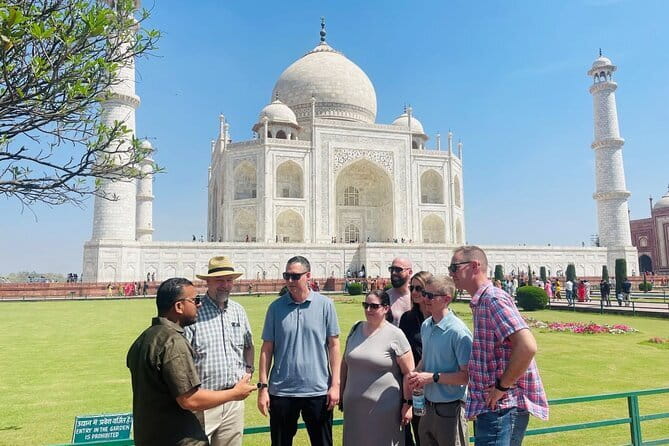
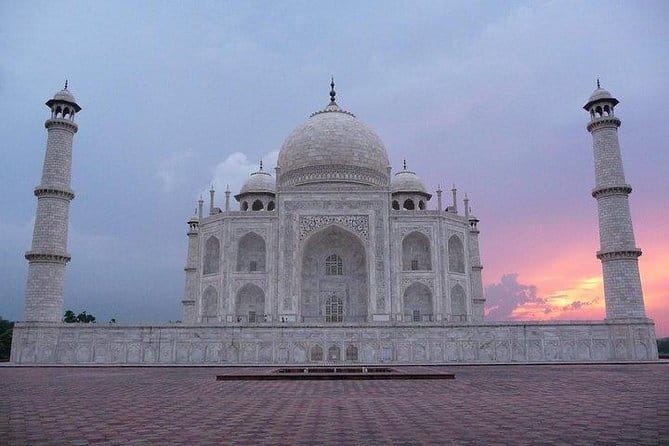
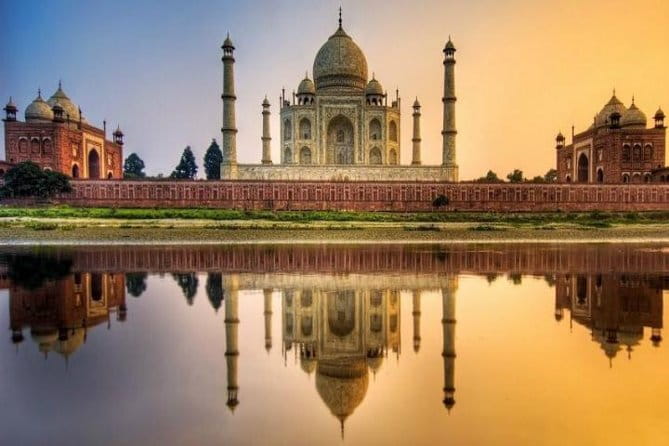
- Taj Mahal at sunrise, with guided time inside
- Agra Fort: where you feel the Mughal power in stone
- Itmad-ud-Daula (Baby Taj): smaller, but sharp
- A scenic detour: Chand Baori stepwell in Abhaneri
- Transfer to Jaipur and check-in
- Day 3 in Jaipur: Jal Mahal photos, City Palace, Jantar Mantar, and Hawa Mahal
- Panna Meena ka Kund: a quick stepwell stop with texture
- Jal Mahal: a palace in the middle of Man Sagar Lake
- City Palace: royal seat turned visitor experience
- Jantar Mantar: astronomy made in stone
- Hawa Mahal: the Palace of Winds from the outside
- Guides, Drivers, and What Private Luxury Actually Means
- Price and Value: How $20 Fits Against What You Get
- Timing, Weather, and a Smart Packing List
- Who Should Book This Tour (and Who Might Prefer Something Different)
- Should You Book This Delhi–Agra–Jaipur Tour?
- FAQ
- How many days is the Golden Triangle tour?
- Does the tour include pickup from Delhi?
- Is Taj Mahal included, and do you visit it at sunrise?
- Are entrance fees to monuments included?
- What else is included besides sightseeing?
- Do you get a rickshaw ride in Delhi?
- Is tipping included, and what is the cancellation rule?
Key Highlights You’ll Feel Immediately
- Sunrise Taj Mahal inside access with guided time that actually helps you see what you’re looking at
- UNESCO hits in multiple cities: Qutub Minar, Humayun’s Tomb, Agra Fort, and Jantar Mantar
- Old Delhi rickshaw ride + monument day for a sharper contrast than the typical Golden Triangle
- Jaipur’s big three: City Palace, Jantar Mantar, and Hawa Mahal (with a scenic detour to Jal Mahal)
- Private car comfort with onboard WiFi so you’re not stuck juggling apps, directions, or transfers
Golden Triangle by Private Car: Why It Works
A Golden Triangle trip can go two ways. Either it’s a checklist with constant shuttling, or it feels like a guided route where you get time to actually look. This one leans toward the second option because you travel by an air-conditioned private vehicle with private local guides for the sightseeing.
That matters more than it sounds. In Delhi, Agra, and Jaipur, the real challenge isn’t just seeing famous buildings. It’s handling traffic, timing entry lines, and moving between old and new city areas without wasting half your day.
You also get built-in structure: hotel nights for two days if you choose the hotel option, included entrance fees, and guided visits at the key monuments. In practice, that means you spend your energy on the sights, not on planning what to do next.
Delhi, Agra and Jaipur: more full circuits



Day 1 in Delhi: Qutub Minar to Jama Masjid by Way of Chandni Chowk
Delhi Day 1 has a smart rhythm: start with grand UNESCO-scale monuments, then slide into the heavy sensory world of Old Delhi.
Qutub Minar and the UNESCO opening move
You begin at Qutub Minar, a UNESCO World Heritage site tied to the early Delhi Sultanate era. The famous piece here is the minaret itself—built in 1193 by Qutub-ud-din Aibak, with a spiral staircase and design thought to reference the Minaret of Jam. This is a great first stop because it sets a visual anchor for the rest of the trip: you’re seeing Delhi’s layers from the very beginning.
Practical tip: plan to spend your hour slowly. Walk around for angles, and give yourself time to notice the details on the stonework rather than treating it like a quick stop.
Lotus Temple and India Gate: calm architecture breaks
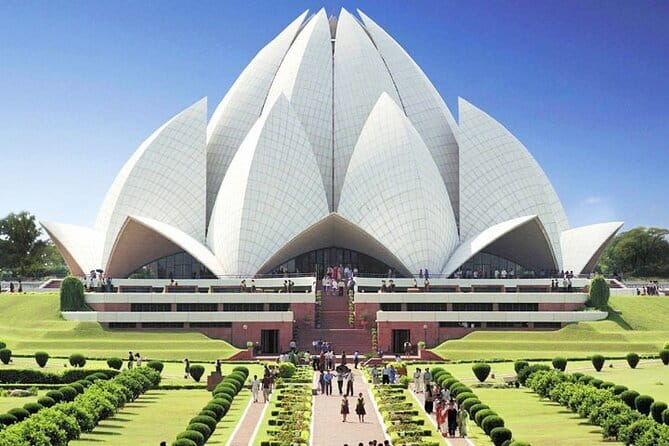
Next comes the Lotus Temple, built in 1986 with its flower-like shape—peaceful, award-winning, and visually easy to appreciate. It’s followed by India Gate, a war memorial near Rajpath dedicated to British India soldiers who died in wars. Even though it’s a memorial, it’s also an architectural statement, so it works well between the taller, older monuments.
Government buildings as photo windows
The route also passes Parliament House (Sansad Bhavan) and Rashtrapati Bhavan, both recognizable for their circular Ashoka Chakra concept and for the scale of the presidential estate and gardens. These stops are more about orientation and landmark views than deep museum time.
More private days with a guide of your own

Agrasen Ki Baoli and Humayun’s Tomb: the quieter Mughal/Mughal-era mood
Then the tour shifts to Agrasen Ki Baoli, a protected stepwell monument. It’s long—about 60 meters—and designed for a very different kind of sightseeing: less about grand facades, more about form and atmosphere. A short stop like this is a good reset, especially after busy central Delhi.
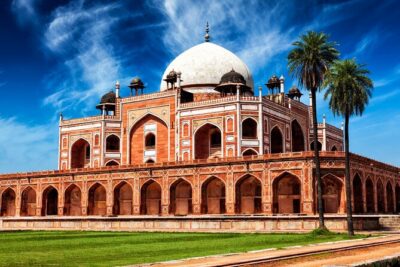
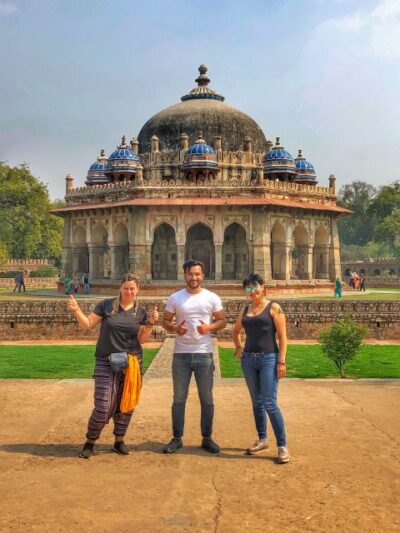
Humayun’s Tomb follows, commissioned in 1558 by Empress Bega Begum. This one tends to reward you most when you slow down. You’ll see it as a major Mughal milestone, and it also helps you understand why later sites in Agra look the way they do.
Chandni Chowk, Jama Masjid, and a rickshaw ride through Old Delhi
The center of gravity on Day 1 becomes Old Delhi. You get time at Chandni Chowk, where the markets are known for spices, dried fruit, silver jewelry, vivid saris, and even small shops tied to essential oils. It’s a place where you can shop without it feeling like a theme park—though it is busy, so keep your expectations for crowding realistic.
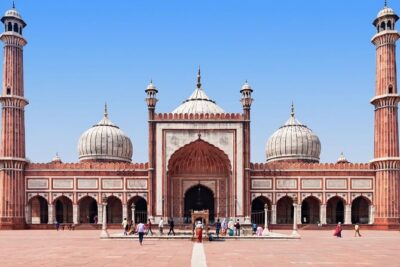
Then you visit Jama Masjid, one of the largest mosques in India, built between 1650 and 1656 by Shah Jahan. After that, you get a rickshaw ride in Old Delhi. The ride is described with historical context connected to the capital shift from Agra to Delhi in 1638 and Jahanara’s role in shaping the square and surrounding market. Even if you just treat that as background, the result is the same: the ride gives you a moving perspective you won’t get on foot.
Red Fort and the drive to Agra
You finish Delhi with Red Fort—Mughal residence for nearly 200 years until 1856—with museums inside. Then the long move begins. The tour includes a drive via the Yamuna Expressway route, with time for lunch as you head toward Agra, and then check in for your overnight stay.
Possible drawback to watch for on Day 1: it’s a big day. You’re hopping from grand monuments to markets, and the crowds around Old Delhi can eat your patience if you expect everything to feel calm and spacious.
Day 2 in Agra: Sunrise Taj Mahal, Agra Fort, Baby Taj, and Chand Baori
Day 2 is the payoff day. Agra is where the Golden Triangle earns its fame, and the tour’s timing helps: you wake up early for a sunrise Taj Mahal viewing.
Taj Mahal at sunrise, with guided time inside
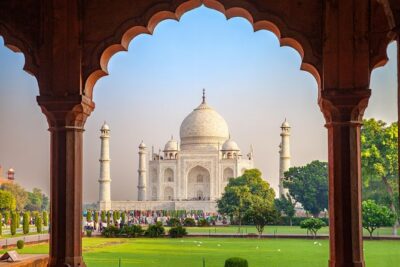
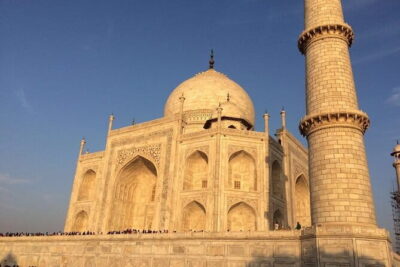
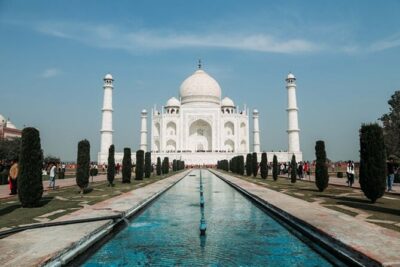
The Taj Mahal isn’t just a single moment here. You get a sunrise view, then a guided visit inside for around two hours. That’s enough time to understand the design choices and the symmetry story people talk about constantly—without feeling rushed.
If you’ve heard “go early” for the Taj, this tour follows that logic. One reviewer specifically suggested early timing around 5:30 AM to help avoid heavy crowds, and the sunrise schedule aligns with that idea.
Practical tip: sunrise can still be chilly depending on season. Dress in layers, and plan for security checks when you arrive.
Agra Fort: where you feel the Mughal power in stone
After Taj, Agra Fort gives you the broader Mughal picture. It’s UNESCO-listed and described as having different apartments and magnificent architecture. The best way to enjoy it is to connect it back to what you saw at the Taj—Agra wasn’t just about one building. It was about a whole power center.
Itmad-ud-Daula (Baby Taj): smaller, but sharp
You also visit Itmad-ud-Daula, often called Baby Taj. This Mughal mausoleum includes the main structure plus outbuildings and gardens. Even though it’s shorter in your schedule, it’s a smart stop because it gives you a more delicate architectural mood than the huge Taj.
A scenic detour: Chand Baori stepwell in Abhaneri
Then comes a detour that many tours skip: Chand Baori, Abhaneri. This stepwell dates to the 8th and 9th centuries and is reached by about 3,500 steps. If you like architecture that’s more about engineering than glamour, this stop can be a favorite. It also breaks up the “big palace, big palace, big palace” feeling.
Transfer to Jaipur and check-in
After Agra, you drive to Jaipur and check in for the overnight stay. The day is set up so the “wow factor” is front-loaded in Agra, then you shift focus to new city sites the next day.
Day 3 in Jaipur: Jal Mahal photos, City Palace, Jantar Mantar, and Hawa Mahal
Jaipur Day 3 is where the Golden Triangle starts to feel like a designed city. The stops connect through a theme: royal planning, astronomy, and scenic framing.
Panna Meena ka Kund: a quick stepwell stop with texture
You begin with Panna Meena ka Kund, a stepwell visit. The stop time is short (about 15 minutes), so treat it as an easy add-on rather than a full production. Still, it’s a nice bridge between Agra’s stepwell moment and Jaipur’s style.
Jal Mahal: a palace in the middle of Man Sagar Lake
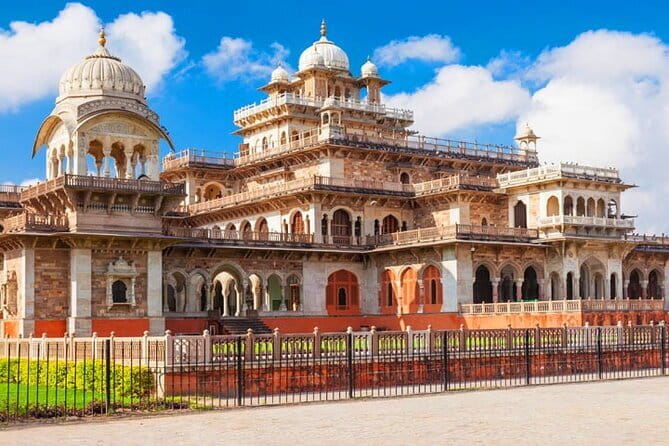
Next is Jal Mahal, a palace located in the middle of Man Sagar Lake. It was renovated and enlarged by Maharaja Jai Singh II of Amber in the 18th century. You’re mostly there for the visual idea—how the palace fits into the water—and it works especially well if the light is decent.
Practical tip: keep your time for this stop focused on photos and a quick scenic walk. The palace setting can make people linger longer than expected.
City Palace: royal seat turned visitor experience
You then reach City Palace of Jaipur. It was constructed in 1721 as the administrative and ceremonial seat of the Maharaja of Jaipur, and it now functions as a major visitor site. This stop is about context: you’re learning how the royal world worked in the center of the city.
Jantar Mantar: astronomy made in stone
Jantar Mantar is UNESCO-listed and built in 1734, with nineteen architectural astronomical instruments created by Sawai Jai Singh II. The cool part is that it’s not just “old stuff.” It’s built measurements you can stand near and connect to how people once studied the sky using physical structures.
Hawa Mahal: the Palace of Winds from the outside
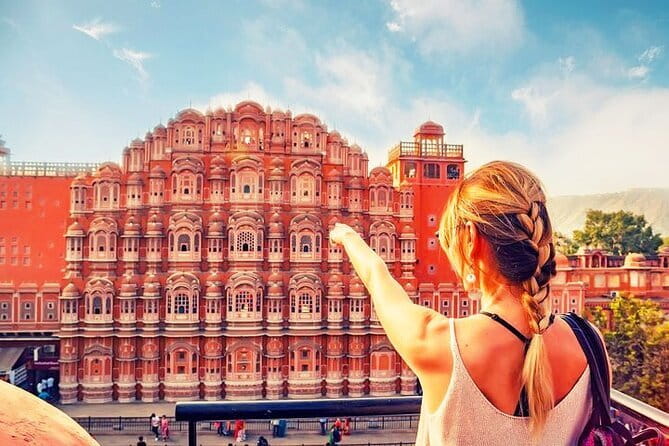
Finally, you wrap with Hawa Mahal, the Palace of Wind. It’s made of red and pink sandstone and known for its facade style that differs from the surrounding city. Your stop time is short, so it’s best enjoyed as a look-and-learn moment.
Guides, Drivers, and What Private Luxury Actually Means
This tour calls it private luxury, but what that should mean for you is simple: your time shouldn’t get eaten by confusion. You’re not sharing your route with strangers, and you’re guided with someone who can explain what you’re seeing and keep the day flowing.
The guides named in positive feedback include people such as Siddhi, Shamin, Nikhil, and Imran Khan, with driver mentions like Rahul and Jeetu. The consistent theme is calm handling and clear English. One reviewer praised Shamin’s superb English and knowledge and noted a clean, calm car with Rahul. Another highlighted Nikhil’s patience and accommodating approach. That’s exactly what helps on a packed three-day schedule: someone steady at the helm.
Also, onboard WiFi and an air-conditioned vehicle aren’t “extras” in hot climates. They make the long stretches between cities feel less like punishment.
Price and Value: How $20 Fits Against What You Get

The price shown is $20 per person, and that’s the kind of number that makes you ask: what’s the catch? Based on what’s included, you’re getting a lot that normally costs extra:
- private local guides for sightseeing
- entrance fees to monuments
- an air-conditioned vehicle with onboard WiFi
- breakfast at the hotel and a buffet lunch at the hotel (as specified)
- two nights of accommodation if you select the hotel-inclusive option
- pickup offered
- all fees and taxes
What’s not included is tipping or gratuities (optional), so keep a little buffer for that.
The best way to judge value is to compare the “cost of hassle.” Between Delhi’s traffic and the fact that your days are front-loaded with famous sites, having transport and guides lined up can be cheaper than DIY—especially when you’d otherwise pay for entry fees and guide time separately.
If you want maximum value, choose the hotel-inclusive option and decide early what hotel level you want. One reviewer recommended booking a 5* hotel for service and safety, which suggests that your comfort can scale with the property you choose.
Timing, Weather, and a Smart Packing List
One reviewer gave a very practical warning: avoid summer time because it can be very hot. That’s not a small detail in India. The Golden Triangle is famous, but you’ll walk through sun and humidity while moving between stops.
You can also reduce stress by planning around the early morning schedule. Sunrise in Agra (and early starts in general) can mean better light, fewer people, and less heat than midday.
Pack smart:
- comfortable walking shoes
- water bottle and sun protection
- light layer for early morning
- a way to cover up for religious sites (kept simple and respectful)
Who Should Book This Tour (and Who Might Prefer Something Different)
This tour is a strong fit if you want:
- a private route with guides and transport handled
- the classic Golden Triangle highlights plus Old Delhi with a rickshaw ride
- sunrise Taj Mahal as a real scheduled moment, not a wish
It may feel less perfect if you:
- hate packed schedules and want longer museum-style pacing
- need lots of free time in each city beyond short leisure breaks
- struggle with early mornings and long road segments
Should You Book This Delhi–Agra–Jaipur Tour?
I’d book it if your goal is to see the big monuments with less stress. The combination of sunrise Taj Mahal, UNESCO stops across all three cities, and guided structure makes the three days feel efficient without being totally rushed.
I’d think twice if you’re the kind of traveler who wants hours and hours to wander with no timeline pressure. This tour works because it keeps momentum. If that’s your style, it’s a good match.
If you book, do two things: wear comfortable shoes, and plan your expectations for heat and crowding. Then enjoy the payoff day in Agra and the designed-city feeling of Jaipur.
FAQ
How many days is the Golden Triangle tour?
It’s a 3-day tour covering New Delhi, Agra, and Jaipur, with two nights included when you choose the option with hotels.
Does the tour include pickup from Delhi?
Pickup is offered.
Is Taj Mahal included, and do you visit it at sunrise?
Yes. The tour includes an early morning Taj Mahal visit with sunrise viewing, plus guided time inside for about two hours.
Are entrance fees to monuments included?
Yes. Entrance fees to monuments are included as part of the tour.
What else is included besides sightseeing?
The tour includes a private local guide, an air-conditioned vehicle, WiFi on board, breakfast at the hotel, and a buffet lunch at the hotel (as specified). All fees and taxes are also included.
Do you get a rickshaw ride in Delhi?
Yes. You get a 30-minute rickshaw ride in Old Delhi.
Is tipping included, and what is the cancellation rule?
Tipping or gratuities are not included. The tour offers free cancellation, with a full refund if you cancel up to 24 hours in advance of the experience’s start time.
More Tours in New Delhi
- Old & New Delhi City Tour – Half or Full Day Options Available
★ 5.0 · 4,811 reviews - Half Day Private Delhi City Tour
★ 5.0 · 4,474 reviews - Same Day Taj Mahal, Agra Fort & Baby Taj Tour from Delhi by Car
★ 5.0 · 4,304 reviews - Taj Mahal Day Tour from Delhi by Superfast Train – TOP RATED TOUR
★ 5.0 · 4,166 reviews - Delhi: Old and New Delhi Private Full or Half-Day Tour
★ 4.9 · 3,776 reviews
More Tour Reviews in New Delhi
- Old & New Delhi City Tour – Half or Full Day Options Available
★ 5.0 · 4,811 reviews - Half Day Private Delhi City Tour
★ 5.0 · 4,474 reviews - Same Day Taj Mahal, Agra Fort & Baby Taj Tour from Delhi by Car
★ 5.0 · 4,304 reviews - Taj Mahal Day Tour from Delhi by Superfast Train – TOP RATED TOUR
★ 5.0 · 4,166 reviews - Delhi: Old and New Delhi Private Full or Half-Day Tour
★ 4.9 · 3,776 reviews
The Full Golden Triangle, More Options
- 3-Days Private Golden Triangle Tour: Delhi, Agra & Jaipur by Car
★ 5.0 · 1,107 reviews - 3-Days Private Golden Triangle Tour: Delhi, Agra & Jaipur by Car
★ 5.0 · 1,098 reviews - 3-Day Delhi, Agra and Jaipur Private Tour – India Golden Triangle
★ 5.0 · 812 reviews - Four-Day Private Luxury Golden Triangle Tour to Agra and Jaipur From New Delhi
★ 5.0 · 807 reviews - 5 Nights 6 Days Private Golden Triangle Tour – Delhi Agra Jaipur
★ 5.0 · 574 reviews
Just added: more New Delhi reviews to browse
- 4 days Golden Triangle Tour★ 5.0 · 3 reviews
- Discover Old & New Delhi: Private Tour with Street Food★ 5.0 · 3 reviews
- Taj Mahal Tour From Delhi By Private Car★ 4.5 · 3 reviews
- Golden Triangle Tour 5 Days★ 5.0 · 3 reviews
- Taj Mahal: Express Entry Ticket For Sunset Tour with guide★ 5.0 · 3 reviews
- Agra Taj Mahal Sunrise & Sunset Tour from Delhi★ 5.0 · 3 reviews
Golden Triangle Tours, compared.
 ★ 5.03-Days Private Golden Triangle Tour: Delhi, Agra & Jaipur by CarFrom $1271,107 reviews
★ 5.03-Days Private Golden Triangle Tour: Delhi, Agra & Jaipur by CarFrom $1271,098 reviews
★ 5.03-Days Private Golden Triangle Tour: Delhi, Agra & Jaipur by CarFrom $1271,107 reviews
★ 5.03-Days Private Golden Triangle Tour: Delhi, Agra & Jaipur by CarFrom $1271,098 reviews
 ★ 5.03-Day Delhi, Agra and Jaipur Private Tour – India Golden TriangleFrom $110812 reviews
 ★ 5.0Four-Day Private Luxury Golden Triangle Tour to Agra and Jaipur From New DelhiFrom $160807 reviews
 ★ 5.05 Nights 6 Days Private Golden Triangle Tour – Delhi Agra JaipurFrom $240574 reviews
 ★ 5.04 Days Golden Triangle TourFrom $146499 reviews
 ★ 5.0Private Car and Drive for Golden Triangle (4N/5D)From $167451 reviews
 ★ 5.0Private Golden Triangle Tour Delhi Agra Jaipur ( Top Rated )From $148436 reviews