
Reviewed · GOLDEN TRIANGLE TOURS
From Delhi: Golden Triangle Private Tour by Train
A Golden Triangle route can feel chaotic. This one uses train connections plus private driving, so you spend more time looking at monuments and less time figuring out transfers. You get a tight mix of Delhi’s Mughal-era icons, Agra’s Taj-area classics, and Jaipur’s palace-and-fort highlights—built into a simple 5-day flow.
I especially love the smoother ticket setup and guide support I’ve seen emphasized in feedback, including the ability to adjust the plan on the fly. One possible drawback: it’s a lot of big-name sights in a short window, so if you prefer slow travel over checklists, you may find the pace a bit intense.
In This Review
- Key things I’d pay attention to before you go
- Golden Triangle by train: why this route feels easier than DIY
- Price and what you get around $509 per person
- How the private tour setup works in practice
- Day 1 Delhi: Jama Masjid, Chandni Chowk, Humayun’s Tomb, and Qutub Minar
- Jama Masjid
- Chandni Chowk (Pasar Chandni Chowk)
- Humayun’s Tomb
- Qutub Minar
- Gurudwara Sis Ganj Sahib
- Lotus Temple
- India Gate
- Day 2 Agra: Taj Mahal, Agra Fort, Baby Taj, and Mehtab Bagh at dusk-ready hours
- Taj Mahal
- Agra Fort
- Tomb of Itimad-ud-Daulah (Baby Taj)
- Mehtab Bagh
- Day 3 Jaipur: City Palace, Jantar Mantar (UNESCO), and Hawa Mahal
- City Palace of Jaipur
- Jantar Mantar
- Hawa Mahal
- Day 4 Amber Fort and the Aravalli viewpoint ring
- Amber Fort (Amer Fort)
- Jal Mahal
- Nahargarh Fort
- Galtaji Temple
- Day 5 Delhi’s Sikh heritage and Akshardham’s modern scale
- Gurudwara Bangla Sahib
- Swaminarayan Akshardham
- What you’ll feel during the 5 days (and how to manage it)
- Who this Golden Triangle train tour suits best
- Should you book this train Golden Triangle tour?
- FAQ
- What cities does this Golden Triangle tour cover?
- Is pickup included?
- How is transportation handled?
- Are monument tickets included?
- Is lunch included?
- Is this tour private?
- Can I cancel for a full refund?
Key things I’d pay attention to before you go
- Train + private car routing for the Golden Triangle without constant long-distance transfers by road
- Guide flexibility (including named guides like Subhan sir in feedback) when you want changes to timing or priorities
- Ticket help that can reduce hassle, plus monument ticket coverage that depends on the option selected
- Religious sites with community focus, like Gurudwara kitchens that feed tens of thousands daily
- Iconic architecture stops spread across Delhi, Agra, and Jaipur, from Qutub Minar to Jantar Mantar
Golden Triangle by train: why this route feels easier than DIY
This is the Golden Triangle most people picture: Delhi, Jaipur, and Agra. The difference is how you move between them. With train as the backbone and private car for local legs, you avoid the most exhausting part of DIY travel—constant “where do we go next” problem-solving.
That matters on days packed with major monuments. You’re not just seeing one site. You’re stacking pairs and clusters: mosque and tomb in Old Delhi, then a sequence of Agra’s Mughal-era monuments, then Jaipur’s palace, observatory, and forts. When the travel leg is already handled, you can focus on what’s in front of you.
This also helps you keep your day structure more predictable. Even if you don’t love tight schedules, predictability is a quiet quality-of-life upgrade—especially in a huge, active country like India.
Delhi, Agra and Jaipur: more full circuits



Price and what you get around $509 per person
The price is $509.77 per person for an approximately 5-day tour. That number can look high at first glance—until you map it to what you’re actually buying:
- Pickup is offered, so you’re not starting the trip stressed.
- Private transportation is included, and the itinerary uses both train and private car.
- A multilingual tour guide is part of the package.
- All fees and taxes are included.
- Monument tickets and lunch are included only if you choose the relevant option.
In other words, you’re not just paying for sightseeing. You’re paying for logistics, guide time, and (depending on your chosen option) admission and meals. For a short Golden Triangle trip, those pieces add up fast if you plan everything yourself.
One thing to watch: monument ticket coverage depends on the option selected. If you want less decision-making later, confirm what’s included in your ticket option before you lock it in.
How the private tour setup works in practice
This is described as a private tour/activity, meaning only your group participates. That’s a big deal when schedules matter, because you’re not trying to match your pace to strangers.
You’ll also see “group discounts” mentioned. In practice, that usually means pricing can improve when multiple people book together. The key point is the tour remains private for your party even while pricing may benefit from group arrangements.
You’ll use a mobile ticket, which tends to reduce last-minute scrambling. And with pickup offered, you’ll start the first day with less friction than the usual “find the meeting point” style trip.
Day 1 Delhi: Jama Masjid, Chandni Chowk, Humayun’s Tomb, and Qutub Minar
Day 1 is Old Delhi into central Delhi, then it stretches into iconic landmarks that many people only ever see from postcards. It’s a smart introduction because it shows how layered Delhi is: Mughal power, markets, and later national memorials.
Jama Masjid
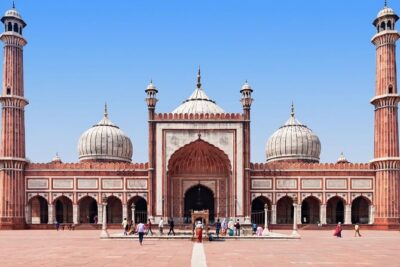
You start at Jama Masjid, one of India’s largest mosques, commissioned by Emperor Shah Jahan between 1650 and 1656. Even if you’re not religious, it’s one of those places where scale changes how you see the city. Plan for time to slow down and take in the architecture rather than just snapping photos.
More private days with a guide of your own

Chandni Chowk (Pasar Chandni Chowk)
Next is Pasar Chandni Chowk, also known as Moonlight Square, near the Old Delhi Railway Station. This is one of Delhi’s oldest and busiest markets. Expect classic “street sensory overload” energy—smells, movement, people negotiating, and constant visual detail.
Practical note: if you’re sensitive to crowds, you’ll want your guide’s pacing. A good guide keeps you from feeling rushed, even when the street itself is fast.
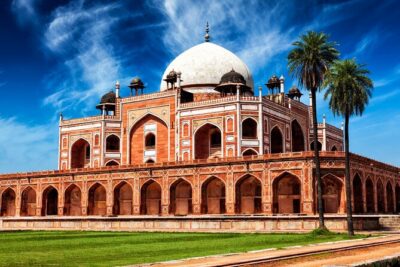
Humayun’s Tomb
Then you reach Humayun’s Tomb, linked to Mughal history and designed by Persian architects chosen by Empress Bega Begum (Haji Begum). It’s a calmer shift from marketplace intensity, and it’s also a strong “gateway” to Mughal garden-tomb design.
Qutub Minar
You move on to Qutub Minar, described as the tallest monument of Delhi. If you’ve ever wondered how monumental India’s medieval architecture could feel, this is the place to test that idea.
Gurudwara Sis Ganj Sahib
After major monuments, the itinerary turns to community life at Gurudwara Sis Ganj Sahib. The highlight here is the free kitchen serving meals to about 50,000 people every day. This is less about sightseeing and more about witnessing a functioning tradition.
Lotus Temple
The day continues with the Lotus Temple, a Baha-i house of worship famous for its flowerlike form made of 27 marble-clad “petals” arranged in clusters. It’s quiet in tone compared with the earlier stops, and it gives your eyes a break.
India Gate
Finally, you end at India Gate, a memorial for 84,000 soldiers of the British Indian Army who lost their lives between 1914 and 1921 in the First World War in France. It’s short on time here, but it anchors the day with a national story.
Possible drawback for Day 1: it’s packed. If you’re the type who needs long rests between stops, you may have to manage your energy with breaks and water.
Day 2 Agra: Taj Mahal, Agra Fort, Baby Taj, and Mehtab Bagh at dusk-ready hours
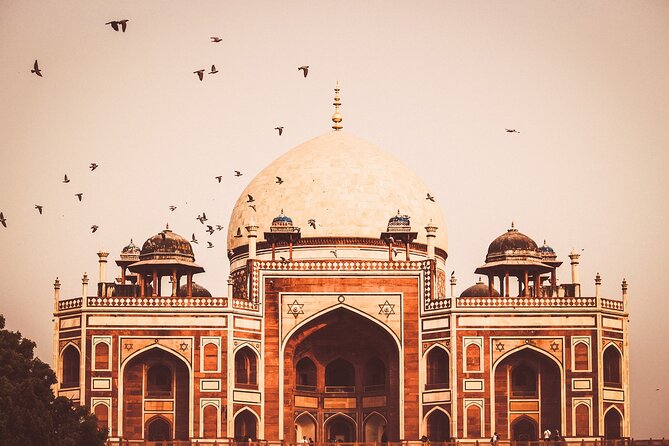
Agra Day 2 is built around the Taj Mahal area, with strong follow-on sites that make the day feel complete instead of one-spot-and-done.
Taj Mahal
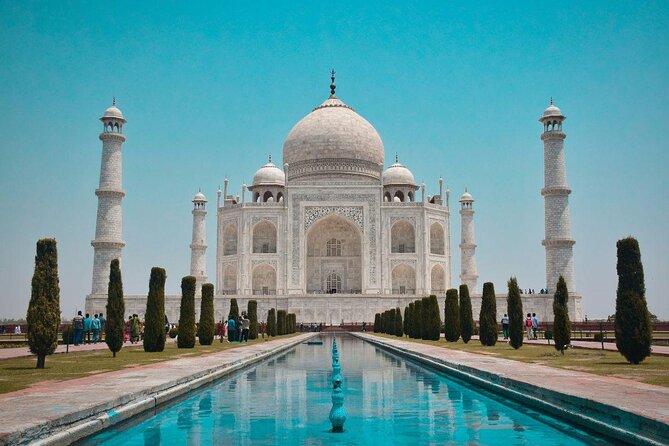
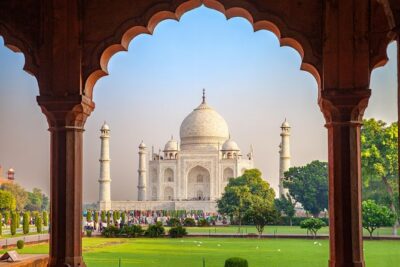
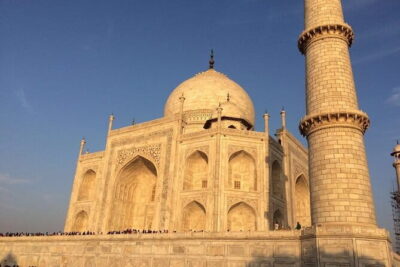
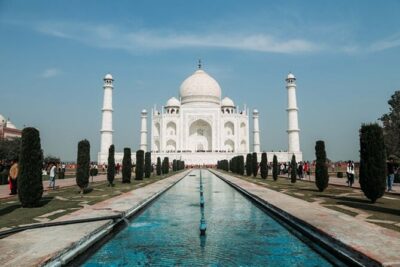
The anchor is the Taj Mahal, an ivory-white marble tomb on the south bank of the Yamuna. It was established from 1631 to 1653 by Shah Jahan with the help of 20,000 workers, built to house Mumtaz Mahal.
If you only care about the big view, you’ll still get it. But if you pay attention to proportions, symmetry, and how the marble changes with light, the experience gets deeper fast. The good news: the rest of the day supports that viewpoint.
Agra Fort
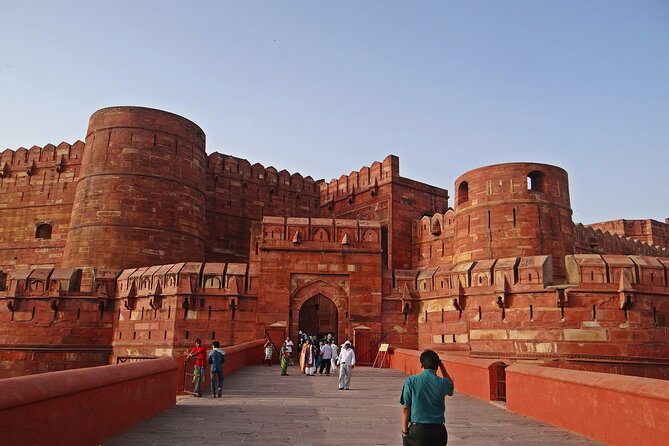
Next is Agra Fort, once the Mughal dynasty’s main residence until 1638 when the capital shifted to Delhi. This stop helps you see the Taj not as a lonely monument, but as part of a full power center.
Tomb of Itimad-ud-Daulah (Baby Taj)
Then comes Tomb of I’timād-ud-Daulah, often called the “jewel box” and sometimes nicknamed the Baby Taj. It’s described as a draft or precursor to the Taj Mahal, and it delivers a different kind of beauty—smaller scale, fine detail.
Mehtab Bagh
You finish with Mehtab Bagh, also called Moon garden or charbagh complex, aligned across the Yamuna with the Taj Mahal complex. This is a “look back” moment, where the architecture becomes a reflection game.
Why this day works: it’s not just the Taj. You get context through fort life and design evolution through the “Baby Taj” comparison.
Day 3 Jaipur: City Palace, Jantar Mantar (UNESCO), and Hawa Mahal
Jaipur Day 3 leans into royal design and the city’s planning brain.
City Palace of Jaipur
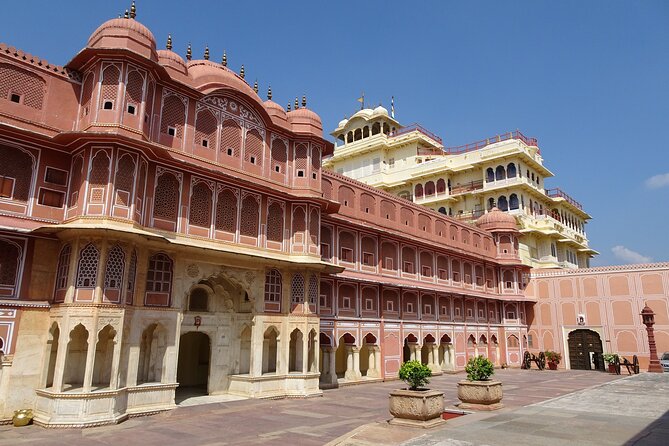
You start at City Palace, established when Maharaja Sawai Jai Singh II moved his court to Jaipur in 1727 from Amber. It served as ceremonial and administrative seat of the Maharaja of Jaipur, plus a center for cultural events and arts.
This is where you get the “why Jaipur looks the way it does” feeling. It’s a good opening for the rest of the day.
Jantar Mantar
Next is Jantar Mantar, a collection of nineteen architectural astronomical instruments built by Sawai Jai Singh and completed in 1734. It’s a UNESCO World Heritage site and includes the world’s largest stone sundial.
Even if astronomy isn’t your thing, it’s a reminder that science and statecraft were linked here. Jaipur wasn’t only about palaces; it was about measurement and prediction too.
Hawa Mahal
Finally, Hawa Mahal (Palace of Wind). The famous beehive design was intended to let royal ladies observe street life without being seen. It’s one of those structures where you feel the social design built into the stone.
Watch-outs for Day 3: Jaipur heat can hit mid-day. Build in short pauses. Your guide can help you pace the line-ups and walking.
Day 4 Amber Fort and the Aravalli viewpoint ring
Day 4 shifts outside the center of Jaipur and into fort-and-temple territory. It’s the day that tends to make people feel like they’re actually in Rajasthan, not just visiting city highlights.
Amber Fort (Amer Fort)
The day starts at Amber Fort, located in Amber, about 11 kilometers from Jaipur. The information provided says the fort was built by Raja Alan Singh Meena in 967 AD, and later ruled by Kachawaha Rajputs. It’s listed with an admission ticket included, so you can plan your time around entry.
Fort visits can be tiring, but they’re also where Jaipur starts to feel dramatic. Give yourself a chance to look slowly at ramparts and courtyards rather than rushing to the main view.
Jal Mahal
Next is Jal Mahal, a palace in the middle of Man Sagar Lake. It was originally constructed in 1699 and later renovated and enlarged in the 18th century by Maharaja Jai Singh II of Amber. This is a “pause and look” stop—shorter time, scenic value.
Nahargarh Fort
You then head to Nahargarh Fort, on the edge of the Aravalli Hills overlooking Jaipur. It once formed a defense ring with Amer Fort and Jaigarh Fort. The name is said to have shifted from Yogesh to Nahargarh, meaning abode of tigers.
If you like views, this is a strong candidate to slow down and take in the city layout below.
Galtaji Temple
Finally, Galtaji Temple, an ancient Hindu pilgrimage site about 10 km away from Jaipur. It’s described as temples built into a narrow crevice in the ring of hills surrounding Jaipur.
It’s not just a viewpoint day. It’s also a spiritual landscape day, with stone architecture pressed into the geography.
Day 5 Delhi’s Sikh heritage and Akshardham’s modern scale
Day 5 brings you back to Delhi with two stops that feel very different in tone: everyday Sikh heritage and a large modern temple complex.
Gurudwara Bangla Sahib
Start at Gurudwara Bangla Sahib, one of Delhi’s most prominent Sikh gurdwaras. It’s associated with the eighth Sikh Guru, Guru Har Krishan, and includes a holy water feature called the Sarovar (described as a holy river inside the complex).
The highlight is the kitchen feeding almost 75,000 people without cost. If Day 1’s Gurudwara felt meaningful, this one reinforces the point: these places aren’t only for worship. They’re community infrastructure.
Swaminarayan Akshardham
Then comes Swaminarayan Akshardham. It officially opened on 6 November 2005. The details provided say it was opened by Pramukh Swami Maharaj, with President Dr A.P.J Abdul Kalam and Prime Minister Manmohan Singh present.
Akshardham often strikes people because of its modern scale and design clarity. If you want a final day that feels structured and photogenic, this is the kind of endpoint that works.
What you’ll feel during the 5 days (and how to manage it)
This itinerary is a classic “major monuments” plan, which means your days are naturally full. That’s not automatically bad. It’s efficient. But you should go in ready for a rhythm of walking, waiting your turn at busy entrances, and switching mental gears between very different cultures and religions.
A big plus here is guide quality. In feedback, people highlight guides like Subhan sir as friendly and flexible, with the ability to modify the tour to match requests. There’s also mention of French-speaking guidance, which can matter if you’re more comfortable in that language than English.
Also, you’ll benefit from the practical stuff:
- Private transport cuts down on stress.
- Mobile ticket reduces last-minute confusion.
- The tour includes pickup, so your first day starts with momentum.
Bring comfortable shoes and plan for sun exposure on forts and open-air areas. And for religious sites, dress respectfully and prepare for basic entry routines. You’ll get more out of the stops when you’re not distracted by logistics.
Who this Golden Triangle train tour suits best
This tour is a good fit if you:
- Want a first-timer-friendly Golden Triangle with minimal planning
- Prefer learning with a guide rather than running a solo itinerary
- Like structure but still want flexibility when your priorities shift
- Care about seeing both “headline monuments” and less flashy companions (like the Baby Taj comparison)
It’s less ideal if you:
- Want lots of downtime between sites
- Prefer very off-the-grid experiences instead of famous, well-documented attractions
Should you book this train Golden Triangle tour?
If your goal is to see Delhi, Jaipur, and Agra in five days without losing your mind on transport and admissions, I’d lean yes. The value angle is strong when you consider private driving, a multilingual guide, pickup, and the chance to have monument tickets included depending on your option. The biggest proof point from feedback is simple: people praise the guide’s flexibility and the overall organization, including smoother ticket handling.
Before booking, do two quick checks:
- Confirm whether monument tickets and lunch are included in your chosen option.
- Be realistic about the pace. This is a “see a lot” plan, not a slow crawl.
If that matches your style, this is a solid way to experience the Golden Triangle with less friction and more context.
FAQ
What cities does this Golden Triangle tour cover?
It covers Delhi, Jaipur, and Agra over approximately 5 days.
Is pickup included?
Yes. Pickup is offered.
How is transportation handled?
The tour is described as traveling via train and private car, with private transportation included.
Are monument tickets included?
Monument tickets are included if the option is selected. The tour also mentions that admission tickets for some stops are included, depending on the selected package.
Is lunch included?
Lunch is included if option selected.
Is this tour private?
Yes. It’s described as a private tour/activity, and only your group will participate.
Can I cancel for a full refund?
Yes, free cancellation is available if you cancel at least 24 hours in advance of the experience start time. If you cancel less than 24 hours before, the amount paid is not refunded.
More Tours in New Delhi
- Old & New Delhi City Tour – Half or Full Day Options Available
★ 5.0 · 4,811 reviews - Half Day Private Delhi City Tour
★ 5.0 · 4,474 reviews - Same Day Taj Mahal, Agra Fort & Baby Taj Tour from Delhi by Car
★ 5.0 · 4,304 reviews - Taj Mahal Day Tour from Delhi by Superfast Train – TOP RATED TOUR
★ 5.0 · 4,166 reviews - Delhi: Old and New Delhi Private Full or Half-Day Tour
★ 4.9 · 3,776 reviews
More Tour Reviews in New Delhi
- Old & New Delhi City Tour – Half or Full Day Options Available
★ 5.0 · 4,811 reviews - Half Day Private Delhi City Tour
★ 5.0 · 4,474 reviews - Same Day Taj Mahal, Agra Fort & Baby Taj Tour from Delhi by Car
★ 5.0 · 4,304 reviews - Taj Mahal Day Tour from Delhi by Superfast Train – TOP RATED TOUR
★ 5.0 · 4,166 reviews - Delhi: Old and New Delhi Private Full or Half-Day Tour
★ 4.9 · 3,776 reviews
The Full Golden Triangle, More Options
- 3-Days Private Golden Triangle Tour: Delhi, Agra & Jaipur by Car
★ 5.0 · 1,107 reviews - 3-Days Private Golden Triangle Tour: Delhi, Agra & Jaipur by Car
★ 5.0 · 1,098 reviews - 3-Day Delhi, Agra and Jaipur Private Tour – India Golden Triangle
★ 5.0 · 812 reviews - Four-Day Private Luxury Golden Triangle Tour to Agra and Jaipur From New Delhi
★ 5.0 · 807 reviews - 5 Nights 6 Days Private Golden Triangle Tour – Delhi Agra Jaipur
★ 5.0 · 574 reviews
Just added: more New Delhi reviews to browse
- 4 days Golden Triangle Tour★ 5.0 · 3 reviews
- Discover Old & New Delhi: Private Tour with Street Food★ 5.0 · 3 reviews
- Taj Mahal Tour From Delhi By Private Car★ 4.5 · 3 reviews
- Golden Triangle Tour 5 Days★ 5.0 · 3 reviews
- Taj Mahal: Express Entry Ticket For Sunset Tour with guide★ 5.0 · 3 reviews
- Agra Taj Mahal Sunrise & Sunset Tour from Delhi★ 5.0 · 3 reviews
Golden Triangle Tours, compared.
 ★ 5.03-Days Private Golden Triangle Tour: Delhi, Agra & Jaipur by CarFrom $1271,107 reviews
★ 5.03-Days Private Golden Triangle Tour: Delhi, Agra & Jaipur by CarFrom $1271,098 reviews
★ 5.03-Days Private Golden Triangle Tour: Delhi, Agra & Jaipur by CarFrom $1271,107 reviews
★ 5.03-Days Private Golden Triangle Tour: Delhi, Agra & Jaipur by CarFrom $1271,098 reviews
 ★ 5.03-Day Delhi, Agra and Jaipur Private Tour – India Golden TriangleFrom $110812 reviews
 ★ 5.0Four-Day Private Luxury Golden Triangle Tour to Agra and Jaipur From New DelhiFrom $160807 reviews
 ★ 5.05 Nights 6 Days Private Golden Triangle Tour – Delhi Agra JaipurFrom $240574 reviews
 ★ 5.04 Days Golden Triangle TourFrom $146499 reviews
 ★ 5.0Private Car and Drive for Golden Triangle (4N/5D)From $167451 reviews
 ★ 5.0Private Golden Triangle Tour Delhi Agra Jaipur ( Top Rated )From $148436 reviews
Browse the lists this tour appears in