
Reviewed · GOLDEN TRIANGLE TOURS
Golden Triangle Private Luxury Tours India 4N/5Days
Five days, three cities, zero hassle. This private luxury-style Golden Triangle route strings together major UNESCO sights across Delhi, Agra, and Jaipur with an air-conditioned vehicle and a guide who keeps the story straight as you move.
What I like is the simple value: you skip the mental load of figuring out transport between far-flung monuments, and you also skip the hard part of finding a place to stay in Jaipur. Hotel and breakfast are included, which means you’re not squeezing in extra planning after long sightseeing days.
One drawback to plan for: monument entrance fees and tips aren’t included, and the schedule is packed enough that you’ll want comfortable shoes and patience for crowds at the big names.
In This Review
- Key things that make this tour worth your time
- Price and logistics: what you’re really paying for
- Delhi in one long day: Qutub Minar, India Gate, and Mughal landmarks
- Qutub Minar: the UNESCO opener that sets the tone
- India Gate and the seat of modern memory
- Parliament House and Rashtrapati Bhavan: British-era architecture with Indian scale
- Humayun’s Tomb: early Mughal grace, gardens included
- Old Delhi by foot: Chandni Chowk, Red Fort, and Jama Masjid
- Chandni Chowk: the market that makes your senses work
- Red Fort and Jama Masjid: big Mughal statements
- Agra’s big day: Taj Mahal, Agra Fort, and Mehtab Bagh at sunset
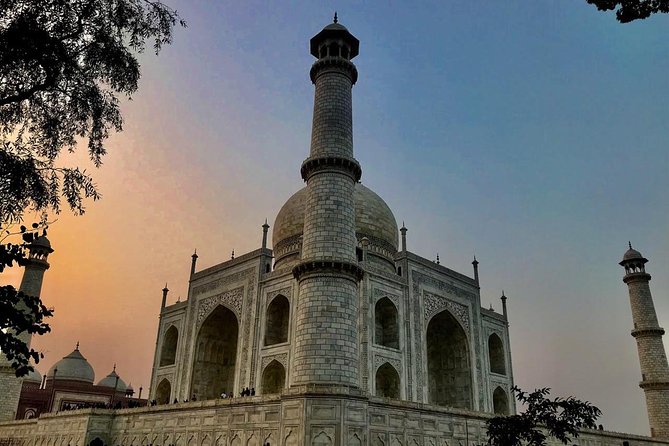
- Taj Mahal: the story behind the postcard
- Agra Fort: palace-and-balcony Mughal engineering
- Mehtab Bagh: Taj Mahal views from across the river
- Between cities: Fatehpur Sikri and Chand Baori near Abhaneri
- Fatehpur Sikri: a lost Mughal capital you can walk through
- Abhaneri and Chand Baori: 3,500 steps of problem-solving
- Arriving Jaipur by evening
- Jaipur highlights without the guessing: Amber Fort, City Palace, and Hawa Mahal
- Amber Fort: the Rajput-Mughal blend you came for
- Jal Mahal: a palace floating in the lake
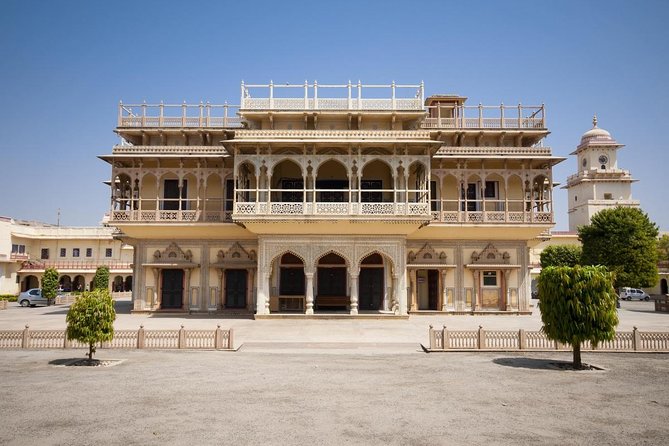
- City Palace: courtyards, palaces, and architectural mixing
- Hawa Mahal: the window facade made for cooling
- Patrika Gate and Albert Hall Museum: color and culture balance
- The last morning and the ride back to Delhi (or Jaipur airport)
- Who should book this Golden Triangle private tour
- Should you book it?
- FAQ
- What’s the duration of this Golden Triangle private tour?
- Do I get hotel pickup and drop-off?
- Is accommodation and breakfast included?
- Are monument entrance fees included in the price?
- Is this tour private or shared with other people?
- Do I need a passport for the trip?
- Can I cancel for a full refund?
Key things that make this tour worth your time
- Private AC transport between Delhi, Agra, and Jaipur keeps the day moving
- UNESCO-heavy highlights in a tight format, including the Taj Mahal and Amber Fort
- Guides who shape the experience around timing and photos, with examples like Danesh, Ajmal, and Danish
- Old Delhi walking time around Chandni Chowk and key Mughal monuments
- Sunset viewpoint at Mehtab Bagh for classic Taj Mahal angles
- Jaipur hotel with breakfast included, so your evenings are actually relaxing
Price and logistics: what you’re really paying for
At $500 per person for about 5 days, this is not a budget-only deal. The money goes into the parts that usually cost real time and effort: a dedicated private vehicle, a professional guide, parking, and water during transfers. You also get Jaipur accommodation plus 4 breakfasts, which adds value when you compare it to cobbling together transport, hotels, and daily guiding on your own.
The parts that are not included matter because they affect your total trip cost. Entrance fees for monuments are extra, and tips for the guide/driver are recommended. If you’re the type who hates surprises, plan to budget for those upfront.
The other practical perk: it’s a private tour with only your group. That means fewer waits for other schedules and more flexibility to pause for photos, questions, and short breaks when your body (or your camera battery) demands it.
Delhi, Agra and Jaipur: more full circuits



Delhi in one long day: Qutub Minar, India Gate, and Mughal landmarks
Delhi day one is a sprint across very different styles of power—early Indo-Islamic, colonial-era plans, and later Mughal grandeur. The benefit of private transport is that you don’t burn hours figuring out routes or negotiating crowded public transit. The trade-off is you’ll cover a lot of ground, so you’ll want to keep your pace realistic.
Qutub Minar: the UNESCO opener that sets the tone
You start at Qutub Minar, a UNESCO World Heritage site and one of the world’s tallest brick minarets. The basics are the kind you’ll remember: built in the early 13th century, linked to Qutb-ud-din Aibak and the early Delhi Sultanate era. Admission isn’t included, so this is one more line item to budget.
What makes it worthwhile isn’t only height—it’s the architecture and the way it signals how quickly Delhi became a major cultural and political center.
India Gate and the seat of modern memory
Next comes India Gate, a war memorial in central Delhi. The arch’s carvings and the names on it are what you’re really here for, and the good news is the stop is free. It’s short, but it gives you a breather before the day turns heavily historical again.
Parliament House and Rashtrapati Bhavan: British-era architecture with Indian scale
You’ll also see Parliament House and Rashtrapati Bhavan, both designed by British architects Sir Edwin Lutyens and Sir Herbert Baker. Construction dates are part of the story here—Parliament began in 1921 and finished in 1927, while Rashtrapati Bhavan’s construction ran from 1912 to 1929.
The buildings are dramatic in their proportions even if you’re not a big architecture person. If you time it right, the Mughal Gardens within the Rashtrapati Bhavan complex can be open during certain periods of the year, and that’s a nice bonus stop when conditions allow.
More private days with a guide of your own
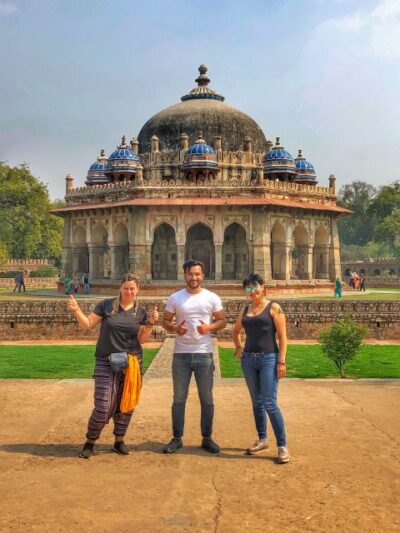

Humayun’s Tomb: early Mughal grace, gardens included
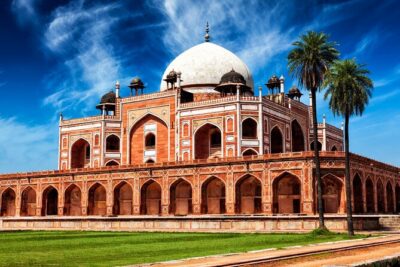
Then it’s Humayun’s Tomb, another UNESCO site and among the earliest examples of Mughal architecture. The tomb complex is famous for its central dome, red sandstone base, and decorative white marble. It’s also a reminder that the Mughal story in India didn’t start with just one monument—it built momentum.
Expect this to be one of the more “slow down and look” moments on your Delhi day.
Old Delhi by foot: Chandni Chowk, Red Fort, and Jama Masjid
Old Delhi is where the trip gets more sensory. You go from major monuments to a neighborhood market vibe—and you’ll do part of it on foot. This is great if you like street-level travel, but it’s also where crowds and noise are real. If you’re sensitive to that, keep your expectations flexible.
Chandni Chowk: the market that makes your senses work
Chandni Chowk is one of Delhi’s oldest and most famous markets, laid out in the 17th century by Shah Jahan. The main draw is walking among the stalls and soaking in the atmosphere. It’s also a food stop if you want it: chaat, samosas, jalebi, and kebabs are all part of the experience.
This is a “go slow and graze” kind of place. Don’t try to see everything in one pass—pick a few lanes, take photos, and let the day come to you.
Red Fort and Jama Masjid: big Mughal statements
Red Fort (Lal Qila) is a UNESCO site and the Mughal imperial base for nearly 200 years. The scale of it hits fast: it’s not subtle, and you feel why it mattered as a symbol of power.
After that, Jama Masjid gives you the other side of the Mughal presence—religious architecture on a grand scale. It was built by Shah Jahan between 1650 and 1656. Admission isn’t included, so budget for that, too.
Practical note: for big mosques, dress modestly. Even if you’re not required to change, you’ll feel more comfortable keeping shoulders and knees covered.
Agra’s big day: Taj Mahal, Agra Fort, and Mehtab Bagh at sunset
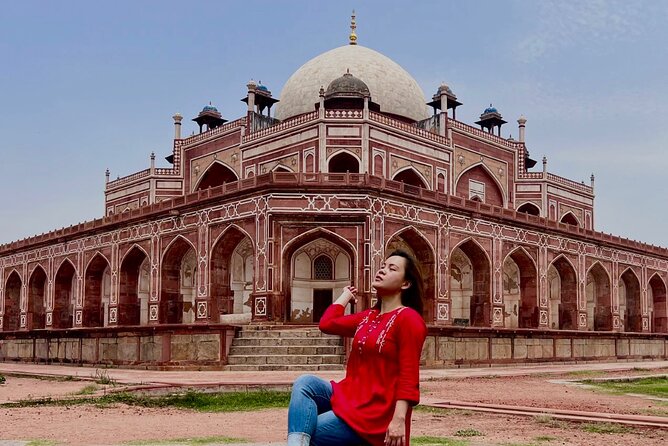
Agra is built around one name first: Taj Mahal. But the best part of this tour is that it doesn’t treat Taj Mahal like the whole trip. You also get Agra Fort and a classic sunset viewpoint at Mehtab Bagh.
Taj Mahal: the story behind the postcard
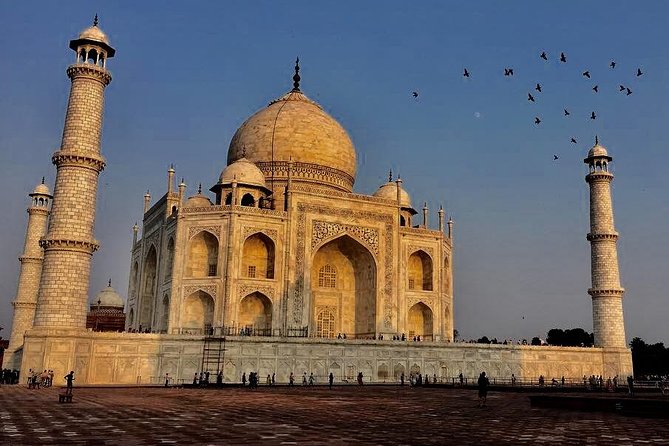
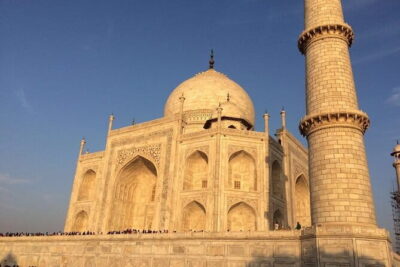
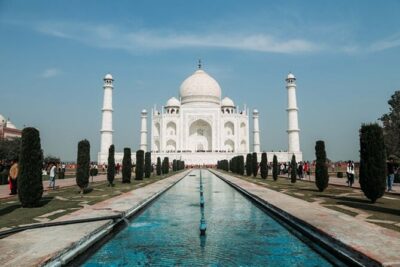
Taj Mahal is UNESCO-listed and famously tied to the New 7 Wonders. You’ll hear the story of Shah Jahan building it in memory of Mumtaz Mahal. What’s helpful is the way the guide ties the monument to the setting: the Yamuna River behind it and the formal gardens framing the views.
This is the one stop where timing matters. Guides like Ajmal have been praised for timing the Taj Mahal visit early to reduce crowding and improve photo angles. You might not always get the same exact timing, but it’s a good reminder: ask your guide what time approach will work best for photos and comfort.
Agra Fort: palace-and-balcony Mughal engineering
Next is Agra Fort, another UNESCO World Heritage site. It served as a main residence for Mughal emperors, and the guide’s job is to connect the dots between the fort’s palaces, balconies, and gardens. If Taj Mahal is about romantic legacy, Agra Fort is about daily power—how rulers lived and worked inside stone walls.
Mehtab Bagh: Taj Mahal views from across the river
Finally, you head for Mehtab Bagh—often called the Moonlight Garden. It sits across the Yamuna River and is known for panoramic Taj Mahal views, especially around sunset (and sometimes sunrise if timing works).
This is a smart addition because it gives you a second angle and helps you see the Taj Mahal as part of a broader landscape, not only a single front-facing view.
Between cities: Fatehpur Sikri and Chand Baori near Abhaneri
Day three is a change of scenery. You’re still in the Golden Triangle orbit, but you get out of the usual Delhi–Agra–Jaipur rhythm and into Mughal-era planning and older water engineering.
Fatehpur Sikri: a lost Mughal capital you can walk through
You visit Fatehpur Sikri, a UNESCO site built by Emperor Akbar in the late 16th century. It served as the Mughal capital for a short period before being abandoned due to water shortages—one of those stories that makes the place feel human and fragile, not just monumental.
The architecture blends Indo-Islamic styles with influences from Persian, Indian, and Islamic design. Even if you’re not an architecture geek, the layout helps you understand how power wanted to be staged.
Admission is listed as free here, which is a nice extra value moment.
Abhaneri and Chand Baori: 3,500 steps of problem-solving
Then it’s Abhaneri, known for Chand Baori, a stepwell that’s one of the deepest and largest in India. The key detail: around 3,500 narrow steps across 13 stories. It was built in the 9th century by King Chanda of the Nikumbh dynasty and served as a water reservoir.
This is a great stop if you like engineering and design. It’s also a calm counterpoint to the big forts and palaces earlier in the trip—your brain gets a different kind of workout.
Admission is listed as free, which again helps the trip feel like it’s not only about paying entrance fees everywhere.
Arriving Jaipur by evening
You reach Jaipur around 7 p.m. and check into your hotel. This is one of the reasons this package works: you don’t arrive at midnight, and you don’t lose your evening to scrambling. Your breakfast on day four is included, too.
Jaipur highlights without the guessing: Amber Fort, City Palace, and Hawa Mahal
Jaipur day is the showstopper day for most people. You hit royal sites and views, plus a couple of lighter stops that still look great in photos.
Amber Fort: the Rajput-Mughal blend you came for
Amber Fort is built primarily with red sandstone and marble and shows a blend of Hindu and Mughal architectural styles. It’s more than a fortress walls-and-towers visit. The guide points out key sections like Diwan-i-Aam (Hall of Public Audience), Diwan-i-Khas (Hall of Private Audience), Sheesh Mahal (Mirror Palace), and Sukh Niwas (Hall of Pleasure).
Admission isn’t included, but this is one of those places where the cost tends to be worth it because the craftsmanship is the point. If you like details—arches, mirrors, carved stone—this is a good day to slow your pace.
Jal Mahal: a palace floating in the lake
Next comes Jal Mahal, positioned in the middle of Man Sagar Lake. It’s famous for its “floating” appearance and for mixing Rajput and Mughal influences. It was built in the 18th century by Maharaja Madho Singh I as a hunting lodge and pleasure palace.
This stop is a breather. The setting gives you a different feel than Amber Fort.
City Palace: courtyards, palaces, and architectural mixing
Then you visit the City Palace of Jaipur, a sprawling royal residence built in the 18th century. The complex combines Rajput, Mughal, and European styles. The guide can help you read the place: courtyards, gardens, and the major palace areas like Mubarak Mahal and Chandra Mahal.
Admission isn’t included, but it’s a good one to prioritize if you want more than just one facade and one view.
Hawa Mahal: the window facade made for cooling
Hawa Mahal is one of the most recognizable faces in Jaipur. The facade resembles the crown of Lord Krishna, and the design—many small windows—was meant to let cool breezes move through the building during hot summers.
This stop is mostly about the exterior and how it works visually. If you’re into city design and “how people lived,” it’s a satisfying cultural detail.
Patrika Gate and Albert Hall Museum: color and culture balance
Then you get Patrika Gate, an entrance gate for Jawahar Circle Garden. It’s known for colorful murals and sections that represent Rajasthan themes—palaces, forts, festivals, wildlife, and traditional attire.
Finally, you visit Albert Hall Museum, an Indo-Saracenic landmark with a mix of Mughal, Rajput, and European elements. Inside, there are collections spanning sculptures, paintings, textiles, arms and armor, and decorative arts.
Time-wise, the museum stop is short, so go in with one mindset: choose a couple of categories you care about, and let the rest be supporting texture.
The last morning and the ride back to Delhi (or Jaipur airport)
Day five keeps things simple: after breakfast, you travel back to Delhi, which takes about five hours, or you can be dropped off at Jaipur airport.
This is a good ending if you want to avoid turning the last day into another set of monuments. It also means you’re not trying to cram in one last Taj-shaped dream before you go home.
Who should book this Golden Triangle private tour

This is a strong fit if you want:
- A private, AC setup rather than public transport stress between cities
- A guide who tells you what you’re looking at (and helps with photo spots; guides like Danesh and Danish are specifically praised for explaining the Taj well and taking great pictures)
- A format that gives you the big names—Taj Mahal, Agra Fort, Amber Fort, Hawa Mahal—without making you plan every step
It’s not the best fit if:
- You hate packed schedules. This route is busy by design.
- You’re extremely budget-focused. Entrance fees and tips add up.
- You don’t want extra time spent in shop stops. One experience noted two shop stops felt like tourist traps, so if you’re sensitive to that, keep an eye on your comfort level and ask your guide what to expect.
Should you book it?
I’d book this if you want the Golden Triangle at full speed, with less confusion and less back-and-forth. The mix of private transport, a professional guide, Jaipur hotel plus breakfast, and multiple UNESCO stops is the core value. At $500 per person, it’s priced like a convenience package—one that works best when you appreciate not having to coordinate logistics.
If you hate crowds, tell your guide you care about timing at the Taj Mahal. If you care about photos, guides like Ajmal and Danesh have earned praise for helping with angles and getting you to the right spots.
If you’re comfortable paying additional entrance fees and tipping when it makes sense, this tour gives you a lot of India in a short window without turning the trip into a transportation puzzle.
FAQ
What’s the duration of this Golden Triangle private tour?
It’s listed as 4N/5 Days, with the tour duration noted as approximately 5 days.
Do I get hotel pickup and drop-off?
Hotel pickup and drop-off are included if you choose that option.
Is accommodation and breakfast included?
Yes. Jaipur accommodation and breakfast are included (breakfast is listed as 4 meals).
Are monument entrance fees included in the price?
No. Monument entrance fees are not included.
Is this tour private or shared with other people?
It’s a private tour. Only your group will participate.
Do I need a passport for the trip?
A current valid passport is required on the day of travel.
Can I cancel for a full refund?
Yes, free cancellation is offered. You can cancel up to 24 hours in advance for a full refund. If you cancel less than 24 hours before, you won’t be refunded.
More Tours in New Delhi
- Old & New Delhi City Tour – Half or Full Day Options Available
★ 5.0 · 4,811 reviews - Half Day Private Delhi City Tour
★ 5.0 · 4,474 reviews - Same Day Taj Mahal, Agra Fort & Baby Taj Tour from Delhi by Car
★ 5.0 · 4,304 reviews - Taj Mahal Day Tour from Delhi by Superfast Train – TOP RATED TOUR
★ 5.0 · 4,166 reviews - Delhi: Old and New Delhi Private Full or Half-Day Tour
★ 4.9 · 3,776 reviews
More Tour Reviews in New Delhi
- Old & New Delhi City Tour – Half or Full Day Options Available
★ 5.0 · 4,811 reviews - Half Day Private Delhi City Tour
★ 5.0 · 4,474 reviews - Same Day Taj Mahal, Agra Fort & Baby Taj Tour from Delhi by Car
★ 5.0 · 4,304 reviews - Taj Mahal Day Tour from Delhi by Superfast Train – TOP RATED TOUR
★ 5.0 · 4,166 reviews - Delhi: Old and New Delhi Private Full or Half-Day Tour
★ 4.9 · 3,776 reviews
The Full Golden Triangle, More Options
- 3-Days Private Golden Triangle Tour: Delhi, Agra & Jaipur by Car
★ 5.0 · 1,107 reviews - 3-Days Private Golden Triangle Tour: Delhi, Agra & Jaipur by Car
★ 5.0 · 1,098 reviews - 3-Day Delhi, Agra and Jaipur Private Tour – India Golden Triangle
★ 5.0 · 812 reviews - Four-Day Private Luxury Golden Triangle Tour to Agra and Jaipur From New Delhi
★ 5.0 · 807 reviews - 5 Nights 6 Days Private Golden Triangle Tour – Delhi Agra Jaipur
★ 5.0 · 574 reviews
Just added: more New Delhi reviews to browse
- 4 days Golden Triangle Tour★ 5.0 · 3 reviews
- Discover Old & New Delhi: Private Tour with Street Food★ 5.0 · 3 reviews
- Taj Mahal Tour From Delhi By Private Car★ 4.5 · 3 reviews
- Golden Triangle Tour 5 Days★ 5.0 · 3 reviews
- Taj Mahal: Express Entry Ticket For Sunset Tour with guide★ 5.0 · 3 reviews
- Agra Taj Mahal Sunrise & Sunset Tour from Delhi★ 5.0 · 3 reviews
Golden Triangle Tours, compared.
 ★ 5.03-Days Private Golden Triangle Tour: Delhi, Agra & Jaipur by CarFrom $1271,107 reviews
★ 5.03-Days Private Golden Triangle Tour: Delhi, Agra & Jaipur by CarFrom $1271,098 reviews
★ 5.03-Days Private Golden Triangle Tour: Delhi, Agra & Jaipur by CarFrom $1271,107 reviews
★ 5.03-Days Private Golden Triangle Tour: Delhi, Agra & Jaipur by CarFrom $1271,098 reviews
 ★ 5.03-Day Delhi, Agra and Jaipur Private Tour – India Golden TriangleFrom $110812 reviews
 ★ 5.0Four-Day Private Luxury Golden Triangle Tour to Agra and Jaipur From New DelhiFrom $160807 reviews
 ★ 5.05 Nights 6 Days Private Golden Triangle Tour – Delhi Agra JaipurFrom $240574 reviews
 ★ 5.04 Days Golden Triangle TourFrom $146499 reviews
 ★ 5.0Private Car and Drive for Golden Triangle (4N/5D)From $167451 reviews
 ★ 5.0Private Golden Triangle Tour Delhi Agra Jaipur ( Top Rated )From $148436 reviews