
Reviewed · GOLDEN TRIANGLE TOURS
Golden Triangle Tour
The Golden Triangle hits fast, then rewards you slowly. This 6-day circuit strings together the big-hitters of Delhi, Agra, and Jaipur with guided time in each city and smart logistics so you’re not wrestling buses and maps all day. It’s a tight plan, but it works if you like seeing a lot and then picking what you’d return to.
I especially like how the tour mixes major monuments with street-level moments: Old Delhi by cycle rickshaw around the Chandni Chowk spice market area, plus the chance to catch Delhi’s Mughal-era highlights in the same day. I also like the way the plan builds momentum toward India’s most famous sight—then actually gets you there early, not after the crowds.
One thing to consider: monument entry fees aren’t listed as included, even though the day plan says admission ticket free. That mismatch means you should confirm what’s covered for your exact dates and tickets, so you don’t get surprised at the gate.
In This Review
- Key things I found most useful
- A 6-day Golden Triangle sprint that’s actually organized
- Price and logistics: what $855 covers (and what you should verify)
- Day 1 in Delhi: landing, hotel check-in, and breathing room
- Day 2 in Delhi: Qutub Minar, Humayun’s Tomb, and Chandni Chowk by rickshaw
- Day 3 to Agra: Sikandra Fort, Agra Fort, Itmad-ud-Daulah, and Jama Masjid
- Day 4: Taj Mahal at sunrise and Mehtab Bagh for the other perspective
- Day 4 to Day 5 transition: Fatehpur Sikri’s scale and then Jaipur’s first night
- Day 5 in Jaipur: Amber Fort, City Palace, Jantar Mantar, and the palaces from the road
- Hotel time, guides, and the small extras that reduce stress
- The best and most practical way to pack for this itinerary
- Who this Golden Triangle tour fits best
- Should you book this Golden Triangle tour?
- FAQ
- What cities are included in the Golden Triangle itinerary?
- How long is the tour?
- What’s the meeting point for the tour?
- Does the tour include airport transfers?
- Are monument entry fees included?
- What transportation is included during the sightseeing days?
- Is breakfast included?
- Is lunch included?
- What is the cancellation or change policy?
- Is this tour private?
Key things I found most useful
- A focused mix of “big names” and real neighborhood travel in Delhi, including a cycle rickshaw ride in Old Delhi.
- Sunrise Taj Mahal plus a second viewpoint at Mehtab Bagh, which helps you avoid seeing it only from the main approach.
- Agra Fort and multiple tombs in one block—so you understand the city as more than just a photo stop.
- Fatehpur Sikri as a full stop, not a quick drive-by, with stops at Buland Darwaza and key Mughal structures.
- Jeep time in Jaipur, paired with Amber Fort and the city’s major landmarks.
- Daily breakfast, AC transfers, and guided coverage across Delhi, Agra, Fatehpur Sikri, and Jaipur—less hassle for first-time visitors.
A 6-day Golden Triangle sprint that’s actually organized

The Golden Triangle is popular for a reason: Delhi layers modern India on top of centuries of empires, Agra is all about Mughal power and craftsmanship, and Jaipur brings you straight into Rajasthan’s forts-and-palaces style. This tour compresses that into 6 days, which can feel like a sprint—until you realize the routing is designed to cut backtracking.
The itinerary is built around full-day city sightseeing in Delhi, Agra, and Jaipur, with driving blocks between them. That structure matters. You’ll spend your energy on the sights, not on figuring out transport or wasting half-days on “how do we get there?” moments.
You also get a consistent rhythm: breakfast, guided sightseeing, hotel time, then dinner and recovery. That predictability is a big deal when you’re new to India’s pace.
Delhi, Agra and Jaipur: more full circuits



Price and logistics: what $855 covers (and what you should verify)
At $855 per person for roughly 6 days / 5 nights (double or twin sharing), you’re not just buying a list of monuments. You’re paying for transport, guides, and daily structure.
From what’s included, you get:
- 5 nights accommodation (double/twin sharing)
- Airport arrival and departure assistance by Holidays At
- Daily breakfast
- All transfers in an AC vehicle, including airport transfers
- Local English-speaking guides in Delhi, Agra, Fatehpur Sikri, and Jaipur
- Cycle rickshaw ride in Old Delhi
- Jeep ride in Jaipur
- One mineral water bottle per person per day
- Taxes including GST
Now the key caution: the plan repeatedly says “admission ticket free,” but the inclusions state that monument entry fees are not included. In practice, that can mean some tickets are covered while others aren’t—or it can mean the wording is inconsistent. Either way, you’ll feel smarter if you confirm ticket coverage before you go.
Also note: beverages other than drinking water aren’t listed as included, and lunch timing is mentioned in the Delhi day. Budget for meals beyond breakfast unless your operator confirms otherwise.
Day 1 in Delhi: landing, hotel check-in, and breathing room
On your arrival day, you’re met at the airport and transferred to your hotel in New Delhi. After that, the schedule keeps things light: you get the rest of the day for leisure on your own.
That free time is useful. Delhi can hit you with heat, noise, and sensory overload fast. Having an unstructured afternoon lets you recover, adjust to local traffic, and decide how adventurous you want to be for dinner. It’s also when you can handle a few basics like SIM cards, cash, or figuring out the best route for an early morning start.
If you’re planning to buy water or snacks, this is a good day to do it—because the next day is full-on sightseeing.
Day 2 in Delhi: Qutub Minar, Humayun’s Tomb, and Chandni Chowk by rickshaw
Delhi sightseeing is a two-world story: Old Delhi’s spice-and-cloth markets and New Delhi’s grand government monuments and gardens. This day gives you both.
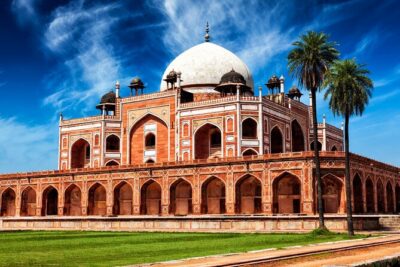
Morning starts with Qutub Minar, then you drive past the Lotus Temple. You also visit Humayun’s Tomb, which is a great anchor sight because it shows how Mughal architecture evolved. Even if you’re not a hardcore architecture fan, the scale and symmetry are easy to appreciate.
After lunch at a local Delhi restaurant, the tour shifts to Old Delhi:
- Raj Ghat
- Jama Masjid
- A drive past Red Fort
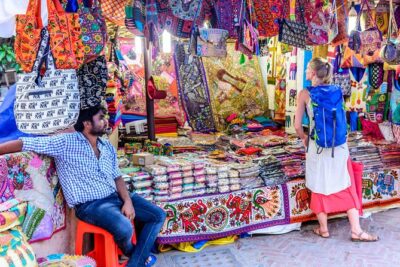
- A short cycle rickshaw ride around the Chandni Chowk area, including spice and clothing markets
This is one of the best parts of the tour because it’s not only monuments. It’s movement through a living neighborhood. You get up close to market life, where you’ll likely see shop stalls packed with spices, textiles, and everyday goods.
Practical tip: Old Delhi market areas can be crowded and a bit hectic. Wear comfortable shoes. Keep your camera ready, but also keep your phone secure during the rickshaw segment.
Day 3 to Agra: Sikandra Fort, Agra Fort, Itmad-ud-Daulah, and Jama Masjid
Leaving Delhi for Agra is one of the core Golden Triangle “transitions.” The driving time is part of the experience if you treat it as downtime rather than just travel.
En route, you stop at Sikandra Fort, also known as Akbar’s Tomb area. It’s a smart warm-up to Mughal Agra because it sets the tone: symmetry, red sandstone, and an empire-level sense of planning.
Once you reach Agra, you check in and then head out with a guided tour that focuses on the city’s power sites:
- Agra Fort (including Moti Masjid, the Octagonal Tower, Jahangir Palace, Diwan-i-Aam, and Diwan-i-Khas)
- Itmad-ud-Daulah’s Tomb
- Jama Masjid
This is a high-value day because it’s not just “see Taj Mahal.” Agra Fort and the tombs teach you that this region was about ceremony, administration, and dynastic messaging. If you go into Taj Mahal with that context, the emotions land harder—and you notice more details.
One drawback possibility: it’s a lot of standing and walking in a row. If you’re sensitive to sun or dust, plan to hydrate early. Your included water bottle helps, but you may want extra too.

Day 4: Taj Mahal at sunrise and Mehtab Bagh for the other perspective
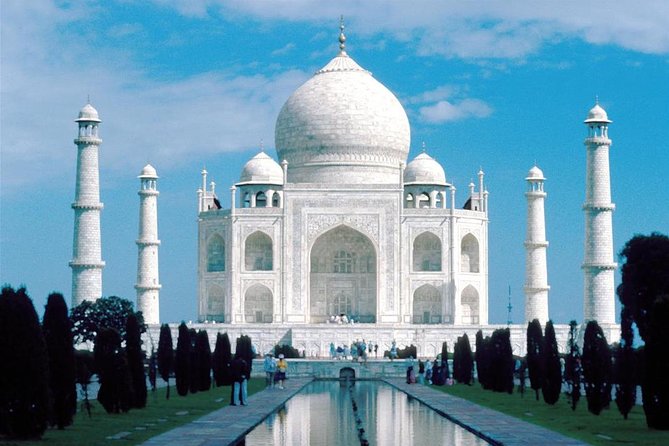
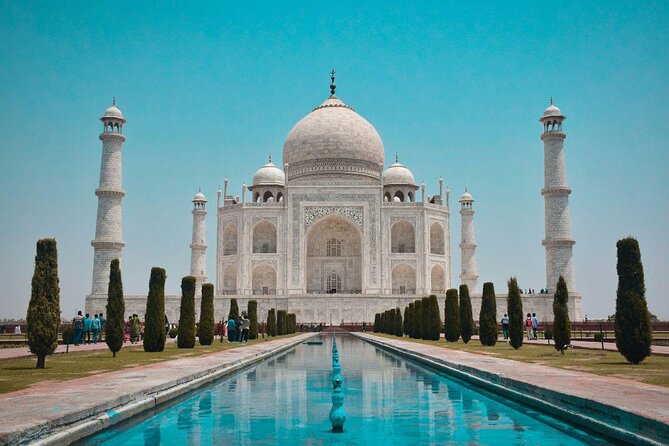
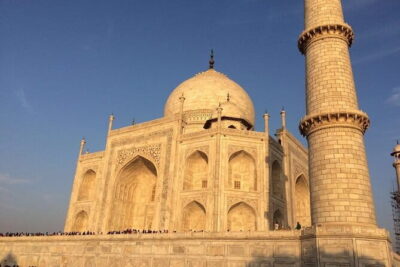
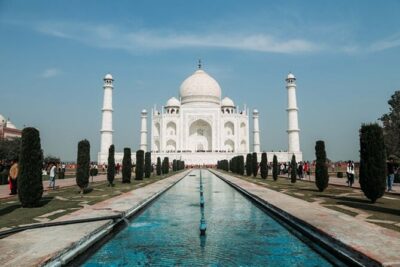
Day 4 is built around one idea: see Taj Mahal when the light is gentle. You start early, before breakfast, for sunrise at the Taj Mahal. That timing matters because Taj Mahal feels different with the shadows and softer contrast. It also helps you avoid some of the worst crowd crush.
After that, you visit Mehtab Bagh. This second location is a good pairing because it gives you a different approach to the Taj Mahal viewpoint. It’s also a nice break from the main foot-traffic pattern.
A practical note: early starts mean early fatigue. Wear layers. Even in warmer months, mornings can feel cooler than midday, and you’ll want to adjust quickly.
Day 4 to Day 5 transition: Fatehpur Sikri’s scale and then Jaipur’s first night
After sunrise and Taj time, the plan shifts to another Mughal blockbuster: Fatehpur Sikri. This stop is a huge reason the tour feels more than “two cities and a fort.”
Fatehpur Sikri is known for being an older, abandoned Mughal settlement with major structures built of red stone. You visit key elements including:
- Tomb of Salim Chishti
- Buland Darwaza
- Diwane e Khas
- Panch Mahal
Then you drive to Jaipur and check in. Day 4 ends with Jaipur being yours to explore at your own pace.
That “first night in Jaipur” free time is helpful. Jaipur is one of India’s easiest cities to navigate by vibes alone. Even if you don’t do a full schedule, you can find places to eat, watch street life, and orient yourself for the big sightseeing day tomorrow.
Day 5 in Jaipur: Amber Fort, City Palace, Jantar Mantar, and the palaces from the road
Jaipur is where the tour leans hard into Rajasthan’s signature look. The day mixes a major fort, palace-era architecture, and a few landmark drive-bys so you still get variety without running yourself ragged.
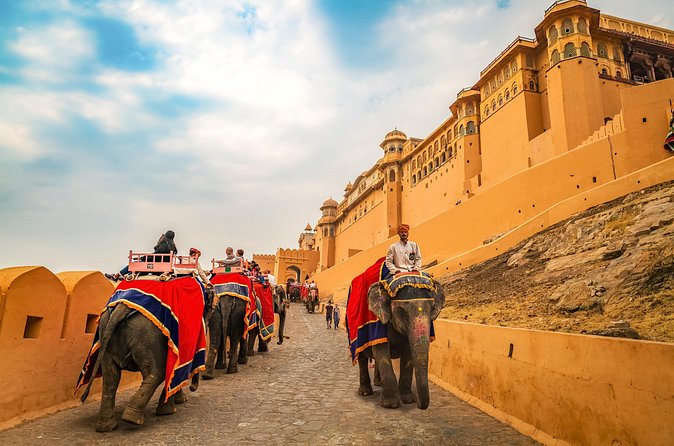
The big highlight is Amber Fort. There’s also an optional extension: Nahargarh Fort and Jaigarh Fort if time permits. If you like fort views and want more time on vantage points, this is where those additions pay off.
Next come Jaipur’s core heritage stops:
- City Palace
- Jantar Mantar
- Drive past Jal Mahal (when you see it from the road, it’s all about the setting)
- Drive past Hawa Mahal (Palace of Winds)
- Birla Temple
Two transport details matter here:
- There’s a jeep ride included in Jaipur (often paired with Fort-area access and viewpoints).
- You’ll be in an AC vehicle between stops, which helps when temperatures climb.
At the end of the guided portion, you get time for shopping or just relaxing. That’s not a throwaway. Jaipur shopping can be excellent for textiles and small crafts, and it’s easier if you’re not rushed right back to the hotel immediately.
Hotel time, guides, and the small extras that reduce stress
Good guides don’t just point. They give you the story so you can read what you’re looking at. This tour includes local English-speaking guides across all the main stops: Delhi, Agra, Fatehpur Sikri, and Jaipur.
You’ll also likely deal with a tour manager role at the company level. Past trip feedback names coordinators such as Amit Tomar and Deepak. Having someone experienced coordinating timing and group flow helps on a route like this, where delays can snowball.
Then there are the small inclusions that make a difference on a day like Day 2 or Day 5:
- Daily breakfast (so mornings start smoothly)
- One mineral water bottle per person per day
- AC vehicle transfers throughout
None of that guarantees your experience will be effortless, but it does mean you spend less time chasing logistics. And in the Golden Triangle, saving even 20–30 minutes repeatedly adds up.
The best and most practical way to pack for this itinerary
This route is monument-heavy. That means your packing should focus on comfort and heat.
- Wear shoes you can walk in for long stretches. You’ll do a lot of moving around forts and tomb areas.
- Bring a light layer for early mornings like sunrise Taj day.
- Use sunscreen and keep a hat or cap handy. The tour includes lots of outdoor time.
- Keep a small day bag for water and essentials—especially for Old Delhi market areas.
Also, plan your photo strategy. Taj Mahal and other major sites can feel like photo contests. Try to take one or two key shots early, then put the camera down and actually look. Taj Mahal especially rewards patience.
Who this Golden Triangle tour fits best
This tour is a strong match if:
- You’re a first-time visitor to India and want a structured entry.
- You like seeing a lot in a short time, but still want guided context.
- You want transport solved and don’t want to piece together city-to-city movement.
- You’re okay with early starts like sunrise Taj Mahal.
It might not be perfect if:
- You hate tight schedules and long days.
- You plan to linger deeply in museums or fewer sights.
- You strongly prefer a self-paced style with lots of downtime.
Should you book this Golden Triangle tour?
If you want a smart introduction to Delhi, Agra, and Jaipur with guided time, included breakfast, AC transfers, and the standout experiences like sunrise Taj Mahal and Old Delhi by rickshaw, this is a good “starter trip” choice. The biggest risk isn’t the route—it’s ticket clarity. With the monument entry fee wording seeming inconsistent, confirm what’s included for your travel dates before you land.
If you like structure and want the Golden Triangle highlights without the planning headaches, I’d book it. Just go in ready for early mornings, comfortable walking shoes, and a bit of flexibility. That’s how you turn a busy itinerary into a trip that feels memorable instead of mechanical.
FAQ
What cities are included in the Golden Triangle itinerary?
This tour covers New Delhi, Agra, and Jaipur, with an additional stop at Fatehpur Sikri on the way between Agra and Jaipur.
How long is the tour?
The duration is listed as approximately 6 days.
What’s the meeting point for the tour?
The tour start is listed at IGI Airport T3 Road, Aerocity, Indira Gandhi International Airport, New Delhi, Delhi 110037, India.
Does the tour include airport transfers?
Yes. Airport arrival and departure assistance are included, and all transfers including airport transfers are done by an AC vehicle.
Are monument entry fees included?
No. Monument entry fees are listed as not included. The day plan text also says admission ticket free, so it’s worth confirming exactly which tickets are covered for your dates.
What transportation is included during the sightseeing days?
You get AC vehicle transfers between cities and sightseeing stops. The tour also includes a cycle rickshaw ride in Old Delhi and a jeep ride in Jaipur.
Is breakfast included?
Yes. Daily breakfast is included for the 5 nights.
Is lunch included?
The itinerary mentions lunch during the Delhi sightseeing day, but only breakfast is listed as included. Plan on paying for lunch unless your operator confirms it is included for your departure.
What is the cancellation or change policy?
The experience is non-refundable and cannot be changed for any reason. If you cancel or ask for an amendment, the amount you paid will not be refunded.
Is this tour private?
It’s listed as a private tour/activity, meaning only your group will participate.
More Tours in New Delhi
- Old & New Delhi City Tour – Half or Full Day Options Available
★ 5.0 · 4,811 reviews - Half Day Private Delhi City Tour
★ 5.0 · 4,474 reviews - Same Day Taj Mahal, Agra Fort & Baby Taj Tour from Delhi by Car
★ 5.0 · 4,304 reviews - Taj Mahal Day Tour from Delhi by Superfast Train – TOP RATED TOUR
★ 5.0 · 4,166 reviews - Delhi: Old and New Delhi Private Full or Half-Day Tour
★ 4.9 · 3,776 reviews
More Tour Reviews in New Delhi
- Old & New Delhi City Tour – Half or Full Day Options Available
★ 5.0 · 4,811 reviews - Half Day Private Delhi City Tour
★ 5.0 · 4,474 reviews - Same Day Taj Mahal, Agra Fort & Baby Taj Tour from Delhi by Car
★ 5.0 · 4,304 reviews - Taj Mahal Day Tour from Delhi by Superfast Train – TOP RATED TOUR
★ 5.0 · 4,166 reviews - Delhi: Old and New Delhi Private Full or Half-Day Tour
★ 4.9 · 3,776 reviews
The Full Golden Triangle, More Options
- 3-Days Private Golden Triangle Tour: Delhi, Agra & Jaipur by Car
★ 5.0 · 1,107 reviews - 3-Days Private Golden Triangle Tour: Delhi, Agra & Jaipur by Car
★ 5.0 · 1,098 reviews - 3-Day Delhi, Agra and Jaipur Private Tour – India Golden Triangle
★ 5.0 · 812 reviews - Four-Day Private Luxury Golden Triangle Tour to Agra and Jaipur From New Delhi
★ 5.0 · 807 reviews - 5 Nights 6 Days Private Golden Triangle Tour – Delhi Agra Jaipur
★ 5.0 · 574 reviews
Just added: more New Delhi reviews to browse
- 4 days Golden Triangle Tour★ 5.0 · 3 reviews
- Discover Old & New Delhi: Private Tour with Street Food★ 5.0 · 3 reviews
- Taj Mahal Tour From Delhi By Private Car★ 4.5 · 3 reviews
- Golden Triangle Tour 5 Days★ 5.0 · 3 reviews
- Taj Mahal: Express Entry Ticket For Sunset Tour with guide★ 5.0 · 3 reviews
- Agra Taj Mahal Sunrise & Sunset Tour from Delhi★ 5.0 · 3 reviews
Golden Triangle Tours, compared.
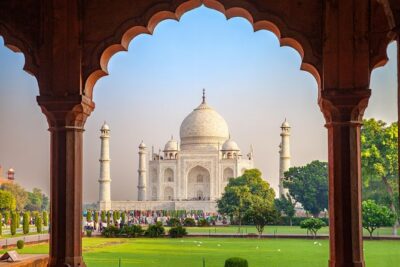 ★ 5.03-Days Private Golden Triangle Tour: Delhi, Agra & Jaipur by CarFrom $1271,107 reviews
★ 5.03-Days Private Golden Triangle Tour: Delhi, Agra & Jaipur by CarFrom $1271,098 reviews
★ 5.03-Days Private Golden Triangle Tour: Delhi, Agra & Jaipur by CarFrom $1271,107 reviews
★ 5.03-Days Private Golden Triangle Tour: Delhi, Agra & Jaipur by CarFrom $1271,098 reviews
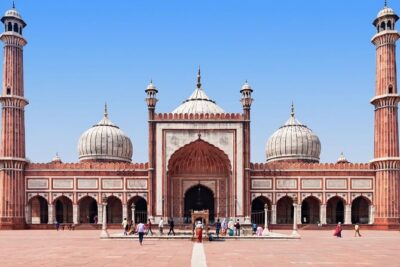 ★ 5.03-Day Delhi, Agra and Jaipur Private Tour – India Golden TriangleFrom $110812 reviews
 ★ 5.0Four-Day Private Luxury Golden Triangle Tour to Agra and Jaipur From New DelhiFrom $160807 reviews
 ★ 5.05 Nights 6 Days Private Golden Triangle Tour – Delhi Agra JaipurFrom $240574 reviews
 ★ 5.04 Days Golden Triangle TourFrom $146499 reviews
 ★ 5.0Private Car and Drive for Golden Triangle (4N/5D)From $167451 reviews
 ★ 5.0Private Golden Triangle Tour Delhi Agra Jaipur ( Top Rated )From $148436 reviews