
Reviewed · GOLDEN TRIANGLE TOURS
Golden Triangle Tour 3 Days – Flexible Itinerary with Local Guide
Three days through India’s famous triangle can feel intense, in a good way. This Golden Triangle Tour (Delhi–Agra–Jaipur) keeps the pace real by pairing private local guidance with dedicated driving, so you spend less time figuring things out and more time seeing what matters.
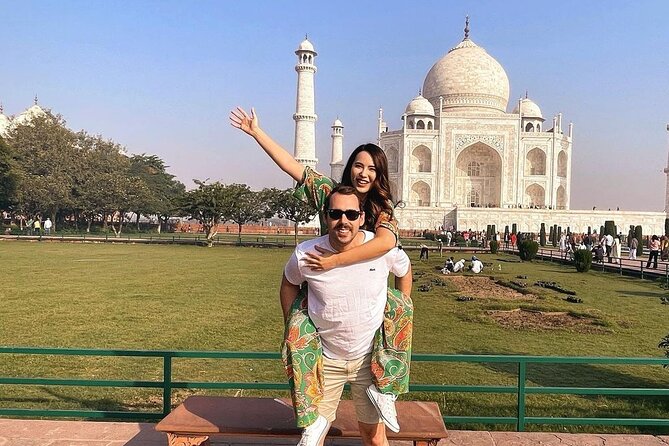
I particularly like the Taj Mahal at sunrise plan on Day 2, plus the way the schedule stitches together major sights in Delhi and Jaipur without turning it into a grab-and-go checklist. On the guiding side, I also appreciate the personal touch highlighted in reviews—names like Vimpul for New Delhi and Gaurav Bhatt for Jaipur come up, along with drivers like Shelondra who focused on comfort and pacing.
One thing to consider: entrance fees and meals aren’t included. You’ll need a cash buffer for the site tickets (guides arrange tickets in advance), and you’ll plan your lunches around the breaks built into the route.
In This Review
- Key things that make this tour work
- Why the Golden Triangle in 3 days feels efficient (not rushed)
- Day 1 in Delhi: Old Delhi spice lanes to Gandhi’s memorial
- Chandni Chowk and the spice market with a rickshaw ride
- Jama Masjid: scale and atmosphere
- Lotus Temple: calm after the crowds
- Raj Ghat: a reflective pause
- India Gate and Rashtrapati Bhavan views
- Overnight in Agra
- Day 2: Taj Mahal sunrise, Agra Fort, then a smooth drive to Jaipur
- Taj Mahal at sunrise: what to expect and how to use the time
- Breakfast and then Agra Fort
- Transfer to Jaipur and overnight
- Day 3 in Jaipur: Hawa Mahal to City Palace and Jantar Mantar
- Hawa Mahal: quick icon stop, big visual payoff
- Amber Fort and Palace time
- Panna Meena ka Kund: the stepwell stop people overlook
- Jal Mahal: photo stop with a view story
- City Palace: a slower, more human-feeling museum complex
- Jantar Mantar: the science landmark that surprises most people
- Price and value: what $190.20 covers, and what you should budget for
- Private guide + AC driver: the difference you feel in traffic
- Who this tour suits best
- Should you book this Golden Triangle Tour?
- FAQ
- What cities does the Golden Triangle Tour cover in 3 days?
- Is airport pickup included?
- Are entrances to monuments included in the tour price?
- How do entrance tickets work if they are not included?
- Are meals included?
- What time is the Taj Mahal sunrise visit?
- Do I get a private guide?
- What vehicle will I use during transfers?
- Can service animals be brought?
- Is cancellation free, and what about weather?
Key things that make this tour work
- Taj Mahal sunrise timing (start around 5:30 AM) to catch the light when it’s calm and photo-friendly.
- Private local guides in all three cities so the stories make sense, not just dates and names.
- Airport pickup with an English-speaking chauffeur who meets you with your name on a sign.
- AC vehicle matched to group size, so transfers stay comfortable in traffic-heavy areas.
- Entrance tickets arranged by guides, with you paying the exact fee in cash at the end of sightseeing.
- A value-heavy price for a door-to-door, three-city plan—then you top up mainly for tickets and food.
Why the Golden Triangle in 3 days feels efficient (not rushed)
If you’re new to India, the Golden Triangle is a smart first sweep: Delhi for layers of old and new, Agra for Mughal grandeur, and Jaipur for Rajasthan-style royal architecture. What makes this 3-day version especially workable is the balance between sightseeing and travel time. You’re not hopping cities at random; the driving is built into the itinerary so you’re not burning half a day trying to connect transport yourself.
Another practical win is the private setup. You’re traveling with just your group, with private local guides in Delhi, Agra, and Jaipur and a vehicle reserved for you. That means you can ask questions, pause when you need a breather, and move at a pace that fits your comfort level. In reviews tied to this experience, people specifically praised guides for explaining site history and answering questions, and for letting the group move at the guide’s tempo rather than a fixed bus schedule.
The final piece is the pickup and transfer rhythm. Airport pickup is handled with a chauffeur waiting at the airport exit with a sign, which is a big deal in a place where arriving can already feel like sensory overload. Once you’re underway, the tour keeps you from getting stuck in the “What’s next?” loop.
Delhi, Agra and Jaipur: more full circuits



Day 1 in Delhi: Old Delhi spice lanes to Gandhi’s memorial
Day 1 starts with an arrival-friendly approach: airport pickup with an English-speaking chauffeur who meets you with your name at the exit. From there, the day is designed to orient you fast—old city textures first, then major landmarks, then a comfortable handoff to Agra.
Chandni Chowk and the spice market with a rickshaw ride
Chandni Chowk is where you get your first feel for Old Delhi. The route includes time to explore the markets and a rickshaw ride, which is one of those experiences that’s hard to replicate on your own without local know-how. Expect lots of movement, dense shop fronts, and a constant swirl of sights and smells. The value here isn’t only the market itself—it’s learning how to read the neighborhood, where streets connect, and how bargaining culture works at a glance.
A quick consideration: this area can be crowded and loud. If you’re sensitive to chaos, go in with a plan—keep your phone secured, wear comfortable shoes, and give yourself a little time to adjust before you start browsing.
Jama Masjid: scale and atmosphere
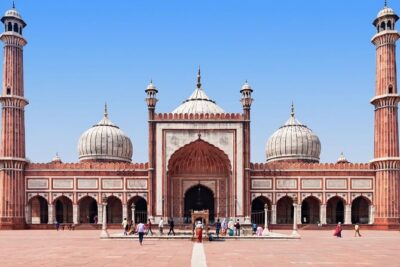
After Old Delhi, the day moves to Jama Masjid, one of the largest mosques in India. You get around an hour here, which is enough to appreciate the building and the courtyard setting without feeling rushed. The guide component matters at this stop; it’s easy to see a monumental structure and miss the meaning if no one explains what you’re looking at.
Practical tip: dress appropriately for a mosque visit. If you don’t know what’s expected, ask your guide before you enter.
Lotus Temple: calm after the crowds
Then comes a mental reset. The Lotus Temple stop is paired with a lunch break suggestion (lunch is not included, so you’ll choose where to eat). The temple is known for its flower-like design and quiet vibe, and that contrast—busy market to serene modern worship space—makes Day 1 feel intentionally balanced.
More guided days, made simple

Raj Ghat: a reflective pause
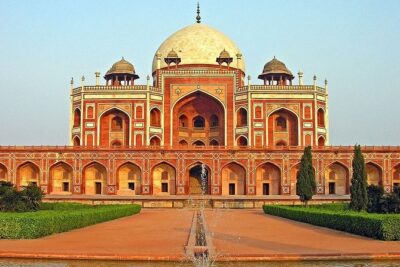
At Raj Ghat, you visit the memorial of Mahatma Gandhi. This is a shorter stop, but it gives the day a grounding moment. I like it because it changes the pace from architecture and markets into a moment of national remembrance.
India Gate and Rashtrapati Bhavan views
Finally, you get a stop at India Gate, including context about its role as the All India War Memorial. It’s a classic Delhi photo spot, but it also works as a quick lesson in how the city honors different chapters of history. After that, you see Rashtrapati Bhavan during the drive toward Agra.
Overnight in Agra
You arrive in Agra and your driver drops you at your hotel so you can check in and relax. Meals aren’t included, so your Day 1 end will likely involve grabbing something simple nearby.
Day 2: Taj Mahal sunrise, Agra Fort, then a smooth drive to Jaipur
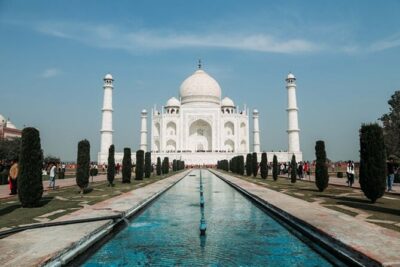
Day 2 is the headline day. It begins early with a Taj Mahal sunrise plan, typically with pickup from your hotel around 5:30 AM. This timing matters more than it sounds. Morning light changes the look of the marble, crowds are often calmer, and you get the monument when the day is still fresh.
Taj Mahal at sunrise: what to expect and how to use the time
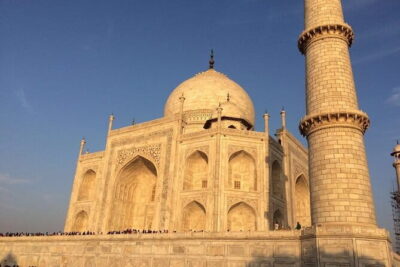
You’ll spend about two hours around the Taj Mahal visit, including the guided experience. Sunrise isn’t just about photos. It’s also about atmosphere—less heat, more time to take in details, and a better chance of a clear view.
A practical move: start with an overview of the symmetry, then slowly circle back to specific marble details. If you go straight into close-up shots, you might miss the grand proportions that make the Taj Mahal feel so different from other monuments.
Breakfast and then Agra Fort
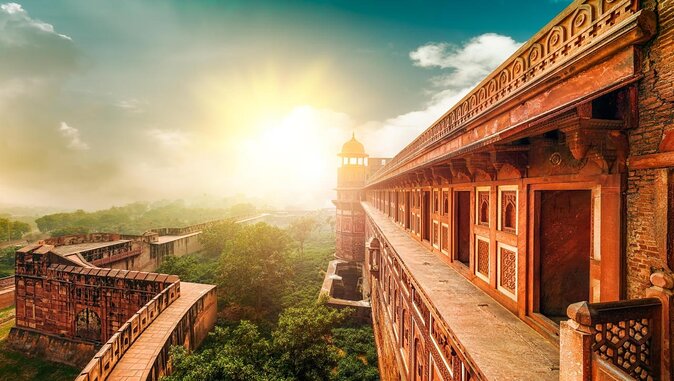
After Taj, there’s breakfast, then the schedule moves to Agra Fort. The fort is described as the grand residence of Mughal emperors and one of the largest forts of the Mughal era. You’ll get about one hour with a guided tour.
This is a good pairing because it expands your understanding of Mughal power beyond the one iconic building most people come for. You’ll see how forts served as political and administrative hubs, not just defensive walls.
Transfer to Jaipur and overnight
Once Agra sightseeing finishes, you head to Jaipur and check in for the night. The transfer time is listed with leisure flexibility (and the vehicle handles the driving). This is where the private-car setup is a real advantage. Instead of coordinating schedules and uncertain transport, you’re simply driven.
Day 3 in Jaipur: Hawa Mahal to City Palace and Jantar Mantar
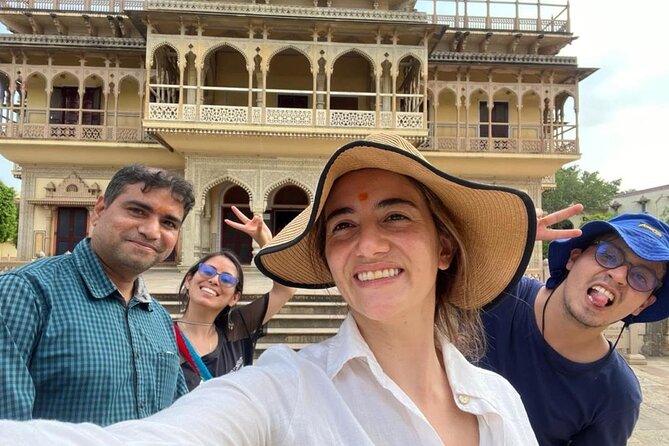
Day 3 keeps the “royal architecture” theme going, but with more variety: palace exteriors, a major fort complex, a stepwell, a couple of iconic photo stops, and time for the city’s cultural science landmark.
Hawa Mahal: quick icon stop, big visual payoff
Hawa Mahal, the Palace of Breeze, is your early highlight. You get about 30 minutes here. It’s short by design—long enough to appreciate the famous façade, not so long that it drags the pace. This stop works best if you take time to look up and notice the window structure rather than only shooting from street level.
Amber Fort and Palace time
Next is Amber Fort, included as both the architecture focus and the main fort highlight of the day (with time allotted for its courtyards and interior style). After that, the itinerary also includes Amber Palace as a focused stop.
One key consideration: fort visits usually involve walking on uneven ground and stairs. Wear shoes that handle cobbles and uneven stone. If you have mobility limitations, tell your guide early so you can plan how much time you want inside versus viewing from key viewpoints.
Panna Meena ka Kund: the stepwell stop people overlook
You also visit Panna Meena ka Kund, an ancient stepwell established in the 16th century. This stop is fascinating if you like “in-between” architecture—water engineering and daily-life infrastructure, not only royal buildings.
A value point here: stepwells show how design solved practical problems in hot climates. They add texture to the Jaipur experience, especially after all the fort-and-palace attention.
Jal Mahal: photo stop with a view story
Then there’s Jal Mahal, a photo stop at the Water Palace. The schedule frames it as a fusion of Rajput and Mughal architectural styles. Even if you’re not obsessed with architecture, it’s a strong visual break and a nice way to see Jaipur’s royal design in a different setting.
City Palace: a slower, more human-feeling museum complex
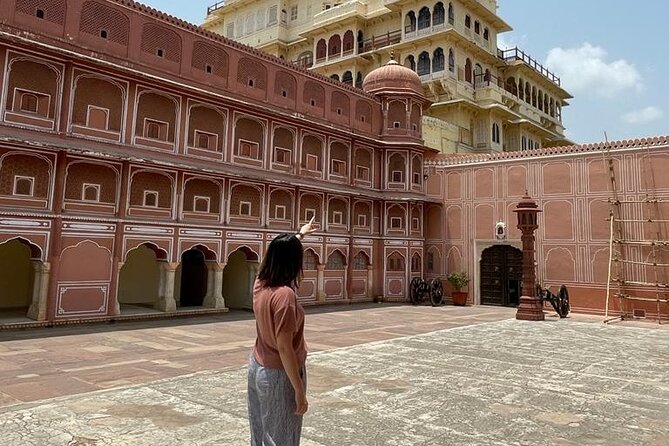
For lunch, the driver and guide suggest options (again, meals not included). After lunch, you explore City Palace, a grand complex with courtyards. You get about one hour here with guided time.
What I like about this kind of stop is that it’s not only about one façade. You get courtyards and spaces that help you picture how a palace complex functioned day to day.
Jantar Mantar: the science landmark that surprises most people
Finally, you visit Jantar Mantar, a UNESCO World Heritage Site and one of the largest astronomical observatories ever constructed. It’s listed as about one hour. This is where Jaipur can surprise you if you expected only forts and shops.
If you like hands-on learning, ask your guide to point out what the instruments are designed to do. Without explanation, it can look like an unusual outdoor yard of stone forms. With explanation, it becomes a working system tied to the era’s scientific thinking.
Price and value: what $190.20 covers, and what you should budget for
The published price is $190.20 per person for an approximately 3-day private tour. For a three-city plan that includes private guides in Delhi, Agra, and Jaipur, a dedicated AC vehicle option, and water bottles, it can represent decent value—especially if you’re trying to avoid arranging city-to-city transfers and guide services separately.
Where your wallet needs planning is exactly what’s not included:
- Entrance fees: the total tour entrance fees are listed as around Rs. 5000/adult (INR).
- Meals: not included.
- Gratuities: not included.
The good news is that guides arrange entrance tickets in advance and you simply pay the exact ticket cost in cash to the guide at the end of sightseeing. That reduces friction and line time compared to wandering ticket counters on your own.
One more practical money point: the tour price says pickup is offered, and you also get GST, toll taxes, and parkings covered. Those small charges add up quickly when you’re hiring everything separately.
If you’re traveling with a group, the tour notes group discounts, and vehicle choice scales by group size (sedan for 1–2, Kia Carens for 3, and larger SUVs or a van for bigger groups). That’s the kind of detail that matters: fewer surprises, less waiting, and a vehicle that fits your group.
Private guide + AC driver: the difference you feel in traffic

India’s major cities can be intense. Even when the monuments are close on a map, real travel time can swing wildly because of traffic flow. This tour helps by using a private air-conditioned vehicle (vehicle type depends on the number of people and the option you choose).
In daily terms, this means:
- You don’t waste energy hunting for transport after every stop.
- You get to treat the day as sightseeing, not logistics.
- Your guide can keep the story connected because the route is planned.
I also like that the airport pickup includes an English-speaking chauffeur holding a name sign. That small thing reduces stress after travel. And based on review notes, drivers like Shelondra are singled out for going out of the way to keep the guest comfortable, which tells me the operator pays attention to the service side, not just the routing.
Who this tour suits best
This is a great fit if you:
- Want the Golden Triangle without planning city transfers yourself.
- Prefer private guidance over group-bus lectures.
- Have a tight schedule and want Taj Mahal sunrise rather than a daytime version.
- Value comfort during drives, especially with an AC vehicle option and water bottles included.
It may be less ideal if you love complete freedom and spontaneity. This plan is flexible in the sense that it’s private, but the core stops are set. You’ll still have some time to breathe, but it’s not a “pick any hour and go” kind of itinerary.
If you’re solo, the private format can still work well. One review even calls out solo traveling as a good match for this tour style, mainly due to the ease of having someone handle the route and guidance.
Should you book this Golden Triangle Tour?
If you want a first-timer-friendly route through Delhi, Agra, and Jaipur with a private guide and real handholding, I’d say it’s worth booking—especially for sunrise at the Taj Mahal and the straightforward pacing across the three cities.
Before you decide, check your comfort with two things:
- You’ll budget extra for entrances and meals, and you should plan to carry cash for exact ticket costs paid to the guide.
- You’re committing to a full itinerary over three days, so it’s best if you enjoy seeing a lot while staying guided.
If that sounds good, you’re likely to come away feeling like you got the big icons plus the context that makes them matter.
FAQ
What cities does the Golden Triangle Tour cover in 3 days?
It covers New Delhi, Agra, and Jaipur. Day 1 focuses on Delhi sights, Day 2 includes Agra highlights and then transfers to Jaipur, and Day 3 is dedicated to Jaipur sightseeing.
Is airport pickup included?
Yes. An English-speaking chauffeur meets you at the airport exit holding a sign with your name, then drives you into Delhi.
Are entrances to monuments included in the tour price?
No. Entrance fees are not included. The tour notes total entrance fees of around Rs. 5000 per adult, and the exact ticket cost is handled during the sightseeing.
How do entrance tickets work if they are not included?
Guides arrange entrance tickets in advance to help you avoid line waiting. You pay the exact ticket cost in cash to the guide at the end of sightseeing.
Are meals included?
No. Meals are not included. The itinerary includes breaks where you can take lunch on your own.
What time is the Taj Mahal sunrise visit?
The sunrise plan starts early, with pickup around 5:30 AM for the Taj Mahal sunrise visit.
Do I get a private guide?
Yes. The tour includes private local guides in Delhi, Agra, and Jaipur, and the activity is private for your group only.
What vehicle will I use during transfers?
You’ll use a private AC vehicle depending on the option chosen and your group size (for example, a 4-seater AC sedan for 1–2 people, a Kia Carens for 3 people, and larger options like an SUV or van for bigger groups). The tour also provides water bottles.
Can service animals be brought?
Yes. Service animals are allowed.
Is cancellation free, and what about weather?
The tour offers free cancellation, with the ability to cancel up to 24 hours in advance for a full refund. The tour also notes it requires good weather, and if canceled due to poor weather, you’ll be offered a different date or a full refund.
More Tours in New Delhi
- Old & New Delhi City Tour – Half or Full Day Options Available
★ 5.0 · 4,811 reviews - Half Day Private Delhi City Tour
★ 5.0 · 4,474 reviews - Same Day Taj Mahal, Agra Fort & Baby Taj Tour from Delhi by Car
★ 5.0 · 4,304 reviews - Taj Mahal Day Tour from Delhi by Superfast Train – TOP RATED TOUR
★ 5.0 · 4,166 reviews - Delhi: Old and New Delhi Private Full or Half-Day Tour
★ 4.9 · 3,776 reviews
More Tour Reviews in New Delhi
- Old & New Delhi City Tour – Half or Full Day Options Available
★ 5.0 · 4,811 reviews - Half Day Private Delhi City Tour
★ 5.0 · 4,474 reviews - Same Day Taj Mahal, Agra Fort & Baby Taj Tour from Delhi by Car
★ 5.0 · 4,304 reviews - Taj Mahal Day Tour from Delhi by Superfast Train – TOP RATED TOUR
★ 5.0 · 4,166 reviews - Delhi: Old and New Delhi Private Full or Half-Day Tour
★ 4.9 · 3,776 reviews
The Full Golden Triangle, More Options
- 3-Days Private Golden Triangle Tour: Delhi, Agra & Jaipur by Car
★ 5.0 · 1,107 reviews - 3-Days Private Golden Triangle Tour: Delhi, Agra & Jaipur by Car
★ 5.0 · 1,098 reviews - 3-Day Delhi, Agra and Jaipur Private Tour – India Golden Triangle
★ 5.0 · 812 reviews - Four-Day Private Luxury Golden Triangle Tour to Agra and Jaipur From New Delhi
★ 5.0 · 807 reviews - 5 Nights 6 Days Private Golden Triangle Tour – Delhi Agra Jaipur
★ 5.0 · 574 reviews
Just added: more New Delhi reviews to browse
- 4 days Golden Triangle Tour★ 5.0 · 3 reviews
- Discover Old & New Delhi: Private Tour with Street Food★ 5.0 · 3 reviews
- Taj Mahal Tour From Delhi By Private Car★ 4.5 · 3 reviews
- Golden Triangle Tour 5 Days★ 5.0 · 3 reviews
- Taj Mahal: Express Entry Ticket For Sunset Tour with guide★ 5.0 · 3 reviews
- Agra Taj Mahal Sunrise & Sunset Tour from Delhi★ 5.0 · 3 reviews
Golden Triangle Tours, compared.
 ★ 5.03-Days Private Golden Triangle Tour: Delhi, Agra & Jaipur by CarFrom $1271,107 reviews
★ 5.03-Days Private Golden Triangle Tour: Delhi, Agra & Jaipur by CarFrom $1271,098 reviews
★ 5.03-Days Private Golden Triangle Tour: Delhi, Agra & Jaipur by CarFrom $1271,107 reviews
★ 5.03-Days Private Golden Triangle Tour: Delhi, Agra & Jaipur by CarFrom $1271,098 reviews
 ★ 5.03-Day Delhi, Agra and Jaipur Private Tour – India Golden TriangleFrom $110812 reviews
 ★ 5.0Four-Day Private Luxury Golden Triangle Tour to Agra and Jaipur From New DelhiFrom $160807 reviews
 ★ 5.05 Nights 6 Days Private Golden Triangle Tour – Delhi Agra JaipurFrom $240574 reviews
 ★ 5.04 Days Golden Triangle TourFrom $146499 reviews
 ★ 5.0Private Car and Drive for Golden Triangle (4N/5D)From $167451 reviews
 ★ 5.0Private Golden Triangle Tour Delhi Agra Jaipur ( Top Rated )From $148436 reviews