
Reviewed · GOLDEN TRIANGLE TOURS
Golden Triangle Tour 3 Night 4 Day by Car Tiger Safari from Delhi
Mughal mornings, tiger nights, one smooth drive. This Golden Triangle tour strings together Delhi, Agra, Jaipur, and a sunrise Ranthambore safari with private car pickup from Delhi. I like how the day-by-day plan keeps moving without feeling rushed, and I especially like the early Taj Mahal timing that helps you start the day while it’s still calm.
Two things I’d highlight right away: you get a guided circuit of major Mughal sites (not just drop-offs), and you travel in comfort with a private vehicle plus bottled water in the car. The guide help can be a big deal here; one name that comes up is Imran Khan, noted for helping with photo angles around the Taj Mahal.
One possible drawback: several key attractions list entrance tickets as not included, so you’ll want to budget for those separately and keep a little flexibility in your day if tickets are checked at the gates.
In This Review
- Key things to know before you go
- The Golden Triangle + Tiger Safari combo that actually fits 4 days
- Delhi day 1: Jama Masjid, India Gate, Humayun’s Tomb, Lotus Temple, and Qutub Minar
- The 5:30 AM Taj Mahal plan: what you’ll gain before breakfast
- Fatehpur Sikri then the drive toward Ranthambore
- Sunrise Ranthambore safari: what the shared jeep/canter really means
- Jaipur day 4: Amber Fort, Jal Mahal, City Palace, Jantar Mantar, and Hawa Mahal
- Price and logistics: where $200 per person feels fair (and where it might not)
- Guides and the photo-friendly Taj Mahal moment
- Should you book this Golden Triangle 3-night 4-day car tour with Tiger Safari?
- FAQ
- What cities are included in this 4-day Golden Triangle tour?
- Where is pickup and drop-off provided?
- Is the tour private or shared?
- How early is the Taj Mahal visit?
- Are breakfast and accommodations included?
- Are entrance tickets included for all attractions?
- Is a Tonga ride included in Agra?
- What vehicle and water are provided during sightseeing?
- What is the cancellation window for a full refund?
- Photo tip from the schedule
Key things to know before you go
- Private car pickup in Delhi/Noida/Gurugram: you meet the driver and guide right from your hotel or airport pickup point.
- Taj Mahal at 5:30 AM: you’ll start early for the best mix of light and fewer crowds.
- Ranthambore safari uses shared open jeeps/canters: even though the tour is private, the wildlife portion runs on shared vehicles.
- Agra sightseeing includes a Tonga ride: a fun, old-school transport moment tied to the Agra experience.
- Breakfast is included: it’s planned into the schedule for Delhi, Agra/Ranthambore, and Jaipur days.
The Golden Triangle + Tiger Safari combo that actually fits 4 days
The Golden Triangle is classic for a reason: Delhi gives you layers of empire and architecture, Agra is pure Mughal drama, and Jaipur brings the Rajput vibe. What makes this plan work is the order and the pacing. You don’t try to squeeze ten cities into four days; you do the high-impact sights and then spend one full day focusing on wildlife.
I also like the “car-based” approach. Flights aren’t part of this, so you avoid airport stress and you get more control over when you’re at each site. If you’re the type who wants to see more and worry less, this format helps.
That said, you are still on the road a lot. Expect a long Delhi-to-Agra drive (listed as about 8 hours) and a couple of other drive days (around 3 hours to Jaipur, plus the return drive). It’s doable, but it’s not a slow vacation.
Delhi, Agra and Jaipur: more full circuits



Delhi day 1: Jama Masjid, India Gate, Humayun’s Tomb, Lotus Temple, and Qutub Minar
Day 1 is built around Delhi’s “great hits,” with a mix of Mughal monuments and iconic landmarks. You start with a pickup from your hotel, airport, or another spot in Delhi/Noida/Gurugram, then you meet your local driver and tour expert in the lobby before you roll out.
Jama Masjid (about 1 hour) is a strong opening because it sets the tone for the Mughal part of the trip. Since the entrance ticket is listed as not included, plan for separate payment at the site. Practical tip: dress modestly, because mosque visits usually mean covering up and respecting the space.
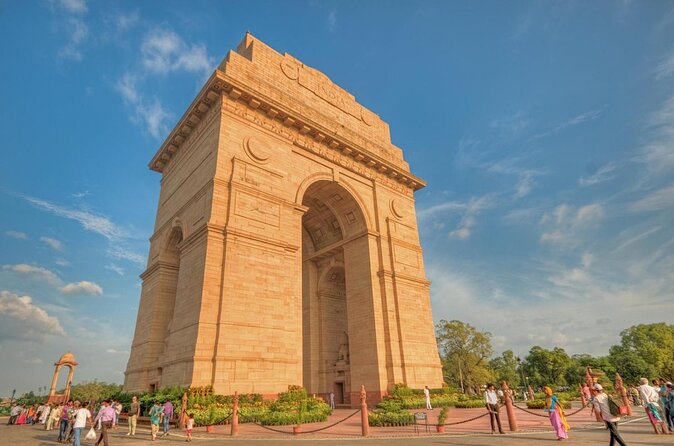
India Gate (about 30 minutes) is your shift into a different kind of monument. It’s a war memorial in central Delhi, built in 1921 by Edwin Lutyens, and it’s also an easy place to take a breather without committing to a long guided lecture.
Humayun’s Tomb (very short stop listed) is interesting because it’s Mughal-era and visually gives you that “how empires translated power into stone” feeling. The entrance ticket is listed as not included, so again, you’ll want to budget for entry if you want time inside rather than only outside photos.
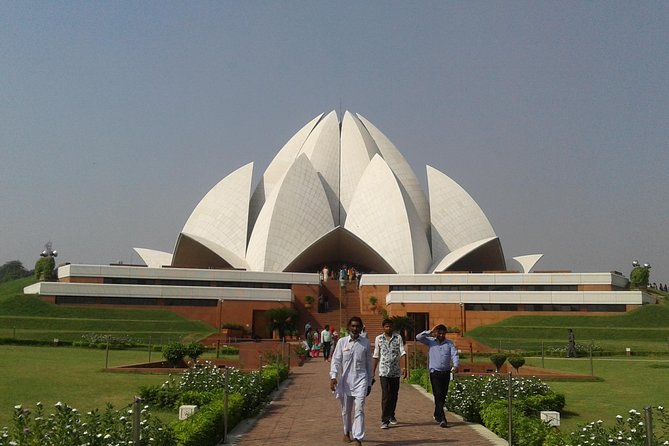
Lotus Temple (about 30 minutes) is a calmer moment. It’s a Baháʼí House of Worship dedicated in December 1986, known for its lotus-like shape. Since it’s marked as admission free, it’s a great stop if you want something scenic without paying extra.
Qutub Minar (listed up to about 3 hours) is where the day turns historic-heavy. This tall tower is described as the highest in India, with foundation laid in AD 1199 by Qutb Ud-Din Aibak. The listed entrance ticket is not included, and you’ll likely want real time here because Qutub Minar isn’t just one angle; it’s a whole complex feel.
Overall, Delhi day 1 is a smart overview day. The trade-off is that you’re hopping between sites, so wear comfortable shoes and keep your water bottle handy. It’s a lot of walking and standing, especially in heat.
The 5:30 AM Taj Mahal plan: what you’ll gain before breakfast
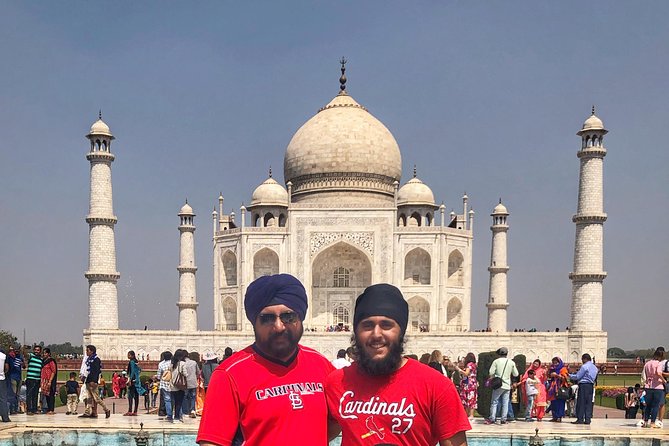
Day 2 starts with the standout timing: Taj Mahal pickup from Agra hotel at 5:30 AM and drive straight to the site. The tour lists the Taj Mahal admission ticket as not included, but the early arrival is the big win. Early light makes the marble look better, and you avoid the harsh midday sun.
Inside the experience, you’ll spend about 2 hours 30 minutes at the Taj. The description frames it as the 17th-century masterpiece built by Shah Jahan for his beloved wife, and it took 22 years to complete. You don’t need to be a history nerd to appreciate it; the scale is the story.
Agra Fort (about 50–70 minutes in the plan) gives you a different side of the city. The tour notes it as another UNESCO-listed site, built in the 16th century and housing multiple palaces like Jahangiri Mahal, Diwan e Aam, Pearl Mosque, and more. Since entrance is listed as not included, you’ll likely pay separately if you go inside key areas.
Then comes Fatehpur Sikri (about 4 hours). It’s described as a ghost city or abandoned city, built in the 16th century by Emperor Akbar and known as a planned wall city of the Mughal Empire. The plan marks it as admission ticket free, which is a nice money saver.
One more thing I like in this day’s structure: it mixes “iconic must-see” (Taj Mahal) with “power and planning” (Fort and Fatehpur Sikri). That contrast helps you understand how the Mughal world functioned, not just what it looked like.
Fatehpur Sikri then the drive toward Ranthambore
After Fatehpur Sikri, the plan moves you to Ranthambore for the night stay. That transition matters because it gives you a proper setup for a sunrise safari. You’re not trying to do wildlife on the same day as heavy palace walking; you’re giving your body time to reset before you chase tigers.
The drive timing isn’t specified in the details you provided, so I’d treat it like a practical travel day. Pack light for the safari day that follows. You’ll want to keep essentials accessible because early departures can make you skip rummaging through bags.
If you’re thinking about the emotional rhythm of the trip, this is a good pivot point: temples and tombs in the morning-to-afternoon, then a shift to forest and early wildlife energy.
Sunrise Ranthambore safari: what the shared jeep/canter really means
Day 3 is the wildlife highlight. You get pickup at sunrise for Ranthambore National Park with a safari conducted on a shared basis in an open jeep or canter. The plan lists the safari admission ticket as free, and the ride time is short in the list, but the key is the early start.
Here’s the practical reality: because it’s shared, you’ll be part of a team. That usually means your schedule is tight and the route can change based on what the guides see. The open vehicle setup is worth it. You’ll feel the air, the movement, and the quiet of the park in a way you don’t get from a locked van.
After the safari, you’ll have a short rest and breakfast break, then you visit Ranthambore Fort inside the park for about 30 minutes. The entrance ticket is listed as not included. The bonus here is that the fort visit adds a cultural layer back onto the tiger focus, reminding you this region isn’t just wildlife; it’s also human history.
Then, late morning or early afternoon, you start the drive to Jaipur (about 3 hours), transitioning from forest to Rajasthan.
More tiger country trips beyond the capital


Jaipur day 4: Amber Fort, Jal Mahal, City Palace, Jantar Mantar, and Hawa Mahal
Jaipur is a full day of big sights, and the plan is efficient without feeling like a checklist sprint. You begin with breakfast, then head to Panna Meena ka Kund for about 15 minutes. It’s a stepwell near the monument area, and this is one of those stops that adds texture. It’s not as famous as the forts, but it gives you something different than “another palace.”
Amber Fort (about 2 hours) is the anchor. It’s described as a 16th-century hilltop fortress with Rajput and Mughal architecture, plus palaces with intricate mirror work. The entrance ticket is not included, so budget for entry. Also, this is a fort day, meaning more walking and steps depending on where you go inside.
Then you get Jal Mahal (about 20 minutes), the Water Palace in the middle of Man Sagar Lake. It’s described as appearing to float, with a five-story look. Entrance is listed as not included, but the short stop is a good chance to soak in the view and reset before the heavier palace stops.
Next, City Palace of Jaipur (about 1 hour). The plan calls it the royal residence of the Maharajas of Jaipur and mentions a blend of Rajput, Mughal, and European architectural styles. It’s a real “center of power” stop, and it’s worth taking your time because the complex has multiple layers.
Jantar Mantar (about 1 minute listed) is described as an 18th-century astronomical observatory built by Maharaja Sawai Jai Singh II, with nineteen large instruments designed to measure time and other motions. The stop time listed looks brief, so I’d treat this as a “see the instruments, get the idea” moment rather than a museum deep read.
Finally, Hawa Mahal (about 20 minutes): the Palace of Wind, built in 1799, with its honeycomb pink sandstone façade. It’s one of those places where the exterior is the main event, and the short stop makes sense for photos and quick orientation.
After Jaipur, you’re driven back to Delhi for drop-off at your chosen location, with the return drive listed as about 4 hours.
Price and logistics: where $200 per person feels fair (and where it might not)
At $200 per person for a 4-day car tour, the value mostly comes from what it includes. You get breakfast, a private tour, and transport by private vehicle with unlimited bottled mineral water. You also get professional tour guiding for the sightseeing stops listed, plus hotel or homestay stays in Delhi and Jaipur (the details list options like Delhi 3-star hotel and boutique homestay options, and similar accommodation in Jaipur).
You also get a meaningful activity win: a Tonga ride in Agra is included in the plan. That’s the kind of detail that often costs extra on tours that otherwise look “standard.”
What’s not included is just as important. The tour notes food and drinks are not included. Also, many specific sights are marked with entrance tickets as not included (like Jama Masjid, Humayun’s Tomb, Qutub Minar, Taj Mahal, Agra Fort, Amber Fort, City Palace, Jantar Mantar, Hawa Mahal, and Ranthambore Fort). Some stops are listed as free (like India Gate, Lotus Temple, and Fatehpur Sikri). So your final spend depends on how many paid-entry areas you go into fully.
If you want to keep costs predictable, I’d plan a daily allowance for entrance fees and lunch. If you already budget for museum and monument entries in India, you’ll likely feel this price is fair given the private car, guide, and sunrise safari.
One more note: the safari portion is shared, even though the rest of the tour is private. You still get the guide and planning, but the vehicle and the pacing during the safari are constrained by the shared format.
Guides and the photo-friendly Taj Mahal moment
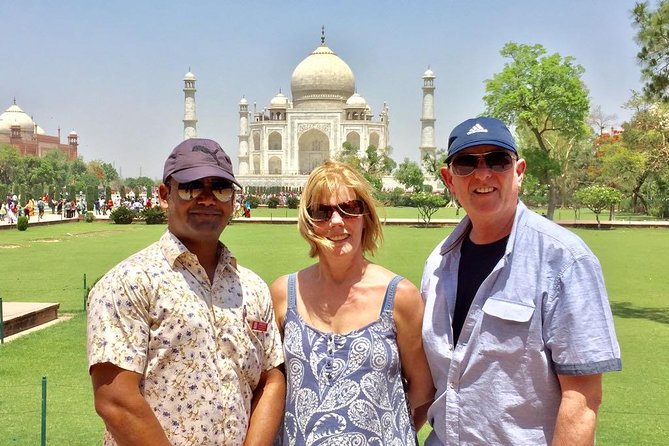
A quick word about guidance quality, because it can change your experience fast in Delhi and Agra. Your schedule here depends on timing, and the biggest monument is the Taj Mahal. One guide name that comes up is Imran Khan, described as a skilled photographer who helps capture professional-looking photos around the Taj Mahal.
Even if you don’t get that exact guide, the lesson is useful: bring a few clear photo goals. Ask where to stand for the best framing, and ask when to move so you’re not stuck in the wrong spot when the light changes.
This is also a good tour for people who like narration. The stops are major sites, so the guide’s explanations help you go beyond postcard photos and understand why each building matters.
Should you book this Golden Triangle 3-night 4-day car tour with Tiger Safari?
I’d book it if you want a classic route with smart timing and you don’t want to coordinate trains or domestic flights. This is also a good pick if you care about having a guide at each stop, and if sunrise wildlife sounds like your kind of day.
I’d hesitate if entrance fees worry you. The schedule includes many sites where tickets are listed as not included, so your “all-in” budget will be higher than $200 by itself. Also, be ready for long driving days, especially the Delhi-to-Agra stretch.
If you’re traveling as a couple or small group who wants private car comfort, early Taj energy, and one focused tiger day, this plan fits. You’ll see a lot of India’s power centers in one loop, then swap marble and fort stories for forest silence and the hunt for a glimpse of the big cats.
FAQ
What cities are included in this 4-day Golden Triangle tour?
The tour covers New Delhi, Agra, and Jaipur, plus a wildlife safari experience at Ranthambore.
Where is pickup and drop-off provided?
Pickup is offered from your hotel, airport, or a desired location in Delhi, Noida, or Gurugram. Drop-off is in New Delhi at your preferred location, such as your hotel or the airport.
Is the tour private or shared?
This is a private tour/activity, and only your group participates. However, the Ranthambore safari is conducted on a shared basis in an open jeep or canter.
How early is the Taj Mahal visit?
You’ll be picked up from your hotel in Agra at 5:30 AM to drive to the Taj Mahal.
Are breakfast and accommodations included?
Yes. Breakfast is included, and hotel stays are included in the price (with listed options in Delhi and Jaipur).
Are entrance tickets included for all attractions?
Entrance tickets are mixed. Some sights are marked as free (for example, India Gate, Lotus Temple, and Fatehpur Sikri), while others are marked as not included (for example, Jama Masjid, Qutub Minar, Taj Mahal, Agra Fort, and several Jaipur sites).
Is a Tonga ride included in Agra?
Yes. The Tonga ride in Agra is included in the tour.
What vehicle and water are provided during sightseeing?
You travel in a private vehicle for transport, and unlimited bottled mineral water is provided in the vehicle.
What is the cancellation window for a full refund?
You can cancel up to 6 days in advance for a full refund. Cancellation within 2 days of the start time is not refundable.
Photo tip from the schedule
If photography matters, treat the Taj Mahal morning as your priority. The tour’s timing is built around it, and good guidance can help you get the framing right without rushing.
More Tour Reviews in New Delhi
- Old & New Delhi City Tour – Half or Full Day Options Available
★ 5.0 · 4,811 reviews - Half Day Private Delhi City Tour
★ 5.0 · 4,474 reviews - Same Day Taj Mahal, Agra Fort & Baby Taj Tour from Delhi by Car
★ 5.0 · 4,304 reviews - Taj Mahal Day Tour from Delhi by Superfast Train – TOP RATED TOUR
★ 5.0 · 4,166 reviews - Delhi: Old and New Delhi Private Full or Half-Day Tour
★ 4.9 · 3,776 reviews
Tiger Country: More Ranthambore Trips
- Private 4-Day Golden Triangle Tour with Ranthambore Tiger Safari
★ 5.0 · 248 reviews - Golden Triangle & Ranthambore: 4-Day Private Tour from Delhi
★ 5.0 · 224 reviews - Private 5-Day Ranthambhore Tiger Tour from Delhi including the Taj Mahal, Agra and Jaipur
★ 5.0 · 197 reviews - From Delhi: 4-Day Golden Triangle & Ranthambore Guided Tour
★ 4.7 · 121 reviews - 4 Day Golden Triangle with Ranthambore Tiger Safari Tour from Delhi
★ 5.0 · 110 reviews
The Full Golden Triangle, More Options
- 3-Days Private Golden Triangle Tour: Delhi, Agra & Jaipur by Car
★ 5.0 · 1,107 reviews - 3-Days Private Golden Triangle Tour: Delhi, Agra & Jaipur by Car
★ 5.0 · 1,098 reviews - 3-Day Delhi, Agra and Jaipur Private Tour – India Golden Triangle
★ 5.0 · 812 reviews - Four-Day Private Luxury Golden Triangle Tour to Agra and Jaipur From New Delhi
★ 5.0 · 807 reviews - 5 Nights 6 Days Private Golden Triangle Tour – Delhi Agra Jaipur
★ 5.0 · 574 reviews
Just added: more New Delhi reviews to browse
- 4 days Golden Triangle Tour★ 5.0 · 3 reviews
- Discover Old & New Delhi: Private Tour with Street Food★ 5.0 · 3 reviews
- Taj Mahal Tour From Delhi By Private Car★ 4.5 · 3 reviews
- Golden Triangle Tour 5 Days★ 5.0 · 3 reviews
- Taj Mahal: Express Entry Ticket For Sunset Tour with guide★ 5.0 · 3 reviews
- Agra Taj Mahal Sunrise & Sunset Tour from Delhi★ 5.0 · 3 reviews
Golden Triangle Tours, compared.
 ★ 5.03-Days Private Golden Triangle Tour: Delhi, Agra & Jaipur by CarFrom $1271,107 reviews
★ 5.03-Days Private Golden Triangle Tour: Delhi, Agra & Jaipur by CarFrom $1271,098 reviews
★ 5.03-Days Private Golden Triangle Tour: Delhi, Agra & Jaipur by CarFrom $1271,107 reviews
★ 5.03-Days Private Golden Triangle Tour: Delhi, Agra & Jaipur by CarFrom $1271,098 reviews
 ★ 5.03-Day Delhi, Agra and Jaipur Private Tour – India Golden TriangleFrom $110812 reviews
 ★ 5.0Four-Day Private Luxury Golden Triangle Tour to Agra and Jaipur From New DelhiFrom $160807 reviews
 ★ 5.05 Nights 6 Days Private Golden Triangle Tour – Delhi Agra JaipurFrom $240574 reviews
 ★ 5.04 Days Golden Triangle TourFrom $146499 reviews
 ★ 5.0Private Car and Drive for Golden Triangle (4N/5D)From $167451 reviews
 ★ 5.0Private Golden Triangle Tour Delhi Agra Jaipur ( Top Rated )From $148436 reviews
Browse the lists this tour appears in