
Reviewed · GOLDEN TRIANGLE TOURS
Golden Triangle Tour 3 Nights and 4 Days
A monument-and-photo marathon that stays organized. I like the private-group setup and the smart “two Taj moments” plan, with sunset and sunrise built in. One thing to plan for: several sights are marked as admission not included, so you may pay some tickets on the spot.
This is a classic Delhi–Agra–Jaipur circuit, but it’s not just a checklist. You get a smooth ride in an air-conditioned vehicle, early starts from 7:30 am, and a route that mixes major Mughal landmarks with Delhi icons and Jaipur forts. The main consideration is pace: in four days, you’ll see a lot, so keep expectations realistic for how long you’ll linger at each stop.
In This Review
- Key things I’d pay attention to
- The Golden Triangle route: Delhi to Agra to Jaipur in four focused days
- Delhi’s big contrasts: Qutub Minar, Humayun’s Tomb, Raj Ghat, India Gate
- Agra Fort and the Baby Taj setup before Taj Mahal
- Taj Mahal twice: sunrise calm and sunset drama
- Fatehpur Sikri and Jantar Mantar: Mughal power meets old science
- Amber Fort and City Palace: Jaipur’s hilltop drama to museum-style royal life
- Transport and timing: the “7:30 am” effect on comfort
- Price and value: $335 for a private Golden Triangle plan with breakfast
- The guide and driver factor: Kapil, Raza, and Deebak make days run smoother
- What you’ll want to pack and plan for on these monument-heavy days
- Who should book this Golden Triangle tour (and who might not)
- Should you book Dt Golden Triangle’s 3 Nights and 4 Days plan?
- FAQ
- What cities does this Golden Triangle tour cover?
- How long is the tour?
- What time does the tour start?
- Is pickup included?
- Is this tour private?
- Are breakfast meals included?
- Are monument admission tickets included?
- What is the price per person?
- Is cancellation free?
Key things I’d pay attention to
- Sunrise Taj Mahal + sunset Taj Mahal gives you two different light moods, not just one quick peek
- Private tour for your group means fewer bottlenecks and more room to handle needs like restroom breaks
- Guides and drivers are a big deal here, with strong praise for English communication and safe driving
- Tickets aren’t uniform across monuments, so budget for on-site admission at some stops
- A/C vehicle and fuel surcharge included helps a lot when the days get hot and traffic gets slow
The Golden Triangle route: Delhi to Agra to Jaipur in four focused days
The Golden Triangle is the headline for a reason. In a single trip, you see three cities that helped shape India’s Mughal-era grandeur and Delhi’s layered identity, from British-era memorials to older fortified cores.
What I like about this version is that it doesn’t treat every stop as equal. Delhi starts with iconic structures tied to the growth of the city, Agra leans hard into Mughal stonework and imperial power, and Jaipur finishes with a fort-and-palace contrast that’s visually dramatic without needing guesswork.
This kind of tight schedule is great if you want big “wow” moments fast. Just remember you’re moving daily. If you crave long, slow museum time and zero rushing, you might feel the pressure.
Delhi, Agra and Jaipur: more full circuits



Delhi’s big contrasts: Qutub Minar, Humayun’s Tomb, Raj Ghat, India Gate
Day 1 is built around four stops that each tell a different story about Delhi.
Qutub Minar is the “start-here” landmark. It’s tied to Delhi’s oldest fortified city area (Lal Kot), and it’s tall enough that you feel the scale immediately. You spend about 45 minutes, which is enough for the main views without turning it into an all-day grind.
Then comes Humayun’s Tomb, a major 16th-century monument associated with Mirza Nasir al-Din. This is the moment where you start noticing how the architecture “sets the tone” for later Mughal design: geometry, symmetry, and that unmistakable garden-tomb idea.
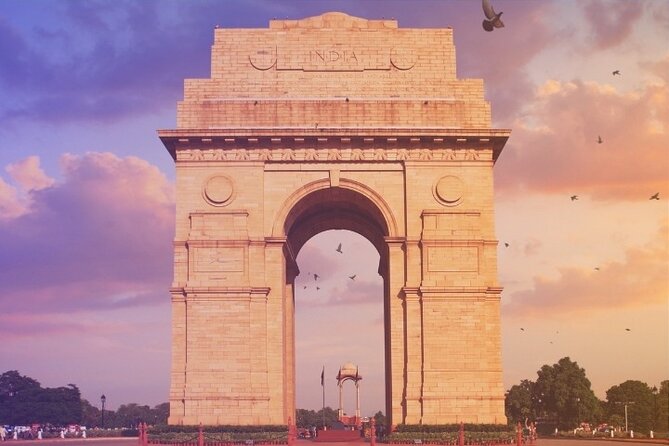
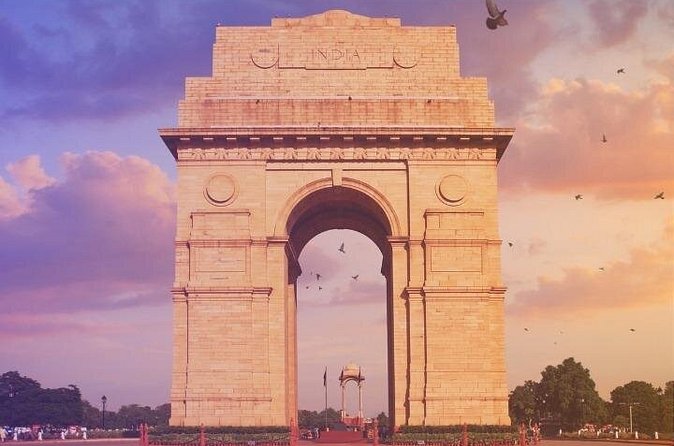
After that, Raj Ghat is a calmer pause. It’s a memorial complex dedicated to Mahatma Gandhi, with free admission, and it helps break the heavy visual load of the day. Next, India Gate brings in the British-era tribute to soldiers who lost their lives in World War—also free. It’s one of those sights where you can do a quick walk, grab photos, and then reset for tomorrow.
Practical note: several Delhi stops list admission not included, so check costs ahead or keep a card ready. The good news is that even if you arrive for the monuments, you still get strong “see-and-understand” context during the guided time.
Agra Fort and the Baby Taj setup before Taj Mahal
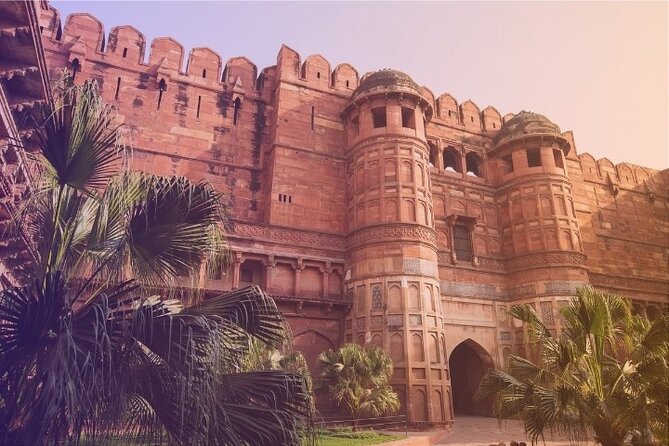
Agra is where the itinerary sharpens. It starts with Agra Fort, which once belonged to Mughal rulers and is packed with high bastions and palace interiors. You get around two hours here, which is helpful because fort sites reward a bit more time than a single lookout point.
From there, you move to Itmad-ud-Daula, often called the Baby Taj. You get about 45 minutes. The reason this stop is worth it is simple: it lets you notice the finer marble details and inlaywork style before you hit the big finale. It’s like getting the trailer before the movie.
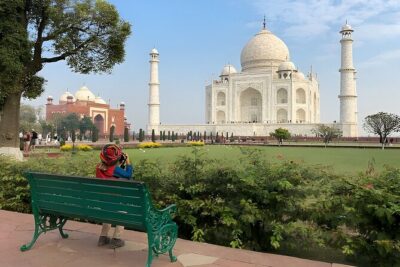
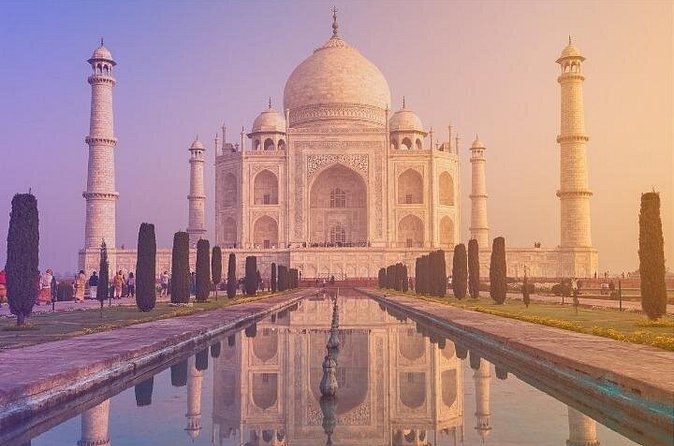
Then you reach the Taj Mahal at sunset, with about 45 minutes allocated. Sunset matters because the marble shifts tone as the light changes. The Taj is popular at all hours, so arriving with the plan (and not just showing up whenever) helps you get a satisfying window rather than a hurried glance.
What to expect: this day feels more structured and less “wander.” The timing is designed to build toward that sunset reveal, so don’t plan on extra detours unless your guide has flexibility.
Taj Mahal twice: sunrise calm and sunset drama
This tour’s biggest strength is that it treats the Taj Mahal as two experiences, not one.
On one morning, you visit for sunrise, with around two hours. Sunrise is when the marble can look softer and the light is gentle. You also get more breathing room on timing since the visit is planned rather than improvised.
Later, you’ve already seen it at sunset, which is where the marble can look warmer and the scene feels more theatrical. The difference between the two visits is the point. Instead of one quick photo blast, you get a chance to see how the Taj changes with the sky.
Is two visits “necessary”? Not for everyone. But if the Taj Mahal is the reason you’re coming to India in the first place, this is the kind of added value that makes the price feel easier to justify.
One consideration: Taj visits can be physically tiring. Bring sun protection and plan to wait a bit. This is a monument, not a quick street stop.
Fatehpur Sikri and Jantar Mantar: Mughal power meets old science
Day 3 brings two stops that feel different on purpose.
Fatehpur Sikri is the Mughal capital that was used for about 13 years before things shifted. You get roughly 45 minutes, which is enough to understand the “city as a statement” idea without needing a full history seminar. The goal here is to let the scale and planning sink in.
Then you head into Jaipur for Jantar Mantar, an ancient observatory with stone instruments used to observe stars. Again, around 45 minutes. This is a great switch-up from pure palace/fort visuals because it gives your brain a different kind of enjoyment—math made physical. It also makes Jaipur feel more than just photo backdrops.
After that, there’s a quick photo stop at Jal Mahal, the palace-like structure surrounded by water. The time is about 45 minutes, and the main value is the viewpoint. If you’re the type who likes getting a specific shot and moving on, this works well. If you’re hoping for a long sit-down scene, don’t build your expectations that way.
Finally, you’re in motion toward the next day’s hilltop classic.
Worth putting side by side with this New Delhi pick:

Amber Fort and City Palace: Jaipur’s hilltop drama to museum-style royal life
Day 4 is where Jaipur becomes unmistakably Jaipur.
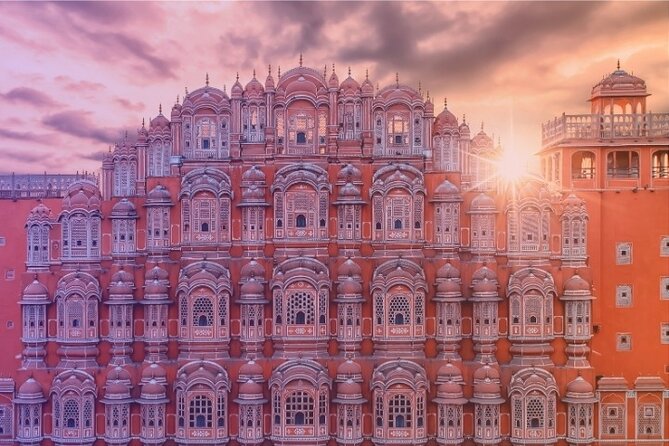
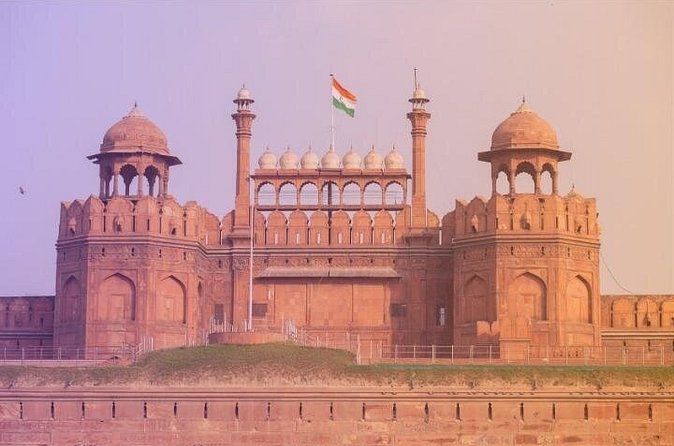
After early breakfast and check-out, you go to Amber Fort, set on a hilltop. You spend about 45 minutes. The design and architecture are visually strong, and the hilltop setting makes it feel like a place you had to build defensively and impressively.
Then comes City Palace of Jaipur, where the royal residence functions more like a museum. You get around 30 minutes here, which is short but workable if you focus on the highlights and don’t try to see every room like you’re touring a national capital.
After sightseeing, the day shifts into travel back to Delhi. The tour is built so Jaipur doesn’t end like a slow fade. It ends with momentum, which is ideal if your real goal is a complete Golden Triangle overview rather than a long stretch in one city.
Transport and timing: the “7:30 am” effect on comfort
Starting at 7:30 am is not a small detail. In Delhi and the broader region, mornings give you two advantages: cooler temperatures and a less punishing traffic rhythm. Even when roads are still busy, you’re often ahead of the worst congestion if you keep to the plan.
You also get an air-conditioned vehicle with pickup offered, plus fuel surcharge included. That matters more than it sounds, especially for multi-stop days. It turns the travel time from wasted time into tolerable transit so you can actually enjoy the monuments.
This is also described as a private tour activity for your group only. Practically, that often means fewer stops dragged out by mixed group speeds. Your guide and driver can support your pace and needs.
Price and value: $335 for a private Golden Triangle plan with breakfast
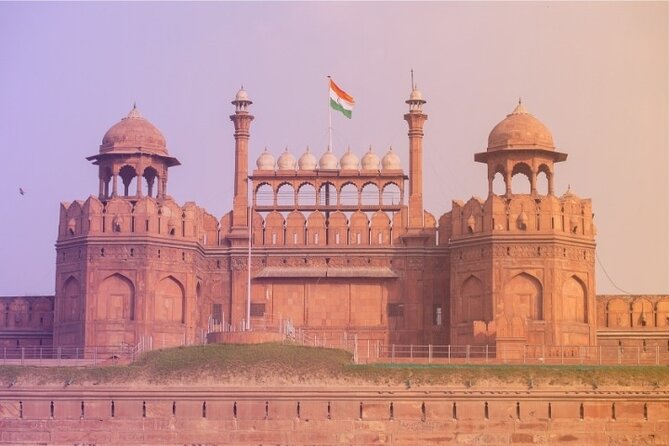
At $335 per person, the value depends on what you compare it to. This isn’t the cheapest way to do Delhi–Agra–Jaipur. But it is often a better deal than cobbling together separate taxis and half-planned guides, especially if you want clear timing and a single point of contact.
Here’s what the price includes based on the details you have:
- Air-conditioned vehicle
- Fuel surcharge
- Entrance fee – Monument entrances (with some monuments listed as admission not included)
- Breakfast (4)
The tricky part is the admission language. Several sights are marked as admission ticket not included, while others are listed as free. So I’d treat this as: some monument entries may be handled by the provider, but you should still budget for paying additional tickets on site for certain stops.
If you like the idea of guided context and planned arrival times (especially for Taj moments), the price starts to look fair. If you’re the type who wants to self-drive and skip guides, you may find cheaper options elsewhere. But you would be trading away convenience.
The guide and driver factor: Kapil, Raza, and Deebak make days run smoother
In a tour like this, the difference between good and great is often the person behind the steering wheel and the person explaining what you’re seeing.
The tour guide Kapil gets especially strong praise for making the Taj Mahal visit memorable, including clear and engaging explanations tied to the places you’re standing in. That kind of guidance turns “pretty marble” into something you can actually connect to what the site meant.
For driving, names like Raza and Vikram show up with positive notes about safe driving and staying on time. There’s also praise for English communication and flexibility for real-world needs like restroom breaks and buying drinks. One standout detail is handling thick fog conditions while still getting to the destination. That’s not the kind of thing you can control as a passenger, so having it go well matters.
And Deebak is mentioned for making people feel extremely comfortable in Agra and even recommending a good restaurant. That’s the practical side of a good guide: not just monuments, but also how you eat and reset between them.
What you’ll want to pack and plan for on these monument-heavy days
This tour is built around outdoor monuments and early starts. Even without inventing specifics, you can prepare smartly.
Bring:
- Sun protection (hat/sunglasses/sunscreen), especially for the Taj mornings
- Comfortable shoes for walking and stairs at forts
- A light layer for morning chill that can happen around sunrise hours
- Basic cash or card for any admission fees that show as not included
Also, keep your phone storage ready. The mix of marble, fort walls, observatory stones, and photo stops like Jal Mahal means you’ll want space for repeated shots—because the light changes fast.
If your schedule feels packed, use short pauses strategically. The value here is to keep moving forward, then take a minute to really look instead of rushing through for one picture.
Who should book this Golden Triangle tour (and who might not)
You’ll probably love this tour if:
- You want a first-timer-friendly Delhi–Agra–Jaipur highlight plan
- The Taj Mahal is a top priority and you want both sunrise and sunset
- You prefer a private-group day structure over figuring routes and timing alone
- You like having your guide explain what you’re seeing instead of guessing
You might hesitate if:
- You dislike early mornings or fast pacing
- You’re set on skipping guided context and touring mostly at your own speed
- You don’t want to manage any on-site ticket costs, given that admission isn’t uniform across stops
Should you book Dt Golden Triangle’s 3 Nights and 4 Days plan?
If your goal is to see the Golden Triangle without turning your trip into a logistics project, this is a strong option. The best reason to choose it is the two Taj Mahal time windows paired with a route that covers the major Delhi and Jaipur hits without fluff.
Before you book, do one simple check: confirm how monument admissions are handled for the specific dates you’ll travel, since some places are listed as admission not included and others as free. If that’s clear, the rest becomes straightforward—private transport, four breakfasts, and a plan that keeps you moving toward the monuments that matter.
FAQ
What cities does this Golden Triangle tour cover?
It covers New Delhi, Agra, and Jaipur.
How long is the tour?
The tour runs for about 4 days (3 nights and 4 days).
What time does the tour start?
The start time is 7:30 am.
Is pickup included?
Yes, pickup is offered.
Is this tour private?
Yes, it’s described as a private tour/activity, meaning only your group participates.
Are breakfast meals included?
Yes, breakfast is included for 4 days.
Are monument admission tickets included?
The details show mixed info: some stops list admission ticket not included, while others list admission free. Entrance fees are also listed as included for monument entrances, so you should expect that at least some sites may require payment at the location.
What is the price per person?
The price is $335.00 per person.
Is cancellation free?
Cancellation is free up to 24 hours in advance, with a full refund if you cancel at least 24 hours before the experience start time.
More Tours in New Delhi
- Old & New Delhi City Tour – Half or Full Day Options Available
★ 5.0 · 4,811 reviews - Half Day Private Delhi City Tour
★ 5.0 · 4,474 reviews - Same Day Taj Mahal, Agra Fort & Baby Taj Tour from Delhi by Car
★ 5.0 · 4,304 reviews - Taj Mahal Day Tour from Delhi by Superfast Train – TOP RATED TOUR
★ 5.0 · 4,166 reviews - Delhi: Old and New Delhi Private Full or Half-Day Tour
★ 4.9 · 3,776 reviews
More Tour Reviews in New Delhi
- Old & New Delhi City Tour – Half or Full Day Options Available
★ 5.0 · 4,811 reviews - Half Day Private Delhi City Tour
★ 5.0 · 4,474 reviews - Same Day Taj Mahal, Agra Fort & Baby Taj Tour from Delhi by Car
★ 5.0 · 4,304 reviews - Taj Mahal Day Tour from Delhi by Superfast Train – TOP RATED TOUR
★ 5.0 · 4,166 reviews - Delhi: Old and New Delhi Private Full or Half-Day Tour
★ 4.9 · 3,776 reviews
The Full Golden Triangle, More Options
- 3-Days Private Golden Triangle Tour: Delhi, Agra & Jaipur by Car
★ 5.0 · 1,107 reviews - 3-Days Private Golden Triangle Tour: Delhi, Agra & Jaipur by Car
★ 5.0 · 1,098 reviews - 3-Day Delhi, Agra and Jaipur Private Tour – India Golden Triangle
★ 5.0 · 812 reviews - Four-Day Private Luxury Golden Triangle Tour to Agra and Jaipur From New Delhi
★ 5.0 · 807 reviews - 5 Nights 6 Days Private Golden Triangle Tour – Delhi Agra Jaipur
★ 5.0 · 574 reviews
Just added: more New Delhi reviews to browse
- 4 days Golden Triangle Tour★ 5.0 · 3 reviews
- Discover Old & New Delhi: Private Tour with Street Food★ 5.0 · 3 reviews
- Taj Mahal Tour From Delhi By Private Car★ 4.5 · 3 reviews
- Golden Triangle Tour 5 Days★ 5.0 · 3 reviews
- Taj Mahal: Express Entry Ticket For Sunset Tour with guide★ 5.0 · 3 reviews
- Agra Taj Mahal Sunrise & Sunset Tour from Delhi★ 5.0 · 3 reviews
Golden Triangle Tours, compared.
 ★ 5.03-Days Private Golden Triangle Tour: Delhi, Agra & Jaipur by CarFrom $1271,107 reviews
★ 5.03-Days Private Golden Triangle Tour: Delhi, Agra & Jaipur by CarFrom $1271,098 reviews
★ 5.03-Days Private Golden Triangle Tour: Delhi, Agra & Jaipur by CarFrom $1271,107 reviews
★ 5.03-Days Private Golden Triangle Tour: Delhi, Agra & Jaipur by CarFrom $1271,098 reviews
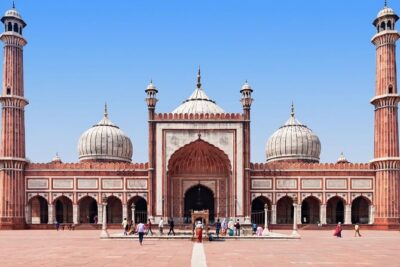 ★ 5.03-Day Delhi, Agra and Jaipur Private Tour – India Golden TriangleFrom $110812 reviews
 ★ 5.0Four-Day Private Luxury Golden Triangle Tour to Agra and Jaipur From New DelhiFrom $160807 reviews
 ★ 5.05 Nights 6 Days Private Golden Triangle Tour – Delhi Agra JaipurFrom $240574 reviews
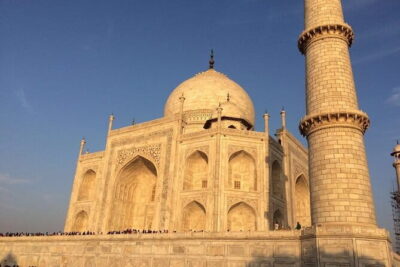 ★ 5.04 Days Golden Triangle TourFrom $146499 reviews
 ★ 5.0Private Car and Drive for Golden Triangle (4N/5D)From $167451 reviews
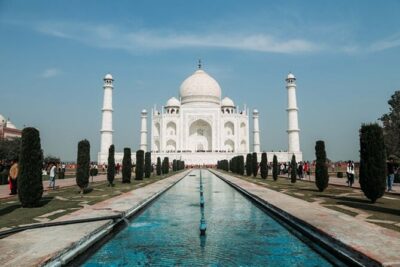 ★ 5.0Private Golden Triangle Tour Delhi Agra Jaipur ( Top Rated )From $148436 reviews