
Reviewed · GOLDEN TRIANGLE TOURS
Golden Triangle Tour with Pushkar from Delhi
Seven days, three cities, one sacred side trip. I like the private air-conditioned transport that keeps you moving without the usual hassle, and I also like that you get guided site visits at the key stops. The main drawback to plan for is that monument tickets and meals are not included, so your budget needs a little extra room once you’re on the ground.
This route also has a smart rhythm: grand Mughal sights in Agra, palace-heavy Jaipur, then the quieter religious mood of Pushkar before ending with Delhi’s big-city monuments. You’ll even get a golf cart to the Taj Mahal entry gate and shoe covers, plus a rickshaw ride through Old Delhi—small touches that add up.
In This Review
- Key highlights before you go
- The Golden Triangle Route with Pushkar: a smart 7-day arc
- Day 1 in Agra: Taj Mahal first, then Agra Fort and the Baby Taj
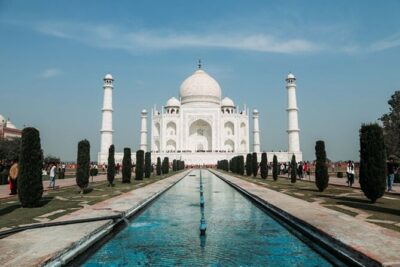
- Taj Mahal visit (the big one)
- Agra Fort: why you should not skip it
- Itmad-ud-Daula (Baby Taj): the calmer closer
- Day 2 to Jaipur: Fatehpur Sikri and Chand Baori on the way
- Fatehpur Sikri: Mughal ambition in stone
- Chand Baori: the stepwell that feels like a workout
- Day 3 in Jaipur: Amber Fort, Jal Mahal, City Palace, Jantar Mantar, Hawa Mahal
- Panna Meena ka Kund: start with geometry
- Amber Fort: the hilltop centerpiece
- Jal Mahal: palace-in-the-water views
- City Palace: museum + living palace legacy
- Jantar Mantar: planets, instruments, and time
- Hawa Mahal: the last-photo landmark
- Day 4 to Pushkar: Brahma Temple, Savitri Mata Mandir, and Pushkar Lake
- Brahma Temple: the one-for-Brahma focus
- Savitri Mata Mandir: Ratnagiri Hill views and worship
- Pushkar Lake: mythology + calm
- Day 5: back to Delhi, with time to breathe
- Day 6 in Delhi: Jama Masjid, Red Fort, Bangla Sahib, and Qutub Minar
- Jama Masjid: India’s largest mosque
- Red Fort: Mughal power in stone
- Gurudwara Bangla Sahib: Sikh faith and the tank story
- India Gate and Rashtrapati Bhawan: big monuments, short stops
- Humayun’s Tomb or Akshardham: a choice
- Qutub Minar: finish with the tall UNESCO landmark
- What you really get for the price (and what to budget)
- Comfort, timing, and the small rules that change your day
- Should you book this Golden Triangle with Pushkar tour from Delhi?
- FAQ
- Where does the tour start and end?
- Is this a private tour or a shared group?
- How long is the Golden Triangle with Pushkar tour?
- What’s included in the price besides the guide and transportation?
- Are monument tickets included?
- What meals are included?
- Are there any closures that affect the itinerary?
- Can the itinerary be customized?
Key highlights before you go
- Taj Mahal logistics that save time: shoe covers and a golf cart ride to the entry gate
- A real guide at most stops: helpful explanations at the places that matter most
- Jaipur in one full day: Amber Fort, Jal Mahal, City Palace, Jantar Mantar, and Hawa Mahal
- Pushkar’s slower pace: Brahma Temple, Savitri Mata Mandir, and a lakeside sunset-like atmosphere
- Delhi with variety: Old Delhi by rickshaw, major mosques and forts, plus Qutub Minar to finish
The Golden Triangle Route with Pushkar: a smart 7-day arc

This is the classic north-India sweep—Delhi to Agra to Jaipur—then a left turn into Pushkar for temples and lake life. The value here is how much you cover with less decision-making. You’re not piecing together transfers and entry lines each day; you’re mostly following a route that makes geographic sense.
You’ll also feel the big change in pace. Agra is all about Mughal monuments and viewing angles. Jaipur is palace-and-fort day, with photogenic stops that take time. Pushkar slows things down, and Delhi ends with a final burst of iconic landmarks.
Delhi, Agra and Jaipur: more full circuits



Day 1 in Agra: Taj Mahal first, then Agra Fort and the Baby Taj
Agra day starts with a pick-up anywhere in New Delhi and an air-conditioned drive. Once you arrive, you check in with help from your guide, then the itinerary points you straight to the Taj Mahal. That order matters: it helps you see the main monument while your energy is still high.
Taj Mahal visit (the big one)
The Taj Mahal is covered by your guide, but the admission ticket is not included. You’ll get practical extras—shoe covers and a golf cart ride from the parking to the Taj Mahal entry gate—which can make the early chaos feel manageable. Just remember it’s closed on Fridays, so if your dates fall on a Friday, expect the operator to shift your plan.
Agra Fort: why you should not skip it
After the Taj, you’ll head to Agra Fort, a UNESCO World Heritage Site. The best part isn’t just the fort walls—it’s the views. There’s a classic way to look toward the Taj from a small octagonal tower overlooking the Yamuna River. You’ll also hear the story through architecture, including the Hall of Public Audience and royal pavilions.
Itmad-ud-Daula (Baby Taj): the calmer closer
Later you’ll visit Itmad-ud-Daulah’s Tomb, often called the Baby Taj. It’s smaller and more intimate than the Taj Mahal, and that makes it a nice counterbalance. You get less of the postcard crowd vibe and more time to notice details. Admission isn’t included here either, but the stop is short enough to fit well.
Quick planning thought: Agra monuments usually involve walking and sun, even if the schedule is tight. Comfortable footwear is worth more than bringing the perfect outfit.


Day 2 to Jaipur: Fatehpur Sikri and Chand Baori on the way
On day two you check out after breakfast and drive to Jaipur, stopping en route at two major sights.
Fatehpur Sikri: Mughal ambition in stone
First up is Fatehpur Sikri, described as the former second capital of Mughal Emperor Akbar. The admission is listed as free for this stop, but you still get value from being there with a guide who can connect the site to the larger Mughal story. It’s one of those places where the layout feels like a planned whole, not just isolated buildings.
Chand Baori: the stepwell that feels like a workout
Next is Chand Baori in Abhaneri, famous for its design and its many steps (the itinerary notes 3,500). Here’s an important detail: there is no guide provided, so you’ll want to go with curiosity. Even if you don’t know what you’re looking at, it’s a striking visual. Use it as a photo break and a reset before Jaipur.
Day 3 in Jaipur: Amber Fort, Jal Mahal, City Palace, Jantar Mantar, Hawa Mahal
This is your big Jaipur day, and the timing is built around grouping the sights so you don’t crisscross the city too much. You’ll start with a guided tour and move from stepwell to hilltop fort to palace complexes and observatories.
Panna Meena ka Kund: start with geometry
You begin at Panna Meena ka Kund, an ancient stepwell near Amber Fort. The focus is the geometric design, which is a good way to start the day with something a bit different from palaces. Admission isn’t included, so expect that to be a separate ticket.
Amber Fort: the hilltop centerpiece
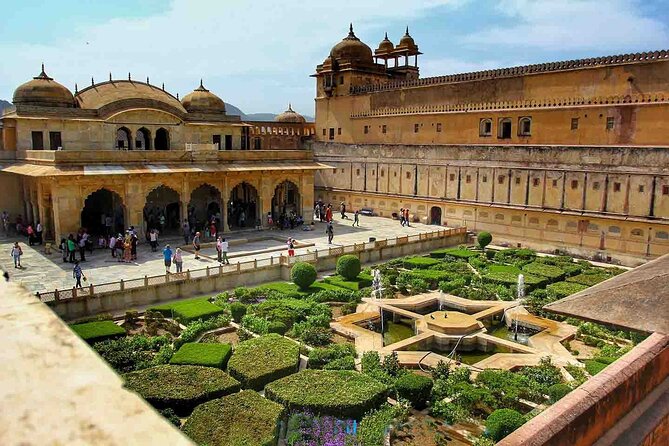
Then comes Amber Fort, built by Raja Man Singh I and set atop a hill in Amer. You’ll also see the Maota Lake in front, and the itinerary notes it served as a water source. Forts in Jaipur aren’t just for walls and views—they’re for understanding how power, water, and architecture worked together.
Admission isn’t included, but it’s one of those stops where the guide’s context pays off fast.
Jal Mahal: palace-in-the-water views
Next you’ll visit Jal Mahal, a palace set in the middle of Man Sagar Lake. It’s one of the most photographed spots in the city, so you’ll likely spend short bursts here rather than a long sit-down. Admission isn’t included, and the value is mostly the viewpoint.
City Palace: museum + living palace legacy
Your next stop is the City Palace of Jaipur, built in 1721. It houses the Maharaja Sawai Man Singh II Museum and remains the residence of the royal family. Admission isn’t included. What I like about this stop is that it’s not only decorative—it gives you a sense of how the royal household evolved into a museum space.
Jantar Mantar: planets, instruments, and time
You’ll then go to Jantar Mantar, a UNESCO World Heritage Site with 19 astronomical instruments created by King Sawai Jai Singh II in 1734. This is not a “walk fast and leave” place. The explanations help you read what looks like science sculptures. Admission isn’t included, but it’s worth it if you enjoy learning what people once used to measure the sky.
Hawa Mahal: the last-photo landmark
Finally, you’ll visit Hawa Mahal, the Palace of Winds, built in 1799. It’s known for its honeycomb-like façade, and the guide brings out why it was designed that way. Admission isn’t included, and it’s a quick finish that leaves you with a final iconic Jaipur image.
Day 4 to Pushkar: Brahma Temple, Savitri Mata Mandir, and Pushkar Lake
Day four is your change of scenery. You travel from Jaipur to Pushkar, check in, then do temple and lake sightseeing.
Brahma Temple: the one-for-Brahma focus
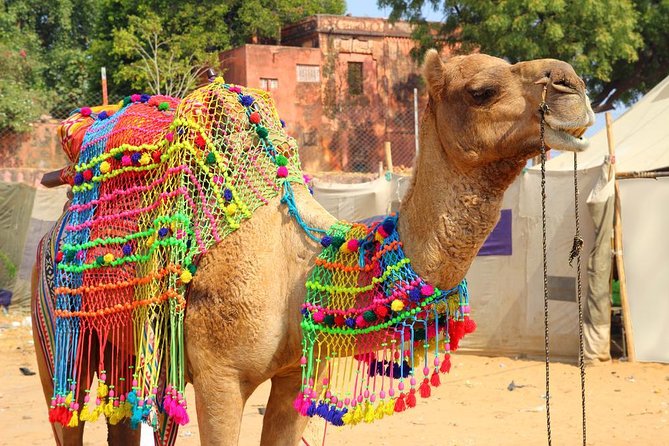
First is the Brahma Temple, noted as the only temple in the world dedicated to Lord Brahma. It’s identified by a red spire and an image of Brahma’s sacred swan, Hans, at the main entrance. Admission isn’t included.
Savitri Mata Mandir: Ratnagiri Hill views and worship
Then you’ll visit Shree Savitri Mata Mandir, also called Savitri Temple, atop Ratnagiri Hill. It’s a revered pilgrimage site for devotees. Admission isn’t included. Even if you’re not religious in the formal sense, this stop tends to make people slow down because the hilltop feel is so different from Jaipur forts.
Pushkar Lake: mythology + calm
After temples, you’ll go to Pushkar Lake, described as a semi-circular sacred body of water called TirthaRaj. The itinerary shares a mythology detail about the lake being created from a petal from the lotus flower tied to Brahma’s story. Admission isn’t included.
The lake visit is the part that helps you exhale. After intense monument days, Pushkar’s pace feels natural for a final evening before you head back toward Delhi.
Day 5: back to Delhi, with time to breathe
On day five, you leave Pushkar and drive to Delhi. Once you arrive, you check into your hotel and have the evening free.
This matters more than you’d think. You’ve had long stretches of sightseeing, so a genuinely unplanned evening helps you reset. If you want to do extra shopping or just grab something local near your hotel, this is the day to do it.
Day 6 in Delhi: Jama Masjid, Red Fort, Bangla Sahib, and Qutub Minar
Delhi is where the trip shows its range. You start with Old Delhi religious and civic landmarks, then move through major imperial-era monuments, then end with UNESCO heritage at Qutub Minar.
Jama Masjid: India’s largest mosque
First is Jama Masjid, described as India’s largest mosque. The tour focuses on walking the red sandstone courtyard. It was built with help of 5,000 workers, and it sits in front of the Red Fort area in Chandni Chowk. Admission isn’t included.
Red Fort: Mughal power in stone
Then you’ll visit Red Fort, built by Shah Jahan between 1639 and 1648 and described as a Mughal emperors main residence. Admission isn’t included.
Important note: the itinerary flags that the Red Fort and Lotus Temple are closed on Mondays. On those days, you visit Gurudwara Bangla Sahib instead.
Gurudwara Bangla Sahib: Sikh faith and the tank story
Next is Gurudwara Bangla Sahib. The itinerary explains a story from 1664 about the eighth Sikh Guru curing people from smallpox and cholera by distributing water, tied to a tank inside the gurudwara. Admission is listed as free here.
India Gate and Rashtrapati Bhawan: big monuments, short stops
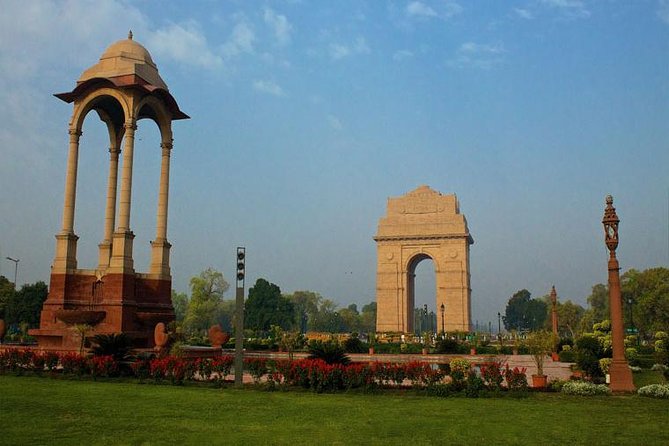
After that you’ll see India Gate, with names of 13,300 Indian army servicemen carved on it who died during the First World War. The stop is short (about 15 minutes in the schedule). Then you’ll also see Rashtrapati Bhawan, described as 330 acres and built in 1929 by Sir Edwin Lutyens and Herbert Baker.
Humayun’s Tomb or Akshardham: a choice
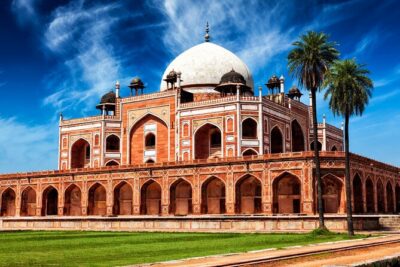
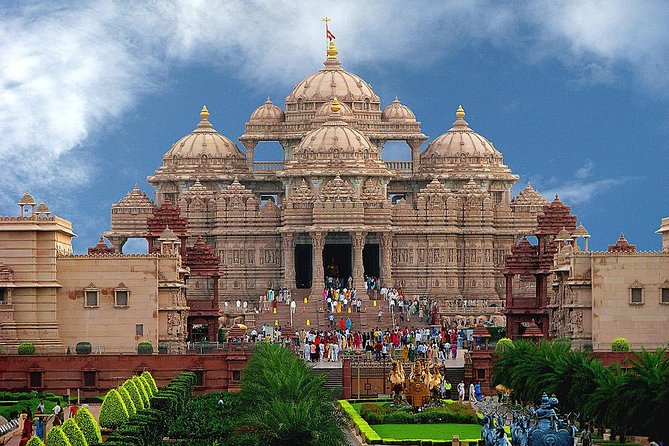
You’ll also visit Humayun’s Tomb, a UNESCO World Heritage Site, noted as the first Garden Tomb of India. The itinerary says you can instead visit Akshardham Temple. Admission isn’t included, and the itinerary gives you a decision point.
Qutub Minar: finish with the tall UNESCO landmark
Finally, you’ll see Qutub Minar, the tallest minaret built up in 1192 with bricks, part of a UNESCO World Heritage Site. The stop is about an hour, and it ends with a drop-off back to your hotel in Delhi.
This is a good way to close the loop. After walking through mosques, forts, and palaces, Qutub Minar gives you a vertical finale.
What you really get for the price (and what to budget)
This tour is priced at $388.64 per person for about 7 days. For that money, you’re not just paying for a sightseeing checklist. You’re paying for a private setup: pickup and drop-off in the Delhi area, a professional driver, a private air-conditioned vehicle, and a tour guide at the sites.
You’re also getting operational comfort items that tourists often pay extra for elsewhere: golf cart access to the Taj entry gate, shoe covers for the Taj visit, and a rickshaw ride through Old Delhi. Those are practical, not flashy.
Here’s what’s not included: meals, drinks, monument tickets, and tips. So the real cost depends on how many sites you enter and how often you eat on your own. Also, some hotels are included only if you choose the hotel option; the itinerary mentions 6-night hotel accommodation if selected, plus daily breakfast if selected.
One more note: there’s a mandatory gala dinner fee on New Year’s Eve, Christmas, and from December 24 to January 4. If your travel dates land there, ask up front so you don’t get surprised by the final total.
Comfort, timing, and the small rules that change your day
This itinerary runs on a “see a lot, then move” schedule, so comfort is mostly about avoiding stress. The private driver and air-conditioned vehicle help, but you’ll still want to plan for traffic and walking time around major monuments.
A few practical issues to keep in mind:
- Taj Mahal closure: Taj Mahal remains closed on Friday.
- Monday closures in Delhi: Red Fort and Lotus Temple are closed on Mondays, with Gurudwara Bangla Sahib used as the alternative.
- Chand Baori has no guide: you’ll be on your own here, so go with curiosity.
- Credit cards may not work everywhere: the itinerary recommends carrying cash in INR or asking the driver to help find an ATM.
- Footwear matters: the route involves walking, so comfortable shoes are not optional.
And since this is a private tour, it’s usually easier to ask questions in real time. In one highlight from a prior booking, the guide named Mohd was credited for keeping the trip smooth, with a friendly team and responsive communication.
Should you book this Golden Triangle with Pushkar tour from Delhi?
Book it if you want a structured route that covers the big icons of Delhi, Agra, and Jaipur, then adds Pushkar’s temple-and-lake feel. It’s especially good value if you’d rather pay for private transport and guided stops than manage transfers and tickets yourself.
Skip or reconsider if you hate tight schedules, because this plan is busy. Also, if you’re traveling with a tight monument-ticket budget, remember that key sites have admission not included. Finally, double-check dates for Friday (Taj Mahal closure) and Monday (Red Fort/Lotus Temple closures) so you understand how the swap will work.
If you like organized days with a few chances to slow down—then this Golden Triangle plus Pushkar combination is a solid bet. You’ll get big sights, clear explanations, and a genuine change of mood before you fly out of Delhi.
FAQ
Where does the tour start and end?
The tour starts with pick-up from anywhere in New Delhi and includes a final drop to Delhi airport, your hotel in Delhi or Gurgaon, or another desired location in Delhi or Gurgaon on the last day after breakfast.
Is this a private tour or a shared group?
It’s a private tour/activity, meaning only your group participates.
How long is the Golden Triangle with Pushkar tour?
The duration is listed as 7 days (approx.).
What’s included in the price besides the guide and transportation?
The included items list includes hotel or airport pick-up and drop-off, a private air-conditioned vehicle with a professional driver, a rickshaw ride through Old Delhi, a golf cart ride from parking to the Taj Mahal entry gate, shoe covers for the Taj Mahal visit, and a tour guide at all sites. Hotel accommodation (6 nights) and daily breakfast are included only if you select those options.
Are monument tickets included?
Monument tickets are not included. The itinerary lists most major sites (including the Taj Mahal and other attractions) as admission ticket not included.
What meals are included?
Meals and drinks are not included. Daily breakfast is included only if you select the option.
Are there any closures that affect the itinerary?
The Taj Mahal is closed on Friday. The Red Fort and Lotus Temple are closed on Mondays, and the tour substitutes Gurudwara Bangla Sahib on those days.
Can the itinerary be customized?
Yes. The tour can be fully customized, and you can request changes to the itinerary after booking, including adding, removing, or modifying monuments.
More Tours in New Delhi
- Old & New Delhi City Tour – Half or Full Day Options Available
★ 5.0 · 4,811 reviews - Half Day Private Delhi City Tour
★ 5.0 · 4,474 reviews - Same Day Taj Mahal, Agra Fort & Baby Taj Tour from Delhi by Car
★ 5.0 · 4,304 reviews - Taj Mahal Day Tour from Delhi by Superfast Train – TOP RATED TOUR
★ 5.0 · 4,166 reviews - Delhi: Old and New Delhi Private Full or Half-Day Tour
★ 4.9 · 3,776 reviews
More Tour Reviews in New Delhi
- Old & New Delhi City Tour – Half or Full Day Options Available
★ 5.0 · 4,811 reviews - Half Day Private Delhi City Tour
★ 5.0 · 4,474 reviews - Same Day Taj Mahal, Agra Fort & Baby Taj Tour from Delhi by Car
★ 5.0 · 4,304 reviews - Taj Mahal Day Tour from Delhi by Superfast Train – TOP RATED TOUR
★ 5.0 · 4,166 reviews - Delhi: Old and New Delhi Private Full or Half-Day Tour
★ 4.9 · 3,776 reviews
The Full Golden Triangle, More Options
- 3-Days Private Golden Triangle Tour: Delhi, Agra & Jaipur by Car
★ 5.0 · 1,107 reviews - 3-Days Private Golden Triangle Tour: Delhi, Agra & Jaipur by Car
★ 5.0 · 1,098 reviews - 3-Day Delhi, Agra and Jaipur Private Tour – India Golden Triangle
★ 5.0 · 812 reviews - Four-Day Private Luxury Golden Triangle Tour to Agra and Jaipur From New Delhi
★ 5.0 · 807 reviews - 5 Nights 6 Days Private Golden Triangle Tour – Delhi Agra Jaipur
★ 5.0 · 574 reviews
Just added: more New Delhi reviews to browse
- 4 days Golden Triangle Tour★ 5.0 · 3 reviews
- Discover Old & New Delhi: Private Tour with Street Food★ 5.0 · 3 reviews
- Taj Mahal Tour From Delhi By Private Car★ 4.5 · 3 reviews
- Golden Triangle Tour 5 Days★ 5.0 · 3 reviews
- Taj Mahal: Express Entry Ticket For Sunset Tour with guide★ 5.0 · 3 reviews
- Agra Taj Mahal Sunrise & Sunset Tour from Delhi★ 5.0 · 3 reviews
Golden Triangle Tours, compared.
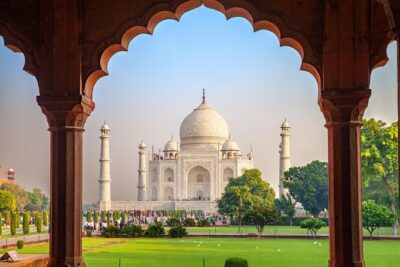 ★ 5.03-Days Private Golden Triangle Tour: Delhi, Agra & Jaipur by CarFrom $1271,107 reviews
★ 5.03-Days Private Golden Triangle Tour: Delhi, Agra & Jaipur by CarFrom $1271,098 reviews
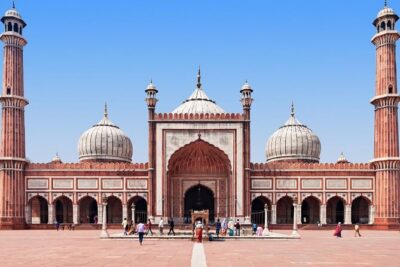 ★ 5.03-Day Delhi, Agra and Jaipur Private Tour – India Golden TriangleFrom $110812 reviews
 ★ 5.0Four-Day Private Luxury Golden Triangle Tour to Agra and Jaipur From New DelhiFrom $160807 reviews
 ★ 5.05 Nights 6 Days Private Golden Triangle Tour – Delhi Agra JaipurFrom $240574 reviews
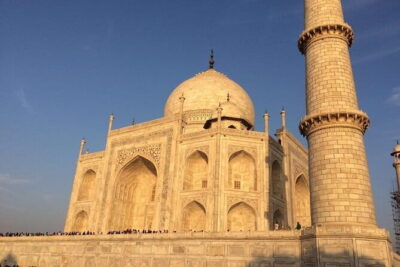 ★ 5.04 Days Golden Triangle TourFrom $146499 reviews
 ★ 5.0Private Car and Drive for Golden Triangle (4N/5D)From $167451 reviews
 ★ 5.0Private Golden Triangle Tour Delhi Agra Jaipur ( Top Rated )From $148436 reviews