
Reviewed · GOLDEN TRIANGLE TOURS
Golden Triangle tour with Ranthambore Jungle Safari
Tigers and Mughal marble in one tight loop. This Delhi–Agra–Jaipur itinerary connects the big-name sights with a real wildlife day at Ranthambore, using private English-speaking guides and an air-conditioned driver so you lose less time to logistics. You also get the practical rhythm of daily breakfasts, included dinners in Ranthambore, and airport transfers.
I also like that the package bundles a lot of the moving parts: 5 nights’ accommodation, daily continental breakfast, hotel taxes, parking/tolls, and even a daily water bottle. One drawback to plan for up front: monument entry fees aren’t included, and the Ranthambore safari is noted as pay-on-the-spot, so you’ll want to budget separately for those days.
In This Review
- Key highlights worth your attention
- The Golden Triangle, paced like a human plan
- Delhi: Old Delhi markets + New Delhi monuments
- Agra handoff: the drive is part of the trip
- Taj Mahal at sunrise: why the timing is the value
- Ranthambore arrival: wildlife country starts quietly
- The 6:00 AM safari: early start, real payoff
- Jaipur: Amber Fort, City Palace, and Jantar Mantar
- The short Day 6 transfer: plan your flight like an adult
- Price and logistics: what $650 really buys
- Group size, privacy, and why it affects your comfort
- Guides and driving: the difference between seeing and understanding
- Who should book the Golden Triangle with Ranthambore?
- Quick practical tips before you go
- Should you book this Golden Triangle with Ranthambore safari?
- FAQ
- How long is the Golden Triangle tour with Ranthambore jungle safari?
- What cities and areas are included in the itinerary?
- Is airport pickup and drop included?
- Are monument entry fees included?
- Is the Ranthambore jungle safari included in the package price?
- What meals are included?
- What is the cancellation policy?
Key highlights worth your attention
- Private English-speaking guides in Delhi, Agra, and Jaipur keep the big sights readable and not just photo stops
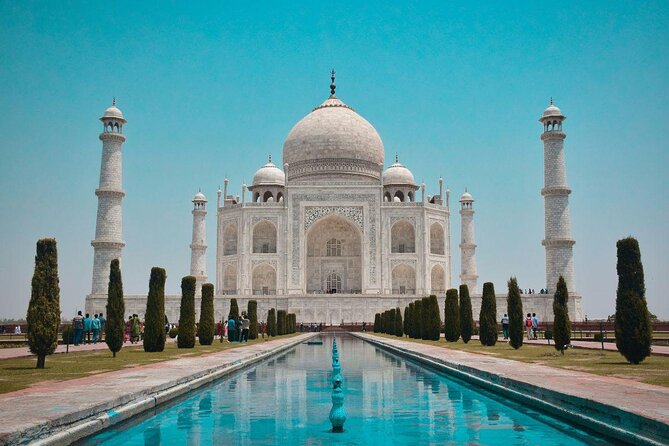
- Sunrise Taj Mahal timing gives you a calmer start before the midday crowds
- Ranthambore safari at 6:00 AM means early wake-ups, but that’s when you’re best positioned for wildlife sightings
- A tight but sensible Golden Triangle flow reduces backtracking across North India
- Logistics included beyond the obvious: hotel taxes, parkings/tolls, fuel surcharge, and daily water
The Golden Triangle, paced like a human plan
This tour works because it respects distance. You’re not trying to do Delhi, Agra, and Jaipur like a speedrun. You move by private car, overnight in Agra, then slide into Jaipur, and only after the Taj Mahal do you head toward Ranthambore.
Day 1 is basically a soft landing. You’re met at the airport or hotel and transferred to your pre-booked luxury hotel in an air-conditioned car. The rest of Day 1 is yours, which is smart because India travel starts with energy management, not sightseeing marathons.
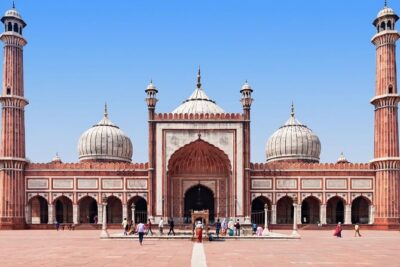
Day 2 is where the tour becomes useful. You get a private tour of Old and New Delhi, which is the right pairing. Old Delhi is all about the history-on-street level feeling: Raj Ghat and then you move through sites like Jama Masjid and the spice markets in Chandni Chowk. New Delhi then gives you the big architectural set pieces like Qutub Minar, India Gate, and the Lotus Temple.
If you want your pictures to look intentional (not just frantic), this pacing helps.
Delhi, Agra and Jaipur: more full circuits



Delhi: Old Delhi markets + New Delhi monuments
On Day 2, you’ll start with a proper historical anchor: Raj Ghat, the memorial for Mahatma Gandhi. From there, you pass the Red Fort and stop at Jama Masjid—a mosque that’s more than a landmark; it’s a sense of place. If you’re the type who likes street-level details, Chandni Chowk is where you’ll notice the city’s everyday energy, plus the spice markets.
Then the tour shifts gears to New Delhi’s grander scale. You’ll see Qutub Minar (called the tallest stone tower in India in the tour details), India Gate, Rashtrapathi Bhawan, and the Lotus Temple. These aren’t tiny stops. You’ll likely feel the day as a full sightseeing block, even though some sights are passes and some are actual visits.
Practical advice: wear shoes that can handle lots of walking on uneven surfaces. Delhi can be warm, and it’s easy to underestimate how long you’ll be out. If you’re sensitive to heat, ask your guide for breaks at natural gaps in the schedule.
Agra handoff: the drive is part of the trip
After Delhi, you drive to Agra (about 205 km, around 4 hours). This matters because it keeps the trip from feeling like you’re just hopping between cities. You check in for an overnight stay, which gives you a real base before Taj Mahal day.
The tour highlights include “Mughal city” framing, but what you’ll actually feel is the transition: Delhi’s political monuments and market crowds to Agra’s older, more concentrated focus around Mughal power and marble. Even without adding extra stops, the day’s structure sets you up for the big morning ahead.
Taj Mahal at sunrise: why the timing is the value

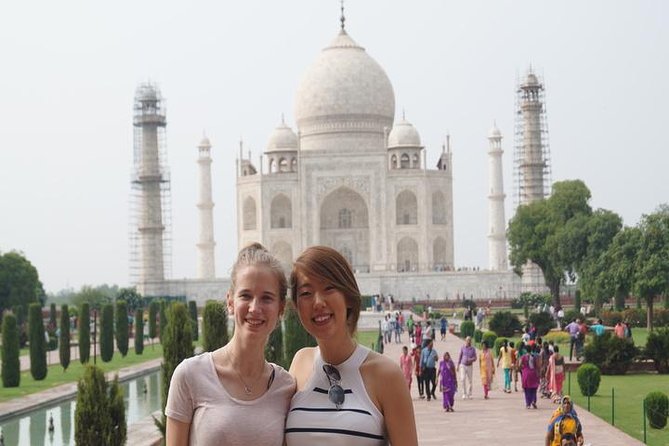
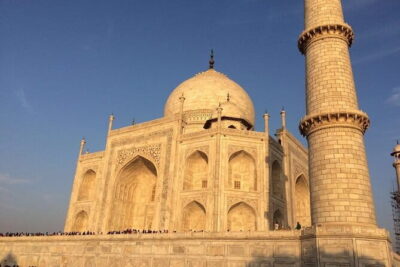
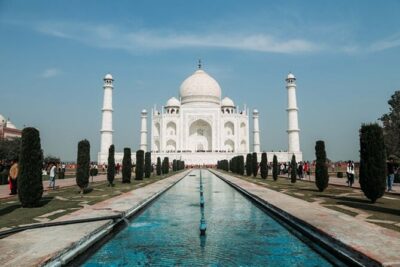
Day 3 is built around Taj Mahal at sunrise. The tour description is clear that you’ll witness it at first light, then return to the hotel for breakfast. That’s a big deal in real life because Taj Mahal light at sunrise is different—soft and clean—and you can start your day without the harsh midday sun.
What’s especially useful is that the tour doesn’t promise you a rushed photo sprint. It lists a 4-hour window for Taj Mahal, which usually means time for the main viewing areas and a guided explanation rather than just standing at a railing and calling it done.
Important budget note: Taj Mahal admission isn’t included. So when you price this tour out in your head, add Taj entry fees on top. Also plan a little for basic on-site needs like water or snacks, since those aren’t spelled out as included beyond what’s listed in the package.
If your guide is the kind who narrates as they walk, you’ll get more meaning out of the visit. One Agra guide mentioned in past feedback is Tarun Joshi, with praise for explaining the monument step by step. Even if you don’t get the same guide, the tour is set up for guided interpretation, not just checkpoints.
Ranthambore arrival: wildlife country starts quietly
After Taj Mahal morning, you head toward Ranthambore and check in by evening. The tour frames Ranthambore National Park as a vast wildlife reserve near the town of Sawai Madhopur in Rajasthan. It’s also described as a former royal hunting ground, which is a helpful context because you’re visiting a place with deep human use history, not an untouched wilderness concept.
The big wildlife draw here is obvious: tigers, plus leopards and marsh crocodiles are mentioned in the tour description. You’ll also hear about key landmarks like Ranthambore Fort (10th century, on a hilltop) and the Ganesh Mandir temple, and Padam Talao Lake, known for water lilies.
Why this matters for you: Ranthambore is not about one single sight. It’s about habitats—open areas, water edges, and the fort-zone terrain—so the safari guide’s knowledge and the timing of the drive really matter.
More tiger country trips beyond the capital


The 6:00 AM safari: early start, real payoff
Day 4 begins with a jungle safari at 6:00 AM, and here’s the line you should circle in your notes: the safari is described as needing payment directly on the spot. That means it’s not fully baked into the listed inclusions, so you should carry funds and don’t assume it’s covered.
This timing is also why the safari is the centerpiece of the whole trip. Tigers don’t wait for your sleep schedule. The early morning helps with sightings and keeps you from losing the day to heat later on.
After the safari, you’re back for breakfast, then you head to Jaipur in the afternoon and check into your hotel for overnight. That’s a lot of movement, and it’s worth knowing because it changes how you should pack and how you should manage your energy. You’ll likely be tired, but the day is designed so the safari still gets its prime window.
Also, Ranthambore and Jaipur in the same day means you shouldn’t plan extra activities after check-in. Let your hotel be your evening plan.
Jaipur: Amber Fort, City Palace, and Jantar Mantar
You’ve earned Jaipur because it’s not just “pretty buildings.” Day 5 is where the tour shows its structure: Amber Fort first, then forts/palaces/observatories later.
Amber Fort is described as built in the 16th century. You’ll also drive past Hawa Mahal, the Palace of Winds. Even when you’re only passing it, it’s a visual moment—like Jaipur’s face on a postcard, but in real streets.
After that, the afternoon continues with City Palace and museum, and then you walk to Jantar Mantar, described as an adjacent astronomical observatory. This is the kind of stop that’s easy to skip if you’re only chasing Instagram photos, but it’s the opposite of fluff. It gives you a sense of how the city connected astronomy to daily life.
Practical advice: bring a light layer. Forts and palaces can feel cooler in shaded corridors, and then suddenly hot again in open courtyards. You’ll also do enough walking across Day 5 to justify comfortable shoes.
In the evening, the tour leaves time at leisure. That’s the part of the schedule that helps this day feel like a vacation rather than a checklist.
The short Day 6 transfer: plan your flight like an adult
On Day 6, you pack up and check out, then get transferred back to the Jaipur/Delhi airport for your onward journey. The tour lists this as a longer block (8 hours), which hints that your final timing may include waiting and road time.
The takeaway is simple: don’t book a painfully tight flight. The itinerary is built for transfers, not miracle timing. If you can choose later departures, you’ll likely thank yourself.
Price and logistics: what $650 really buys
At $650 per person for 6 days (approx.), the value mostly comes from what’s included, not just from the big-name attractions. This package lists:
- 5 nights accommodation in the mentioned hotel or similar
- Daily lavish continental breakfast
- Dinner at Ranthambore resort
- Airport pick-up and drop
- Professional English-speaking guides in Delhi, Agra, and Jaipur
- Luxury private air-conditioned cab plus fuel surcharge
- Parking/tolls, inter-state taxes, and hotel taxes
- A packed water bottle daily per person
In other words, it’s paying for reduced friction: you don’t have to coordinate transport across three cities, and you don’t have to hunt for guides at each stop. For many people, that’s the real time-and-stress saver.
Where the value gets tricky is budgeting for what’s explicitly not included:
- Entry fees to monuments and palaces (and Taj Mahal admission is specifically noted as not included)
- The Ranthambore safari payment on the spot
- Meals not mentioned beyond breakfast and the single listed dinner
- Tips and personal spending
So the best way to judge the total cost is to treat this as a solid base package with a few major “add-ons” you’ll pay during the trip.
If you’re comparing to DIY travel, remember this is built around private guiding and car transfers. DIY can be cheaper, but it takes more time and planning—and it’s easy to spend that savings on confusion.
Group size, privacy, and why it affects your comfort
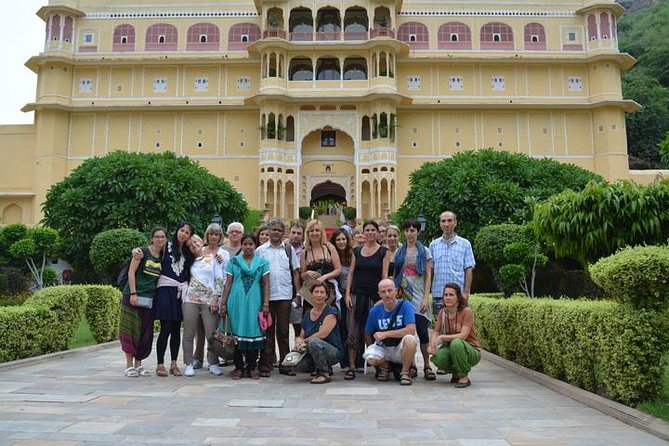
This is described as a private tour/activity where only your group participates. That tends to make a difference. Even when days are structured, you can move at a pace that fits your group rather than constantly recalculating around other schedules.
The tour also lists pickup offered and group discounts, plus mobile ticket. I’d treat those as nice-to-haves: they can simplify the process, but the bigger win is the private guiding and the included driver/cab across cities.
Guides and driving: the difference between seeing and understanding
One of the most praised parts of similar bookings is how smoothly the itinerary runs when the driver and guide are on point. In past feedback tied to this kind of trip, Gurdev is mentioned for skilled driving and sharing information along the way. In Agra, Tarun Joshi is specifically praised for explaining the Taj Mahal in detail, step by step, even including a more interpretive approach to the interior visit.
That’s the kind of service that changes your experience. You walk through the same places either way, but with good guidance you actually connect the dots: why a building looks the way it does, what the major symbols mean, and how the geography ties together.
Still, keep expectations realistic. Guides and logistics can’t remove every surprise in India. You’re moving between cities, changing hotels, and leaving early for a safari. This tour tries to keep it orderly, but your best chance of smooth days comes from staying flexible.
Who should book the Golden Triangle with Ranthambore?
This tour fits best if you want:
- A classic Delhi–Agra–Jaipur circuit without figuring out transport day by day
- A safari day that starts early at 6:00 AM, not a lazy afternoon drive
- Guides in English who help you make sense of monuments (not just point and go)
- Included basics that reduce trip friction: accommodation, breakfast, hotel taxes, and a private car
It might be less ideal if you hate early mornings or you prefer to handle all entry tickets and on-the-day safari costs yourself. Also, if you’re very picky about hotel star ratings, you should confirm what you’re getting at booking time since “luxury” and “4-star” can feel different to different people.
Quick practical tips before you go
- Bring cash for on-the-spot safari payment, since the safari is noted as pay directly on the spot.
- Plan extra time for Taj Mahal morning logistics and costs since admission is not included.
- Wear shoes that work for palace forts and uneven surfaces.
- Keep your day 6 departure flexible because it includes a full transfer block.
Should you book this Golden Triangle with Ranthambore safari?
If you want the Golden Triangle with less stress and more explanation, I’d say it’s a strong booking. The biggest strengths are the private guiding across Delhi, Agra, and Jaipur, plus the fact that so much of the transport and accommodation friction is handled for you.
Before you commit, do two things: budget for monument entry fees and confirm how the Ranthambore safari payment on the spot will work for your date. If you plan for those, this itinerary is a practical way to see North India’s icons plus a genuine wildlife day in Ranthambore—without turning your vacation into a spreadsheet.
FAQ
How long is the Golden Triangle tour with Ranthambore jungle safari?
The duration is listed as 6 days (approx.).
What cities and areas are included in the itinerary?
You’ll visit New Delhi, Agra, Jaipur, and Ranthambore National Park near Sawai Madhopur.
Is airport pickup and drop included?
Yes. The tour includes airport pick-up and drop.
Are monument entry fees included?
No. Entry fees to monuments and palaces are not included, and Taj Mahal admission is specifically noted as not included.
Is the Ranthambore jungle safari included in the package price?
The itinerary says the safari at 6:00 AM needs to be paid directly on the spot.
What meals are included?
Breakfast is included daily (6 breakfasts listed). Dinner is included once at Ranthambore resort. Other meals are listed as not mentioned in the itinerary.
What is the cancellation policy?
Free cancellation is offered. You can cancel up to 24 hours in advance for a full refund, based on local time.
More Tour Reviews in New Delhi
- Old & New Delhi City Tour – Half or Full Day Options Available
★ 5.0 · 4,811 reviews - Half Day Private Delhi City Tour
★ 5.0 · 4,474 reviews - Same Day Taj Mahal, Agra Fort & Baby Taj Tour from Delhi by Car
★ 5.0 · 4,304 reviews - Taj Mahal Day Tour from Delhi by Superfast Train – TOP RATED TOUR
★ 5.0 · 4,166 reviews - Delhi: Old and New Delhi Private Full or Half-Day Tour
★ 4.9 · 3,776 reviews
Tiger Country: More Ranthambore Trips
- Private 4-Day Golden Triangle Tour with Ranthambore Tiger Safari
★ 5.0 · 248 reviews - Golden Triangle & Ranthambore: 4-Day Private Tour from Delhi
★ 5.0 · 224 reviews - Private 5-Day Ranthambhore Tiger Tour from Delhi including the Taj Mahal, Agra and Jaipur
★ 5.0 · 197 reviews - From Delhi: 4-Day Golden Triangle & Ranthambore Guided Tour
★ 4.7 · 121 reviews - 4 Day Golden Triangle with Ranthambore Tiger Safari Tour from Delhi
★ 5.0 · 110 reviews
The Full Golden Triangle, More Options
- 3-Days Private Golden Triangle Tour: Delhi, Agra & Jaipur by Car
★ 5.0 · 1,107 reviews - 3-Days Private Golden Triangle Tour: Delhi, Agra & Jaipur by Car
★ 5.0 · 1,098 reviews - 3-Day Delhi, Agra and Jaipur Private Tour – India Golden Triangle
★ 5.0 · 812 reviews - Four-Day Private Luxury Golden Triangle Tour to Agra and Jaipur From New Delhi
★ 5.0 · 807 reviews - 5 Nights 6 Days Private Golden Triangle Tour – Delhi Agra Jaipur
★ 5.0 · 574 reviews
Just added: more New Delhi reviews to browse
- 4 days Golden Triangle Tour★ 5.0 · 3 reviews
- Discover Old & New Delhi: Private Tour with Street Food★ 5.0 · 3 reviews
- Taj Mahal Tour From Delhi By Private Car★ 4.5 · 3 reviews
- Golden Triangle Tour 5 Days★ 5.0 · 3 reviews
- Taj Mahal: Express Entry Ticket For Sunset Tour with guide★ 5.0 · 3 reviews
- Agra Taj Mahal Sunrise & Sunset Tour from Delhi★ 5.0 · 3 reviews
Golden Triangle Tours, compared.
 ★ 5.03-Days Private Golden Triangle Tour: Delhi, Agra & Jaipur by CarFrom $1271,107 reviews
★ 5.03-Days Private Golden Triangle Tour: Delhi, Agra & Jaipur by CarFrom $1271,098 reviews
★ 5.03-Days Private Golden Triangle Tour: Delhi, Agra & Jaipur by CarFrom $1271,107 reviews
★ 5.03-Days Private Golden Triangle Tour: Delhi, Agra & Jaipur by CarFrom $1271,098 reviews
 ★ 5.03-Day Delhi, Agra and Jaipur Private Tour – India Golden TriangleFrom $110812 reviews
 ★ 5.0Four-Day Private Luxury Golden Triangle Tour to Agra and Jaipur From New DelhiFrom $160807 reviews
 ★ 5.05 Nights 6 Days Private Golden Triangle Tour – Delhi Agra JaipurFrom $240574 reviews
 ★ 5.04 Days Golden Triangle TourFrom $146499 reviews
 ★ 5.0Private Car and Drive for Golden Triangle (4N/5D)From $167451 reviews
 ★ 5.0Private Golden Triangle Tour Delhi Agra Jaipur ( Top Rated )From $148436 reviews
Browse the lists this tour appears in