
Reviewed · GOLDEN TRIANGLE TOURS
Golden Triangle Tour with Varanasi
Delhi to Varanasi is a big jump, but it feels organized. This 8-day Golden Triangle tour adds the holy pulse of Varanasi, with private car comfort and real guided time at major sights. I like that the tour comes with a built-in support team—especially at station and airport moments—so you’re not left figuring out the next step alone.
Two things I particularly like are the hour-by-hour structure across Delhi, Jaipur, and Agra, and the way Varanasi is handled with both day access (ghats and temples) and the evening Ganga Aarti. The main drawback to consider: monument entry tickets are not included, and the schedule is full enough that you’ll want to travel light and expect some early mornings (and one overnight train segment).
In This Review
- Key Highlights Worth Your Attention
- Golden Triangle Plus Varanasi: Why This Route Works
- Delhi Day 2: Red Fort, Jama Masjid, and New Delhi Landmarks
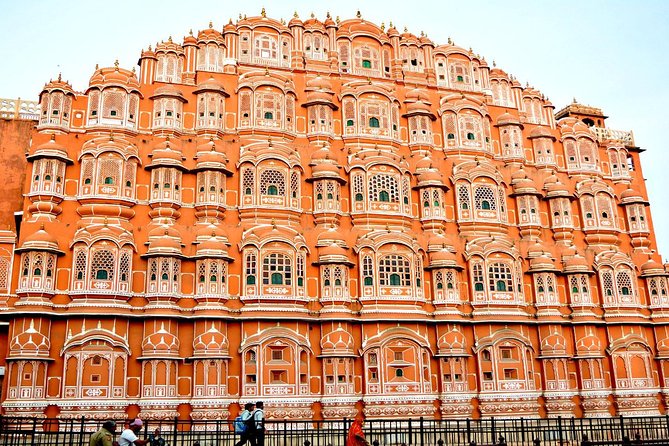
- Jaipur Days 3–4: City Palace, Jantar Mantar, Amber Fort, and Hawa Mahal
- Fatehpur Sikri and Agra Fort: A Full Day of Mughal Power
- Taj Mahal Early Morning, Baby Taj Details, and Mehtab Bagh Sunset
- Varanasi Nights and Days: Ganga Aarti, Ghats, and Temples With Specific Meaning
- Hotels, Private Car, and the Logistics That Actually Matter
- Price and Value: What $866.67 Covers (and What You’ll Pay Extra)
- Tips to Make This Trip Feel Easier (Not Just Busy)
- Should You Book This Golden Triangle Tour With Varanasi?
- FAQ
- What cities are included in this tour?
- How long is the tour?
- What is the price per person?
- What type of transportation is included?
- Are hotel rooms included?
- What meals are included?
- Is the Varanasi boat ride included?
- Are monument entrance tickets included?
- Is vegetarian food available?
- Is there free cancellation?
Key Highlights Worth Your Attention
- Private AC car + English-speaking chauffeur helps you cover long city distances with less hassle.
- Historian-style guides at major monuments keep the stories clear, not vague.
- Overnight train Agra to Varanasi saves a night of hotel time and cuts travel friction.
- Ganga Aarti evening ceremony gives you the religious atmosphere at the right time of day.
- Varanasi boat ride on the Ganges is specifically included, not a last-minute add-on.
- Names like Bharat Kushwaha (coordinator) and guide Sunny appear in feedback as part of what makes the trip feel smooth.
Golden Triangle Plus Varanasi: Why This Route Works
This tour makes a smart move: it doesn’t stop at the Golden Triangle’s biggest photos (Delhi, Jaipur, Agra). It pushes on to Varanasi, where the experience is less about grand architecture and more about daily ritual—river life, temples, and ceremony rhythms.
From a value standpoint, you’re getting a lot of “guided time” for a set price. The package includes three-star hotels across locations, a private air-conditioned car, a tour guide, and even practical extras like a first aid kit, tissue papers, and mineral water in the vehicle. That matters more than it sounds when you’re jumping across crowded districts and long travel days.
The other big plus is logistics support. The company representative assists with arrival and departures at the railway station, hotel, and airport, and that’s the part that usually causes stress on multi-city trips. You still pay entry fees for monuments, but you won’t be scrambling for what to do next.
If you want a taste of both India’s imperial side (Mughal-era sites) and its living religious traditions (Ganga Aarti and temple visits), this route is a strong fit.
Delhi, Agra and Jaipur: more full circuits


Delhi Day 2: Red Fort, Jama Masjid, and New Delhi Landmarks
Delhi is often two cities in one—Old Delhi’s lanes and New Delhi’s ceremonial boulevards—and this tour gives you that split day. You start with Mughal heavyweights and work through iconic government and memorial sites afterward.
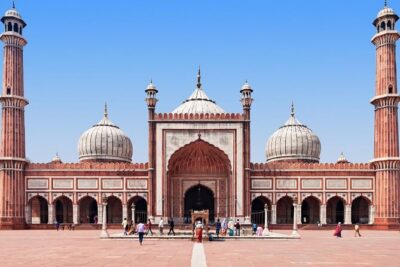
Old Delhi kicks off at Red Fort, described as a marvel in red stone. From there you go to Jama Masjid, one of the largest mosques in India, built by Emperor Shah Jahan between 1644 and 1656. It’s also tied to a specific historical detail in the tour description: it was inaugurated by an Imam from Bukhara (present-day Uzbekistan). If you like context that connects architecture to history, this is a good setup.
Then you move through Old Delhi’s atmosphere via a rickshaw ride experience mentioned in the tour notes. It’s not just sightseeing—it’s a quick way to feel how daily movement in the area works.
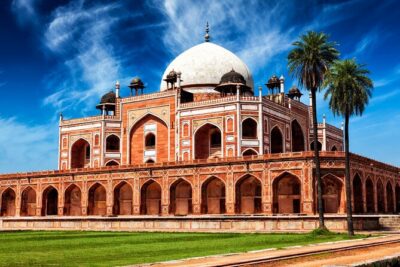
Later, you shift to New Delhi with stops like Humayun’s Tomb (highlighted as one of the best preserved Mughal monuments, and noted as an early example that inspired Taj Mahal). You’ll also visit Qutub Minar, part of the UNESCO Qutb complex, with details like its height (73 meters) and its five-storey tapering shape.
The final hits are the big landmarks: India Gate (with its inscription of 13,300 names and the Amar Jawan Jyoti structure) and Rashtrapati Bhavan, the President of India’s official residence. This is a good day balance: high-drama monuments first, then calmer landmark viewing.
Possible catch: some sites are “not included” for entry tickets, so you’ll likely add a few fees later. Also, Delhi’s traffic can shift timing, so build in patience.
Jaipur Days 3–4: City Palace, Jantar Mantar, Amber Fort, and Hawa Mahal
Jaipur earns its reputation for a reason: color, craftsmanship, and a layout that makes you feel like you’re moving through layers of royal life. After the drive from Delhi, you arrive in the Pink City and go straight into palace-and-observatory territory.
Day 3 includes City Palace, described as a royal museum where luxury still lives. Even if you’re not a museum person, City Palace is a solid “reset” after travel because you get shaded indoor time and a clearer sense of who ruled, how, and what objects mattered.
Then you hit Jantar Mantar, an observatory built by Emperor Jai Singh. The tour doesn’t list every instrument, but the key takeaway is that you’re seeing science as design—measuring time and the sky with structures you can walk around.
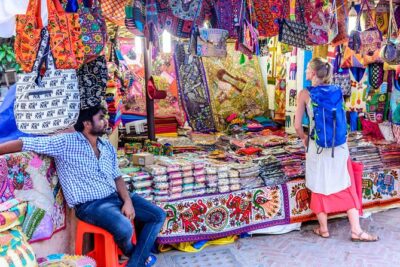
In the evening, you get time for Jaipur’s colorful markets. That’s where you can pick up small souvenirs without turning your trip into a shopping mission.
Day 4 focuses on the postcard icons: Amber Palace (Amber Fort) and Hawa Mahal. Amber Fort is framed in the tour notes as a fort built in the 16th century by Maan Singh, a trusted general of Akbar, and later becoming the Amer state. That historical anchor helps the site feel less like a generic fort photo.
Hawa Mahal is the “wow” factor: built in 1799 for the women of the royal palace, shaped to connect queens and princesses with the outside through many windows. The tour also mentions the building’s link to Lord Krishna—structured in the shape of Krishna’s crown. It’s one of those places where a little story makes the architecture click.
Fatehpur Sikri and Agra Fort: A Full Day of Mughal Power
After Jaipur, you’re on the move toward Agra, with Fatehpur Sikri placed en route. This stop is a smart use of travel time because it breaks the drive with a site that feels different from Jaipur and Delhi.
Fatehpur Sikri is described as a small city west of Agra founded by a 16th-century Mughal emperor, with red sandstone buildings and a core of major monuments. The tour notes call out Buland Darwaza gate, the marble Tomb of Salim Chishti, the Diwan-E-Khas hall, and the mix-style Jodha Bai Palace alongside the five-story Panch Mahal. That gives you enough landmarks to keep your attention from drifting.
Then you reach Agra, where the itinerary turns to fort and tomb culture. Agra Fort is included, though the tour text is more poetic than technical—still, you’ll get the “power symbol” story: towers, overwhelming facades, and the sense that defense and display were inseparable.
Taj Mahal Early Morning, Baby Taj Details, and Mehtab Bagh Sunset
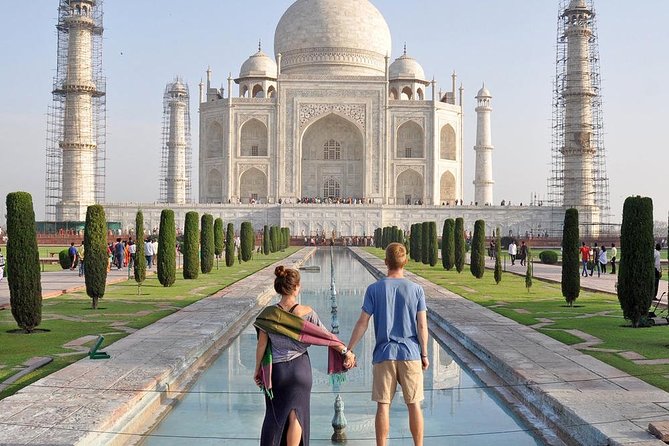
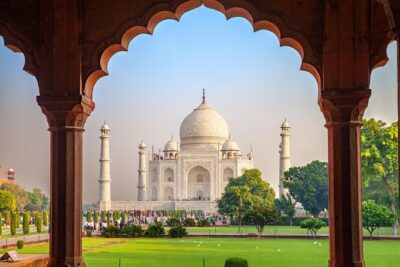
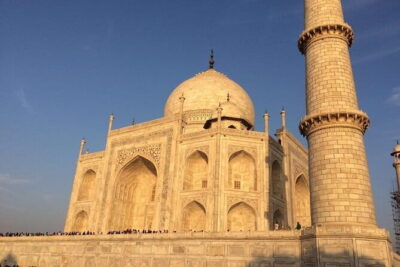
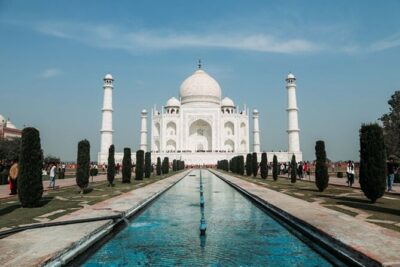
Agra is the day you’ll remember most for the big visual hit—Taj Mahal—and it’s scheduled early with your tour guide. Morning timing tends to be practical as well as beautiful, because you get ahead of heat and crowds while the light is still kind.
After Taj Mahal, you return for breakfast at your hotel before continuing with other Agra highlights:
- Agra Fort again appears in the flow after Taj Mahal.
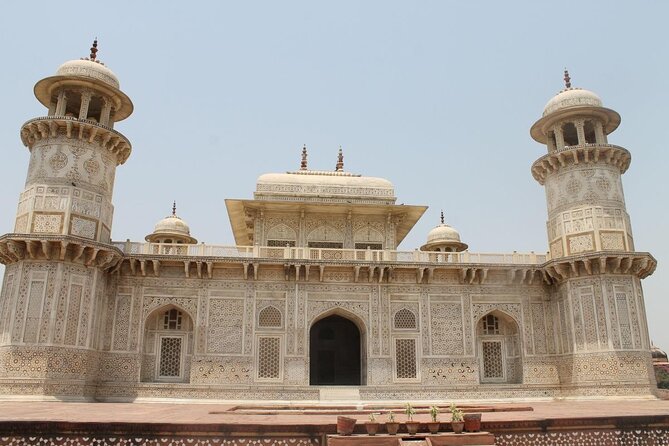
- Tomb of Itimad-ud-Daulah, often nicknamed the Baby Taj. This stop has real detail in the tour notes: marble lattice screens, fine carvings, and the idea that it’s a delicate artwork that helped inspire later marble monuments. The text also flags a specific historical creator: it was the first Mughal structure made with marbles by Nur Jahan, and it was one of the earlier tombs on the Yamuna riverbank.
Then comes Mehtab Bagh for the Taj Mahal sunset view. Even if your favorite photos are the morning ones, having a second viewpoint angle is valuable. It makes the monument feel less like a single moment and more like a place you can understand through different light.
The end of this day is practical: you visit local markets, enjoy dinner, and then transfer to the railway station for an overnight train to Varanasi.
If you hate overnight trains, this is the only segment that could feel like a trade-off. The upside is you save a hotel night and you arrive in Varanasi already set up for evening plans.

Varanasi Nights and Days: Ganga Aarti, Ghats, and Temples With Specific Meaning
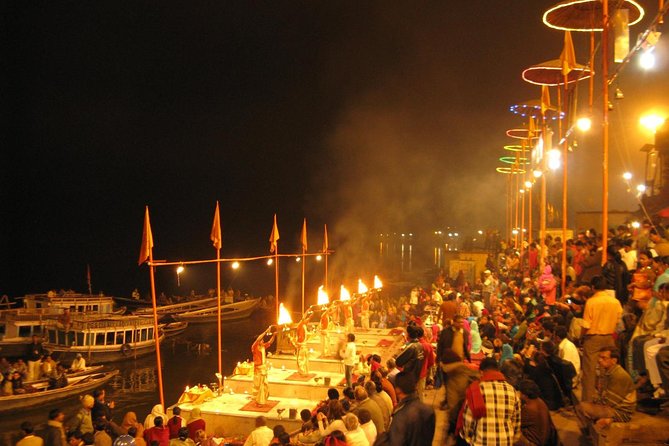
Varanasi changes the mood immediately. This tour keeps the pace respectful: you arrive, check in, rest a bit, then head out for the evening Ganga Aarti.
The Aarti is described as drawing about thousands of pilgrims from across India to attend on the banks of the Ganges. That matters because you’re not just seeing a ritual—you’re seeing scale. Your guide keeps it tied to what you’re actually watching, which makes the whole thing easier to understand instead of feeling like you’re only observing from the outside.
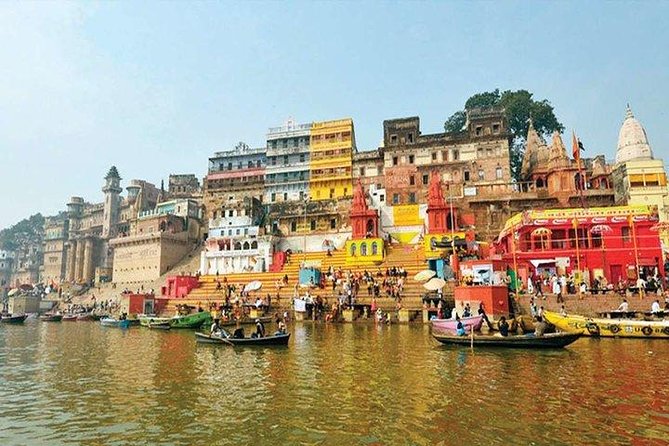
The next day is where you get the full “river life” package. You start with an included boat ride on the Ganges in the early morning, followed by time at the ghats—specifically named ones like Harischandra Ghat and Dashwamedha Ghat. The tour also frames the experience as learning typical Hindu rituals through walking and observation. In other words, it’s not only scenic; it’s interpretive.
After the river time, the temples are arranged in a logical flow:
- Sankat Mochan Temple dedicated to Hanuman, founded in the early 16th century by saint Sri Goswami Tulsidas.
- Bharat Mata Temple, with a notable detail: instead of traditional statues, there’s a huge marble map of undivided India carved in stone, dedicated to Bharat Mata.
- Kashi Vishwanath Temple, with date and builder detail included: constructed in 1780 by Maharani Ahilyabai Holkar. The tour notes the gold coverage history too, including donations mentioned from Ranjit Singh and management by Uttar Pradesh after 28 January 1983.
- Banaras Hindu University (BHU), with the tour describing its founding year 1916 and crediting Madan Mohan Malviya with establishing the university.
Then you end with an excursion to Sarnath, presented as a key Buddhist pilgrimage site for followers of Lord Buddha, plus a visit to the Sarnath museum for historical items related to Buddhism.
This is a lot of spiritual material in one itinerary—but the routing keeps it grounded: river first, ghats, then temple clusters, then Sarnath.
Hotels, Private Car, and the Logistics That Actually Matter
This package is built around practical comfort. You get three-star hotels at all locations and a private AC car with an English-speaking chauffeur. That reduces stress in two ways: you’re not coordinating public transit while tired, and you can ask questions without playing guessing games.
The tour also includes a mobile ticket and a rep to assist with arrivals and departures at key points (rail and airport). For a multi-city route like this, that assistance can be the difference between a smooth day and an annoying scramble.
One more practical win: the vehicle setup includes a first aid kit, tissue papers, and mineral water. It’s a small line item, but it’s also a hint that the operator thinks about real day-to-day needs, not just sightseeing.
Group size is a factor too. The tour is private in the sense that it’s for your group only, which usually means less waiting for people and more consistent guiding.
Price and Value: What $866.67 Covers (and What You’ll Pay Extra)
At $866.67 per person, you’re paying for a package that bundles a lot of cost drivers: lodging in three-star hotels, private car transport, guides, train tickets (Agra to Varanasi), and airfare (Varanasi to Delhi). Entrance fees are not included, and tipping is listed as not included.
So where does the value come from?
- Transport is largely solved: AC car between cities, plus train for the long haul segment, plus a flight at the end.
- Guides are part of the package, which is where many independent trips start to get messy because you need tickets, timings, and interpretation.
- You get an included Varanasi boat ride, which is often the item people end up paying separately or booking last-minute.
Where you should expect extra spending:
- Monument entrance tickets (explicitly “not included” in the tour details).
- Tipping, which the package lists as not included.
- Any food and personal shopping not described as included.
If you like a guided structure but don’t want to pay for a long private driver day every single hour, this is a good middle ground.
Tips to Make This Trip Feel Easier (Not Just Busy)
This itinerary is full, but you can keep it smooth with a few habits.
First, plan for the fact that some sights are labeled with entry tickets not included. When you arrive at a site, be ready to pay quickly so you don’t lose momentum.
Second, pack for heat swings. You’re moving through northern India across multiple days, and at least one day includes a very early start for Taj Mahal.
Third, decide your pace for markets and shopping. Jaipur has market time; Agra includes local markets too. If you try to do all of it, you’ll feel rushed. If you pick one or two small areas and focus, it’s more fun.
Finally, make your Varanasi time count. The Ganga Aarti and boat ride are the heart. Treat them like anchor events—don’t treat them as optional add-ons you might skip if you’re tired.
Should You Book This Golden Triangle Tour With Varanasi?
I think you should book if you want a guided Golden Triangle with solid monument coverage and you also want Varanasi handled as more than a checkbox. The included overnight train, the Ganga Aarti ceremony, and the boat ride are the kind of elements that make this feel like one complete India story rather than four separate sightseeing days.
Skip or reconsider if you strongly dislike packed days or if you’re sensitive to overnight train travel. Also, budget for monument entrance fees since they’re not included.
If your ideal trip is: structure, interpretation, and a river-ritual finale, this one fits well—and the extra attention to logistics (especially around station and airport moments) is the kind of detail that keeps your trip from turning into stress management.
FAQ
What cities are included in this tour?
It covers Delhi, Jaipur, Agra, and Varanasi.
How long is the tour?
The duration is about 8 days.
What is the price per person?
The listed price is $866.67 per person.
What type of transportation is included?
You get a private air-conditioned car, plus train tickets from Agra to Varanasi and airfare from Varanasi to Delhi.
Are hotel rooms included?
Yes. The tour includes hotel accommodation in a three-star hotel at all locations.
What meals are included?
Breakfast is included for 6 days.
Is the Varanasi boat ride included?
Yes. The tour includes a boat ride on the Ganges in Varanasi.
Are monument entrance tickets included?
No. Monument entrance tickets are not included.
Is vegetarian food available?
Yes, a vegetarian option is available if you advise the provider at booking.
Is there free cancellation?
Yes. You can cancel up to 24 hours in advance for a full refund.
More Tours in New Delhi
- Old & New Delhi City Tour – Half or Full Day Options Available
★ 5.0 · 4,811 reviews - Half Day Private Delhi City Tour
★ 5.0 · 4,474 reviews - Same Day Taj Mahal, Agra Fort & Baby Taj Tour from Delhi by Car
★ 5.0 · 4,304 reviews - Taj Mahal Day Tour from Delhi by Superfast Train – TOP RATED TOUR
★ 5.0 · 4,166 reviews - Delhi: Old and New Delhi Private Full or Half-Day Tour
★ 4.9 · 3,776 reviews
More Tour Reviews in New Delhi
- Old & New Delhi City Tour – Half or Full Day Options Available
★ 5.0 · 4,811 reviews - Half Day Private Delhi City Tour
★ 5.0 · 4,474 reviews - Same Day Taj Mahal, Agra Fort & Baby Taj Tour from Delhi by Car
★ 5.0 · 4,304 reviews - Taj Mahal Day Tour from Delhi by Superfast Train – TOP RATED TOUR
★ 5.0 · 4,166 reviews - Delhi: Old and New Delhi Private Full or Half-Day Tour
★ 4.9 · 3,776 reviews
The Full Golden Triangle, More Options
- 3-Days Private Golden Triangle Tour: Delhi, Agra & Jaipur by Car
★ 5.0 · 1,107 reviews - 3-Days Private Golden Triangle Tour: Delhi, Agra & Jaipur by Car
★ 5.0 · 1,098 reviews - 3-Day Delhi, Agra and Jaipur Private Tour – India Golden Triangle
★ 5.0 · 812 reviews - Four-Day Private Luxury Golden Triangle Tour to Agra and Jaipur From New Delhi
★ 5.0 · 807 reviews - 5 Nights 6 Days Private Golden Triangle Tour – Delhi Agra Jaipur
★ 5.0 · 574 reviews
Just added: more New Delhi reviews to browse
- 4 days Golden Triangle Tour★ 5.0 · 3 reviews
- Discover Old & New Delhi: Private Tour with Street Food★ 5.0 · 3 reviews
- Taj Mahal Tour From Delhi By Private Car★ 4.5 · 3 reviews
- Golden Triangle Tour 5 Days★ 5.0 · 3 reviews
- Taj Mahal: Express Entry Ticket For Sunset Tour with guide★ 5.0 · 3 reviews
- Agra Taj Mahal Sunrise & Sunset Tour from Delhi★ 5.0 · 3 reviews
Golden Triangle Tours, compared.
 ★ 5.03-Days Private Golden Triangle Tour: Delhi, Agra & Jaipur by CarFrom $1271,107 reviews
★ 5.03-Days Private Golden Triangle Tour: Delhi, Agra & Jaipur by CarFrom $1271,098 reviews
 ★ 5.03-Day Delhi, Agra and Jaipur Private Tour – India Golden TriangleFrom $110812 reviews
 ★ 5.0Four-Day Private Luxury Golden Triangle Tour to Agra and Jaipur From New DelhiFrom $160807 reviews
 ★ 5.05 Nights 6 Days Private Golden Triangle Tour – Delhi Agra JaipurFrom $240574 reviews
 ★ 5.04 Days Golden Triangle TourFrom $146499 reviews
 ★ 5.0Private Car and Drive for Golden Triangle (4N/5D)From $167451 reviews
 ★ 5.0Private Golden Triangle Tour Delhi Agra Jaipur ( Top Rated )From $148436 reviews