
Reviewed · OLD & NEW DELHI CITY TOURS
Heritage Day Tour of Old and New Delhi
Delhi’s past and present meet on foot. This 8-hour Heritage Day Tour of Old and New Delhi threads together Mughal-era monuments, working markets, and modern landmarks, all with a guide who keeps the story straight as you move across town. You get stops that feel like different eras of the same city, from Shahajanabad’s street life to Humayun’s Tomb and the Qutub complex.
I especially like the bottled water and the way the guide handles the nitty-gritty: where to stand, what to notice, and how to read the buildings and streets like they matter. I also like the balance of Old Delhi commerce and architecture, including time around the Chandni Chowk spice scene, plus guided context that makes famous sites easier to follow.
One thing to plan for: while the itinerary lists some stops as admission ticket free, the operator also flags on-the-spot monument fees as per actual, and food and drinks are not included. In plain terms, bring your patience and budget a little extra so the day doesn’t surprise you.
In This Review
- Key things I’d zero in on
- How this Heritage Day Tour actually plays out
- Where you meet and why it matters
- Pasar Chandni Chowk: Shahajanabad’s streets, Red Fort area, and spice-market power
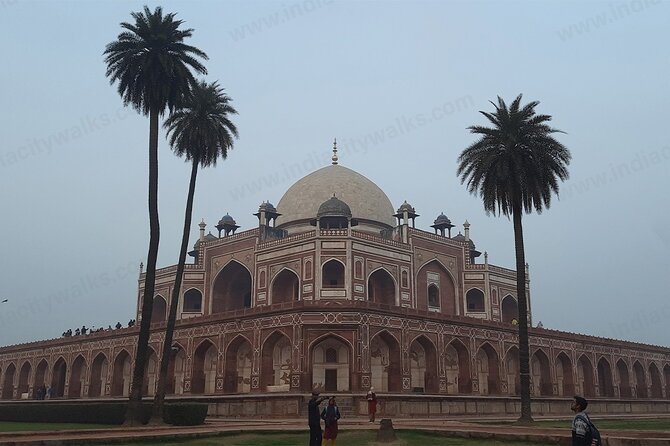
- Humayun’s Tomb complex: Isa Khan to Humayun, with gardens in the middle
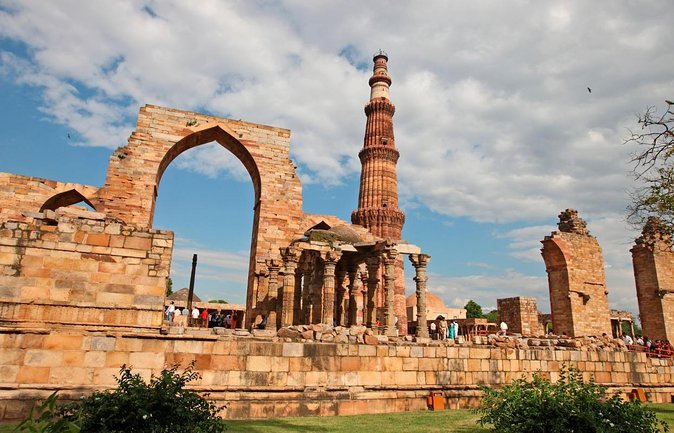
- Qutub Minar: Quwwat-ul-Islam Mosque, the iron pillar, and Alai darwaza
- Kartavya Path and the India Gate axis: from Rajpath to democracy talk
- Guides and pacing: why certain walk leaders get repeat praise
- Price and value: $38 for a full heritage route
- What to bring for a smooth day
- Who should book this tour
- Should you book the Heritage Day Tour of Old and New Delhi?
- FAQ
- How long is the Heritage Day Tour of Old and New Delhi?
- What does the tour cost?
- Is food and drinks included?
- Are monument entry tickets included?
- Is there a guide included?
- Do I get pick-up and drop-off?
- Where does the tour start and end?
- Is this a private tour?
- What is the cancellation policy?
Key things I’d zero in on
- Bottled water is provided to keep you moving through the day
- Guide-led routing helps you spot details you’d miss on your own
- Chandni Chowk area mixes heritage with an active spice and bazaar culture
- Humayun’s Tomb complex includes multiple structures in one stop, from Isa Khan’s tomb to Arab Sarai
- Qutub Minar site logic is clear: Quwwat-ul-Islam Mosque first, then the iron pillar and Alai darwaza
- Modern Delhi finish at Kartavya Path, India Gate, and the President’s House area ties the whole day together
How this Heritage Day Tour actually plays out
This is a full-day walking and site-hopping style tour built around context. You’ll move through Old Delhi’s layers—architecture, markets, and spirituality—then switch gears to New Delhi’s planned spaces and government landmarks.
The price is $38, and for Delhi that can be good value if you want structure. A guide is included, and the tour uses a mobile ticket, so you’re not wrestling with extra paperwork once you’re there.
Also, it’s private in the sense that you don’t share with strangers; it’s only your group. That matters because a good guide can pace the day around your speed and questions instead of forcing everyone into one rigid rhythm.
The old and the new, covered a few more ways




Where you meet and why it matters

The tour starts in New Delhi and ends back at the meeting point, so you can think of it as a loop of two cities in one day. Pick a meeting spot that works with your plan for the rest of your trip, because you’re likely to want to grab food after the tour ends.
The day is listed as about 8 hours, and the operator asks for moderate physical fitness. That doesn’t mean you need to be an athlete, but you should be ready for walking between major areas and spending time standing in and around monument spaces.
Pasar Chandni Chowk: Shahajanabad’s streets, Red Fort area, and spice-market power
Your first real hit of Delhi energy is the Chandni Chowk region, centered on Shahajanabad. This is where the city shows its daily face: old architecture, dense lanes, and the kind of commerce that never feels staged.
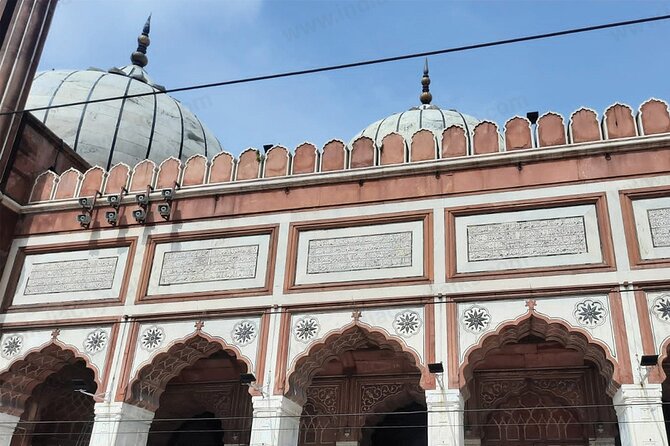
You’ll focus on heritage sights in this area, including the Red Fort region and a 17th-century Friday mosque described as South Asia’s first largest Friday Mosque. You’ll also get your time around the spice market, described as Asia’s largest spice market, plus other older bazaars in the Chandni Chowk orbit.
What I like about starting here is that you’re not just looking at monuments. You’re learning how the city works at street level—how people move, how trade happens, and why these places gained importance in the first place.
A small practical note: this area is active, so plan for sensory overload. If you’re sensitive to crowds or strong smells, keep that in mind before you go in expecting quiet, museum-level pacing.
Humayun’s Tomb complex: Isa Khan to Humayun, with gardens in the middle
Humayun’s Tomb isn’t only one tomb. The complex is set up like a whole miniature world, and the tour uses that to your advantage by pulling you through the story in steps.
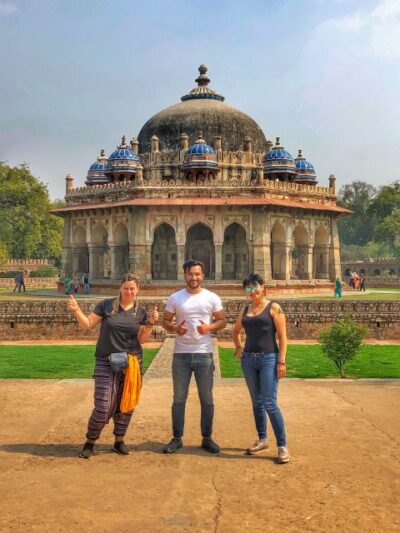
You start with the mosque and tomb of Isa Khan Niyazi, where the details include incised plaster work and glazed tiles in green, yellow, and bright blue. Then the route moves to Arab Sarai, built for 300 Arab servants, brought back to India by Hamida Banu Begum from Mecca. From there you look toward the garden and the tomb of Bu Halima.
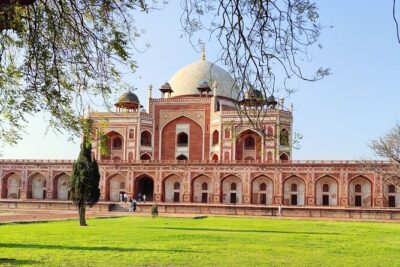
Finally, you see Humayun’s Tomb itself, commissioned by Hamida Banu Begum after the emperor’s death in 1556.
Why this stop feels worth the time: the tour frames the complex as a family and court story, not just a pretty site. You get the sense that these buildings were built to house people, status, worship, and memory all at once.
One consideration: the stop is scheduled for about 1 hour, and the complex has lots of sightlines and smaller elements. If you’re a slow-walker or you love reading every inscription, you might want to keep your eyes on the guide’s suggested highlights so you don’t run out of time.
Qutub Minar: Quwwat-ul-Islam Mosque, the iron pillar, and Alai darwaza
The Qutub complex has a lot going on, so having the order right helps. You meet at the Qutub Minar ticket counter, then step in and begin with the Quwwat-ul-Islam Mosque.
This mosque is tied to the first Delhi sultan, Qutbuddin Aibak, and it’s described as the first building in the Qutub complex. From there you get to see the iron pillar in the center area of the Quwwat-ul-Islam Mosque—one of Delhi’s most famous heritage attractions. The stop then moves to the Alai darwaza, later added by Alauddin Khilji, designed as a main gateway to the ambitious extension of the mosque.
What makes this stop work on a tour day is the guided sequencing: you’re not wandering in circles trying to decide what matters most. The guide’s narration helps you connect why the mosque, the pillar, and the gateway belong to the same larger building story.
Timing note: this is also scheduled for about 1 hour, which is enough to see the key structures but not enough to turn the complex into a full photography project.
More paths into old New Delhi



Kartavya Path and the India Gate axis: from Rajpath to democracy talk
After the older Delhi sites, the tour shifts to planned New Delhi around President’s House, Kartavya Path, and India Gate. The framing here is colonial-era planning first, then the modern message behind the space today.
You’ll learn how Kartavya Path represents a change from the former Rajpath, which functioned as a symbol of power. The tour points out that Kartavya Path is now treated as a sign of democratic control and empowerment.
This stop is about getting your bearings in modern Delhi. If your trip includes other government or memorial sites, this helps you understand the logic of the city layout rather than just admiring the big views.
Small drawback: this is more about perspective and explanation than about climbing into one specific landmark. If you want hands-on archaeology every hour, this part may feel more like a walk with storytelling.
Guides and pacing: why certain walk leaders get repeat praise
In my book, the difference between a good Delhi day and a great one is the guide. The best leaders don’t just point; they connect details into a clear mental map so the day doesn’t feel like a checklist.
From the strong signals around this operator, guides like Srushti stand out for making the heritage story click. One review specifically highlights a connection between heritage and a gender perspective, which is a smart way to read how spaces shaped daily life, not just rulers and dates. Kazal is praised as skilful and passionate, and Aamir Ahmed is mentioned as a top pick for walking in the same neighborhoods repeatedly, with strong local knowledge.
That shows up in practical ways: well-paced movement, clear narration, and attention to small directions so you don’t lose the group when lanes change or viewpoints open up.
It also helps that the tour keeps you hydrated with bottled water, which is a small thing that makes a big difference on a long day.
Price and value: $38 for a full heritage route
At $38, you’re paying for a guide and a structured day across several major sites. You’re not paying for a private car tour, and that’s part of the value. Delhi’s heritage is easiest to understand on foot and in close proximity, especially when you want the guide to explain street-level context.
However, this is where you need to be realistic. The tour materials say monument entry charges are not included and that there can be on-the-spot cost charge as per actual. Also, food and drinks aren’t included. So the real cost is $38 plus whatever you choose to eat and plus any monument fees that apply during the day.
If you come prepared with water strategy, snacks or a plan for lunch, and a bit of flexibility on fees, the pricing works out as a solid deal. If you want a fully catered day with zero extra spending, you’ll likely feel a little annoyed.
What to bring for a smooth day
You’re moving through old lanes and monument areas, so pack for comfort, not for fashion.
Bring:
- A hat and sunscreen for open stretches
- Comfortable walking shoes with grip
- A small layer for indoor/exterior temperature swings
- Cash or card backup for any on-the-spot monument charges, since fees may show up
- A snack plan, since food and drinks are not included
Also, use the bottled water provided, but don’t assume it’s the only water you’ll need. Delhi weather and pace can vary, and you’re better off being slightly over-prepared than trying to solve hydration on the fly.
Who should book this tour
This is a good match if you want:
- A guided day that connects Old Delhi markets and monuments with New Delhi planning
- A clear itinerary that helps you choose what to revisit later
- A guide who explains details and helps you keep track of what you’re seeing
It’s less ideal if you hate walking, dislike crowds, or want a day built around food stops and indoor rest breaks.
Should you book the Heritage Day Tour of Old and New Delhi?
I’d book it if you want one organized day to understand Delhi’s layers without guessing. The mix of Chandni Chowk, the Humayun’s Tomb complex, Qutub Minar, and the Kartavya Path/India Gate zone gives you a full spectrum of the city—from everyday commerce to big monument stories to modern civic space.
I would not book it if you need food included, if extra monument fees would be a deal-breaker, or if you’re searching for a relaxed, slow pace with minimal walking. On a good day, this tour gives you a strong map of what to return to later, and that is the real win in Delhi.
FAQ
How long is the Heritage Day Tour of Old and New Delhi?
The tour is listed as approximately 8 hours.
What does the tour cost?
The price is $38.
Is food and drinks included?
No. Food and drinks are not included.
Are monument entry tickets included?
Monument entry charges are not included. The operator notes that monument tickets can have an on-the-spot cost charge as per actual.
Is there a guide included?
Yes. A tour guide is included.
Do I get pick-up and drop-off?
No. Pick and drop are not included.
Where does the tour start and end?
It starts in New Delhi, Delhi, India, and ends back at the meeting point.
Is this a private tour?
Yes. Only your group will participate.
What is the cancellation policy?
You can cancel for free up to 24 hours in advance for a full refund. If you cancel within 24 hours, the amount paid is not refunded. If the experience is canceled due to poor weather, you’ll be offered a different date or a full refund.
More Tours in New Delhi
- Old & New Delhi City Tour – Half or Full Day Options Available
★ 5.0 · 4,811 reviews - Half Day Private Delhi City Tour
★ 5.0 · 4,474 reviews - Same Day Taj Mahal, Agra Fort & Baby Taj Tour from Delhi by Car
★ 5.0 · 4,304 reviews - Taj Mahal Day Tour from Delhi by Superfast Train – TOP RATED TOUR
★ 5.0 · 4,166 reviews - Delhi: Old and New Delhi Private Full or Half-Day Tour
★ 4.9 · 3,776 reviews
More Tour Reviews in New Delhi
- Old & New Delhi City Tour – Half or Full Day Options Available
★ 5.0 · 4,811 reviews - Half Day Private Delhi City Tour
★ 5.0 · 4,474 reviews - Same Day Taj Mahal, Agra Fort & Baby Taj Tour from Delhi by Car
★ 5.0 · 4,304 reviews - Taj Mahal Day Tour from Delhi by Superfast Train – TOP RATED TOUR
★ 5.0 · 4,166 reviews - Delhi: Old and New Delhi Private Full or Half-Day Tour
★ 4.9 · 3,776 reviews
Old and New Delhi, Keep Exploring
- Old & New Delhi City Tour – Half or Full Day Options Available
★ 5.0 · 4,811 reviews - Delhi: Old and New Delhi Private Full or Half-Day Tour
★ 4.9 · 3,776 reviews - Delhi: Private Old & New Delhi Guided Half- or Full-Day Tour
★ 4.9 · 2,309 reviews - Old & New Delhi Private Tour – Half or Full Day (Rated Excellent)
★ 5.0 · 2,226 reviews - Old & New Delhi Full or Half Day Sightseeing Tour
★ 5.0 · 1,900 reviews
Just added: more New Delhi reviews to browse
- 4 days Golden Triangle Tour★ 5.0 · 3 reviews
- Discover Old & New Delhi: Private Tour with Street Food★ 5.0 · 3 reviews
- Taj Mahal Tour From Delhi By Private Car★ 4.5 · 3 reviews
- Golden Triangle Tour 5 Days★ 5.0 · 3 reviews
- Taj Mahal: Express Entry Ticket For Sunset Tour with guide★ 5.0 · 3 reviews
- Agra Taj Mahal Sunrise & Sunset Tour from Delhi★ 5.0 · 3 reviews
Old & New Delhi City Tours, compared.
 ★ 5.0Old & New Delhi City Tour – Half or Full Day Options AvailableFrom $384,811 reviews
 ★ 4.9Old and New Delhi Private Full or Half-Day TourFrom $23,776 reviews
 ★ 4.9Private Old & New Delhi Guided Half- or Full-Day TourFrom $72,309 reviews
 ★ 5.0Old & New Delhi Private Tour – Half or Full Day (Rated Excellent)From $202,226 reviews
 ★ 5.0Old & New Delhi Full or Half Day Sightseeing TourFrom $241,900 reviews
 ★ 4.8Full or Half-Day Old and New Delhi Private TourFrom $71,883 reviews
 ★ 4.9Private Full-Day City Tour of Old and New DelhiFrom $221,722 reviews
 ★ 5.0Old and New Delhi Guided Full or Half-Day TourFrom $20976 reviews
Browse the lists this tour appears in