

Reviewed · OLD DELHI TOURS
Hidden Gems of Old Delhi (All inclusive)
Old Delhi feels like a maze. This tour helps you move through it with a small-group guide, plus built-in stops so you’re not guessing your way around. You’ll cover historic religious sites, street-food moments, and market time that most first-timers struggle to stitch together on their own.
I especially like the faith-to-food flow, starting at places of worship and ending in the spice and market world. And I really like that your guide is Sandeep Sharma, with a reputation for knowing Delhi well and spotting the kinds of streets that feel hard to navigate solo.
One thing to consider: this experience requires good weather, so if the day turns rainy or uncomfortable, plans may shift.
In This Review
- Key Highlights You’ll Care About
- Old Delhi on Foot: Why This Works Better Than Ad-Hoc Plans
- Meet at Chandni Chowk and Get Oriented Quickly
- Small Group Size: What “Up to 10” Changes for You
- Temple Stops That Explain Three Faiths in One Route
- Sis Ganj Gurudwara (Sikhism, about 400 years old)
- Sri Digambar Jain Lal Mandir (Jainism, about 400 years old)
- Gauri Shankar Temple (Hinduism, about 800 years old)
- Markets Between Worship: Wedding Cloth at the Wholesale Stalls
- Khari Baoli, Asia’s Largest Spice Market: What to Expect
- Street Food and Snacks: Eating Well Without Getting Lost
- Tuk-Tuk Ride Included: A Fun Break From Dense Lanes
- Rooftop Lookout Views: Getting the Big Picture
- Price and Value: Is $50 Worth It Here?
- Who Should Book This Tour (And Who Might Want Something Else)
- Quick Practical Notes for a Smooth Day
- Should You Book This Old Delhi Walk?
- FAQ
- How long is the Hidden Gems of Old Delhi tour?
- Where does the tour start and end?
- What is included in the tour price?
- Which religious sites are visited?
- Is there time at a spice market?
- How many people are in the group?
- What is the cancellation policy?
Key Highlights You’ll Care About
- Tuk-tuk ride included for a quick change of pace in a dense area
- Admission tickets covered for the 3 main temples (gurudwara + Jain + Hindu)
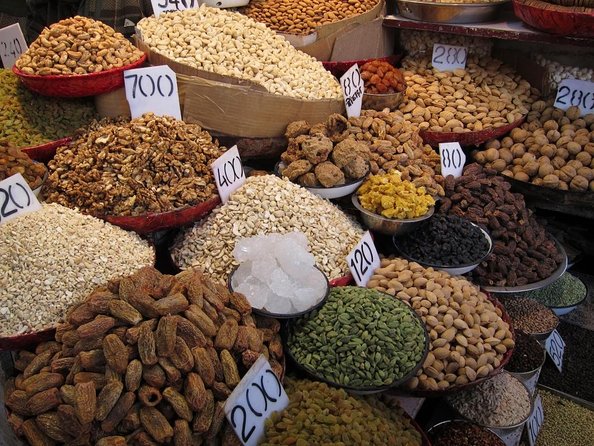
- Khari Baoli spice market time at Asia’s largest spice market
- Snacks and refreshments provided, so you can focus on walking and tasting
- Maximum 10 people, which usually means you can ask questions without shouting
- Sandeep Sharma as your local host, known for practical city knowledge
Old Delhi on Foot: Why This Works Better Than Ad-Hoc Plans

Old Delhi is the kind of place where “I’ll just wander” can turn into extra time, wrong turns, and unnecessary stress. This tour is built around a simple idea: pick a tight loop, cover key neighborhoods, and keep you on a route that makes sense.
The practical value here is that you get structure without feeling herded. You’re walking through different layers of the area—religious spaces, trading streets, and sensory market zones—so you understand what you’re seeing instead of treating it like a photo scavenger hunt.
The timing is also realistic. You’re looking at around 3 hours (approx.) and it’s described as a 4-hour walking experience overall. Either way, it’s short enough to stay energetic, but long enough to actually connect the dots between places.
More hours to spend in Old Delhi




Meet at Chandni Chowk and Get Oriented Quickly
Your start point is easy to anchor: 839, Netaji Subhash Marg, Lajpat Rai Market, Chandni Chowk, New Delhi. It ends back at the meeting point, so you’re not left navigating your way out alone.
This matters because the area around Chandni Chowk can feel chaotic if you’re arriving cold. Having a scheduled meeting and a guide removes the first big anxiety: getting to the first stop without wasting time.
The tour is also marked near public transportation, so you’re less dependent on taxis if your hotel is elsewhere in Delhi. And since you’ll have a mobile ticket, you’re less likely to lose paperwork before you even start.
Small Group Size: What “Up to 10” Changes for You
A maximum of 10 travelers (small group) is a big deal in Old Delhi. It typically means:
- you’re not competing for space in tight lanes
- you can hear explanations
- you can ask about what you’re seeing without waiting forever
It also helps with pace. Old Delhi streets aren’t evenly wide, and some sections need slow movement. In a larger group, that can get frustrating fast. Here, the small number is what keeps the whole experience workable in real life.
Temple Stops That Explain Three Faiths in One Route
One of the strongest parts of this tour is that it doesn’t just show buildings. It frames them as living places of worship, trade connections, and community life.
You get three religious visits, each timeboxed to about 15 minutes with admission included:
Sis Ganj Gurudwara (Sikhism, about 400 years old)
This is your first stop: Sis Ganj Gurudwara, a Sikh temple that’s about 400 years old. Even with just a short visit, it sets context for the area. Sikh places of worship are often central community hubs, and starting here helps you understand the neighborhood’s identity beyond street food and shopping.
A tip: dress and behavior matter at religious sites. Follow whatever guidance the guide gives you on-site, and keep your pace respectful. Short visit or not, this part is where you’ll get the most cultural grounding.


Sri Digambar Jain Lal Mandir (Jainism, about 400 years old)
Next is Sri Digambar Jain Lal Mandir, another site around 400 years old, focused on Jainism. Jain temples have a very distinct atmosphere and symbolism. The value of visiting it as a second stop is timing: you’ll compare how different traditions use space, devotion, and visual cues.
If you’re curious about why certain practices look so specific, this is the moment to ask. A local guide can connect the dots quickly—what you’re seeing, what it means, and why it matters here.
Gauri Shankar Temple (Hinduism, about 800 years old)
Then you head to Gauri Shankar Temple, a Hindu temple dated around 800 years old. This stop adds depth and age, and it helps you see continuity in the neighborhood.
A simple way to get more out of this: keep an eye on what feels repeated across stops (architecture cues, crowd flow, how people move through the space). Even in a short window, the comparisons can make the route feel more meaningful.
Markets Between Worship: Wedding Cloth at the Wholesale Stalls

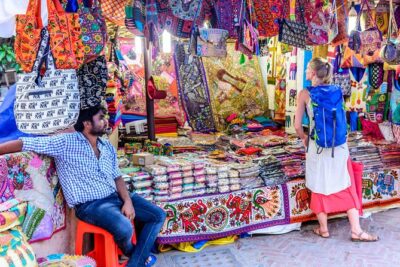
After the temples, you switch to the practical side of Old Delhi: trade. You’ll visit a wholesale cloth market, specifically called out for wedding special cloths.
This is one of those stops that people often skip because it sounds like shopping and not sightseeing. But it’s actually a valuable cultural lens. Wedding textiles can reflect local tastes, wealth signals, and craft traditions. Even if you don’t buy anything, watching how the stalls operate helps you understand why these neighborhoods exist in the first place.
If you do want to buy, do it with a calm mindset. Markets like this move on negotiation and relationship. If you’re new to bargaining, treat it as a learning moment: ask the price, compare quickly, and don’t let the noise push you into buying on the spot.
Khari Baoli, Asia’s Largest Spice Market: What to Expect
Your next big sensory stop is Khari Baoli, described as Asia’s largest spice market, with about 30 minutes planned. This is where Old Delhi becomes smell-and-color specific.
You’ll get time to look, and time to slow down. That’s important because spice markets can be overwhelming if you rush. With a guide, you’re more likely to notice the differences—how spices are stored, how vendors describe products, and how people shop for everyday cooking versus special uses.
Practical advice:
- Go in expecting strong odors. If you’re sensitive, hold off on getting too close to piles of open spices.
- Bring a mindset of curiosity, not perfection. Prices, packaging, and quality can vary. Focus on learning and sampling rather than trying to “win” the market.
Also, this is your free-ticket moment: the spice market admission is listed as free, so you’re not getting nickel-and-dimed on entry fees.
Street Food and Snacks: Eating Well Without Getting Lost
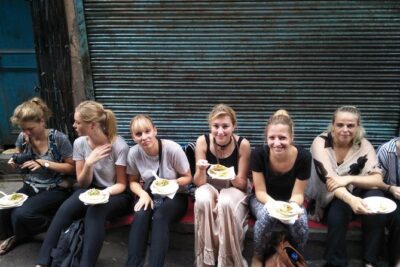
The tour includes snacks and refreshments, which makes a real difference in a neighborhood where you might otherwise feel unsure what’s safe or worth your time. Even when street food is tempting, it can be hard to decide when you don’t know the area.
Here, the value is not just the food itself—it’s the support around it. A local guide helps you focus on what’s appropriate and what’s likely to be a good choice for a short visit.
If you have dietary restrictions, you’ll want to mention them to the guide at the start. The tour data confirms snacks and refreshments are included, but it doesn’t spell out options. Better to ask early than hope.
Tuk-Tuk Ride Included: A Fun Break From Dense Lanes
You also get a fun tuk-tuk ride, which is a smart inclusion. Walking in Old Delhi is great, but there are times when you need a short “reset”—especially if you’re coming from a busy part of town.
Think of the tuk-tuk as part transport, part pacing tool. It breaks up the walk, reduces fatigue, and gives you a moment to reorient visually before you step back into the lanes.
Since the tour is small-group, you should get a more orderly ride compared to trying to hail transport on your own in the same area.
Rooftop Lookout Views: Getting the Big Picture
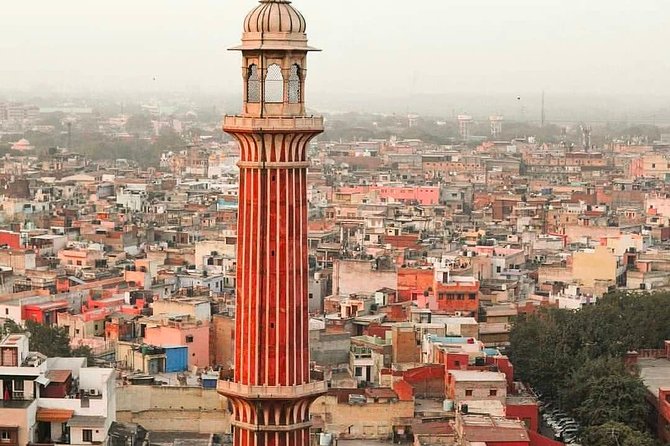
The tour description also mentions sweeping views of Old Delhi from a rooftop lookout. Even if you only pause briefly, this kind of viewpoint changes how you understand everything below.
Walking a maze can make you feel like you’re just moving from stop to stop. A rooftop moment helps you see the neighborhood layout and makes your mental map click.
If you plan for photos, keep expectations practical. Rooftop spaces can be crowded and weather can affect visibility. Bring a phone strap or secure grip, and follow the guide’s instructions for where to stand.
Price and Value: Is $50 Worth It Here?
At $50 per person, this tour is priced as an inexpensive way to buy time, expertise, and access in a high-effort area.
What you’re getting that drives value:
- A local guide who can explain faith sites, market behavior, and what you’re looking at
- Admission tickets included for the three major religious stops
- Snacks and refreshments provided
- A tuk-tuk ride
- Small-group format (max 10), which keeps you from getting stuck in a slow crowd
What you’re not paying separately for (based on what’s listed):
- temple/gurudwara admissions for the included stops
- market entry for Khari Baoli (listed as free)
Could you do something similar on your own? Sure. But in Old Delhi, the main cost isn’t only money—it’s the time and stress of figuring out the route, knowing what to see first, and deciding what food and markets are worth your attention. For many people, paying $50 buys you a smoother first day in the area.
Who Should Book This Tour (And Who Might Want Something Else)
This is a strong fit if you:
- want Old Delhi navigation support without getting lost
- enjoy religion + markets as a single morning/afternoon story
- like food and don’t want to spend the whole day second-guessing what’s good
- prefer small groups and Q&A-friendly pacing
You might want a different plan if you:
- can’t handle moderate walking for a few hours
- strongly dislike crowded market environments or strong spice smells
- need an itinerary that avoids outdoor walking if the weather isn’t great (this experience requires good weather)
Quick Practical Notes for a Smooth Day
This one is short and active, so set yourself up:
- Wear comfortable shoes you trust for uneven pavement.
- Bring water. Snacks and refreshments are included, but you’ll still want hydration.
- Keep your phone charged for the rooftop lookout moment.
- If you’re someone who worries about stepping into religious spaces, the guide will help you with on-the-ground expectations at the gurudwara and temples.
The meeting point is specific, and the tour ends where you start, which helps you feel less “stuck” afterward.
Should You Book This Old Delhi Walk?
If it’s your first time in Delhi and you want a route that connects temples, spice markets, shopping streets, and street snacks without turning into a confusing day, I’d book it. The small-group size, included admissions, and added tuk-tuk pacing are exactly the kind of “pay once, worry less” value that matters in a complex neighborhood.
If you’re traveling on a tight schedule and want to see a lot without spending hours planning, this is also a good match. Just go prepared for walking, spice smells, and the idea that the day works best when the weather holds up.
FAQ
How long is the Hidden Gems of Old Delhi tour?
It’s listed as approximately 3 hours, and the tour description also refers to a 4-hour walking experience.
Where does the tour start and end?
The tour starts at 839, Netaji Subhash Marg, Lajpat Rai Market, Chandni Chowk, New Delhi and it ends back at the meeting point.
What is included in the tour price?
The tour includes a local guided walking experience, a tuk-tuk ride, snacks and refreshments, and admission tickets for the included religious stops.
Which religious sites are visited?
You visit Sis Ganj Gurudwara (Sikhism), Sri Digambar Jain Lal Mandir (Jainism), and Gauri Shankar Temple (Hinduism), each listed as about 400 years or 800 years old.
Is there time at a spice market?
Yes. You’ll spend about 30 minutes at Khari Baoli, described as Asia’s largest spice market.
How many people are in the group?
The group is capped at a maximum of 10.
What is the cancellation policy?
You can cancel for a full refund up to 24 hours before the experience. If you cancel less than 24 hours before the start time, the amount paid is not refunded. The experience also depends on good weather; if it’s canceled due to poor weather, you’ll be offered another date or a full refund.
More Tour Reviews in New Delhi
- Old & New Delhi City Tour – Half or Full Day Options Available
★ 5.0 · 4,811 reviews - Half Day Private Delhi City Tour
★ 5.0 · 4,474 reviews - Same Day Taj Mahal, Agra Fort & Baby Taj Tour from Delhi by Car
★ 5.0 · 4,304 reviews - Taj Mahal Day Tour from Delhi by Superfast Train – TOP RATED TOUR
★ 5.0 · 4,166 reviews - Delhi: Old and New Delhi Private Full or Half-Day Tour
★ 4.9 · 3,776 reviews
More of Old Delhi
- The Great Indian Food Tour: Old Delhi Food and Heritage Walk
★ 5.0 · 1,698 reviews - Old Delhi Food, Heritage&Cultural Walk with Rickshaw ride to Masterji Kee Haveli
★ 5.0 · 742 reviews - Old Delhi Bike Tour
★ 5.0 · 616 reviews - Old Delhi Street Food Tour
★ 5.0 · 497 reviews - Breakfast Walk in Old Delhi
★ 5.0 · 449 reviews
Just added: more New Delhi reviews to browse
- 4 days Golden Triangle Tour★ 5.0 · 3 reviews
- Discover Old & New Delhi: Private Tour with Street Food★ 5.0 · 3 reviews
- Taj Mahal Tour From Delhi By Private Car★ 4.5 · 3 reviews
- Golden Triangle Tour 5 Days★ 5.0 · 3 reviews
- Taj Mahal: Express Entry Ticket For Sunset Tour with guide★ 5.0 · 3 reviews
- Agra Taj Mahal Sunrise & Sunset Tour from Delhi★ 5.0 · 3 reviews
Old Delhi Tours, compared.
 ★ 5.0The Great Indian Food Tour: Old Delhi Food and Heritage WalkFrom $431,698 reviews
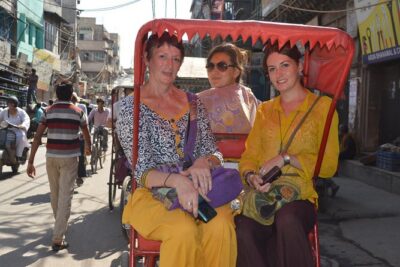 ★ 5.0Old Delhi Food, Heritage&Cultural Walk with Rickshaw ride to Masterji Kee HaveliFrom $52742 reviews
 ★ 5.0Old Delhi Bike TourFrom $30616 reviews
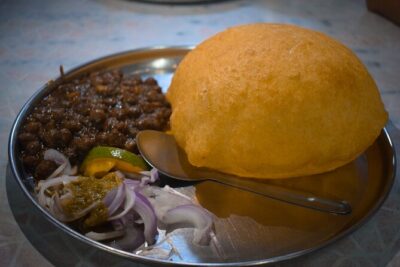 ★ 5.0Old Delhi Street Food TourFrom $40497 reviews
 ★ 5.0Breakfast Walk in Old DelhiFrom $80449 reviews
 ★ 4.9Old Delhi Street Food Tour with Rickshaw RideFrom $43403 reviews
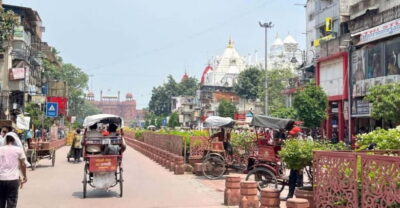 ★ 4.9Old Delhi: Private Tour of Chandni Chowk, Tuk Tuk & FoodFrom $70345 reviews
 ★ 5.0New Delhi and Old Delhi Private Tour 4-8 Hours – CustomizableFrom $10342 reviews
Browse the lists this tour appears in