
Reviewed · GOLDEN TRIANGLE TOURS
India Himalayas foothills & Golden Triangle 12 Days
Sunrise Taj Mahal plus mountain air in one route. This tour strings together Delhi, Agra, Jaipur, Amritsar, Chandigarh, and Shimla with a private AC car and English-speaking guide doing the heavy lifting. It is the kind of trip where you get big sights with less stress, and you still have moments to breathe.
I also like that the experience is designed around included entry fees, so you can spend less time figuring out tickets and more time actually looking. With hotel stays and breakfast included for the program days, the logistics feel smoother than a DIY shuffle.
One consideration: it is a lot of moving around in about 13 days, with multiple city changes. If you like slow travel and long stays in one place, you may feel the pace, especially with early starts.
In This Review
- Key highlights worth your attention
- What you’re really getting for the $1,917 price
- Delhi’s mix of Mughal power, market life, and Gandhi memory
- Amritsar: Golden Temple serenity, Jallianwala Bagh gravity, and Wagah drama
- Chandigarh’s planned-city layout and Rock Garden creativity
- Shimla: cooler mountain air, Mall Road strolling, and Jakhoo views
- Back down to Delhi and the Agra day that hinges on timing
- Fatehpur Sikri: a Mughal “what happened here?” stop on the way to Jaipur
- Jaipur essentials: Amber Fort, City Palace, Jantar Mantar, and Hawa Mahal
- Transportation, comfort, and how to actually make this trip feel easy
- Who should book this itinerary, and who might not love it
- Value check: the “included” items are doing real work
- Should you book this Golden Triangle plus Himalayas foothills trip?
- FAQ
- Do I get airport help when I arrive in Delhi?
- Is there an air-conditioned vehicle during the tour?
- Are monument entry fees included?
- What kind of hotels are included?
- Is breakfast included?
- Is airfare included in the price?
Key highlights worth your attention
- Private guide and chauffeur: you are not stuck with a chaotic group meeting points and running late.
- Sunrise-focused Taj Mahal time: the plan aims for morning light, which is when the marble does its most magical color shift.
- Monuments with ticketing handled: major entries are included, so your time stays for sightseeing.
- Amritsar + Wagah ceremony: you get both the solemn and the spectacle in one stop.
- Foothills-to-hill-station scenery: Chandigarh city design and Shimla views add a different feel than the Golden Triangle.
- Comfort details in the car: bottled water and wet tissue help on hot days and long drives.
What you’re really getting for the $1,917 price
At $1,917 per person for roughly 13 days, this is not a budget shortcut. It is closer to “buy the peace of mind.” You are paying for a private setup: an air-conditioned vehicle, an English-speaking guide, and a chauffeur who stays with you through the itinerary. You also get hotel accommodation (3-star or 4-star options) and 11 breakfasts during the program.
The other big value lever is that monument entry fees are included. In a trip like this—Taj Mahal, Agra Fort, Fatehpur Sikri, Amber Fort, and the rest—tickets add up fast, and figuring them out on the fly wastes precious hours.
If you tried to replicate this yourself, you would still need a driver for intercity travel, pay for a guide at the big sites, and handle all the ticket logistics. This tour packages those costs so you can focus on the sights.
Delhi, Agra and Jaipur: more full circuits



Delhi’s mix of Mughal power, market life, and Gandhi memory
Your trip begins with an airport meet-and-greet, then a transfer to your hotel. That first transfer matters in Delhi; it helps you get your bearings fast after arrival and sets the tone for the rest of the tour.
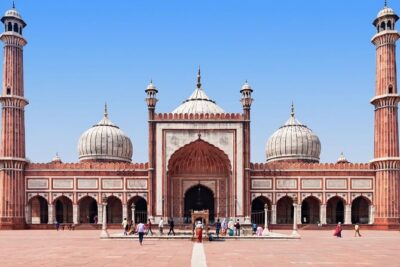
In Delhi, you cover classic Old and New Delhi contrasts in a single sweep. You start at Jama Masjid, the largest mosque in India. It is an imposing space, and even with crowds, it is one of those places that helps you understand how monumental Mughal-era architecture was meant to feel.
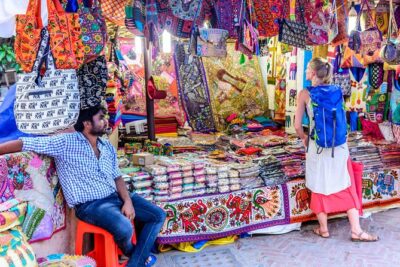
Then comes Chandni Chowk, one of the best places in Delhi to experience everyday rhythm—narrow lanes, colorful shops, and constant local movement. I like that the tour builds in time for strolling rather than treating the bazaar like a checklist photo stop. This is also where you may want to snack lightly if you see something that looks safe and busy with locals.
You also visit Rajghat, the memorial where Mahatma Gandhi was cremated, where an eternal flame burns. After the market energy, this stop feels like a reset. It adds emotional weight to your Delhi day, not just architecture.
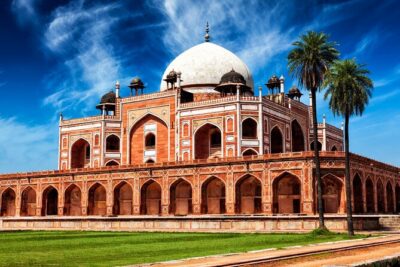
Next are the Mughal gardens and tombs, including Humayun’s Tomb, known for its Persian-inspired garden layout and the soothing symmetry of its courtyards. And you round out the sightseeing with a stop at Qutub Minar, one of Delhi’s most famous landmark towers.
Practical tip: Delhi mornings can cool down quickly but still get warm later. Dress for walking—comfortable shoes win, and you’ll be glad you brought water along.
Amritsar: Golden Temple serenity, Jallianwala Bagh gravity, and Wagah drama
When you head toward Amritsar, the sightseeing style changes. This is less about marble and more about faith, memory, and a living culture you can feel in the streets.
You begin with Shree Durgiana Temple, a 16th-century temple built in a style similar to the Golden Temple. It gives you context for the architecture and devotional atmosphere before you reach the main event.
Then you visit Jallianwala Bagh, a memorial tied to the 1919 tragedy of the Amritsar Massacre. This is one of those stops that hits hard because it is not abstract—it is a place designed for remembrance. Pairing it with the later beauty of the Golden Temple can feel emotionally complex, but it also makes the trip more honest.
You also stop at Rambagh Gardens, which includes the summer palace of Ranjit Singh in the middle of the gardens. Even if you do not go deep into the palace details, the garden setting helps you picture the Sikh Empire’s scale and the comfort of leadership life.
At the center is the Golden Temple, where you experience the famous spiritual pull of the complex and the energy of people coming together. It is not just one sight; it is a whole atmosphere.
Finally, you include the Wagah Border Ceremony. It is short in duration in the schedule, but the staging near the crossing makes it feel bigger than a typical “watch a show” moment. There is a lot of pageantry and intensity packed into that limited time.
Practical tip: if you care about viewing angles at ceremonies, you’ll be happier arriving with time to settle. Ask your guide what time to aim for so you do not feel rushed.
Chandigarh’s planned-city layout and Rock Garden creativity
From Amritsar you move to Chandigarh, described as a planned city with design tied to Le Corbusier. Even if you are not an architecture nerd, it helps to notice the way the city feels organized—wide routes, planned sections, and a sense of function.
You visit Sukhna Lake in the Shivalik foothills area. It is a good palate cleanser after temples and memorials—more open sky, more space to breathe. Then you head to the Rock Garden of Chandigarh, which is built using discarded industrial and urban waste. The creativity is the point: you see what people can do when they treat trash like raw material.
This stop is one of my favorites on the itinerary because it turns sightseeing into a lesson about ideas. It is not only scenery; it is human problem-solving turned into art you can walk through.
Shimla: cooler mountain air, Mall Road strolling, and Jakhoo views

After Chandigarh, the route climbs into Shimla, a hill station at roughly 7,000 feet. The change in temperature is real, and you feel it the moment you step into the city’s slower pace.
Shimla is where you get a mix of British-era architectural touches, pine-and-cedar scent, and lookout points. The plan includes an evening chance to walk the Mall Road, a promenade known for shops and views over the town.
In the sightseeing portion, you visit places built for perspective:
- Jakhoo Hills and the Jakhoo Temple for high views
- The Ridge, a central open space for wide-town panoramas
- Stops connected to the scenic outskirts such as Chadwick Falls (weather and access can affect how it feels on the day)
You also visit the Indian Institute of Advanced Study, which adds a quieter, more academic contrast to the shopping-and-streets vibe.
And there is Kufri, a foothills destination about an hour from Shimla. If you like hiking or just want Himalayan views with fewer crowds than some major hotspots, Kufri is an easy win.
Practical tip: hill-station clothing needs flexibility. Even if it feels mild in the afternoon, mornings and evenings can cool quickly.

Back down to Delhi and the Agra day that hinges on timing
After returning to Delhi, you head to Agra. This part of the trip is where the “Golden Triangle” magic factor shows up.
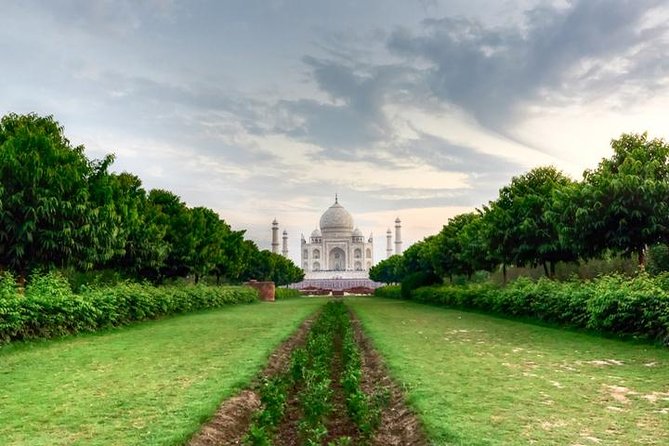
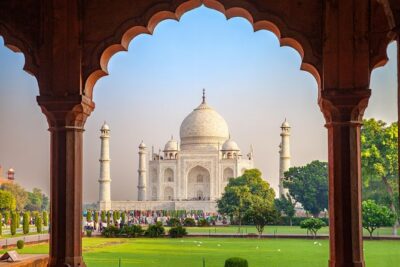
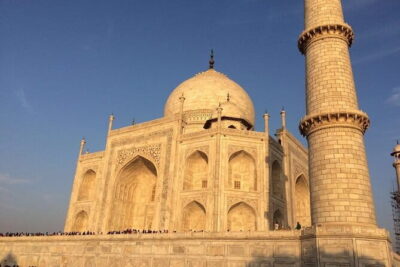
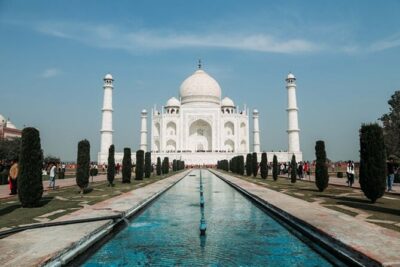
You are scheduled to visit the Taj Mahal at sunrise. That matters. The marble color shift—morning tones and the way light spreads across the surface—can make your photos look less like a wall of white and more like living stone. It is also the best way to avoid some of the worst day heat.
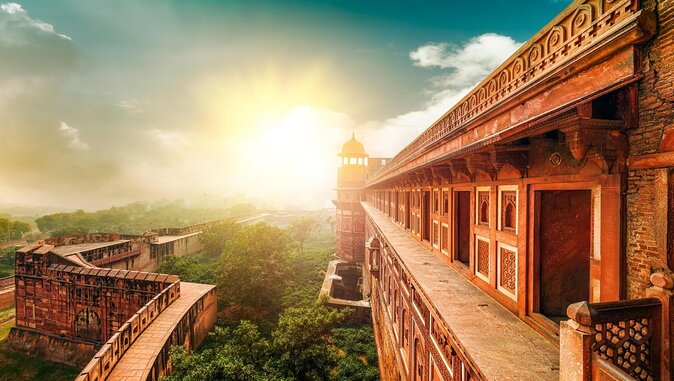
After the Taj, you also see Agra Fort, a UNESCO site that gives you a sense of Mughal power from within stone walls. If you only see the Taj, you get beauty; if you also see Agra Fort, you get context.
You also have Mehtab Bagh listed as part of the Agra highlights. This garden area is often used for scenic views of the Taj across the river, and it is a nice way to break up the day between monuments.
Practical tip: sunrise Taj means early wake-up energy. Even if your guide handles the flow, you should set expectations for tired feet later. Comfortable socks and a small daypack help.
Fatehpur Sikri: a Mughal “what happened here?” stop on the way to Jaipur
Next you drive toward Jaipur, with a stop at Fatehpur Sikri. This UNESCO site is remembered as an abandoned Mughal imperial city from Emperor Akbar’s era. That abandoned status changes how you experience it: you look at scale and symmetry, then you ask why it was left behind.
You see key monuments connected with the city’s centerpiece era, including Jama Masjid, the Panch Mahal, and Buland Darwaza—described as the highest gateway built by Akbar in 1601. Buland Darwaza is the kind of structure that makes you pause, because it is built to impress from far away.
Fatehpur Sikri is one of those stops where you feel the “time depth” even without a long lecture. The stone layout helps you read the story.
Practical tip: this is typically a walking-heavy site. Bring sun protection and take breaks. Your guide can help you pace it so you do not fry halfway through.
Jaipur essentials: Amber Fort, City Palace, Jantar Mantar, and Hawa Mahal

Once in Jaipur, the itinerary goes full classic Rajasthan.
You start with Amber Fort and then move through the big core sites:
- City Palace of Jaipur, where palace rooms and courtyards show how power lived
- Jantar Mantar, an astronomical site tied to measurement and observation
- Hawa Mahal, the Wind Palace—famous for its façade and the idea of ventilated viewing spaces
You also have Jal Mahal mentioned as a water palace stop. Even from a distance, the setting makes the fort-day feel less dry and more scenic.
The schedule includes time for shopping in Jaipur Bazaar in the evening. This is your chance to do something real with the day: pick up small gifts, textiles, or spices if that is your style.
If you want souvenirs that actually feel Rajasthan (not just generic trinkets), ask your guide what shops are reliable. A good guide often knows which stalls push quality instead of just price.
Transportation, comfort, and how to actually make this trip feel easy
This tour is built around air-conditioned private transport with a professional chauffeur and an English-speaking guide. That combination is a big deal for value because it reduces time loss—no guessing routes, no language friction, and less “where do we go now?” stress.
You also get bottled water and wet tissue in the vehicle, which sounds like a small thing until you are tired and it is hot. Those details are part of why this feels like a guided experience rather than a chaotic bus loop.
What to pack for this style of trip:
- Light layers for changing temps (Delhi to Agra to hill country is a temperature roller coaster)
- Comfortable walking shoes for forts and tombs
- Sun protection (hat/sunglasses) for midday outdoor segments
- A small power bank if you plan to use your phone for Taj photos at sunrise
Who should book this itinerary, and who might not love it
This tour fits best if you want:
- A first-timer-friendly India route with hand-holding
- Classic Golden Triangle sights plus major add-ons (Amritsar and the foothills-to-hill-station section)
- Private touring with an AC car and a guide who explains what you are seeing
You might want a different format if:
- You hate hotel changes and prefer fewer cities
- You want a deeper “slow travel” experience with more time in each place
- You are extremely sensitive to early mornings (sunrise Taj is part of the plan)
Value check: the “included” items are doing real work
One reason this price looks more reasonable than it first appears: you are not paying separately for everything that commonly drains budgets in India.
Included items you should care about:
- Hotel accommodation (3-star or 4-star options)
- Private English-speaking guide
- Air-conditioned private car for the program
- Meet-and-greet at Delhi International Airport
- Entrance fees of monuments on the itinerary
- Breakfast on program days (11)
From the feedback style you provided, the company is also associated with professional planning and a comfortable vehicle. Coordination names mentioned in past experiences include Garima and Manish and his team, and the recurring theme is that the driver and guide help the day feel smooth.
Should you book this Golden Triangle plus Himalayas foothills trip?
If you want the big hits—Taj Mahal at sunrise, Agra Fort, Jaipur icons, and Delhi’s Mughal and market contrasts—plus a change of pace in Amritsar and Shimla, then yes, this is a strong fit. The private guide and included entry fees make it feel efficient without feeling like a rushed checklist.
I would book it if your priority is comfort and clear planning, and you are okay with a fairly full schedule.
If you prefer deep, unhurried time in one region or you dislike early starts, you may end up wishing for a slower pace. In that case, consider shortening the route so you can savor fewer places.
FAQ
Do I get airport help when I arrive in Delhi?
Yes. You get meet-and-greet assistance at Delhi International Airport, followed by a transfer to your Delhi hotel.
Is there an air-conditioned vehicle during the tour?
Yes. The program includes an air-conditioned private car with a professional chauffeur for the tour days.
Are monument entry fees included?
Yes. Entrances fees of monuments on the itinerary are included.
What kind of hotels are included?
Accommodation is included as per the tour programme, with 3-star or 4-star hotel options.
Is breakfast included?
Yes. Breakfast is included on 11 days of the programme.
Is airfare included in the price?
No. Any airfare (international or domestic) is not included.
More Tour Reviews in New Delhi
- Old & New Delhi City Tour – Half or Full Day Options Available
★ 5.0 · 4,811 reviews - Half Day Private Delhi City Tour
★ 5.0 · 4,474 reviews - Same Day Taj Mahal, Agra Fort & Baby Taj Tour from Delhi by Car
★ 5.0 · 4,304 reviews - Taj Mahal Day Tour from Delhi by Superfast Train – TOP RATED TOUR
★ 5.0 · 4,166 reviews - Delhi: Old and New Delhi Private Full or Half-Day Tour
★ 4.9 · 3,776 reviews
The Full Golden Triangle, More Options
- 3-Days Private Golden Triangle Tour: Delhi, Agra & Jaipur by Car
★ 5.0 · 1,107 reviews - 3-Days Private Golden Triangle Tour: Delhi, Agra & Jaipur by Car
★ 5.0 · 1,098 reviews - 3-Day Delhi, Agra and Jaipur Private Tour – India Golden Triangle
★ 5.0 · 812 reviews - Four-Day Private Luxury Golden Triangle Tour to Agra and Jaipur From New Delhi
★ 5.0 · 807 reviews - 5 Nights 6 Days Private Golden Triangle Tour – Delhi Agra Jaipur
★ 5.0 · 574 reviews
Just added: more New Delhi reviews to browse
- 4 days Golden Triangle Tour★ 5.0 · 3 reviews
- Discover Old & New Delhi: Private Tour with Street Food★ 5.0 · 3 reviews
- Taj Mahal Tour From Delhi By Private Car★ 4.5 · 3 reviews
- Golden Triangle Tour 5 Days★ 5.0 · 3 reviews
- Taj Mahal: Express Entry Ticket For Sunset Tour with guide★ 5.0 · 3 reviews
- Agra Taj Mahal Sunrise & Sunset Tour from Delhi★ 5.0 · 3 reviews
Golden Triangle Tours, compared.
 ★ 5.03-Days Private Golden Triangle Tour: Delhi, Agra & Jaipur by CarFrom $1271,107 reviews
★ 5.03-Days Private Golden Triangle Tour: Delhi, Agra & Jaipur by CarFrom $1271,098 reviews
★ 5.03-Days Private Golden Triangle Tour: Delhi, Agra & Jaipur by CarFrom $1271,107 reviews
★ 5.03-Days Private Golden Triangle Tour: Delhi, Agra & Jaipur by CarFrom $1271,098 reviews
 ★ 5.03-Day Delhi, Agra and Jaipur Private Tour – India Golden TriangleFrom $110812 reviews
 ★ 5.0Four-Day Private Luxury Golden Triangle Tour to Agra and Jaipur From New DelhiFrom $160807 reviews
 ★ 5.05 Nights 6 Days Private Golden Triangle Tour – Delhi Agra JaipurFrom $240574 reviews
 ★ 5.04 Days Golden Triangle TourFrom $146499 reviews
 ★ 5.0Private Car and Drive for Golden Triangle (4N/5D)From $167451 reviews
 ★ 5.0Private Golden Triangle Tour Delhi Agra Jaipur ( Top Rated )From $148436 reviews