
Reviewed · CYCLING TOURS
New Delhi Cycle Tour
That first pedaling moment in Delhi is magic.
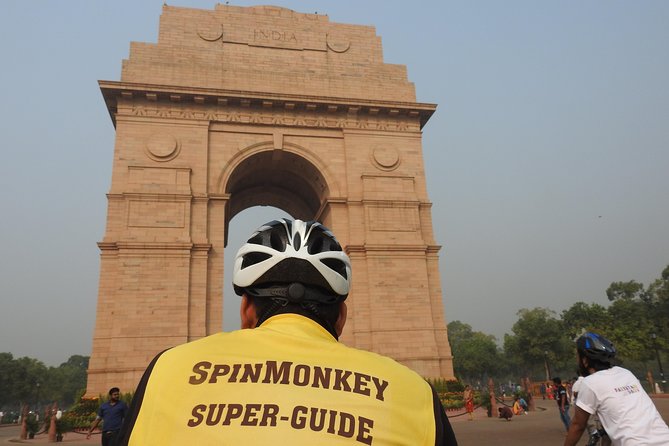
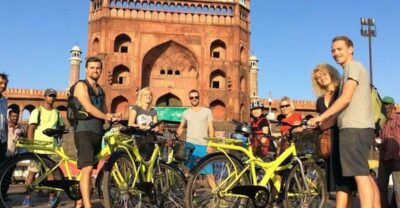
This 4-hour morning ride turns a big, complex city into a human-scale route, with Old Delhi lanes, major sights in Lutyens Delhi, and real local morning life. I like how the tour starts before the city fully wakes up, when traffic is lighter and your guide can steer you safely through the busier parts later in the morning.
I especially like the included breakfast and food tastings at the end, plus the culture-focused stops that go beyond photo ops. The ride also comes with a helmet and safety jacket, and the pace is leisurely enough that you don’t need to be training for a race.
One consideration: you’ll be on the bike early and you’ll visit religious places, so you should plan clothes that follow Indian traditions (and skip shorts when possible). If you’re easily startled by close traffic, ask about padded bike pants—some people prefer that extra comfort layer.
In This Review
- Quick hits
- Why the 5:30am or 6:30am start makes this tour work
- Old Delhi by bike: Connaught Place and the Sikh temple kitchen
- Lutyens Delhi scenery: President Estate viewpoints and India Gate lawns
- War memorial and stepwell: quick stops with real context
- Dhobi Ghats early morning: hands-on laundry in action
- The ride gears: mountain bikes, disc brakes, and what to wear
- Food and beverages: breakfast plus tasting, not just a final stop
- Price and value: what $35 really buys you
- Who should book this New Delhi cycle tour
- Should you book this New Delhi Cycle Tour?
- FAQ
- What’s the duration of the New Delhi Cycle Tour?
- How much does the New Delhi Cycle Tour cost?
- What time does the tour start and end?
- What’s included in the price?
- What about bottled water and drinks?
- Is hotel pickup or drop-off included?
- Do I need to be an expert cyclist?
- What should I wear?
- Is there a vegetarian option?
- Can I get a full refund if my plans change?
Quick hits
- Breakfast plus morning tea and beverages keep the early start from feeling like punishment
- Bicycle, helmet, and safety jacket mean you can focus on the ride, not the logistics
- Connaught Place, a Sikh temple, India Gate lawns, and Dhobi Ghats all fit into one morning
- President Estate viewpoints are offered from right outside, so you get the photo moment without a big detour
- Leisurely pace on mostly manageable roads makes this a good “bike intro” in Delhi
- Small group size (max 15) helps the guide keep everyone together safely
Why the 5:30am or 6:30am start makes this tour work
New Delhi can feel huge. The clever move here is the timing: the ride runs roughly 5:30am–9:30am (Mar–Sept) and 6:30am–10:30am (Sep–Feb). That means you’re doing a lot of your sightseeing while the streets are calmer than they are later in the day.
You’ll also notice the difference in how the city treats you on a bike. Early on, it’s easier to get from one neighborhood to another and still feel alert. Later, Delhi traffic gets more intense, and a bike tour only stays fun if someone is managing the route and keeping you safe. This tour is built for that safer pace, with an English-speaking guide and a local co-guide.
Another practical upside: after you finish around late morning, you’re still able to enjoy the rest of your day—shopping, museums, or just taking it slow. A good morning tour isn’t just about seeing sights. It’s about not wasting half your day trapped in transit.
More of Delhi turned over two wheels



Old Delhi by bike: Connaught Place and the Sikh temple kitchen
The route starts with the kind of sightseeing that’s hard to replicate on foot: you cover distance quickly, but you still get close to everyday street life. Your guide keeps you moving the safe way, which matters most when you’re cycling through older parts of the city.
One stop is Connaught Place, a busy hub that traces back to the British era. Even if you’ve seen similar colonial-era planning elsewhere, Delhi’s version feels distinct because of how it mixes wide-open lanes with fast-moving people and commerce. On a bike, you can actually take in the shape of the place, not just stand and look.
Then you’ll cycle to the tour’s cultural centerpiece: the famous Sikh temple. You’ll learn about Sikh culture and see the community kitchen—described as the biggest in Delhi—where food is provided for free to anyone in need. The key detail is how normal it feels. This isn’t a “special event” meal; it’s part of the temple’s ongoing service.
If you want to participate, the experience includes the option to help with making food or serving the needy. I like that this isn’t a passive stop where you only watch. Even small help turns your visit into something more meaningful, especially in a place built around community care.
Drawback to plan for: religious sites have expectations around clothing and behavior. You’ll want comfortable, respectful outfits and patience. Also, because this is early morning and you’re on a bike, you should be ready to move steadily even if the crowd levels change once you’re inside.
Lutyens Delhi scenery: President Estate viewpoints and India Gate lawns
After you’ve handled the older-city energy, you shift into a different Delhi mood: the wide, green, government-focused axis of Lutyens Delhi. This part of the ride is one of the reasons the tour feels like two trips in one morning—older streets for context, then broad boulevards for perspective.
You reach the President Estate for a marvelous view from right outside it. It’s the kind of sight that’s easy to miss if you’re just walking past quickly, but on a bike you get the right speed: close enough for a great look, not so close that it turns into a hassling street moment.
From there, you follow through the lawns of India Gate, one of the city’s most recognized landmarks. The lawns are a big part of why India Gate feels important. You’re not just seeing a monument—you’re seeing how space and ceremony work together in Delhi.
If you like your photos framed with context (trees, lawns, axes of sight), this is your section. You can feel the planning behind the city’s grander design.
War memorial and stepwell: quick stops with real context
Next up are two older, very different kinds of “history in the landscape” moments.
First is the war memorial built in the shape of the Arc de Triomphe in Paris. The form instantly connects Delhi to a wider world of memorial architecture, but the experience is still local because it’s placed in Delhi’s setting, under Delhi’s morning light and atmosphere. This is a stop that rewards you for paying attention to shape and symmetry.
Then comes an ancient stepwell, used to store water for travelers—though there’s unfortunately not much water left there now. Stepwells aren’t only “cool ruins.” They’re practical engineering tied to how cities worked before modern plumbing. Even with less water today, the purpose stays visible in the layout and the idea: people needed reliable supply during travel and dry seasons.
If you’re the type who loves understanding how a place solved real needs, these two stops are the payoff for the tour’s pacing. You get a feeling for Delhi’s layers—planned monuments next to older infrastructure built for survival.
Dhobi Ghats early morning: hands-on laundry in action
A key moment of this ride is your stop near the Dhobi Ghats area, where hand washing happens with a massive setup. The tour doesn’t treat this as a random photo stop. It’s framed as real morning work—how people wash clothes by hand, and why that method is considered faster and better for the cloth.
You’ll see the process up close in a way that’s hard to replicate by simply passing by. On foot you can get stuck behind crowds. By bike, you can get in, see how the system is arranged, and keep moving without turning it into a chaotic bottleneck.
A practical note: mornings are when places like this often look most active. If you’re sensitive to strong smells or close-range activity, keep that in mind. Early hours can be intense, but that intensity is also the point—it shows you the city as it functions before many visitors arrive.
More of New Delhi by bike
The ride gears: mountain bikes, disc brakes, and what to wear
This isn’t a spinning-class vibe. It’s a bike tour designed to be accessible. You’ll be on mountain bikes with disc brakes, and you get helmets, safety jackets, and a water bottle.
The tour also gives clear clothing guidance: wear comfortable clothes, and avoid shorts when possible because you’ll visit religious places. If you’re someone who gets nervous around traffic, the tour notes that padded bike pants may only be required if you scare easily.
That detail matters because Delhi can be a bit intimidating from the saddle—especially if you’re new to cycling in cities. The tour handles this with a leisurely pace and active guidance, but you still want physical comfort. I’d also plan for a bit of sun if you’re traveling in hotter months. You’re outside early, but Delhi mornings can still climb quickly once the day warms up.
And because the bike is provided, you don’t need to hunt down rentals in advance. That’s value. In a city where planning can be stressful, having your ride gear ready for you is one less thing to worry about.
Food and beverages: breakfast plus tasting, not just a final stop
Food is a big part of this morning. The tour includes breakfast, morning tea, and beverages along the way. Then it ends with an Indian breakfast at a famous cafe, plus food tasting.
I like this structure because it matches the rhythm of a bike tour. You burn energy early, you need hydration, and you want a satisfying finish—not just a cookie and a goodbye. The included coffee and/or tea also helps if your morning start time has you feeling foggy.
There’s also a vegetarian option available if you advise during booking. That’s an important detail for planning your food expectations.
One thing to consider: because your route includes religious sites, your food stops may be tied to those practical morning schedules. Bring flexibility. This is a “good morning flow” tour, not a choose-your-own-adventure itinerary.
Price and value: what $35 really buys you
At around $35 for about 4 hours, this tour is priced like a budget-friendly way to see multiple major areas without renting a bike or paying for separate transport segments.
Here’s what you’re getting for the money:
- Use of a mountain bike
- Helmet and safety jacket
- Guide and local co-guide
- Water bottle
- Breakfast and tea/beverages
- Food tasting
- Bottled water
- A certificate
Even without counting the sights, the bundled safety gear and guide support are the main cost-justifiers. In a place like Delhi, a good guide can make or break the experience. When traffic is involved, you’re not paying just for facts—you’re paying for steering, pacing, and keeping your group together.
What you should watch for: hotel pickup/drop-off isn’t included, and camera tickets at monuments aren’t included. If you’re staying far from the start point, you’ll want to budget your own way to meet up. Also, if you’re traveling with high expectations for monument photography tickets, check what you’ll need separately.
But for a half-day that mixes culture, major landmarks, and real morning street scenes, $35 is strong value—especially if you’d otherwise pay for taxis between far-flung areas.
Who should book this New Delhi cycle tour
This is a good fit if you want:
- A morning start and a quick, efficient overview
- Bike travel with safety gear provided
- A route that includes both Old Delhi energy and Lutyens Delhi landmarks
- Culture stops that go beyond surface explanations (like the Sikh community kitchen and the stepwell context)
It’s also family-friendly in practice. One family ride described the route as manageable, mostly flat in Old Delhi, and safe thanks to guidance through the chaos. That suggests the pace and support are designed for people who aren’t hardcore cyclists.
You might reconsider if:
- You hate early mornings
- You’re uncomfortable around hand-work in close quarters (Dhobi Ghats)
- You’re not willing to dress respectfully for religious places
- You’re looking for a fast, athletic ride. The pace is explicitly leisurely, not a high-intensity training session.
Should you book this New Delhi Cycle Tour?
If you want a morning that feels both practical and local, I think this one makes sense. The big strengths are the safety-forward setup, the mix of neighborhoods, and the fact that the food isn’t an afterthought. You’re not just collecting landmarks—you’re getting Delhi as a lived-in city, from a Sikh temple kitchen to early laundry work.
Book it if you can meet early and you’re okay with modest rules for temple visits. Skip it if you want a relaxed sightseeing day with no bikes, or if you strongly prefer private transport and zero traffic exposure. For the right traveler, though, this is a fun way to see Delhi in one go without burning your day on transit.
FAQ
What’s the duration of the New Delhi Cycle Tour?
The tour runs for about 4 hours (approx.), from early morning to late morning.
How much does the New Delhi Cycle Tour cost?
The price is $35.
What time does the tour start and end?
It starts at 5:30am to 9:30am (Mar–Sept) and 6:30am to 10:30am (Sep–Feb).
What’s included in the price?
Bicycle use, helmet, safety jacket, water bottle, breakfast, morning tea and beverages, food tasting, and a guide (English speaking) plus a local speaking-language co-guide. GST and a certificate are also included.
What about bottled water and drinks?
Bottled water and beverages are included.
Is hotel pickup or drop-off included?
No. Hotel pickup and drop-off are not included.
Do I need to be an expert cyclist?
No. The pace is leisurely and it’s described as not being only for skilled cyclists. If you can ride a bike, you can join.
What should I wear?
Wear comfortable clothes and avoid shorts when possible because you’ll visit religious places.
Is there a vegetarian option?
Yes. A vegetarian option is available if you advise at the time of booking.
Can I get a full refund if my plans change?
Free cancellation is available up to 24 hours in advance for a full refund. Less than 24 hours before the start time isn’t refundable.
More Tours in New Delhi
- Old & New Delhi City Tour – Half or Full Day Options Available
★ 5.0 · 4,811 reviews - Half Day Private Delhi City Tour
★ 5.0 · 4,474 reviews - Same Day Taj Mahal, Agra Fort & Baby Taj Tour from Delhi by Car
★ 5.0 · 4,304 reviews - Taj Mahal Day Tour from Delhi by Superfast Train – TOP RATED TOUR
★ 5.0 · 4,166 reviews - Delhi: Old and New Delhi Private Full or Half-Day Tour
★ 4.9 · 3,776 reviews
More Tour Reviews in New Delhi
- Old & New Delhi City Tour – Half or Full Day Options Available
★ 5.0 · 4,811 reviews - Half Day Private Delhi City Tour
★ 5.0 · 4,474 reviews - Same Day Taj Mahal, Agra Fort & Baby Taj Tour from Delhi by Car
★ 5.0 · 4,304 reviews - Taj Mahal Day Tour from Delhi by Superfast Train – TOP RATED TOUR
★ 5.0 · 4,166 reviews - Delhi: Old and New Delhi Private Full or Half-Day Tour
★ 4.9 · 3,776 reviews
Delhi on Two Wheels
- Old Delhi Bike Tour
★ 5.0 · 616 reviews - Delhi By Cycle & Old Delhi
★ 5.0 · 329 reviews - 3.5-Hours South Delhi Private Bike Tour with Lodi Art District
★ 5.0 · 37 reviews - Premium Delhi Aravalli Organic Cycle Tour – A glimpse of Real and Rural India
★ 5.0 · 25 reviews - Raj Tour- New Delhi Cycle Tour
★ 5.0 · 22 reviews
Just added: more New Delhi reviews to browse
- 4 days Golden Triangle Tour★ 5.0 · 3 reviews
- Discover Old & New Delhi: Private Tour with Street Food★ 5.0 · 3 reviews
- Taj Mahal Tour From Delhi By Private Car★ 4.5 · 3 reviews
- Golden Triangle Tour 5 Days★ 5.0 · 3 reviews
- Taj Mahal: Express Entry Ticket For Sunset Tour with guide★ 5.0 · 3 reviews
- Agra Taj Mahal Sunrise & Sunset Tour from Delhi★ 5.0 · 3 reviews
Cycling Tours, compared.
 ★ 5.0Old Delhi Bike TourFrom $30616 reviews
 ★ 5.0Delhi By Cycle & Old DelhiFrom $30329 reviews
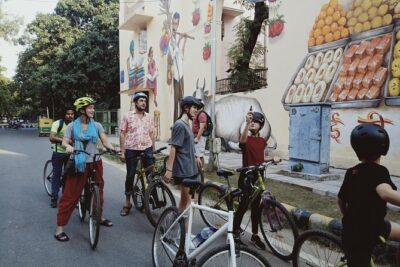 ★ 5.03.5-Hours South Delhi Private Bike Tour with Lodi Art DistrictFrom $2937 reviews
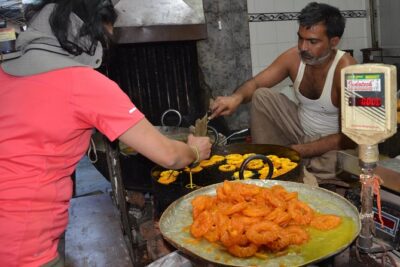 ★ 5.0Half-Day Food Tour with Cycle Rickshaw ride to Masterji Kee HaveliFrom $5331 reviews
 ★ 4.5Spiti Valley Biking / Backpacking Road Trip 2022From $39027 reviews
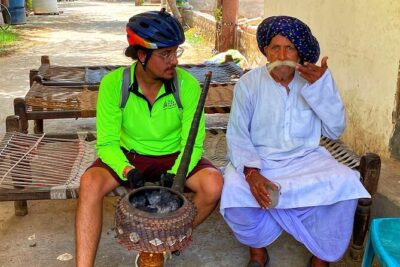 ★ 5.0Premium Delhi Aravalli Organic Cycle Tour – A glimpse of Real and Rural IndiaFrom $12025 reviews
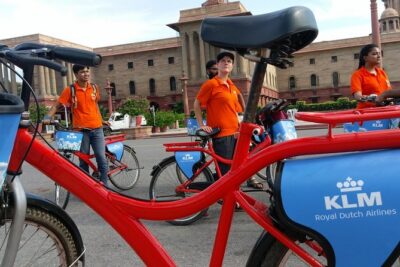 ★ 5.0Raj Tour- New Delhi Cycle TourFrom $3522 reviews
 ★ 4.6Old Delhi: 3.5-Hour Small-Group Bike Tour with BreakfastFrom $2621 reviews
Browse the lists this tour appears in