
Reviewed · GOLDEN TRIANGLE TOURS
New Delhi : Private 3 Days Golden Triangle Tour
Early-morning pickup beats jet-lag fast.
This private Golden Triangle pairs big-name monuments with a real-world schedule that keeps you moving from Delhi to Agra to Jaipur in just 3 days. I like that you’re not left to guess logistics: you get hotel pickup/drop-off and a driver in a private vehicle, with a local guide to help you connect the dots. One thing to consider: monument fees aren’t included, so you should plan for paid entries even if a few stops are listed as free in the timing.
What I truly like here is the day-by-day flow. Delhi is handled with a sensible sweep of India Gate, Qutub Minar, and Humayun’s Tomb, then you’re driven on to Agra without wasting the afternoon. I also like that your Agra and Jaipur days aren’t just one-stop photo marathons; you get the follow-ups (Agra Fort and Fatehpur Sikri on Day 2, then Amer Fort, Hawa Mahal, City Palace, and Jantar Mantar on Day 3). The possible drawback is that the pace is full—start time is 6:00 am, so you’ll want a good sleep the night before.
In This Review
- Key Highlights You’ll Feel Immediately
- The Real Deal on a Private 3-Day Golden Triangle
- Day 1 in Delhi: India Gate, Qutub Minar, Humayun’s Tomb
- India Gate: A big memorial on Rajpath
- Qutub Minar: UNESCO and the minaret complex
- Humayun’s Tomb: Mughal royal scale and Persian design
- After Delhi: Drive to Agra and check in
- Day 2 in Agra: Taj Mahal, Agra Fort, and Fatehpur Sikri
- Taj Mahal: the centerpiece stop (with time to look)
- Agra Fort: Akbar’s major Mughal work
- Fatehpur Sikri: a whole set of named highlights
- Day 3 in Jaipur: Amer Fort, Jal Mahal, Hawa Mahal, City Palace, Jantar Mantar
- Amer Fort: high on the hill and the main attraction
- Jal Mahal: a palace on the lake
- Hawa Mahal: the red and pink sandstone facade
- City Palace: the seat of power complex
- Jantar Mantar: the 18th-century science park
- Back to Delhi and drop-off
- What’s Included (and What You’ll Pay Separately)
- Hotels, Guides, and the Touch That Makes It Feel Smooth
- Value at $200: Is This a Smart Deal for You?
- Should You Book This Private Golden Triangle Tour?
- FAQ
- How long is the Golden Triangle tour?
- Where does the tour start and end?
- What time does the tour start?
- Is pickup included?
- Is this a private tour?
- What kind of transportation do you use?
- Are meals included?
- Are monument tickets included?
- What sites are visited in Delhi?
- What happens if weather is poor?
Key Highlights You’ll Feel Immediately
- Private transport plus driver/guide, so you’re not juggling public routes between cities
- 6:00 am start that helps you beat traffic and makes the sightseeing day feel efficient
- Delhi’s Mughal-and-monument combo: Qutub Minar and Humayun’s Tomb sit right in your first morning block
- Agra with the classic order: Taj Mahal, then Agra Fort and Fatehpur Sikri
- Jaipur core sights in one loop: Amer (Amer Fort), Jal Mahal, Hawa Mahal, City Palace, and Jantar Mantar
- Good-value structure for a short trip at $200 per person, especially with pickup included
The Real Deal on a Private 3-Day Golden Triangle
A Golden Triangle trip is all about balance: the headline monuments (Taj Mahal and the Jaipur icons), plus the context that turns a checklist into a story. This one is built around a compact route—New Delhi → Agra → Jaipur—with private touring and a dedicated driver. That matters, because time is your only real “currency” on a 3-day itinerary.
You’re scheduled to start early from New Delhi at 6:00 am. From the beginning, the emphasis is on making the day work: pickup, quick room reset, then sightseeing, then the drive onward. In the reviews, people repeatedly point to how timing and sequence feel smooth, and that’s exactly what you want when every monument has crowds and the day can get eaten by traffic.
Also, this trip is sold as a private tour/activity. That usually means less waiting around and fewer “everyone meet here” moments. If you’re traveling as a couple or with family and want your own pace (even within a set schedule), that’s a big plus.
Delhi, Agra and Jaipur: more full circuits



Day 1 in Delhi: India Gate, Qutub Minar, Humayun’s Tomb
Your first morning is a careful mix of memorial, UNESCO heritage, and Mughal tomb architecture. It starts with pickup from the airport (or your location, depending on what you selected) and transfer to the hotel. After a fresh-up break, you get moving to see a cluster of major Delhi landmarks.
India Gate: A big memorial on Rajpath
India Gate is described as a war memorial on the eastern edge of the ceremonial axis, astride Rajpath (formerly called Kingsway). It’s a classic orientation stop. You get a sense of the city’s planned layout before diving into the older, more intricate monuments.
Tip for you: take a slow walk here even if your photos come out fast. India Gate is the kind of place where the architecture is simple, but the meaning adds weight.
Qutub Minar: UNESCO and the minaret complex
Next comes Qutub Minar, part of the Qutab complex, which is listed as a UNESCO World Heritage Site. Qutub Minar is framed as a UNESCO context stop, not just a single tower. You’ll also want to remember the practical side: Qutub Minar is one of those places where you can spend a full chunk of time just looking around—so having a guide helps you focus on what’s worth your attention.
Humayun’s Tomb: Mughal royal scale and Persian design
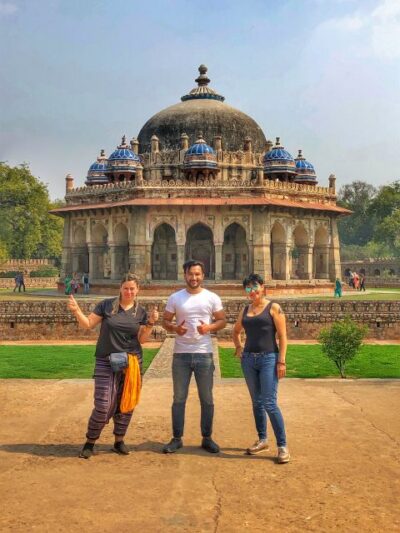
Then you end the Delhi block with Humayun’s Tomb, the tomb of Mughal Emperor Humayun. The tour info highlights that it was commissioned by Humayun’s first wife and chief consort, Empress Bega Begum, in 1569–70, designed by Persian architects Mirak Mirza Ghiyas and Sayyid Muhammad. That detail matters because it shifts the stop from seeing a famous tomb to understanding how rulers shaped art and architecture.
This is also a nice “breather” style stop after Qutub Minar. Even if you’re not a history person, the structure tends to read well when you have someone explaining what you’re looking at.
More private days with a guide of your own

After Delhi: Drive to Agra and check in
Your Day 1 ends with an afternoon drive to Agra, check-in, and an overnight stay. That’s efficient. You get to see Delhi’s highlights first, then you’re not sleeping in a moving vehicle all day. You’ll likely feel the travel time, but the itinerary avoids the worst case: doing the long drive before you’ve even started sightseeing.
Day 2 in Agra: Taj Mahal, Agra Fort, and Fatehpur Sikri
Day 2 starts with breakfast, then it’s check-out and the Agra core. This is the day most people come for, but it’s also the day that can get rushed if you don’t plan.
Taj Mahal: the centerpiece stop (with time to look)
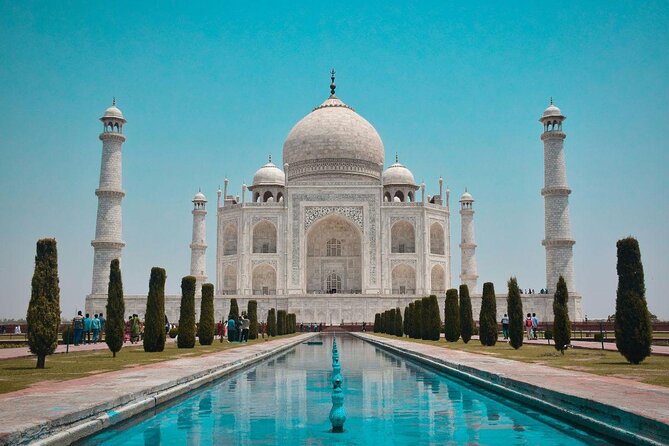
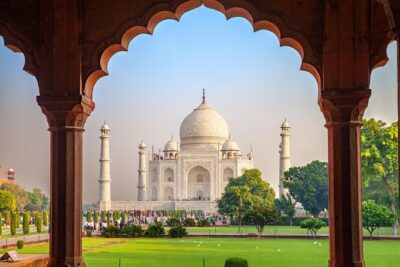
Taj Mahal is built in the 17th century by Mughal Emperor Shah Jahan as a memorial for his wife Mumtaz. The itinerary schedules Taj Mahal visits with a short segment marked as admission ticket free and another segment later. It’s not totally clear how that maps to ticketing in practice, because the tour states monuments fee isn’t included overall.
So here’s how I’d handle it: treat any “free” label in the schedule as a clue, not a guarantee. Bring a little flexibility and be ready to pay monument fees on-site if needed.
Agra Fort: Akbar’s major Mughal work
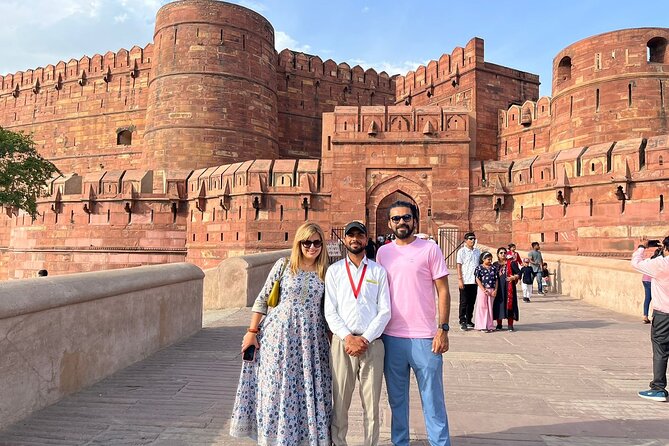
After Taj Mahal, you head to Agra Fort, described as built in 1565 A.D. by Mughal Emperor Akbar. This gives you a different angle on Mughal power: not just the romantic memorial, but the fortified, administrative scale behind it. If you love structure and layout, Agra Fort is the stop that makes the day feel more than postcard-perfect.
Fatehpur Sikri: a whole set of named highlights
Then you go to Fatehpur Sikri, described as a small city west of Agra, with red sandstone buildings centered around major architecture. The schedule calls out specific sights:
- Buland Darwaza gate, entrance to Jama Masjid mosque
- Nearby Marble Tomb of Salim Chishti
- Diwan-E-Khas hall with a carved central pillar
- Jodha Bai Palace mixing Hindu and Mughal styles
- The Panch Mahal, a five-story structure overlooking the site
That list is what makes the stop valuable. It turns Fatehpur Sikri from a single “cool ruins” moment into a guided circuit of named places. And because it’s a larger site, having that structure matters for your time.
In the end, you’ll likely leave Agra feeling like you saw both sides: the love story at Taj Mahal and the court culture behind it.
Day 3 in Jaipur: Amer Fort, Jal Mahal, Hawa Mahal, City Palace, Jantar Mantar
Day 3 is your “Pink City” sweep. The itinerary is built as a route that moves from elevated fort views down toward the city’s iconic palaces and monuments. This is the day you’ll want to dress for sun and light wind, because Jaipur can feel intense once you’re outside for long.
Amer Fort: high on the hill and the main attraction
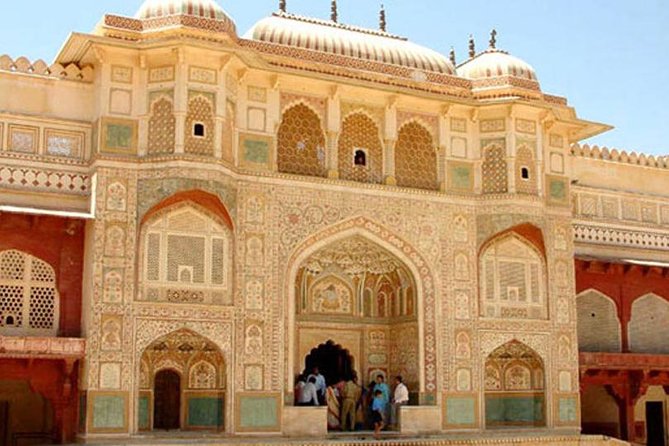
You start with Amber (Amer) Palace—listed as Amer Fort and described as the principal tourist attraction in Jaipur, located about 11 km from Jaipur and positioned high on a hill. That hilltop setting is why this stop is so popular. Even if you only spend the scheduled time, you’ll get the sense of scale and strong defensive planning.
Jal Mahal: a palace on the lake
Next is Jal Mahal, a palace in the middle of Man Sagar Lake. It notes that the palace and lake area were renovated and enlarged in the 18th century by Maharaja Jai Singh II of Amber. Jal Mahal gives you a visual reset. Instead of stone fortress energy, you get a water-and-architecture look that’s easier on the senses.
The itinerary lists a shorter stop here, with admission ticket info marked free for that segment. Again: keep your expectations flexible since the tour overall says monument fees aren’t included.
Hawa Mahal: the red and pink sandstone facade
Then it’s Hawa Mahal (Palace of Wind), built in 1799 by Maharaja Sawai Pratap Singh. It’s described as made of red and pink sandstone, sitting on the edge of City Palace and extending to the zenana (women’s chambers). Even if you’re not reading every architectural detail, the building’s concept is easy to grasp.
If you like “see it once, then understand it forever” sights, Hawa Mahal fits that.
City Palace: the seat of power complex
You then visit City Palace of Jaipur, described as including Chandra Mahal and Mubarak Mahal and serving as the seat of the Maharaja of Jaipur. The info also notes it was associated with the Kachwaha Rajput clan. This stop is where the day shifts from standalone icons into an actual palace complex—more spaces, more rooms, more variety.
Jantar Mantar: the 18th-century science park
Finally, Jantar Mantar: a UNESCO-listed collection of nineteen astronomical instruments, built by Sawai Jai Singh II and completed in 1734. The tour highlights the world’s largest stone sundial and notes it sits near City Palace and Hawa Mahal.
This is the surprise stop that often ends up being a favorite if you like perspective. It turns Jaipur from “palaces and patterns” into “people built tools to measure the sky.”
Back to Delhi and drop-off
After Jaipur sightseeing, you drive back to Delhi later in the afternoon. On arrival, the driver drops you at your location or the airport. That wrap-up is convenient, especially if you’re continuing onward the same day.
What’s Included (and What You’ll Pay Separately)
The price is $200 per person. For a short Golden Triangle with private transport, that can be good value—especially because the itinerary is built around a proper driver setup, hotel nights, and guides.
Here’s what’s explicitly included:
- Hotel pickup and drop-off
- Transport by private vehicle
- Driver/guide and a local guide
- Bottled water
- Fuel surcharge
- Breakfast (2)
And from your itinerary and overall package info:
- Food and drinks are not included
- Monuments fee are not included
That last part is the one you must plan for. Even if a few segments are marked as free in the schedule, you should treat entrance fees as a likely extra cost. I’d also budget a little for snacks or bottled water if you run out between stops, since meals are not covered.
Hotels, Guides, and the Touch That Makes It Feel Smooth
The tour description says you’ll stay in the best of class hotel, with hospitality and delectable food. Since the specific hotel names aren’t provided here, I can’t promise a particular property. But the structure indicates you’re not doing this as a budget-only experience.
What stands out from the reviews is the human factor:
- People praised how well organized the trip felt, with timing and sequence that worked well for a couple.
- Multiple mentions point to great driver service, including a named driver: Amar.
- Reviews also mention guides who explained Taj Mahal well and helped with Delhi sightseeing.
That’s what you want from a private tour: someone making the places make sense while you focus on seeing them.
Value at $200: Is This a Smart Deal for You?

With a 3-day Golden Triangle, value depends on what you’d otherwise spend and how much you hate logistics.
This package is usually strongest for you if:
- You want private transport instead of figuring out intercity travel on your own
- You appreciate a planned sequence (Delhi first, then Agra, then Jaipur)
- You want a guide to connect stops like Humayun’s Tomb and Qutub Minar to what you’re seeing
- You’re okay with a full schedule and early mornings
It may be less of a match if:
- You prefer a slower pace with lots of free time at each site
- You want all monument fees included up-front
- You’re traveling solo on a super tight budget and can handle DIY transit
The good news: because pickup and drop-off are included, you’re not starting your trip with friction.
Should You Book This Private Golden Triangle Tour?
If you’re aiming for the classic Golden Triangle highlights in a short time, this is a solid option. The private vehicle + guides reduce the stress that usually makes 3-day itineraries feel exhausting. The schedule also makes sense: Delhi’s major monuments on Day 1, Agra’s core on Day 2, then Jaipur’s icons on Day 3.
I’d especially consider booking if you like having someone handle timing and transport. In the reviews, the strongest theme is smooth running and good guiding, and that’s what turns a fast trip into an enjoyable one.
One last practical nudge: plan for separate monument fees and bring comfortable shoes. Start the day early with a real breakfast (breakfast is included), and you’ll get more from each stop.
FAQ
How long is the Golden Triangle tour?
The tour is listed as 3 days (approx.).
Where does the tour start and end?
It starts in New Delhi and ends back at the meeting point in New Delhi.
What time does the tour start?
The start time is 6:00 am.
Is pickup included?
Yes. The tour includes hotel pickup and drop-off.
Is this a private tour?
Yes. It’s described as private, with only your group participating.
What kind of transportation do you use?
The tour uses transport by private vehicle, along with a driver.
Are meals included?
Breakfast is included (2 breakfasts). Food and drinks are not included.
Are monument tickets included?
Monuments fee are listed as not included. Some itinerary entries show admission ticket free for certain segments, but overall monument fees may still apply.
What sites are visited in Delhi?
Delhi sightseeing includes India Gate, Qutub Minar, and Humayun’s Tomb.
What happens if weather is poor?
The experience requires good weather. If it’s canceled due to poor weather, you’ll be offered a different date or a full refund.
If you want, tell me your travel month and whether you’re flying in/out of Delhi on Day 1 or Day 3—I can suggest how to time your arrival and departure around a 6:00 am start.
More Tours in New Delhi
- Old & New Delhi City Tour – Half or Full Day Options Available
★ 5.0 · 4,811 reviews - Half Day Private Delhi City Tour
★ 5.0 · 4,474 reviews - Same Day Taj Mahal, Agra Fort & Baby Taj Tour from Delhi by Car
★ 5.0 · 4,304 reviews - Taj Mahal Day Tour from Delhi by Superfast Train – TOP RATED TOUR
★ 5.0 · 4,166 reviews - Delhi: Old and New Delhi Private Full or Half-Day Tour
★ 4.9 · 3,776 reviews
More Tour Reviews in New Delhi
- Old & New Delhi City Tour – Half or Full Day Options Available
★ 5.0 · 4,811 reviews - Half Day Private Delhi City Tour
★ 5.0 · 4,474 reviews - Same Day Taj Mahal, Agra Fort & Baby Taj Tour from Delhi by Car
★ 5.0 · 4,304 reviews - Taj Mahal Day Tour from Delhi by Superfast Train – TOP RATED TOUR
★ 5.0 · 4,166 reviews - Delhi: Old and New Delhi Private Full or Half-Day Tour
★ 4.9 · 3,776 reviews
The Full Golden Triangle, More Options
- 3-Days Private Golden Triangle Tour: Delhi, Agra & Jaipur by Car
★ 5.0 · 1,107 reviews - 3-Days Private Golden Triangle Tour: Delhi, Agra & Jaipur by Car
★ 5.0 · 1,098 reviews - 3-Day Delhi, Agra and Jaipur Private Tour – India Golden Triangle
★ 5.0 · 812 reviews - Four-Day Private Luxury Golden Triangle Tour to Agra and Jaipur From New Delhi
★ 5.0 · 807 reviews - 5 Nights 6 Days Private Golden Triangle Tour – Delhi Agra Jaipur
★ 5.0 · 574 reviews
Just added: more New Delhi reviews to browse
- 4 days Golden Triangle Tour★ 5.0 · 3 reviews
- Discover Old & New Delhi: Private Tour with Street Food★ 5.0 · 3 reviews
- Taj Mahal Tour From Delhi By Private Car★ 4.5 · 3 reviews
- Golden Triangle Tour 5 Days★ 5.0 · 3 reviews
- Taj Mahal: Express Entry Ticket For Sunset Tour with guide★ 5.0 · 3 reviews
- Agra Taj Mahal Sunrise & Sunset Tour from Delhi★ 5.0 · 3 reviews
Golden Triangle Tours, compared.
 ★ 5.03-Days Private Golden Triangle Tour: Delhi, Agra & Jaipur by CarFrom $1271,107 reviews
★ 5.03-Days Private Golden Triangle Tour: Delhi, Agra & Jaipur by CarFrom $1271,098 reviews
 ★ 5.03-Day Delhi, Agra and Jaipur Private Tour – India Golden TriangleFrom $110812 reviews
 ★ 5.0Four-Day Private Luxury Golden Triangle Tour to Agra and Jaipur From New DelhiFrom $160807 reviews
 ★ 5.05 Nights 6 Days Private Golden Triangle Tour – Delhi Agra JaipurFrom $240574 reviews
 ★ 5.04 Days Golden Triangle TourFrom $146499 reviews
 ★ 5.0Private Car and Drive for Golden Triangle (4N/5D)From $167451 reviews
 ★ 5.0Private Golden Triangle Tour Delhi Agra Jaipur ( Top Rated )From $148436 reviews