
Reviewed · OLD DELHI TOURS
Old Delhi – Walking Tour with wireless audio head sets for live commentary
One street. One guide. Then the city starts talking back. This Old Delhi walk is built for clarity in chaotic places, with a local guide leading the way and wireless audio headsets so you can actually follow the story while you move. Guides like Ritu and Saurav have a reputation for keeping things organized even when the streets get loud and crowded.
I love two parts of this experience. First, you get a tight, walk-it-all format that brings you close to landmarks like Jama Masjid and the market lanes around Chandni Chowk. Second, the food break is not an afterthought—there’s a real food tasting stop (plus snacks and bottled water), which turns the walk into something you feel in your day, not just look at.
The one drawback to plan around is simple: it’s not built for people who have difficulty walking. You’ll be on your feet for about 3 hours, and you’ll be visiting religious places, so you’ll want to be comfortable and dressed conservatively.
In This Review
- Key takeaways before you go
- Why this 3-hour Old Delhi walk is worth your time
- Starting at Jama Masjid: a massive landmark that sets the tone
- Gurudwara Sis Ganj and the live kitchen experience
- The Haveli stop: history you can see between the signs
- Wedding Bazaar and Silver bazaar: the craft-and-occasion streets
- Town hall: a quick reality check on the city’s layers
- Spice market and the tasting moment: plan to go hungry
- How the wireless audio headsets really help
- Group size, guide style, and what you can ask
- Logistics that affect your day (without spoiling the fun)
- Price and value: what $56.67 buys you here
- Who this Old Delhi walking tour suits best
- Should you book it?
- FAQ
- Where does the Old Delhi walking tour start?
- How long is the tour?
- Are audio headsets included?
- What food is included?
- Is hotel pickup included?
- Is admission included for the stops?
- Is the tour refundable if I cancel?
Key takeaways before you go
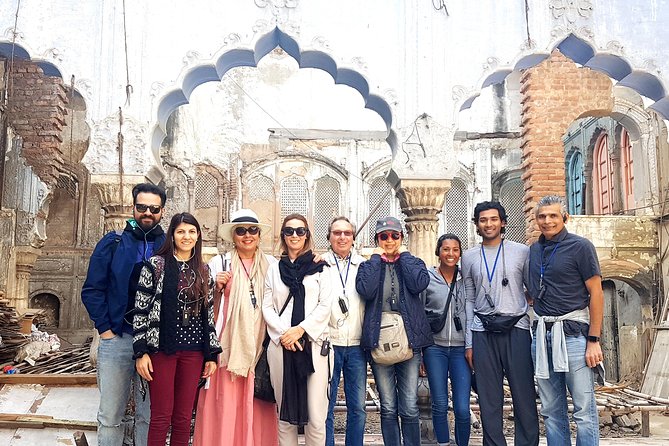
- Wireless audio headsets help you hear live commentary in Old Delhi’s busiest stretches
- Jama Masjid start gives quick orientation at one of India’s largest mosques
- Gurudwara Sis Ganj with live kitchen adds a sensory, everyday side to the tour
- Market sequence covers Wedding Bazaar, Silver bazaar, and a spice market tasting
- Small group (up to 15) means questions don’t get swallowed by the crowd
- Food tastings and snacks included so you’re not just sightseeing—you’re sampling
Why this 3-hour Old Delhi walk is worth your time
Old Delhi can feel like sensory overload if you’re just walking on your own. This tour solves that with a guided pace and live explanations delivered through headsets, which matters when sounds come from every direction.
I also like that the format is short enough to stay fun. About 3 hours is long enough to see multiple neighborhoods and markets, but short enough that you’re not mentally done before the best street-food moments.
This is a small-group experience with a maximum of 15 travelers, so you’re not stuck behind a line of people. You can ask practical questions—what you’re seeing, why it’s there, and how to make sense of the chaos.
And because there’s no hotel pickup, you get to start where you actually want the story to begin: at the gateway of Old Delhi, Jama Masjid.
More hours to spend in Old Delhi




Starting at Jama Masjid: a massive landmark that sets the tone
The tour begins at Jama Masjid in Old Delhi, which is noted as the largest mosque of India. That’s a big deal, because it immediately puts you in the scale of the neighborhood—this isn’t just a single sight, it’s the start of a whole way of life.
What you should expect here is a focus on context. The guide’s explanations help you understand what you’re looking at while you’re still fresh and not yet surrounded by market traffic.
Here’s a practical note about the headsets: at the start, they can feel a little unnecessary for the moment—especially in a calmer stretch right at the mosque. But the value shows up quickly once you head into the Chandni Chowk area and the street noise rises. The wireless audio is what keeps the tour feeling guided instead of chaotic.
Gurudwara Sis Ganj and the live kitchen experience
Next up is Gurudwara Sis Ganj, and the tour highlights its live kitchen. Even if you don’t know the first thing about the site, the “live kitchen” detail signals that you’re not just looking at a monument—you’re seeing a functioning part of community life.
This stop is also why the tour asks for conservative dress. You’ll be visiting religious places, and that means you’ll want to respect the setting with clothing that covers appropriately and feels comfortable for walking.
If you’re the type of traveler who likes food tied to culture (not just food tied to a vendor line), this is a strong moment. It helps you connect “why this place looks the way it does” to “how people actually use it.”
The Haveli stop: history you can see between the signs
After the gurudwara, the route includes a Haveli. In Old Delhi, havelis are often the kind of structure that you notice more once someone gives you a frame of reference—what it is, why it belongs here, and how it connects to daily life.
This is where the guided aspect matters most. Markets and lanes can be visually loud, but a quick, well-timed explanation helps you notice the architectural and cultural patterns you’d otherwise miss.
The drawback? You may spend this part feeling a bit like you’re walking through layers of Old Delhi—great for people who love context, but less ideal if you’re only chasing photo-famous landmarks. If that’s you, just remember the point is understanding the neighborhood fabric, not ticking a list.
Wedding Bazaar and Silver bazaar: the craft-and-occasion streets
Then you move into the Wedding Bazaar and the Silver bazaar. These stops are where Old Delhi becomes less about one grand building and more about what the streets do every day.
Shopping districts can be tricky to enjoy if you feel pressured, but a guided route helps you slow down. You’re not just walking past storefronts—you’re learning how the markets fit into the rhythms of the city, especially around major life events like weddings.
With bazaar areas, you’ll want to keep expectations realistic. You’re going to see lots of goods, lots of displays, and lots of people. That’s normal. The headphones and guide help you keep your bearings so the market doesn’t turn into wandering.
Also, if you’re sensitive to crowds, the small group size is your friend here. With fewer people, it’s easier to keep the flow and ask questions without the group breaking apart every two minutes.
New Delhi at a walking pace, a few more routes
Town hall: a quick reality check on the city’s layers
The itinerary includes the Town hall stop. This is a useful pause because it signals the tour isn’t only about Mughal-era grandeur or market life. It’s showing how different eras and functions sit side by side in Old Delhi.
This kind of stop is a value add for travelers who like balance. If you’re only looking at religious sites and street commerce, you can miss how cities organize power, administration, and public space.
Time here is likely short compared with the markets, but the purpose is clear: you’re getting a broader map of what Old Delhi is, not just a few high points.
Spice market and the tasting moment: plan to go hungry
The tour ends with a spice market element that includes tastings. This is the part that turns your tour from “I saw Old Delhi” into “I tasted Old Delhi.”
Food tastings and snacks are included, along with bottled water. That matters because market walking is not the time to realize you forgot to eat or drink.
Practical tip: eat lightly beforehand. Even if you’re not a huge snacker, the tasting stops are meant to be taken as part of the experience, not a bonus you can ignore.
One more practical point: spice markets can smell strong and stay with you. If you’re sensitive to strong scents, bring a plan for after—like fresh wipes or something simple to feel comfortable once the tour wraps.
How the wireless audio headsets really help
Wireless audio headsets are the defining feature of this tour. In practice, they do two jobs.
First, they keep you from straining to hear the guide when you’re near traffic and crowd noise. Old Delhi doesn’t pause for your ears.
Second, they let you keep walking without constantly stopping and checking for instructions. The guide is in front, you’re behind, and you don’t have to miss turns or explanations.
The headsets can feel slightly odd at the very beginning—especially if the starting area isn’t as loud. But once you’re in the market lanes, the advantage becomes obvious fast.
If you’re booking this tour, don’t treat the headsets like a gimmick. They’re what make a short walk feel like a guided “story,” rather than a moving group photo.
Group size, guide style, and what you can ask
You’ll be with a maximum of 15 travelers, and that’s a meaningful comfort factor. It’s small enough to feel personal, but large enough to keep the group lively.
The guide leads the walk and provides live commentary, with time for questions. In the best moments, you’ll use those questions to connect dots—why certain areas are structured the way they are, what religious sites mean in the neighborhood, and how people approach markets day to day.
From the experience of guides associated with the tour—names like Ritu and Saurav come up for a reason—I’d expect a friendly, flexible style. You’re not just following a script; you’re getting a human guide who answers.
And because the tour includes food tasting, questions about ingredients or what you’re trying are naturally part of the flow.
Logistics that affect your day (without spoiling the fun)
This tour is 3 hours approximately, and it runs from Jama Masjid back to the same meeting point. That end-back-at-start setup is convenient: you’re not stuck guessing where you’ll be dropped off later.
There’s no hotel pickup or drop-off, so you’ll need to handle your own getting there. The good news is that it’s described as being near public transportation, so you can plan a simple route.
You’ll also get a mobile ticket, which is handy if you like to keep everything on your phone. Just make sure your phone has battery and you can show the ticket when needed.
The tour is also noted as not recommended if you have difficulty walking. Old Delhi walking can include uneven pavement and tight spaces, so be honest about your limits before you commit.
Price and value: what $56.67 buys you here
At $56.67 per person, this isn’t a “bargain street stroll.” But it does include several things that add real value in Old Delhi: a local guide, wireless headsets, bottled water, and food tastings plus snacks.
Here’s the way I’d frame the value for your budget. If you were to do Old Delhi on your own, you’d likely spend money on your own guide at some point (even if informal), you’d still need to pay for water and snacks, and you might end up paying for tastings anyway. This tour bundles those pieces into one guided package.
The headsets are especially relevant in a dense area. They help you hear the guide clearly, which means the experience is easier to enjoy and easier to learn from. That’s hard to put a price tag on, but it’s a big reason this format tends to feel worth it.
If you like structure but still want to experience the street level of the city, the value is stronger than if you’re only chasing a list of monuments.
Who this Old Delhi walking tour suits best
This tour is a strong match if you:
- want a guided introduction to Old Delhi rather than wandering without context
- like markets, religious sites, and street food in one loop
- appreciate practical tech like wireless headsets for hearing the guide
- prefer a small group atmosphere (up to 15 people)
It may be less suitable if you:
- have difficulty walking
- want a slow, sit-down sightseeing day (this is a walking tour format)
- dislike strong scents like spices for extended periods
Should you book it?
I’d book this tour if you want Old Delhi to feel understandable in a short time. The combo of live commentary, headsets, and included tastings is built for the realities of the neighborhood—noise, crowds, and sensory overload.
I’d skip it if your walking is limited or if you know you’ll struggle with conservative dress requirements at religious sites. Otherwise, it’s a smart way to get your bearings fast and leave with stories you can repeat, plus flavors you can remember.
If you want one key decision rule: come hungry, wear comfortable shoes, and use the headsets like they matter. They do.
FAQ
Where does the Old Delhi walking tour start?
It starts at Jama Masjid, Old Delhi, Delhi 110006, India.
How long is the tour?
The duration is about 3 hours.
Are audio headsets included?
Yes. Wireless headsets are included so you can hear the guide clearly, with live commentary.
What food is included?
The tour includes food tasting and snacks, plus bottled water.
Is hotel pickup included?
No. Hotel pickup and drop-off are not included.
Is admission included for the stops?
The tour notes admission ticket free.
Is the tour refundable if I cancel?
No. The experience is non-refundable and cannot be changed for any reason.
More Tours in New Delhi
- Old & New Delhi City Tour – Half or Full Day Options Available
★ 5.0 · 4,811 reviews - Half Day Private Delhi City Tour
★ 5.0 · 4,474 reviews - Same Day Taj Mahal, Agra Fort & Baby Taj Tour from Delhi by Car
★ 5.0 · 4,304 reviews - Taj Mahal Day Tour from Delhi by Superfast Train – TOP RATED TOUR
★ 5.0 · 4,166 reviews - Delhi: Old and New Delhi Private Full or Half-Day Tour
★ 4.9 · 3,776 reviews
More Tour Reviews in New Delhi
- Old & New Delhi City Tour – Half or Full Day Options Available
★ 5.0 · 4,811 reviews - Half Day Private Delhi City Tour
★ 5.0 · 4,474 reviews - Same Day Taj Mahal, Agra Fort & Baby Taj Tour from Delhi by Car
★ 5.0 · 4,304 reviews - Taj Mahal Day Tour from Delhi by Superfast Train – TOP RATED TOUR
★ 5.0 · 4,166 reviews - Delhi: Old and New Delhi Private Full or Half-Day Tour
★ 4.9 · 3,776 reviews
More of Old Delhi
- The Great Indian Food Tour: Old Delhi Food and Heritage Walk
★ 5.0 · 1,698 reviews - Old Delhi Food, Heritage&Cultural Walk with Rickshaw ride to Masterji Kee Haveli
★ 5.0 · 742 reviews - Old Delhi Bike Tour
★ 5.0 · 616 reviews - Old Delhi Street Food Tour
★ 5.0 · 497 reviews - Breakfast Walk in Old Delhi
★ 5.0 · 449 reviews
Just added: more New Delhi reviews to browse
- 4 days Golden Triangle Tour★ 5.0 · 3 reviews
- Discover Old & New Delhi: Private Tour with Street Food★ 5.0 · 3 reviews
- Taj Mahal Tour From Delhi By Private Car★ 4.5 · 3 reviews
- Golden Triangle Tour 5 Days★ 5.0 · 3 reviews
- Taj Mahal: Express Entry Ticket For Sunset Tour with guide★ 5.0 · 3 reviews
- Agra Taj Mahal Sunrise & Sunset Tour from Delhi★ 5.0 · 3 reviews
Old Delhi Tours, compared.
 ★ 5.0The Great Indian Food Tour: Old Delhi Food and Heritage WalkFrom $431,698 reviews
 ★ 5.0Old Delhi Food, Heritage&Cultural Walk with Rickshaw ride to Masterji Kee HaveliFrom $52742 reviews
 ★ 5.0Old Delhi Bike TourFrom $30616 reviews
 ★ 5.0Old Delhi Street Food TourFrom $40497 reviews
 ★ 5.0Breakfast Walk in Old DelhiFrom $80449 reviews
 ★ 4.9Old Delhi Street Food Tour with Rickshaw RideFrom $43403 reviews
 ★ 4.9Old Delhi: Private Tour of Chandni Chowk, Tuk Tuk & FoodFrom $70345 reviews
 ★ 5.0New Delhi and Old Delhi Private Tour 4-8 Hours – CustomizableFrom $10342 reviews
Browse the lists this tour appears in